A 5-Day Serbia Itinerary
Truth be told, I had a mixed experience in Serbia.
It’s not that I could put my finger on anything I particularly didn’t like — I just didn’t click with it. While traveling, sometimes you vibe with a place, and sometimes you don’t, and I didn’t vibe with Serbia.
Still, I’m certainly glad I visited Serbia — I’m happy to have experienced the vibrance of Belgrade, the history of Golubac Fortress, and the architecture of Subotica, among other things — and if you’re interested in visiting Serbia, I think you should!
So how much time would I recommend for a Serbia itinerary? I think five days is just right.
Five days in Serbia isn’t a lot of time, but it’s enough to get an overview of the country’s largest and best-known cities — Belgrade and Novi Sad — while also squeezing in some day trips to other unique, historic destinations.
This is how to spend 5 days in Serbia.
This post contains affiliate links. If you make a purchase or a booking through one of these links, I may receive a small commission at no extra cost to you. Thanks for supporting In Old Cities in this way!
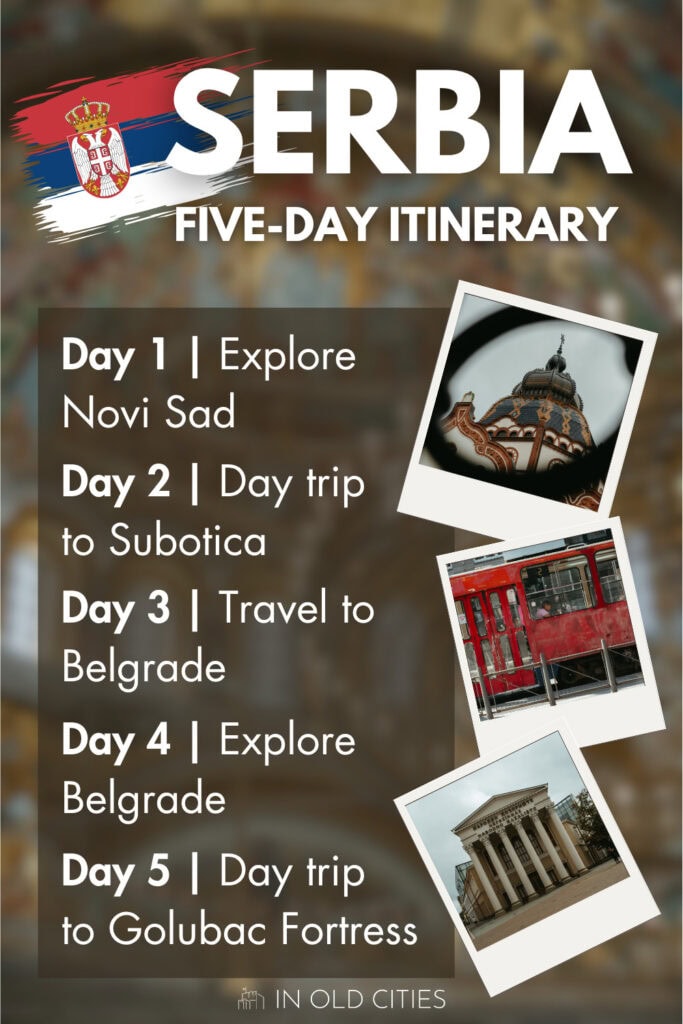
5 Days in Serbia: Itinerary at a Glance
Day 1: Explore Novi Sad
Day 2: Day trip to Subotica
Day 3: Travel to Belgrade
Day 4: Explore Belgrade
Day 5: Day trip to Golubac Fortress
5-Day Serbia Itinerary
DAY 1 // Novi Sad
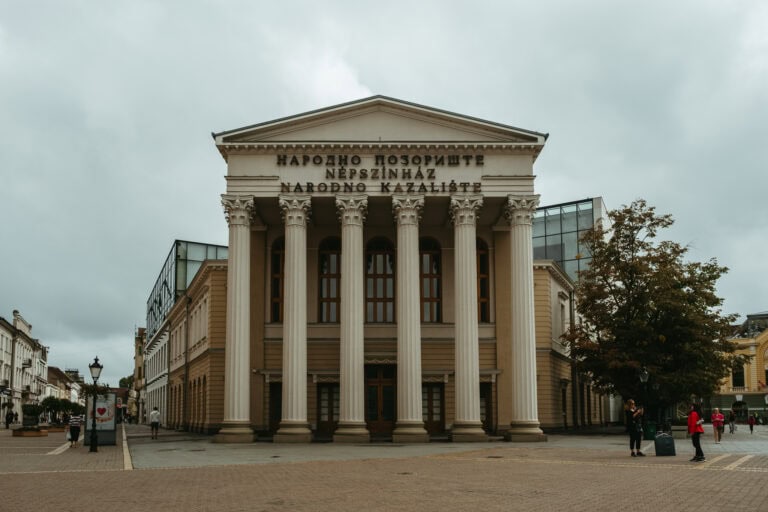
Begin your time in Serbia in its second-largest city, Novi Sad.
If you ask me, one day is perfect for Novi Sad. You’ll have enough time to get a sense of the city center and enjoy the vibes. I wouldn’t necessarily say Novi Sad is a city with plenty to do — rather, it’s a city with plenty to see. Plan to spend much of your time in Novi Sad walking around, appreciating the architecture and views.

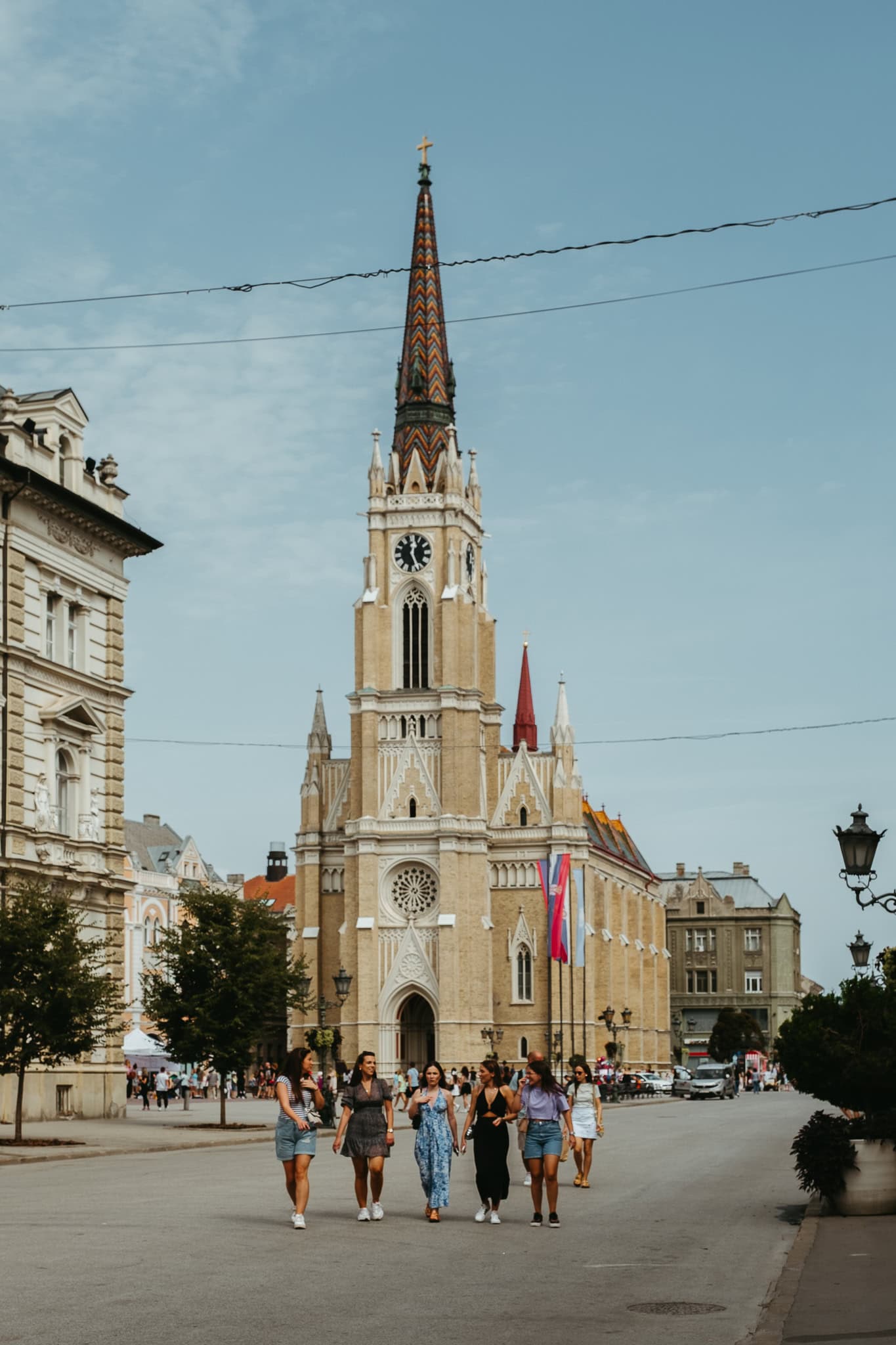
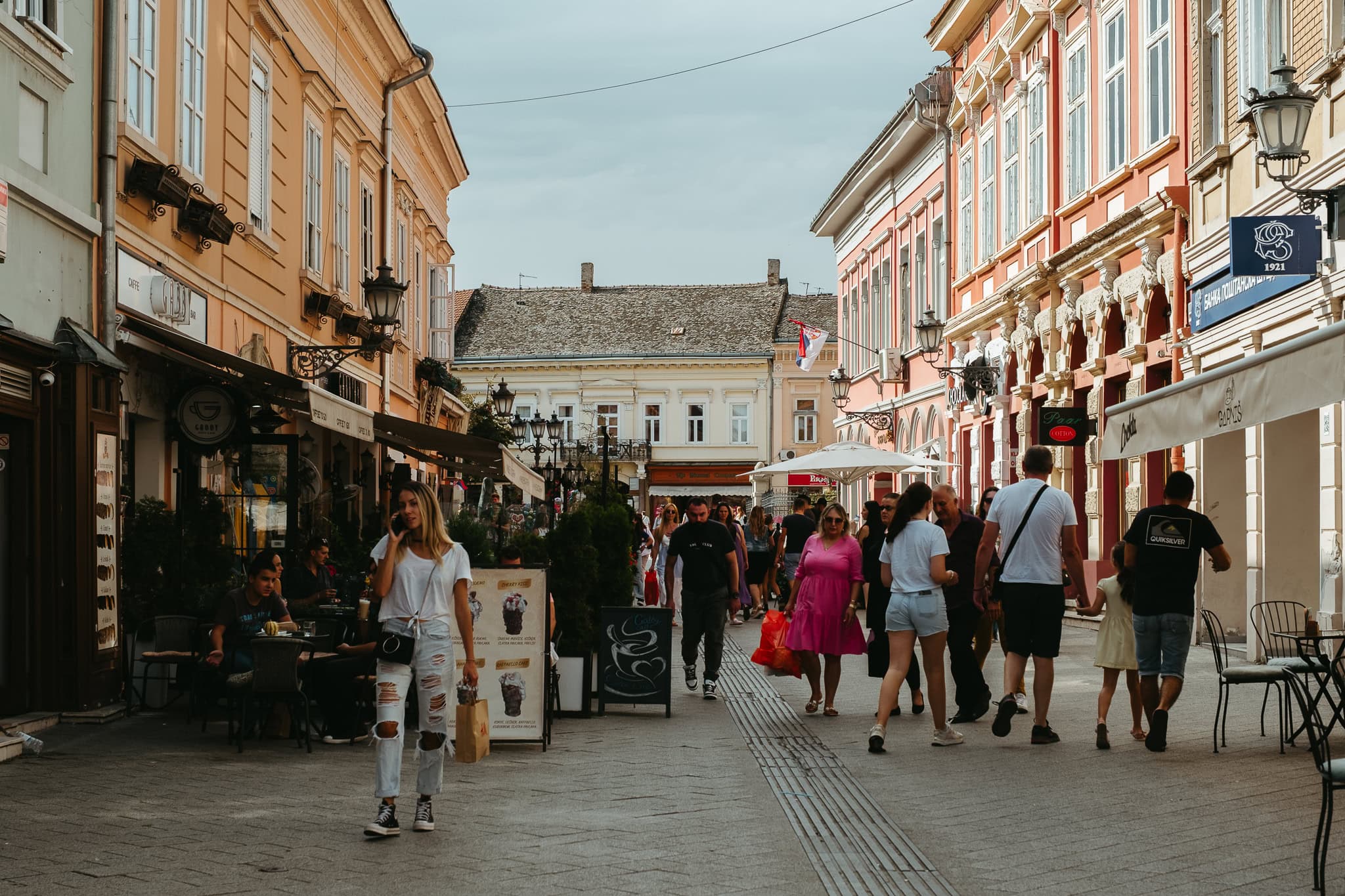
Top Things to Do in Novi Sad
Visit the massive Petrovaradin Fortress to admire the views of the city and the Danube River. Don’t miss the famous clock with its reversed hands!
Relax at the lovely and lively Danube Park.
Admire the Name of Mary Church and the busy square on which it sits.
Eat at Project 72 — perhaps my favorite restaurant in all of the Balkans!
Learn about the history of Novi Sad with a walking tour.
Shop, eat, and people-watch on the charming Dunavska Street.
Where to Stay in Novi Sad
I stayed at Prenociste Stojic, which I selected for its proximity to the bus station. This was a comfortable, affordable spot with super friendly proprietors, and it was nice to be so close to the bus station — both for arrival and departure and for convenience during my day trip to Subotica.
The downside of staying at Stojic is that it was a bit of a walk to get to the center of Novi Sad. But proximity to the bus station is more useful than proximity to the city center for this particular itinerary, so I do recommend that you take a look at Stojic while staying in Novi Sad.
For other lodging options in Novi Sad, consider the following:
BUDGET | Hotel Mediteraneo Garni offers super-affordable rooms and an incredibly convenient location in the heart of Novi Sad.
COMFORT | If you don’t mind staying even farther from the bus station, consider Hotel Leopold I for old-school glamour near Petrovaradin Fortress.
LUXURY | Hotel Pupin has modern rooms and a convenient location near the center of town.
DAY 2 // Subotica
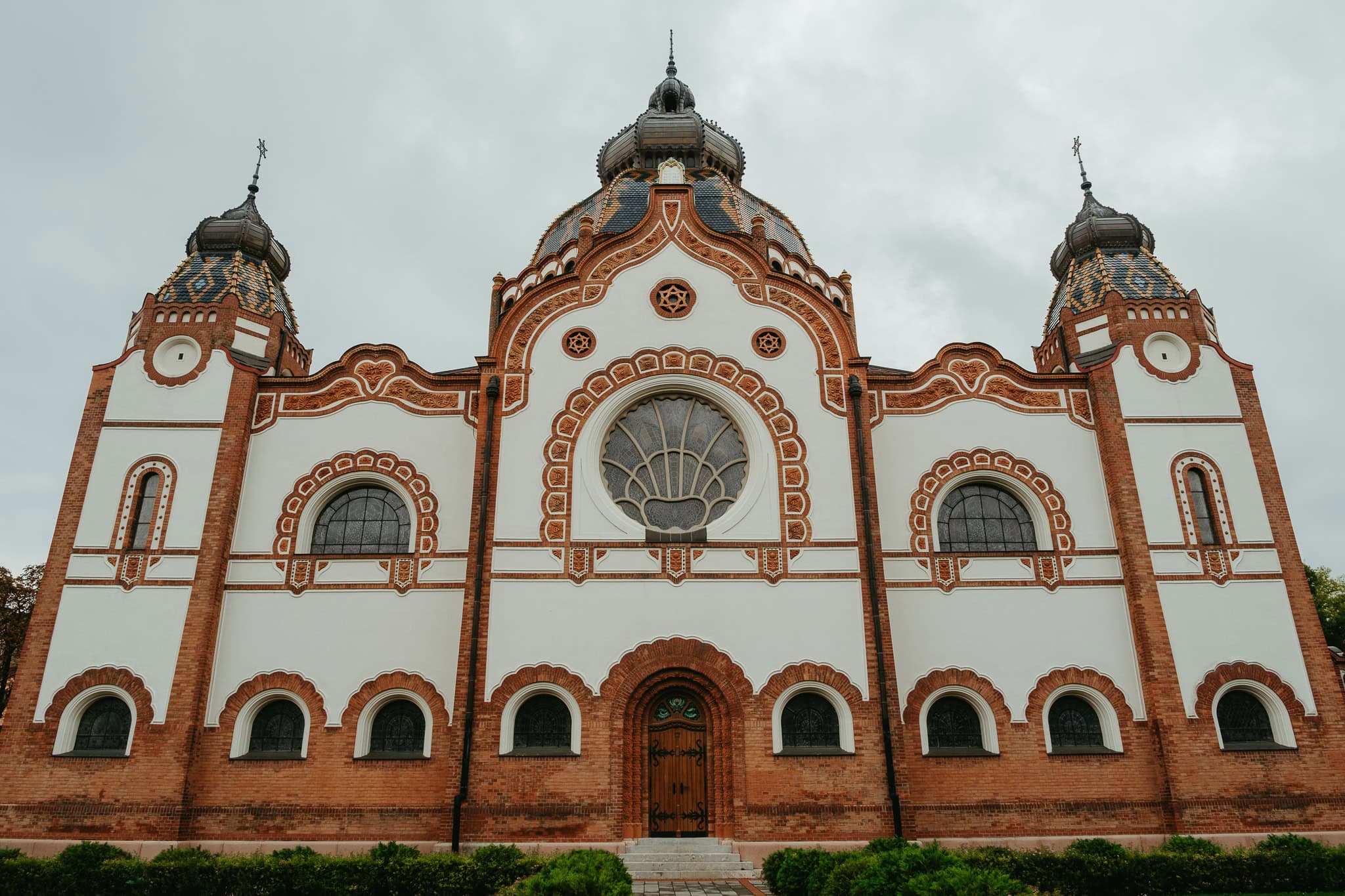
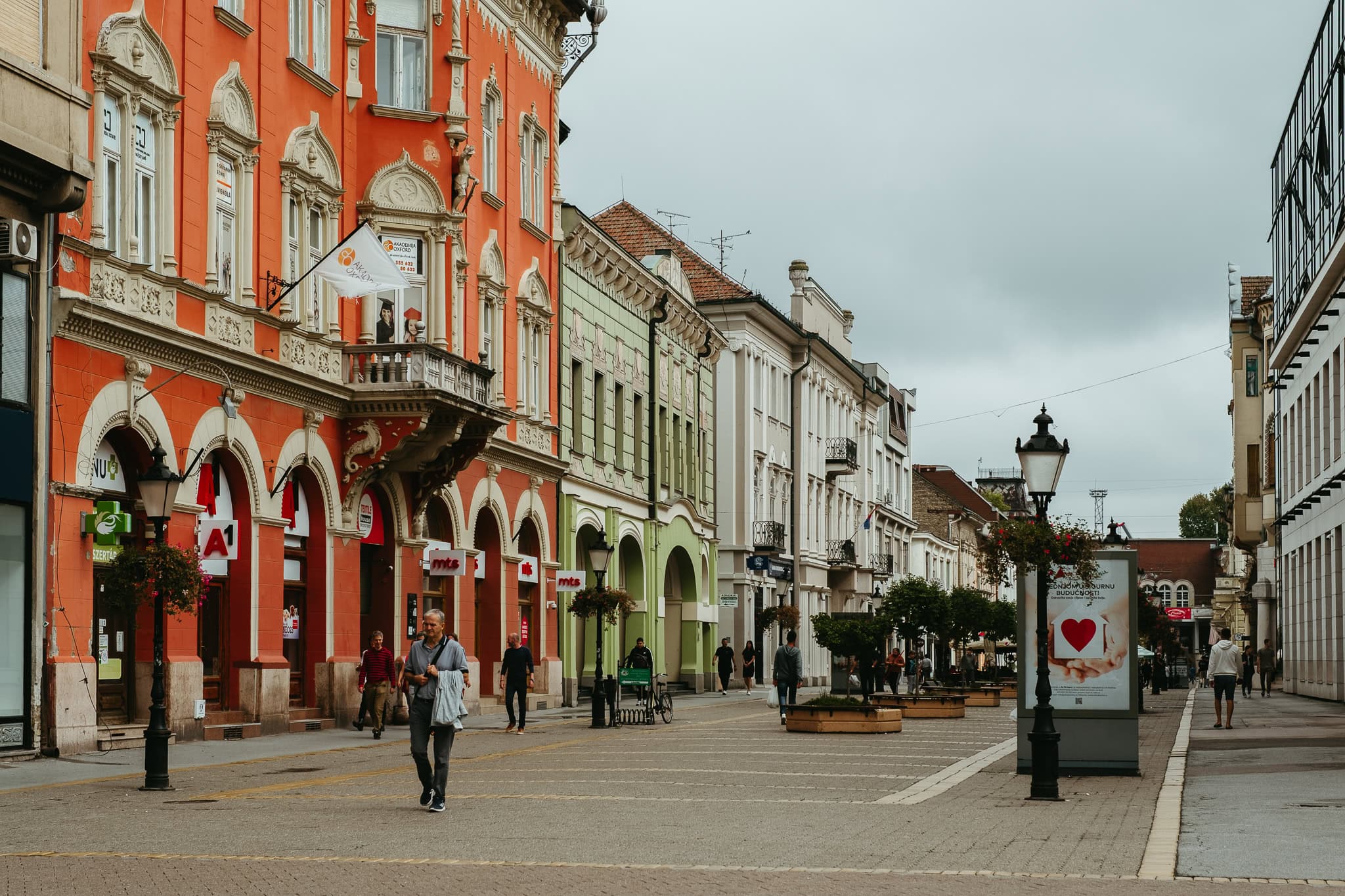
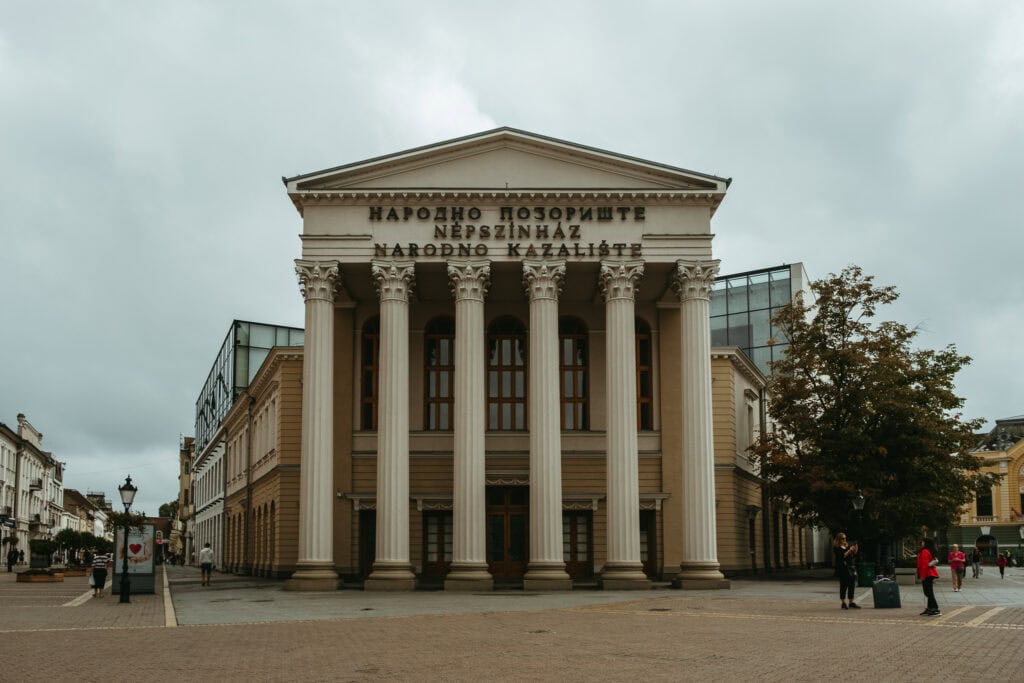
On day two, take a day trip from Novi Sad to Subotica. This small city just over the border from Hungary is known for its collection of ornate Art Nouveau architecture in the Hungarian Secession style — and if you ask me, it’s well worth seeing.
It’s easy and inexpensive to get to Subotica via bus from Novi Sad (one reason you might consider staying near the bus station in Novi Sad!). Once in Subotica, your top priority should be checking out the magnificent Art Nouveau architecture. Must-see buildings include:
- City Hall, with its colorful tile roof and impressive tower
- The synagogue (my favorite building in Subotica!), which you can visit any day but Monday
- Raichle Palace, once a private home and now an art gallery
- Subotica Savings Bank Palace, which you’ll find at Korzo 4 on a lovely pedestrian street (look above the Piraeus Bank!)
- City Library, a cool yellow building
- The Golden Lamb Hotel, a striking green building that’s no longer actually a hotel
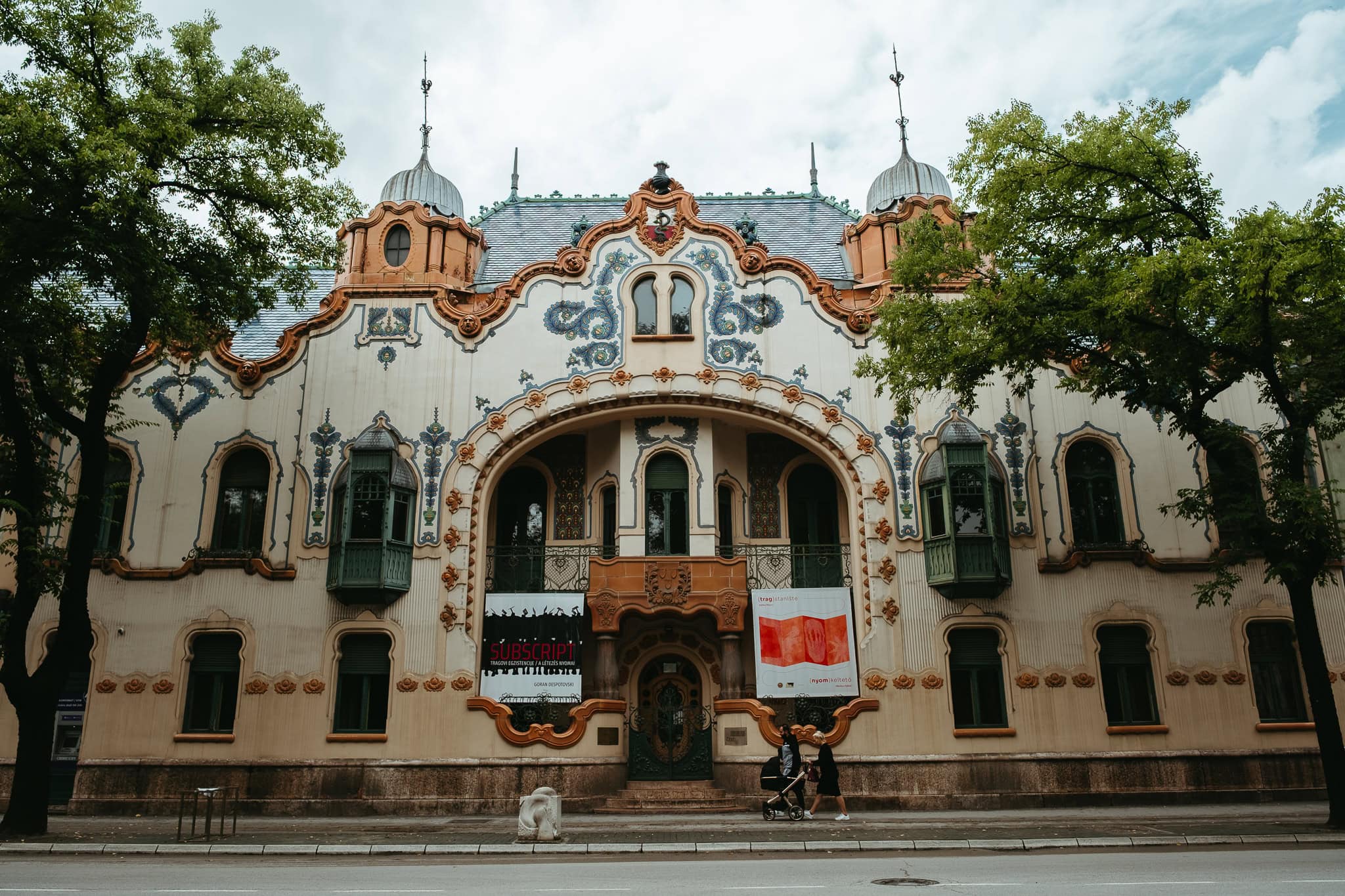
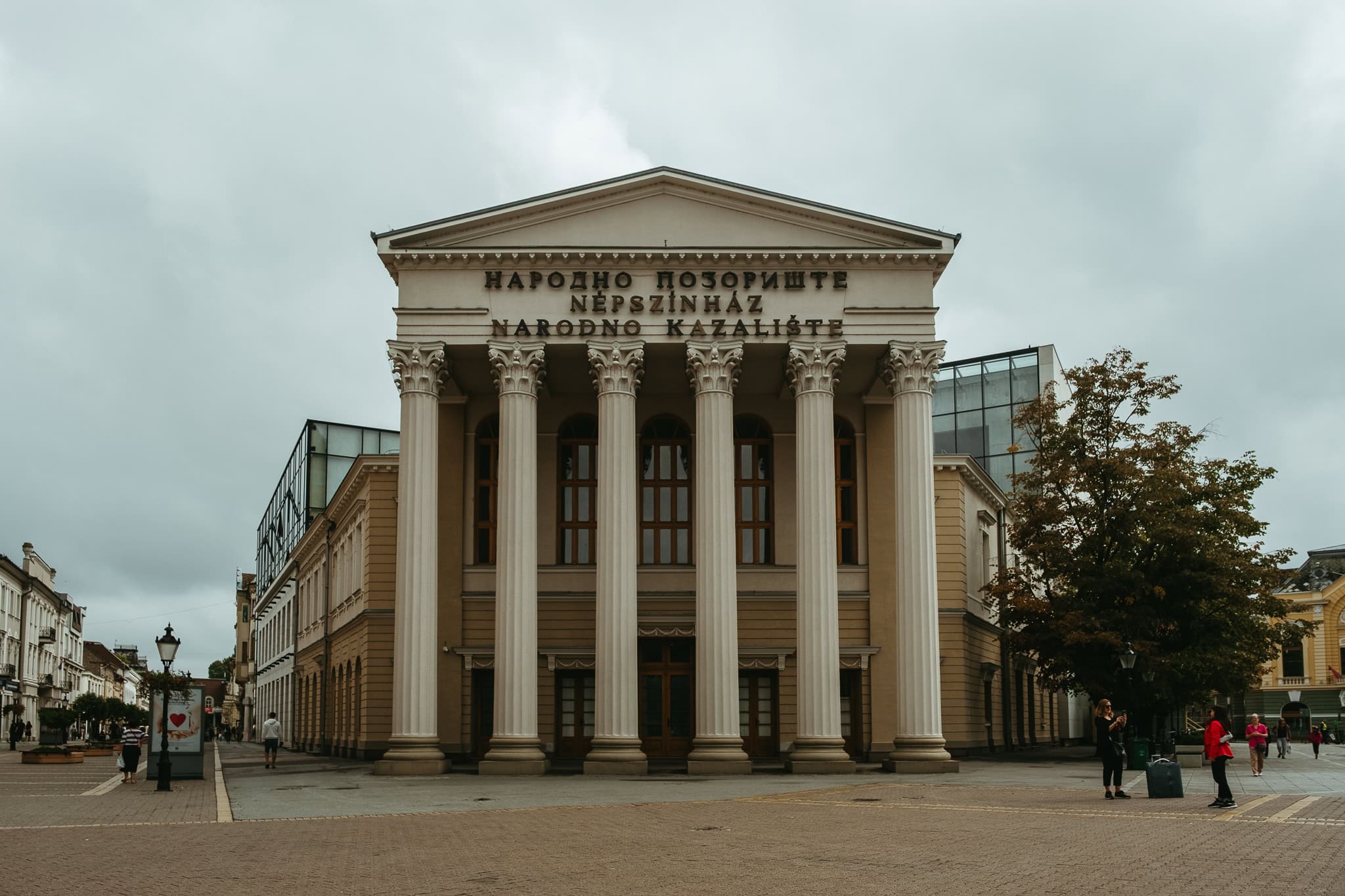
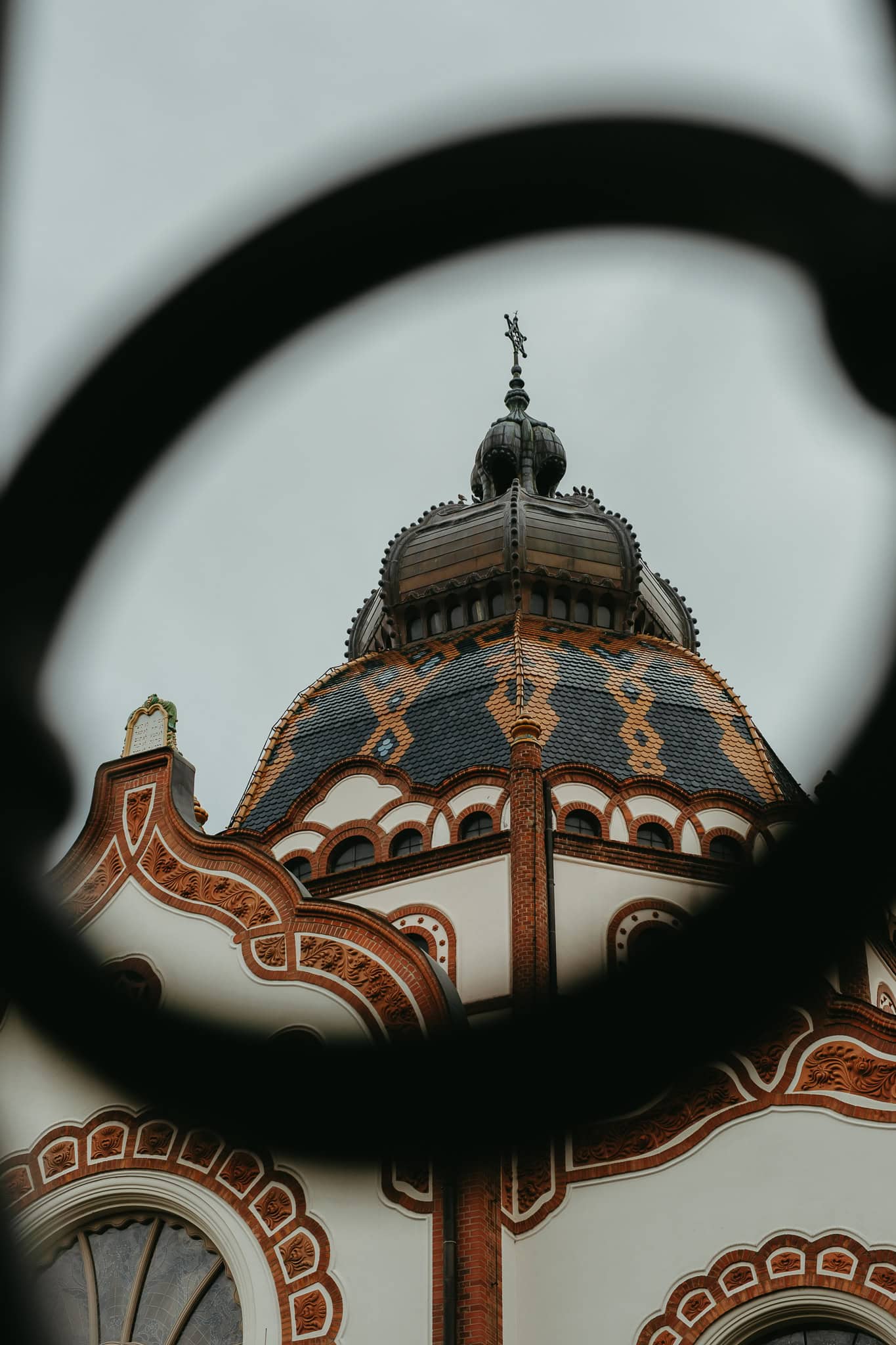
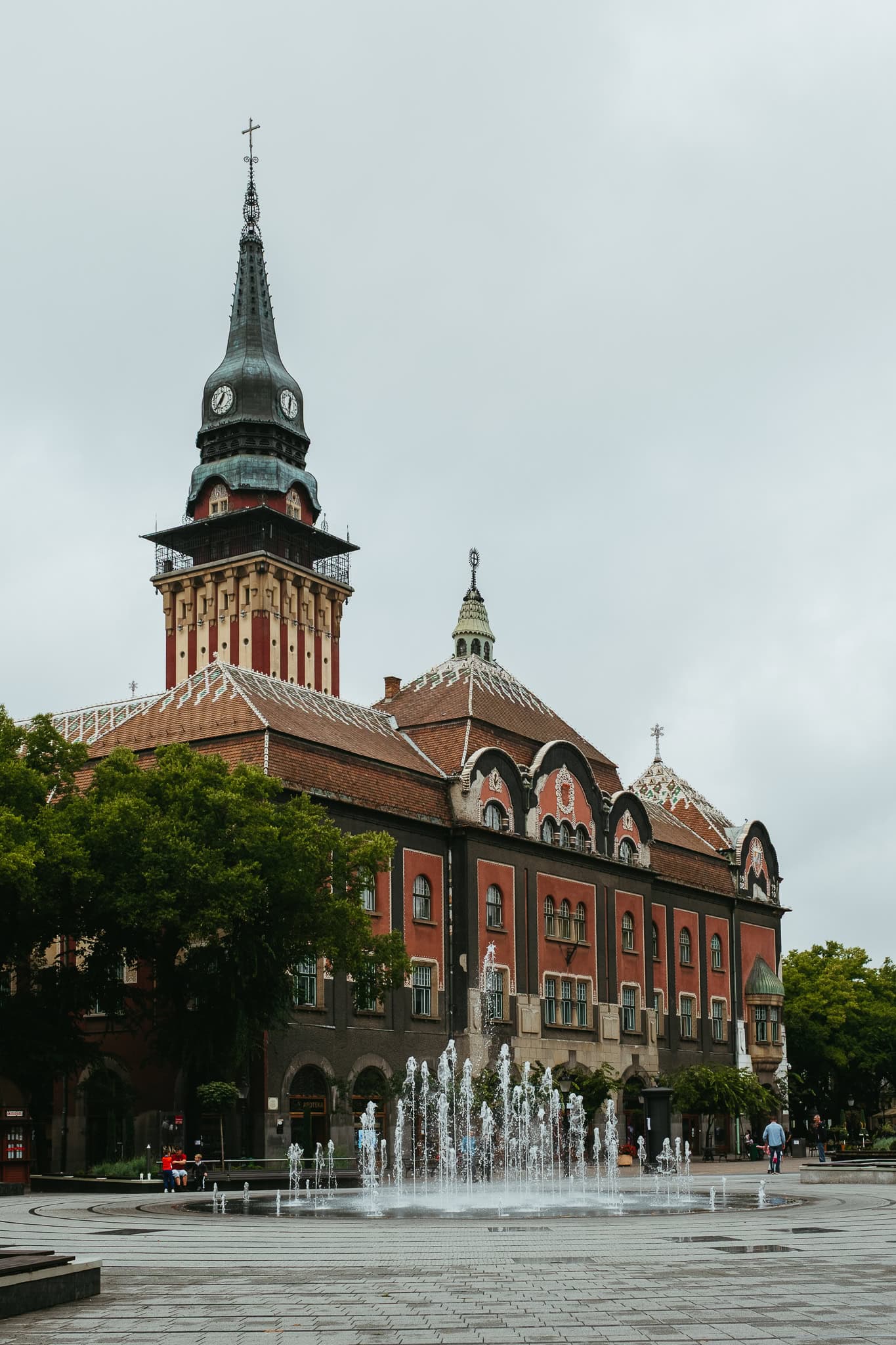
I also recommend climbing the tower at Subotica City Hall, which is available only at noon from Tuesday through Saturday (so try to avoid timing your visit to Subotica for Sunday or Monday, if possible!).
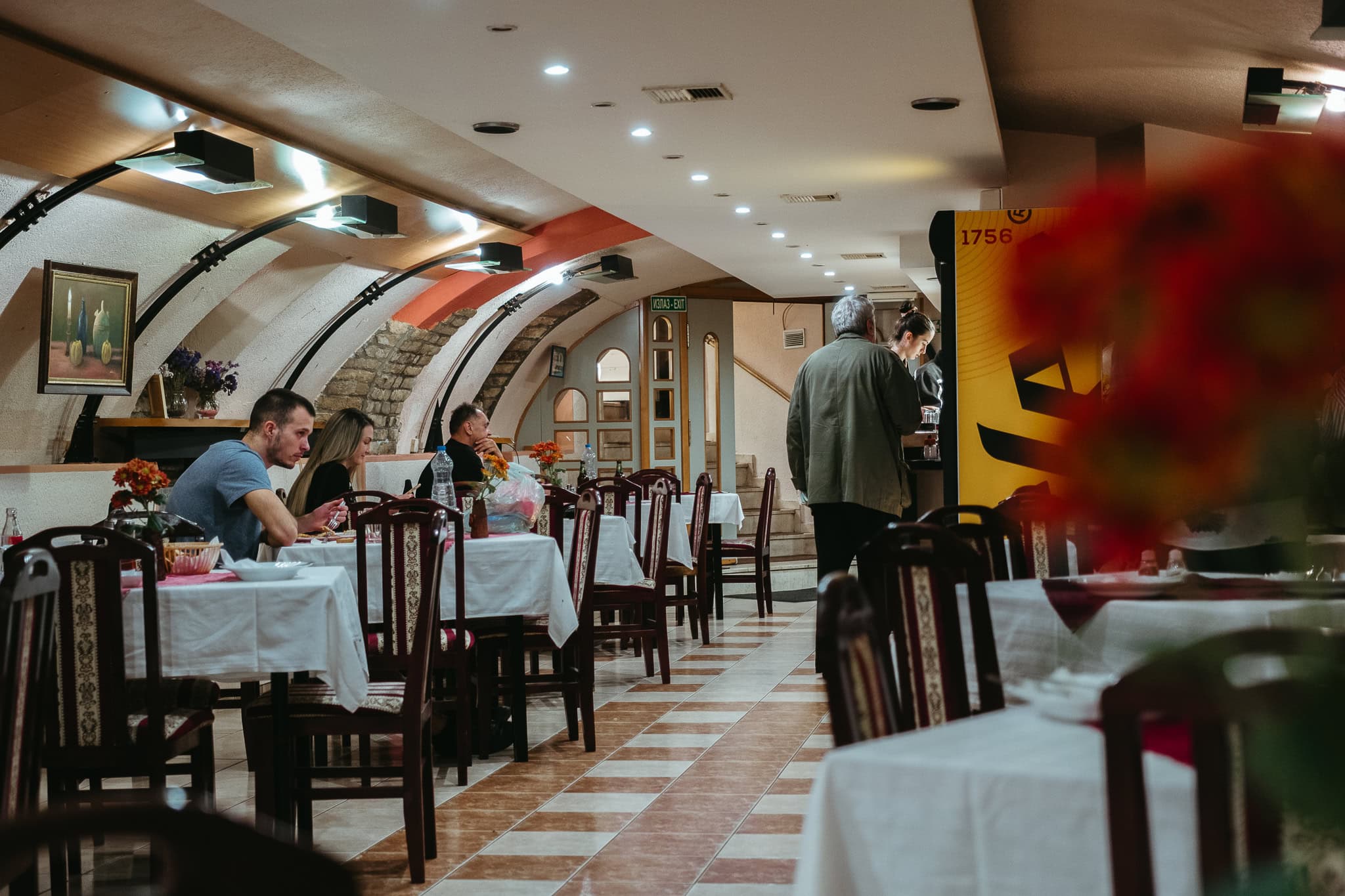
For food in Subotica, don’t miss Nada — an almost shockingly affordable spot serving up traditional Serbian food in a sort of cellar space.
DAYS 3-4 // Belgrade
On the morning of day 3, take the bus to Belgrade, which will be your home base for the remainder of your time in Serbia. (I recommend booking your bus ticket via Flix.) Spend the rest of day 3, as well as day 4, exploring Belgrade as you wish.
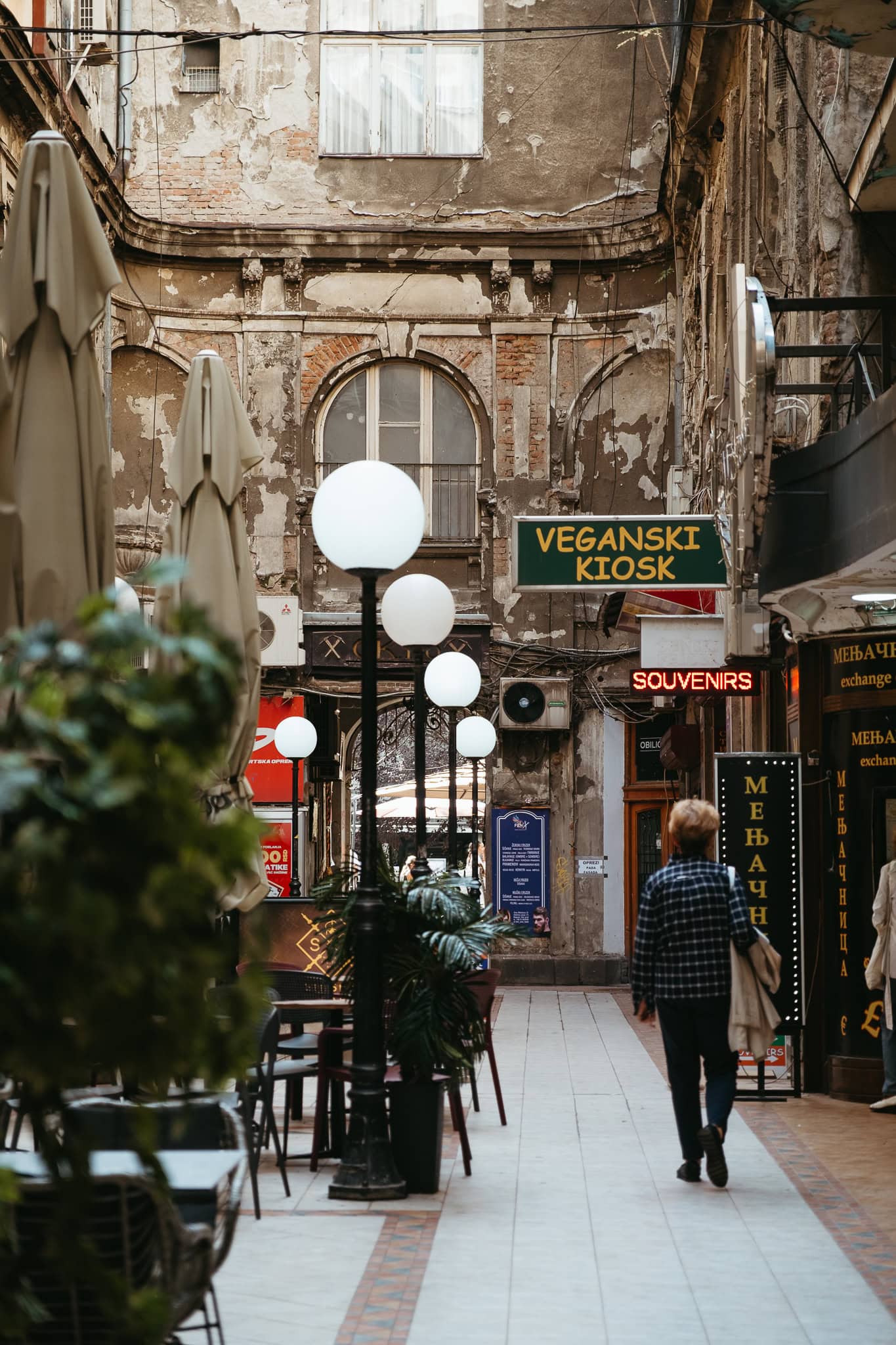
Belgrade is a complicated city and a bit hard to summarize. Though it’s one of the most historic cities in the Balkans, it doesn’t necessarily feel immensely historic in most places — in part, because it’s been the locus of so many bombings and battles over the centuries.
Still, today, an ancient fortress stands proudly over the confluence of the Danube and Sava rivers. Below it is a modern city known for its nightlife, its role as the capital of the former Yugoslavia (and all the complexities tied up in that recent history), its cafe culture, its immense Orthodox church, and more.
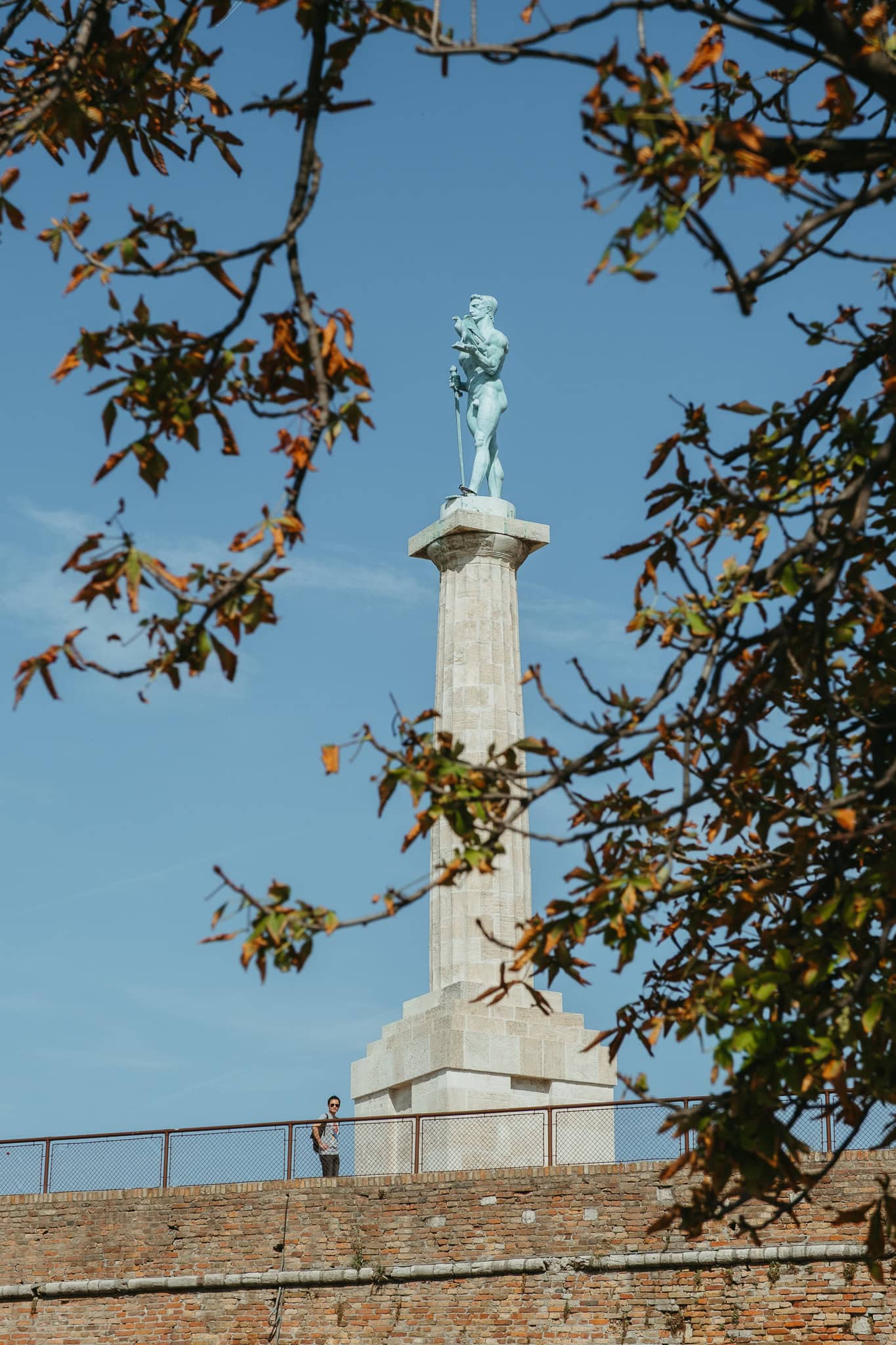
Top Things to Do in Belgrade
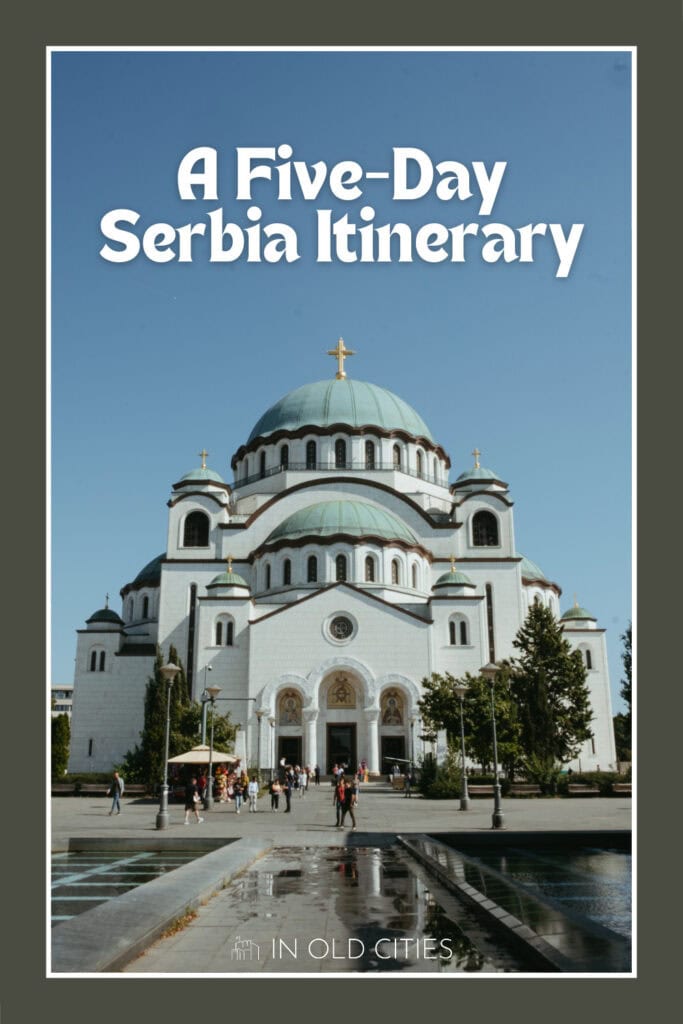
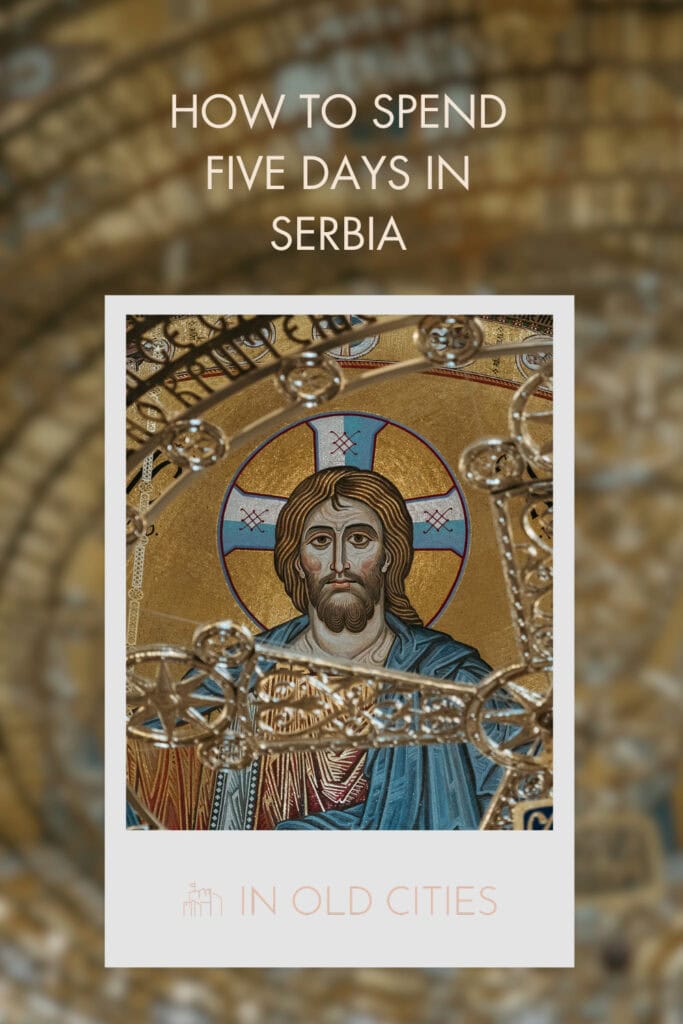
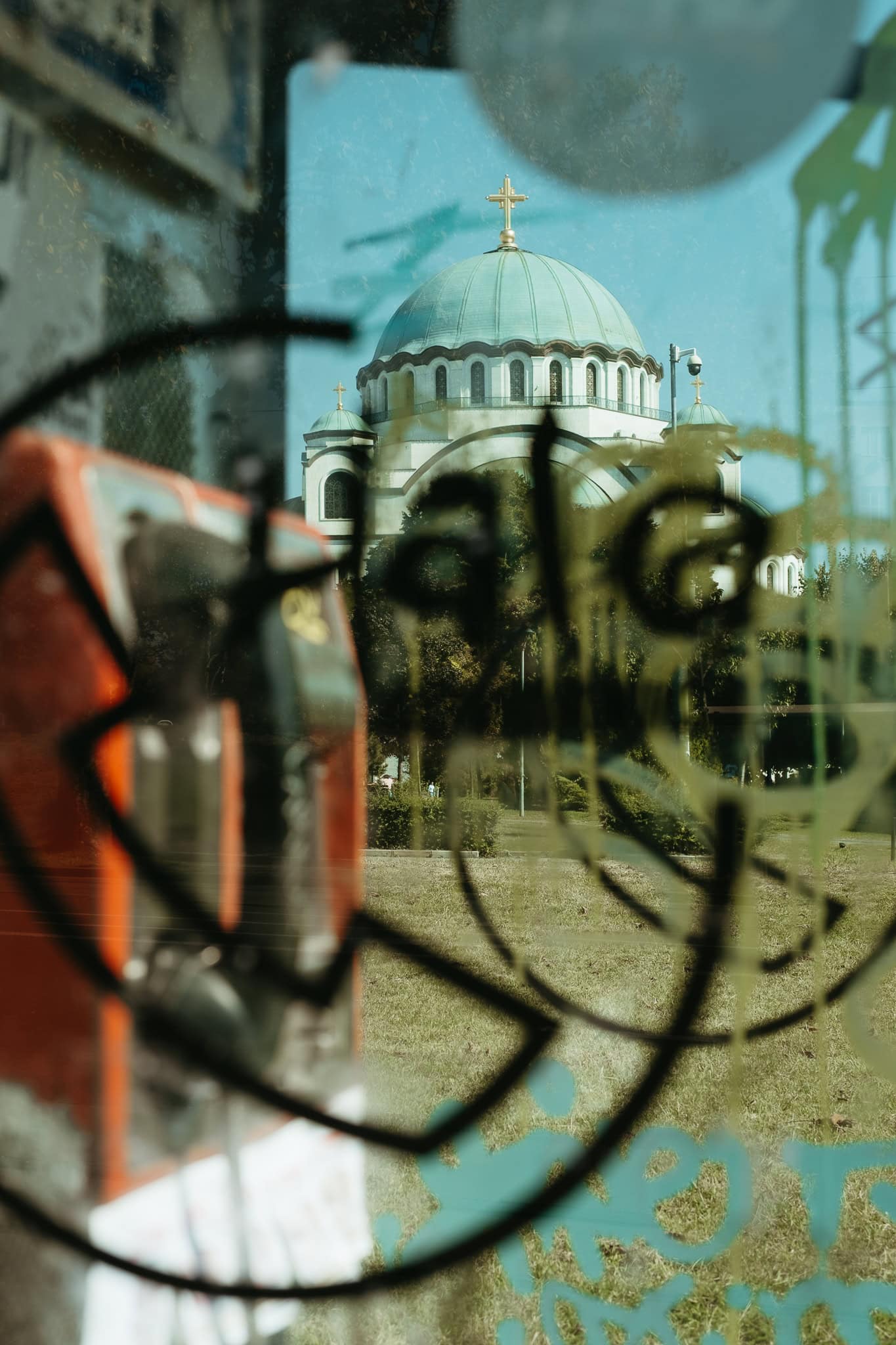
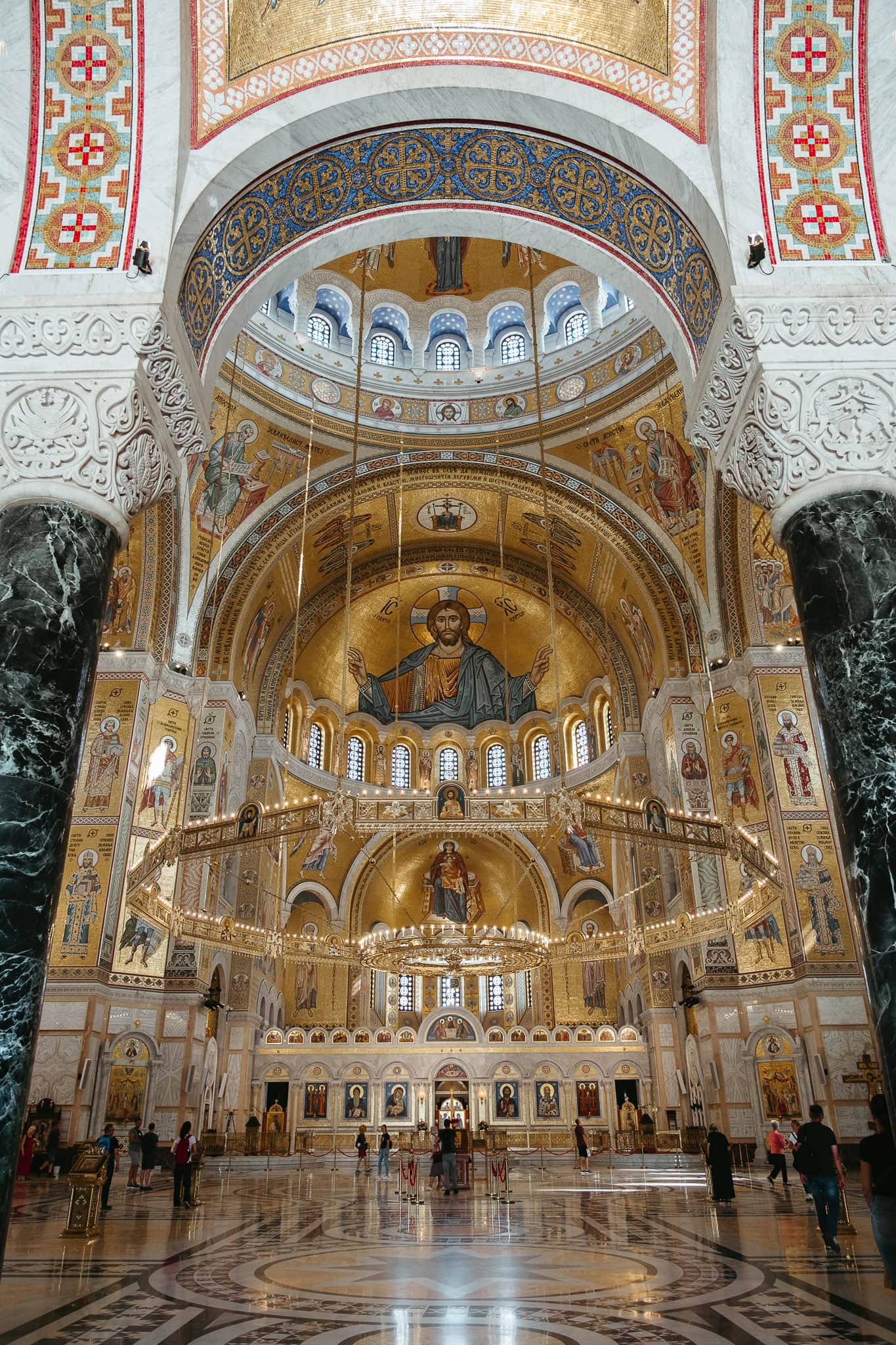
Visit the magnificent Church of Saint Sava, one of the largest Orthodox churches in the world. Admire the incredible golden mosaics lining the interior domes, which took decades to construct.
Explore the historic Belgrade Fortress (free to visit!), which dates back many centuries and has lovely views over the rivers.
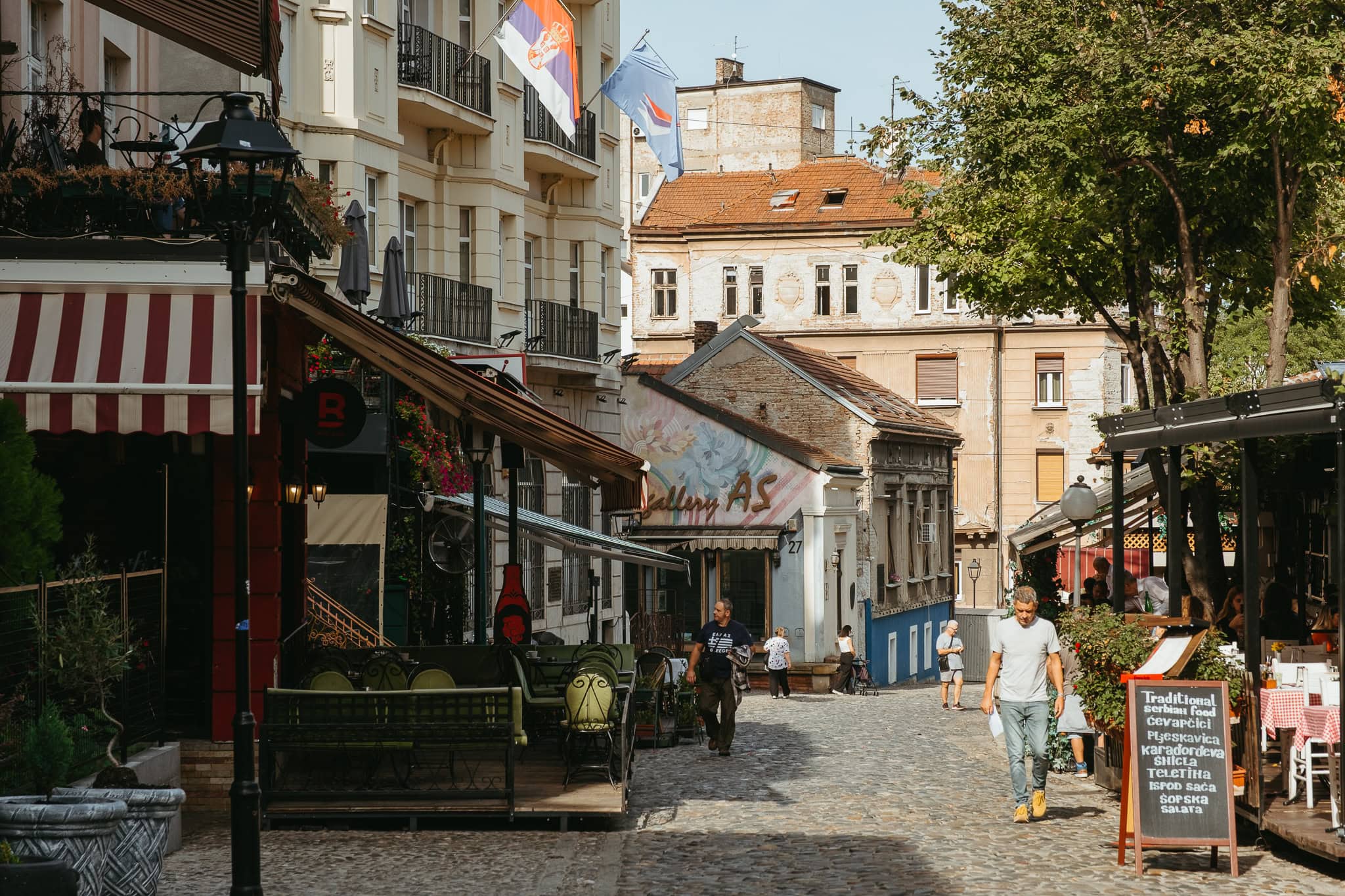
Wander through Skadarlija, Belgrade’s charming bohemian quarter.
Visit the Nikola Tesla Museum, a science museum dedicated to Tesla’s life and work (and the location of his urn).
Take a walking tour and discover some element of Belgrade’s past or present — the Brutalist architecture, the Old Town, or Serbian history, perhaps.
Learn about Balkan history at the Museum of Yugoslavia.
Where to Stay in Belgrade
I stayed at Omia, which was comfortable and convenient. It was fairly central, allowing me to walk everywhere I wanted to go in Belgrade (though note that my idea of what’s walkable is extremely expansive!), and it was clean and affordable. No complaints here!
For other lodging options in Belgrade, consider the following:
BUDGET | BG Exclusive Suites offers affordable, no-nonsense rooms in a convenient location.
COMFORT | The centrally located Hotel Moskva is set in a historic (and totally cool) Art Nouveau building.
LUXURY | The 5-star Bristol Belgrade gets rave reviews for its service, cleanliness, and beauty.
DAY 5 // Golubac
On your final day in Serbia, join a group tour from Belgrade to Golubac Fortress and more.
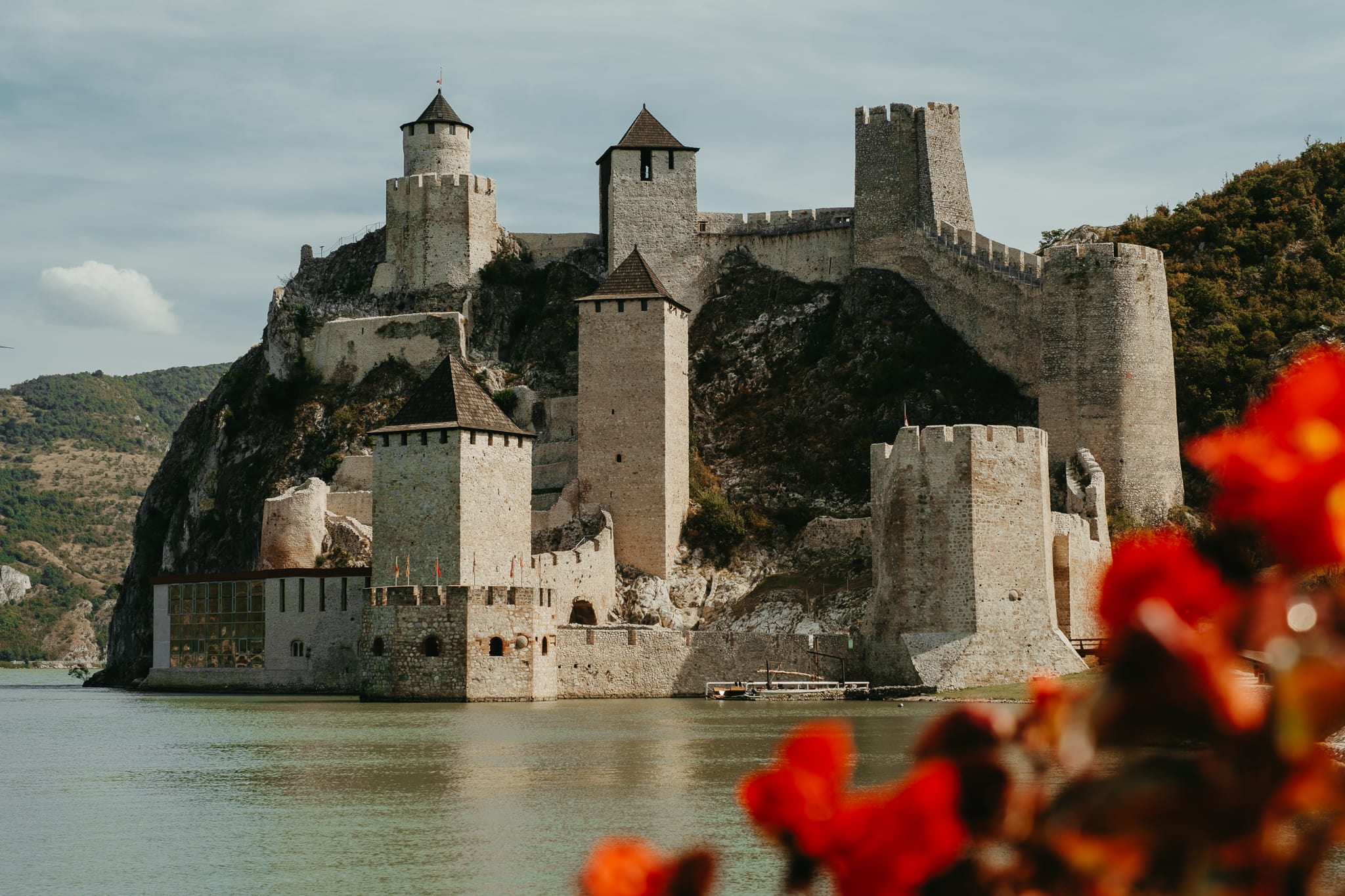
Golubac Fortress, which is set on the banks of the Danube just across the river from Romania, dates back to approximately the 14th century. Since then, it’s been the site of numerous battles between numerous forces and has been, variably, under the control of Austrians, Turks, Hungarians, Bulgarians, and Serbs.
Today, of course, Golubac is in Serbia, and it is the Serbians (with the help of EU funding) who reconstructed the fortress beginning in 2014. Though the bones of Golubac Fortress still stood strong, the reconstruction was a major effort — not least because, at the time, a traffic tunnel literally went through the fortress (and had to be permanently diverted).
The result of the reconstruction effort is that the fortress looks surprisingly clean and new, with primarily fresh-looking stone. Some folks preferred the site in its aged and weathered state, but personally, I think it’s quite striking!
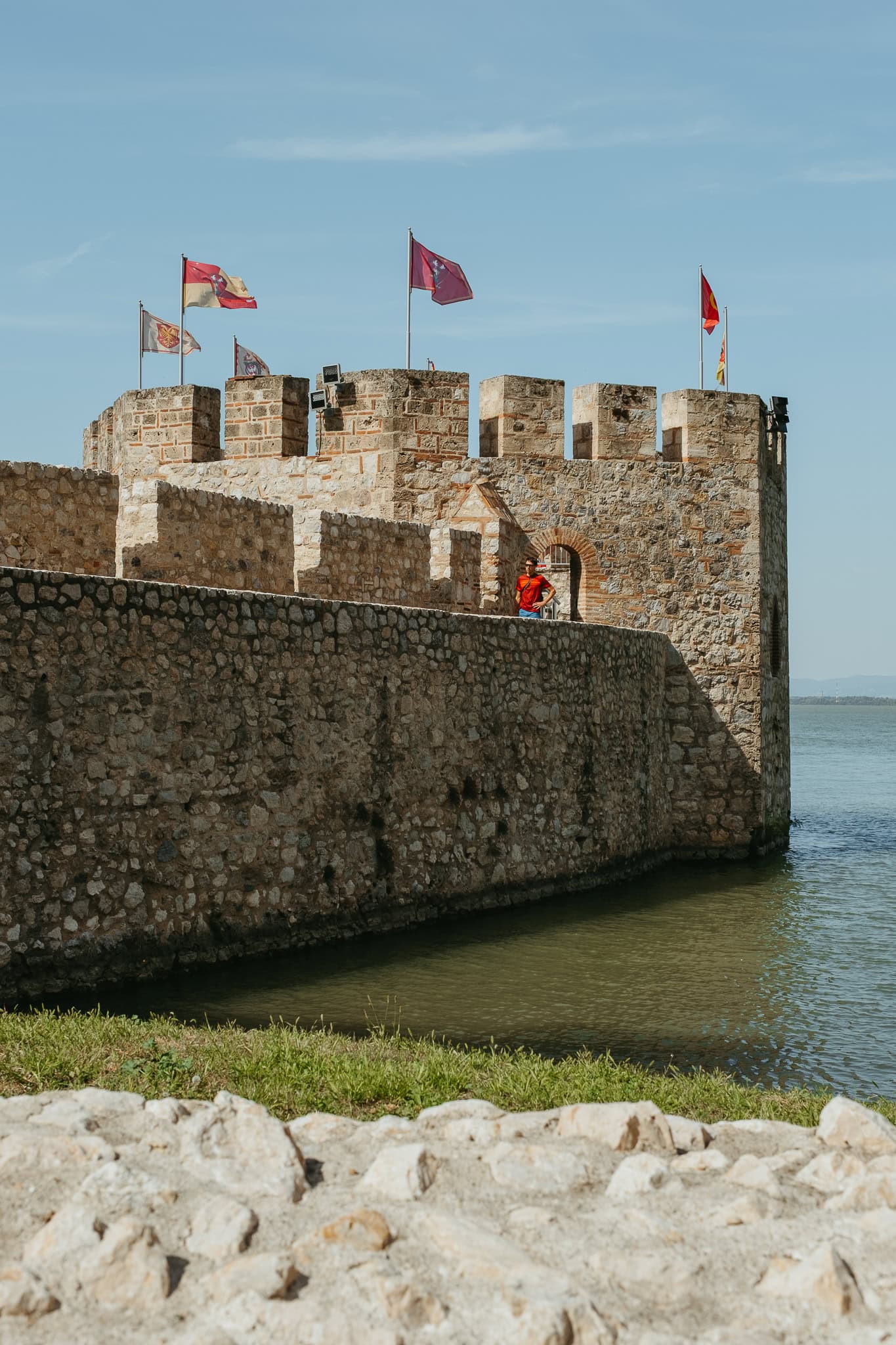
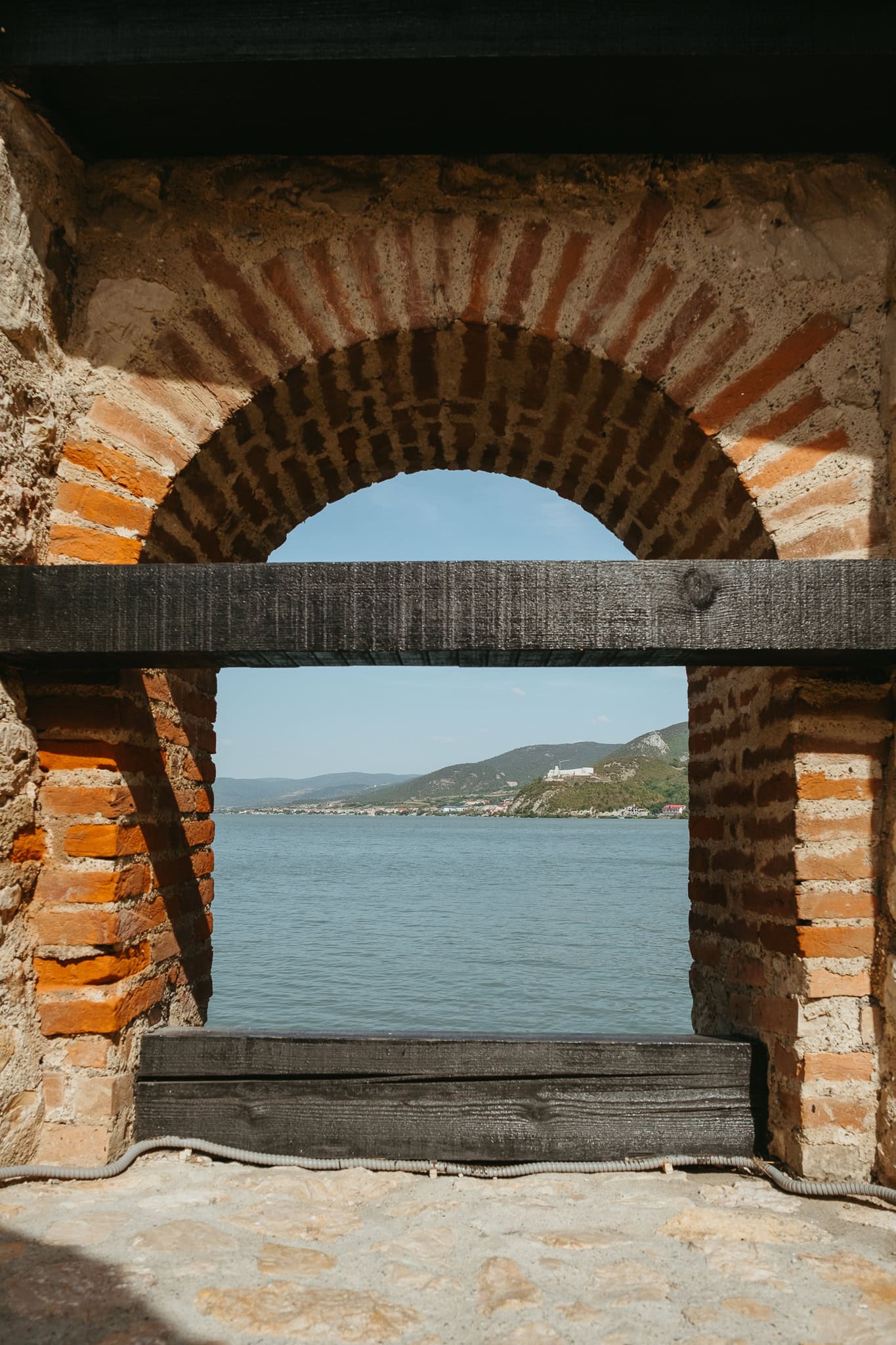
During the group tour to Golubac Fortress, you’ll have some time to explore the site on your own. Notably, it’s not possible to access some portions of the fortress (including the upper towers) without a particular type of ticket, specific clothing, and an alpine guide, Nonetheless, I thought the lower portions of the fortress were well worth seeing and found it easy to fill the allotted time at the site by checking out all the accessible rooms and towers.
The group tour to Golubac Fortress also stops at Lepenski Vir, a notable archaeological site that held human settlements as early as 9500 BC. You’ll learn about the discovery of the site, see some of the artifacts found there, and find out why it’s such an important and notable record of history.
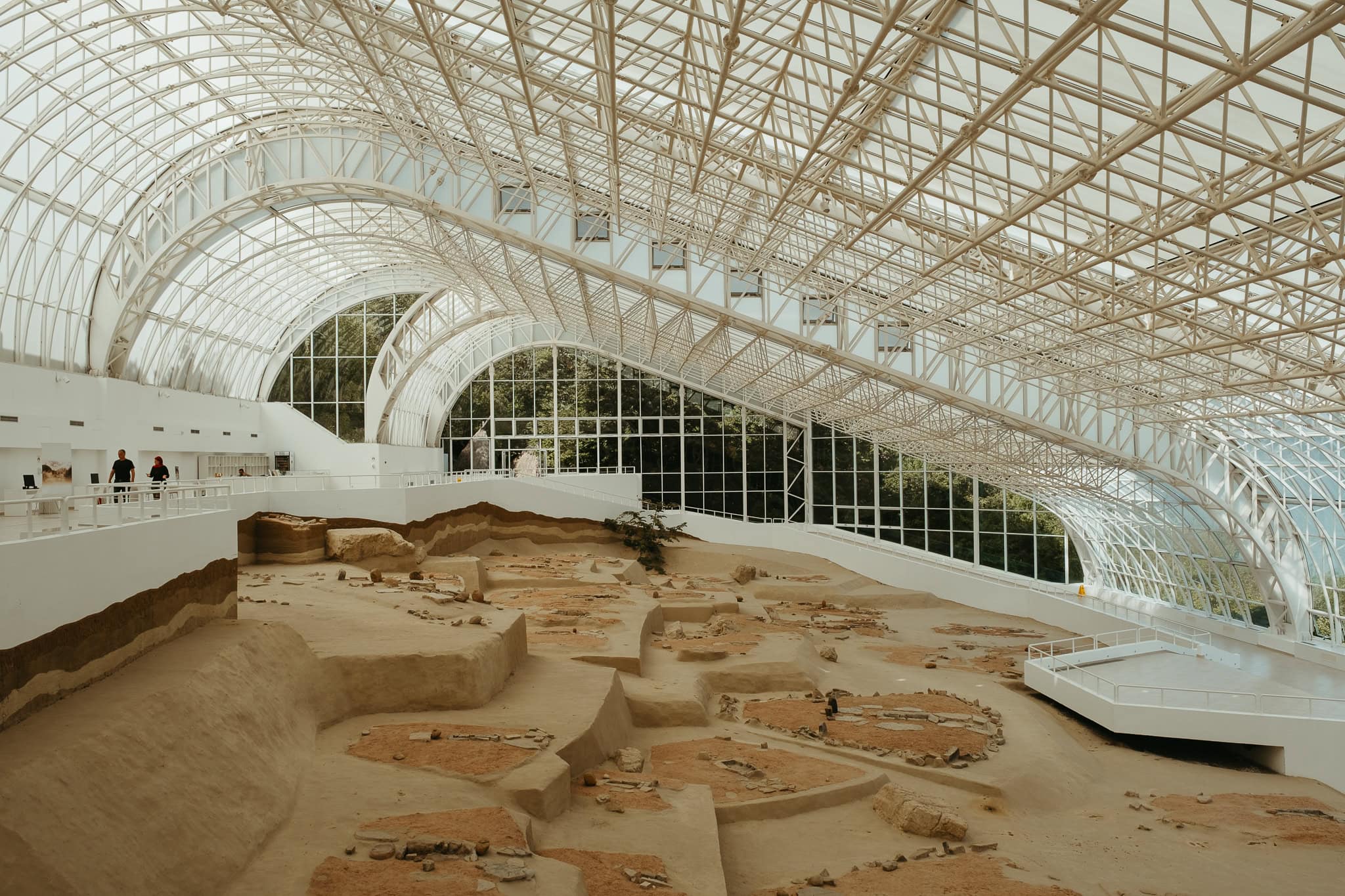
Check availability for the Golubac group tour here:
Serbia Itinerary: Interactive Map
Below is a map with the locations included in this itinerary. To use this map during your own trip to Serbia, click the star next to the map’s name (which saves the map to your account). You can then find and use the map from your Google Maps app by going to “Saved,” then “Maps.”
pin this post