How to Spend One Week in Banff // A Detailed Itinerary
On the southwestern edge of the province of Alberta, Banff National Park boasts an incredible array of impressive mountains, vibrant lakes, powerful waterfalls, and much more. Whether you’re a serious hiker who fills vacations with lots of day-long hikes, or you take a more casual approach to enjoying the outdoors, you’ll find plenty to love in Banff.
And it’s not just all about Banff: nearby Jasper National Park, Yoho National Park, and Kootenay National Park have incredible sights of their own.
With one week, you have plenty of time to see the best of Banff AND one or more of the other national parks within the Canadian Rockies. My family followed this itinerary during a recent trip to Canada, and we felt that we had a thorough and well-rounded experience in the Rockies!
Here are my recommendations for how to structure your one-week trip to Banff.
This post contains affiliate links. If you make a purchase or a booking through one of these links, I may receive a small commission at no extra cost to you. Thanks for supporting In Old Cities in this way!
One Week in Banff: The Basics
- Day 1: Johnston Canyon, wildlife drive
- Day 2: Lake Minnewanka & Stewart Canyon, Banff, Bow Falls
- Day 3: Moraine Lake, Takkakaw Falls, Wapta Falls, Emerald Lake & Hamilton Falls, Spiral Tunnels
- Day 4: Banff Gondola, Sulphur Mountain
- Day 5: Lake Louise & Lake Agnes, Canmore
- Day 6: Icefields Parkway, Herbert Lake, Athabasca Falls, Jasper
- Day 7: Maligne Canyon, Lake Annette, Sunwapta Falls, Peyto Lake
TIP: This map contains most of the recommendations in this blog post. To save it to your own Google Maps account, click the star next to the map’s name. You can then find and use the map from your Google Maps app by going to “Saved,” then “Maps.”
The best time to visit Banff
Banff is undoubtedly beautiful at any time of year, but as it’s located fairly far north, weather will impact what you’re able to do. If you want to see many of the locations described in this post, you’ll need to visit in the summer — certainly not before June 1, but ideally in July or August. Many destinations in the Canadian Rockies are open only from June through October (or even less).
In fact, during our visit in late June, one sight we hoped to visit (Takakkaw Falls) was not yet open for the year. Additionally, family friends of ours visited the area just a few weeks before us, in late May, and some of Banff’s best sights — including Moraine Lake — were still closed from the winter.
Of course, if you’re interested in skiing and other winter activities, winter would be a great time to visit Banff.
How to get to Banff
Unless you live within driving distance, the easiest way to reach Banff and the other national parks in the Canadian Rockies is to fly into Calgary.
This itinerary requires extensive driving — you will need a car. I recommend renting one at the Calgary airport and driving it to your lodging in the Rockies. The drive is about 90 minutes to the town of Banff (a little less to Canmore). It’s a beautiful drive; I very much enjoyed getting my first sweeping views of the Rockies in front of us.
Be sure to look at rental cars well in advance, particularly if you are traveling with more than 4 people. Even months in advance, demand was so high for rental cars that our family of 6 was forced to book 2 separate small cars because no large vehicles were available with any rental agency. (Thankfully, a van turned out to be available when we arrived at the airport!)
Where to stay in Banff
In my view, you have at least three good options for areas to stay.
The first is the town of Banff itself. Banff is a very cute little tourist town within Banff National Park. Lodging tends to be more expensive there, but it would be very convenient to stay within walking distance of so many shops and restaurants.
If you have a (very) substantial lodging budget, check out the historic Fairmont Banff Springs hotel (and then send me photos so I can live vicariously through you).
Another town with lots of lodging is Canmore, which is just a few miles away from Banff. Canmore isn’t necessarily picturesque like Banff is (though it’s also surrounded by beautiful mountains!), but it does have restaurants, a large grocery store, and other good infrastructure. We had fabulous meals at Spice Hut and Thai House.
That said, we actually stayed a bit outside Canmore, in the tiny area of Dead Man’s Flats. Specifically, we rented an apartment at the Copperstone Resort, which was excellent.
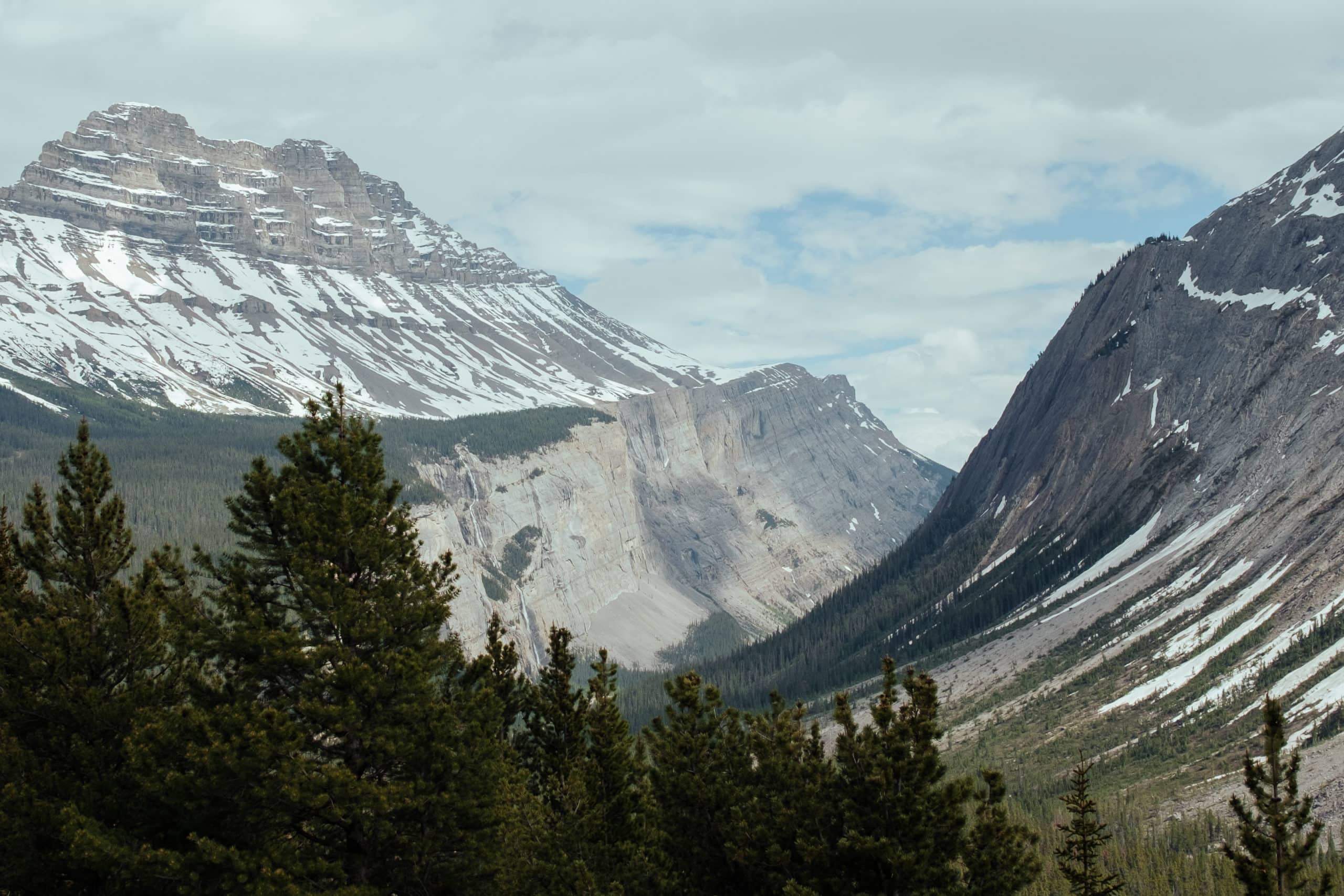
One more thing…
Many of the destinations on this itinerary will require a Parks Canada pass to access. A pass is valid for one year, and costs $75.25 per adult, or $151.25 per vehicle. You can order one in advance, or your lodging may provide one.
One-Week Banff Itinerary
Here’s the perfect day-by-day itinerary for one week in Banff.
Day 1
Johnston Canyon
Begin your week in the Canadian Rockies with an easy and very enjoyable hike through Johnston Canyon. You’ll walk up stairs and along pathways that cling to the canyon walls, passing two different waterfalls.
Johnston Canyon is a 5.2 kilometer (or 3.2 mile) round-trip hike if you turn around at the second waterfall. You can expect it to take about 90 minutes to 2 hours (If you like, you can choose to walk another 3 kilometers to colorful mineral pools called the Ink Pots.)
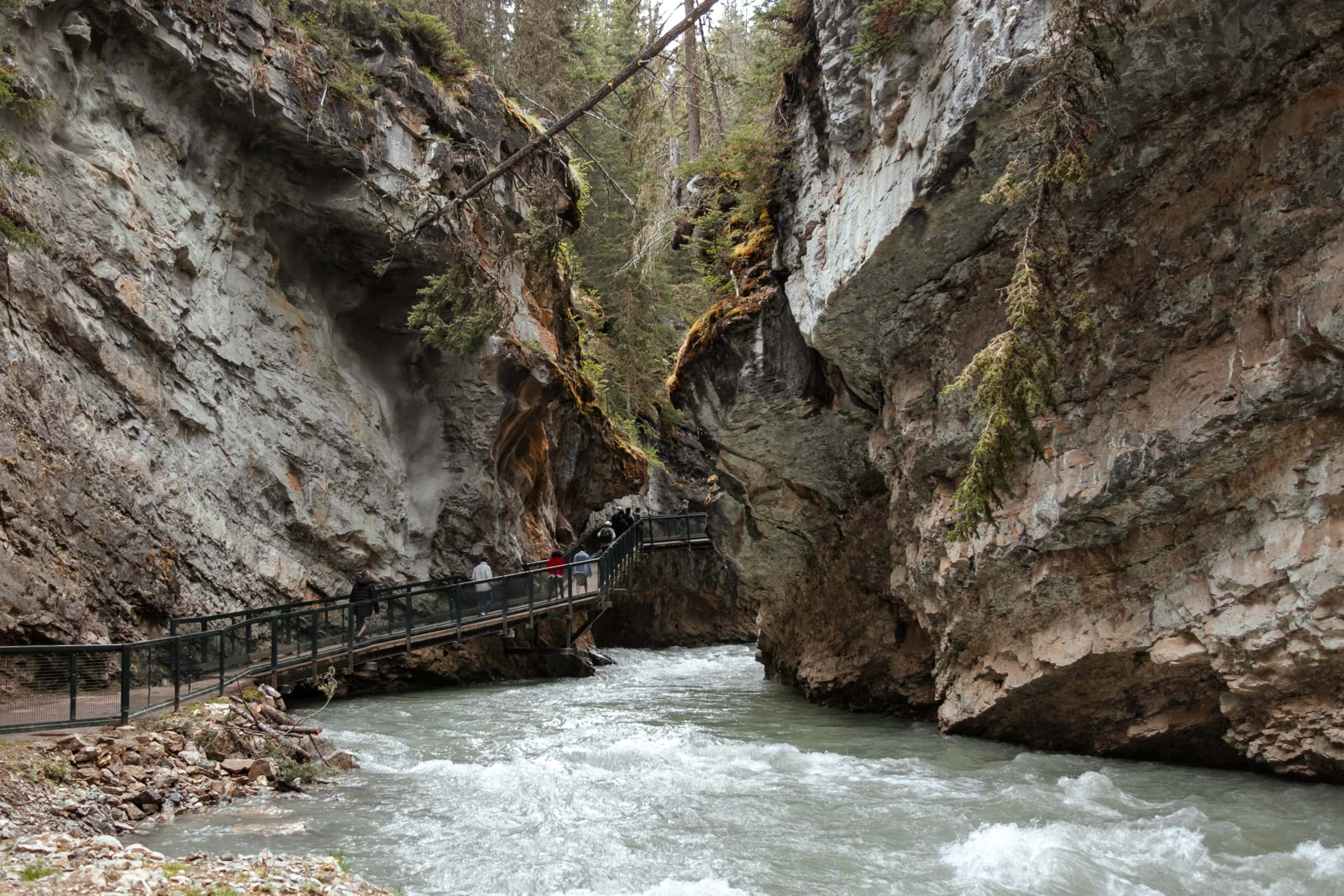

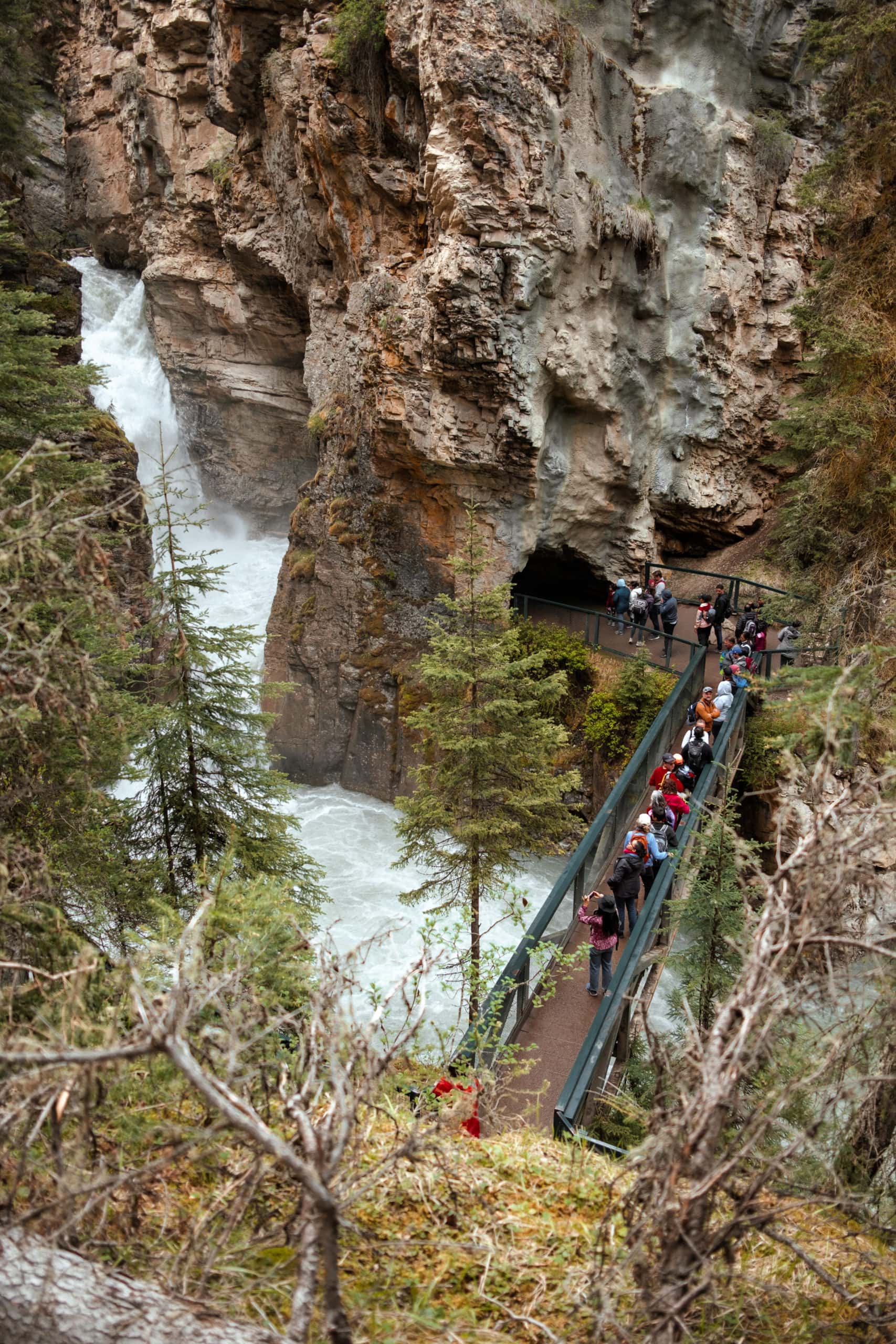
I recommend arriving at Johnston Canyon in the morning, as the parking lot may fill up due to the canyon’s popularity. In late June, we arrived at about 11 a.m. and were able to park in the lot — but later in the week, we drove past in the afternoon and cars were being turned away because the lot was full.
Read more about hiking Johnston Canyon here.
Wildlife Drive
You’ll likely see some bears, elk, and more by chance during your time in the Canadian Rockies (keep an eye out for wildlife crossing bridges over the highways!), but you can increase your chances by taking a wildlife drive through less populated roads in in the evening.
Here’s the route we took:
On this drive, we saw a black bear, elk, deer, bighorn sheep (standing right in the middle of the road, licking salt), prairie dogs, and more — not to mention, of course, the incredible mountains and lakes all around us.
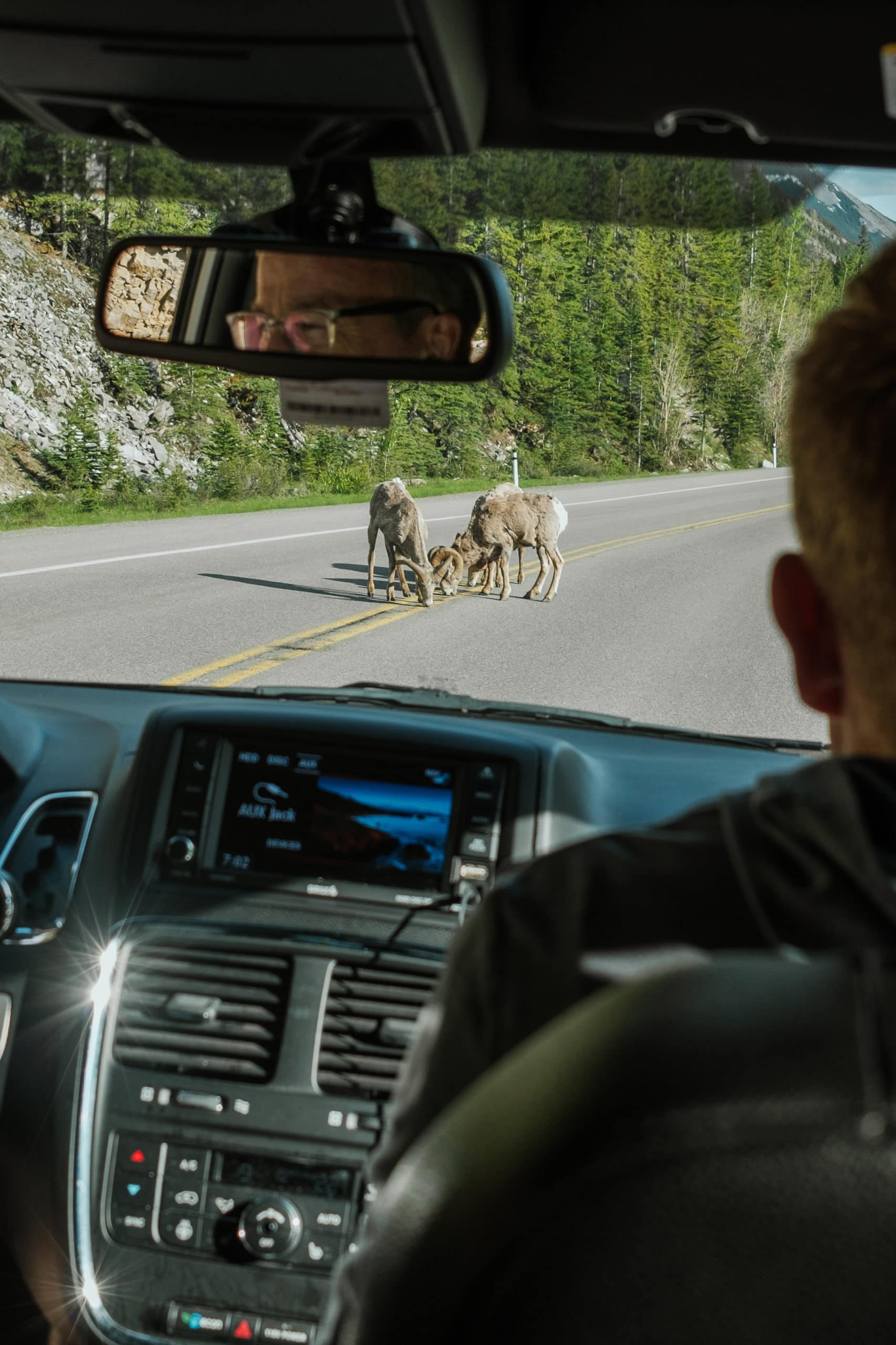
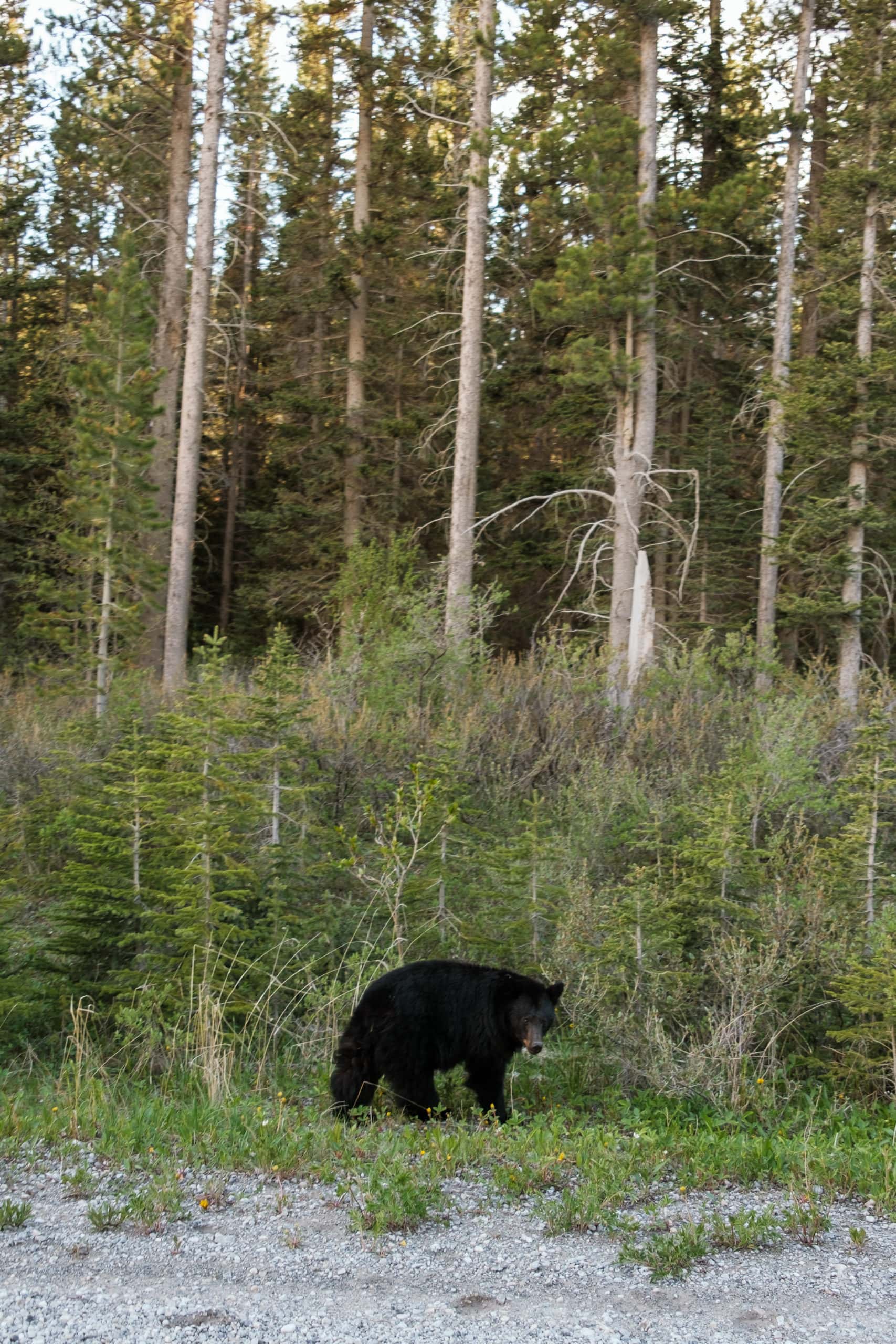
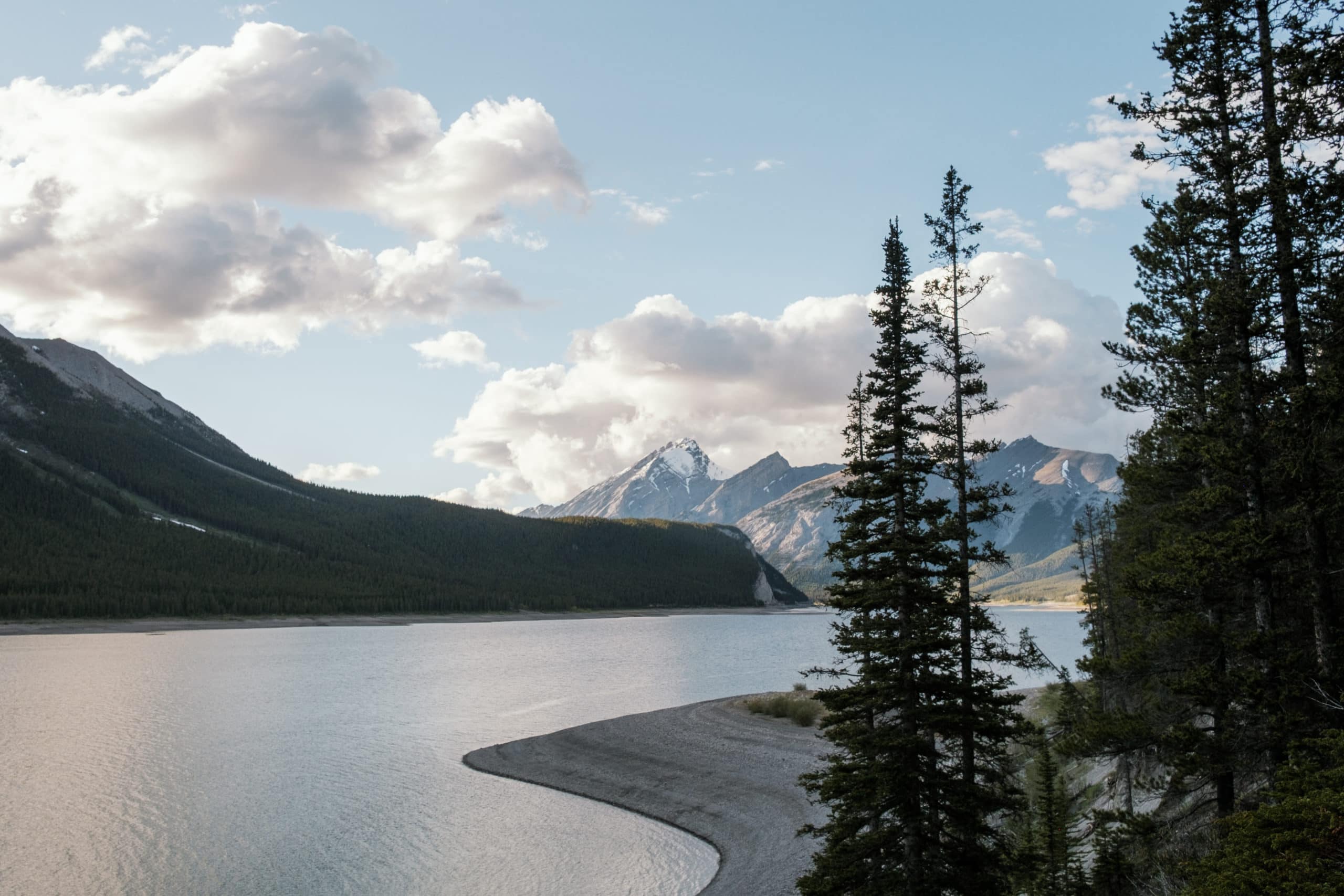
This particular route took us about 2 hours, which included lots of pauses for photos and a brief detour to a viewpoint over Lower Kananaskis Lake, which we passed along the way.
If you copy our route, be aware that parts of it are not paved. Also, please exercise caution if you encounter wildlife. Remain in your car to take photos, and drive cautiously when passing animals. When we saw the sheep, we stopped at a reasonable distance. Other cars did the same or drove past at a slow crawl. But one car sped right past, flying by just a few feet from the sheep. This, understandably, totally freaked out the animals, who started running and could have easily been hit. Don’t be that driver.
Day 2
Lake Minnewanka & STEWART CANYON
At 13 miles (or 21 kilometers) long, the impressive Lake Minnewanka offers enough hiking, boating, and cycling opportunities to fill a full day if you wanted. With just a morning at the lake, however, make sure to spend some time on the rocky trail that follows the side of the lake. The views are gorgeous, and if you follow the trail into the woods, you’ll reach a wooden bridge over Stewart Canyon.
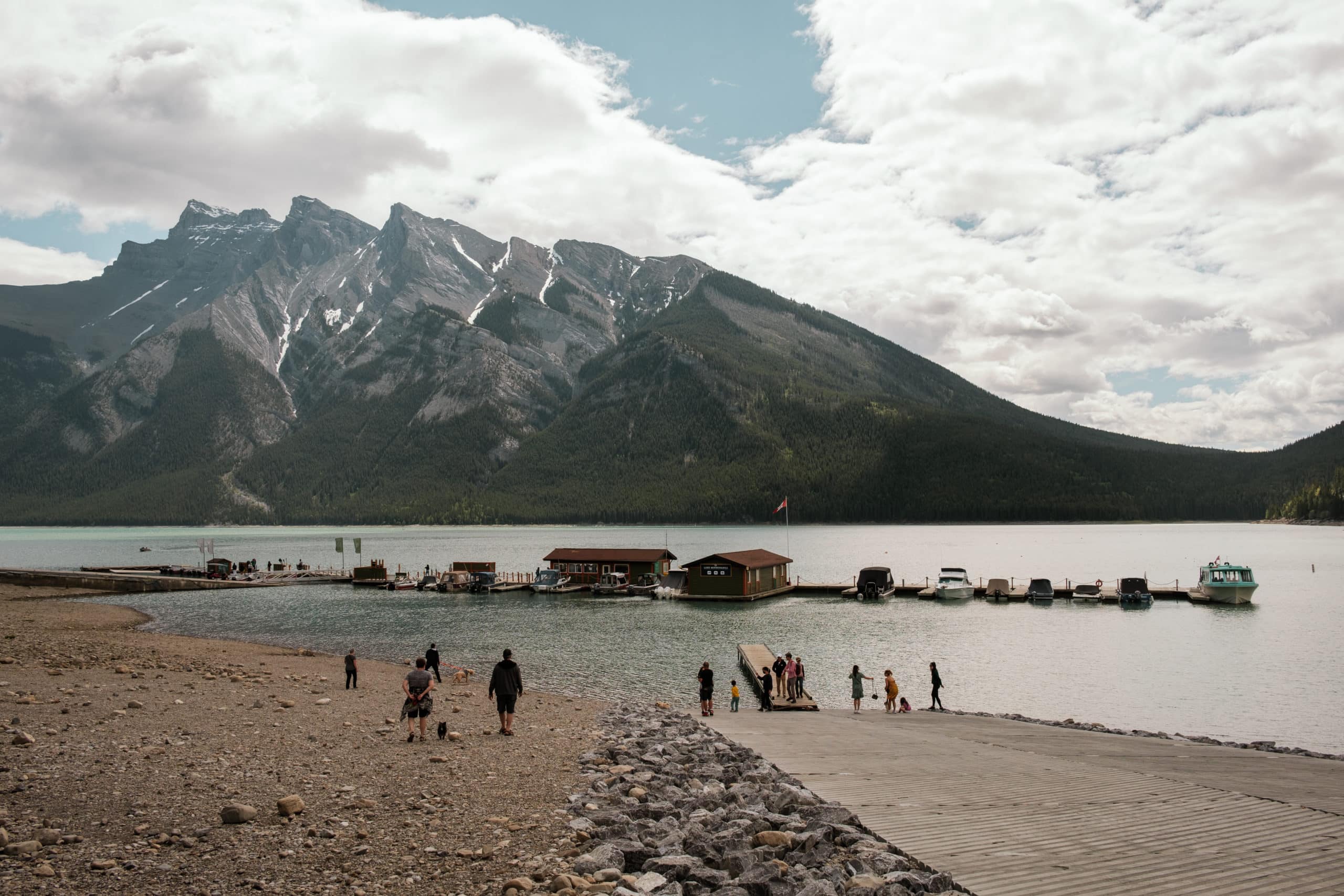
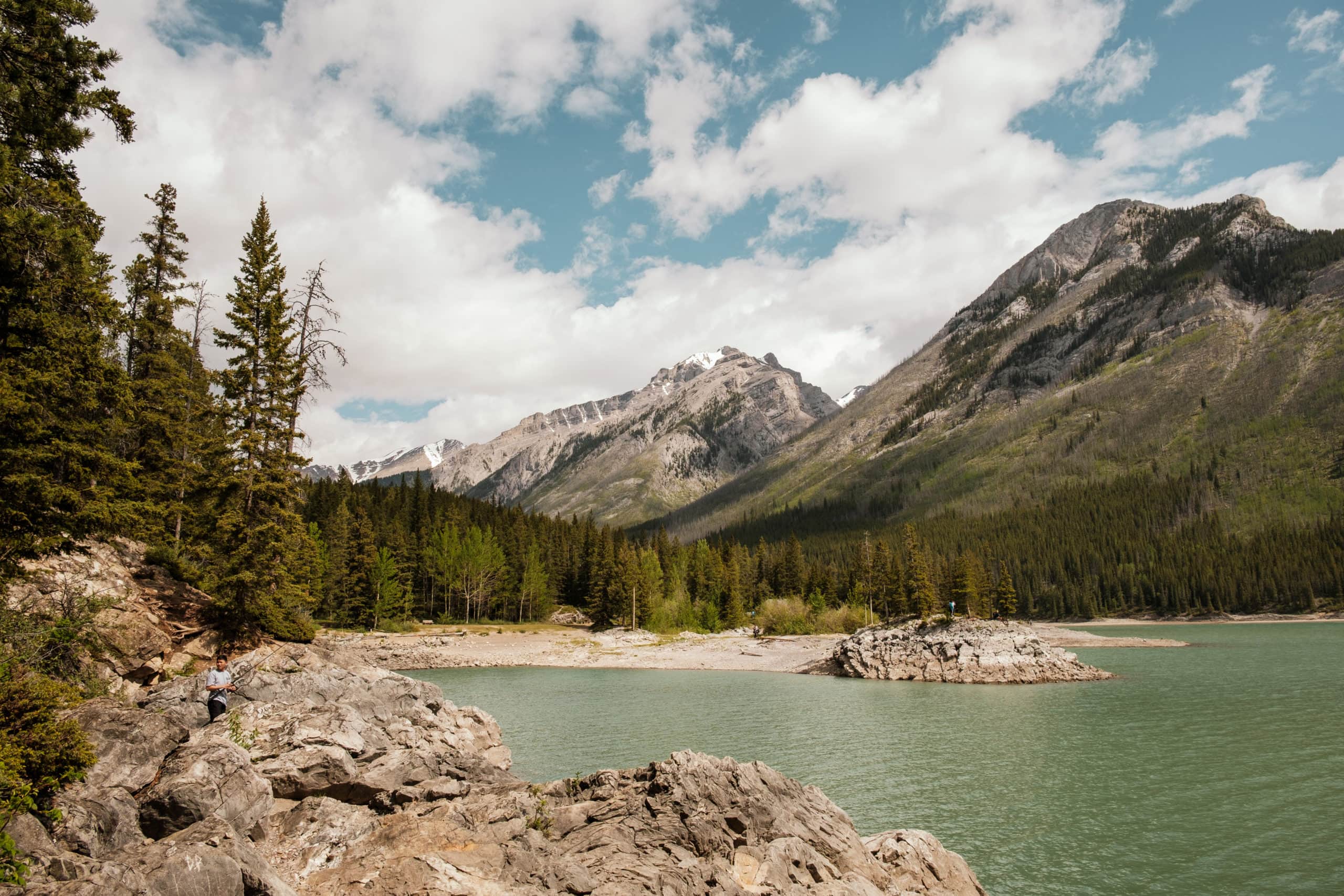
Read more about easy hiking at Lake Minnewanka here.
Banff
From Lake Minnewanka, drive just a few miles into the town of Banff.
While Banff is quite a touristy little town, it’s picturesque.
The town’s main drag, Banff Avenue, points to the imposing Cascade Mountain, which fills the background of most views. Along pedestrian-only blocks on Banff Avenue and some of the side streets, charming buildings are filled with plenty of stores and restaurants. (We liked The Eddie Burger + Bar for food, and also heard good things about Tooloulous from friends who loved their brunch.)

Besides walking, shopping, and people-watching, I enjoyed the Treasures of Banff Clue Solving Adventure. This is, essentially, a scavenger hunt that leads you all around town, giving you clues that you need to solve using real sights around town. (The clues are delivered and solved via a phone app you will need to download if you book this experience.)
If you like escape rooms and other puzzles, you might enjoy this. It’s not perfect — we never did understand the reasoning behind one of the clues, and thought another had two equally correct answers — but it’s a fun way to see details in the town you might otherwise have missed. It costs $59 per team. (They recommend that you complete it in teams of 2 to 5, but you CAN do it solo or with more than 5 people — we did it with 6.)
My mom also visited the Cascades of Time Garden. She wasn’t overly impressed (and I trust her judgment when it comes to gardens!), but it is free and easy to reach, so you might consider checking it out if you wind up with some time to kill.
Heads up: we found free street parking on Spray Avenue, just across the river from the main part of town. There are also several parking lots in town, though they may have time limits.
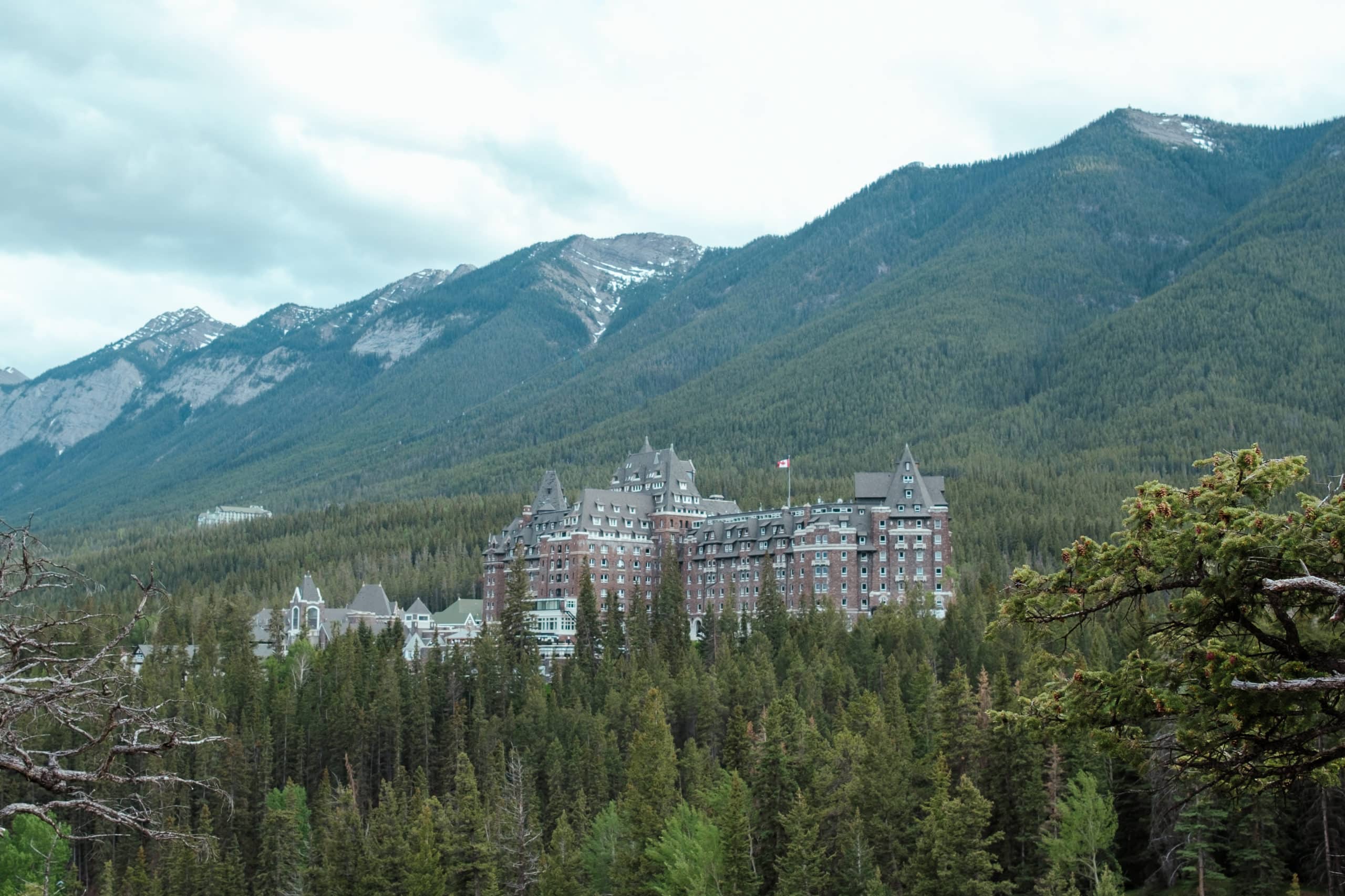
While you’re in town, make sure to swing by the massive Fairmont Banff Springs hotel, which is perched on a mountain nearby and can be visible from miles away. While this place is out of most travelers’ budgets, you’re allowed to walk inside and check out some parts of the building, even if you’re not a guest there (signs will let you know where only guests are permitted).
Indeed, this is what we did. Emboldened by a local we met, who told us to “walk in there like you belong,” we walked in there and did our best impression of belonging. (I don’t think our best was very good, but hey — they didn’t kick us out!)
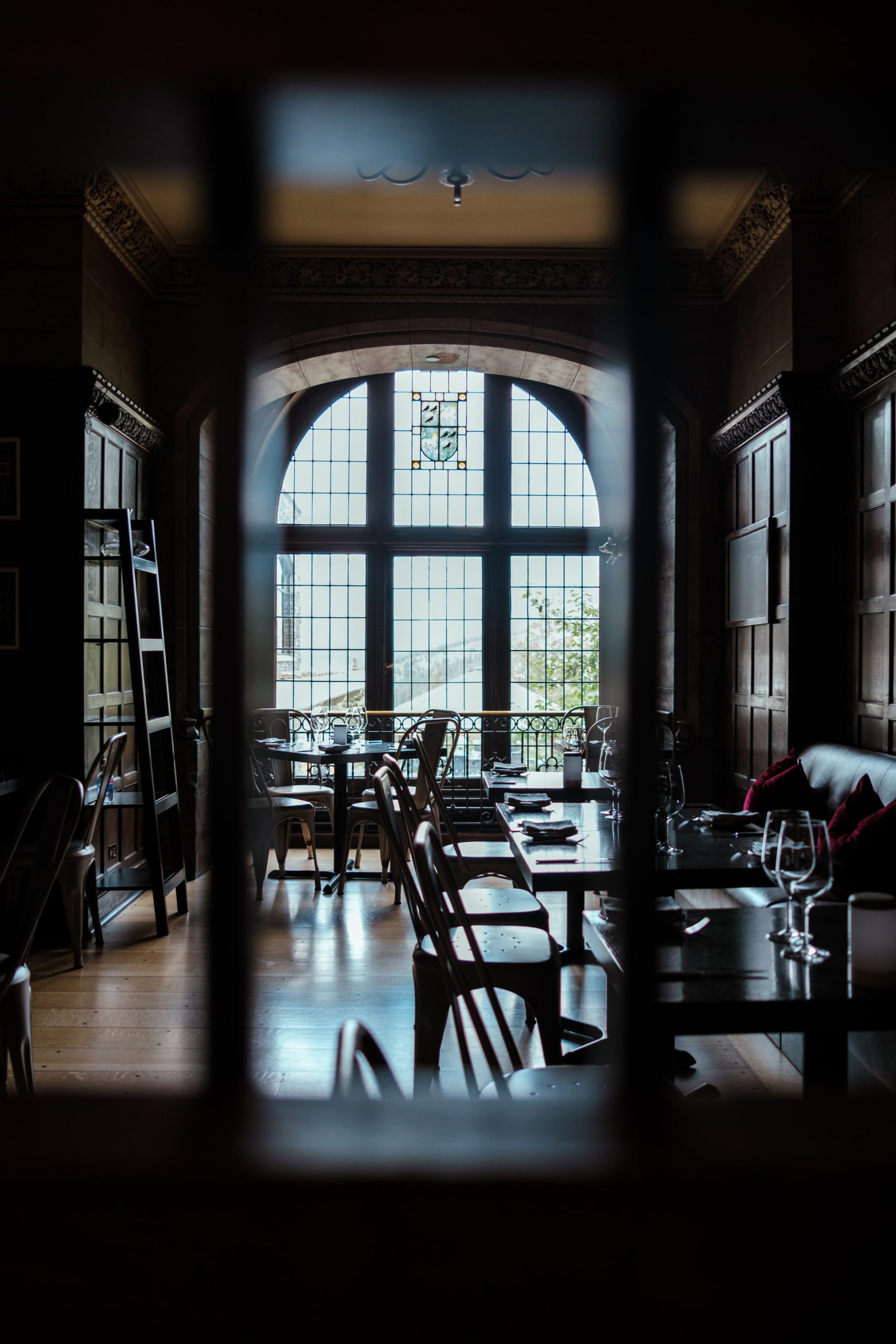

The building is gorgeous, and let me repeat — massive. The hotel first opened in the late 1800s, as one of Canada’s grand railway hotels, though the present building only dates to the 1920s due to a fire that destroyed the original structure.
Today, in additional to hundreds of rooms, the hotel holds restaurants, ballrooms, bars, very fancy stores, and more.
Bow Falls
While you’re in Banff, take a few minutes to check out Bow Falls. While it’s not the grandest waterfall in the Canadian Rockies (to say the least), the walk to the viewpoint is quick and easy.
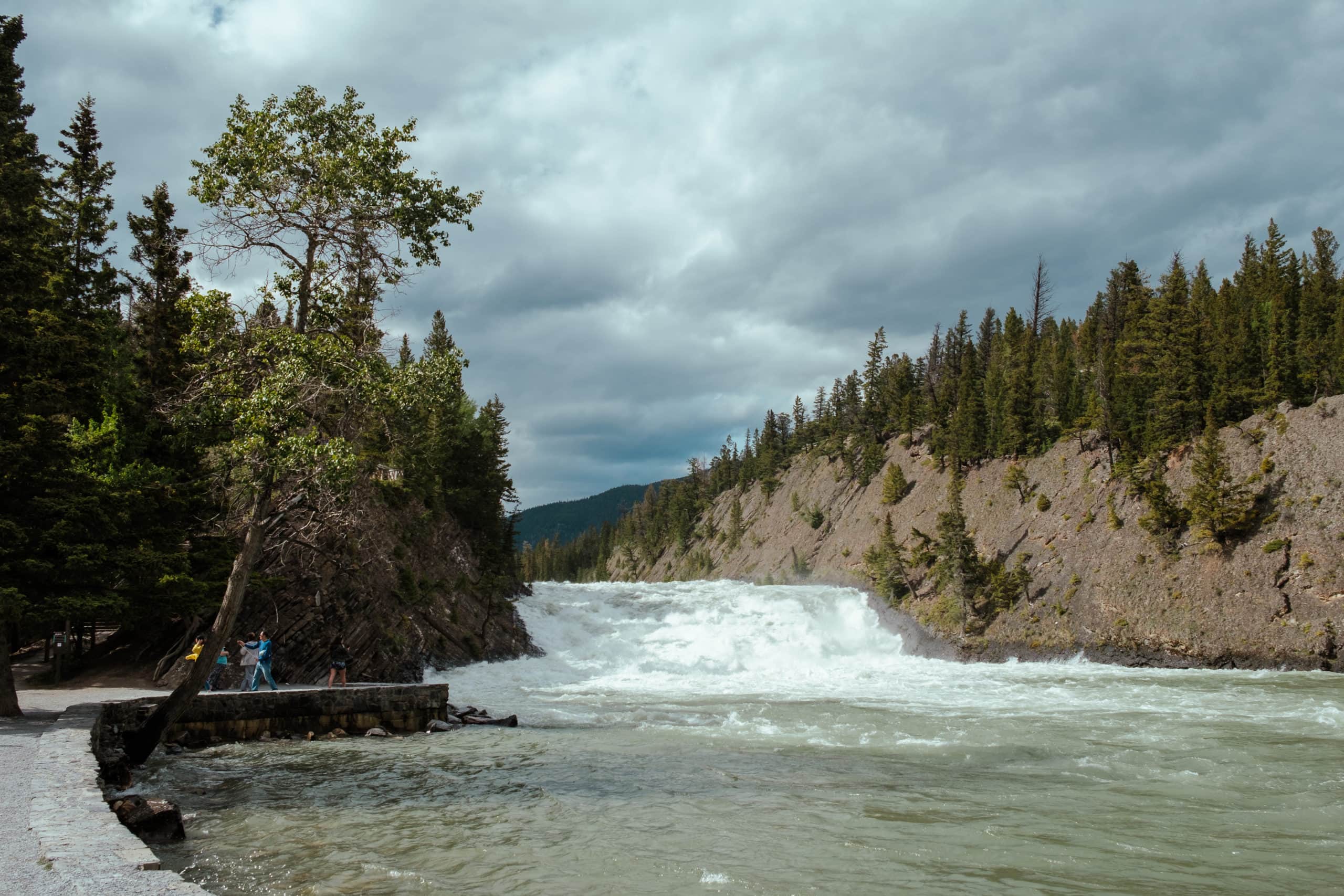
You can walk along either side of Bow River. To see Bow Falls, walk on the south. If you walk on the northern side, with a higher trail, you’ll get a great view of the Fairmont hotel.
For more on walking to Bow Falls, read this.
Day 3
Moraine Lake
Wake up reasonably early and head straight to the incredible Moraine Lake.
TIP: Personal vehicles are no longer permitted to park at Moraine Lake. To visit the lake, you’ll need to park at the Lake Louise Park & Ride and take a shuttle to Moraine Lake. You should book your shuttle in advance (right here), as they do sell out and you could find yourself completely unable to get to the lake.
There are a number of hiking options at Moraine Lake, including short and easy hikes and longer, multi-hour hikes. For the best experience at Moraine Lake, plan to complete at least the two easiest hikes — the Rockpile Trail and the Lakeshore Trail.

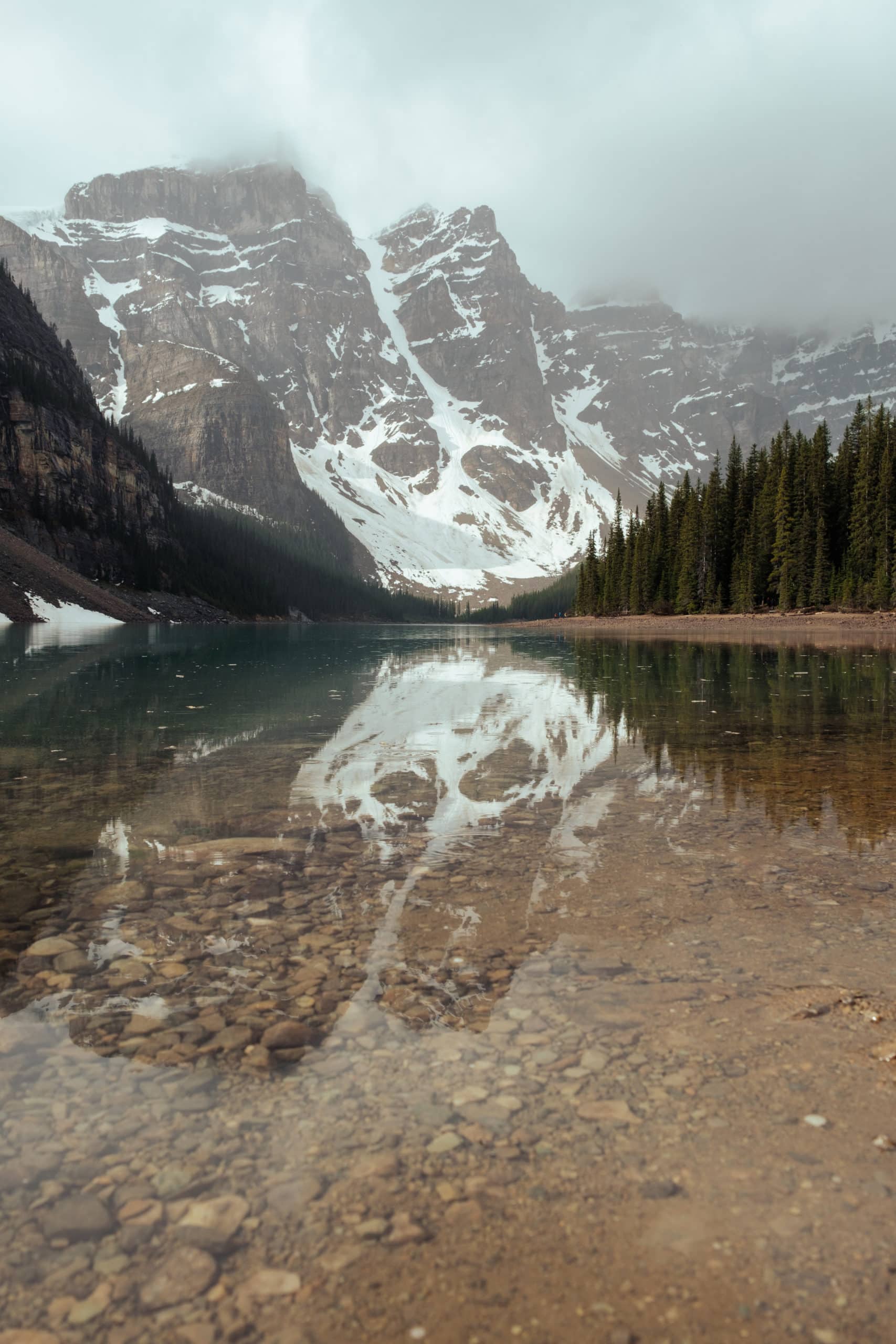
Moraine Lake was one of my favorite locations from my week in the Canadian Rockies. No doubt its incredible color changes depending on the time of day and the weather, but during my visit on a cloudy, drizzly day, the lake was an unbelievable turquoise.
The Rockpile Trail, which is quite accurately named and gives you a great view over the lake, is on the back side of the rocks — so you can’t see the lake until you reach a viewing platform at the top of the pile. As my brother and I climbed up the last few steps, my father (who was already at the viewpoint) looked back at us and joked, “Don’t bother, it’s no good.”
In fact, it was very, very good.
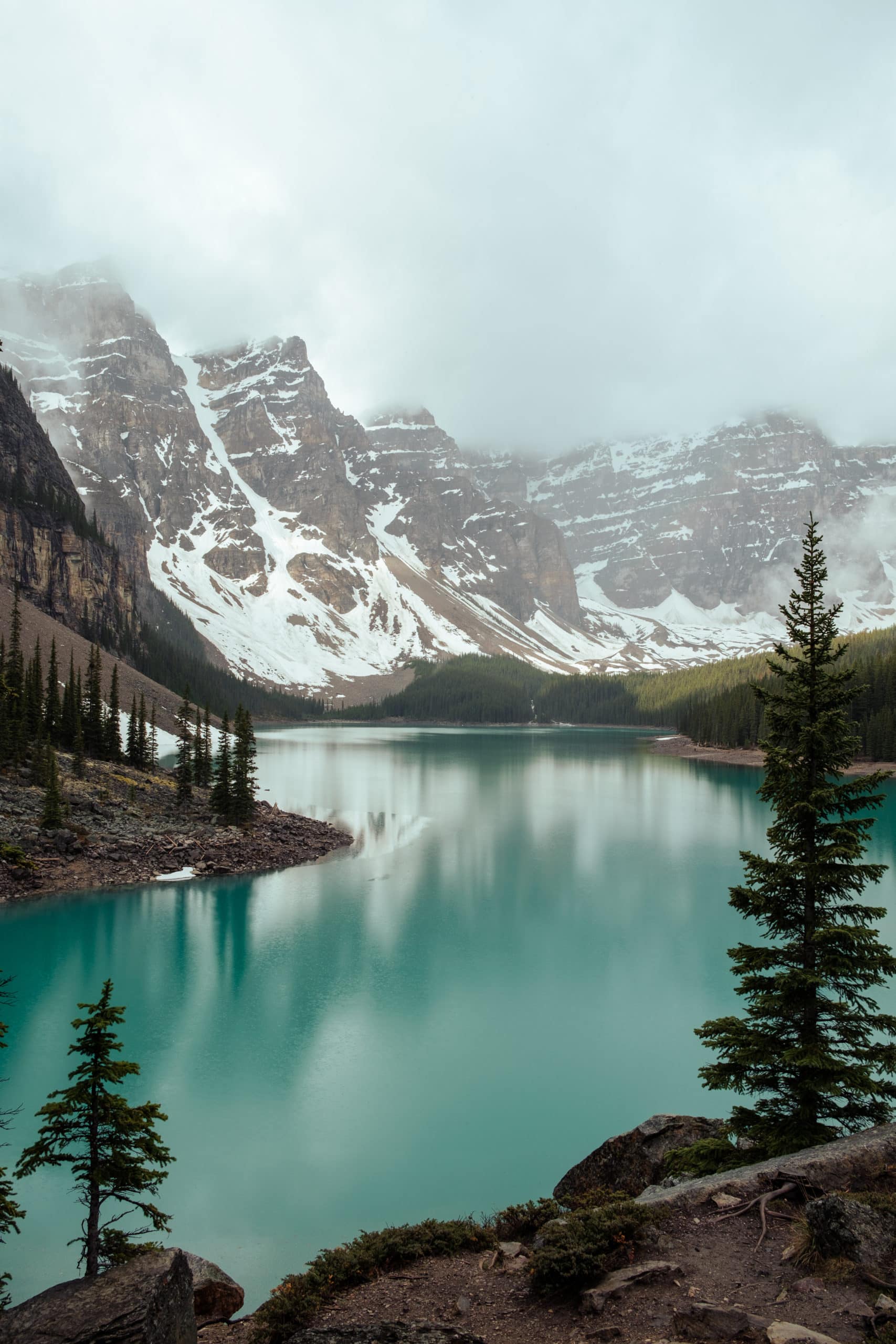
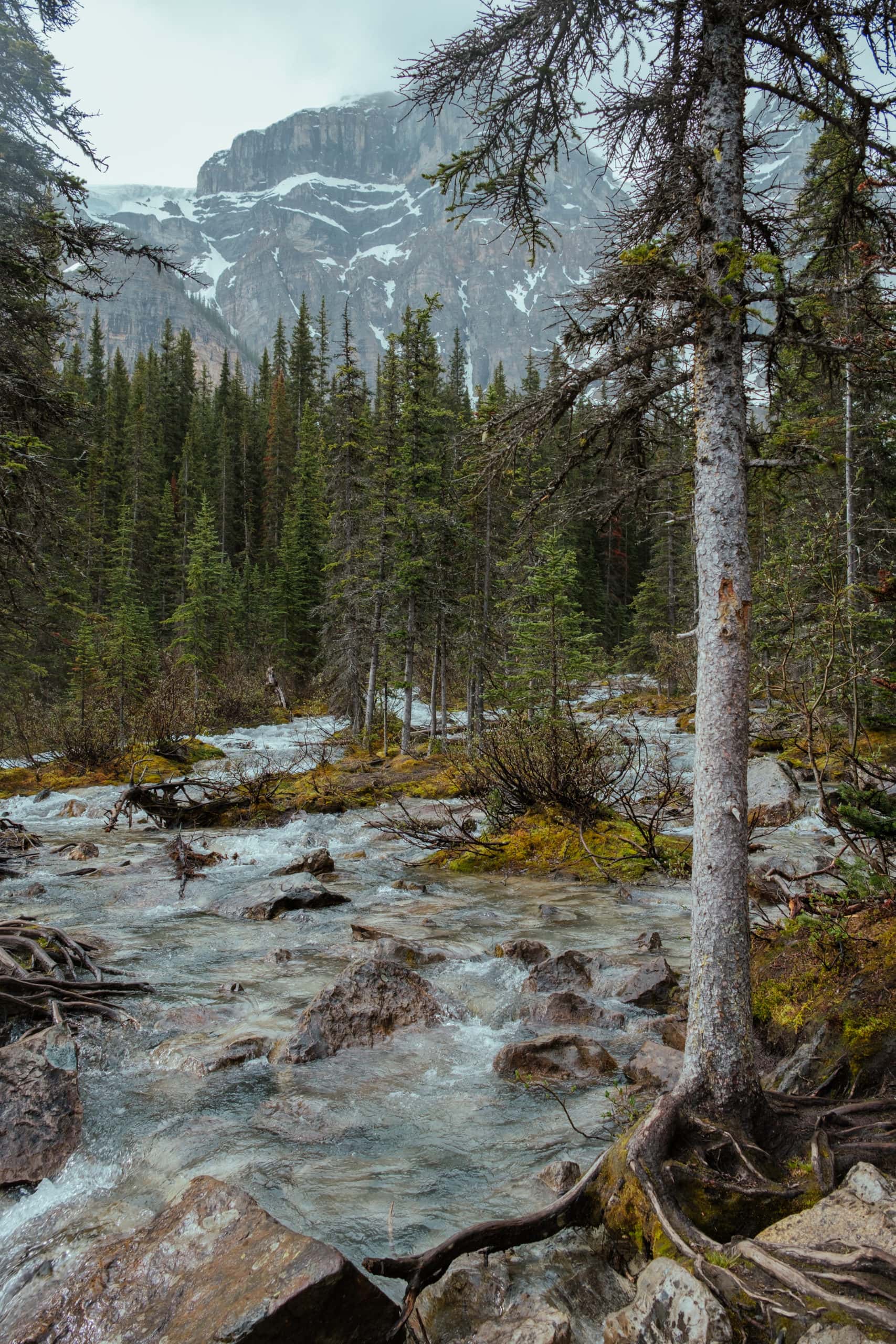
Don’t miss the Lakeshore Trail, either — it’ll give you great views of the lake from ground level and show you where a glacial meltwater creek empties into the end of the lake.
Emerald Lake & Hamilton Falls
Next, cross the provincial border into British Columbia and enter Yoho National Park. (You’ll pass Lake Louise on the way, but for reasons relating to both parking and time, I don’t recommend that you try to see Moraine Lake and Lake Louise on the same day.)
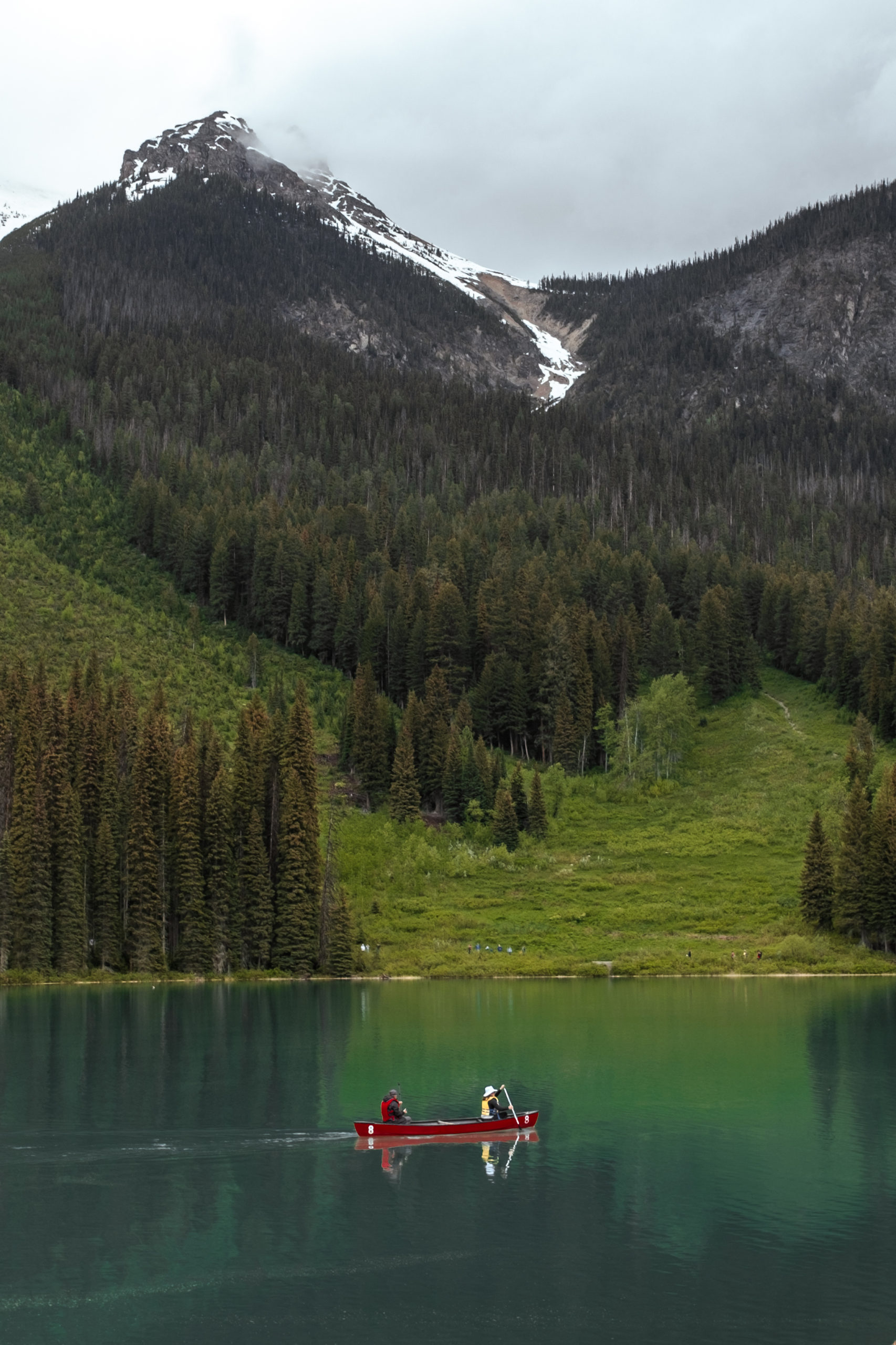
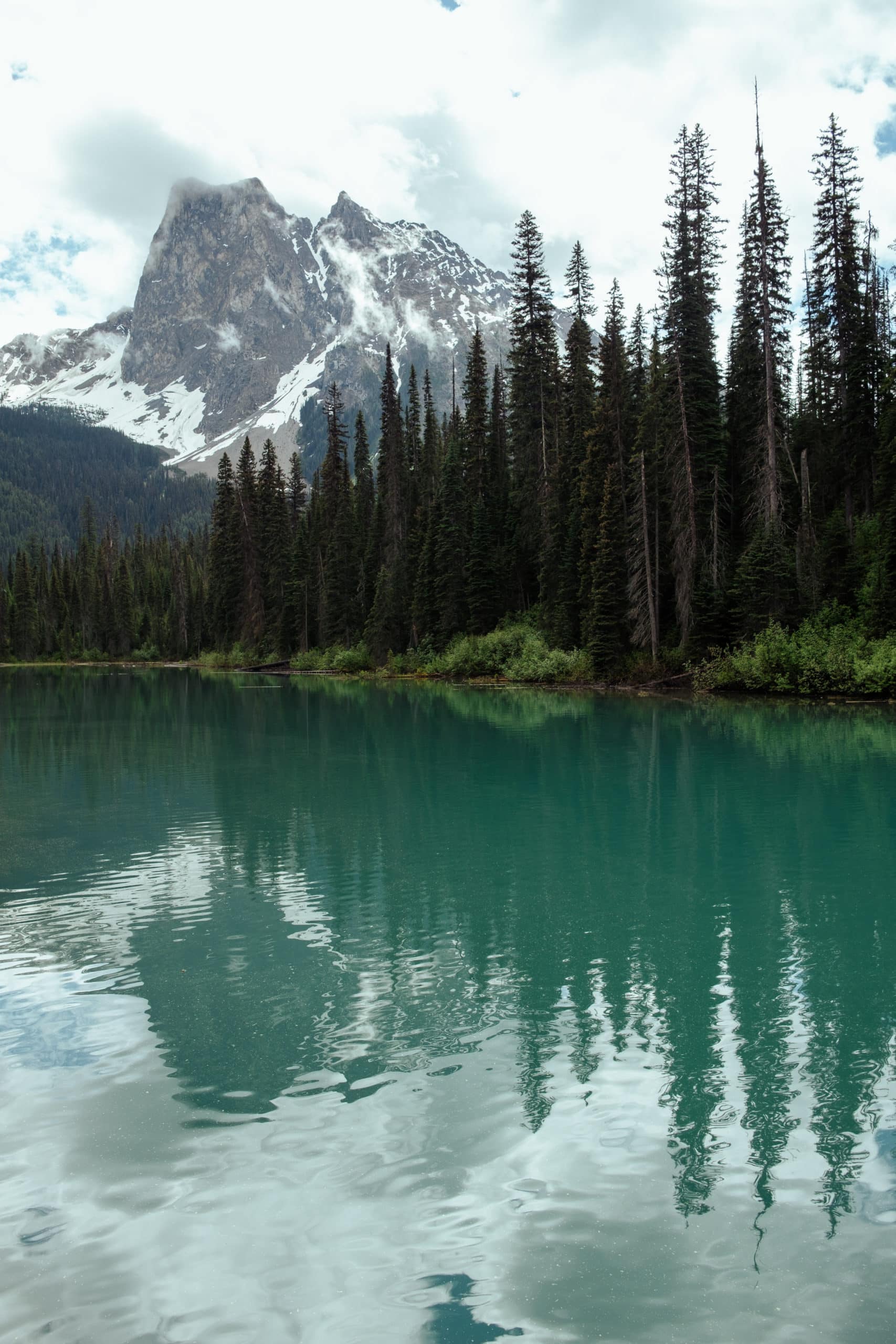
You’re heading to Emerald Lake, which is — as you may have guessed — a gorgeous green. You can rent a canoe and head out on the water, hike around the lake, or just enjoy the view from a bridge near the parking lot (though you’ll likely need to contend with lots of other tourists in that case)
Next to Emerald Lake’s parking lot, you’ll also find the trailhead for Hamilton Falls — a small waterfall hiding within the trees. The trail to Hamilton Falls is muddy and occasionally steep, but peaceful and unpopulated. Read more about hiking to Hamilton Falls here.
Spiral Tunnels
On your way back to Alberta, keep an eye out for the Spiral Tunnels. An amazing feat of engineering, these tunnels replaced a dangerously steep railway gradient with two three-quarter circle tunnels passing through mountainsides. As a train goes around one of these tunnels, its locomotive crosses under the very train cars it’s pulling.
If you’re lucky, or willing to wait, you may see a train passing through the Lower Spiral Tunnel. Even if not, though, there’s a viewpoint with a parking lot and lots of educational information about how the Spiral Tunnels were constructed and operate today.
If you have extra time…
This would also be a good day to see Takkakaw Falls and/or Wapta Falls. During our visit in late June, Takkakaw Falls was still closed for the winter, and we didn’t try to squeeze in Wapta Falls, so I can’t speak to the experience of either of these places. But both of those waterfalls are also in Yoho National Park, so it would make sense to see them while you’re already over there for Emerald Lake.
Day 4
Banff Gondola
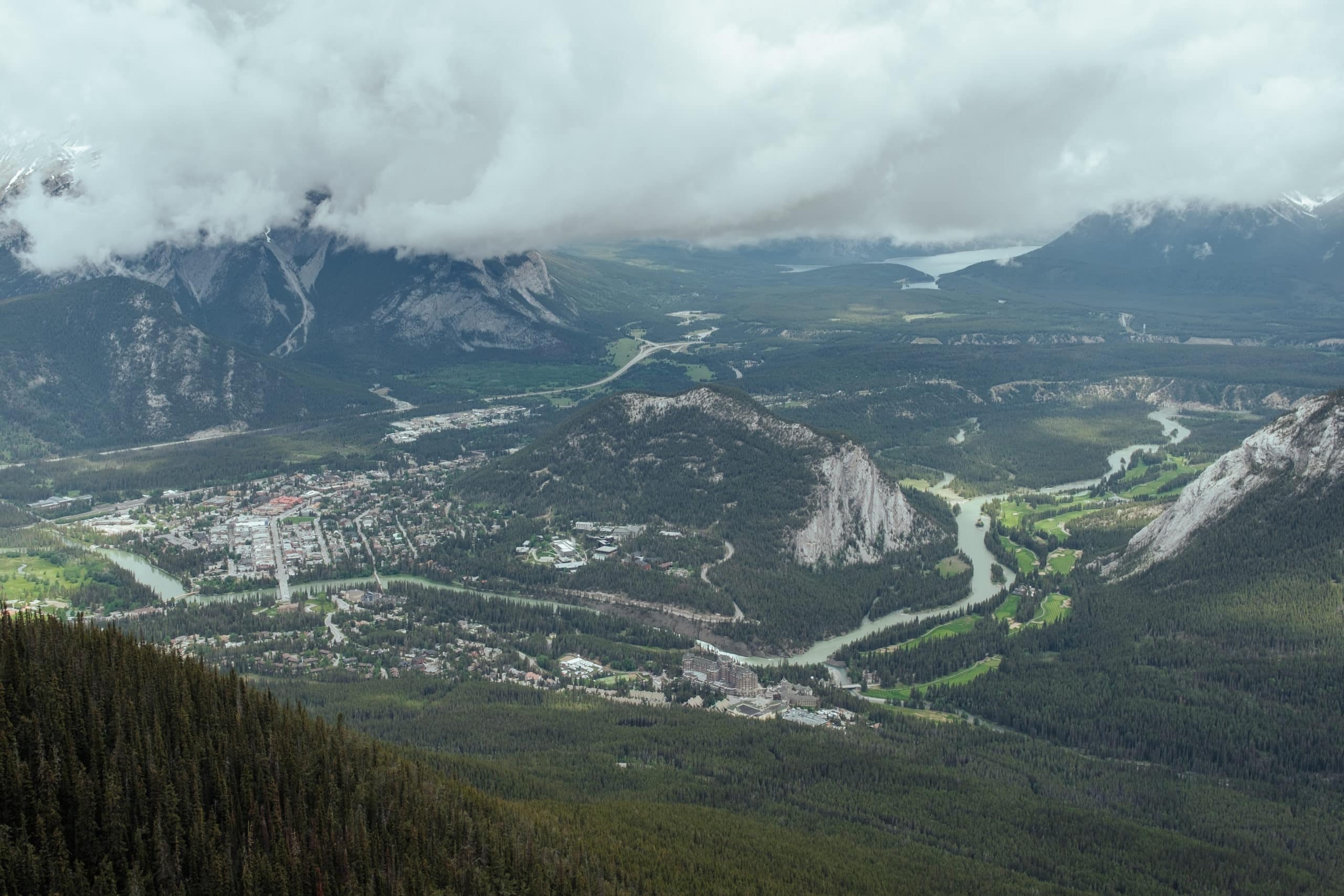
This day is about sweeping views from the top of Sulphur Mountain, which overlooks the town of Banff.
The easiest way to reach the peak is to ride the Banff Gondola. At approximately $66 per adult (prices vary depending on the day), the experience isn’t cheap, but it’s a very pleasant ride with gorgeous views.
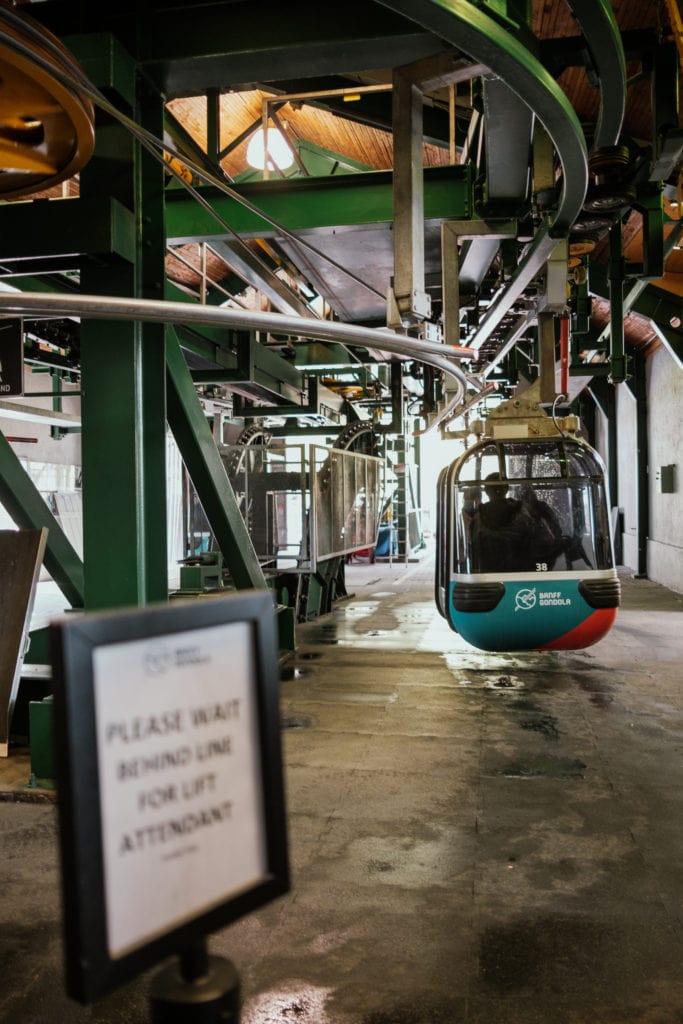
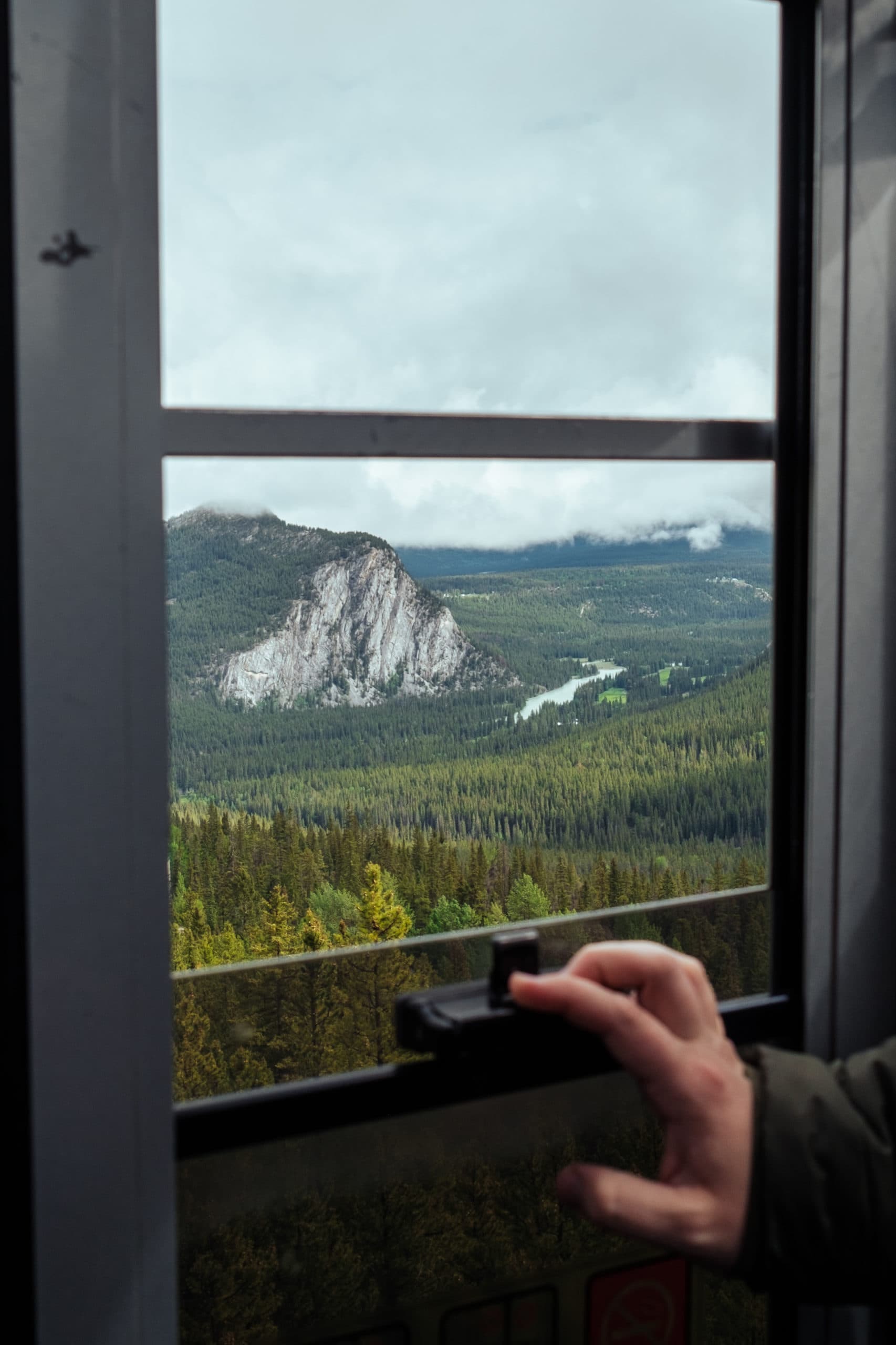
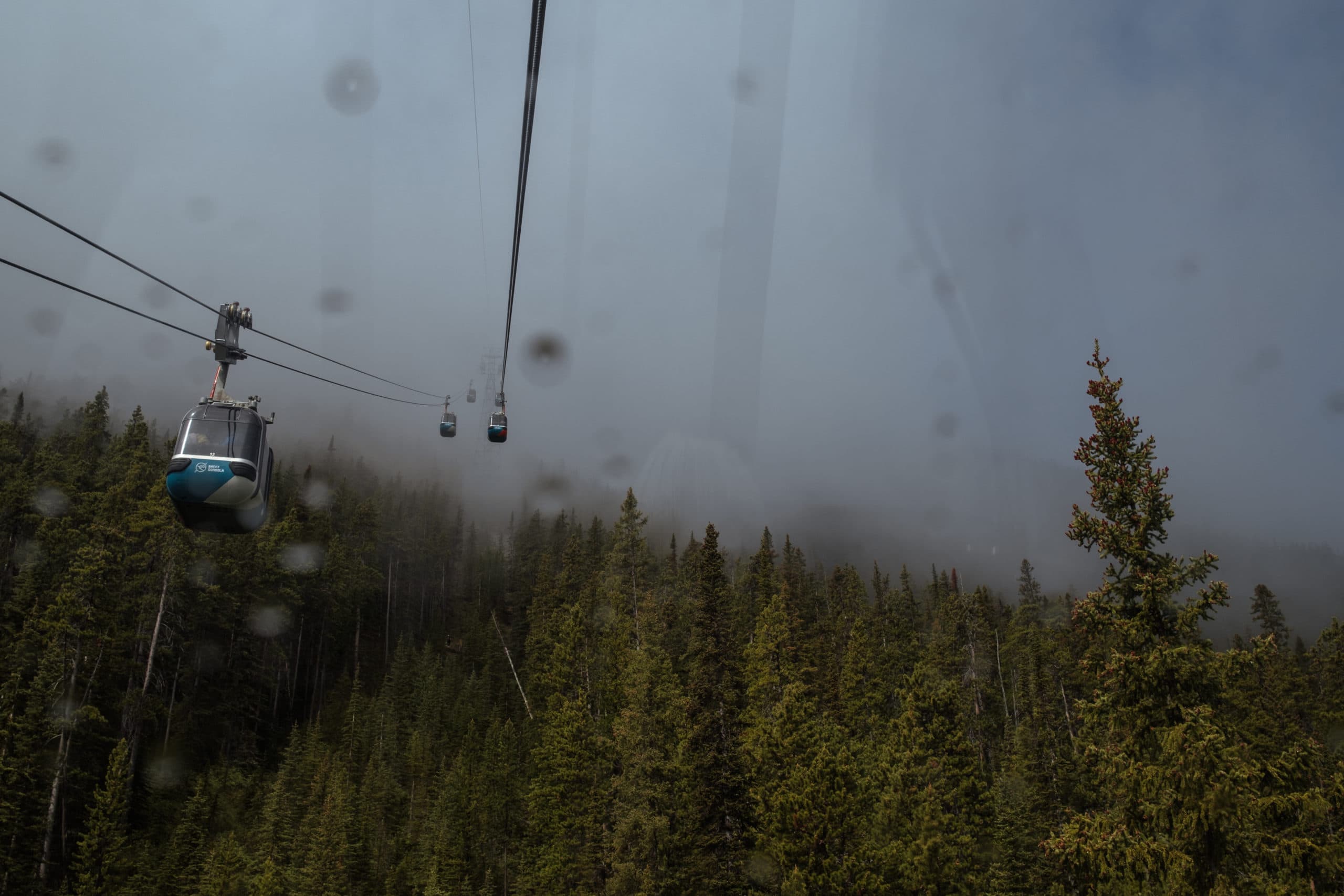
If you want to reach the top of the mountain without spending so much money, or you just want to get some exercise, you can also hike up Sulphur Mountain.
The trail is approximately 5.5 kilometers (or 3.4 miles) to the top of the mountain, and you can expect your hike to take 1.5 to 3 hours, depending on your speed. I can’t personally speak to the difficulty of the trail, except to say that its switchbacks are often visible from the gondola, and it looked challenging to me (a not especially serious hiker).
Sulphur Mountain
However you reach the top of the mountain, when you get there, you’ll have incredible, 360 degree views of the surrounding area — if the skies are clear. During my visit, it was pretty cloudy, but there were enough moments of clarity to be sure that the views would be incredible on a clear day. As a result, you may want to save this experience for a day with excellent weather, though no promises that gondola tickets will be available to buy on the spot (we booked ahead).
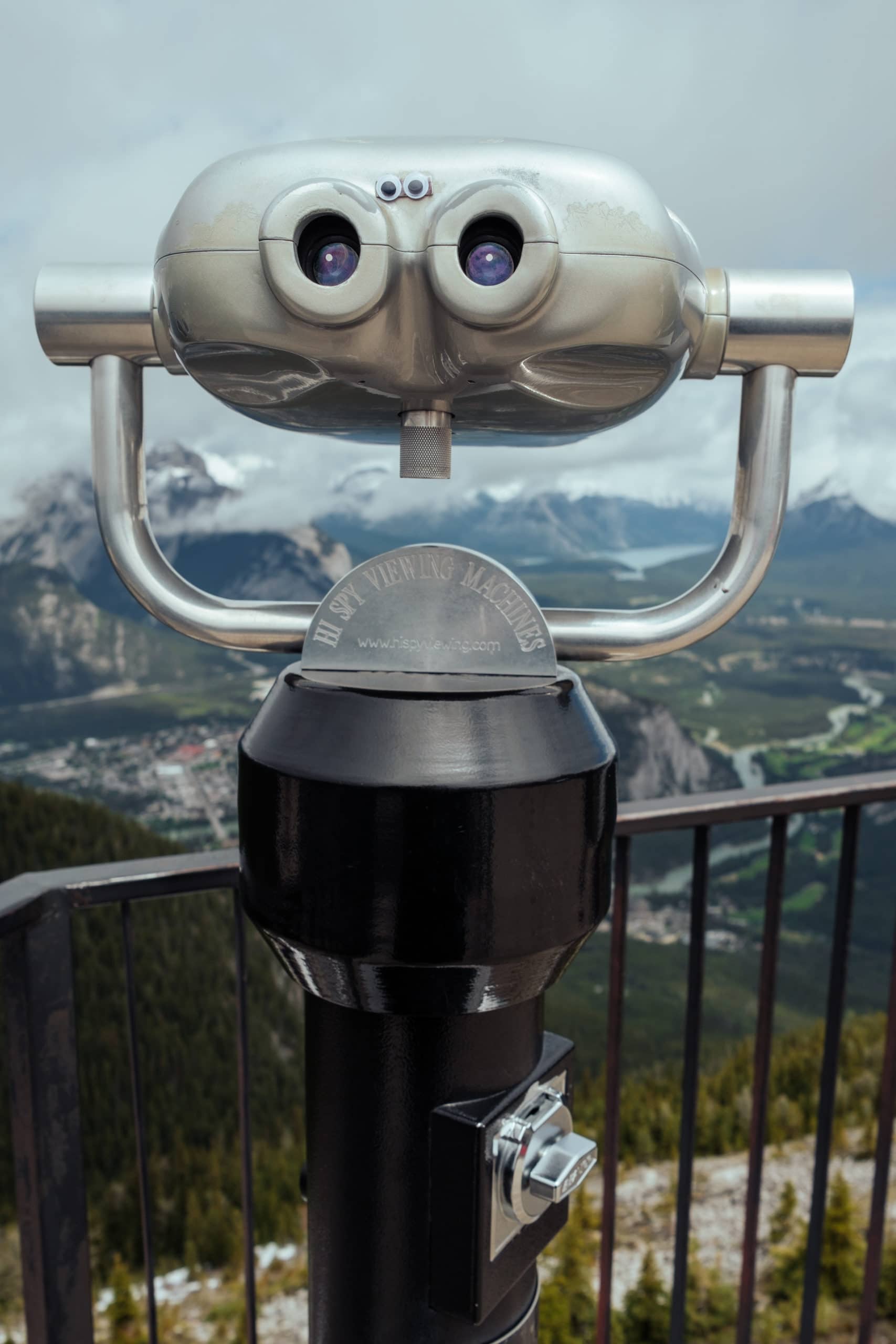
At the top of Sulphur Mountain is a building with a panoramic viewing platform, several restaurants, a gift shop, some educational displays, and more. While it’s pretty touristy and commercial, the journey up the mountain is absolutely worthwhile for the views, if nothing else. Indeed, if you hike up the mountain, it’s possible to experience Sulphur Mountain without spending any money at all.
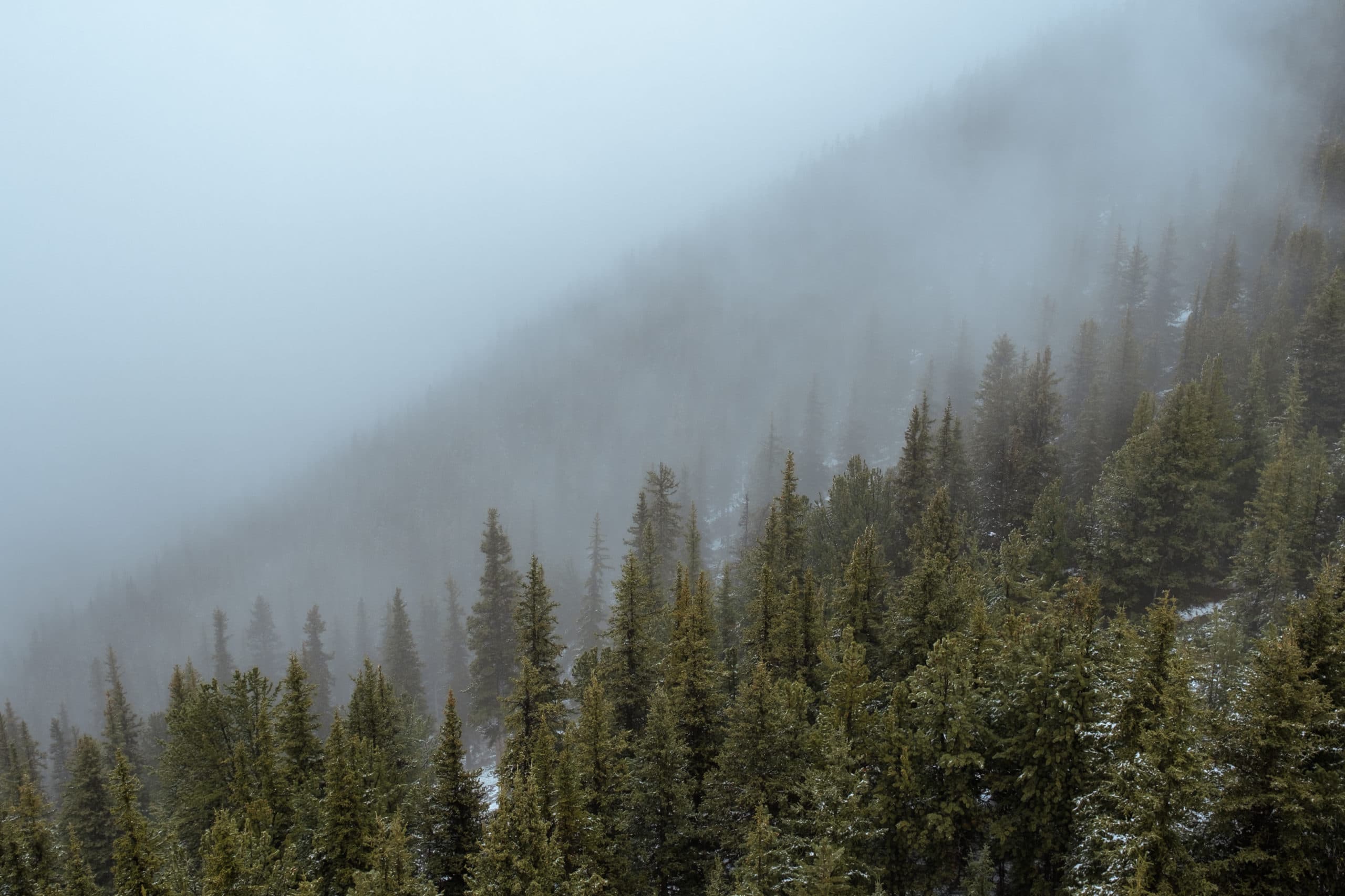
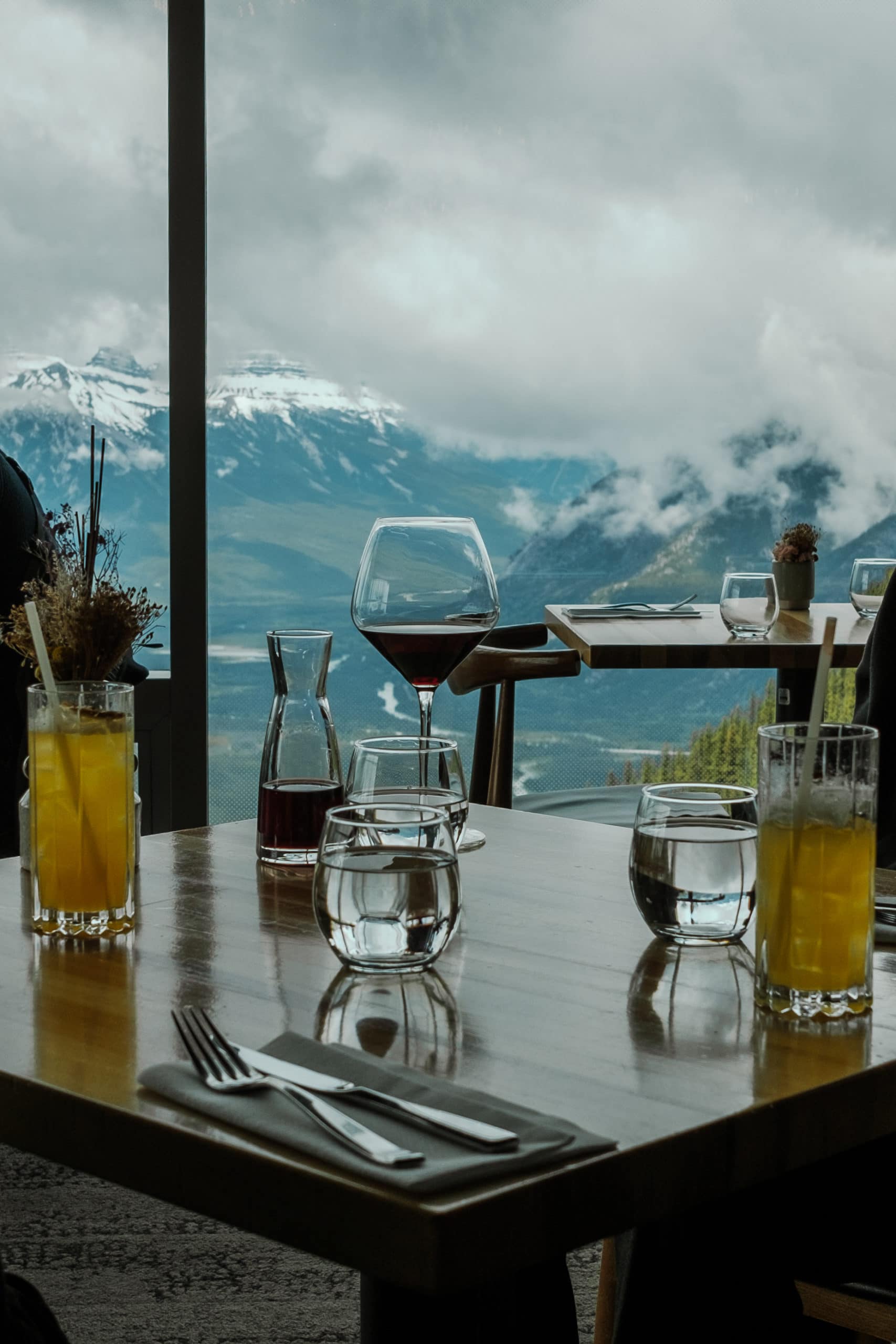
We opted to splurge on lunch at Sky Bistro, one of the restaurants on the mountain. While I find that these types of tourist restaurants are often disappointing, that wasn’t the case here. The food was great, and — once the skies cleared up a little bit — the views were fabulous.
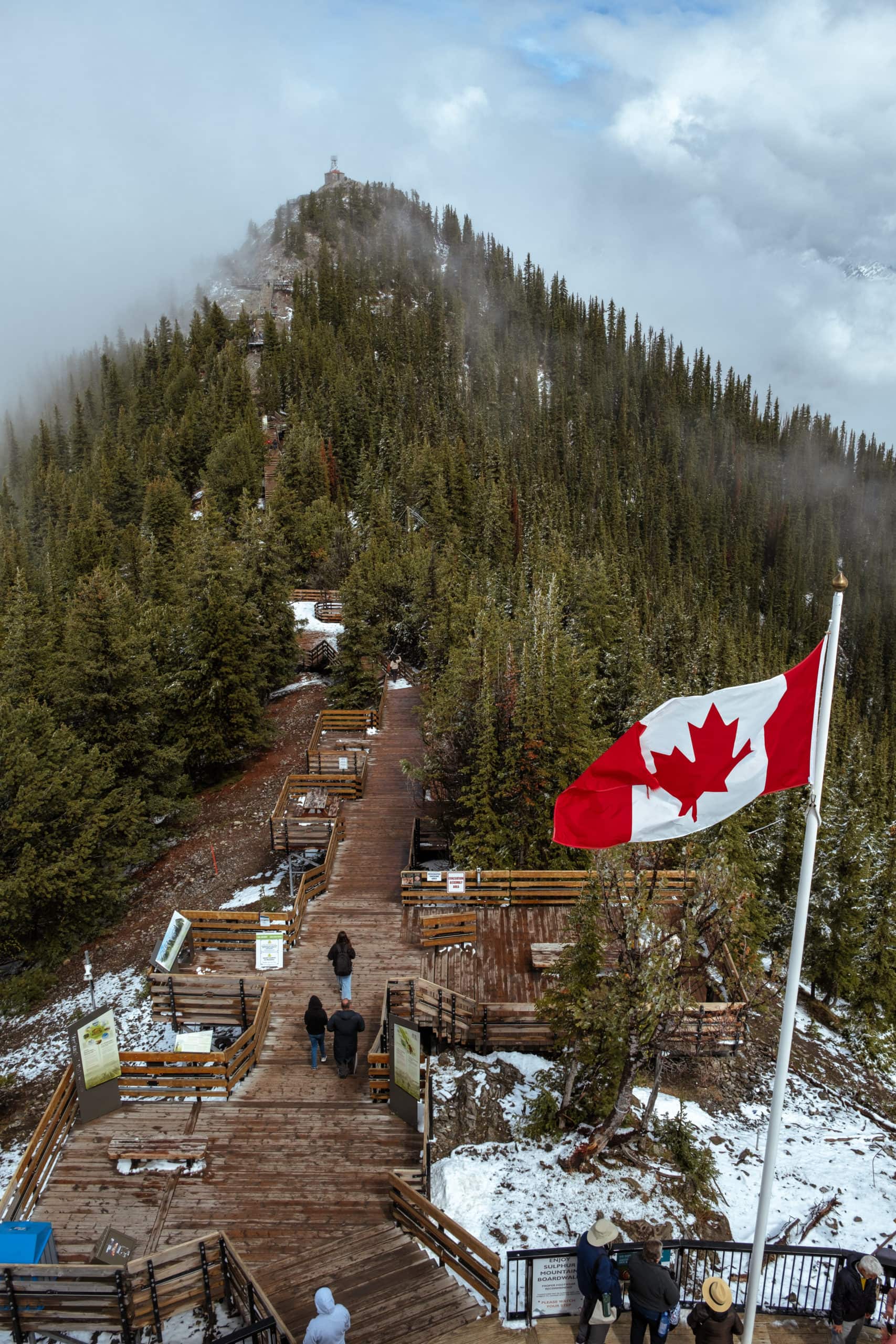
While you’re on Sulphur Mountain, don’t miss your chance to walk the Boardwalk. There, you can get a great view back toward the main building, learn a lot about the local ecosystem from educational signs along the way, and see the location of a former cosmic ray laboratory on the neighboring Sanson Peak.
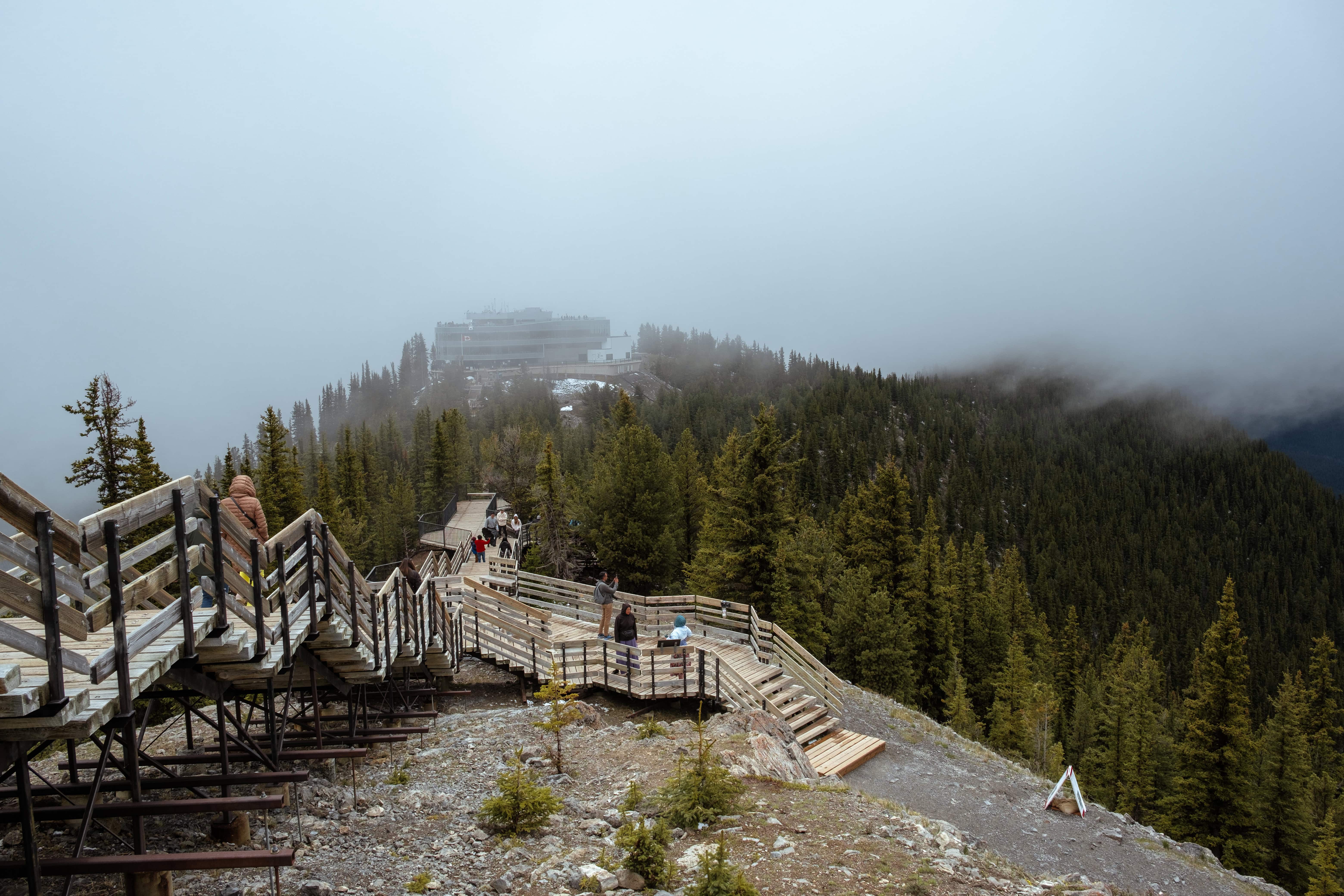
Read more about the Sulphur Mountain Boardwalk here.
Day 5
Lake Louise
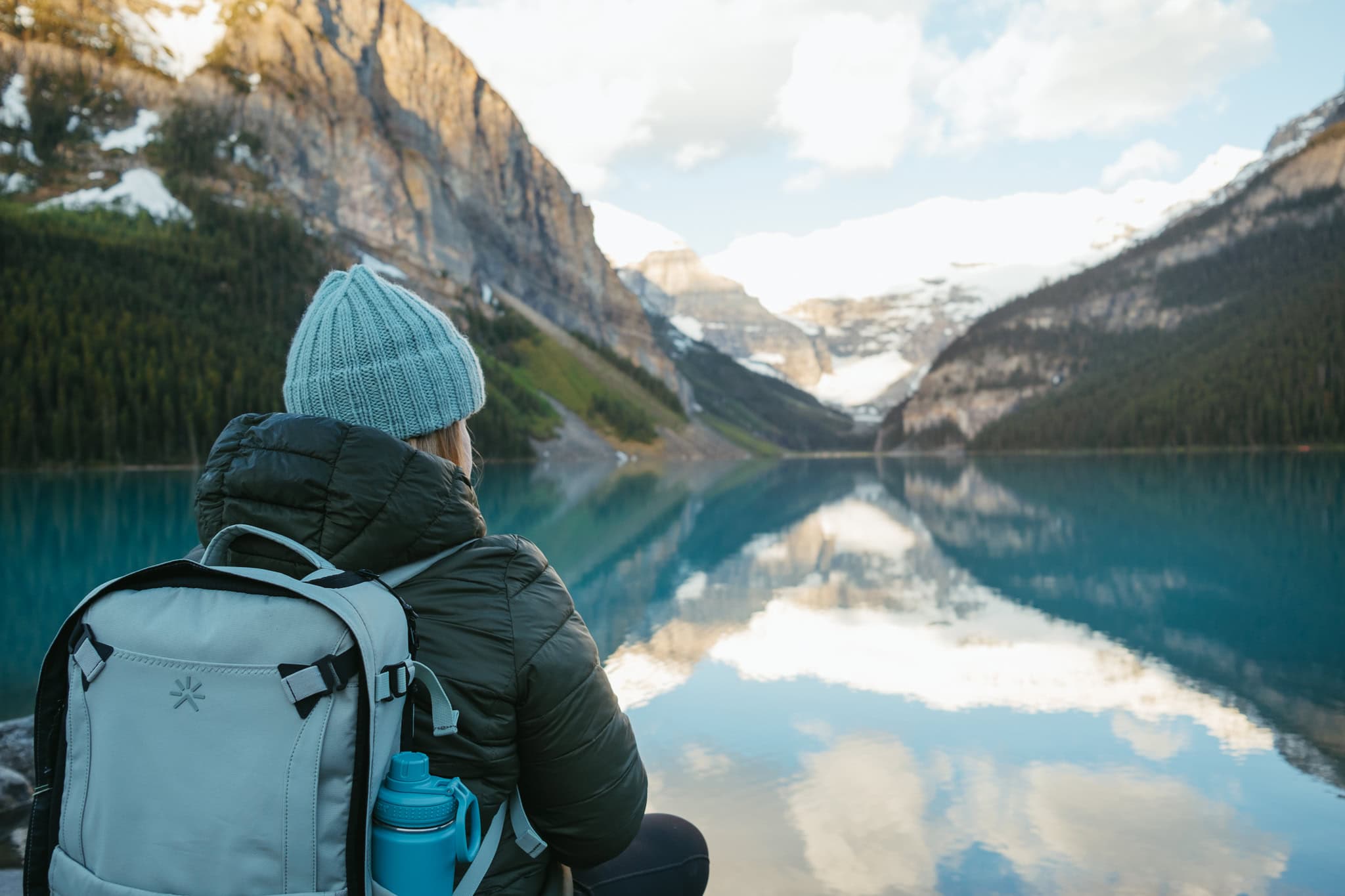
Lake Louise is one of the most popular sights in the Canadian Rockies, and for good reason. Like Moraine Lake, Lake Louise is a turquoise, glacier-fed lake surrounded by impressive peaks — but it’s twice as big.
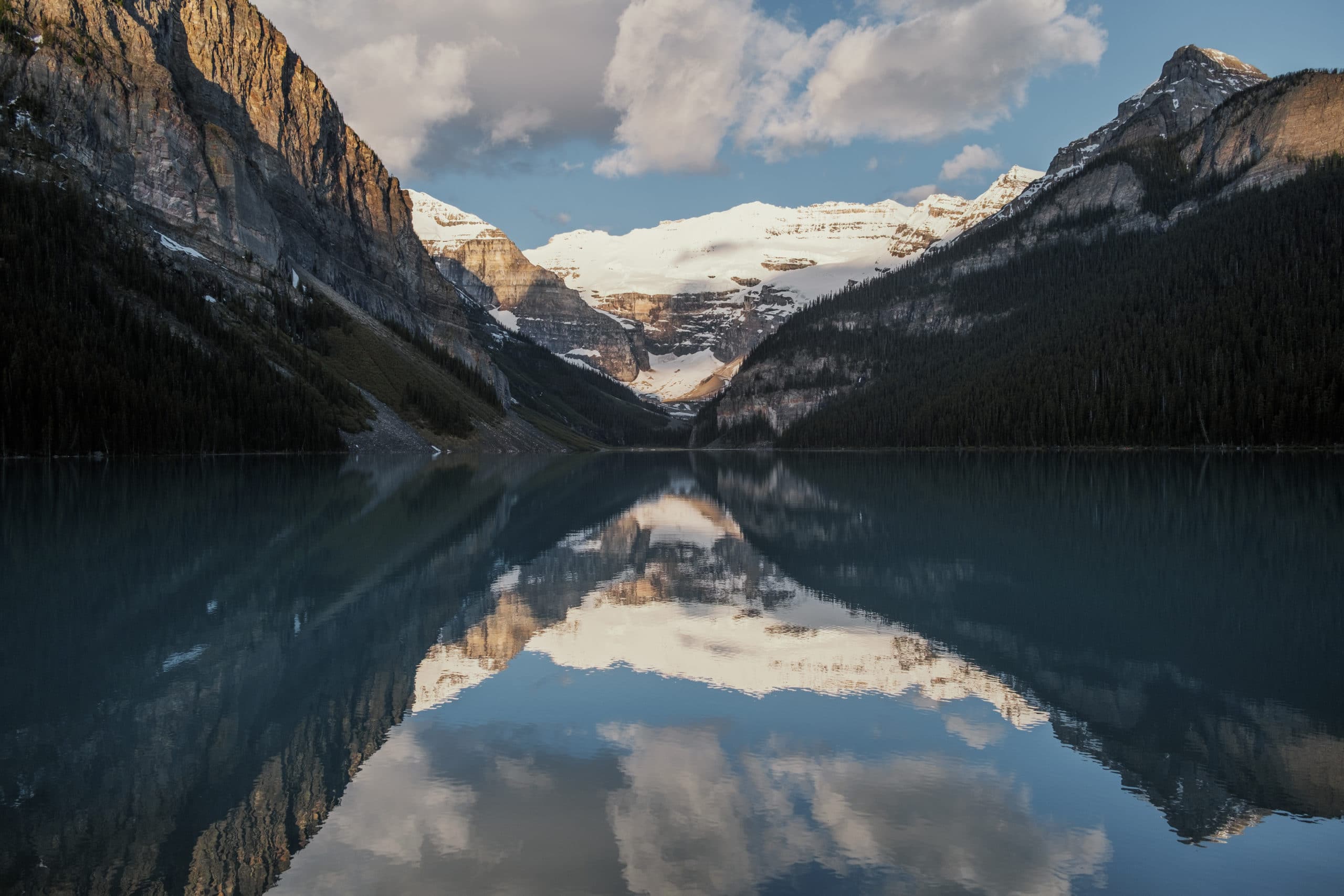
A word of warning about visiting Lake Louise: the on-site parking lot fills up sometime in the morning. When that happens, visitors are forced to park a few miles away and reach the lake by paid shuttle. But you may have to wait for a shuttle! Underestimating the parking situation, my family first tried to visit Lake Louise at 1:30 p.m. We were forced to park in one of the overflow lots, and tried to buy shuttle tickets — only to learn that the next available shuttle was not until 3 p.m.
You can avoid all of this nonsense by simply arriving at Lake Louise early in the morning. In fact, as long as the weather is good, my recommendation is to arrive in time for the sunrise. If you’re anything like me, this may not sound appealing — but, as I learned, it really is worth the effort. Not only are the views beautiful, but you’ll avoid the crowds that overtake the lake by mid-morning.
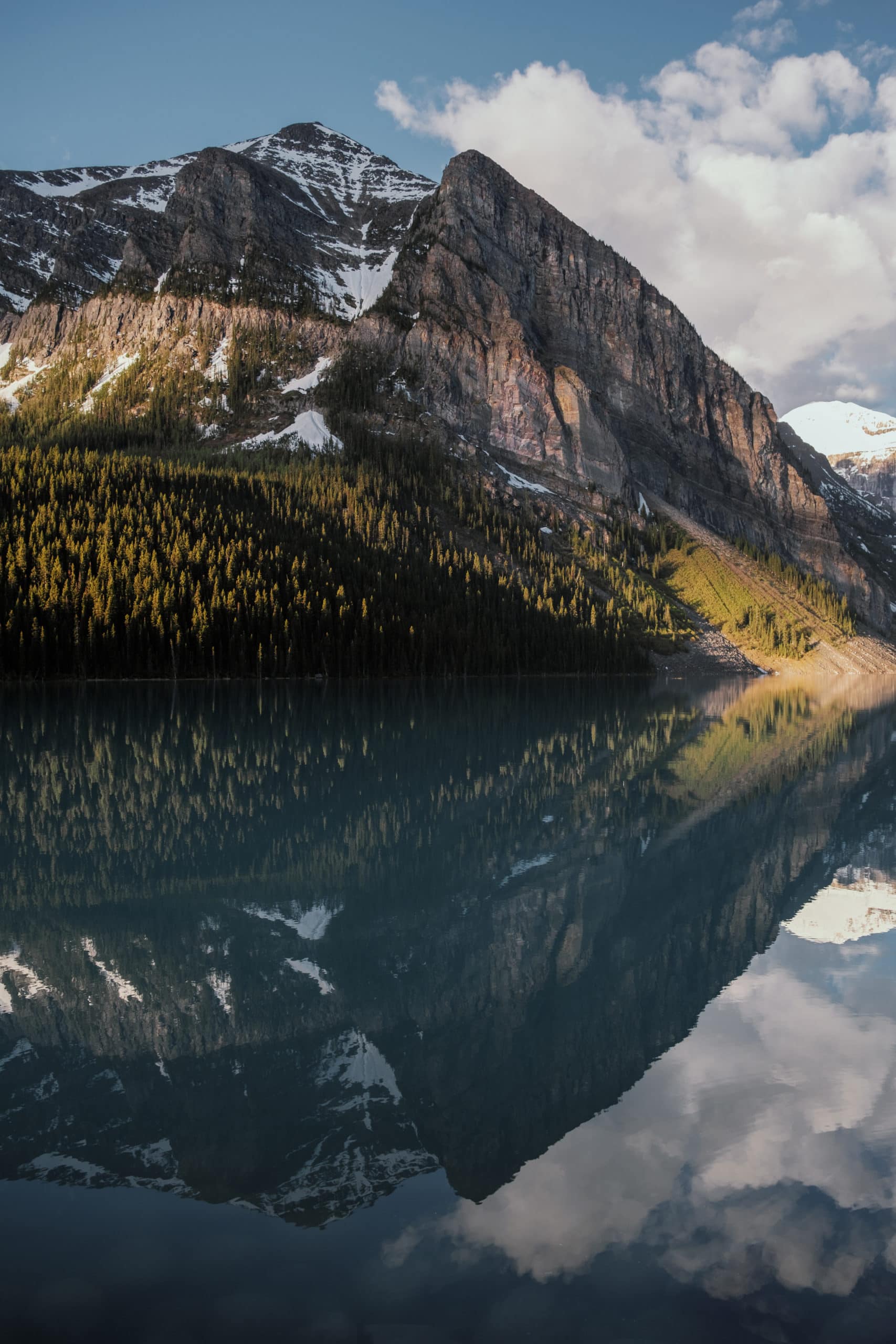

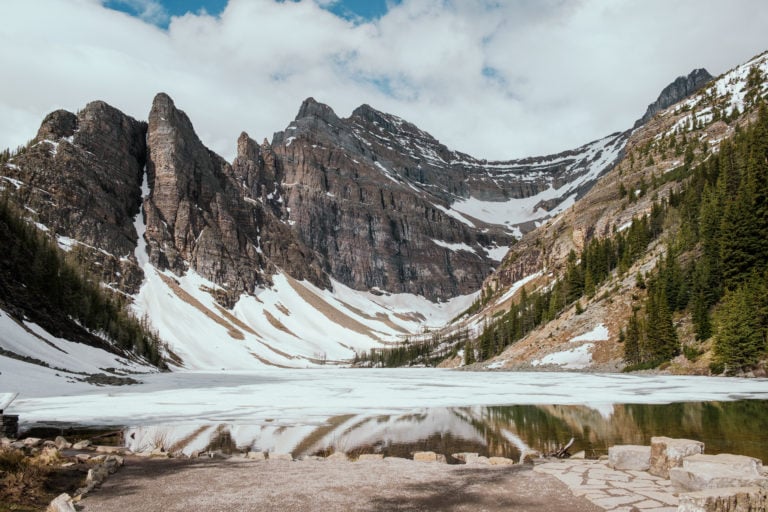
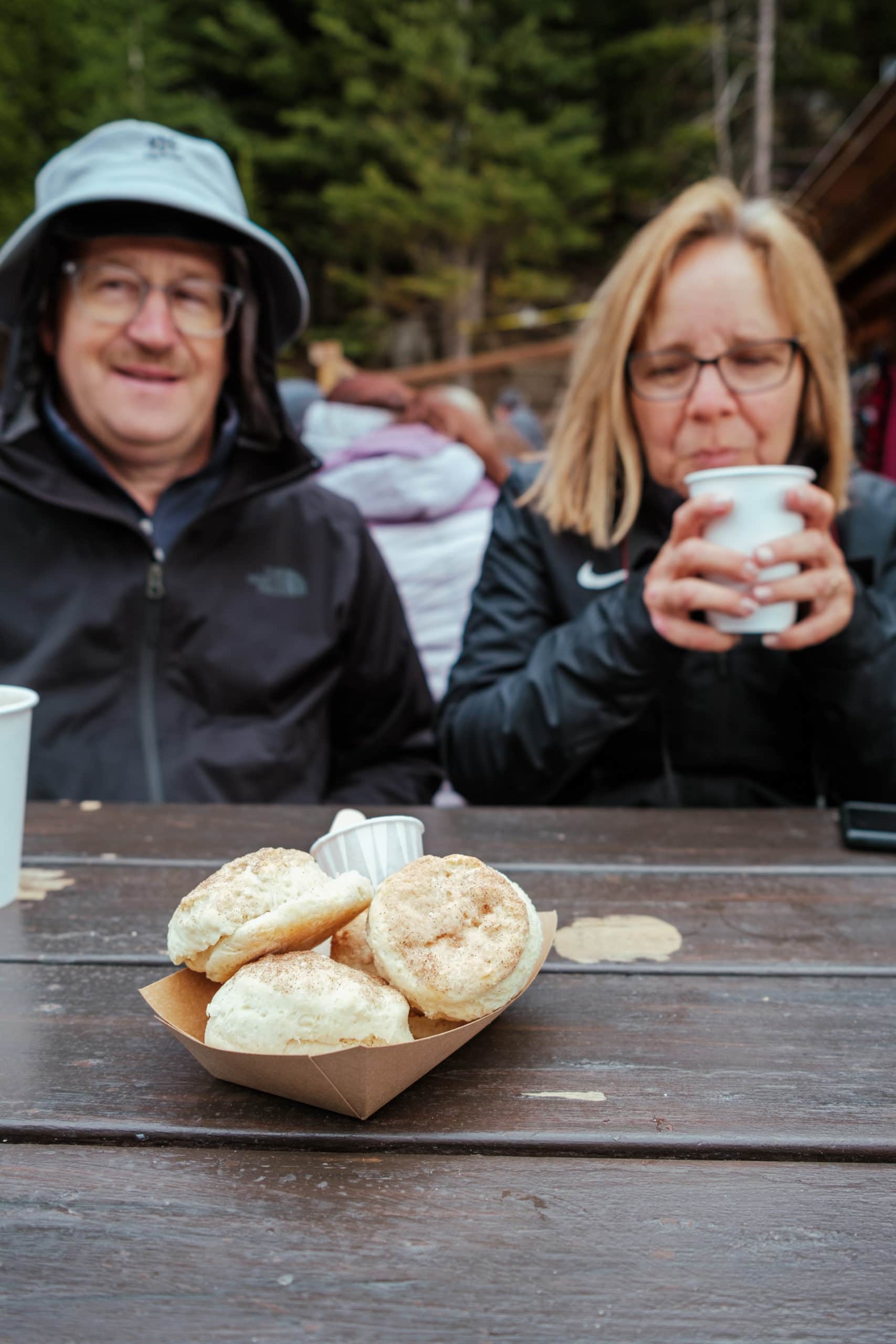
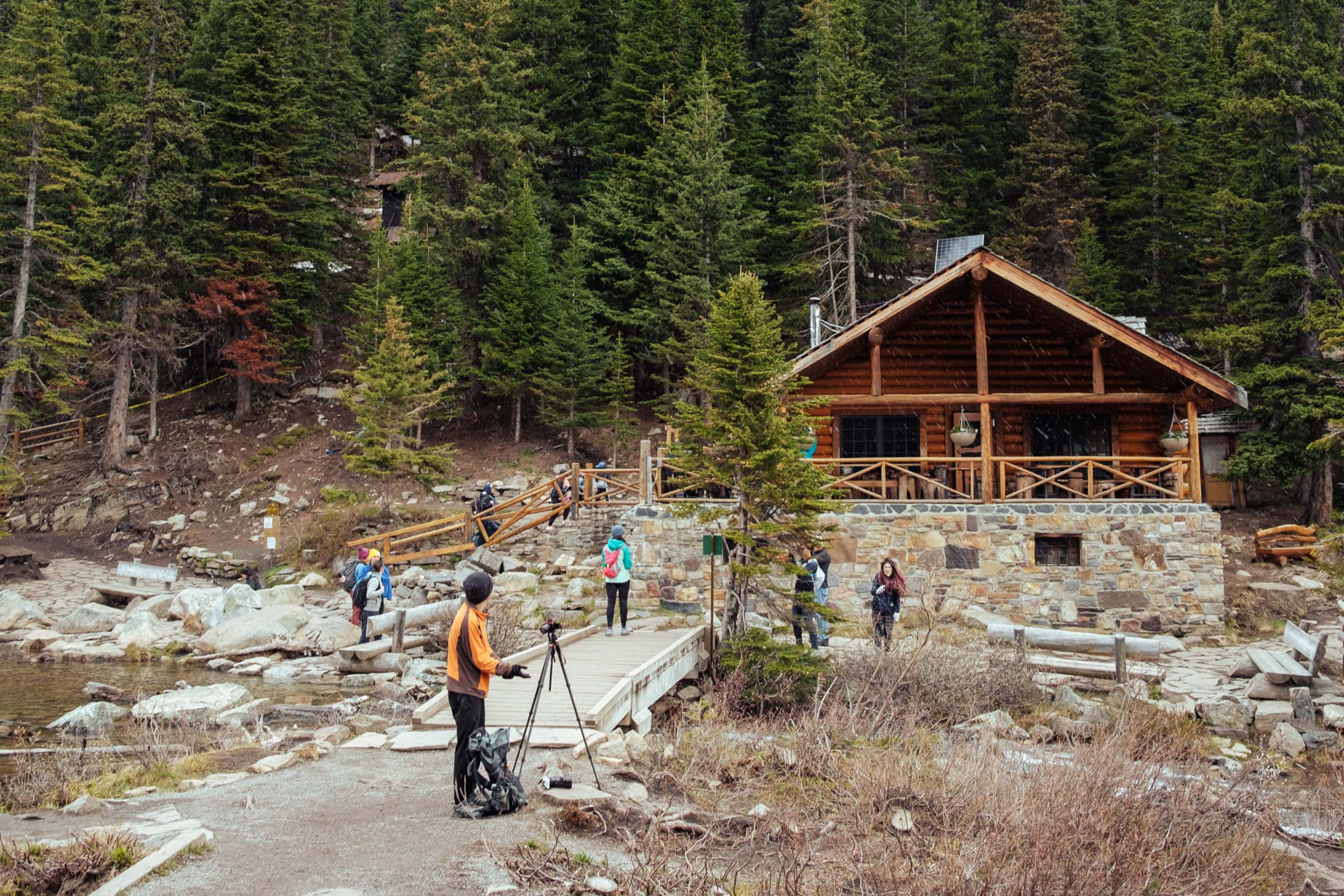
Getting to Lake Louise by sunrise is a good idea for another reason: you can also beat the crowds to tea. Perched high above Lake Louise, amongst the peaks that reflect on Lake Louise below, is the smaller Lake Agnes, which has its own claim to fame: the Lake Agnes Tea House. Every day from early June until Canadian Thanksgiving, the tea house serves hot tea and light food to hikers willing to climb 400 meters (or 1300 feet) to reach it.
The hike to Lake Agnes takes 1-2 hours, depending on your speed. Because the tea house opens at 8 a.m., if you set off for Lake Agnes shortly after the sunrise at Lake Louise, you can beat the rush to the tea house and be one of the first people to arrive there.
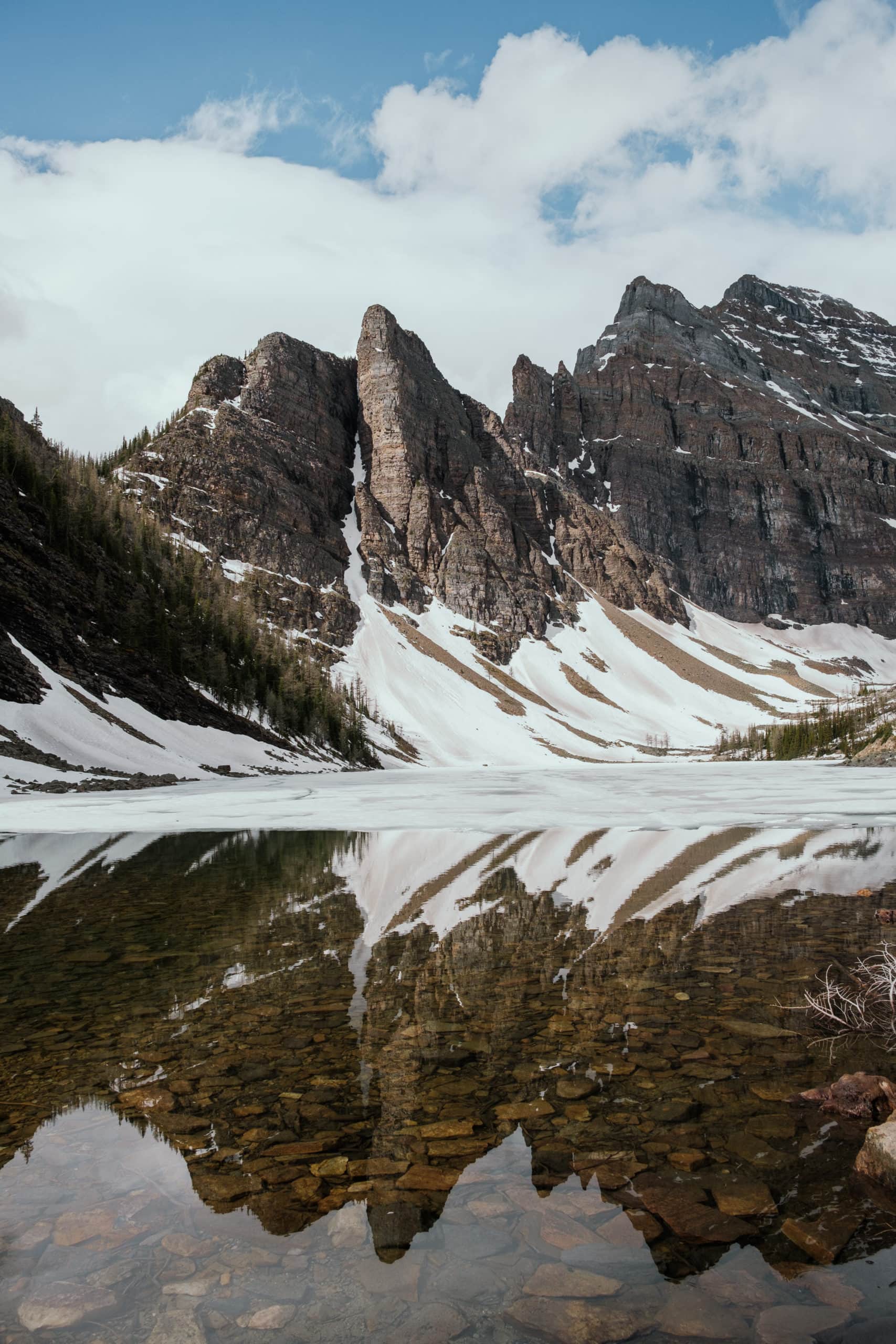
Beyond the tea house, you can climb further to reach the peaks of Little Beehive and/or Big Beehive, where you’ll find sweeping views of Lake Louise and the surrounding area.
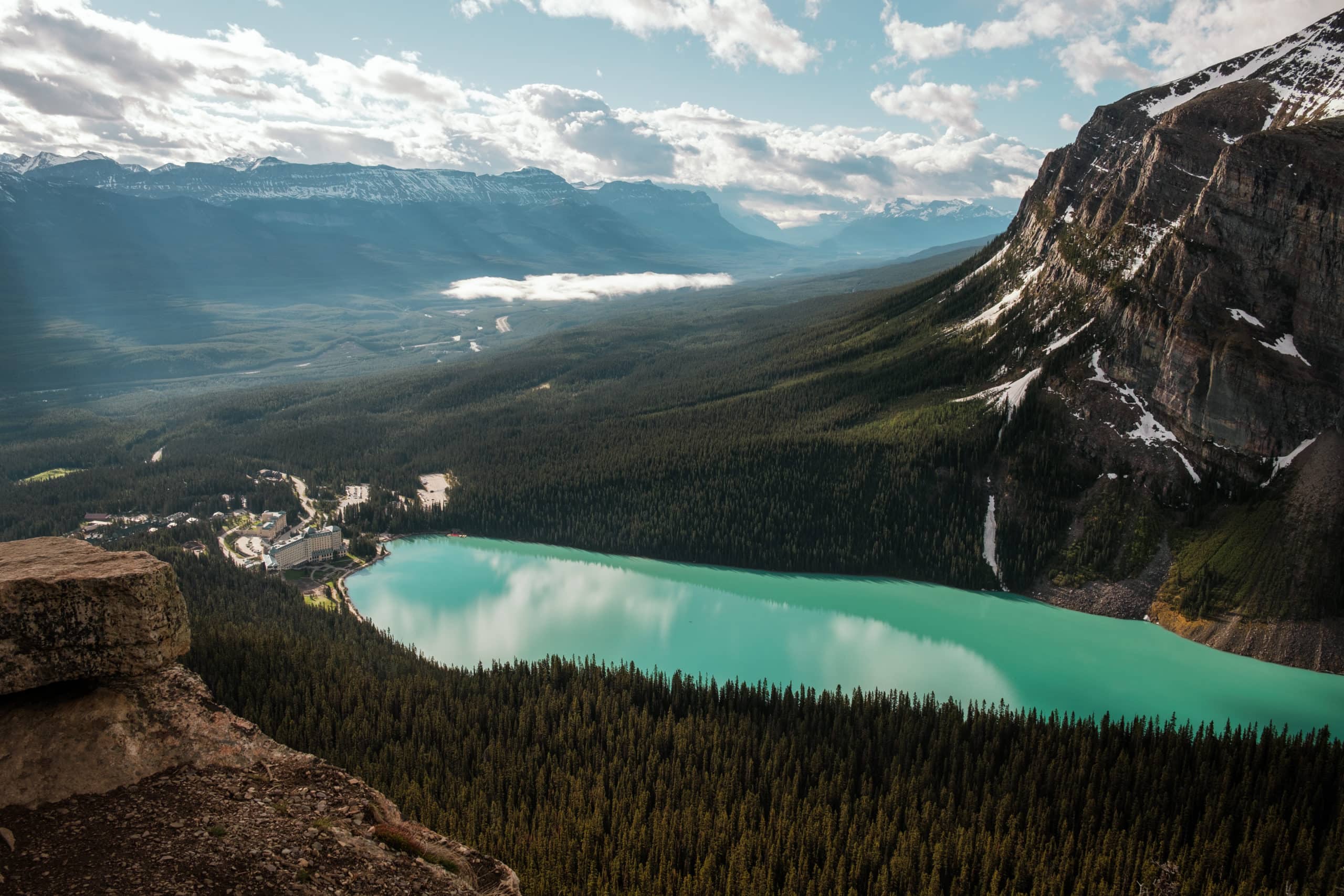
READ MORE: How to Hike to Lake Agnes Tea House
If Lake Agnes doesn’t appeal to you, but you’d still like to do some hiking at Lake Louise, check out the Lake Louise Shoreline Trail or the Plain of Six Glaciers Trail. My sister hiked part of the latter trail and loved it.
Canmore
If you have the time and energy after your hike to Lake Agnes, take some time to explore Canmore. While there’s less to do than in the town of Banff, make sure to check out the farmer’s market, which operates every Thursday in the summer.
Clue Solvers also offers several experiences in Canmore.
Day 6
The final two days of this itinerary will take you to Jasper National Park. Jasper is farther than Yoho from Banff, and I recommend that you plan to spend the night in Jasper.
However, if you’d rather not deal with switching accommodations, it is possible to see everything listed for this day and the next in one day. (This is what my family did!) It is a long and busy day, with an early start and a lot of driving, but if that doesn’t scare you, it’s doable.
Herbert Lake
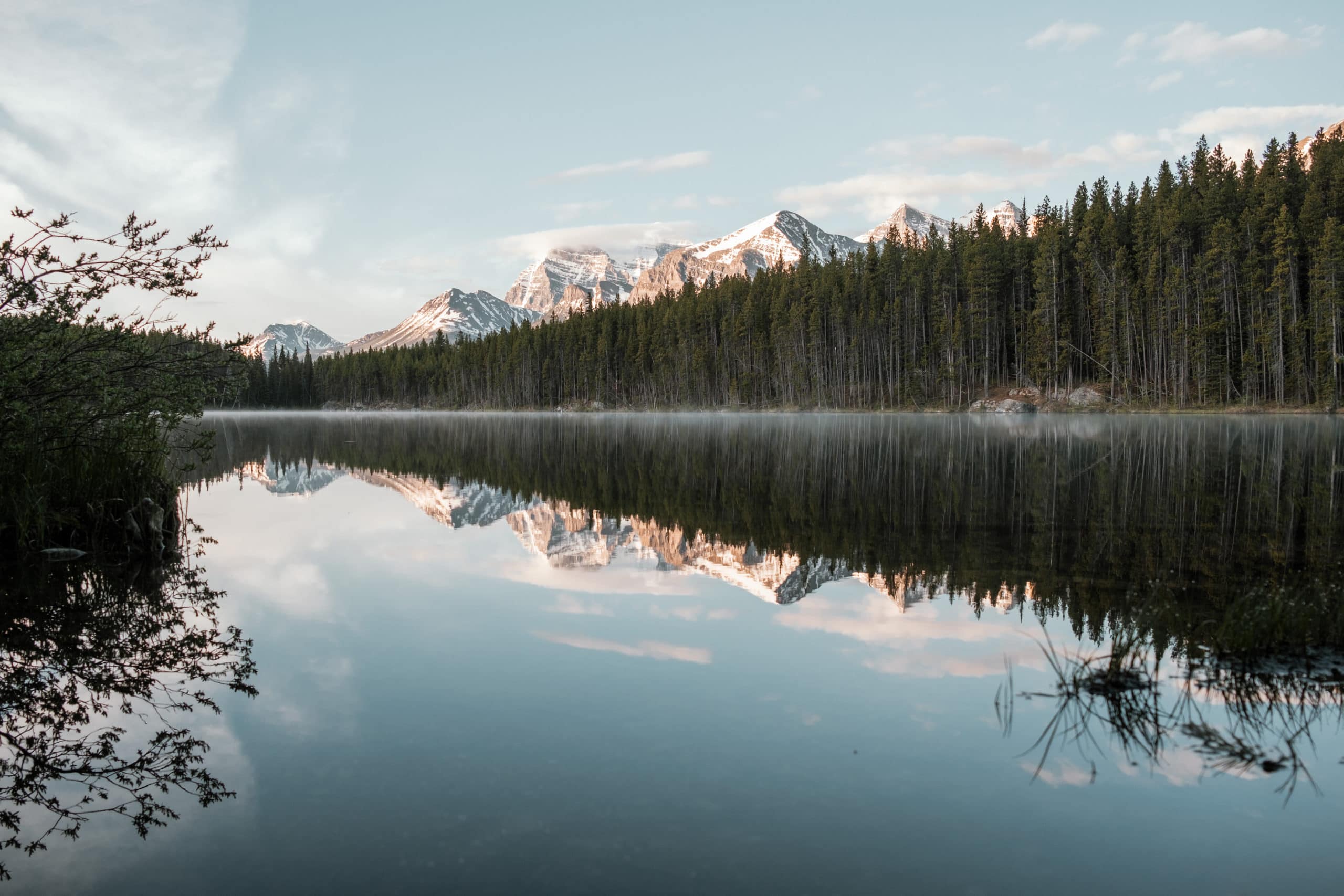
I strongly recommend driving the beautiful Icefields Parkway to reach Jasper. You’ll pass lots of beautiful sights along the way, including Herbert Lake — which is right at the beginning of the drive.
Even if you decide to spread your Jasper visit out over two days, as I recommend here, I still suggest getting an early start on this day so you can see Herbert Lake with the early morning light. We didn’t have any particular expectations for Herbert Lake, but just pulled over when we saw a sign, and thought it was stunning. When we arrived at 6 a.m., the moon was still visible, and joined the trees, mountains, and eerie mist to reflect gorgeously in the quiet lake.
Athabasca Glacier
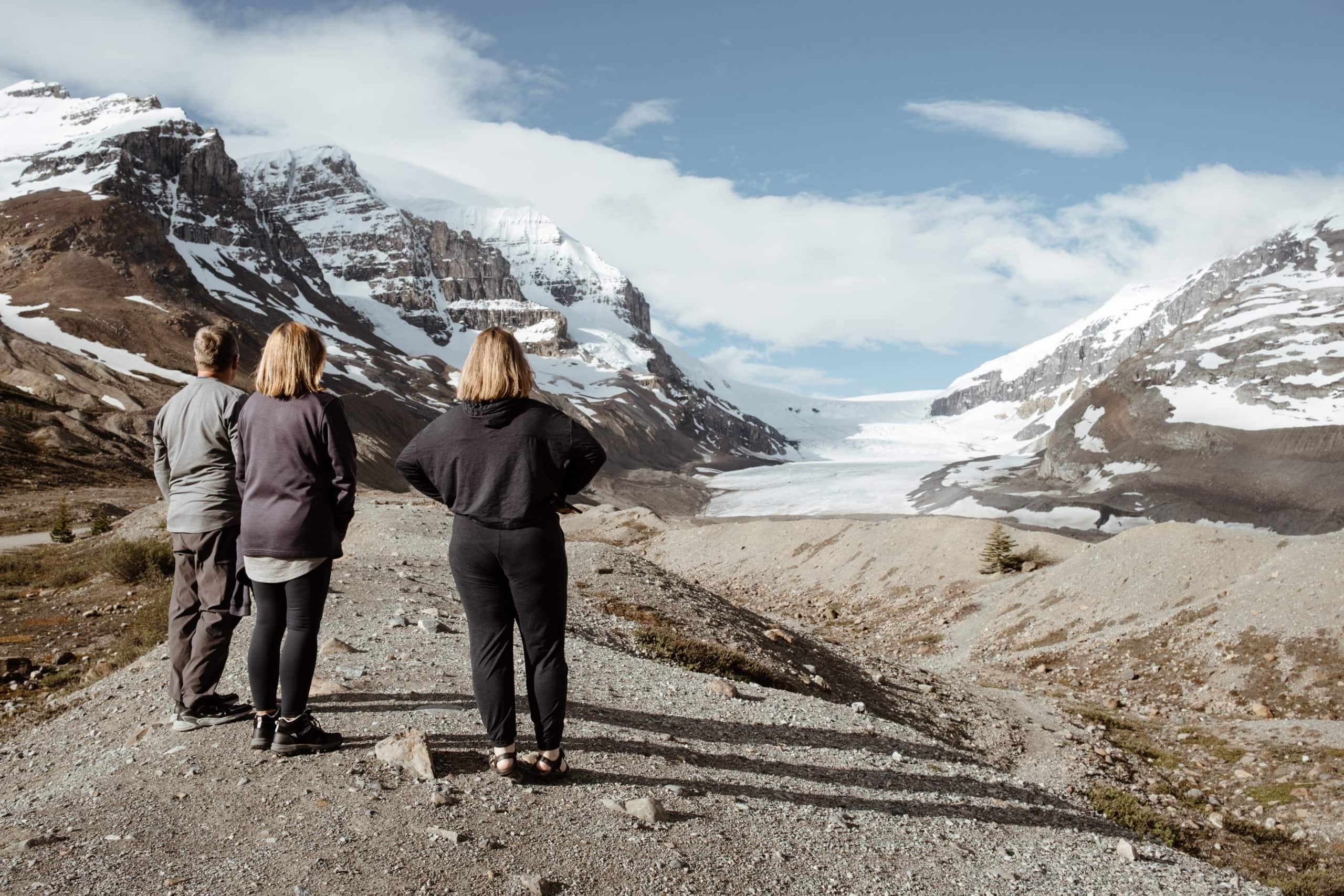
Next up on the Icefields Parkway, don’t miss the beautiful Athabasca Glacier — one of the “toes” of the Columbia Icefield. It’s an inspiring but sobering stop, as the glacier is rapidly disappearing due to climate change. Indeed, signs along the road to the glacier indicate how far the glacier used to extend in various years in the past. In just 125 years, the Athabasca Glacier has receded an alarming 1.5 kilometers.
From two different parking lots, you can either admire the glacier from a distance, or walk up closer to it via rocky walking paths. You can also book tours, like this one, that actually take you out on to the glacier.
Athabasca Falls
Athabasca Falls isn’t the tallest or largest waterfall I’ve ever seen, but it’s one of the most impressive in terms of sheer force. From a wide section of the Athasbasca River, water surges over eroding rocks and thunders into a narrow, tumultuous gorge the water has carved out over thousands of years. Below, water swirls around “pot holes” created by the path of the falls before finally escaping down the river.
There are several different paths and viewing platforms all around the falls. Be sure to follow them all so you can see the waterfall from all sides. It’s truly remarkable.
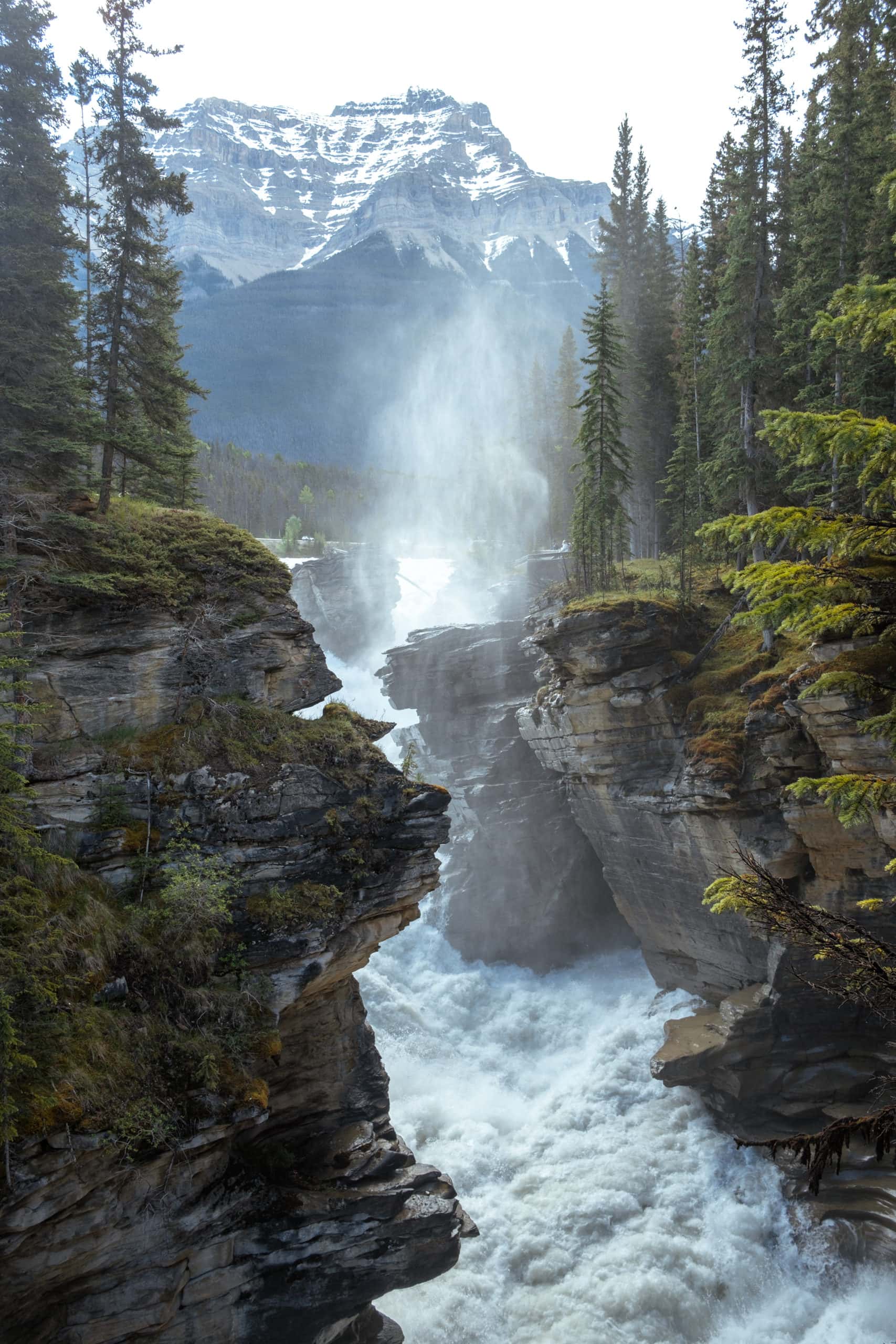
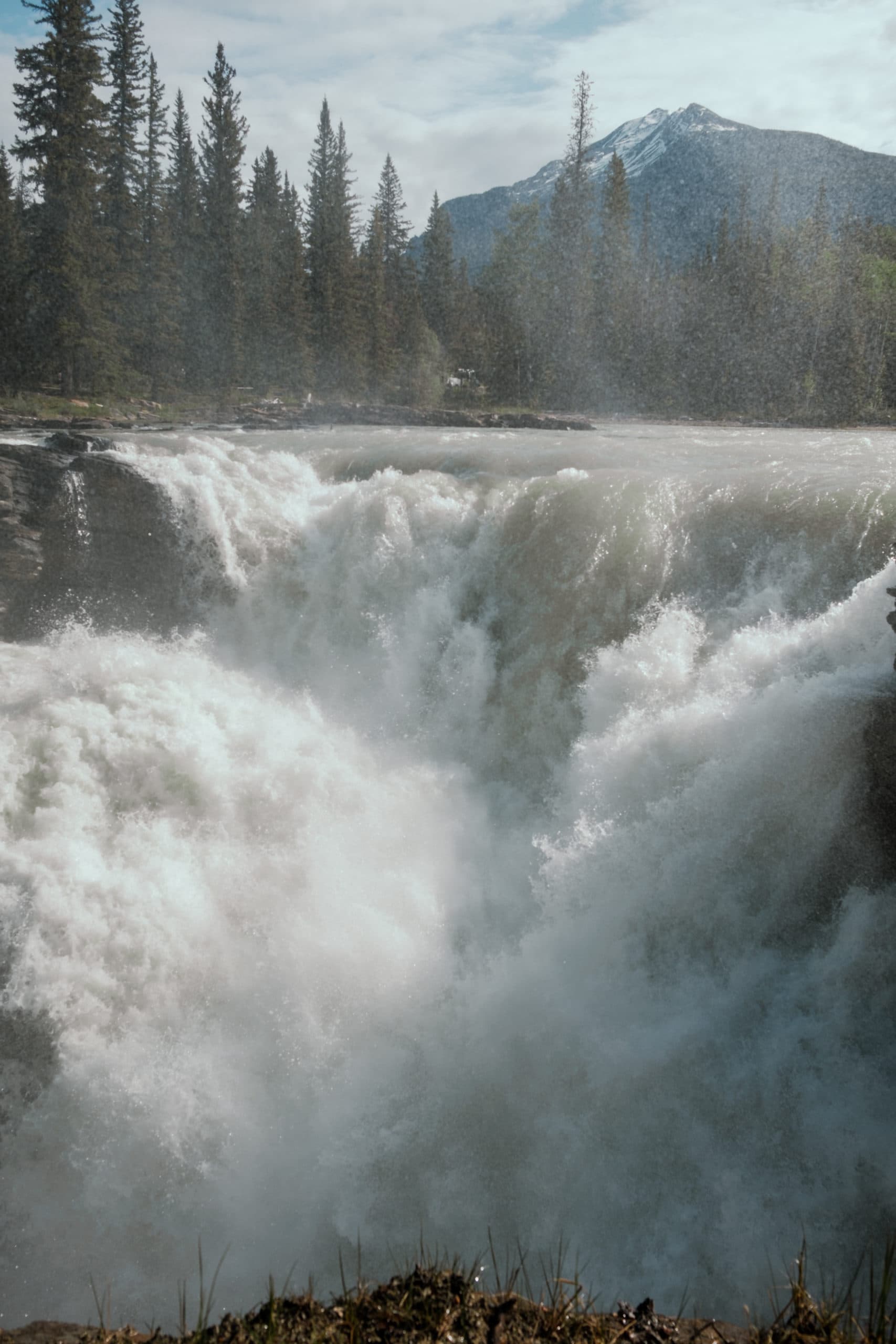
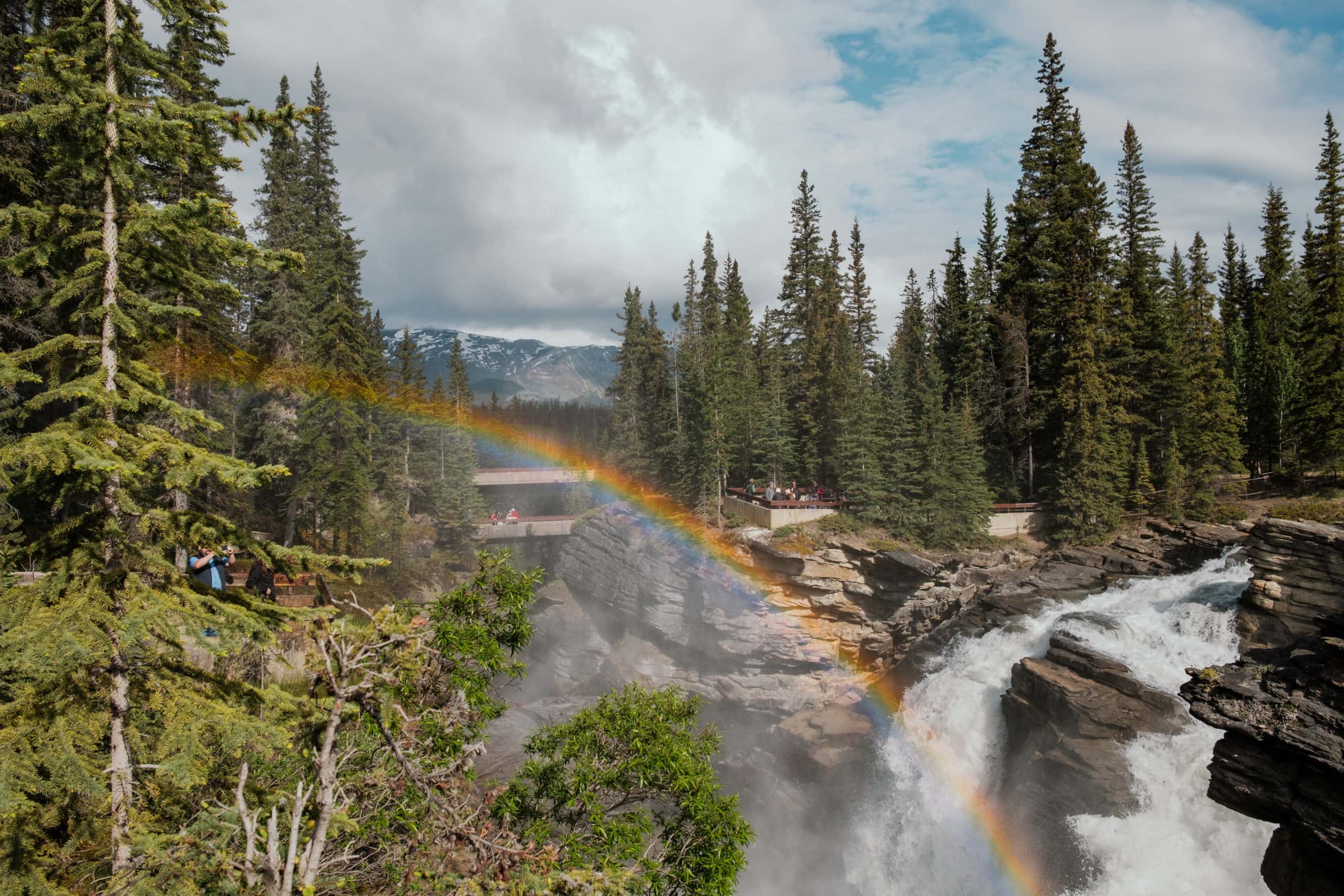
Please be cautious at Athabasca Falls. Several benches in the area memorialize young people who died at the falls after taking unnecessary risks. This waterfall is seriously powerful and not something to mess around with. That said, if you stay on the designated pathways and platforms, behind the railings, you will be fine.
Jasper
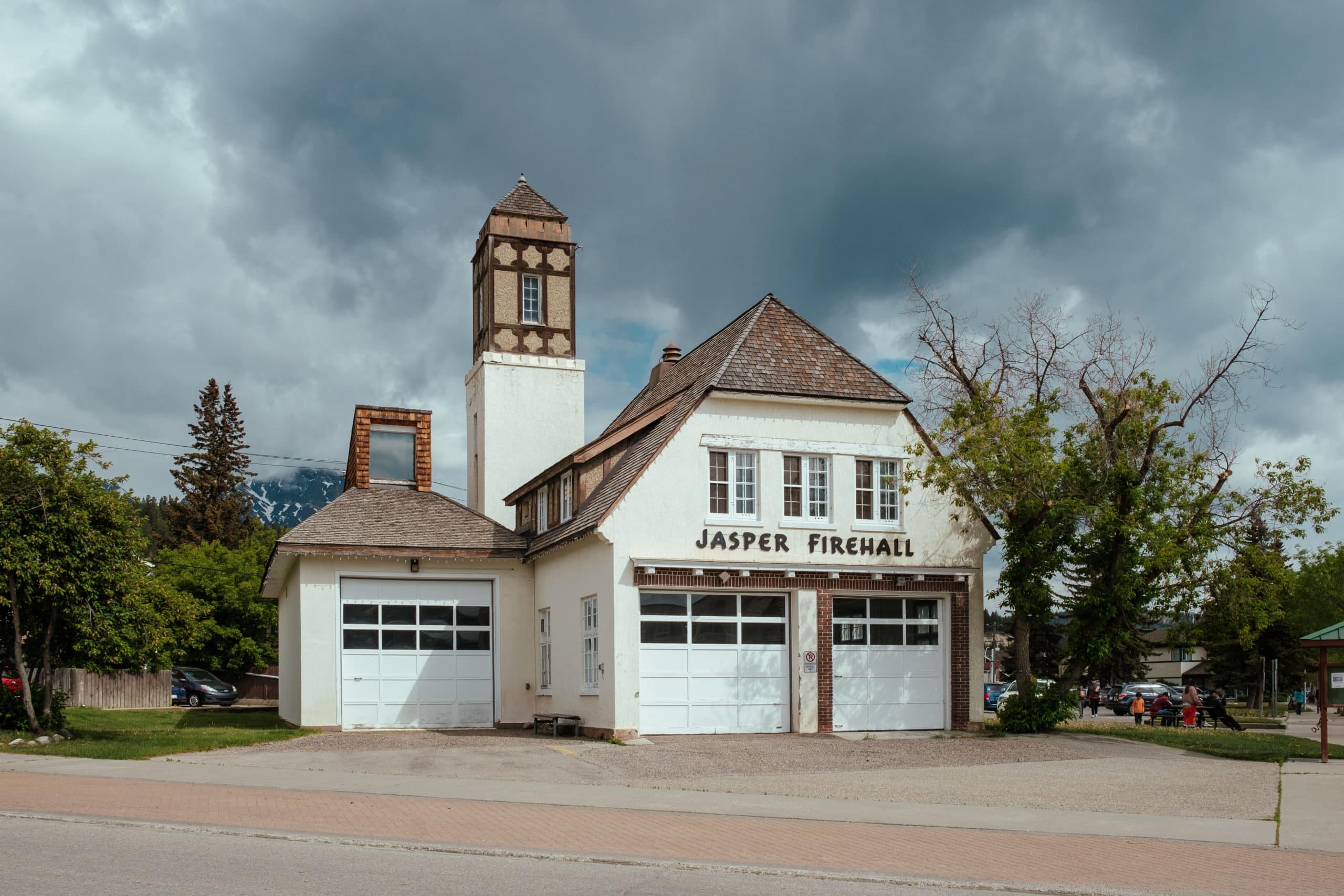
Finally, arrive in the town of Jasper and explore what it has to offer. While there are lots of shops and restaurants, Jasper also feels a little more residential than Banff. Be sure to stop in the very helpful information center if you’re looking for additional things to do in the area. For food, we enjoyed Jasper’s Wafflato.
Day 7
Maligne Canyon
Your first stop today is another intriguing slot canyon with pretty waterfalls and interesting geological formations. Conveniently, you can customize your visit to Maligne Canyon based on how much time and interest you have: the trail through the canyon passes over six different bridges, and you can choose to see them all or just stop after two or three if you’re short on time, don’t want to hike, etc.
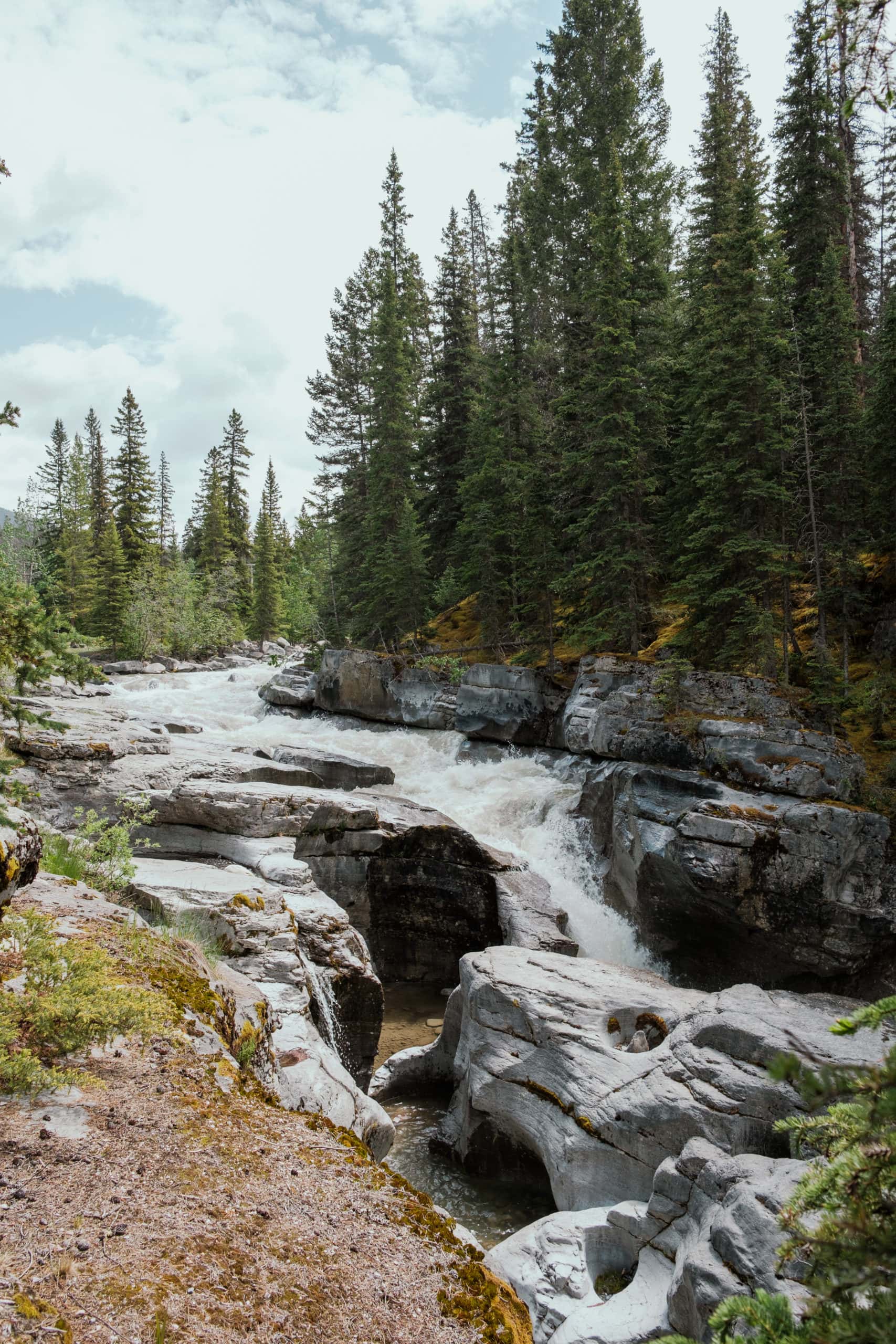
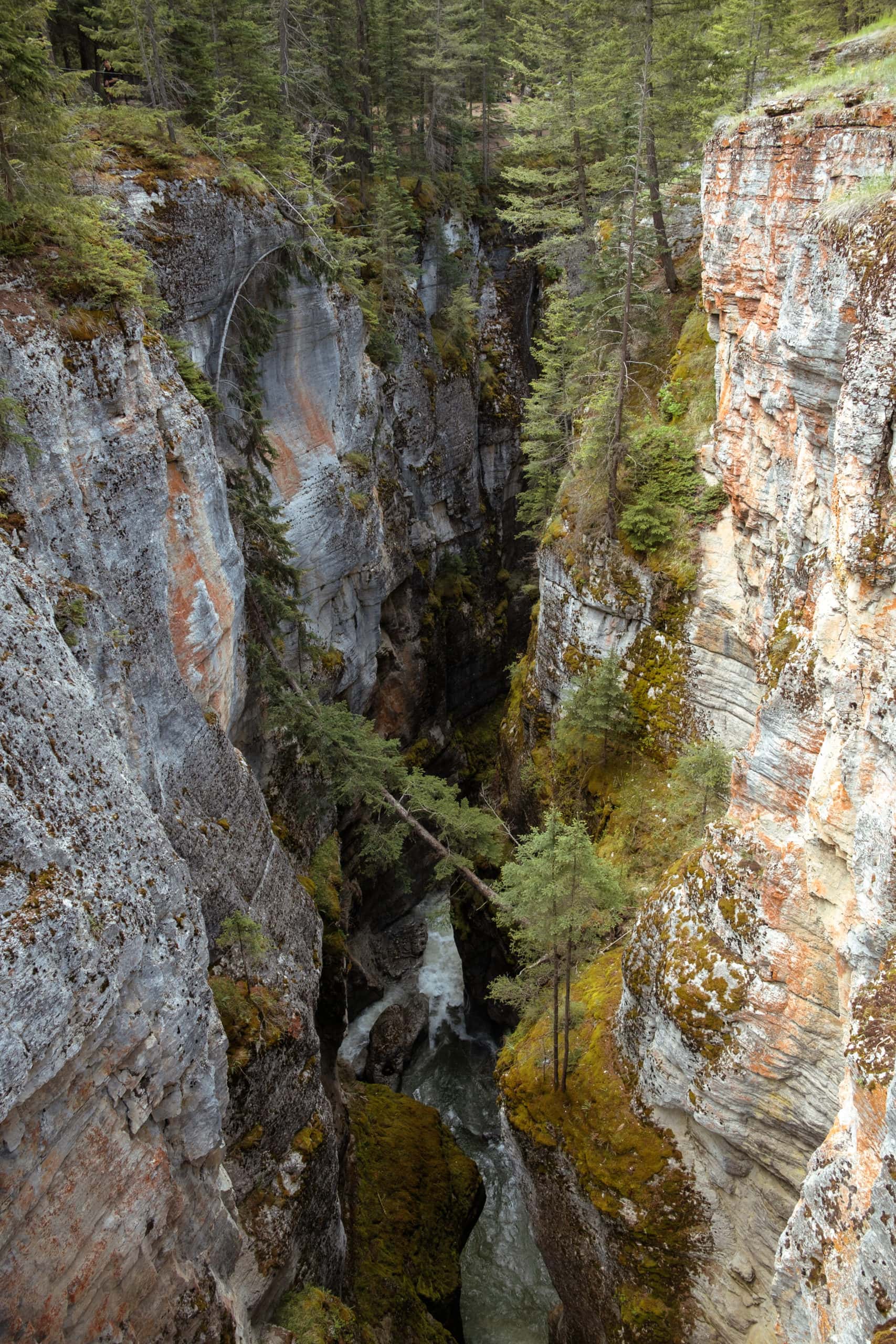
For more on visiting Maligne Canyon, click here.
Lake Annette
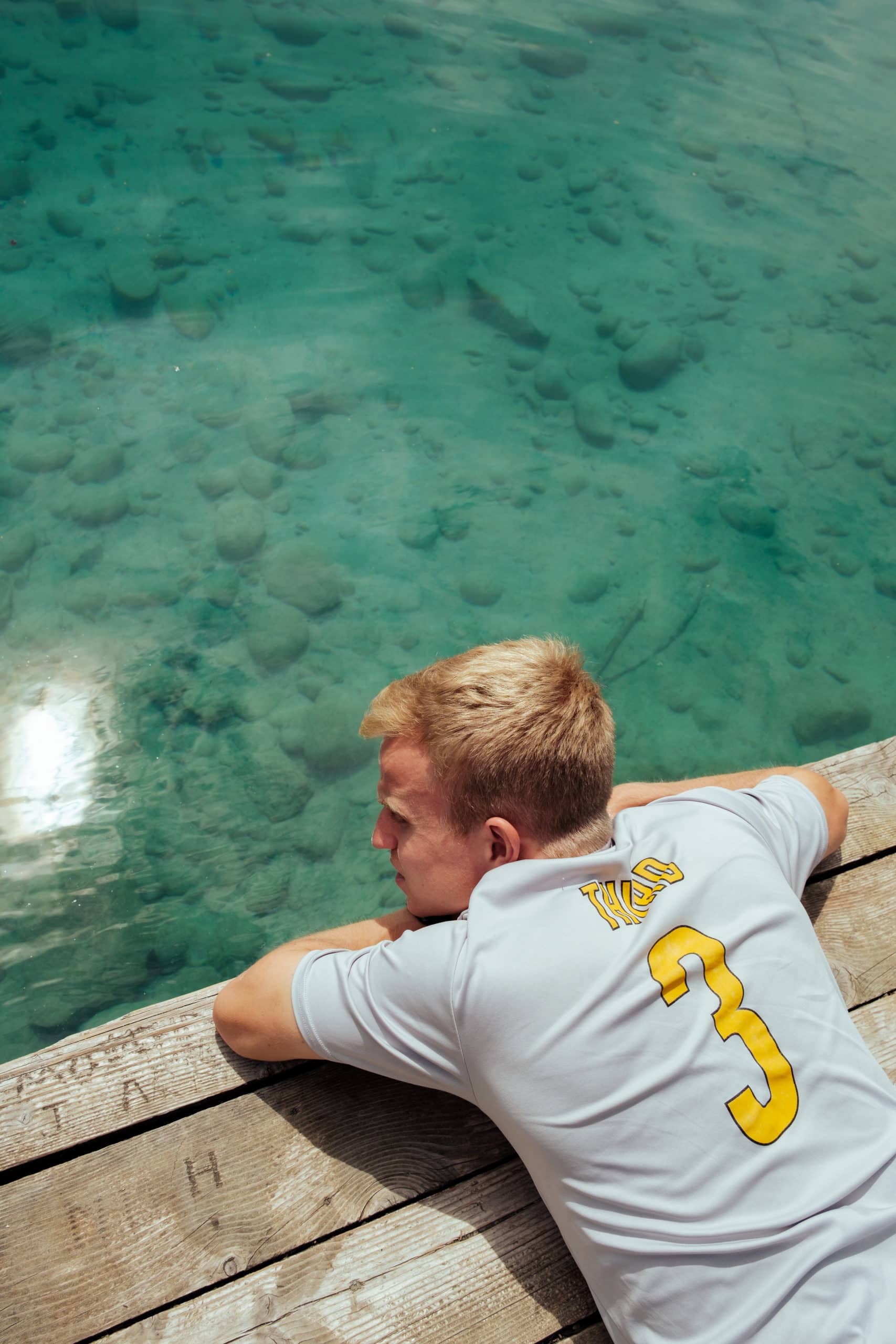
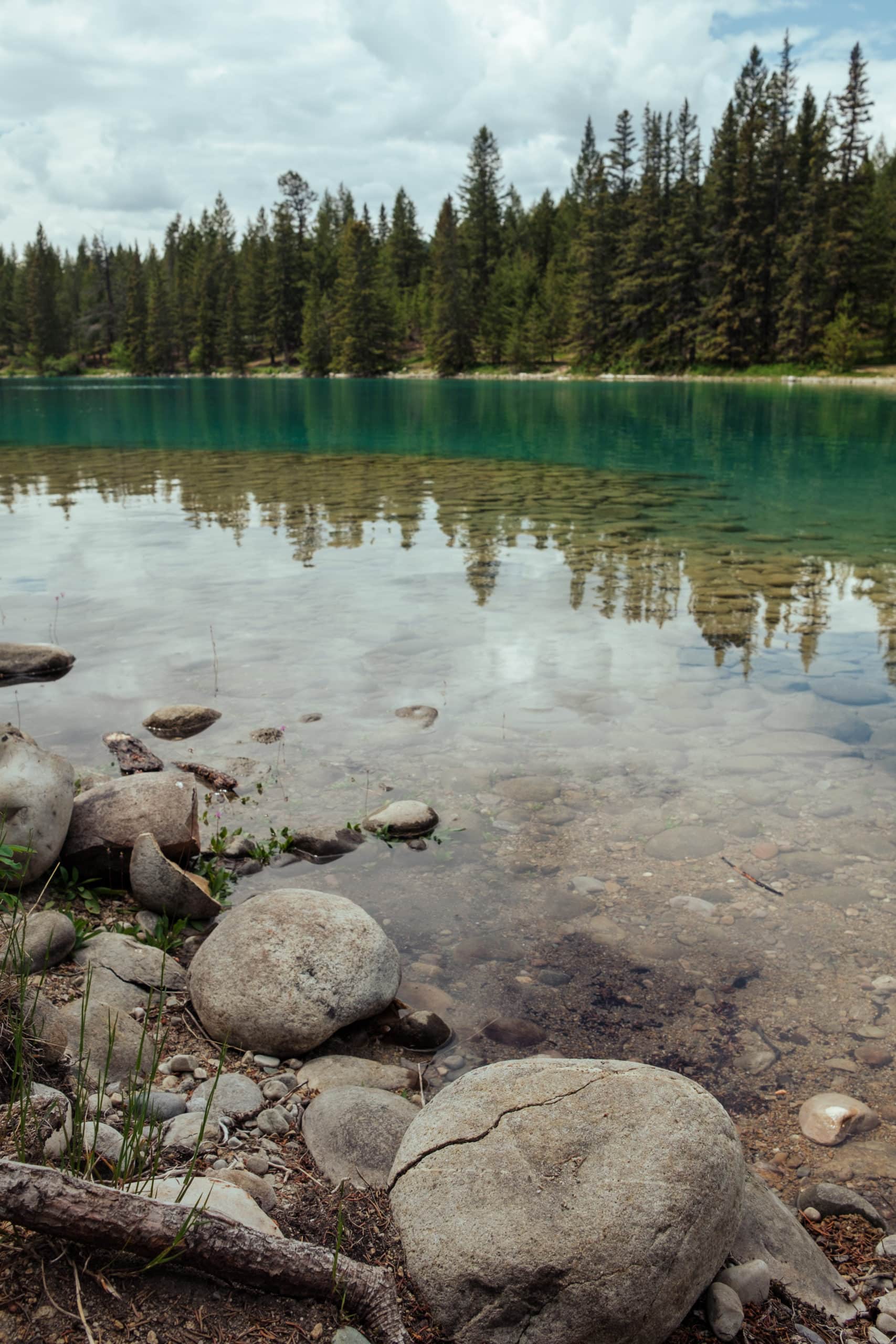
For lunch, stop at a grocery store and pack a picnic to eat at Lake Annette. It’s a lovely little lake with rich green colors and beautiful mountain views.
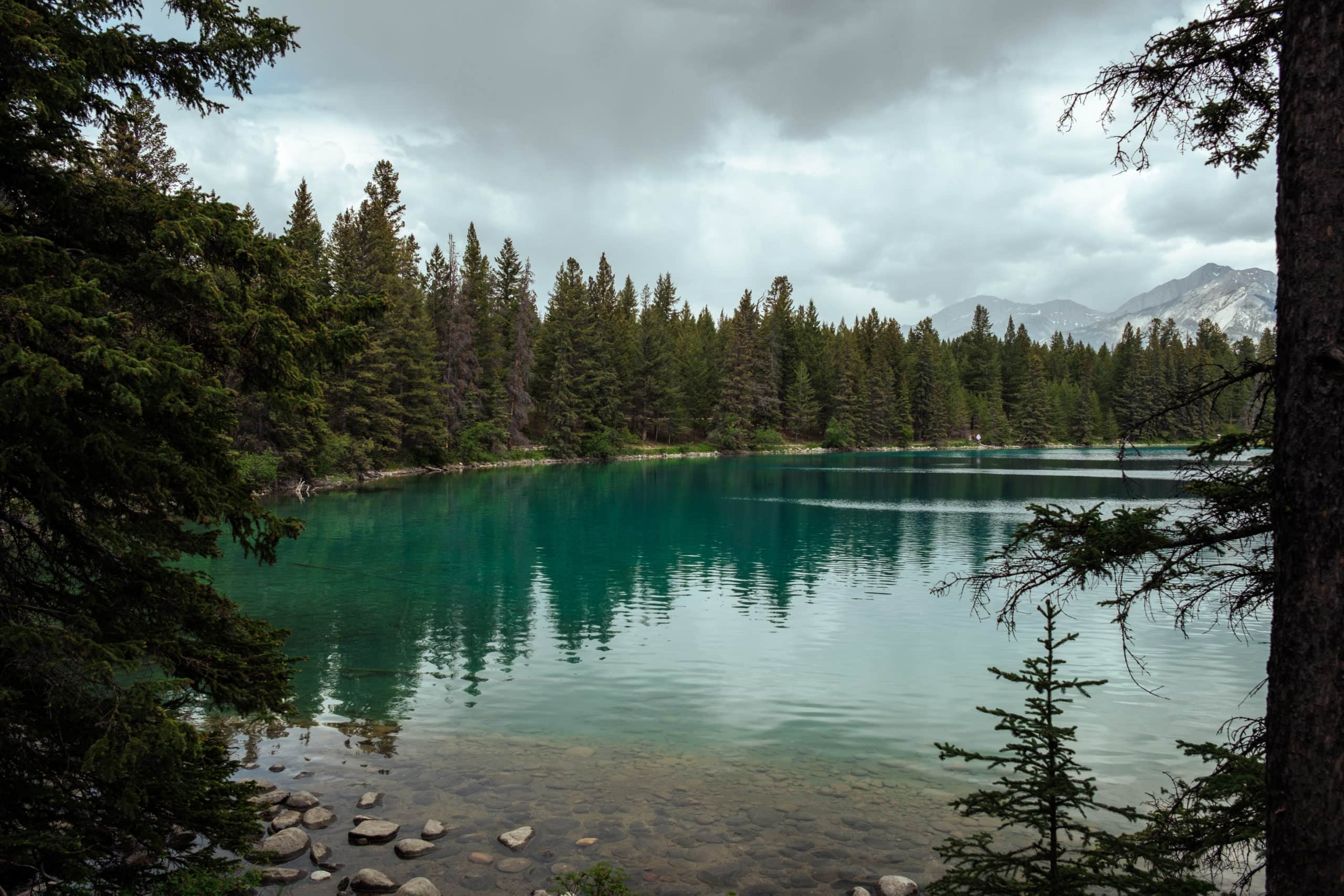
Then, stretch your legs with a 1.5-mile (or 2.4 kilometer) walk around the lake. It’s an easy, quiet loop — read more about it here.
Sunwapta Falls
Back on the Icefields Parkway, stop at the accessible Sunwapta Falls. Just a brief walk from the parking lot lies a viewing platform where you can see the Upper Sunwapta Falls from up close. Return to the path, and you’ll encounter a bridge with a great view over the upper falls.
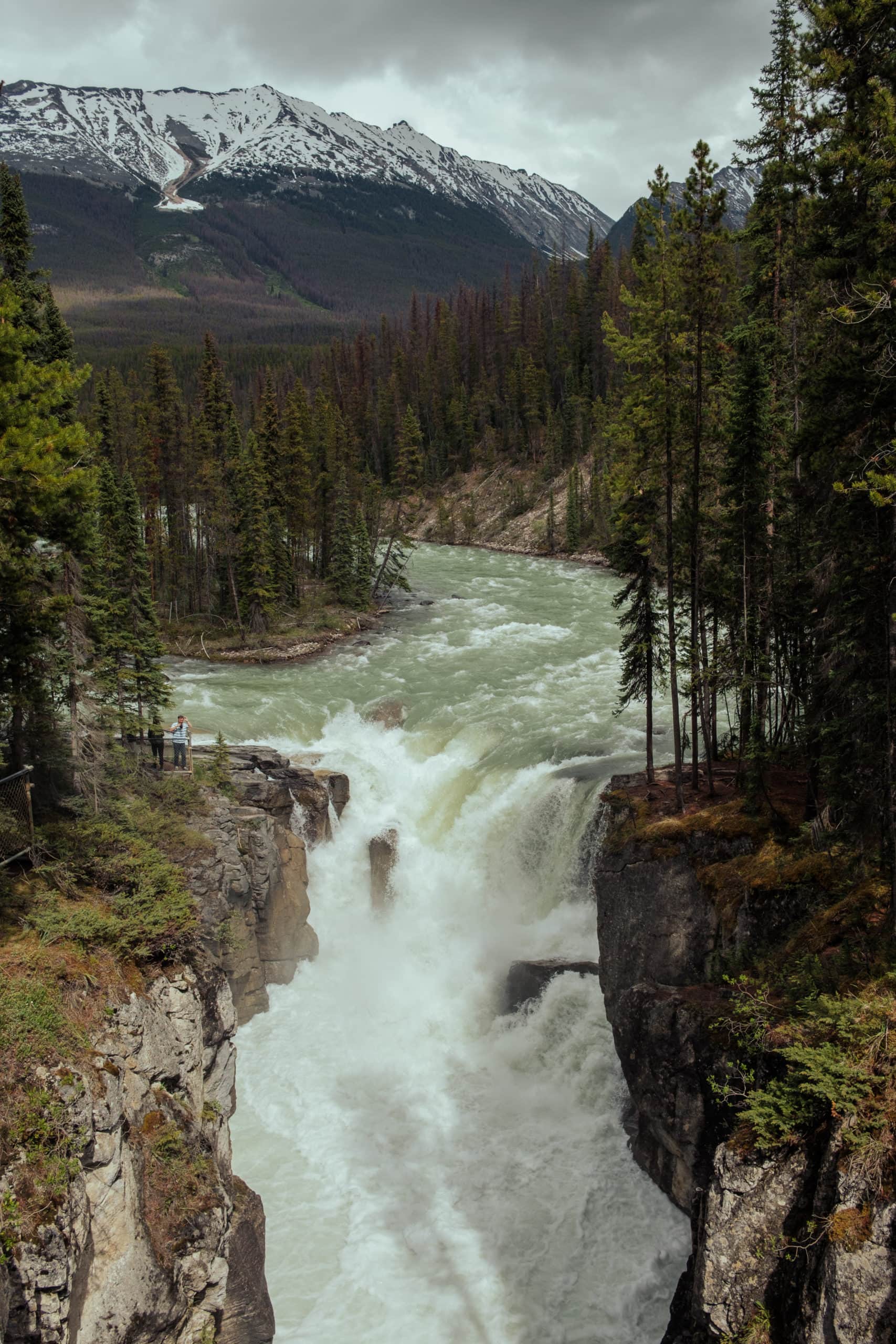
If you have the time to keep going, follow the signs to the Lower Sunwapta Falls too. The walk is just 2.6 kilometers (or 1.6 miles) round trip.
Peyto Lake
Your last stop before returning to Banff is one of the most famous views in the Canadian Rockies: Peyto Lake.
At this point, you’ve seen a lot of spectacularly colored lakes. But Peyto Lake is special, since you can easily see it from high above at the Bow Summit viewpoint. The view is magnificent, with rich green forests and snow-speckled peaks stretching as far as the eye can see.
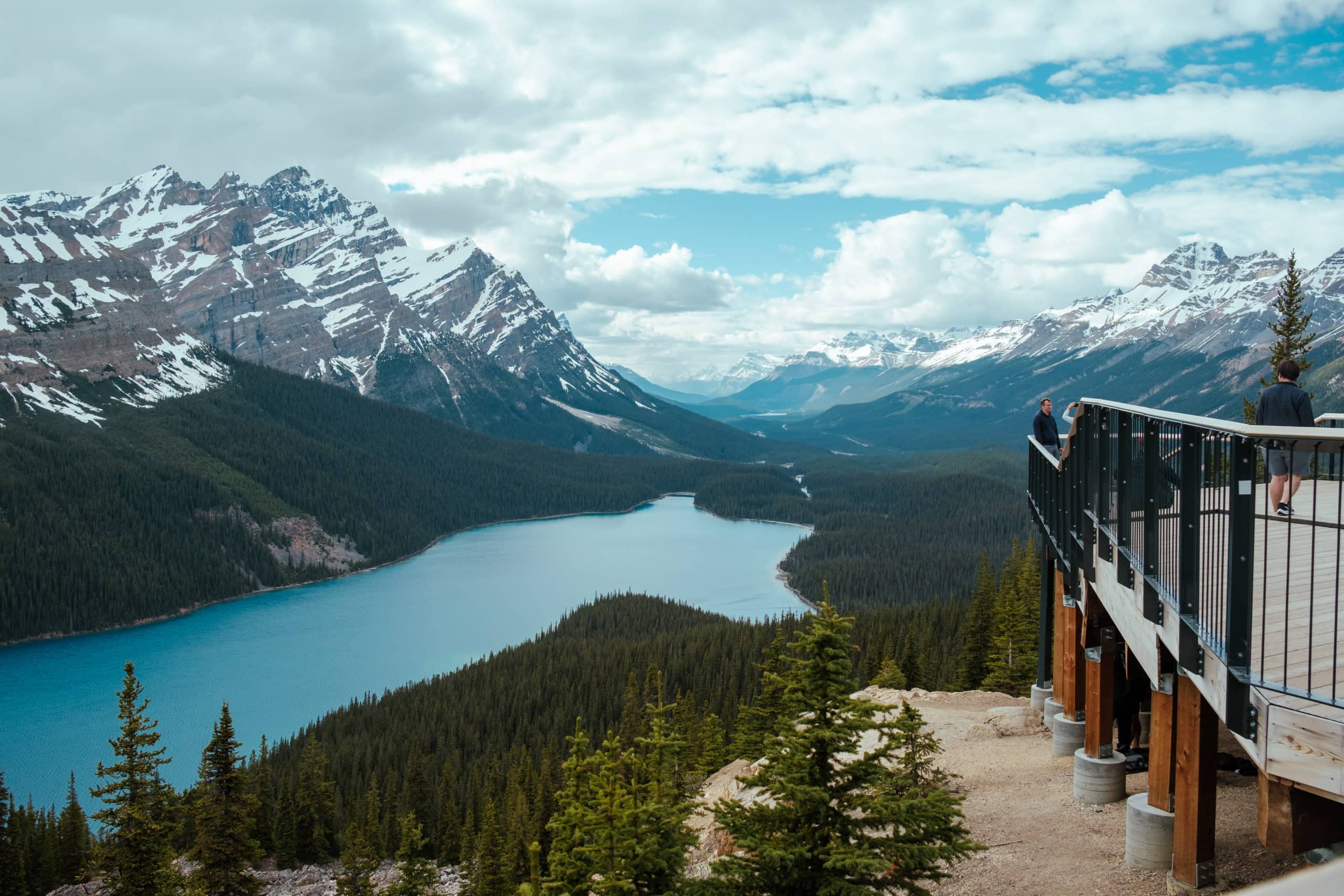
Read more about reaching this Peyto Lake viewpoint here.
Final Thoughts
The Canadian Rockies are a spectacular part of the world, well worth at least a week’s visit. In that amount of time, you can explore national parks, hike to fabulous viewpoints, drink wine in mountaintop restaurants and glamorous hotels, shop in charming small towns, and so much more.
I hope this post has helped you to plan the perfect week in Banff and beyond, full of whatever it is you most enjoy!
More Information About Canada
HIKING | Learn about 10 easy hikes in the Canadian Rockies.
TEA HOUSE | Hike high above Lake Louise to the wonderful Lake Agnes Tea House.
QUEBEC CITY | Soak up some European vibes with three days in charming Quebec City.
pin this post