Louvre or Musée d’Orsay: Which One Should You Visit?
Of all the esteemed museums in Paris, two stand above the rest in terms of fame and popularity.
There’s the Louvre, of course — that storied former palace, now a massive museum complex with some of the most famous works of art in the entire world.
And there’s Musée d’Orsay, which fills an expansive former train station with the world’s best collection of Impressionist paintings and much more.
Yes — spoiler alert — both the Louvre and Musée d’Orsay are well worth visiting. But what if you only have the time or budget (or desire!) to visit one of them? Should you visit the Mona Lisa and the royal grandiosity of the Louvre, or admire the Impressionists in Musée d’Orsay?
In this post, learn all about what it’s like to visit both the Louvre and Musée d’Orsay. Then, I’ll compare the two museums and tell you which one I think you should visit, depending on your schedule and interests.
This post contains affiliate links. If you make a purchase or a booking through one of these links, I may receive a small commission at no extra cost to you. Thanks for supporting In Old Cities in this way!
What to Know About Visiting the Louvre
Louvre Tickets
There are several ways to purchase tickets for the Louvre, including: (1) purchasing from the museum directly, whether in advance or on arrival; (2) using the Paris Museum pass; (3) booking a guided tour.
Purchasing directly from the Louvre
There are a LOT of third-party websites that are trying to fool you into thinking that they’re the real Louvre ticketing site. Ignore them all — here is the official Louvre website, where you can buy Louvre tickets straight from the source:
You can also purchase tickets on arrival (at the pyramid entrance), assuming they’re not already sold out for the day. However, be warned that this option may entail waiting in line for some time, particularly if you’re visiting during a high tourist season (like the summer).

Paris Museum Pass
If you’re planning to visit other museums and popular attractions during your visit to Paris, it may be worth purchasing the Paris Museum Pass, which can save some money (provided you use it enough).
The Paris Museum Pass is valid for either 2, 4, or 6 days, depending on your selection, and covers lots of Paris’s popular tourist sites, including Arc de Triomphe, the Pantheon, Sainte-Chapelle, tons of museums, and more.
To determine whether to buy the Paris Museum Pass, I recommend adding up the costs of tickets for the sites you plan to visit while in Paris and comparing the total to the cost of buying the Museum Pass.
Notably, if you do buy the Paris Museum Pass, you will not have to pay any extra for a Louvre ticket — the cost is entirely covered by the Museum Pass. However, you WILL need to reserve an entrance time for the Louvre in advance. To do so, follow the instructions and link on the Paris Museum Pass website here.
Guided tour
If you’d like a little direction for your Louvre experience — which is totally understandable, given how massive and overwhelming it is — you might consider booking a guided tour. With this option, you’ll follow a guide who will lead you to many of the most important and interesting works of art within the Louvre and will tell you what to know to know about them.
Well-reviewed guided tours of the Louvre include these options:
Entering the Louvre
You’re probably familiar with one of the entrances to the Louvre — I.M. Pei’s famous glass pyramid — but it’s not the only place you can enter the Louvre. However, note that the other entrances have some restrictions! Here are the additional options:
- Galerie du Carrousel: An underground shopping mall in the area surrounding the Louvre’s pyramid (this is where you will exit the Louvre, whenever you leave). You can get there several ways, including an escalator at 99 Rue de Rivoli. Entrance via Galerie du Carrousel is available to groups, Louvre members, and visitors with tickets.
- Richelieu: The Richelieu Passage entrance is within the Richelieu (northern) wing of the Louvre. It’s available only to groups and Louvre members — NOT to normal visitors.
- Porte des Lions: The Porte des Lions entrance, located here, is available to visitors with tickets.
Importantly, if you are planning to buy a ticket upon arrival (rather than buying one in advance), you can ONLY enter at the pyramid. There is nowhere to buy a ticket at the other entrances.


Another note: even if you do purchase a ticket in advance, I recommend showing up before your entrance time — particularly if your ticket is for the opening time slot and you’re trying to get into the museum to see popular attractions like the Mona Lisa before the masses arrive.
At the pyramid, at least, the Louvre uses an alternating line system where there is one line for entry slots on the hour and another for entry slots on the half hour, and people start lining up for their respective slots well in advance of the actual entry time. During my last visit, I had a 9 am ticket (the opening time slot), and when I arrived soon after 8:30 a.m., there were already dozens of people in line for 9 a.m. entry at the pyramid (see the photo above!).
Regardless of when and where you enter, be prepared to go through a security line before you permitted into the museum.
MY RECOMMENDATION: If your top priority is avoiding lines, go to Porte des Lions, which is the farthest from the museum and therefore typically attracts the fewest visitors. But I generally recommend entering via the iconic pyramid for the unique experience.
Exploring the Louvre
After you get through security, you will find yourself in an entry hall underneath the pyramid. From here, you will need to decide which wing of the Louvre to start in — the Richelieu, Sully, or Denon.

The Louvre is so big that it’s not possible to see everything in one day, so you’ll need to go in with a bit of a plan. I also strongly recommend grabbing a map on your way in so you can keep track of where you are.
There are many ways to approach the Louvre, but I recommend choosing one of the following:
- Do some research in advance and make a list of the art you want to see and which gallery each piece is located in. Ideally, make a plan for the order you’d like to visit them in so you don’t end up backtracking and walking extra miles — literally.
- Just want to see the Mona Lisa? Book an entrance ticket for the opening time slot, get in line as early as you can bear it, and book it straight to Room 711 (in the Denon wing) as fast as you can when you enter. If you’re lucky, you’ll be one of the first dozen or two people in the room and can see the painting without many rows of people in front of you. After that, be sure to see other mega-famous pieces like Venus de Milo and the Winged Victory of Samothrace (you’ll pass the latter on the way to Mona Lisa, but don’t stop!).
- Follow one of the Louvre’s own pre-designed routes.
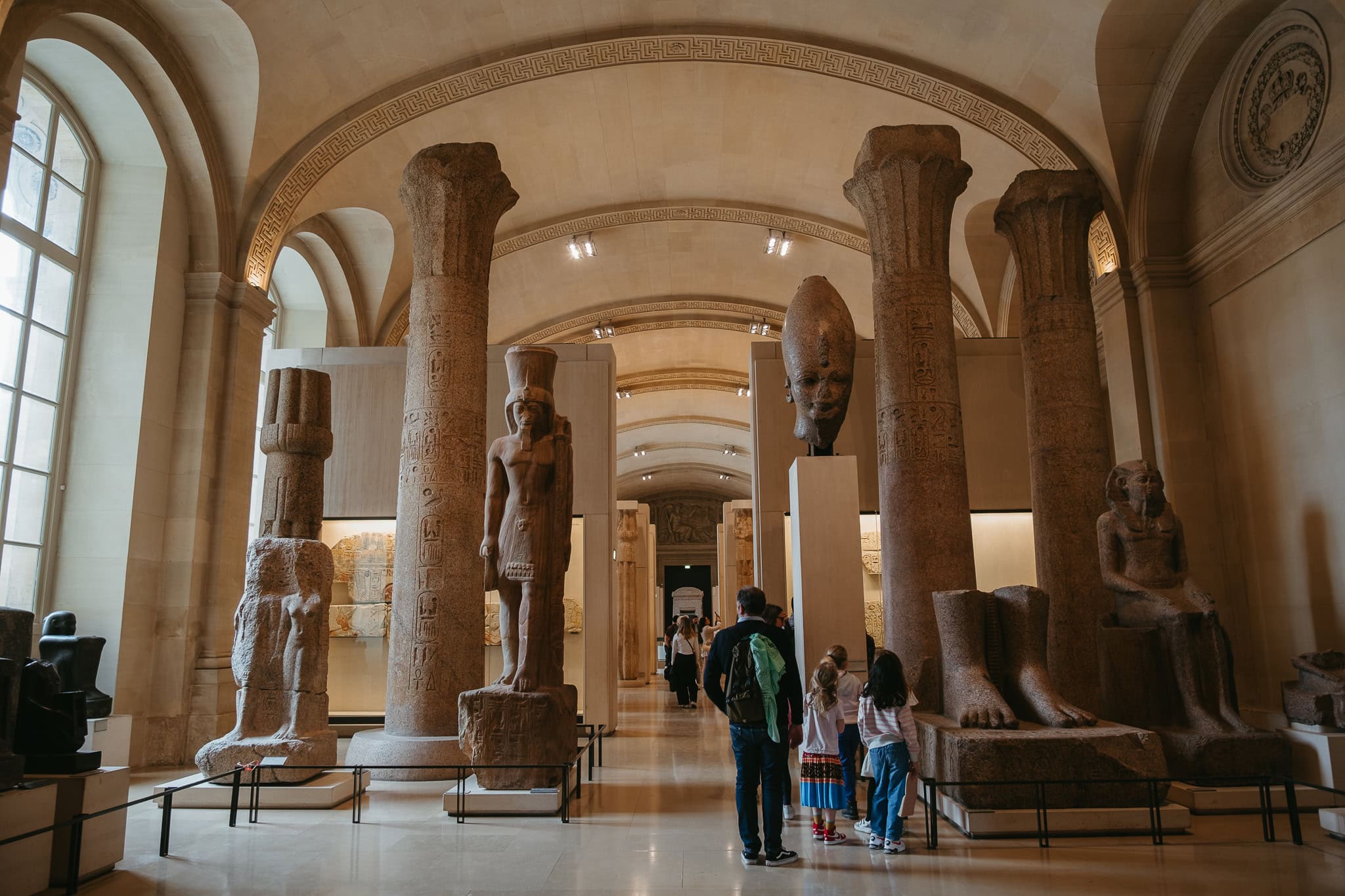
- Pick one wing and stick to it, exploring as many of the galleries as you can handle. If this is your plan, here’s what to know before you choose: the Denon wing contains most of the best-known paintings in the museum, including the Mona Lisa; the Sully wing contains many of the oldest and most historic pieces in the museum, including the Egyptian collection; and the Richelieu wing contains a rather eclectic collection, including the Code of Hammurabi, the Napoleon III apartments, and a pair of beautiful courtyards.
- Choose not to care at all about what you see and just wander, following your whims.
Helpfully, the museum contains a lot of signage pointing the way toward some of the best-known works of art, such as the Mona Lisa. If your main interest in visiting the Louvre is seeing its most famous treasures, keep an eye out for these signs and let them lead the way.

For what it’s worth, here are a few of the pieces and galleries I think are most worth seeing, and where you can find them:
- Mona Lisa (Room 711, Denon wing)
- Venus de Milo (Room 346, Sully wing)
- Winged Victory of Samothrace (Room 345, Sully wing)
- Napoleon III Apartments (Richelieu wing)
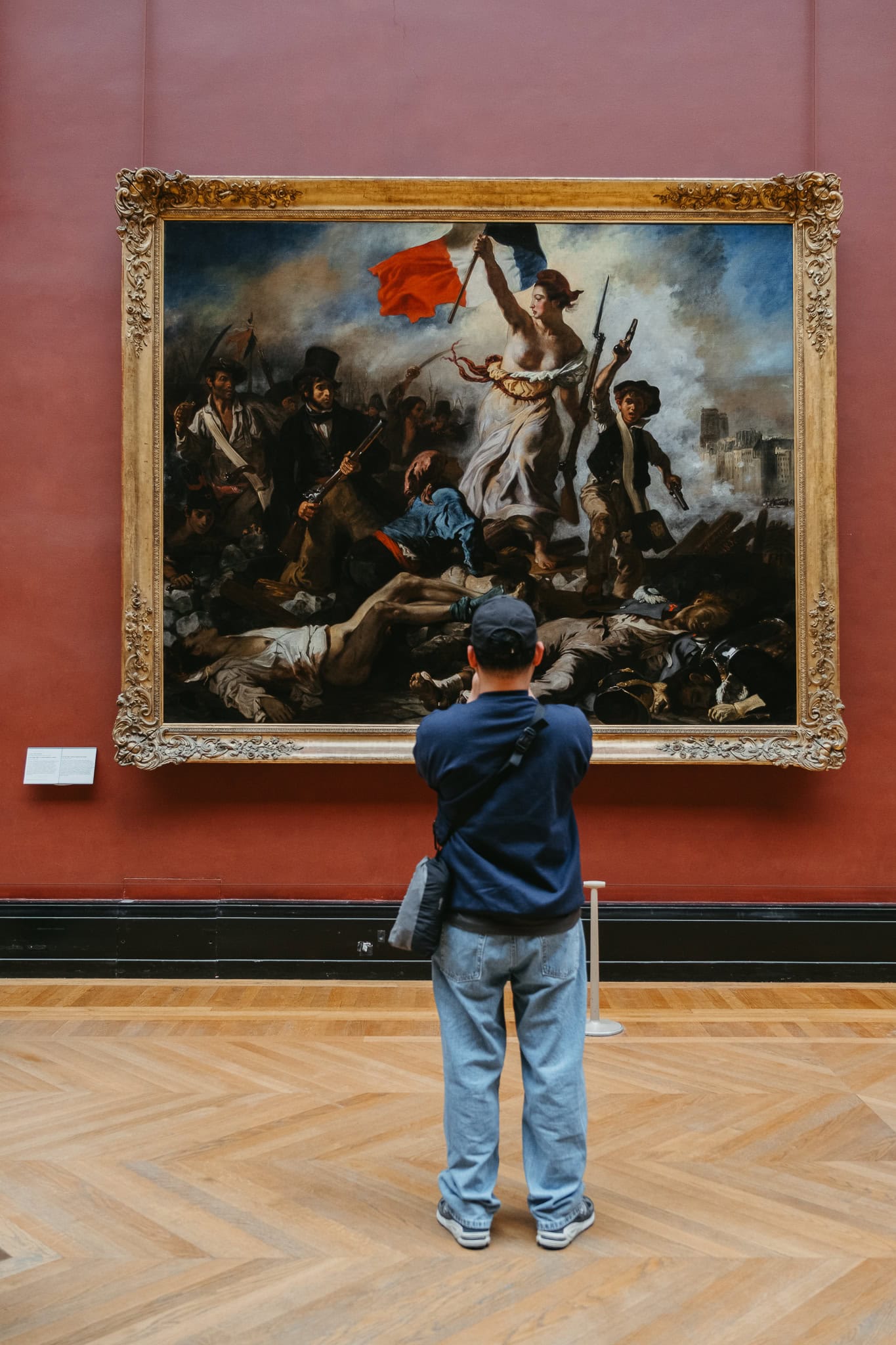
- Liberty Leading the People (Room 700, Denon wing)
- The Grand Gallery (Denon wing)
- Great Sphinx of Tanis (Room 338, Sully wing)
- Cour Puget and Cour Marly (Richelieu wing)
KNOW BEFORE YOU GO: The Louvre is currently undergoing a massive, multi-year renovation project, so it’s possible that some of the galleries and areas you’re interested in seeing might be closed during your visit, and/or some of the art may be temporarily relocated.
Is the Louvre Worth Visiting?
Yes, the Louvre is certainly worth visiting. It’s perhaps the most famous art museum in the world, with countless treasures and centuries of history. There are good reasons that visitors to Paris flock to the Louvre!
That said, I’d never recommend that you do something you hate just because people say it’s the thing to do. Do you typically hate art museums? If so, you’re probably really going to hate the Louvre — it’s the quintessential art museum.
Sure, if you still want to see the Mona Lisa, you’ll have to visit the Louvre at least once, but if you don’t care about that, then why pay money and spend hours of your valuable time doing something you don’t enjoy? If that’s the case, skip the Louvre and go enjoy a coffee at a cafe, or climb a church tower for some views, or do whatever it is that appeals to you instead!



What to Know About Visiting Musée d’Orsay
Musée d’Orsay Tickets
Just like with tickets for the Louvre, in order to get tickets for Musée d’Orsay, you can: (1) purchase from the museum directly, whether in advance or on arrival; (2) use the Paris Museum pass; (3) book a guided tour.
Purchasing directly from Musée d’Orsay
As with the Louvre, there are a number of third-party websites pretending to be official ticketing sites for Musée d’Orsay. Ignore them — this is the official Musée d’Orsay website.
You can also purchase tickets on arrival, if they’re not already sold out for the day, but that may entail waiting in a long line. I recommend purchasing tickets in advance if you have a good sense of your plans.
Paris Museum Pass
The Paris Museum Pass also includes entrance to Musée d’Orsay.
In case you skipped it above, here’s another brief overview of the Paris Museum Pass: it covers entrance to many of Paris’s museums and top tourist sites for either 2, 4, or 6 days (you choose). Basically, you pay one large fee for the pass and then you can visit as many of the covered attractions as you want (or can squeeze in).
Notably, if you do buy the Paris Museum Pass, you will not have to pay any extra for a Musée d’Orsay ticket — the cost is entirely covered by the Museum Pass. However, you WILL need to reserve an entrance time for Musée d’Orsay in advance. To do so, follow the instructions and link on the Paris Museum Pass website here.
Guided tour
If you’d like a little expert assistance navigating the museum and understanding what you’re looking at, you might consider booking a guided tour.
Well-reviewed guided tours of Musée d’Orsay include the following:
Entering Musée d’Orsay
Unlike the Louvre, there’s only one place to enter Musée d’Orsay — but the entrance does have multiple lines/doors (one for the Paris Museum Pass, one for other pre-booked tickets, one for purchasing tickets, etc.), and it’s important that you select the correct one. Pay close attention to the signage at the doors and join the line that matches your circumstances.
As with the Louvre, you will go through security before entering the museum officially.
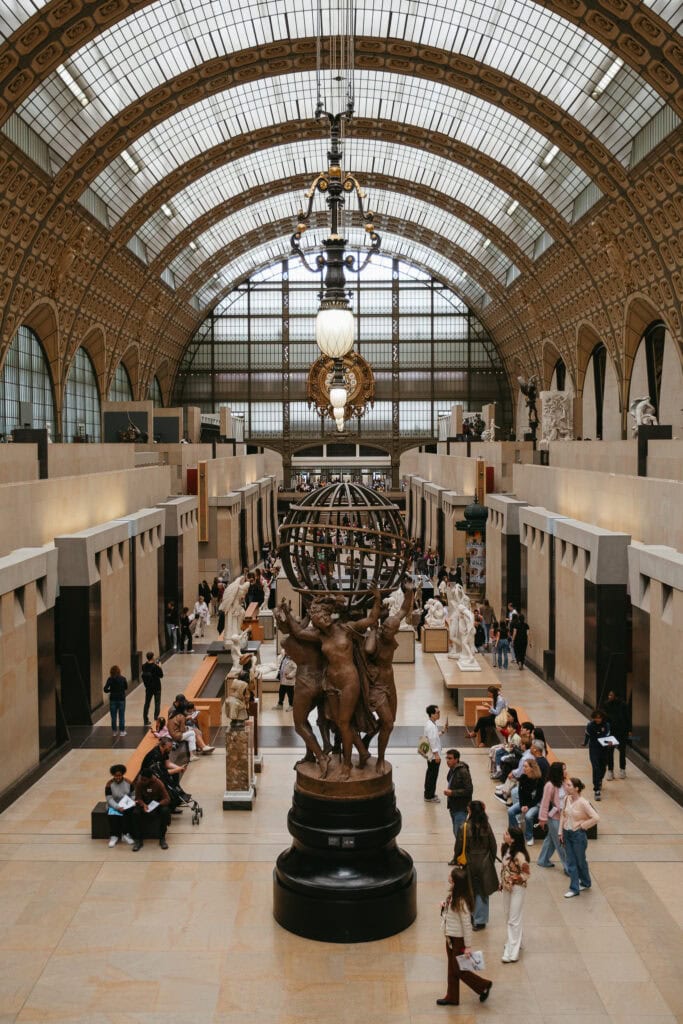
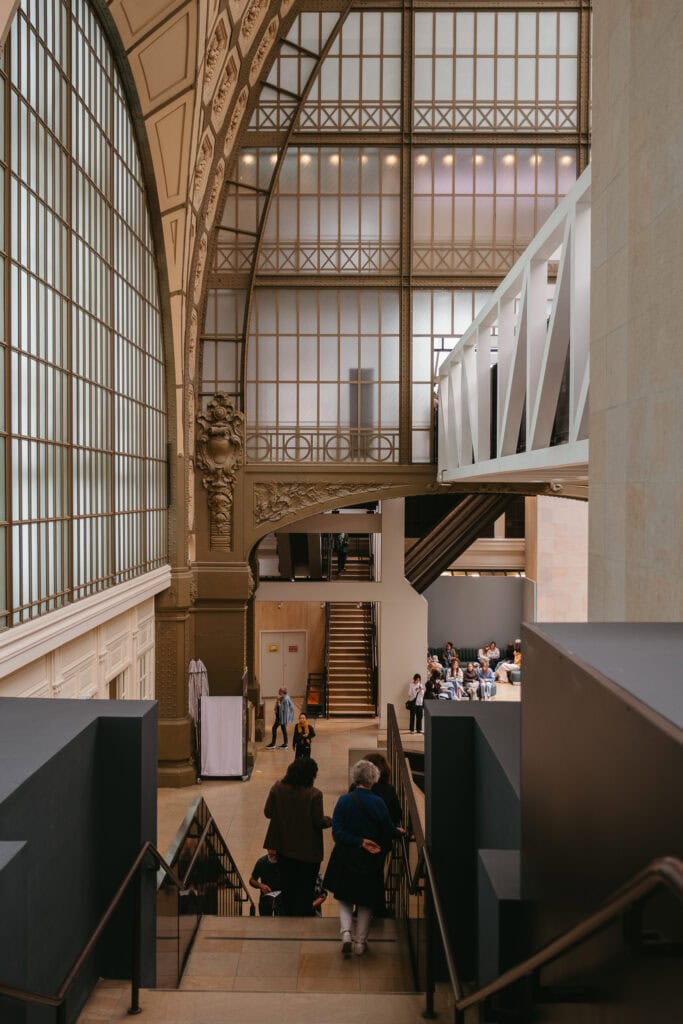
Once you are inside, you can enter the massive main hall — which is gorgeous and cavernous, with a huge arched ceiling and statues now placed along the floor. This might have been quite the place to board a train back in the day!
Alternatively, turn immediately toward the escalators to the side of the entrance and head up to one of the galleries on the sides of the museum — more on that in the next section.
Exploring Musée d’Orsay
I strongly recommend that you try to enter Musée d’Orsay during the first time slot of the day. It gets very full and busy, particularly in popular areas like the Impressionism galleries.
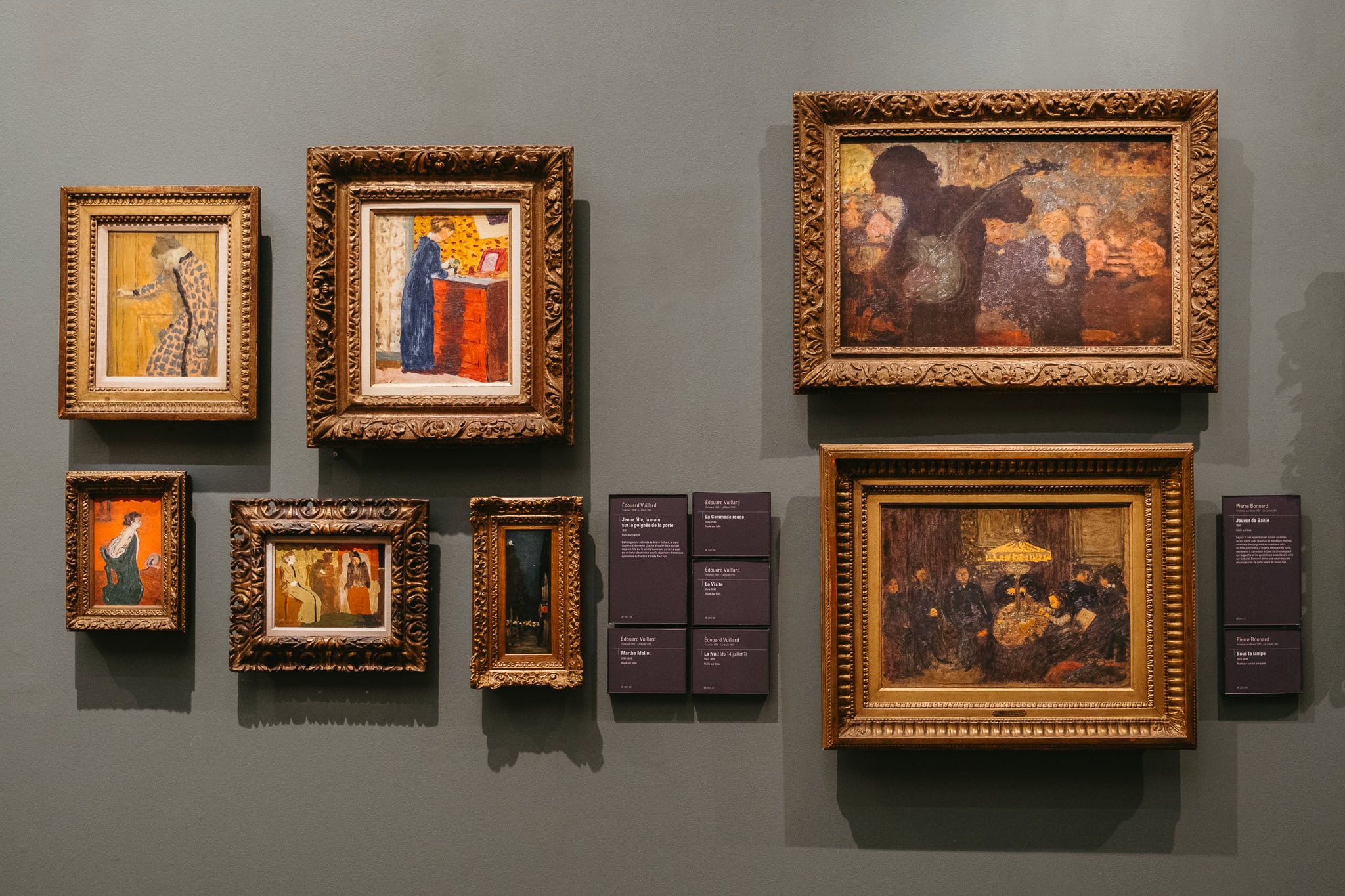
If you follow this advice, when you enter the museum, you should book it straight to the top floor, where you’ll find the Impressionists on the side of the building nearest to the Seine. Speaking from experience, you will enjoy these galleries much more without the crowds that flock there soon after the museum opens.
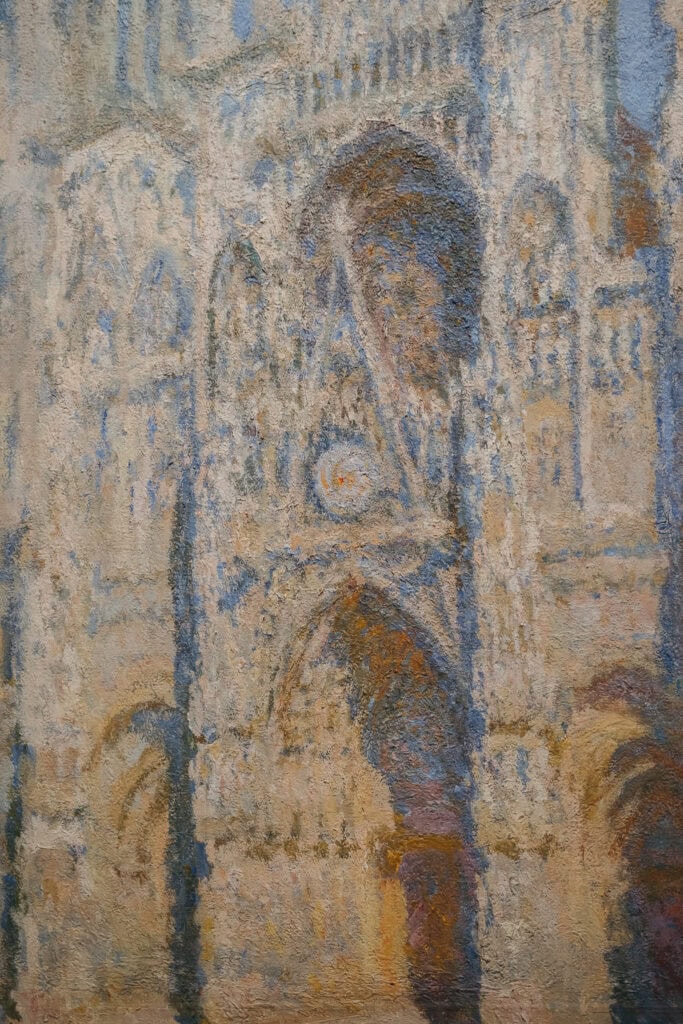

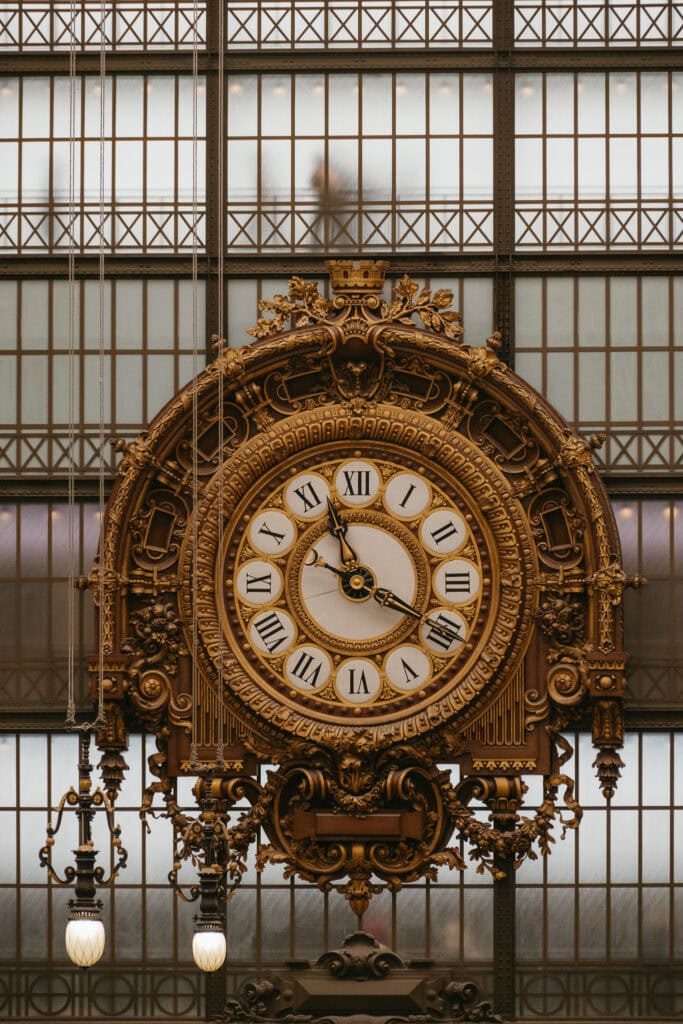
On the top floor, you’ll also find the museum’s famous clock windows, which are remnants of the train station that once filled the building. These windows are exactly what they sound like: large round windows that each contain a clock. They’re one of the most popular things to photograph in Paris!
One of the clock windows is within the museum’s cafe. You can walk past the cafe and photograph the window from a distance, but you can’t get near it unless you actually patronize the cafe.
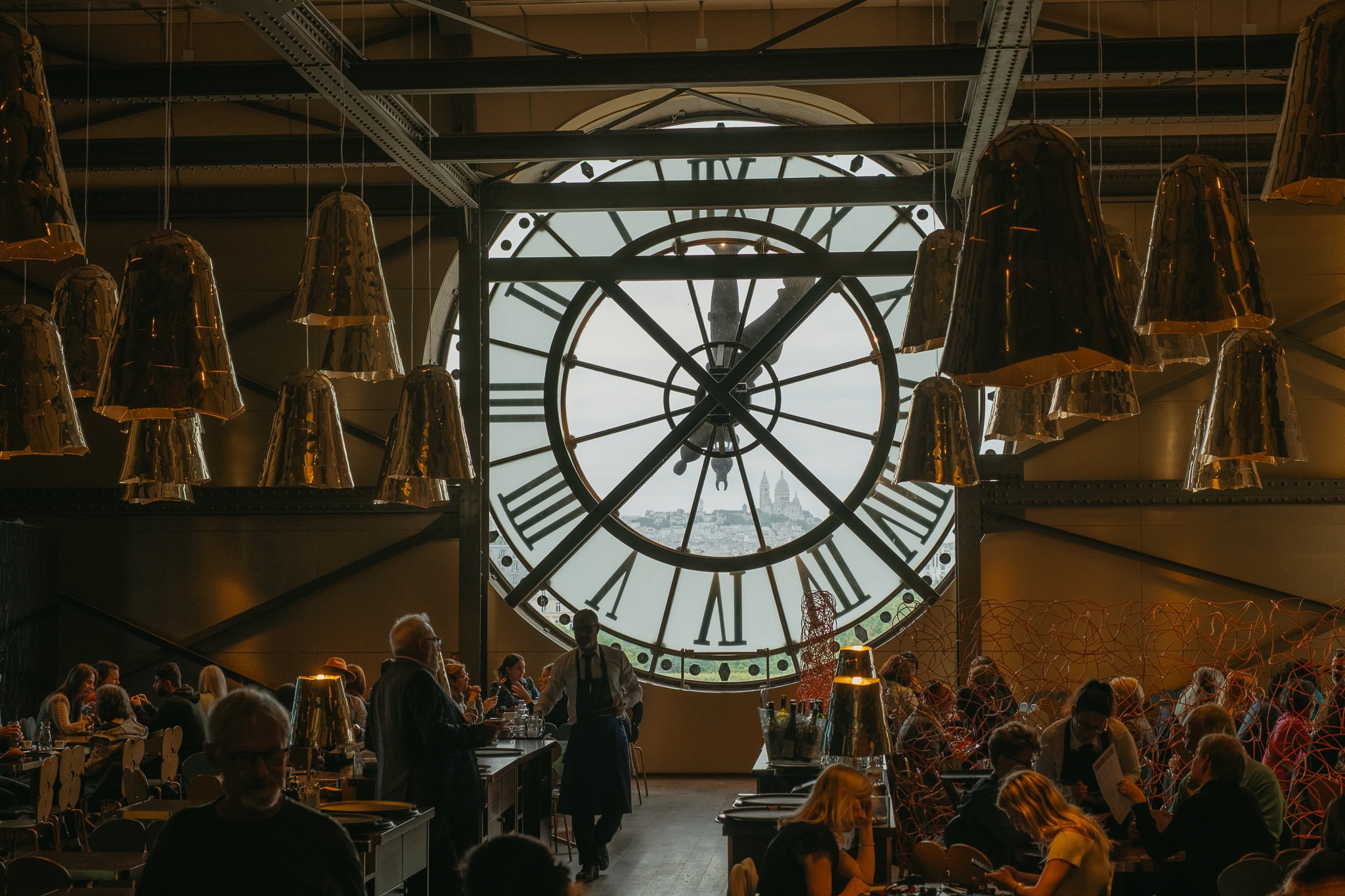
The other one is more or less set apart from galleries, etc. for the express purpose of photography. Typically, a line will form behind the clock — you can, of course, join the line if you’d like to get a photo of yourself standing in front of the clock window.
During my last visit to the d’Orsay, the line was quite long — at least 30 minutes, I’d say. I waited for a while, but eventually got bored and just took some photos of the clock (and its fantastic view of Sacre-Coeur) with my zoom lenses from the back of the line.

If you’d like to get photos from right in front of the clock, I actually recommend going there first — even before you visit the Impressionists. Understand, though, that you may be sacrificing your chance to see the Impressionist galleries with fewer crowds. Like many things, it’s a tradeoff!
There are lots of wonderful things to see in Musée d’Orsay besides the clock windows and the Impressionists! The non-Impressionism galleries are often wonderfully uncrowded, and there are quite a few unique areas and displays of things that aren’t statues or paintings. These include:
La Salle des Fetes, an opulent former ballroom. Because it’s a bit tucked away in a corner of the museum, a lot of people don’t know it exists and, in my experience, it’s not typically crowded.

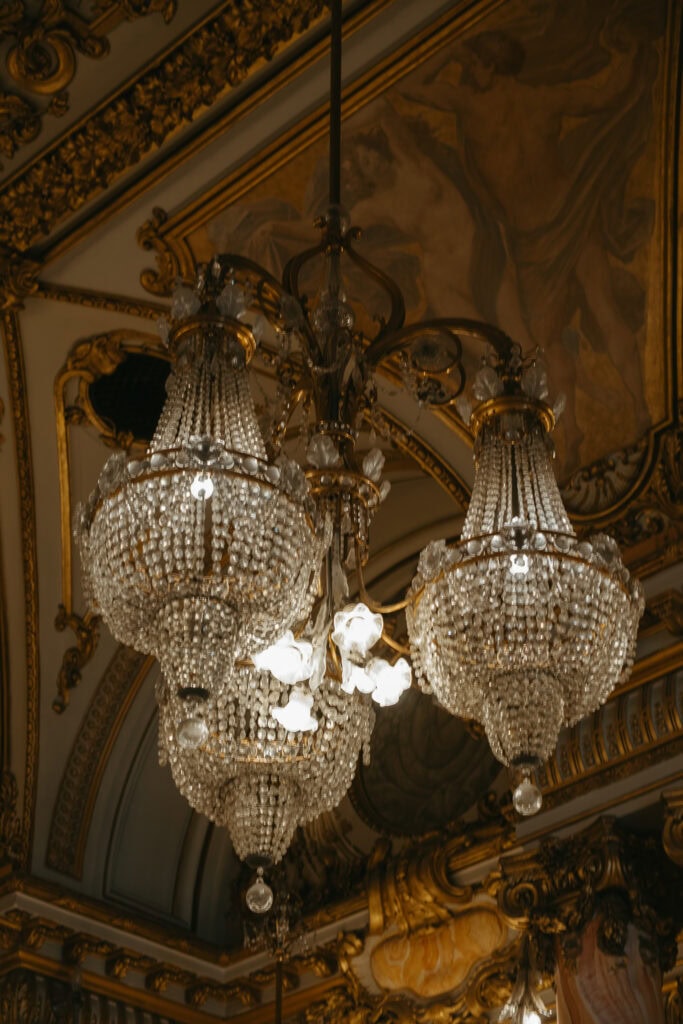
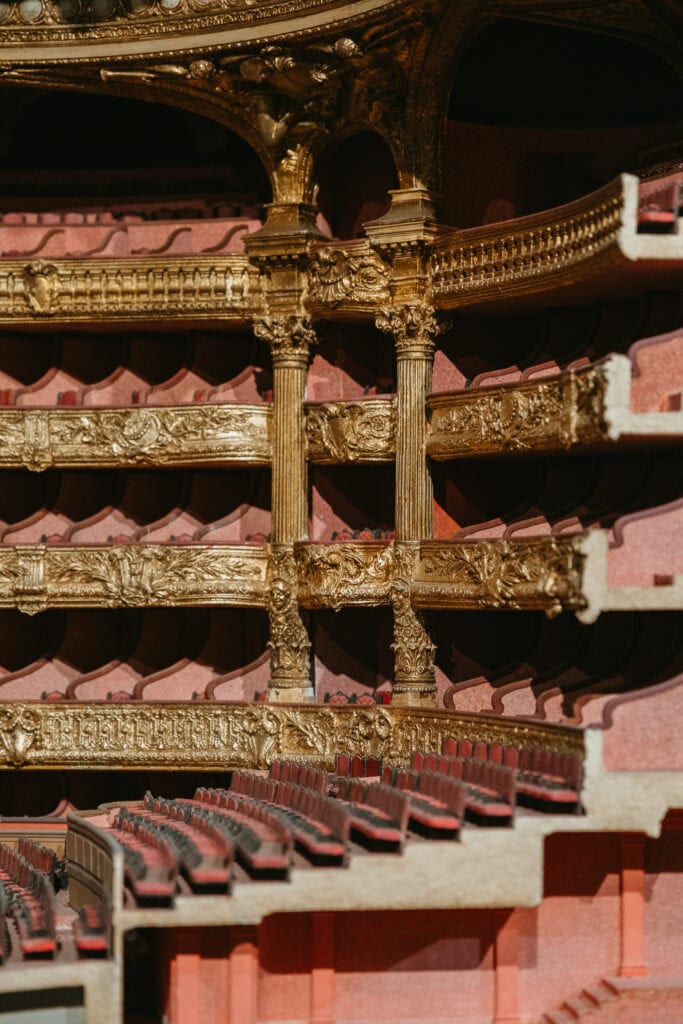
An intricate cross-section model of Palais Garnier, Paris’s world-famous opera house. Admire the seating, the backstage area, the glamorous Grand Foyer, and more.

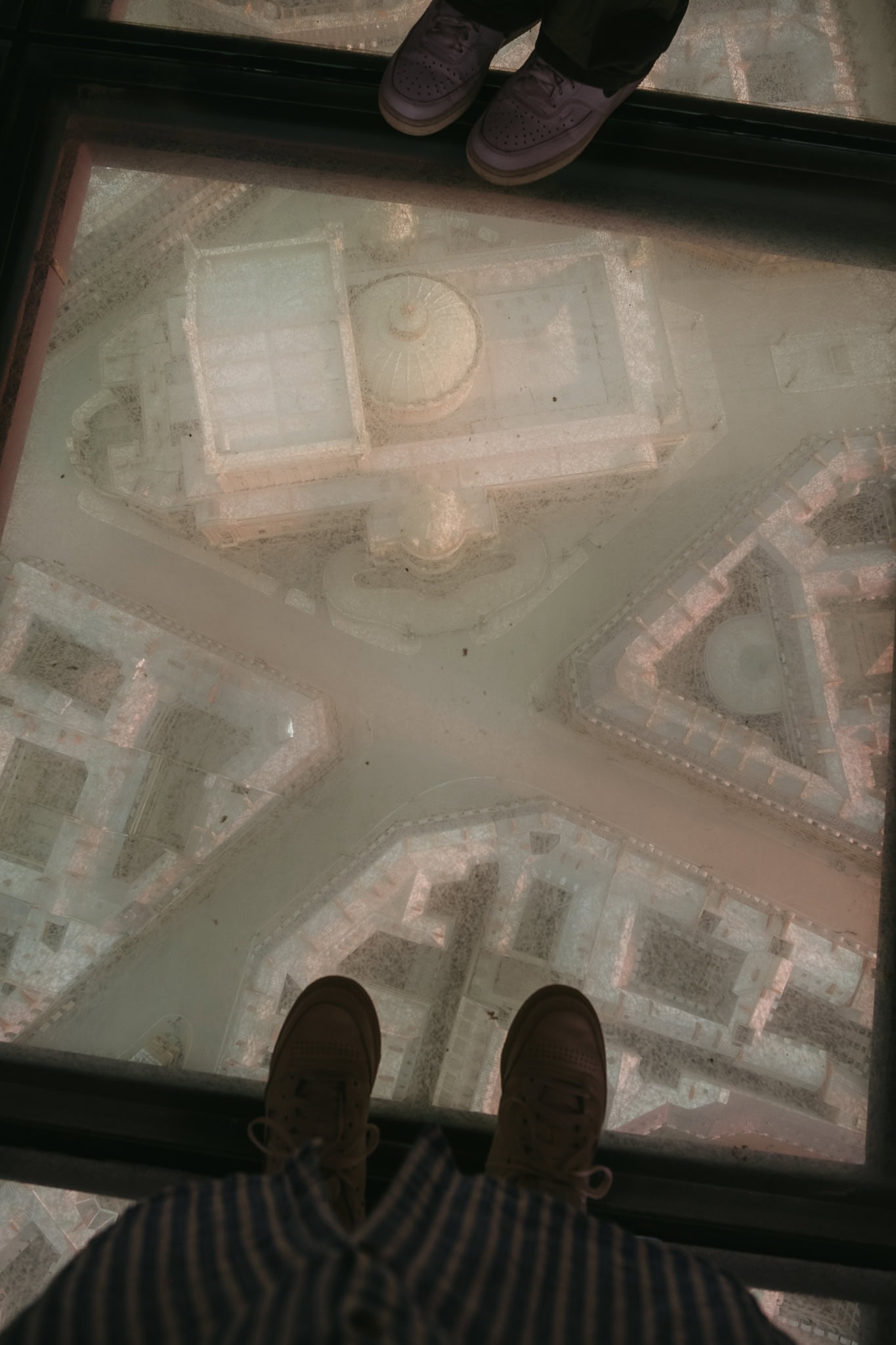
A model of the street plan of Paris. Walk over large glass panels and look at the streets and sights of Paris beneath your feet.
Is Musée d’Orsay Worth Visiting?
Musée d’Orsay is definitely worth visiting! Despite the crowds, I really love this museum. The space is so unique and beautiful that it really elevates the museum-going experience for me.
In particular, I think you might like the d’Orsay even if you’re not typically a fan of art museums. You might still get bored in the galleries, but the building itself is well-worth seeing, and I bet you’d enjoy looking at some of the more unique rooms and displays (like the ballroom). Plus, those views from the clock windows!

Louvre vs. Musée d’Orsay
So now you know what it’s like to visit the Louvre and Musée d’Orsay. But what if you don’t have the time, budget, or desire to visit both, and need to choose between them? Should you visit the Louvre or Musée d’Orsay?
Truth be told…it depends. I don’t think there’s a one-size-fits-all choice here — both museums are worth visiting, and it just depends how much time you have and what kind of experience you’d prefer to have.
So based on your own interests and availability, here’s what I recommend.
Go to the Louvre if:
- You want to see the Mona Lisa. Duh.
- You want to avoid the crowds. This one might be counterintuitive! The thing is: both of these museums are extremely popular. And yes, the most famous galleries in the Louvre will be very full of people pretty much all the time. But the Louvre is SO big that it’s much easier to find little-known areas with few people.
- You want more variety. Again, thanks to the Louvre’s size, it has more to offer in the way of sheer variety, both in types of art/objects and in times/places of origin.
- You’d like to spend an entire day in a museum. Easy to do with the Louvre! If you’re an art museum lover, I’m sure you’ll relish it.
Go to Musée d’Orsay if:
- You love Impressionism. The d’Orsay can’t be beat.
- You like seeing art in a unique space. The Louvre is, like, the platonic ideal of an art museum. Yes, it’s gorgeous and worth seeing, but it’s very much a palace-turned-museum. In contrast, d’Orsay’s train station setting is pretty unique, and it’s a real pleasure to experience. The views of Sacre Coeur from the clock windows are also quite special!
- You get tired of museums quickly, or you’re not actually sure you want to visit an art museum at all. There’s still plenty to see, but d’Orsay is much more compact than the Louvre, and it’s therefore far less overwhelming and you’ll be able to see more of it before you get museum fatigue.
- You don’t have much time for a museum. Same thing: if you only have, let’s say, two hours to explore a museum, I don’t recommend the Louvre. You’ll probably just be dashing between the best-known works of art, and I doubt it would be terribly enjoyable. Instead, go to d’Orsay!
And if you still can’t decide and just want someone to tell you what to do…I say go to the d’Orsay. It’s the one I personally prefer.
Whichever museum you choose, I strongly recommend getting a ticket for the opening time slot! Your experience in either museum will likely be much more pleasant if you arrive before the worst of the crowds.
Final Thoughts
I love the Louvre AND Musée d’Orsay alike. And while I might personally gravitate more toward the d’Orsay, the Louvre may well be the right choice for you. The good news is: you can’t go wrong!
Still unsure whether you should visit the Louvre or Musée d’Orsay during your visit to Paris? Please feel free to leave a comment on this post or send me a message — I’d be happy to help you decide!
More Information About France



pin this post