
The Camino Frances: A Photo Diary
In late May of 2023, I flew to Europe to walk the Camino de Santiago — an ancient journey toward the city of Santiago de Compostela, Spain. Specifically, I would walk the Camino Frances — so named because it begins in France — which is a 500-mile route across northern Spain. It’s the most well-known of many Camino routes.
People walk the Camino for all sorts of reasons. Some are Catholics walking to pay homage to Saint James, who is purportedly buried in Santiago. Some are seeking clarity, or a revelation, or any kind of answers. Some are processing grief. Some are trying to improve their health. Talk to five pilgrims, and you’ll probably get five different reasons for their journeys.
I was walking mainly because it sounded like a cool thing to do, to be honest. I like to walk, and I like to travel, and why not combine the two? But also, I had just left my job as a lawyer, and I thought that a long (long, long) walk might be a good way to process that change and ponder what might come next.
Here, in lots of words and lots of photos, I’ve tried to capture a small amount of my enormous experience on the Camino Frances.
Want to read more about the Camino?
Find my complete travel guide for the Camino de Santiago here.
This post contains affiliate links. If you make a purchase or a booking through one of these links, I may receive a small commission at no extra cost to you. Thanks for supporting In Old Cities in this way!
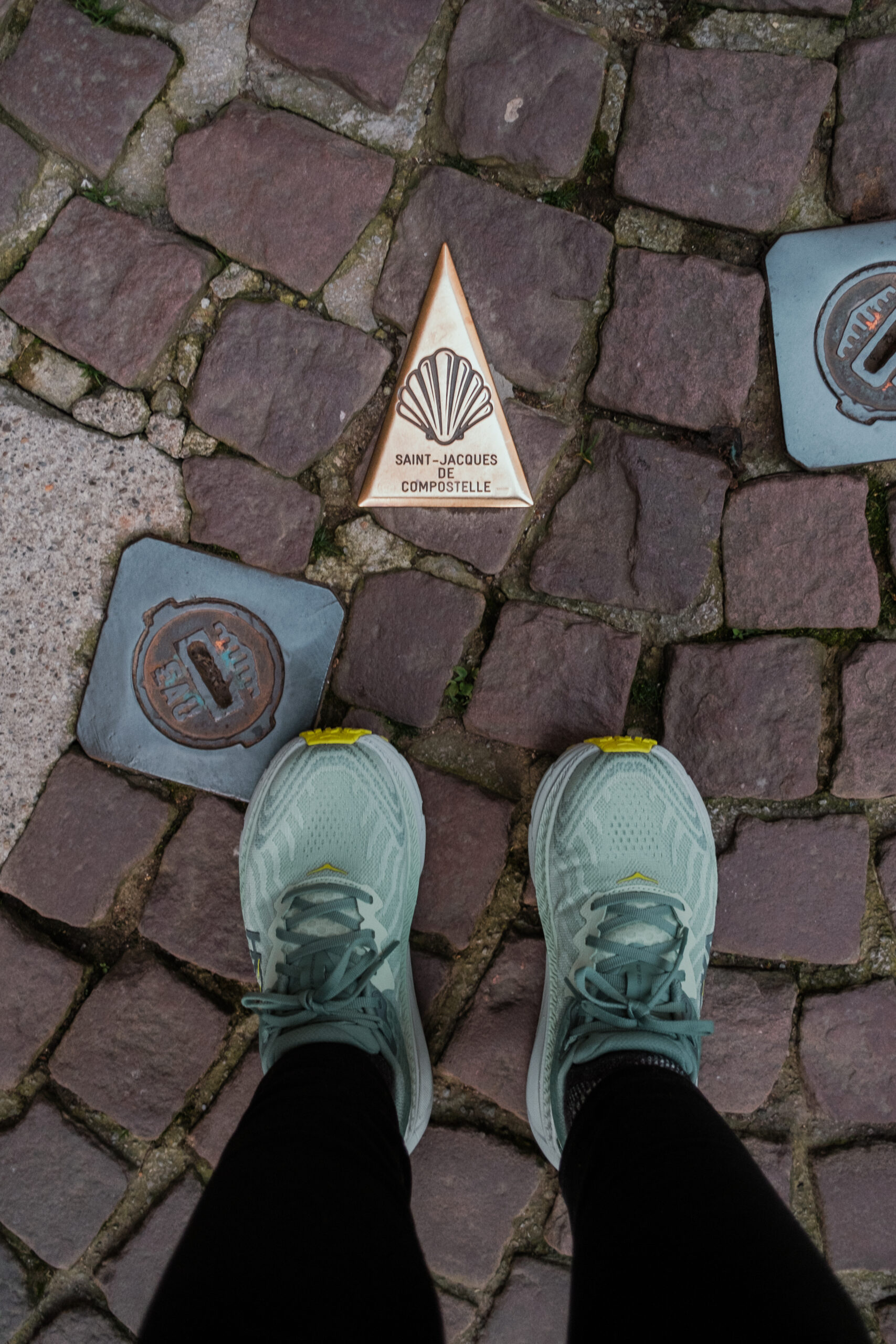
I began my Camino in the small French town of Saint Jean Pied de Port — the traditional starting point for the Camino Frances. Getting there was a bit of a mess — the night before I was set to leave, one of my three flights was delayed, throwing off my whole schedule and forcing me to scramble. Ultimately, I had no choice but to shell out way too much money for a shuttle from Biarritz to SJPdP, but I eventually got to my destination with time to pick up some last-minute supplies and register at the pilgrims’ office.


I set off at 6:30 a.m. the next morning, ready and eager to cross from France to Spain via the Pyrenees. It was a completely gorgeous morning, with fog clinging to hills in the distance and sheep grazing with bells on and horses chasing each other down hills. And thank goodness for all that, because I sure needed some wonderful views to sustain me during those steep, steep switchbacks.



The way up the mountains was long and difficult, but reaching the high point of the day was a truly triumphant moment. Then came the steep, rocky descent, which was itself no joke. Finally, though, I reached my destination: Roncesvalles. There, at an ancient monastery with a reasonably modern albergue, I got my first real taste of pilgrim life: halls filled with dozens of bunk beds, rooms for storing shoes, communal meals with people from half a dozen different countries, laundry rooms with large sinks for hand washing, and more. Truthfully, I don’t think I slept a wink that night: between all the adrenaline from this new adventure and the millions of people getting up to use the bathroom every five seconds (surely it was millions, right? it HAD to be), my brain couldn’t quiet down.


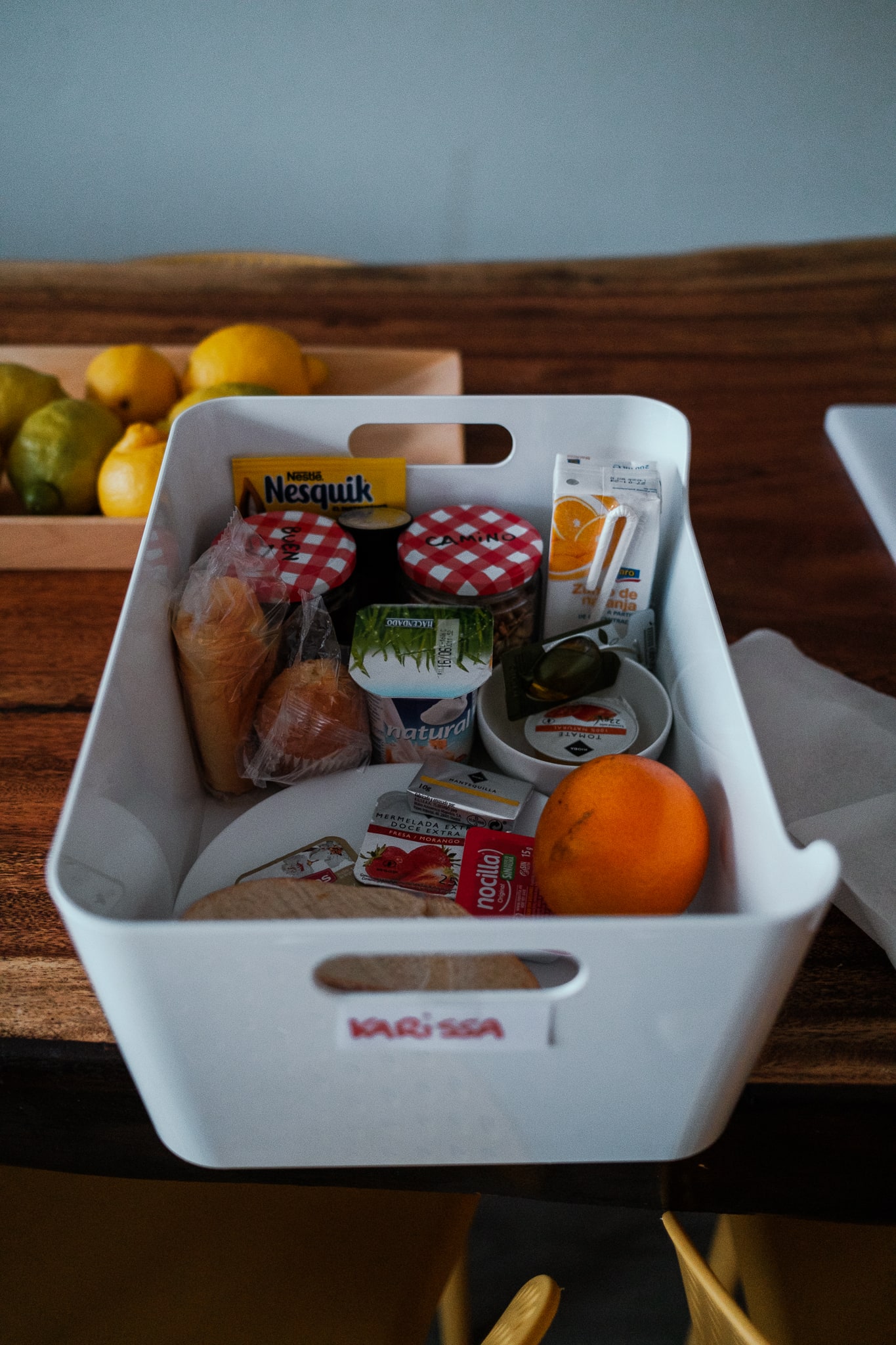
I spent the next few days getting into the groove of the Camino and developing a sense for what my daily routine would usually look like: wake up with the sun (or even before it), quietly pack up my bag, start walking, walk walk walk, stop for breakfast, walk some more, stop again (for second breakfast, or maybe just some coffee), apply sunscreen, put on a hat, keep walking, arrive at my destination, take off my walking shoes (without fail, one of the best moments of the day), check in, claim my bed, shower, put on my one clean outfit, hand wash my dirty outfit, eat, relax (which might mean: having drinks with fellow pilgrims, napping, or reading a book), edit photos, eat dinner, pack up my stuff for the next day, SLEEP.
Some highlights from those early days:
- Eating probably my best meal of the entire Camino at Albergue Suseia in Zubiri. Plus, I didn’t know it then, but the women who happened to be sitting on either side of me would later become two of the dearest members of my Camino family!
- Starting to understand how small the Camino world is. Just one example: one of the other pilgrims in my room in Zubiri was a Frenchman named Laurent. He spoke very little English, and I spoke even less French, but we did our level best to communicate nonetheless. Over the next few days (and weeks), I must have run into Laurent 3 or 4 times nearly every day. Always, we rejoiced at being reunited. And Laurent was just one of many people I saw constantly on the Camino.
- Pamplona, in general. What a lovely city, with incredibly inexpensive tapas and wine (I maaaay have overindulged), and a beautiful cathedral. I went out to explore Pamplona with vague concerns that I didn’t have anyone to share dinner with — but then I promptly ran into Phill, the very first person I had met leaving SJPdP on day one, and he invited me to join him and his friends for the evening. We had a blast, and I spent lots of time with them over the next few weeks (until our differing Camino timelines split us up).




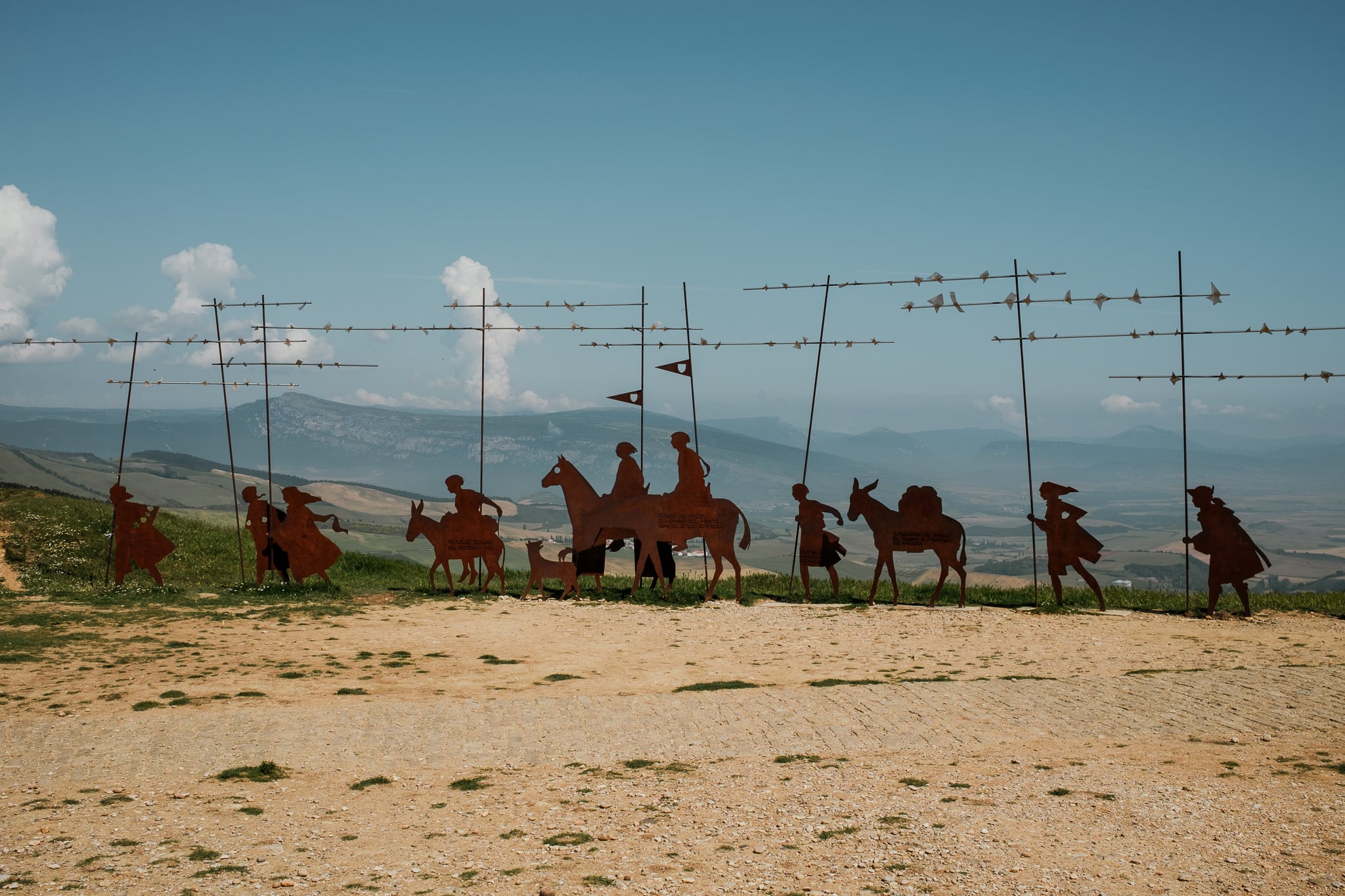
On day 4, a few miles outside of Pamplona, I reached one of the most famous landmarks of the Camino Frances: Alto del Perdón, or the “Hill of Forgiveness.” Alto del Perdón is a mountain ridge containing a ton of windmills and, more importantly for Camino purposes, a famous monument depicting a group of pilgrims walking west. Some Camino traditions do say that pilgrims are supposed to ask forgiveness for their sins while climbing up the ridge. But, well, I hadn’t looked ahead at the route for the day and didn’t realize it was Alto del Perdón that I was climbing until I reached the top and saw the statue. (I did, for reasons I cannot explain, immediately tear up.)


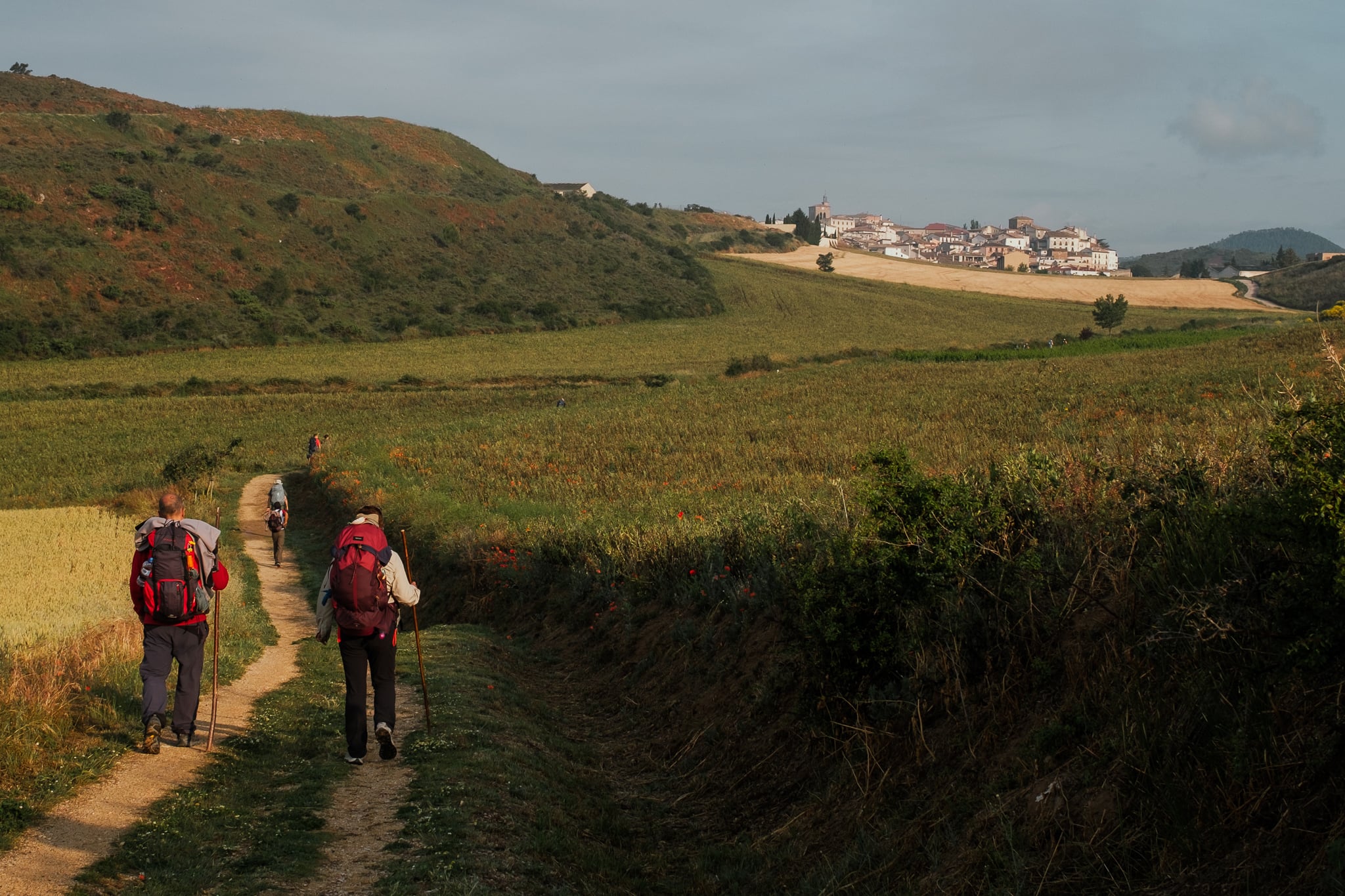
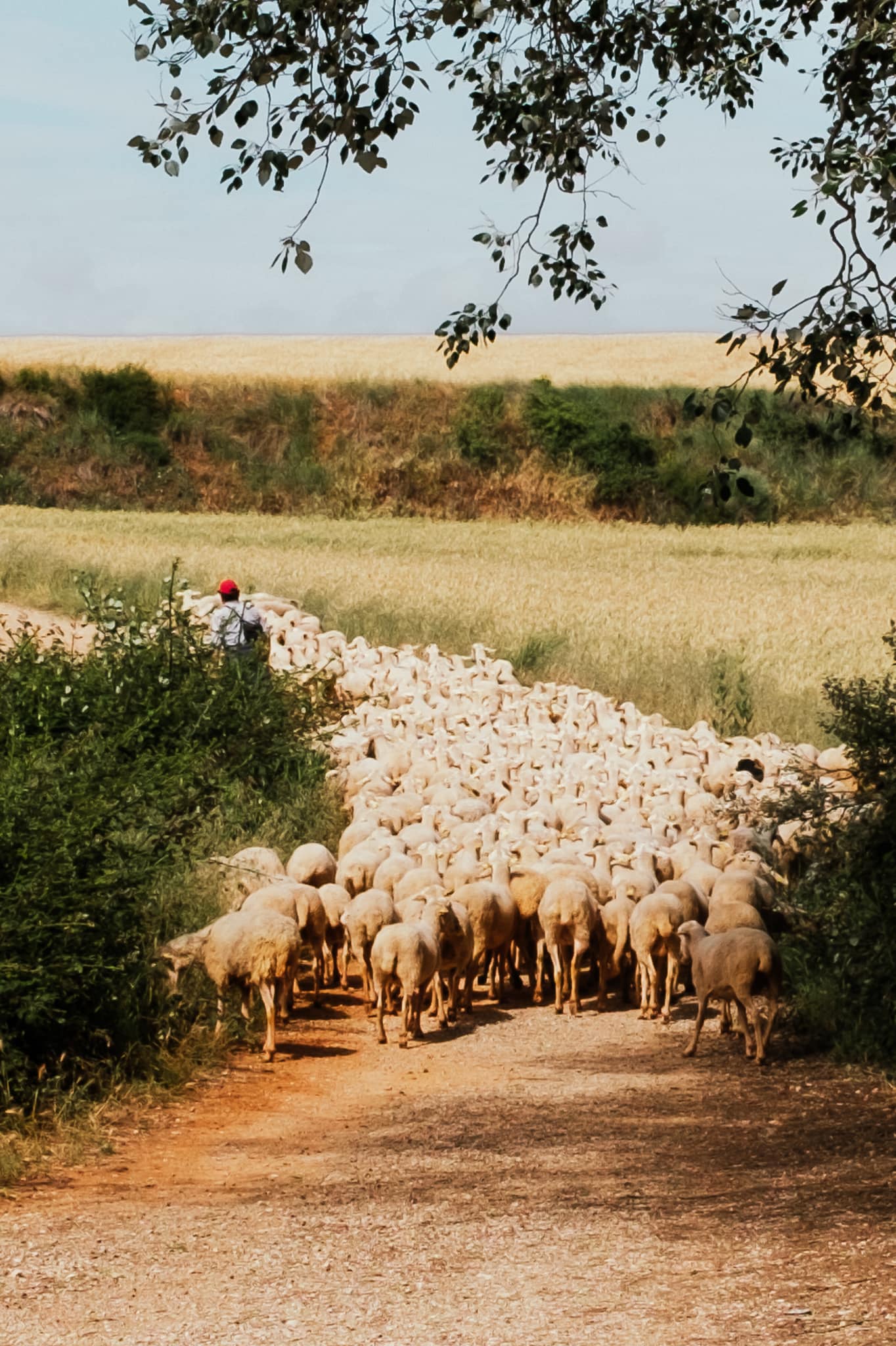
The day I reached Alto del Perdón, and the several days that followed, were some of the most beautiful days of the entire Camino Frances, in my view. There were tons of gorgeous hilltop towns — Sansol, Torres del Rio, and Cirauqui, just to name a few — and loads of beautiful vineyards. Spain’s poppies were still going strong, leaving fields of red around every other corner. Outside of Villamayor de Monjardin, I ran into an actual shepherd and his sheepdogs herding a flock right down the path. And the towns I stayed in — Puente la Reina, Estella, Los Arcos — were totally delightful.
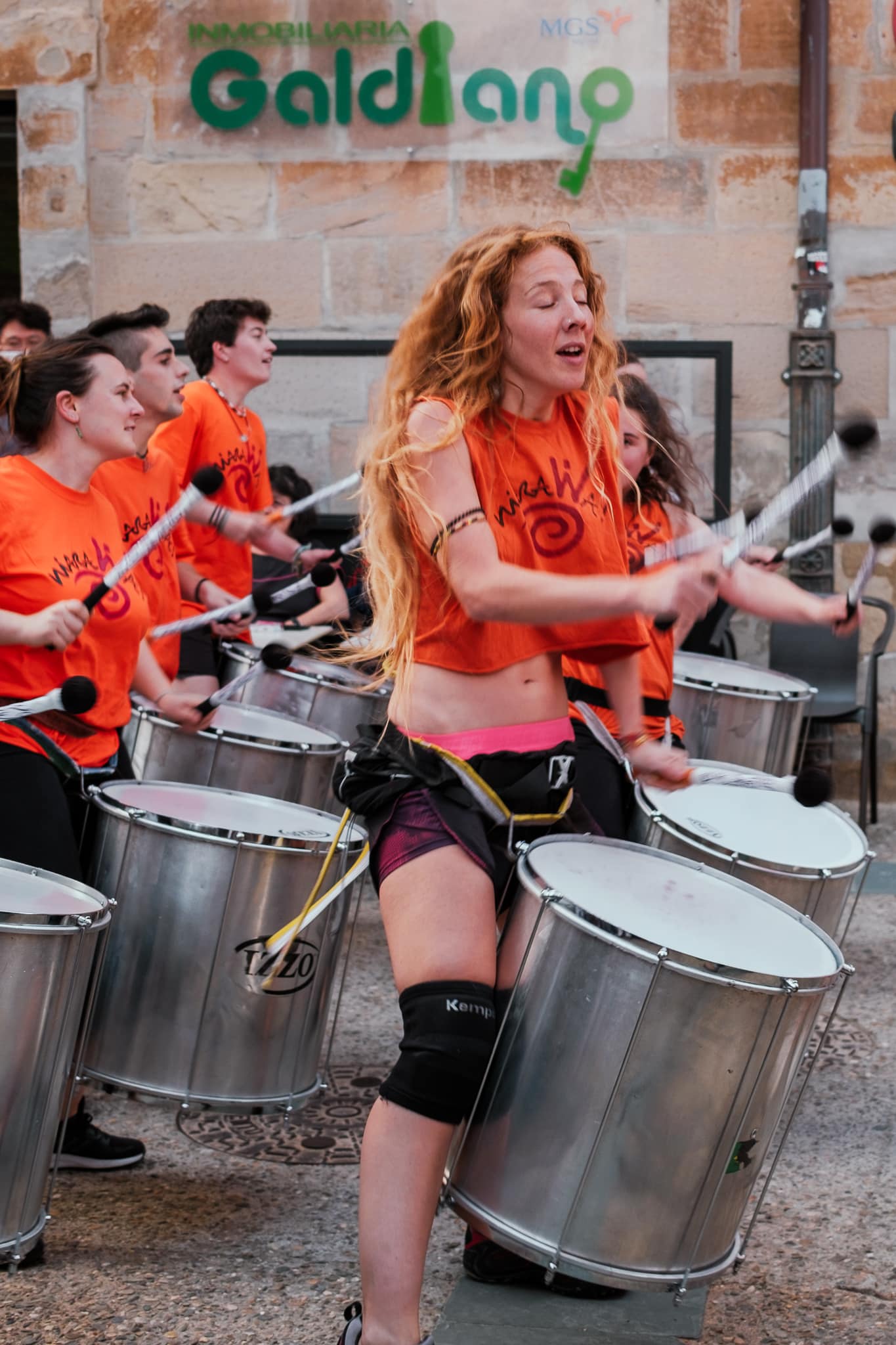
Coincidentally, there was even a festival the night I stayed in Los Arcos, with insanely dangerous fireworks, giant characters chasing people around, a mock running of the bulls for kids, and the most joyful drum group ever. As I walked with new friends, following the drum group as it performed throughout town, I once again — you guessed it — started to tear up. I was simply so grateful to be exactly where I was, experiencing that moment with friends and strangers alike, all of us feeling the same beat deep in our bones.
Looking back, I can also now identify that it was during these few days that I met (or reconnected with) quite a few of the people who would become my closest Camino family later on. This was a special time in my Camino, for lots of reasons!








After Los Arcos came Logroño, which…hmm. Logroño wasn’t the first large city on my Camino — that was Pamplona — but it was much more unpleasant than Pamplona had been to walk into and out of. Where Pamplona just brought miles of a sort of boring stretch of sidewalk, Logroño brought miles of very busy roads and industrial outskirts. And leaving was not much better: knowing I had a very long day ahead (19 miles!), I started walking at 5:30 a.m. (when people were still out partying in the streets, by the way), and had a difficult time finding the way in the dark (and when I did find it, the path out of the city was long and boring).
But, as ever, there were bright spots. I ran into the first people I had met on night one, back in Roncesvalles, and walked with them for a few hours, which distracted me from the harsh midday sun and my horribly aching feet. I found a cafe that served cold smoothies. And my destination for the day — Najera — offered a beautiful river, a solid nap, and evening drinks with friends.


The next day, a moment of true serendipity: in Santo Domingo de la Calzada, I met someone from my hometown. Not just that — he lives just a couple of miles from me, AND he attends church three blocks from my house. We have mutual friends! And he, like me, is a Mennonite — a member of a tiny Protestant denomination with an emphasis on peace, service, and justice. I could hardly believe it, really.
Incredibly, he was not even the first Mennonite I met on the Camino. In Logroño, I met another pilgrim who was an adult convert to the Mennonite church (we also have mutual friends). That night, I wrote in my journal: “So funny to meet a Menno on the Camino. I wonder if there will be any others?” Well, lol. (And, spoiler alert: there were even more to come?!)
Days 9 through 11 were memorable for other reasons, too: the honest-to-god chickens that live INSIDE the cathedral in Santo Domingo, the weird modern ghost town of Cirueña and the spectacular scenery that followed, the pool and wonderful communal meal with top-notch company at my albergue in Belorado.
On these days, I also thought a lot about a common Camino saying: “the Camino provides.” Just when you run out of water, you happen upon a donativo table with cold drinks that some kind person has left out just for this purpose. Find a fresh blister? The pilgrim in the next bunk over is happy to hand over the Compeed you need. Etc.
The Camino does provide, but it’s because the Camino is populated with people, and people provide. For me, during this stretch, providers included two different friends who each offered electrolyte tablets upon learning that I was feeling a little lightheaded — and who pulled me out of my resulting funk — and the locals sitting at either end of the tiny town of Grañon, making sure pilgrims found the way.

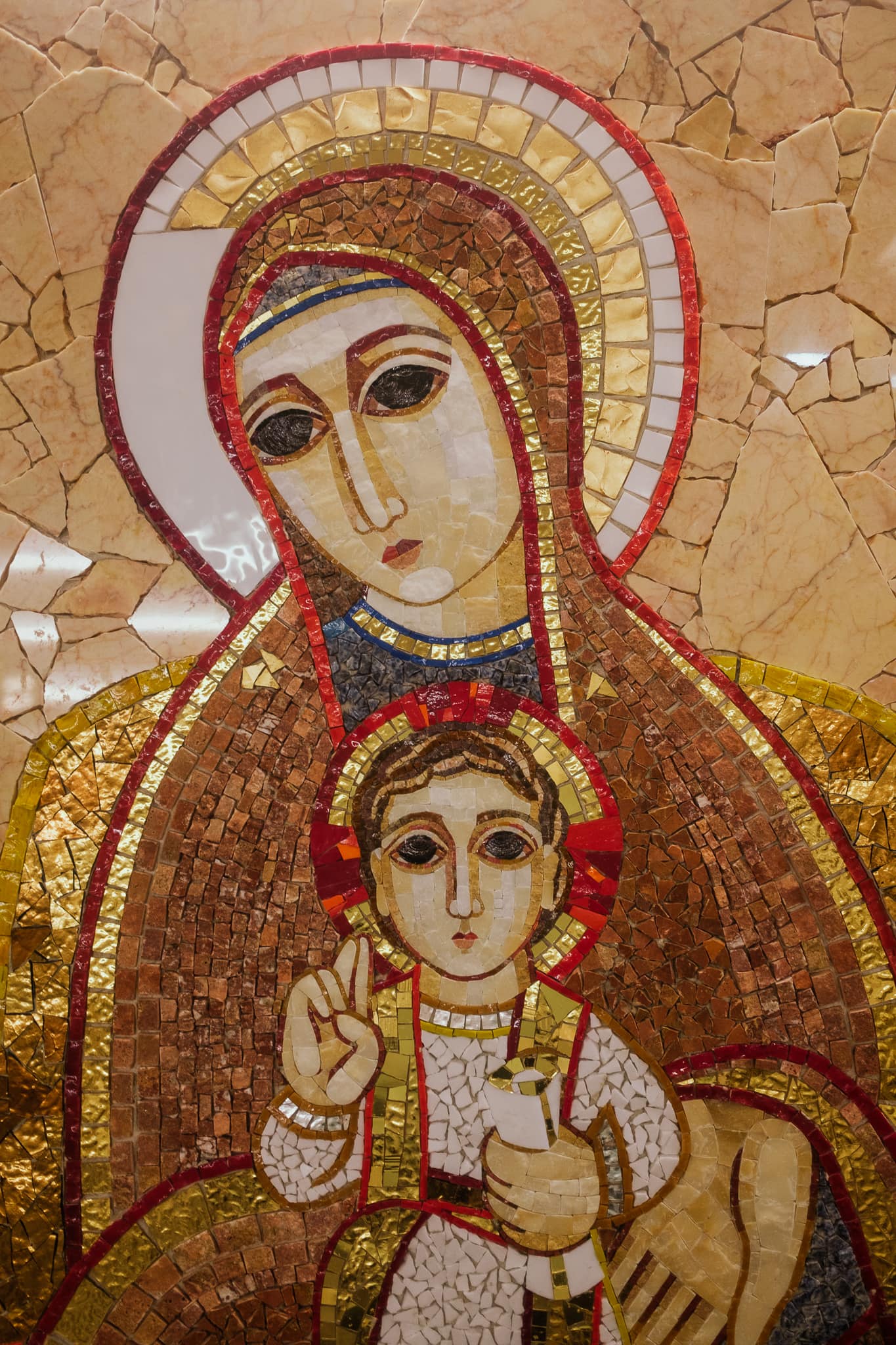


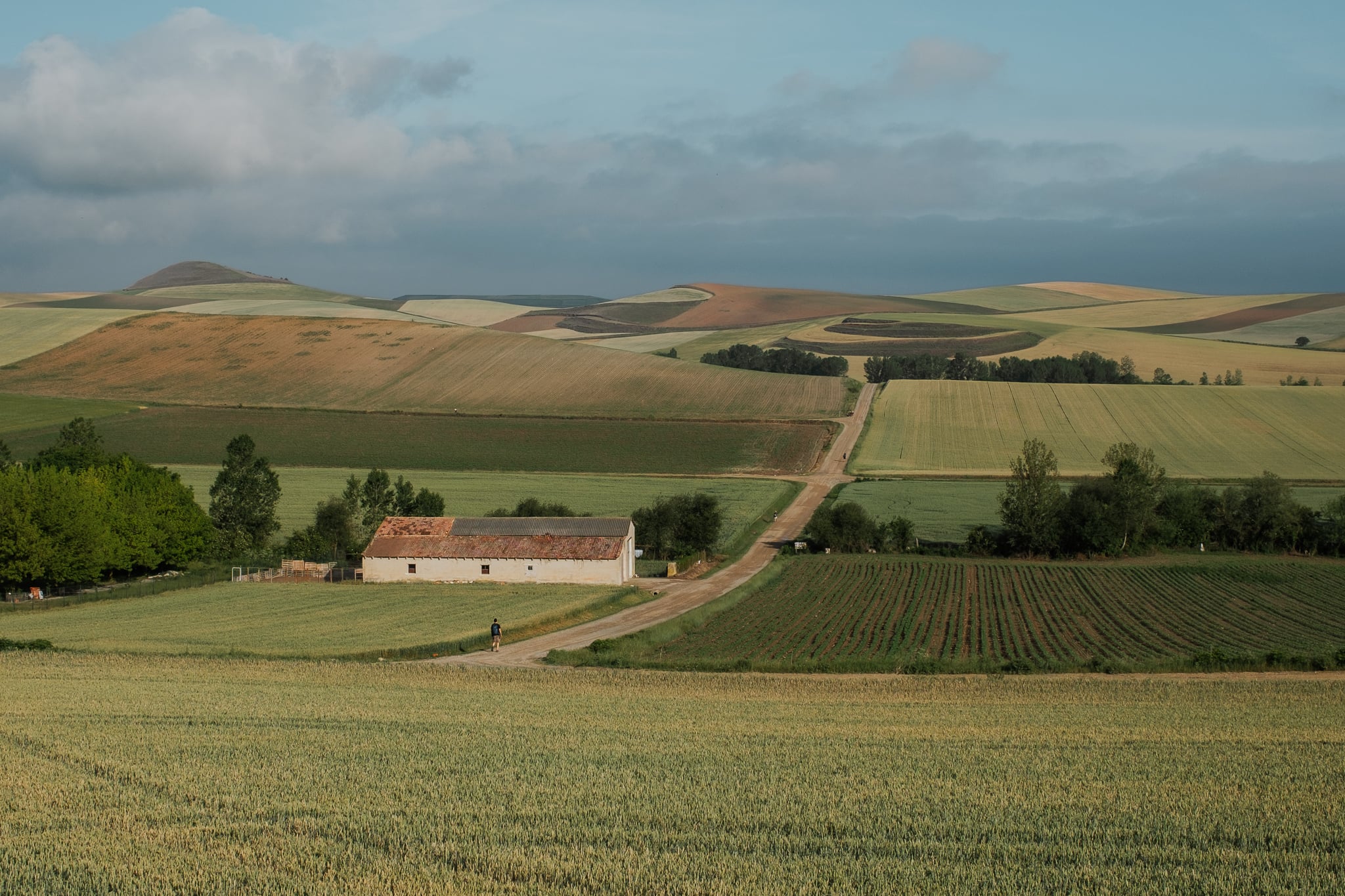


Day 12 was a lesson all in its own. I was heading to San Juan de Ortega — a place that really isn’t large enough to be called a “town,” even — which has one sizable albergue (in a monastery), and a couple of private places with a few beds that were already booked full. In Belorado, the night before, word on the street was that getting a bed at the monastery would be competitive and difficult. So I set off at 5:30 a.m. and walked in the dark, minimizing my breaks and trying to keep ahead of other pilgrims, hoping to snag one of those 60 beds. Then, naturally, I arrived an hour before they even opened, was third in line, and the monastery ending up not selling out anyway. All that rushing — and all that viewing my fellow pilgrims as my competition (ugh) — for naught!
So, back to one of my Camino mantras (borrowed from Russ Eanes): I am not in a hurry!


After San Juan de Ortega, I reached a major Camino milestone: the city of Burgos, which marks the end of the first phase of the Camino Frances. It was also a personal milestone for me, since I planned to take my first rest day in Burgos. Accordingly, I booked a private room for the first time since SJPdP — gasping out loud when I saw the full-size fluffy towels.
It was good timing for a rest day, since I was starting to feel my first notable aches and pains besides the usual sore feet (an achy hip). I tried to stay still as much as possible, but couldn’t resist touring the gorgeous cathedral and heading out to experience a food truck festival with a few friends. In Burgos, I also lightened my load a bit — literally — by taking some unnecessary items to the post office and shipping them ahead to Santiago de Compostela, where the postal system would hold them until I arrived there.


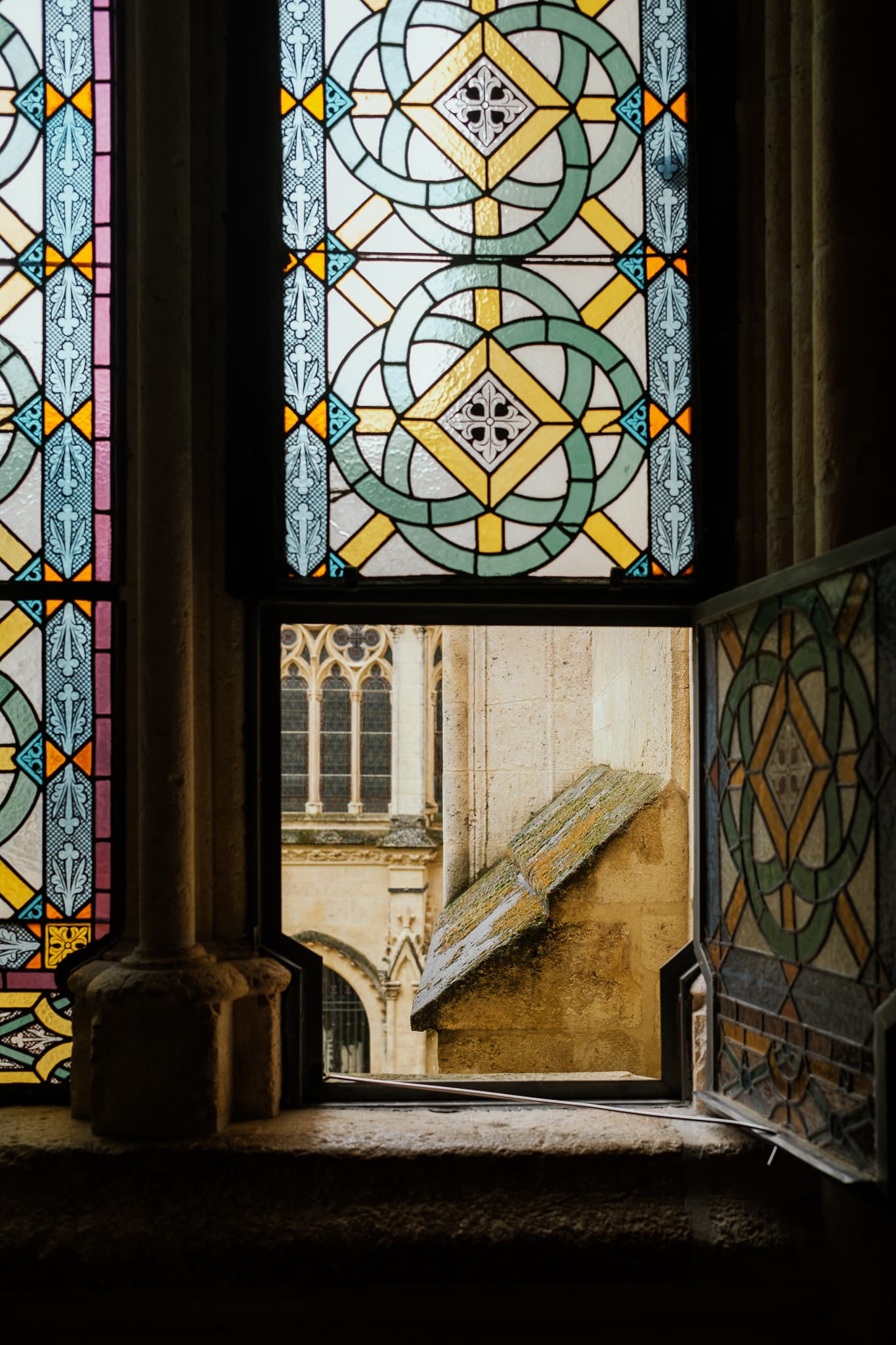


Burgos also meant a bit of a social reset, as it’s a big swapping point — lots of people start or end their Caminos at Burgos, while others do or don’t take rest days there, so a lot of the people I regularly saw during the first two weeks of the Camino went home or walked ahead of me. I didn’t actually realize how many people I had come to recognize, even if I had never talked to some of them, until the rest stops and albergues were full of mostly new faces. This meant lots of new people to meet, but also sadness at knowing I would not see some of my friends again.
But that is part of the Camino: you are constantly saying hello to some people, and goodbye to others. For me, it felt important to walk my Camino at my pace, and not to let anyone else’s schedule dictate my own.
This choice was rewarding in multiple ways — had I tried to keep up with the friends I spent most of my social time with the first week, and not rested in Burgos when they forged ahead, I would have missed out on a whole new group of people who brought me so much joy for the rest of the Camino.
I started to learn this almost immediately, really, when I reached Hornillos del Camino and found a group of six wonderful ladies sitting with drinks in the square. I had spent time with most of them here and there over the first two weeks, but they (plus a few other people we connected with along the way) would become my closest Camino family for the remainder of the journey.
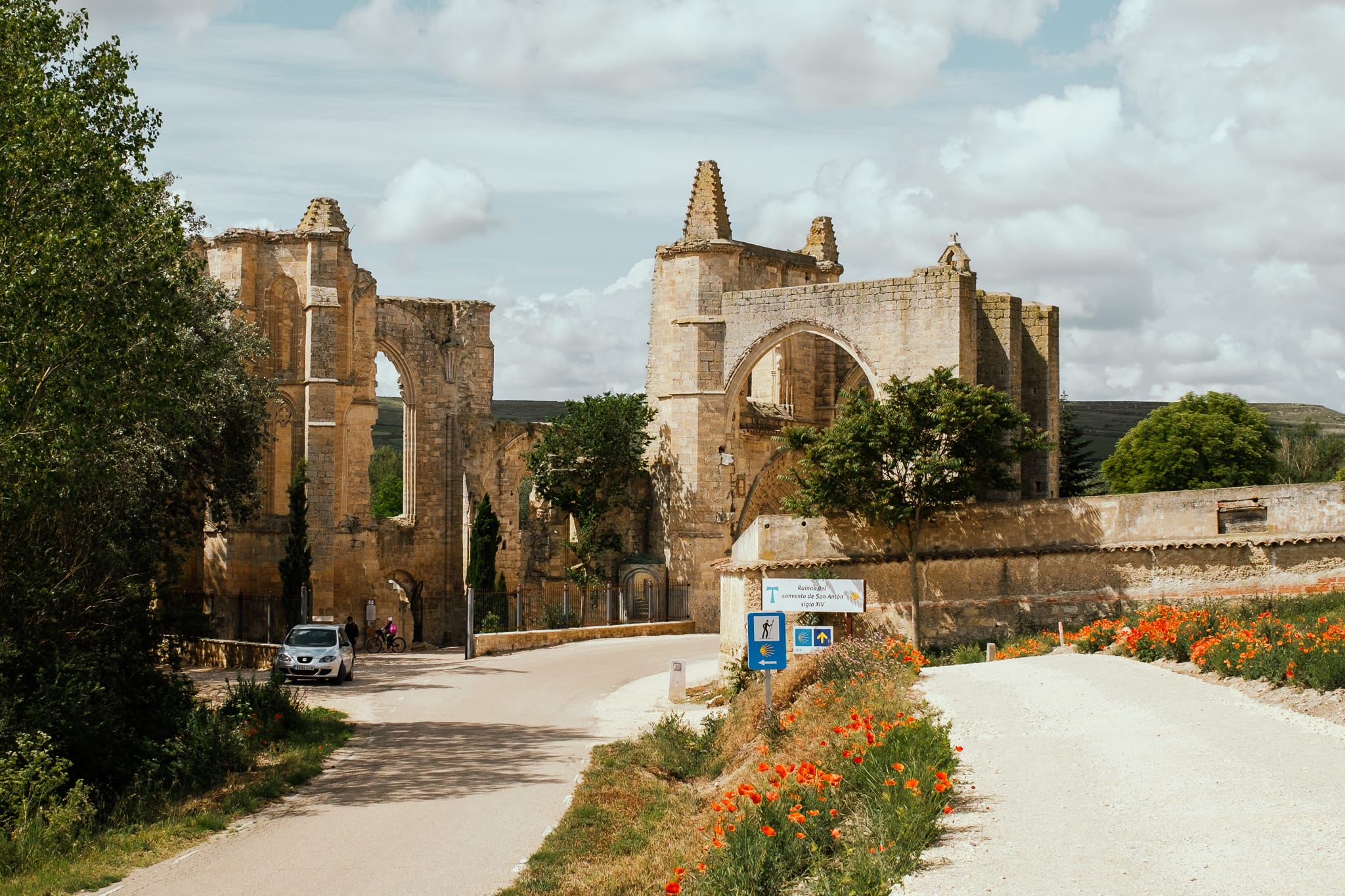
This became especially clear the next day, which was one of my favorites from my entire Camino. It started with miles of solitary walking through fields in the blue morning light, with only the windmills and poppies to keep me company. Then, out of nowhere: Hontanas, a completely charming little town tucked away in a valley, with watermelon for sale in the first cafe (!). Later on, I reached the stunning ruins of the convent of San Antón — one of my very favorite sights on the Camino. Fortuitously, all those lovely ladies reached the convent shortly before or after me, and we ended up taking a recommended detour together, following the scenic way into Castrojeriz, with fields of flowers all around and castle ruins overhead. Later than day, we would also gather for a communal meal in one of the albergues, where we had maaaaaybe a bit too much wine and a bit too much fun — is that possible? — taking slow-mo group jumping videos.




Remember when I said there would be more Mennonites to come? I met them — a father and son — on day 16, in Carrion de los Condes. I still can’t believe it, but they were also from my hometown, and the father was even the pastor at a Mennonite church where my dad’s cousin used to pastor.
I also got a taste of the Camino rumor mill, such as it is, because those two told me they heard there’s an Amish woman walking the Camino. I knew right away that that was a rumor about….me. Ha! There had been some (understandable) confusion about the difference between Amish and Mennonites, and it seemed that jokes from the prior week about me being on Rumspringa had somehow reached the ears of people who were days ahead of me.
Besides this fun interaction, Carrion de los Condes was especially memorable for the sing-a-long in my albergue, which was run by nuns. Each day, before mass, the nuns hold a sing-a-long with any pilgrims who wish to attend. That day, we sang Amazing Grace and other songs in Spanish, French, and German. One Dutchman played a solo on the guitar. An American father and daughter taught us a song they made up about walking on the Camino (to the tune of Copacabana). Others offered up beautiful songs that are special to them. We shared our names and places of origin, and some people explained why they are walking the Camino. One woman was walking in memory of her deceased son, looking for the right place to scatter his ashes. Some people were looking for clarity or some sort of revelation. And some people, like me, were just looking to have experiences exactly like that sing-a-long with the nuns.
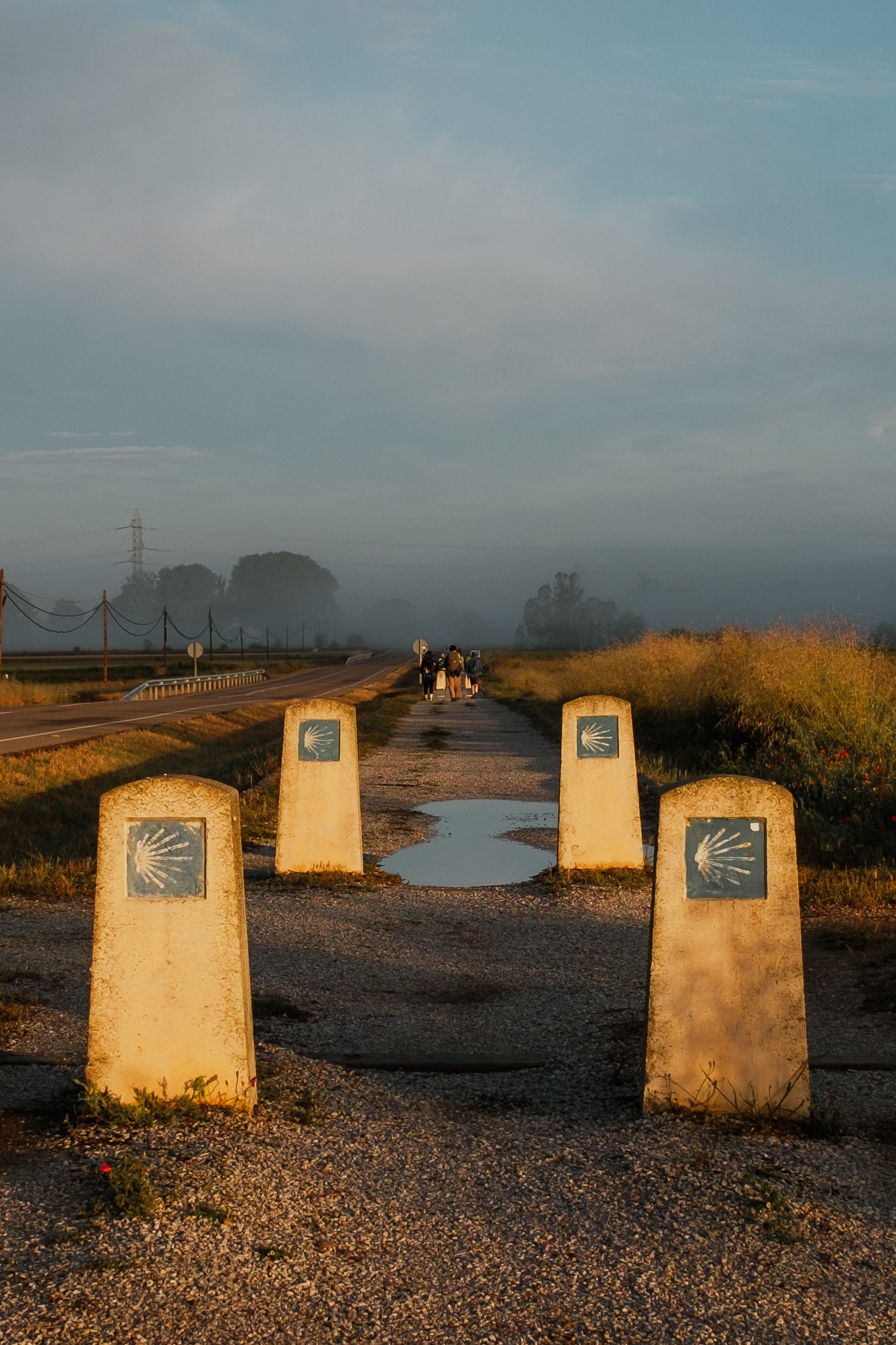


The next day brought my first real taste of the Meseta, the infamous middle section of the Camino. They say that the first part of the Camino Frances — from Saint Jean Pied de Port to Burgos — is for the body, and that the second part — the Meseta — is for the mind.
It’s obvious why, when you walk the Meseta, but you can get a sense of it even without making the walk yourself. Just pull up a map of Spain. See that brown spot in the central north? Welcome to the Meseta.
The Meseta isn’t a desert, as it’s often described. It’s plains. Imagine walking through Kansas for 10 days, and that’s probably about right.
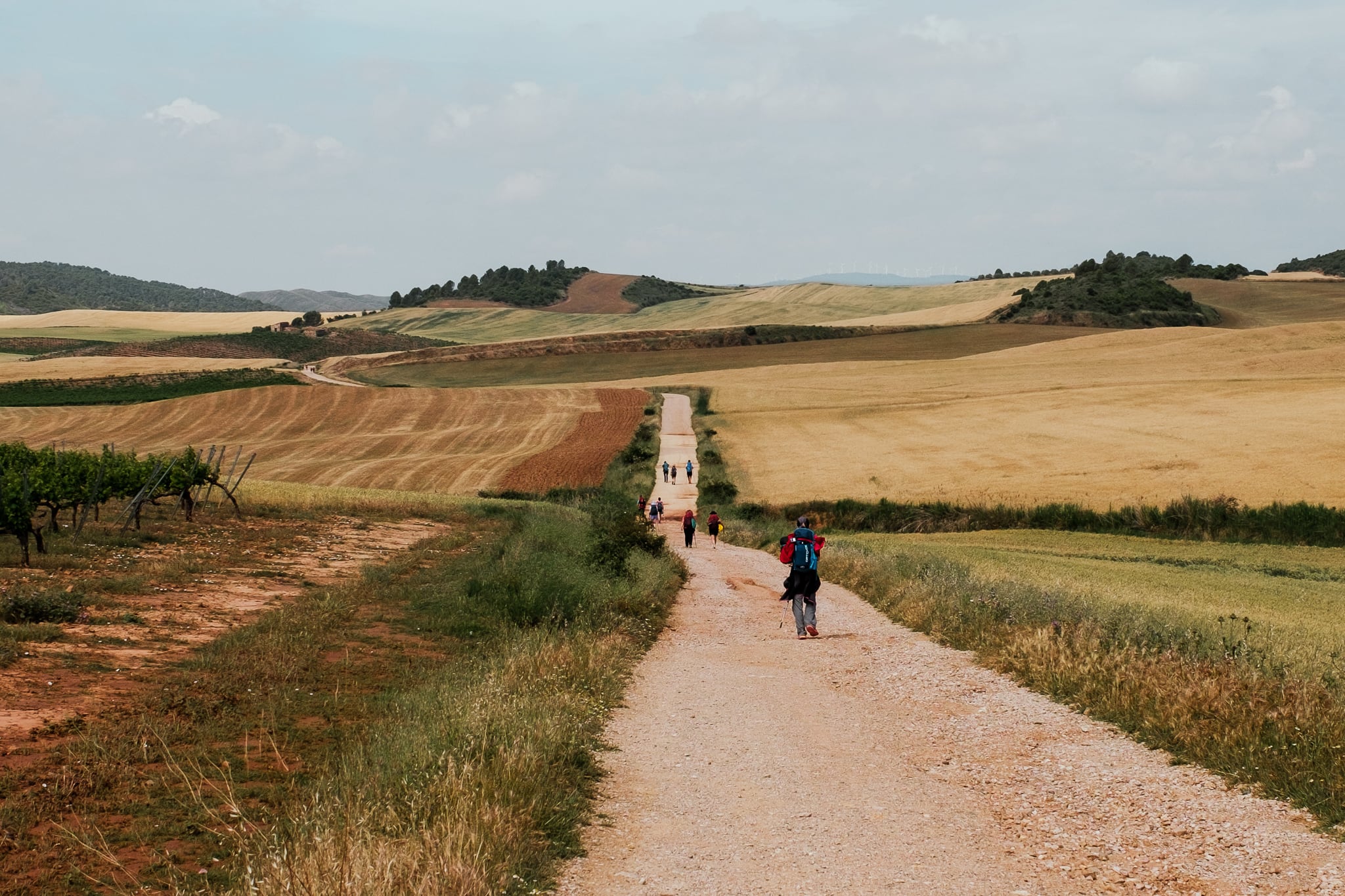
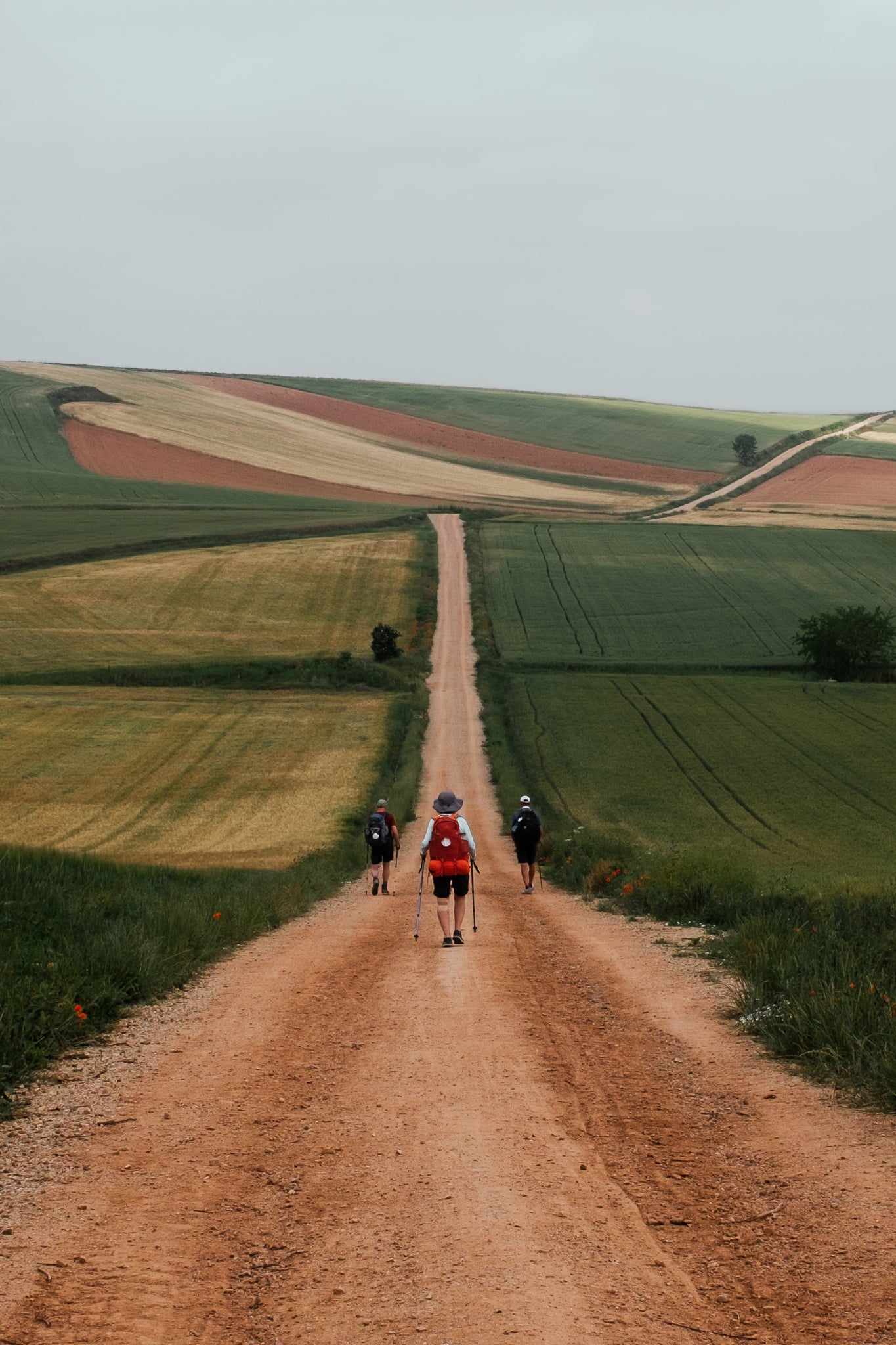
The Meseta isn’t entirely brown, either, at least in June — far from it, in fact. And there’s still plenty of beauty. But it’s also characterized by long, straight, and flat stretches of the Camino. Where the first couple weeks of the Camino are filled with winding paths and unknowns around every corner, the Meseta has few surprises because you can so often see exactly where you’re going for the foreseeable future, and you can see that it looks pretty much exactly like what’s around you already (which is to say: fields).


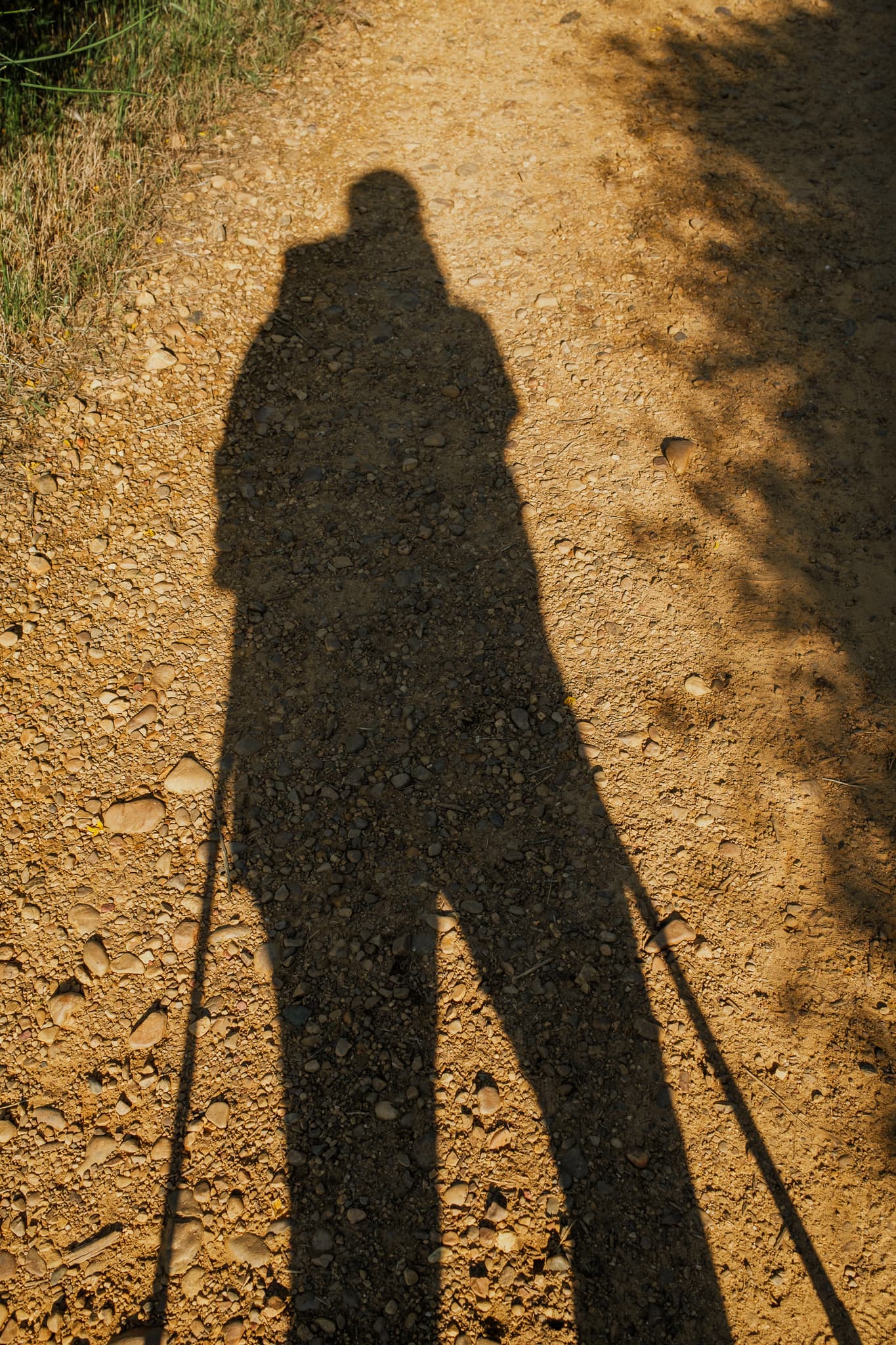
Boredom is a genuine mental challenge — hence, why the Meseta is for the mind — and seeing the same road stretch out in front of you for what seems like miles does not inspire a lot of enthusiasm.
Pilgrims deal with this monotony in all sorts of ways. One of my friends spent her time thinking about the emotional and mental burdens she needs to release. I listened to the complete discography of the Beatles, and also tried to occupy with mind with gratitude (a marginally successful effort). And some mysterious souls simply revel in it (more power to them, really). As my friend Jackie said: “Lose your mind, find your soul.”
Of course, the most boring stretch of the Meseta had plenty of highlights, too. I bonded deeply with my Camino family. I experienced Bar Elvis in Reliegos — surely the quirkiest bar on the Camino — with friends from Spain, Italy, Canada, and Minnesota. I encountered an actual film shoot in Bercianos del Real Camino, and even got to shoot a quick scene as an extra, if you can believe it. (Spot me in the opening scene of The Way, My Way, released in 2024!)

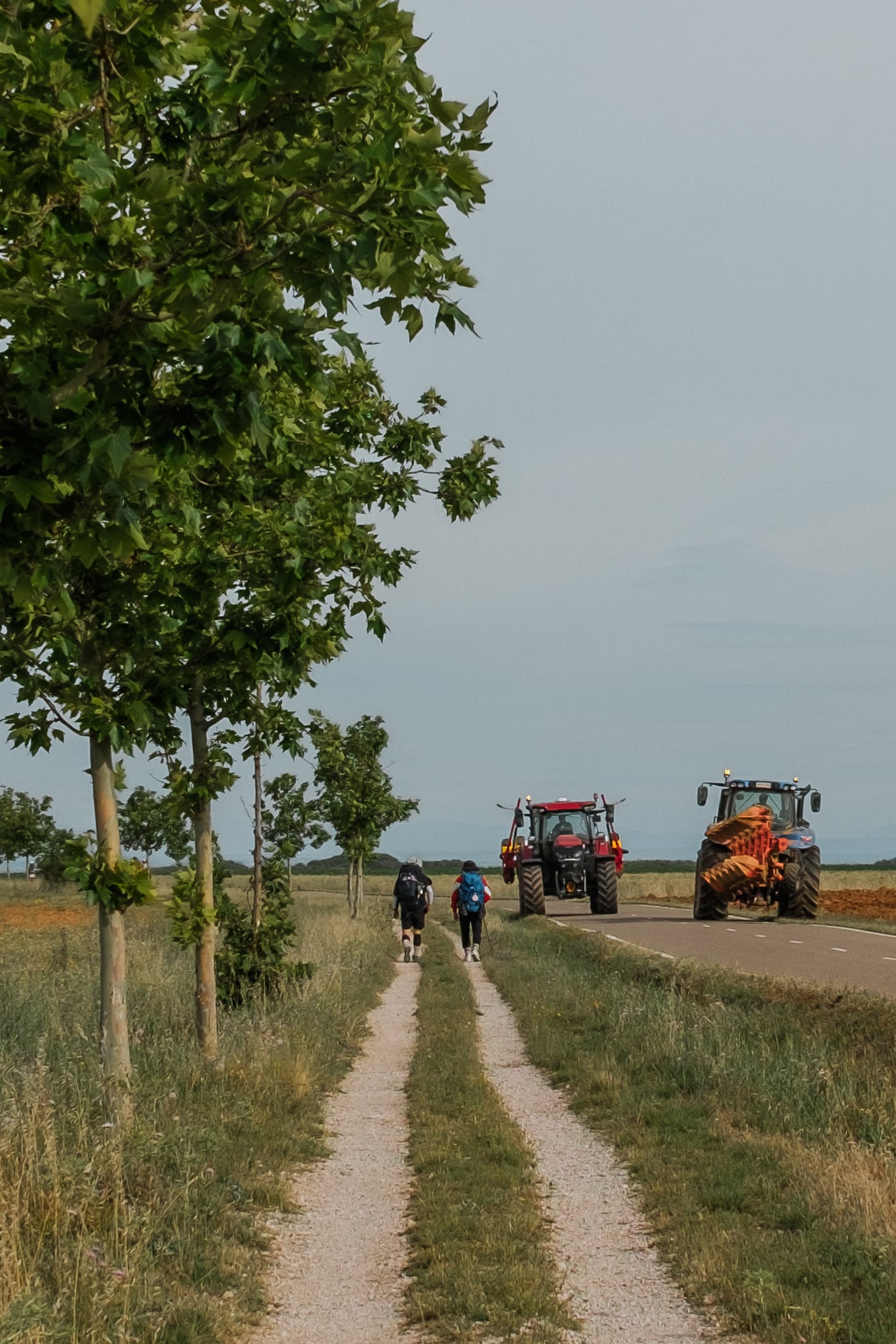


On day 20, I reached Leon after one of the most unpleasant walking days of the Camino. Envision walking for miles through your city’s bleakest stretch of car dealerships and strip malls, and then topping it off by crossing a few major highways, and you’ve pretty much got the experience of walking into Leon. Even worse, I made the mistake of booking a hostel that wasn’t only for pilgrims. The result: a group of drunk tourists entered the hostel in the middle of the night and set up camp in the bathroom (which was located WITHIN the dorm bedroom), talking and laughing loudly and leaving the door open with bright lights on. Extremely uncool!
So, although Leon is beautiful, I wasn’t too sad to leave. Actually, one interesting thing about the Camino is how it flipped upside down my usual travel habits. Ordinarily, small cities are my favorite places to visit, and I’m a busy sightseer, packing in as much as I can. On the Camino, though, I found that I wasn’t especially interested in sightseeing, for the most part — the compulsions to spend downtime with fellow pilgrims, and to otherwise keep walking west, were stronger — and I enjoyed the tiny towns more than the big cities. Is that because the big cities were so unpleasant to walk into and out of? Or something else? I’m still not sure.


At any rate, just a few days after Leon, I reached Astorga (following a brutal 20-mile day), which marked the end of the Meseta. Glory be!
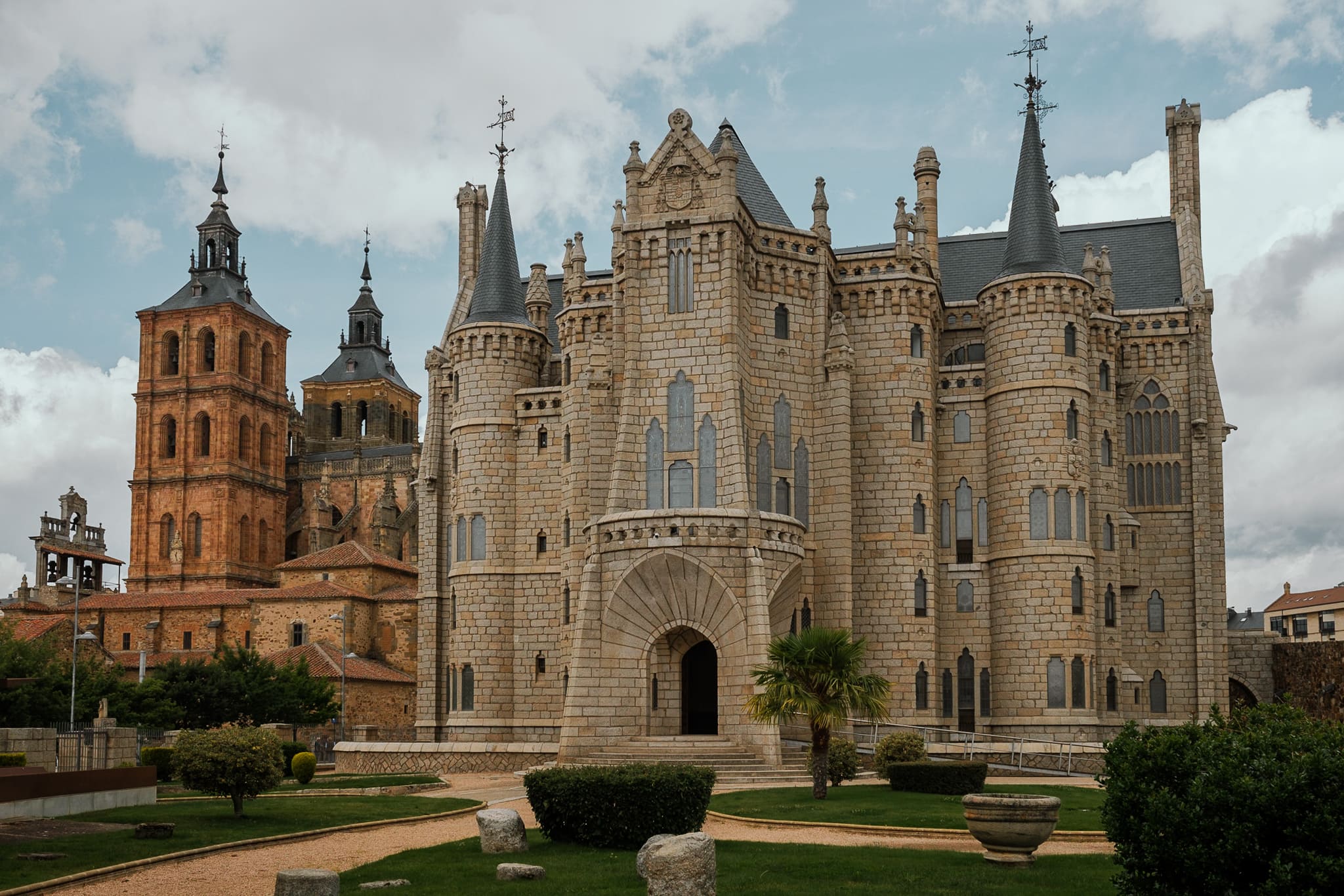
I took my second rest day in Astorga. Lots of people rest in Leon, but I chose Astorga because (1) I thought my feet might need a rest after that loooong walk into Astorga, and (2) I wanted to be sure I would have time to tour the Episcopal Palace of Astorga, designed by Gaudí.
I wound up spending a fully solitary day in Astorga — my first of the Camino — which felt a bit strange (though I spend full days totally alone quite often in normal life!). I visited the cathedral (lovely), and the palace (incredible), and the chocolate museum (meh), and also enjoyed quite a lot of chill time in my lovely apartment, which had a perfect view of the cathedral and palace.




After Astorga, I found myself in a bit of a funk again because I was now off schedule with my friends, who had not taken a rest day in Astorga. I felt like I would be starting over again, socially, and — despite my best ideals about going at my own pace — was wondering if it had been a mistake to rest in Astorga.
Of course, this quickly proved to be wrong in several ways. For one thing, I would soon catch up with my friends anyway, and we would be able to reunite before the end of the Camino.
But also: of course, of course, going at my own pace created the opportunity to meet new, wonderful people. For example, on my first night after Astorga, in Foncebadon, I connected with a father and daughter who had such lovely thoughts on the meaning of the Camino, and of photography (the dad is a professional!), and more. The next day, in Ponferrada, I met a couple my age and their dad/father-in-law, who I clicked with quickly and who became important figures in the next few days of my Camino.


At this point in my Camino — with more than three weeks of walking under my belt — I was also starting to feel acutely aware of just how little time I had left. In just a few days, I would reach Sarria, where my mother and sister would join me to walk the final stretch. Before that, though, I had some important milestones to reach.
There was Cruz de Ferro — a cross placed near the highest point, elevation-wise, on the Camino Frances. Tradition holds that pilgrims carry a stone throughout the Camino and lay it at the base of Cruz de Ferro, but as with so many things on the Camino, people make of this what they wish.
I brought a stone from my grandparents’ garden, and carried it in my backpack’s hip pocket, where I could reach for it while walking when I needed to draw on the feeling of my family’s strength, or think about things I wanted to release. At Cruz de Ferro — which I reached during a foggy sunrise — I held the stone in my hand, said a prayer that many people use at Cruz de Ferro, and laid down my stone.
There was the climb down from Cruz de Ferro — a brutal, miles-long trek down steep, rocky paths. RIP to my knees. Easily one of the hardest days of walking on the entire Camino, even though it was almost entirely downhill.
There was O Cebreiro — a charming, mountaintop village with traditional thatched houses. I elected to stay in the town of La Faba the night before, and climbed to O Cebreiro at sunrise. It was completely spectacular, and I hope that I never forget the sight of the fog rolling in over the valleys below as I ate breakfast in town.
Remember how they say that the first part of the Camino is for your body, and the second is for your mind? Well, the final third of the Camino is for your soul.

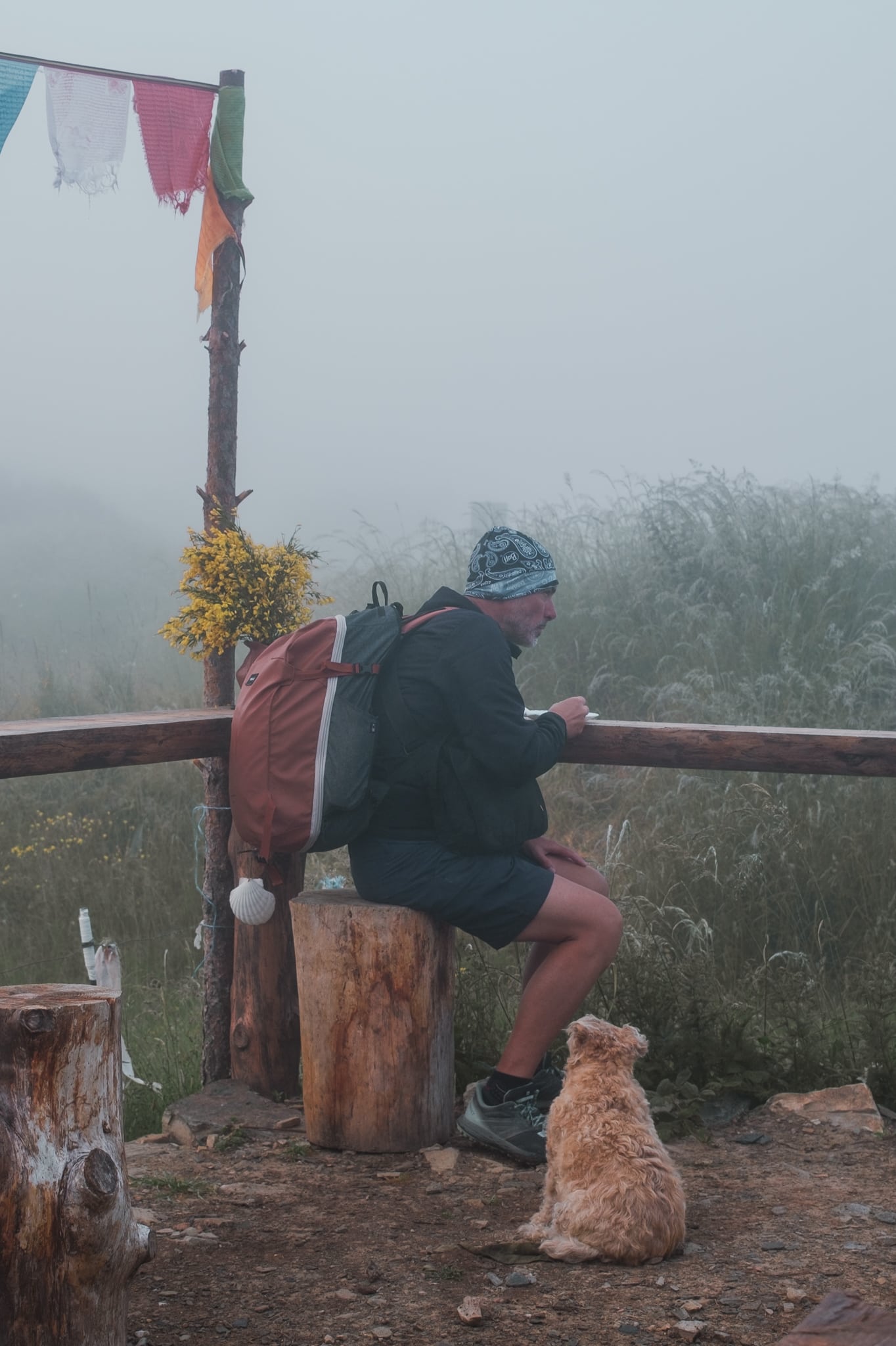


I reached O Cebreiro on my 27th day of walking. From there, I had just two more days of walking alone before my mom and sister would join me. But I wasn’t alone, of course, because I had my Camino family. Moments I treasure from these days include:
- Reuniting with most of my group of lovely ladies in Triacastela and sharing one last round of drinks together.
- Enjoying a lengthy dinner with the family I had met in Ponferrada, where we bonded over shared political values and taste in books and tv shows.
- Visiting the gorgeous art studio of Arthur Manton Lowe, who lives on the Camino, selling art and offering custom watercolor “stamps” in pilgrims’ credenciales. Even more special that I got to be there with many of the ladies I had shared so much time with in the prior few weeks.
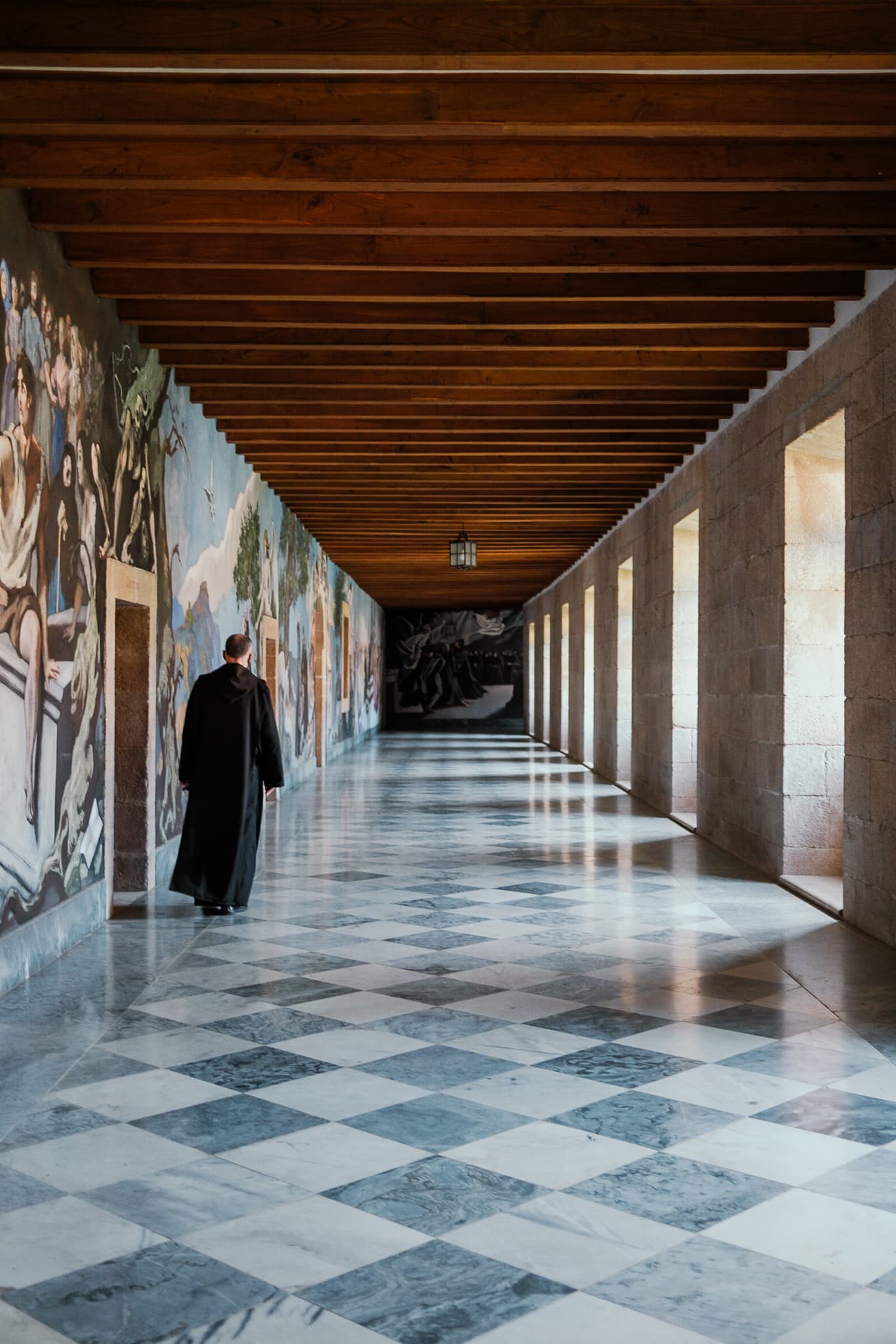
- Receiving a pilgrims’ blessing at mass in the Samos monastery.
- Walking through what felt like a magical storybook forest with two very special women on the way out of Samos.
Just after that magical stretch of woods, though: disaster! Okay, not really. But I did realize, quite suddenly, that I did not have the watercolor I purchased just the day before at Art’s studio — I must have left it behind at my albergue in Samos (2.5 miles away). Naturally, I had no cell service, and couldn’t call the albergue to see if they had found it. And I was worried they might think it was trash (as it was rolled up in a nondescript cardboard tube) and throw it away. There was nothing I could do except trudge back to Samos.
Thankfully, when I arrived an hour later, the hospitalero was there to let me in, and I immediately found that the tube, being a tube, had rolled away from all my other stuff and hidden itself under a bed, where it remained. What a relief!


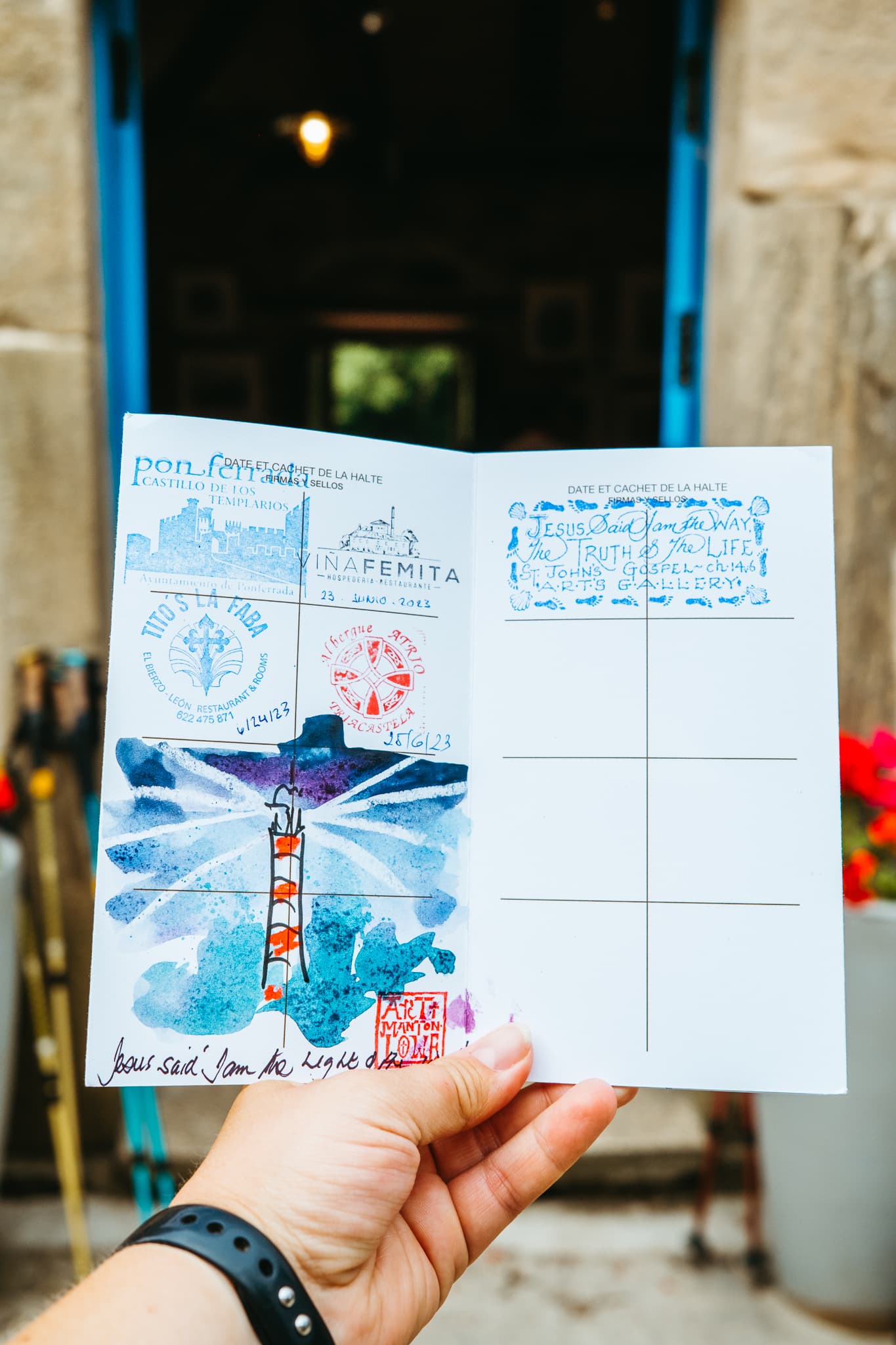




Double thankfully, my planned route for the day (Samos to Sarria) was the shortest of my whole Camino, so an extra 5 miles of walking was not a huge deal. And there were silver linings to my mishap: I got to walk through the beautiful woods again (twice), and while I was (re)approaching Samos, I unexpectedly ran into a friend I hadn’t seen in a few weeks!
The next day, I took my third and final rest day of the Camino in Sarria. It’s not that I especially needed a break, or was particularly interested in anything to see in Sarria (no offense to Sarria, but…no), but I was waiting on the arrival of two very special new pilgrims: my mom and sister!
It was a thrill to see them walking toward me from the train station, and a thrill to introduce them to the basics of the Camino: acquiring walking sticks and shells, finding your packing system, scoping out decent food. And of course, most importantly, the serendipity of running into Camino friends everywhere you go.


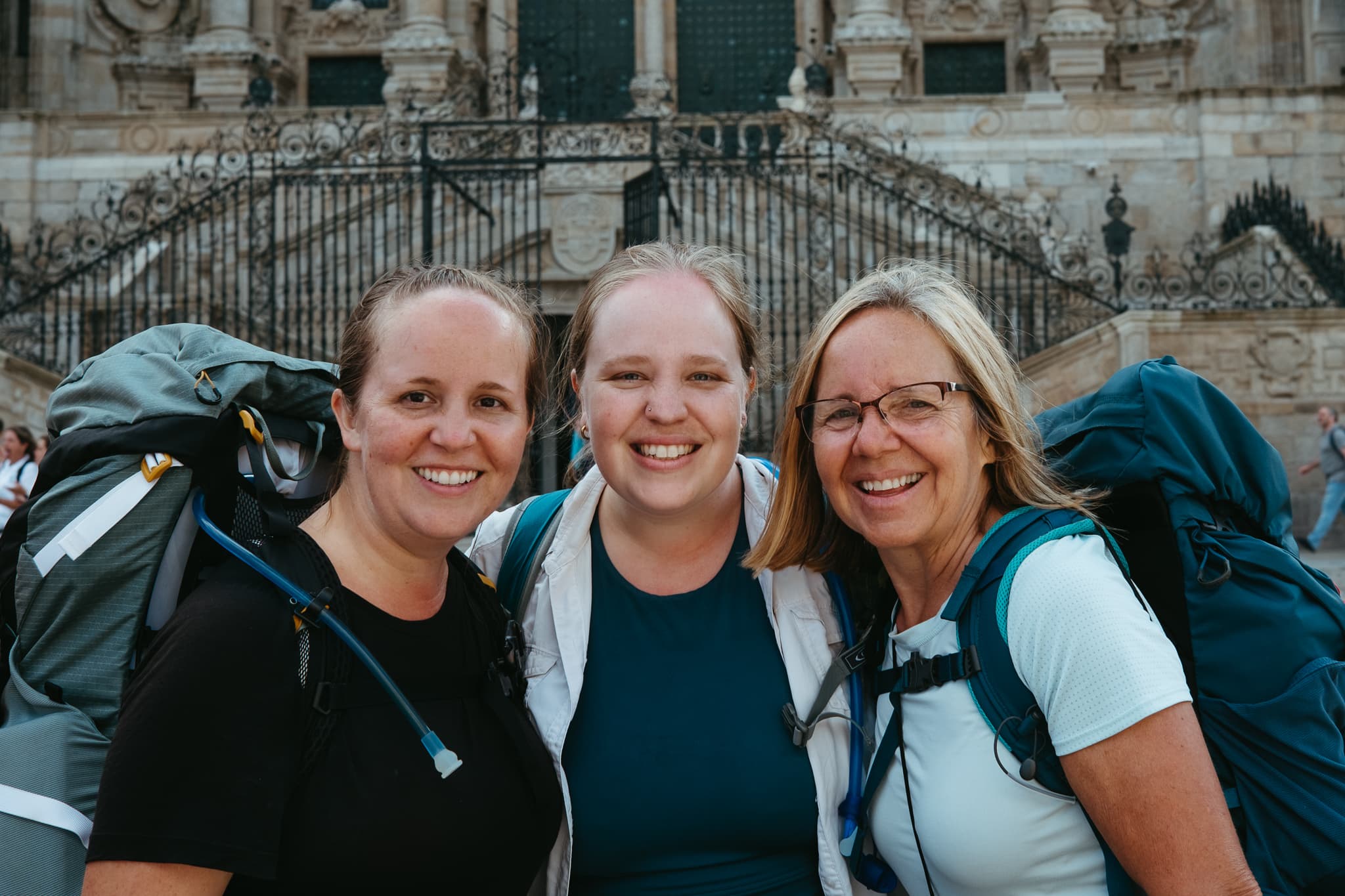
We walked together for the final five days of the Camino — from Sarria to Santiago de Compostela. I had spent the first 29 days of my Camino walking alone, for the most part, and quickly learned that walking with permanent companions is a different experience. Certainly not different in a bad way! More than anything, it was a reminder that while independence is great — and I am very, very independent — so is being connected to and dependent on others.
And it was fun to see the Camino through their eyes, and to discover what types of things they notice. My sister saw a spiderweb shining in the early morning light. My mother said “this is the life,” and I couldn’t disagree.
They even got to experience the joy of running into their own Camino friends, when we stepped outside of our hostel in Portomarin and saw someone they had met en route to Sarria the day before. I’m not sure, until then, that they had really understood what I meant when I said the Camino is a small world.


The final five days of the Camino Frances are very different than the prior few weeks, in large part because of pilgrims like my mom and sister. In order to obtain a compostela, pilgrims need only walk 100 kilometers of the Camino — so lots of people start walking in Sarria (which is about 115 kilometers before Santiago). Most notably, this section of the Camino is famous for filling up with large groups of schoolchildren and others (mostly from Spain) who walk for the last few days of the Frances. This, again, is not necessarily a bad thing, but it is different.
I will admit that in general, this was not my favorite portion of the Camino. Besides the busier trails, I thought that the scenery, for the most part, was a little more same-y than it had been in most other sections of the Frances (the Meseta aside), and very few of the towns we passed through (or stayed in) were especially charming.
But of course, as always, there were so many things I want to remember: the spectacular sunrise leaving Portomarin, horreos (narrow, raised structures for grain storage), the cafe with the best breakfast on the Camino (outside of San Xulian, I think), sharing an inside joke about peppers with people whose names we never even learned, the musician playing “These Boots Are Made for Walkin'” along the trail, more horreos, that one dog perched on a shelf outside of its house, the eucalyptus groves, high fiving with my mom and sister after we finished our longest walking day together, my mom’s keen eye for beautiful flowers, even more horreos, walking into our pension in Arzua and realizing that every pilgrim in the lobby was someone we had encountered on the trail that day, enjoying drinks and wonderful conversation with most of those pilgrims later, getting sunburned beside our albergue’s pool in O Pedrouzo, a bunch more horreos, a herd of cows walking through the path, the reflection of the bridge into Furelos, my sister’s miracle CBD cream, the raspberries we bought from a roadside stand, lemon Kas sodas, and about a hundred more horreos.


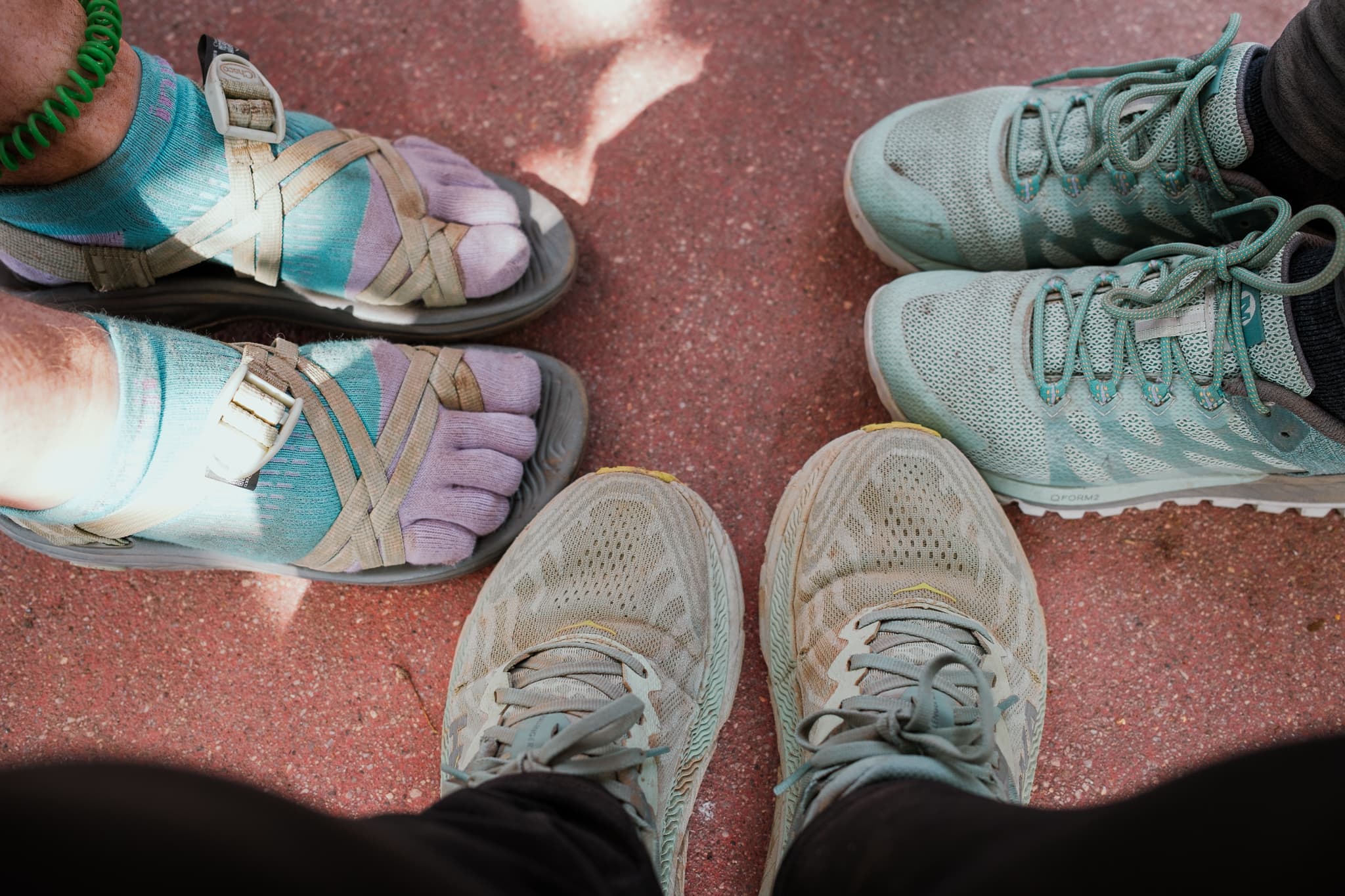
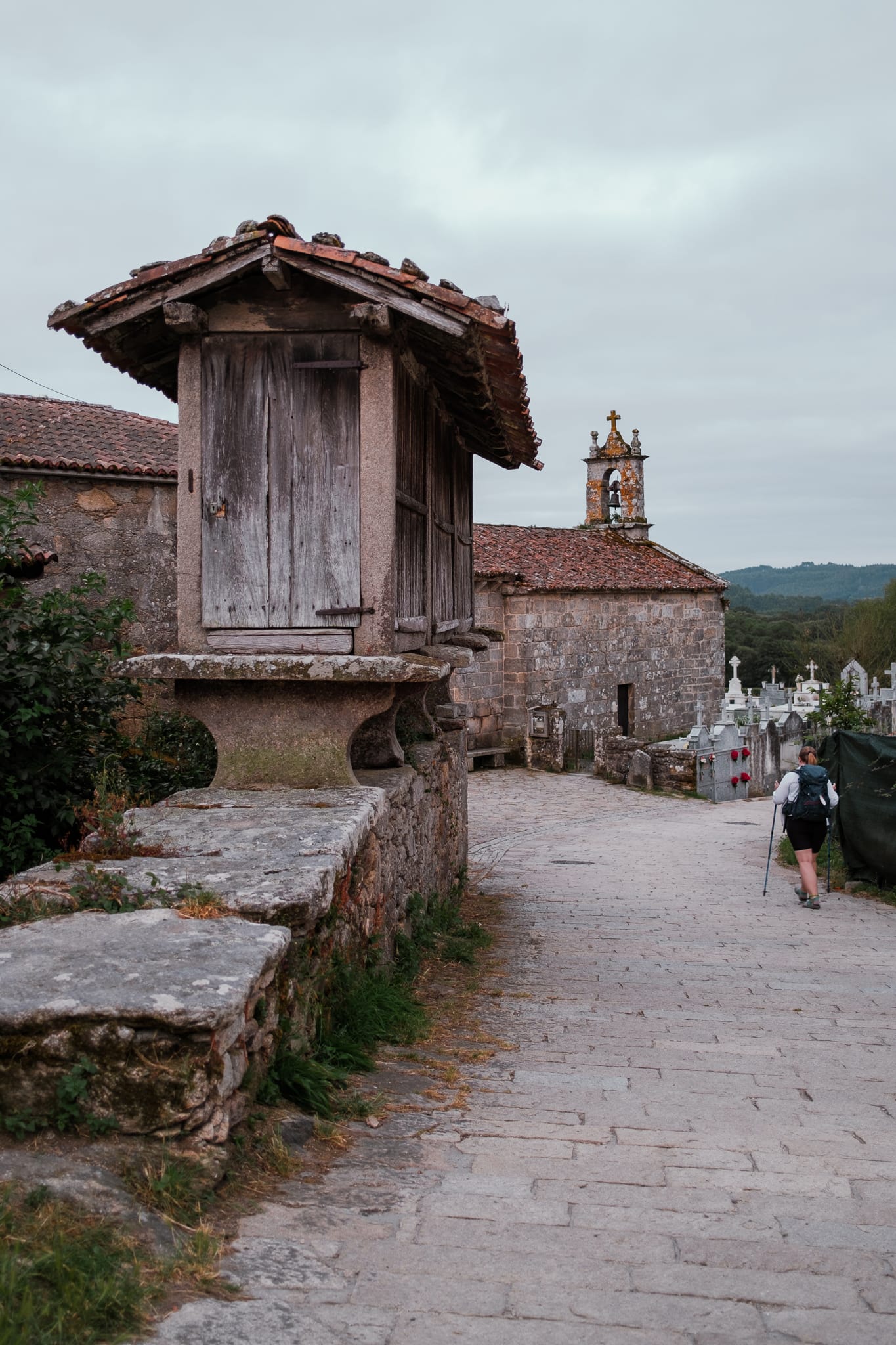


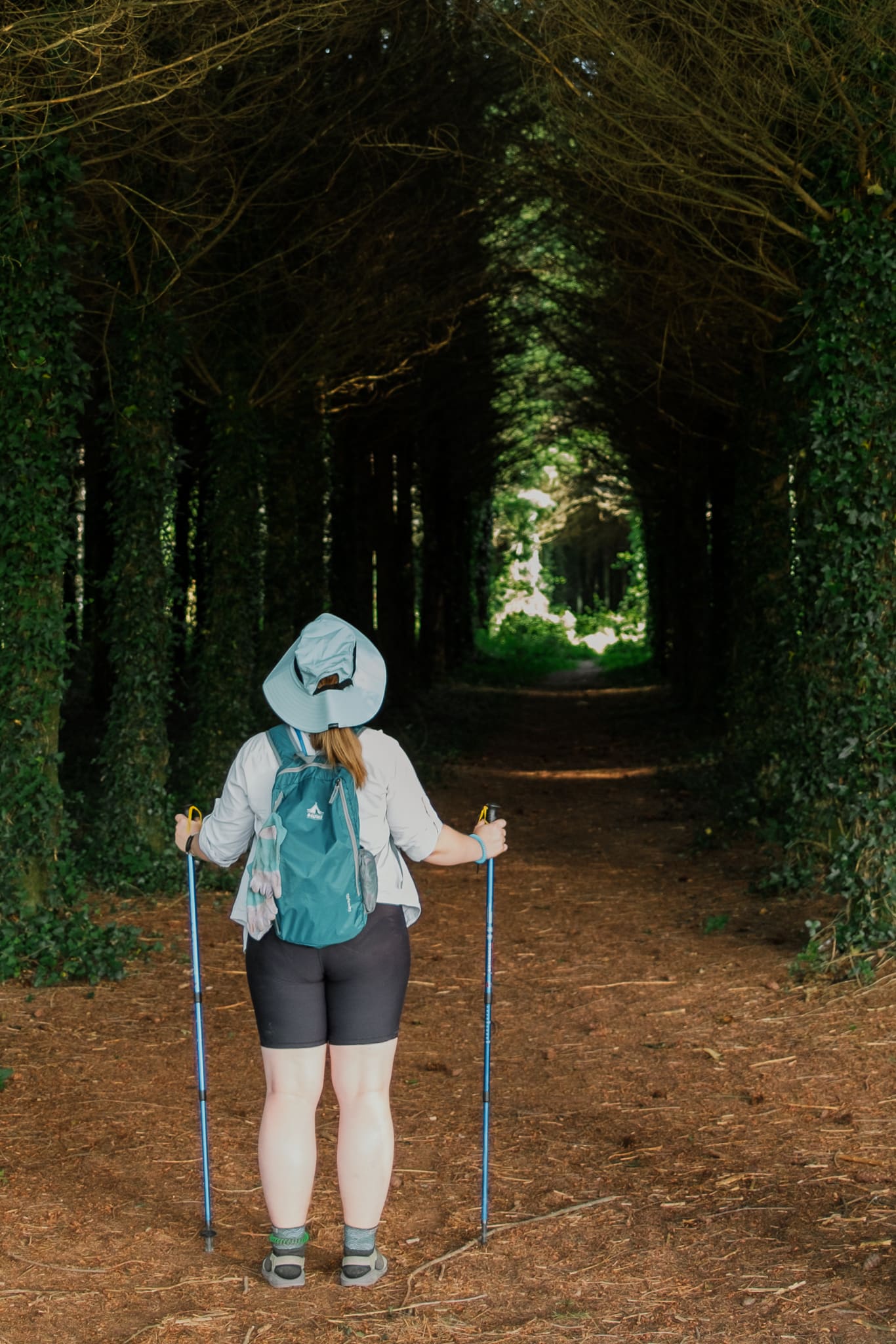
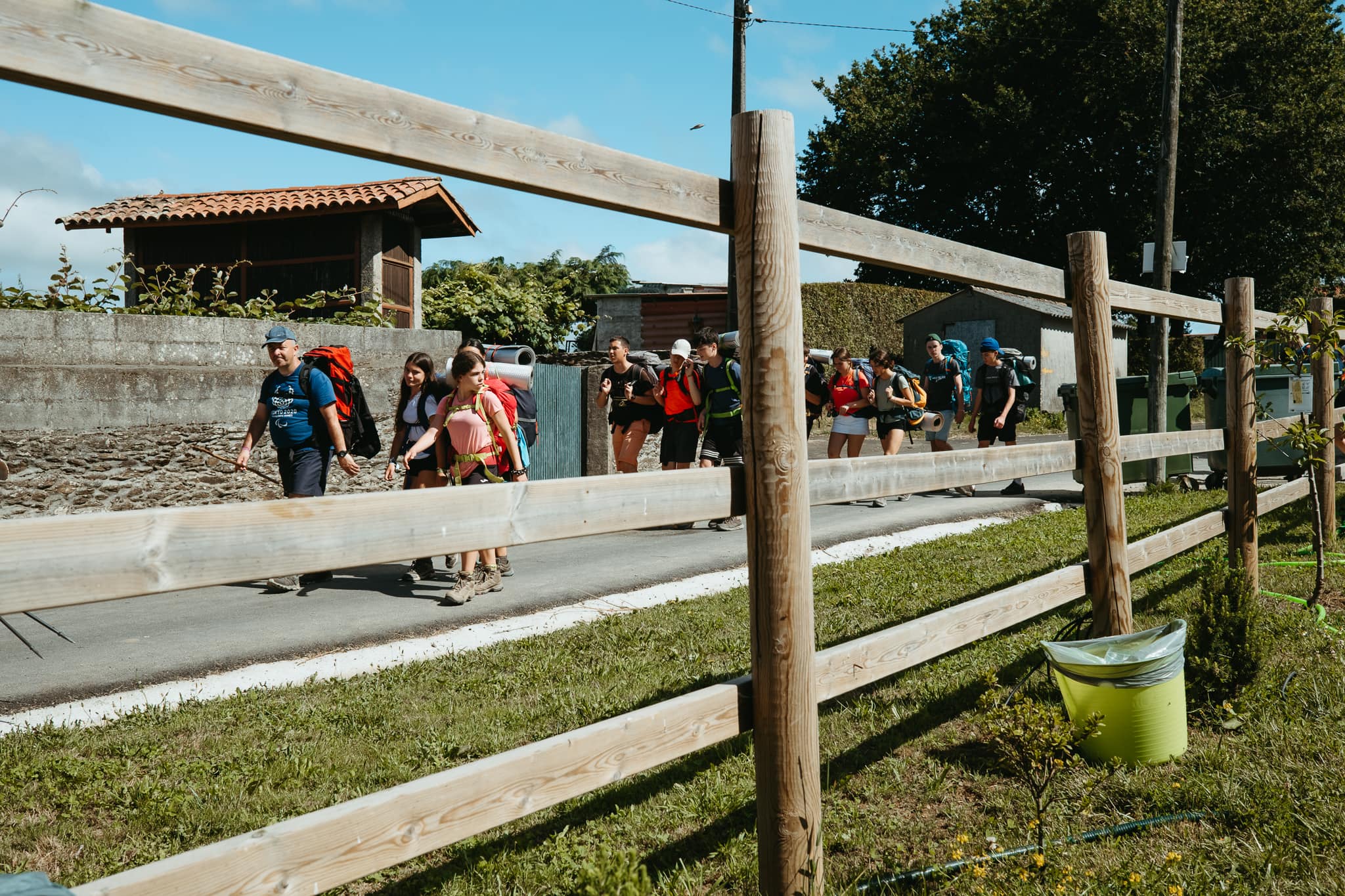


On day 34, we woke up in O Pedrouzo and started walking before even the crack of dawn — hoping to arrive in Santiago de Compostela with enough time to attend pilgrims’ mass at noon. It was surreal, knowing that this would be the last day I would wake up and walk west after nearly five weeks of doing little else.
Here’s what I remember best about this final day of walking:
- Feeling strong and fast and making good time for once — maybe because we were walking with a fast-moving friend; maybe because we had a (self-imposed) deadline; maybe because we felt so compelled to reach our final destination
- Taking photos of every distance marker we passed for the last 10 kilometers
- The crowds of pilgrims all converging on the same destination
- The bagpipes playing under the final stone archway
- Tearing up when I entered the plaza
- Feeling like maybe I can do anything?


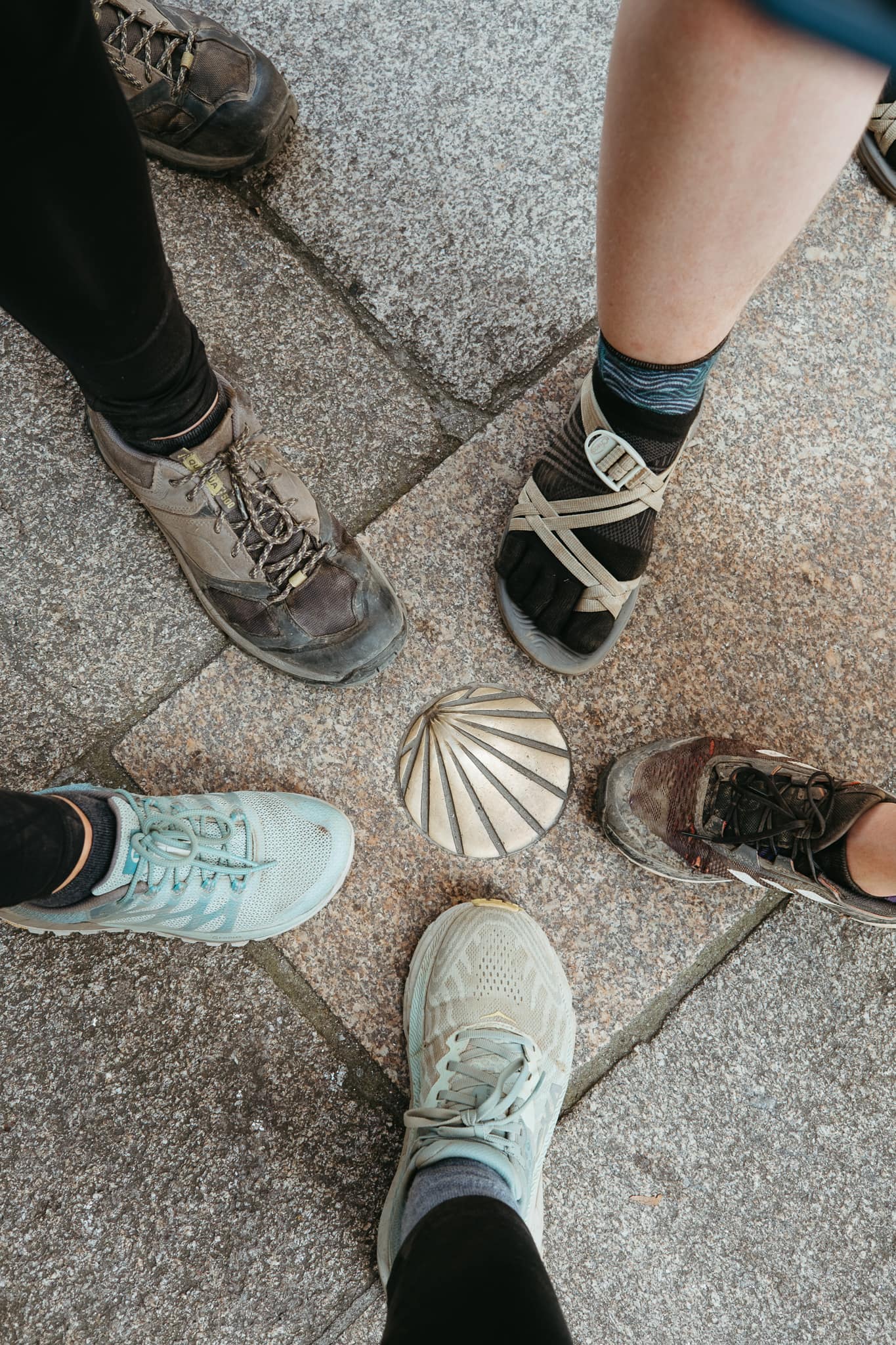
After arriving, we hugged, took photos, greeted other pilgrims we knew in the plaza, went to the pilgrims’ office to receive our compostelas, stored our backpacks away, and joined the long line to enter the cathedral for mass.
Mass was — well, it was in Spanish, and it was very very full, and we had to stand, and we are not Catholic. So it was, shall we say, a mixed experience. But I wanted very much to attend just in case they swung the botafumeiro — a famous incense holder that requires multiple people to operate. They hoist it into the air and swing it back and forth across the cathedral quite dramatically. It fills the space with smoke and fragrance and vibes.
And wouldn’t you know it — the botafumeiro did swing that day. It was just as remarkable as I thought it would be.
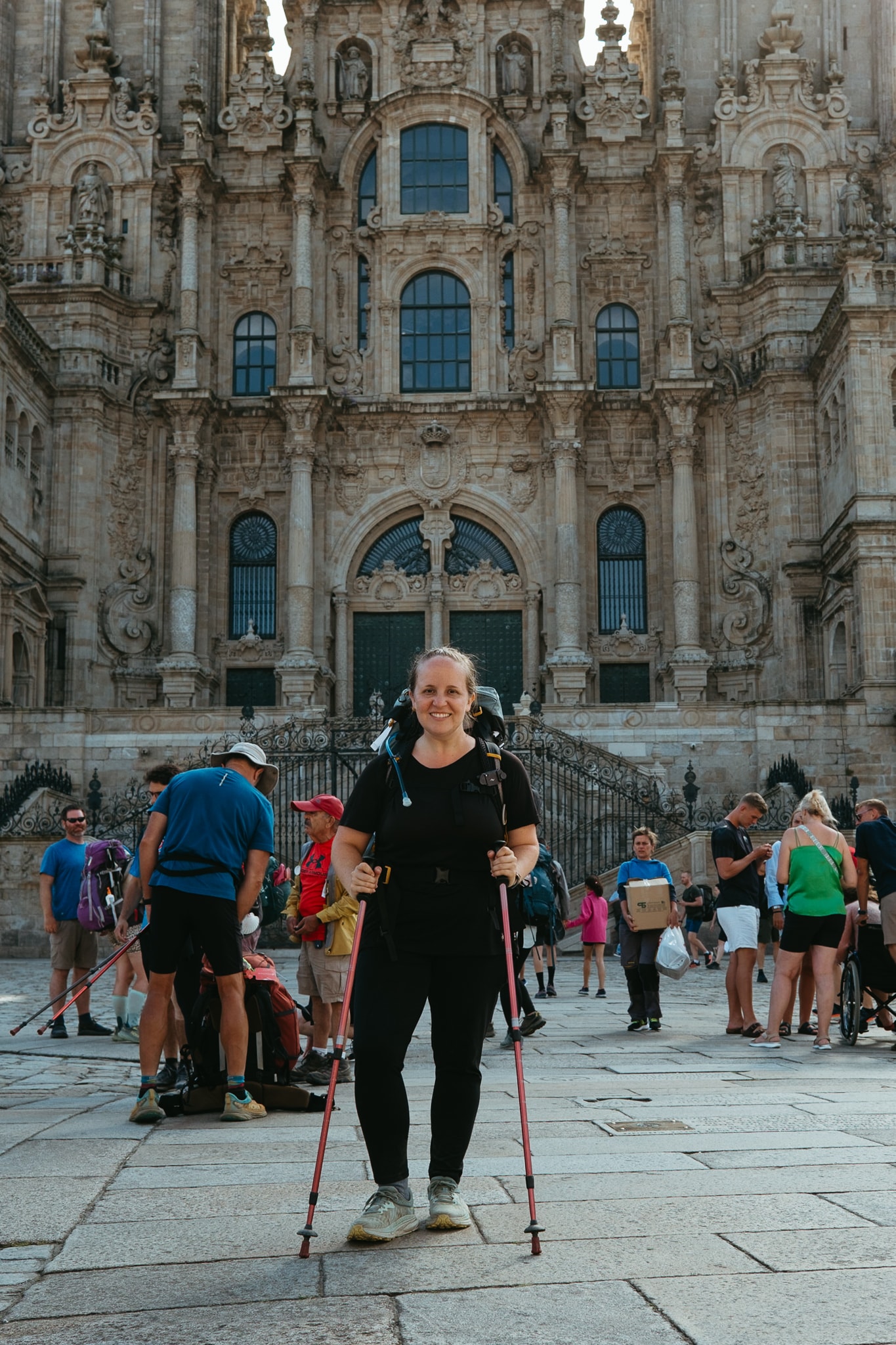


What more is there to say? We had a leisurely lunch with friends. We relaxed. We showered. We shopped for souvenirs. We had a leisurely dinner with friends. We said goodbye. I cried. We left. Life went on. But I think about the Camino all the time. I hope I never stop.
More Information About the Camino
THE BASICS | Start with an introduction to the Camino de Santiago and 15 important things to know about the Camino, and read about a typical day on the Camino.
SAFETY | Find out what to know about safety on the Camino.
FOOD | From typical meals to costs, here’s everything to know about food on the Camino.
GO IT ALONE | Here’s what you need to know if you’re thinking about walking the Camino alone (like me!).
EXPENSES | Just how much does the Camino cost, anyway? Find out here.
GET READY TO GO | Here’s what to know about how long the Camino takes, how to plan for the Camino (or not!), and 9 helpful ways to prepare for the Camino.
ITINERARY | Want to walk the Camino Frances in about 34 days? Read my recommended itinerary.
PACKING GUIDE | Everything you need to know about what to pack (and not to pack!) for the Camino, plus a printable packing checklist.
CAMINO FRANCES | If you walk the Frances route, here are 10 incredible things you can expect to see.
SHORT CAMINO | Here’s how to walk the Camino in just 5 days.
PHOTOGRAPHY | A complete guide to taking great photos on the Camino de Santiago.
pin this post






Hi there, I enjoyed reading this so much. It calmed some nerves I have – I’m going to be doing my first camino frances, alone, in about 3 weeks. I adore your photography, you are so talented! What an eye… and I’m following along on your story on IG now (: nice to “meet” you here online and thanks again for the moving and beautiful blog post!
Oh gosh, what a kind comment! I’m so excited for you and honestly jealous that you get to walk the Camino so soon — I have been majorly feeling the itch again myself lately! I hope you have a fantastic experience (and I’m sure you will). Feel free to DM me on Insta with any questions you have, either now or on the way, and buen Camino! P.S. hope you don’t mind if I follow you back so I can live vicariously through your Camino 🙂