
What to Know About Florence’s Brunelleschi Pass
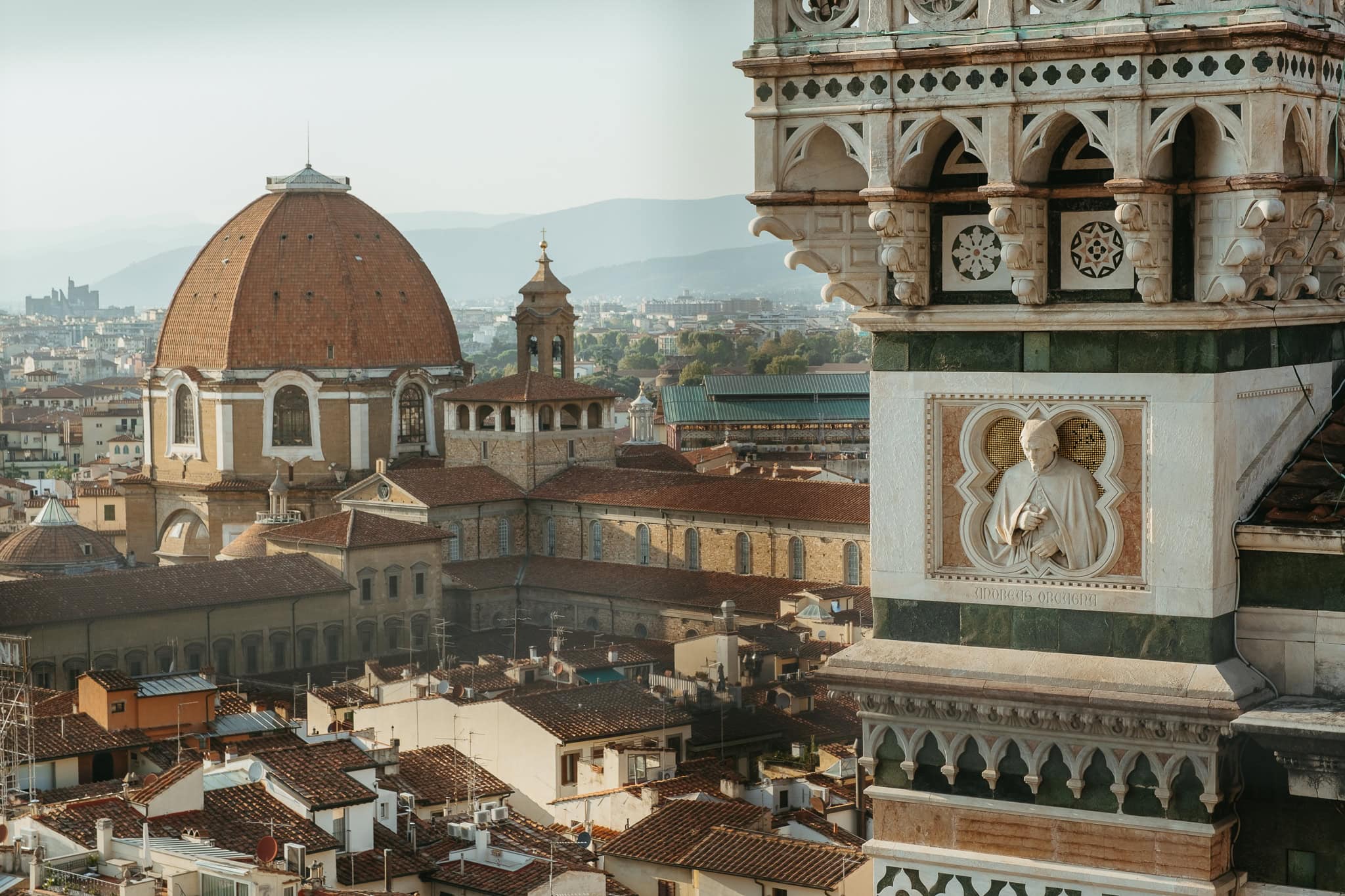
Most visitors to Florence flock to see the Duomo (the city’s world-famous cathedral) — and rightly so. The intricate white, green, and pink marble exterior is genuinely incredible, and the massive dome, designed by Filippo Brunelleschi, is an engineering and architectural wonder.
Though you can enter the main part of the Duomo for free, you’ll need to pay for additional Duomo experiences, such as climbing Brunelleschi’s Dome, entering the baptistery (a separate building next to the Duomo), and climbing the bell tower.
Helpfully, the Duomo (more officially called the Cathedral of Santa Maria del Fiore) makes it easy for visitors to visit all of these and other Duomo complex sites through an all-in-one access ticket: the Brunelleschi Pass.
In this post, learn all about the Brunelleschi Pass, including which entrances are included in the Brunelleschi Pass, how to purchase the Brunelleschi Pass (and time it correctly!), and whether the Brunelleschi Pass is worth buying.
This post contains affiliate links. If you make a purchase or a booking through one of these links, I may receive a small commission at no extra cost to you. Thanks for supporting In Old Cities in this way!
What is the Brunelleschi Pass?
The Brunelleschi Pass is a multi-use ticket that gives you access to all of the ticketed sites within Florence’s Duomo complex: the dome, the campanile, the baptistery, the Opera del Duomo Museum, and Santa Reparata.
If you’re not interested in all five of these sites, you can buy less expensive and less inclusive versions of the Brunelleschi Pass that include entrance to fewer of the sites (more on that in a minute!).

Sites Included in the Brunelleschi Pass
Let’s run through the five sites that are included in the Brunelleschi Pass.
First, here are the locations of the entrances to each site:
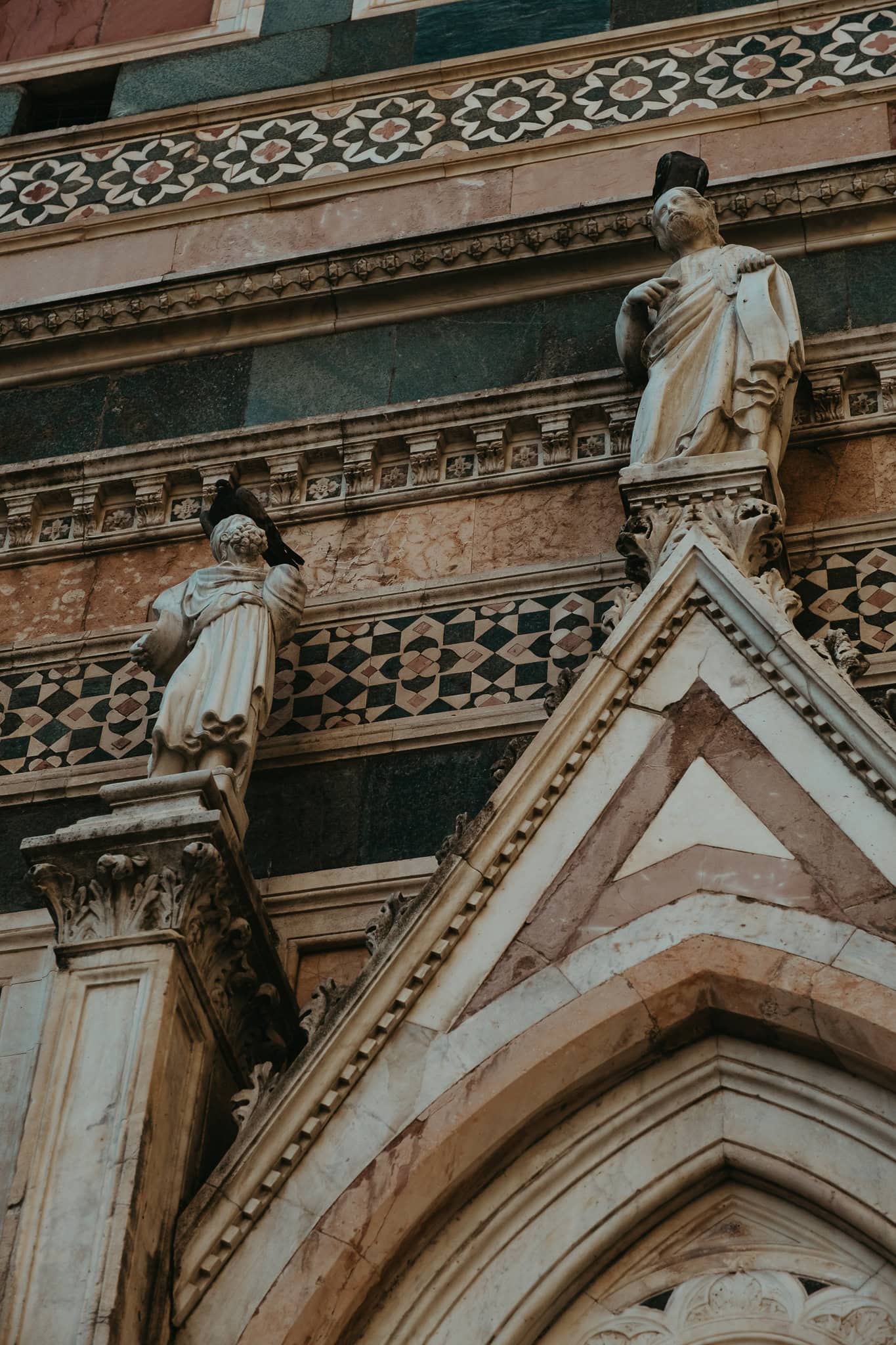
Below, you’ll find a brief description of what you can expect to experience at each site included in the Brunelleschi Pass.
Brunelleschi’s Dome
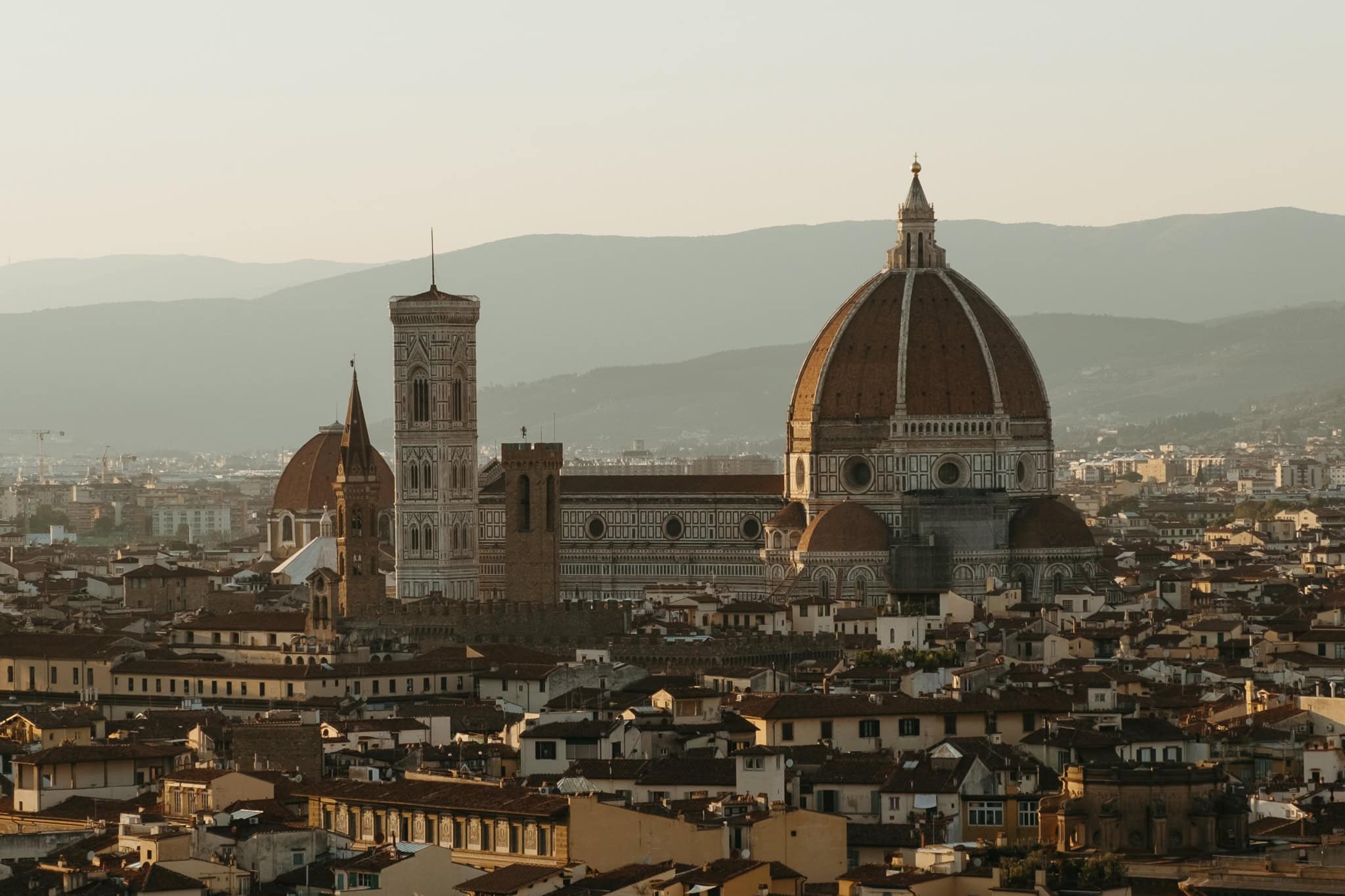
Remarkably, Brunelleschi’s Dome — the massive dome topping the cathedral — is the largest masonry dome in the world, even though it was constructed in the 15th century, well before architects fully understood the physics that prevent the dome from collapsing.
The dome is the most famous landmark in Florence, and truly dominates the skyline. It genuinely is incredible.
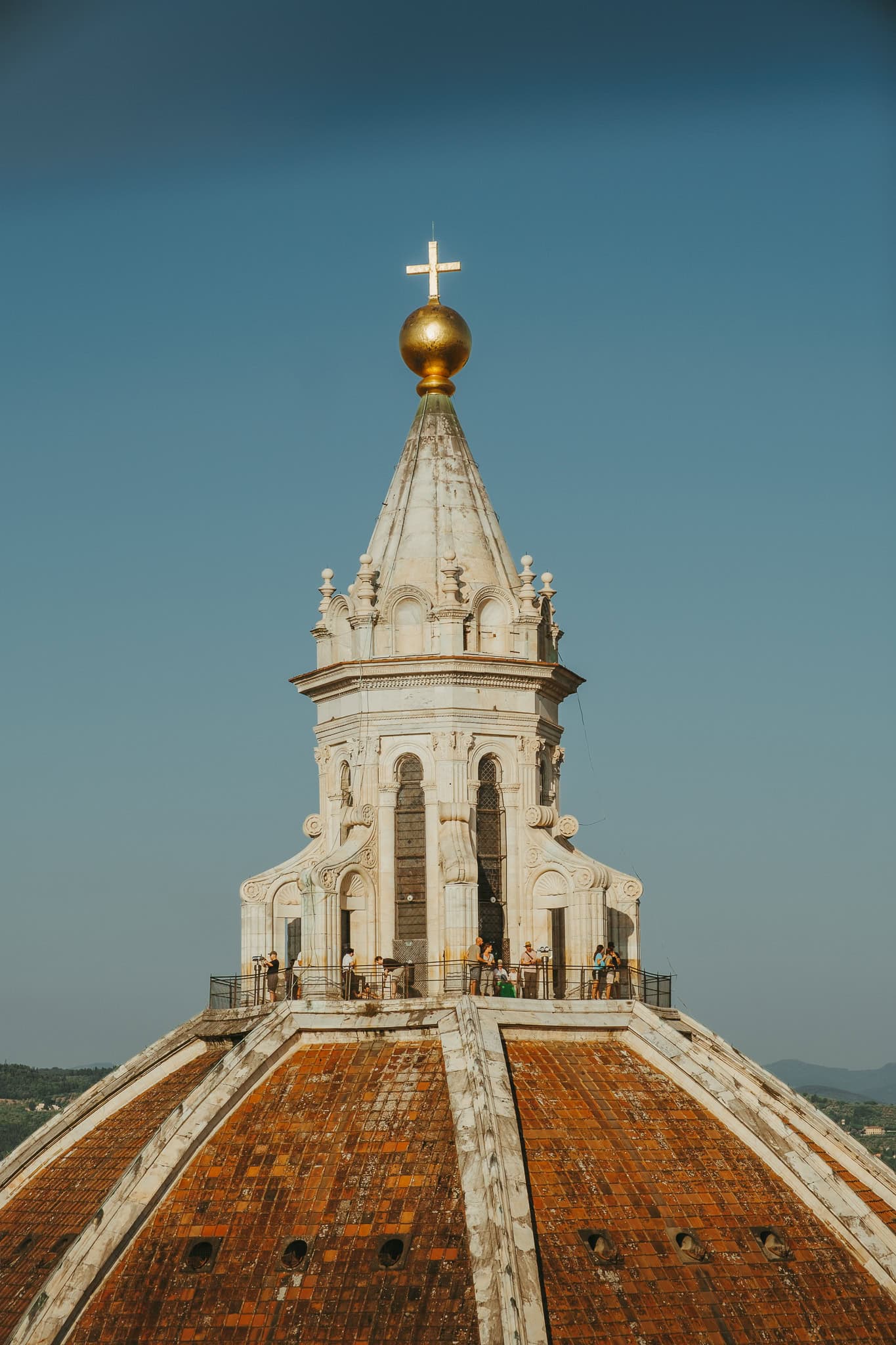
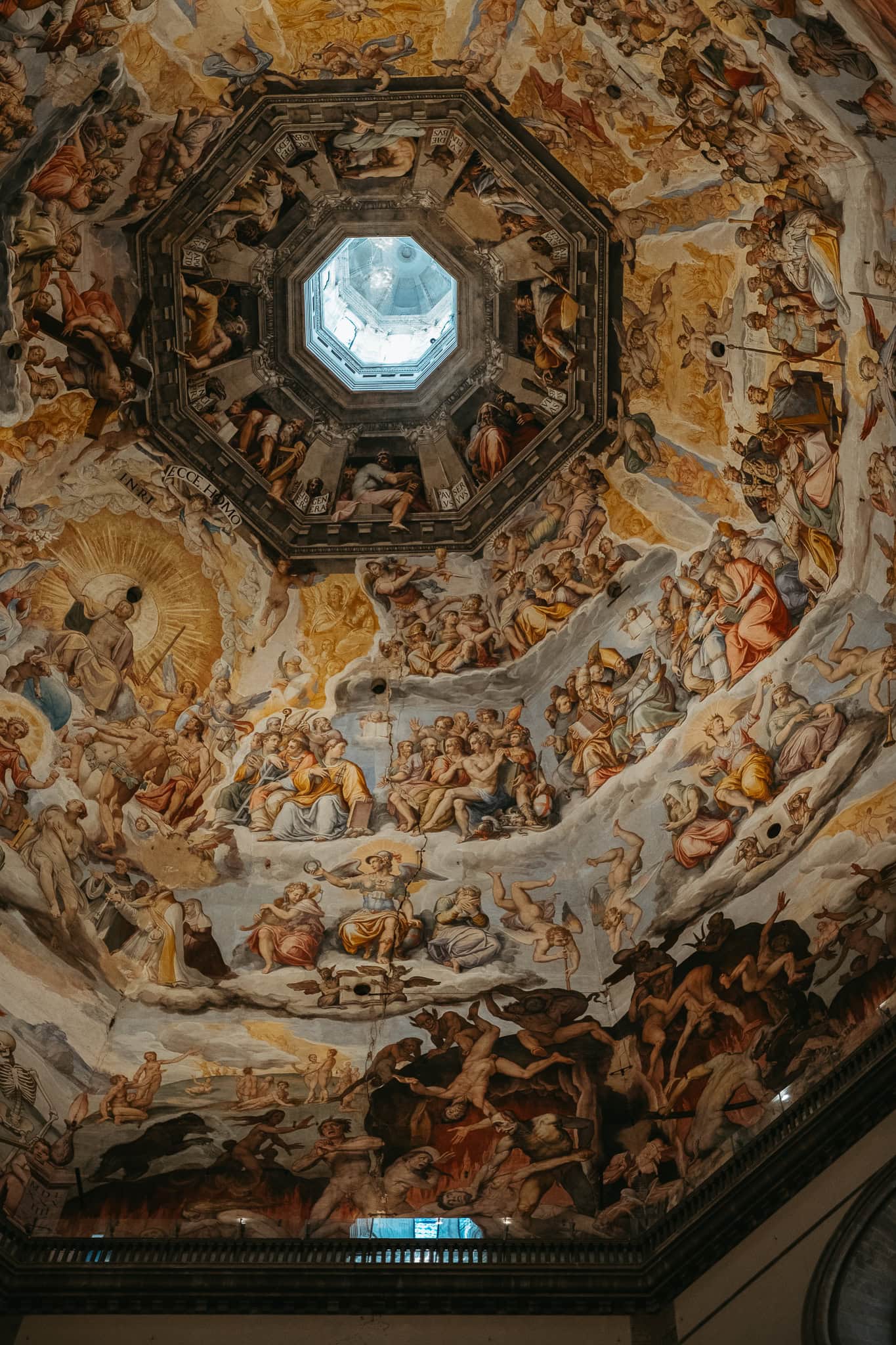
With the Brunelleschi Pass, you can climb up to an exterior viewing platform at the top of the dome. Along the way, you will walk along the inside of the dome and get a close-up look at the huge frescoes painted there.
The climb to the top of Brunelleschi’s Dome involves a brutal 463 steps, often through narrow stairways. At the top, space can still be tight, though the reward is sweeping views of Florence and the surrounding landscapes.


To access Brunelleschi’s Dome, you need to enter via the door on the northern side of the Duomo (as noted in the map above).
Giotto’s Bell Tower
Giotto’s Bell Tower — in Italian, the campanile — stands at the other end of the Duomo.
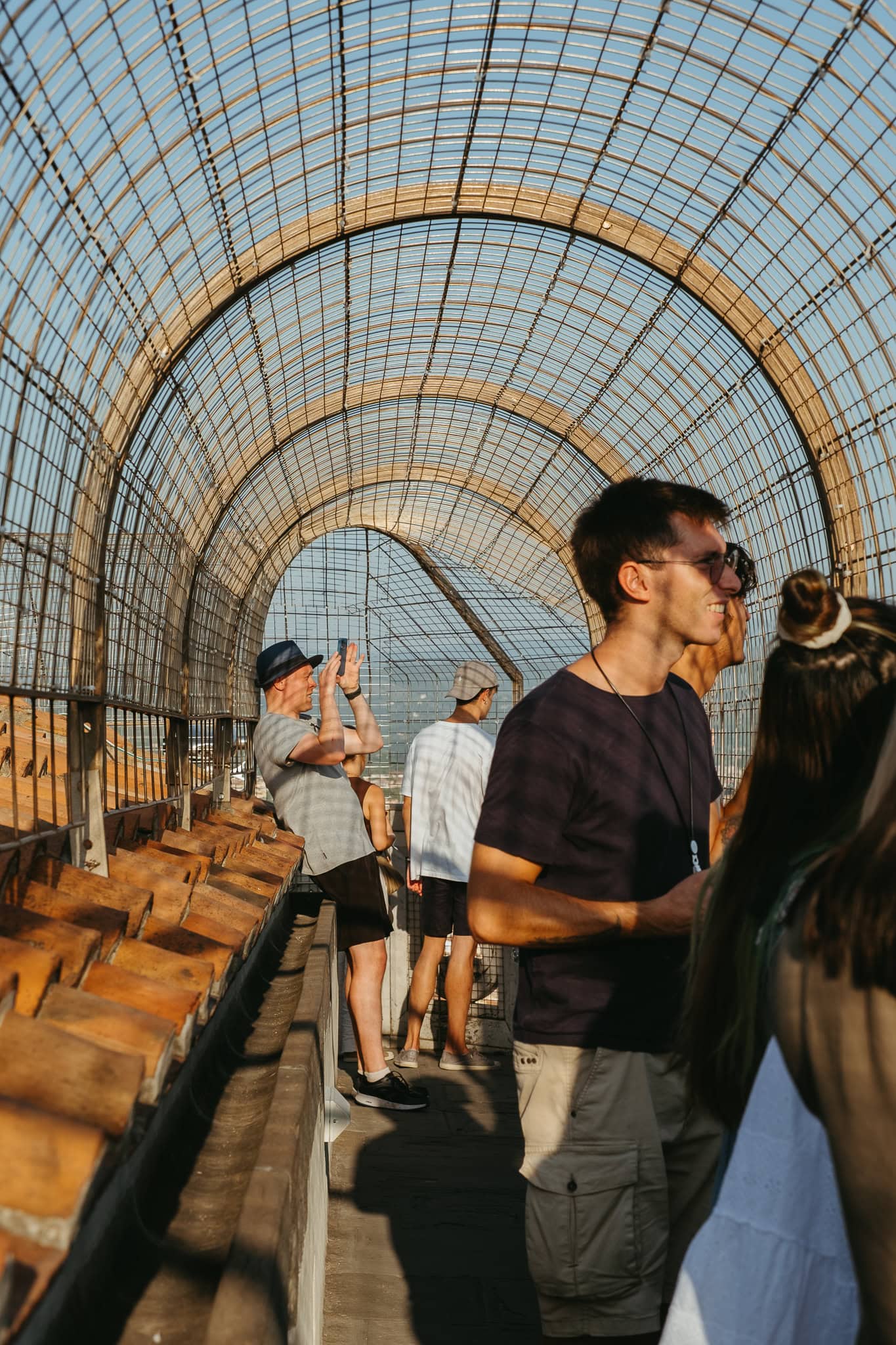
With 414 steps, the climb to the top of the campanile is a bit shorter than the climb to the top of the dome, but only just. Still, it’s a much easier climb, in part because there are several platforms along the way to the top where you can stop to rest and enjoy the views.
At the top of Giotto’s Bell Tower is — you guessed it — a viewing platform. The highlight of the views from the campanile is a fantastic look at Brunelleschi’s Dome. When I was at the top of the campanile, people who were then at the top of the dome were waving at us on the campanile, which was a nice little human moment.
Baptistery
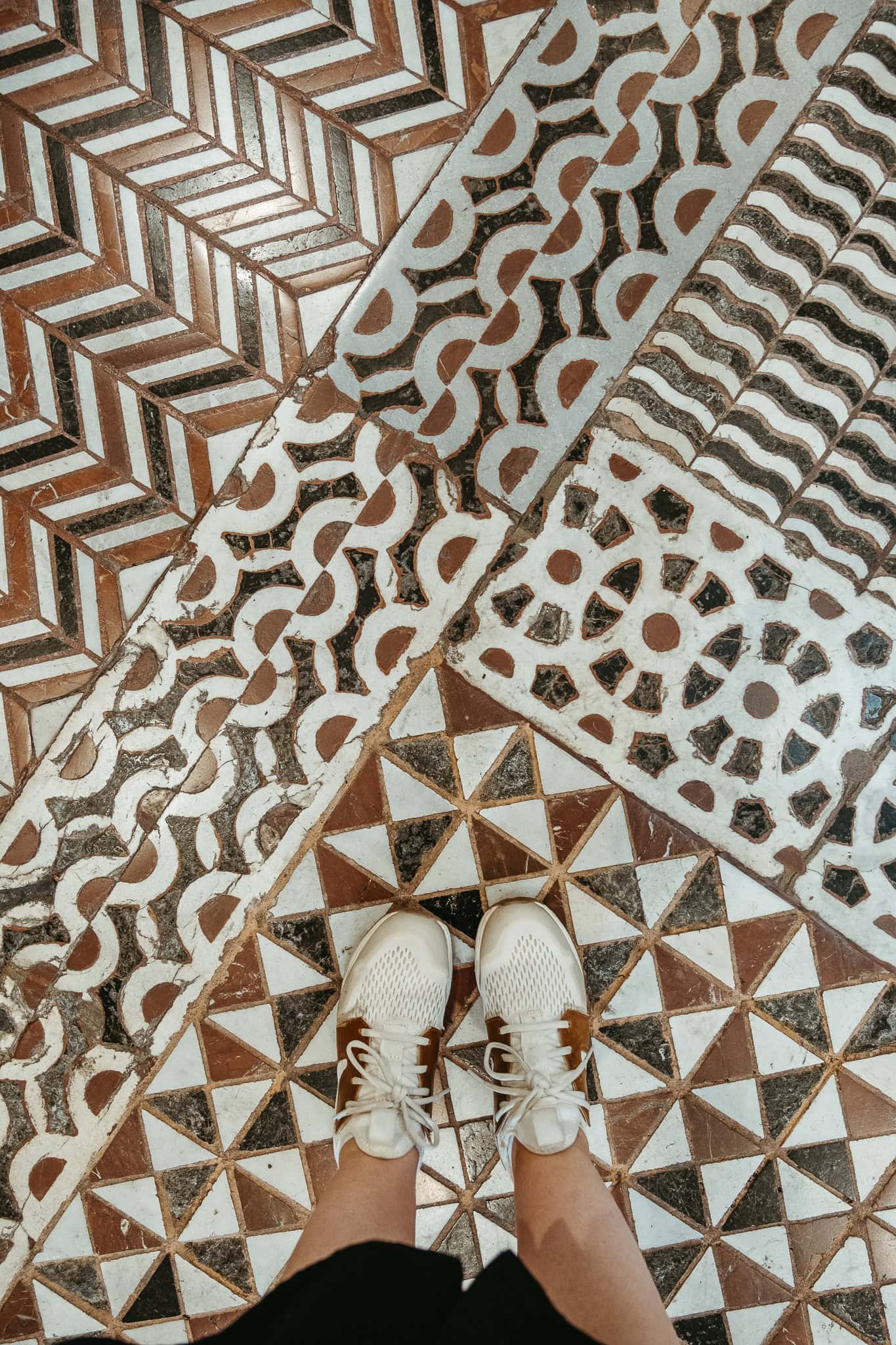
The Duomo’s baptistery is a smaller, separate, octagonal building located in front of the cathedral. Scholars aren’t completely sure when the baptistery was built or what it was originally used for, but we know that it began to be used for infant baptisms by the 12th century. (Fun fact: Dante Alighieri was baptized there in the 14th century!)
Today, the baptistery is best known for its sets of magnificent bronze doors with biblical scenes in intricate relief (though be aware that the doors currently installed are reproductions; the originals are kept in the Opera Duomo Museum for preservation purposes), as well as its wonderful interior mosaics.
However, the mosaics are currently undergoing restoration, so be warned that the interior of the baptistery may contain quite a lot of scaffolding, tarps, and construction debris.
TOURING THE RESTORATION SITE
The baptistery’s restoration presents a unique opportunity: with a guide, you can climb up the scaffolding of the restoration site and see the baptistery’s mosaics up close.
Tours of the baptistery restoration site are available only on Saturdays. Find more information here:

For some fictional context — and here’s where I reveal that I am, unfortunately, a fan of Dan Brown’s Robert Langdon books — the baptistery is the location where, in Inferno, Robert and Sienna find Dante’s stolen death mask hidden away.
Opera del Duomo Museum
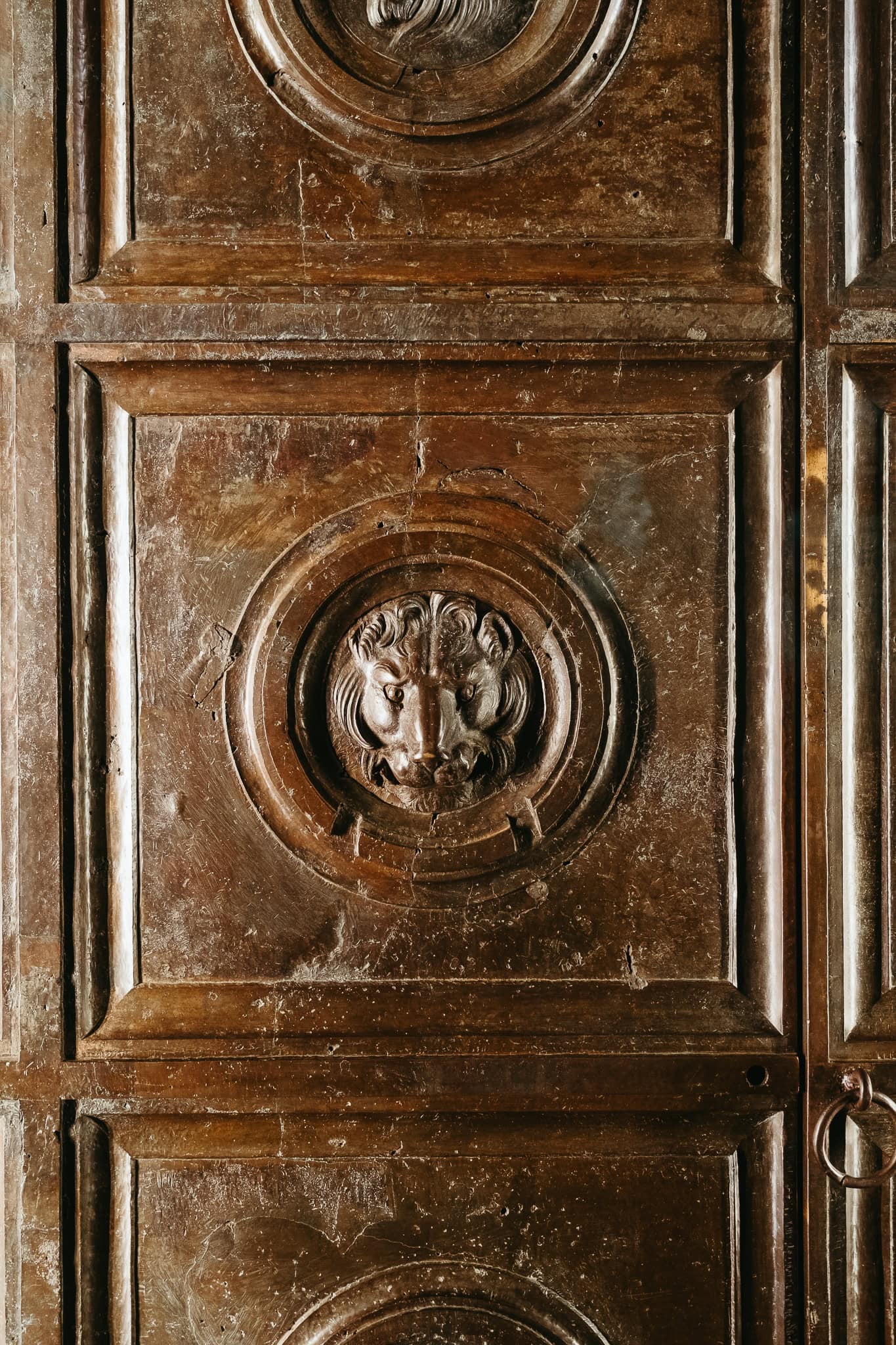
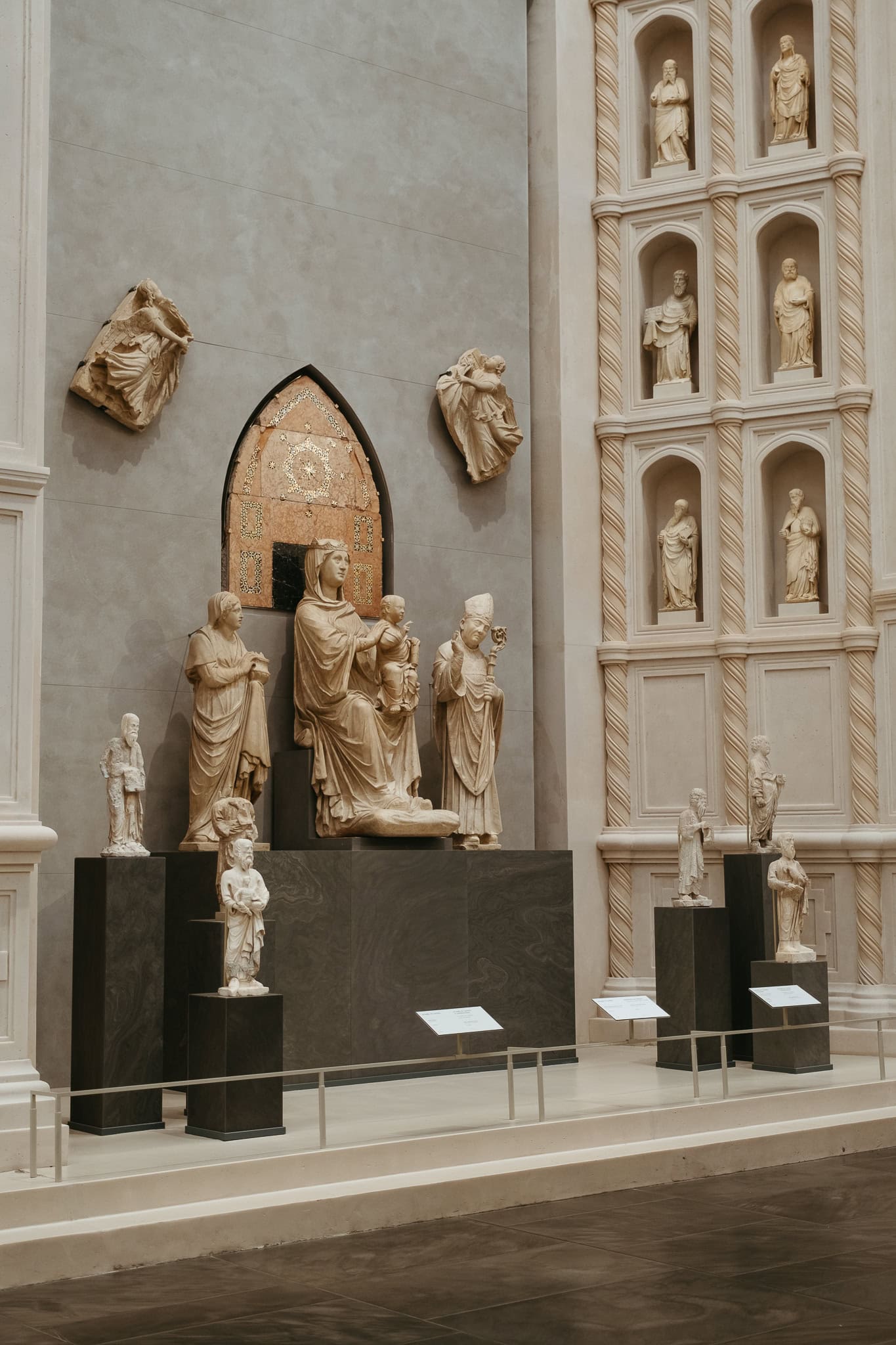
The Opera del Duomo Museum, which is located at the eastern end of the cathedral, is essentially a museum for the Duomo. It contains an incredible array of art and objects that once adorned the Duomo and its accompanying buildings, as well as exhibits about the creation of the Duomo.
Among the many things you’ll find inside the Opera are the original baptistery doors, a full-scale model of the cathedral’s original facade, models that Brunelleschi used to test his ideas for the construction of the dome, and much more.
On an upper level, the Opera del Duomo also has an outdoor terrace with unique views of the walls of the cathedral.
Truth be told, I only visited the Opera del Duomo because I had purchased the Brunelleschi Pass, and otherwise wouldn’t have prioritized it. But I really enjoyed it in the end: it was wonderfully uncrowded in a very crowded city, wonderfully cool on a blazing hot August day, and wonderfully full of unique art and items.
Santa Reparata
Under the floor of the cathedral lie the remains of an ancient basilica that once stood in Florence.
Now known as Santa Reparata, these ruins were discovered during an archaeological campaign beginning in the 1960s.
Today, you can descend into the basement of the cathedral and see floor mosaics, the remains of structures, and more. There’s also a crypt containing a number of tombs, including that of Filippo Brunelleschi.
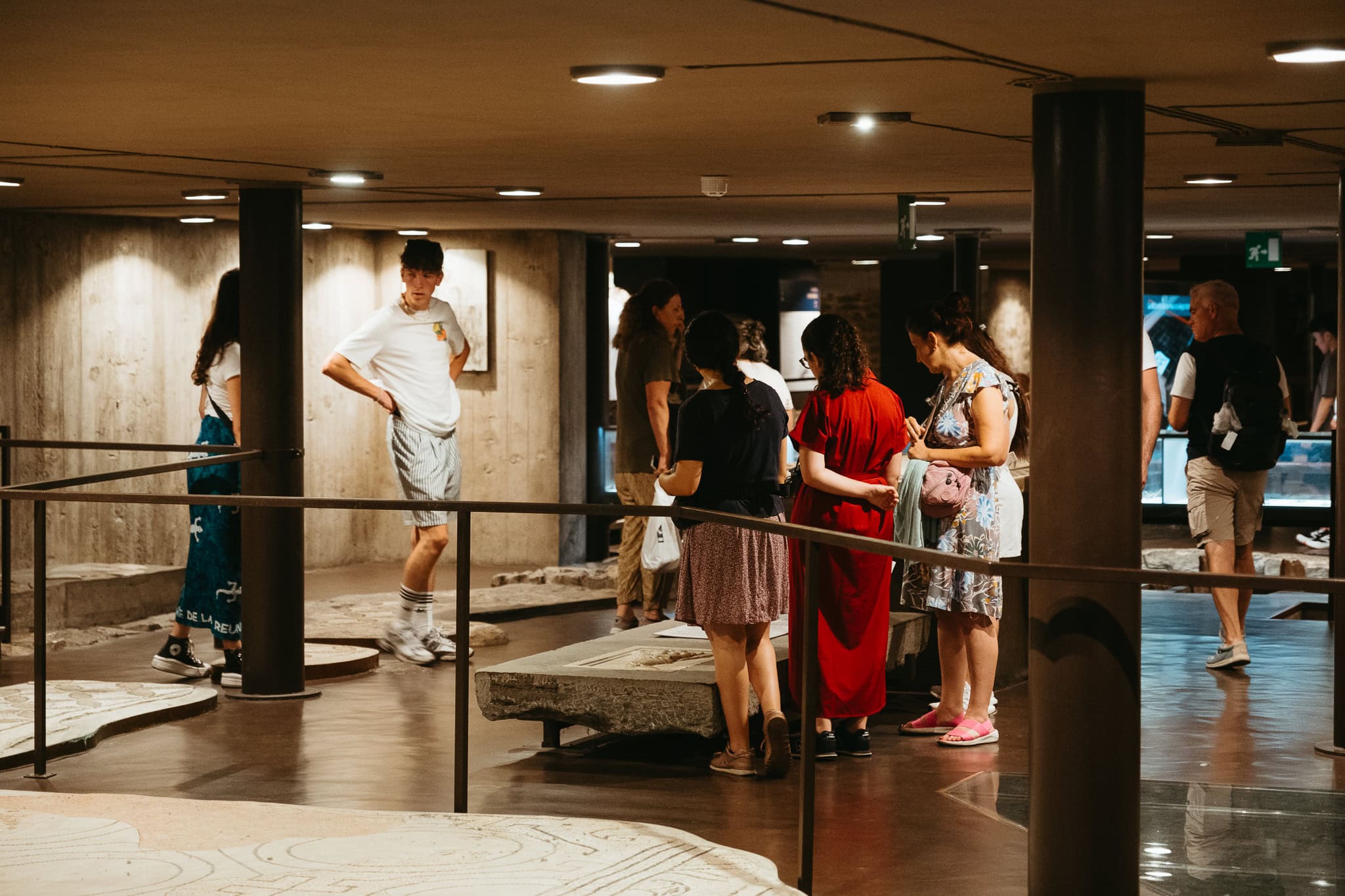
Santa Reparata can be accessed from within the cathedral itself; look for a staircase descending into the floor toward the back of the cathedral.
In my opinion, Santa Reparata is the least interesting of the Duomo sites, but your mileage may vary depending how interested you are in history and archaeology.
How to Buy the Brunelleschi Pass
You can buy the Brunelleschi Pass at the Duomo’s official website here, or in person at a ticket office beside the southern side of the cathedral (indicated on the map above)
However, before you jump to buy your pass, be aware that there are several different pass options, depending which sites you’d like to visit.
With the Brunelleschi Pass, you can visit all five of the sites I described above. But if one or both of the towers doesn’t interest you, or you’re not able to climb them, a different (less expensive) pass might be a better option.
First, there’s the Giotto Pass, which includes everything except access to Brunelleschi’s Dome.
Or you could buy the Ghiberti Pass, which excludes both the dome and the bell tower.
This table summarizes which sites are included in which pass, plus how much each pass costs for an adult:
| BRUNELLESCHI PASS | GIOTTO PASS | GHIBERTI PASS | |
| €30 | €20 | €15 | |
| Brunelleschi’s Dome | ✔ | ||
| Giotto’s Bell Tower | ✔ | ✔ | |
| Baptistery | ✔ | ✔ | ✔ |
| Opera del Duomo Museum | ✔ | ✔ | ✔ |
| Santa Reparata | ✔ | ✔ | ✔ |
Selecting the Time for Your Brunelleschi Pass
All three of the passes — Brunelleschi, Giotto, and Ghiberti — are valid for 3 calendar days. You can visit the sites included in your pass once each over the course of three days, beginning on a date you will select when purchasing your ticket.
Importantly, when you purchase the Brunelleschi Pass, you must also select the time at which you will climb Brunelleschi’s Dome. This time must be on the first day of your ticket’s validity — BUT you can visit other Duomo sites at any point during that day.
In other words, your ticket becomes valid on the calendar day that you are scheduled to climb Brunelleschi’s Dome, and you can use your ticket for non-dome sites throughout that day, regardless of what time you will climb the dome.
For example, here is the relevant portion from my own Brunelleschi Pass, showing that my ticket was valid from August 24 through August 26, and I was set to climb the dome at 18:45 on August 24. With this ticket, I was able to visit the baptistery and Opera del Duomo during the afternoon of August 24 before climbing the dome at 6:45 that evening.

For the Giotto Pass, the same principle applies, but in that case you will be setting the time for when you will climb Giotto’s Bell Tower instead of Brunelleschi’s Dome.
If you buy the Brunelleschi Pass, you do not need to book a time to climb Giotto’s Bell Tower in advance — only the dome.
Buying a Brunelleschi Pass from a Third-Party Vendor
A word of caution: some tour companies buy the Brunelleschi Pass and resell it via third-party vendors like GetYourGuide (though they don’t necessarily call it the Brunelleschi Pass in their advertising!).
Unless your ticket includes guided tours, these third-party vendors usually just increase the cost of the ticket with no extra value added (except perhaps an optional audio tour).
For example, this popular GetYourGuide listing for a “Brunelleschi’s Dome Climb Entry Ticket & Duomo” is really just the Brunelleschi Pass — but for more than you would pay if you just bought your pass directly on the Duomo website!
Accordingly, I generally recommend that you avoid purchasing your Brunelleschi Pass through a third-party vendor.
However, if you can’t figure out the Duomo website, or tickets are sold out on the official site, then buying through a reseller is an alternative option for you. Check availability here:
Is the Brunelleschi Pass worth it?
So, the all-important question: is the Brunelleschi Pass worth buying?
Well, the honest answer is…it depends on your personal interests and abilities.
Because there are multiple passes offering entrance to different sites, this question primarily revolves around whether you want to climb Brunelleschi’s Dome — which is only available through the Brunelleschi Pass.
If you don’t care about climbing the dome, or aren’t able to, then one of the other passes (or no pass) might be a better choice for you.
Here’s what I recommend:
If you care about climbing Brunelleschi’s Dome, buy the Brunelleschi Pass.
Personally, I don’t think that climbing Brunelleschi’s Dome is a must-do experience in Florence. There are other towers you can climb — including Giotto’s Bell Tower, Arnolfo Tower, and others — that I think offer better views and more enjoyable climbing experiences.
But: if you do care about Brunelleschi’s Dome (which is perfectly reasonable) then you should buy the Brunelleschi Pass. Full stop.
If you don’t care about climbing Brunelleschi’s Dome, but do want to climb Giotto’s Bell Tower, buy the Giotto Pass.
If you do want to complete one of the Duomo climbs, but don’t particularly care which one, (or you specifically do care about climbing Giotto’s Bell Tower), get the Giotto Pass. It’s less expensive than the Brunelleschi Dome, and (in my opinion) a better value for your money.
If you don’t care about (or can’t) climb either tower, but you do care about seeing the baptistery, Opera del Duomo, or Santa Reparata (or any combination of the above), buy the Ghiberti Pass.
Ordinarily, I’d tell you that the Ghiberti Pass is definitely worth buying just so you can see the baptistery. But given the baptistery’s current state of construction, I can’t in good conscience recommend that anyone spend €15 to see a bunch of scaffolding and plastic tarps.
Nonetheless, if you do care about seeing the baptistery (which is perfectly understandable), or the Opera del Duomo Museum, or Santa Reparata, then get the Ghiberti Pass.
If you don’t care about (or can’t) climb either tower, and you’re ambivalent about the baptistery, Opera del Duomo, and Santa Reparata, just don’t buy a pass.
Honestly? If none of these sites are especially calling to you, you can skip the Brunelleschi Pass AND its lesser varieties. Just admire the cathedral’s exterior to your heart’s content, step inside the interior for free and gaze up at the frescoes on the dome, and spend your money on some great pizza instead.

Other Tips for Visiting the Duomo Complex
Here are a few more things to know about visiting the Duomo sites with a Brunelleschi Pass.
Bag Storage
If you visit either Brunelleschi’s Dome or Giotto’s Bell Tower, you’ll need to check any backpacks or other large bags into the complex’s bag storage area (which is indicated on the map above) before climbing.
Attire
Like many cathedrals in Italy, you are not permitted to enter the Duomo with bare legs (above the knee), bare shoulders, or hats.
In my experience, this rule is enforced. During my most recent visit to the Duomo, there were even vendors selling scarves to people waiting in line for entrance to the cathedral. If you’re planning to visit the cathedral, either wear clothes that cover your shoulders and thighs or carry a scarf with you.
This rule extends to the baptistery as well!
Final Thoughts
To sum it all up: yes, you should buy the Brunelleschi Pass if you want to climb Brunelleschi’s Dome (though I don’t think this is a must-do activity in Florence).
Otherwise, consider buying one of the less expensive passes, or skipping out on the ticketed Duomo sites and just visiting the interior of the cathedral!
More Information About tuscany and ITALY
ITINERARIES | Learn how to spend one week in Tuscany, 10 days in Florence, Pisa, and Cinque Terre, or 10 days in Rome, Florence, and Venice (COMING SOON!).
FLORENCE | Read about how to spend one day in Florence or three days in Florence, learn about the city’s Uffizi Passepartout, and find out which of the city’s most famous towers you should climb.
SAN GIMIGNANO | Discover how to spend one day in San Gimignano (COMING SOON!) and where to find the best views of the city.
PISA | Discover what you need to know about visiting the Leaning Tower of Pisa (and more!).
SIENA | Find out how I spent one unforgettable day in Siena.
COSTS | Here’s how much I spent for one month in Italy.
pin this post


Thank you so much for your useful information. It helped me a lot.
Awesome, so glad to hear it!