10 Incredible Things to Do in Switzerland’s Jungfrau Region
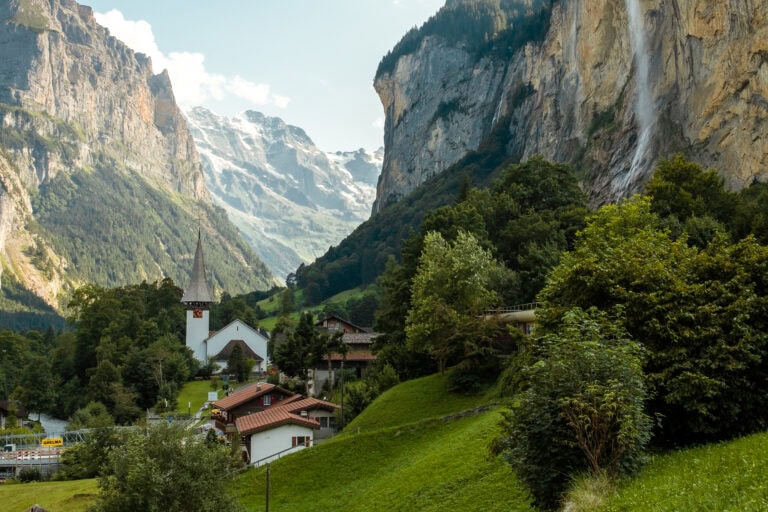
While I’ve been fortunate to see a lot of incredibly beautiful places in my life, I’m not sure any of them can claim to be as jam-packed with stunning views as the Jungfrau region of Switzerland. I’ve visited twice, and spent the entirety of both trips in constant awe of each new scene before me.
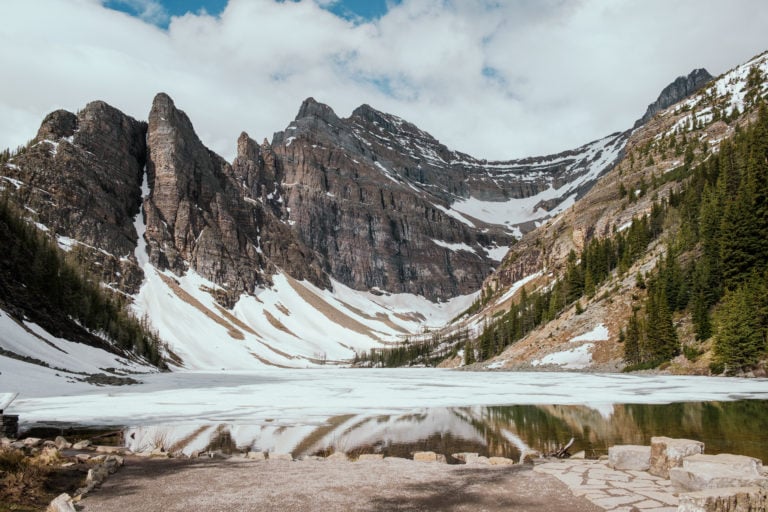
Plus, there’s a wide variety of things to do. During my trips to the Jungfrau region, I’ve hiked below snow-covered mountains and above bright teal lakes, journeyed to the highest train station in Europe, ridden on funiculars and boats, toured a castle, took day trips to charming, historic cities, admired massive waterfalls, walked through stunning valleys, and much more. No matter what you like to do when you travel, there’s something for you in the Jungfrau region.
Here are 10 amazing things you can do during a trip to the Jungfrau region.
This post contains affiliate links. If you make a purchase or a booking through one of these links, I may receive a small commission at no extra cost to you. Thanks for supporting In Old Cities in this way!
What to Know About Traveling in the Jungfrau Region
Before we dig into things to do in the Jungfrau region, here are a few things you should know about this area.
What’s the Jungfrau region, anyway?
Switzerland’s Jungfrau region is a portion of the Bernese Oberland area in central Switzerland. It’s named after the Jungfrau mountain — the highest peak in the area — and sits at the foot of the Bernese alps.
Its most prominent features include the incredible mountain trio of Eiger, Mönch, and Jungfrau, several stunning valleys between towering cliffs, and two beautiful blue-green lakes flanking the town of Interlaken.

Because massive mountains are such an important part of this region, many of the best things to do are located up in the hills or mountains and require special forms of transport to reach (like cogwheel trains). Those forms are transport are not cheap. As such, this is an expensive area to visit (in an expensive country to visit!).
If you’re staying in the Jungfrau region for at least three days, you should definitely consider getting the Swiss Travel Pass. With the Swiss Travel Pass, you pay one flat rate, and then virtually all of your transport needs (trains, boats, etc.) are covered or substantially discounted by your pass.
The Swiss Travel Pass is most likely to save you money if you are planning to take trains, funiculars, cable cars, boats, etc. during each day of your visit.
If you are not sure whether the Swiss Travel Pass is right for you, I recommend making a list of the activities you are most interested in doing, and calculating how much they would cost you in transport if you paid for each ticket separately.
Where should I stay?
If you’re staying in the area for more than one or two days and you intend to do a variety of things — maybe you want to hike in the mountains, and check out the lakes, and visit a few towns — Interlaken is an excellent home base with a variety of lodging options.
During my first visit to the Jungfrau region, I stayed in a private room at the Happy Inn Lodge in Interlaken. It was inexpensive, clean, and very conveniently located near one of Interlaken’s two train stations.
If, on the other hand, you’re visiting the Jungfrau area for a very short time and/or are planning to spend most or all your time exploring the mountains, I recommend staying in one of the beautiful small in the valleys or mountains. These towns include Lauterbrunnen, Wengen, Grindelwald, and Murren. Lauterbrunnen is a particularly great choice if you’re planning to arrive in the area by car (as the other towns can only be accessed by train).
On my most recent visit to the Jungfrau region, I stayed at Hotel Staubbach in Lauterbrunnen. I highly recommend it: there’s a great breakfast buffet and incredible views of the Lauterbrunnen Valley — including Lauterbrunnen’s most prominent waterfall, Staubbach Falls.


What should I do if I only have one day in the Jungfrau region?
My top recommendation is to stay in Lauterbrunnen and spend your day checking out the view from Wengen, hiking from Grütschalp to Mürren, and walking through the Lauterbrunnen Valley.
READ MORE: How to Spend One Day in Lauterbrunnen
10 Things to Do in the Jungfrau Region
TIP: This map contains many of the locations discussed in this blog post. To save it to your own Google Maps account, click the star next to the map’s name. You can then find and use the map from your Google Maps app by going to “Saved,” then “Maps.
1. Check out the View from Wengen
In a region full of stunning views, this is one of my favorites.
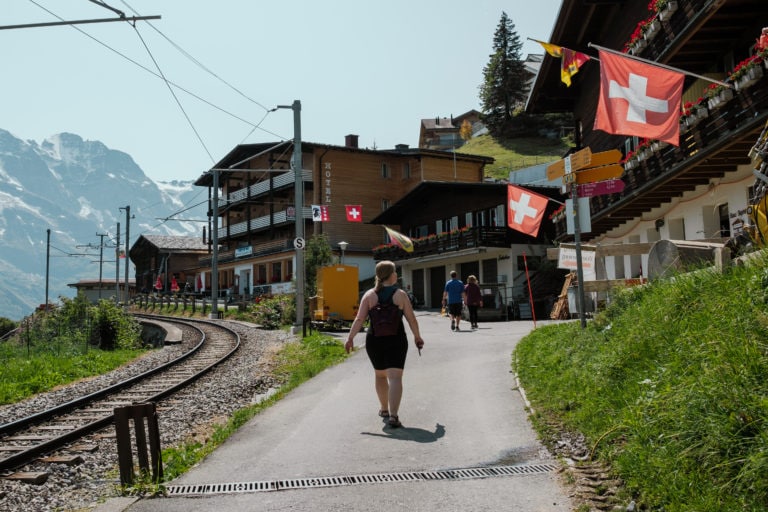
The tiny mountain town of Wengen is located high above the Lauterbrunnen Valley and offers beautiful views of the valley and its famous waterfalls, the town of Lauterbrunnen, and the snow-capped alps presiding over the whole scene.


Wengen is a car-free town, so the only way to reach it is by train. If you take the train from Lauterbrunnen, be sure to sit on the right side of the train on the journey up to Wengen for the best views.

When you arrive in Wengen, take a left from the train station up onto the main street. You are heading for the reformed church, where there is a small observation platform with spectacular views of the Lauterbrunnen Valley. The church is just a few minutes’ walk from the train station, and you will find the platform around the back of the church.

2. Walk from Grütschalp to Mürren
On the other side of the Lauterbrunnen Valley is an easy but incredible walk to the tiny town of Mürren.
This walk begins at the Grütschalp cable car station. If you’re very ambitious, you can hike there from Lauterbrunnen. Otherwise, take the cable car up from Lauterbrunnen.
The cable car station is located directly across from the train station in Lauterbrunnen. Check current pricing and timetables here.
The ride up to Grütschalp is only about 4 minutes long. It’s scenic — you get nice views of Lauterbrunnen — but don’t stress too much about getting great photos, as you’ll have much better views in a few minutes (without the blurry cable car windows in the way!).
When you arrive at the Grütschalp station, most people will head for the tourist train to Mürren. Feel free to join them if you’d rather not take the walk. My strong recommendation, however, is instead to head for the walking path above the train tracks. It will lead you to the small mountain town of Mürren.
The walk to Mürren is one of the most spectacular hikes I’ve experienced, with stunning views of the Eiger, Mönch, and Jungfrau mountains most of the way.

It’s also a short and easy hike, at just 4.3 kilometers (or 2.7 miles), with minimal incline and a well-defined trail. As you walk, you may hear cowbells from nearby grazing areas, and the scenic tourist train will pass you on the track below several times.


Mürren is a very picturesque little Swiss town. When you are done looking around, you can return the way you came, or — my recommendation — take the gondola from Mürren down to Stechelberg in Lauterbrunnen Valley. From there, you can take the bus or walk approximately 4.7 kilometers (or 2.9 miles) back to the town of Lauterbrunnen.


Read much more about the walk to Mürren, as well the walk through Lauterbrunnen Valley, here:
How to Spend One Day in Lauterbrunnen
3. Hike on Schynige Platte
There is no shortage of incredible hiking in the Jungfrau region, to say the least. Out of many fantastic options, I highly recommend hiking on Schynige Platte, which is a ridge between Interlaken and the big, snow-capped mountains. From Schynige Platte, you can get wonderful views of Interlaken and its lakes, as well as the mountains.
There are several different hiking trails available on Schnyige Platte. When you reach the train stop at the ridge, informational signage will tell you about your options, which include hikes that are as short as 50 minutes and as long as 6 hours. If you have time, you can take multiple trails.
Whatever you choose, I strongly recommend that you prioritize one of the routes labeled “Panoramaweg.” These trails will take you out along the ridge nearest Interlaken and offer the best views of Interlaken’s lakes, Thunersee and Brienzersee.


To reach Schynige Platte, you’ll need to ride a special cogwheel train. It’s not cheap, at more than CHF 70.00 for a round trip. But it is a wonderful experience with incredible views. And, if you have the Swiss Travel Pass, your journey will be discounted. You can find more information about tickets to Schynige Platte here.
The train to Schynige Platte only operates from July to October due to snow.

4. Watch the Sun Set from Brienzersee
The lakes on either side of Interlaken are incredibly beautiful from above, but I also recommend getting out on the water. My preference is Brienzersee, which I think is the prettier of the two lakes — though you really can’t go wrong.
Thankfully, the BLS Lake Cruise boat line operates boat rides from the tiny town of Brienz — which lies at the end of Brienzersee — to Interlaken. If you can time it properly, taking this boat trip at sunset is a wonderful experience. (No doubt it would still be wonderful at other times of day at well!).


The boat trip from Brienz takes about 75 minutes. It costs approximately CHF 36.00, though it is free (!) with the Swiss Travel Pass. Read more about boat trips on Brienzersee and Thunersee here.

READ MORE: How to Visit Thun and Brienz in One Day
5. See a 12th-Century Castle in Thun
Moving to Interlaken’s other lake, Thunersee, its namesake town of Thun offers plenty of wonderful sights. Chief among them, perhaps, is Thun Castle, which dates all the way back to the 12th century.
Today, Thun Castle serves as a museum with exhibits about the castle and the Thun area. More importantly, in my view, it also offers the best views of Thun. From the castle’s towers, you can look out over the city of Thun, as well as Thunersee and the mountains in the background.

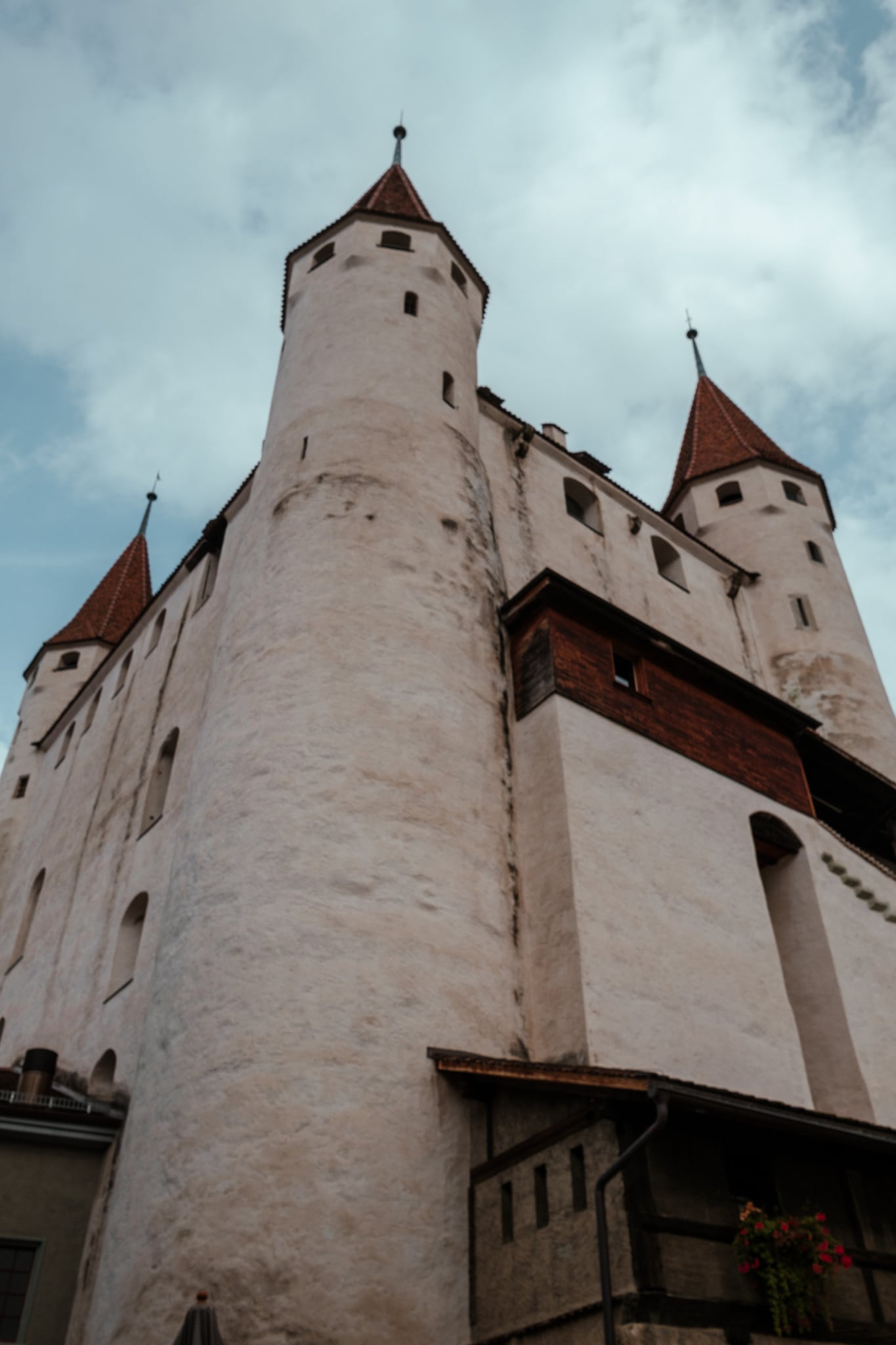
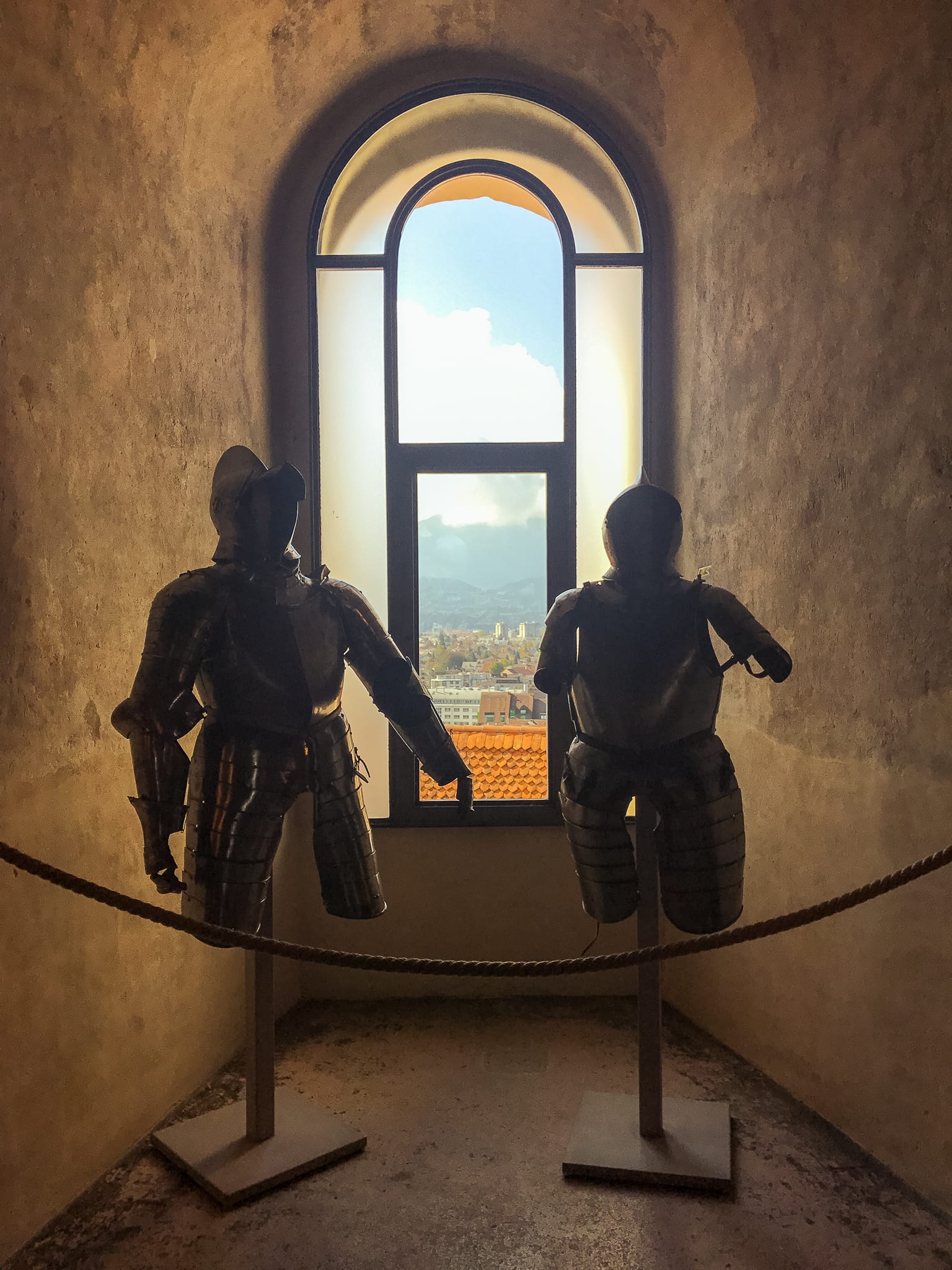

Regular entrance to Thun Castle costs CHF 10.00 (you will need to pay extra if you wish to see any special exhibits). You can find opening hours and other relevant information here.
6. Experience the Roar of Trummelbachfalle
Lauterbrunnen Valley is full of many waterfalls — most famously, Staubbach Falls — but one of its most interesting is not actually visible from the valley. Instead, Trummelbach Falls (or Trummelbachfalle) thunder inside one of the mountains flanking the valley.
Trummelbach Falls is a unique experience. Upon arrival, you ride a rather steep funicular up into the mountain. Then, you walk back down to a valley via a series of walkways and steps, passing 10 different waterfalls along the way.


Be cautious at Trummelbach Falls, as the walkways are slick due to the prolific spray of the falls. It’s also rather loud, since the falls are surrounded by stone.
Entrance to Trummelbach Falls costs CHF 14.00. Find more information here.
7. Throw a Snowball at Jungfraujoch
Jungfraujoch is a unique railway station experience situated at a glacier saddle by the same name. At more than 11,000 feet (or more than 3,400 meters), it’s Europe’s highest train station.
In order to reach Jungfraujoch, you will need to take a train to Kleine Scheidegg. (You can reach Kleine Scheidegg from several directions, including by traveling through Grindelwald or through Lauterbrunnen). At Kleine Scheidegg, you must a buy a ticket for a special train that is equipped to climb up the mountainous tracks that lead to Jungfraujoch.
At Jungfraujoch, there is an observation platform that offers views over much of the Jungfrau region, as well as the glaciers in the other direction. There is also an “ice palace” with several ice sculptures and walkways, informational displays about the construction of the Jungfraujoch railway and station, places to walk out onto the snow, a restaurant, and more.


If you’re interested in seeing Jungfraujoch, here’s the bad news: Jungfraujoch is a very expensive experience even if you have the Swiss Travel Pass.
Without the Swiss Travel Pass, a round-trip ticket for an adult costs at least CHF 214.00 from Interlaken. With the Swiss Travel Pass, tickets are discounted, but will still cost at least CHF 140.00 per person. (Check prices and timetables for specific dates here.)
So, is Jungfraujoch worth it? Well, maybe. Truth be told, it’s a rather touristy experience. I can’t say I was particularly impressed by the manmade attractions at the top. However, the views and the train experience are unique. If that’s something you’re willing to shell out for, Jungfraujoch may be worth your money.
Be aware, as well, that Jungfraujoch is a substantial time commitment because the climb up the mountain is slow. From Interlaken, the journey up to Jungfraujoch takes about two hours.
If it helps, I’m glad I visited Jungfraujoch once (I had the Swiss Travel Pass), but I doubt I’ll do it again on any future visits to the Jungfrau region.

If you decide to go for it, I recommend planning to visit Jungfraujoch on the very first day of your time in the Jungfrau region. This is because Jungfraujoch is not worth a visit if the weather is bad or even questionable: you need clear skies to make this pricey excursion worthwhile. Therefore, if the weather is cloudy on your first day, you can bump back your plans to the next day, and so on.
The good news is that you will not save any money by booking your tickets in advance; the price is the same whether you buy tickets online or at Kleine Scheidegg on the day of your trip. This allows you to play it by ear and visit Jungfraujoch when there are clear skies without adding to the considerable expense of this day.
TRAVEL TIP: If you choose to visit Jungfraujoch from Interlaken, make sure you go up the mountain one way (for example, via Grindelwald) and down the other (via Lauterbrunnen). You will have time, if you want, to stop off at both towns and get a sense of what they are like.
This is another good reason to visit Jungfraujoch early in your trip to the Jungfrau region: if you really love one of these towns, you’ll be able to come back and spend more time there in the following days. This happened to me with Lauterbrunnen!
8. Marvel at the View from Harder Kulm
Harder Kulm is a mountain beside Interlaken. Its observation deck offers one of the most spectacular views I have ever seen. From Harder Kulm, you can see the town of Interlaken directly below you and the majestic mountain massif of Eiger, Monch, and Jungfrau directly across from you. The stunning lakes of Brienzersee and Thunersee lie to your left and your right, respectively. It is incredible.


You can hike a steep trail up Harder Kulm — or take the funicular.
9. Take a Day Trip to Historic Bern
A quick and easy train ride away from Interlaken, the city of Bern makes for a wonderful day trip from the Jungfrau region.
Bern is Switzerland’s capital city, and has a modern center. But its true gem is its incredible Old City, a UNESCO World Heritage site. In my view, it’s one of Europe’s most charming old towns, with steep hills, a towering cathedral, and beautiful architecture — all surrounded by the stunning blue-green waters of the Aare River.


During a visit to Bern, be sure not to miss its famous Zytglogge — a large clock tower that puts on an elaborate mechanical show every hour. You should also check out Bern Minster, Switzerland’s tallest cathedral, which boasts an impressive depiction of the Last Judgment at its entrance.


For the best view of Bern’s Old City, cross the Nydegg Bridge over the Aare River and take a left up the hill. There, you’ll find an overlook between the trees.

10. Get a Rush of Adrenaline in Interlaken
Interlaken is one of the world’s most famous destinations for adventure sports — especially paragliding. I swear, every hour I spent in Interlaken, I saw more paragliders than in the rest of my life put together.
If you’re looking for an adrenaline rush, or just a unique viewpoint over the incredible Jungfrau region, book a paragliding experience in Interlaken. Companies that offer this service include Paragliding Interlaken, Skywings, and AlpinAir. You can expect a paragliding session to cost approximately CHF 180.00.


Final Thoughts
The Jungfrau region is my FAVORITE part of Switzerland — be sure to allot plenty of time to see this area during a visit to the country! It just might become one of your very favorite destinations, too.


pin this post


NOTE: This post contains affiliate links. If you make a purchase or a booking through one of these links, I may receive a small commission at no extra cost to you. Thanks for supporting In Old Cities in this way!