How to Visit Thun and Brienz in One Day
If you’re visiting Switzerland’s gorgeous Jungfrau region, two of the best things to do are visiting the towns of Thun and Brienz, which are located at the ends of the gorgeous lakes (Thunersee and Brienzersee) that flank either side of Interlaken.
If you’re anything like most visitors to this area, you will also be trying to make good use of your time so you can experience more of the many incredible things there are to do in the Jungfrau region of Switzerland.
The good news, then, is that it’s completely possible to visit both Thun and Brienz in just one day. I’ve done it! (And I liked both towns so much that I returned to both with my family on my next trip to Switzerland!)
Here’s what to know about visiting Thun and Brienz in one day.
This post contains affiliate links. If you make a purchase or a booking through one of these links, I may receive a small commission at no extra cost to you. Thanks for supporting In Old Cities in this way!
Know Before You Go
ITINERARY AT A GLANCE
- Morning: train to Thun, explore Thun
- Lunch in Thun
- Afternoon: train to Brienz, explore Brienz
- Sunset: boat to Interlaken

Expenses
There’s no easy way around it: travel in Switzerland is not cheap, transit included.
If you have no access to discounts or travel passes that include the tickets required to follow this itinerary, you should expect to spend approximately the following:
- Interlaken to Thun (train): CHF 7.00
- Thun to Brienz (train): CHF 9.00
- Brienz to Interlaken (boat): CHF 36.00
Search the train legs of your journey here for current (and more precise) pricing. Find a timetable and more information about the boat trip here.
Note, however, that if you are traveling through Switzerland for more than a couple of days, and you are using lots of trains, it may be economical for you to get a Swiss Travel Pass.
The Swiss Travel Pass covers your tickets (either in full or in part) for many trains, buses, boats, and other forms of transit throughout Switzerland. You can buy a Swiss Travel Pass that will be in effect for 3, 4, 8, or 15 days, depending on how long you are traveling.
As a general rule, the Swiss Travel Pass makes sense to buy if you have a fast-paced itinerary that involves taking trains or other forms of transit every day (or nearly every day), as well as one or more special (read: more expensive) train experiences, like the cogwheel train to Schynige Platte.
During my first trip through Switzerland, I had a Swiss Travel Pass, and it completely covered all of my transit for this itinerary (other than part of my Harder Kulm ticket, but more on that later).
How to Visit Thun and Brienz in One Day
Here’s what to do in order to visit both Thun and Brienz in one day.
Train to Thun
Begin your day by catching a train to Thun.
Many people visiting Thun and Brienz in one day will be staying in Interlaken, which is a good base for visiting the Jungfrau region.
There are two train stations in Interlaken: Interlaken West and Interlaken Ost (or East). Trains to Thun leave from both train stations, so it’s easiest if you just go to whichever station is closest to your lodging.
Direct trains from Interlaken (either train station) leave approximately every 30 minutes. The journey is about 27 minutes from Interlaken West (which is slightly closer to Thun) or 32 minutes from Interlaken Ost.

Obviously, the earlier you leave, the more time you will have to explore Thun and Brienz. I recommend leaving Interlaken by 9 a.m. at the latest.
If you are staying elsewhere in the Jungfrau region, such as one of the mountain towns, you will need to add some additional travel time.
Exploring Thun
Thun is a beautiful little city at the end of Thunersee (Lake Thun).
Thun’s most prominent feature is its 12th-century castle, which sits at the highest point of the city.
You can tour the castle, which today serves as a museum. Entrance costs CHF 10.00 for regular admission (you’ll have to pay more to see special exhibits). Check opening hours here.
I have visited Thun Castle, and truth be told — I wasn’t overly impressed by either the museum or the castle’s interiors (though the sheer age of the building is impressive!). However, I think entrance is worth the fee for the views from the top of the tower.

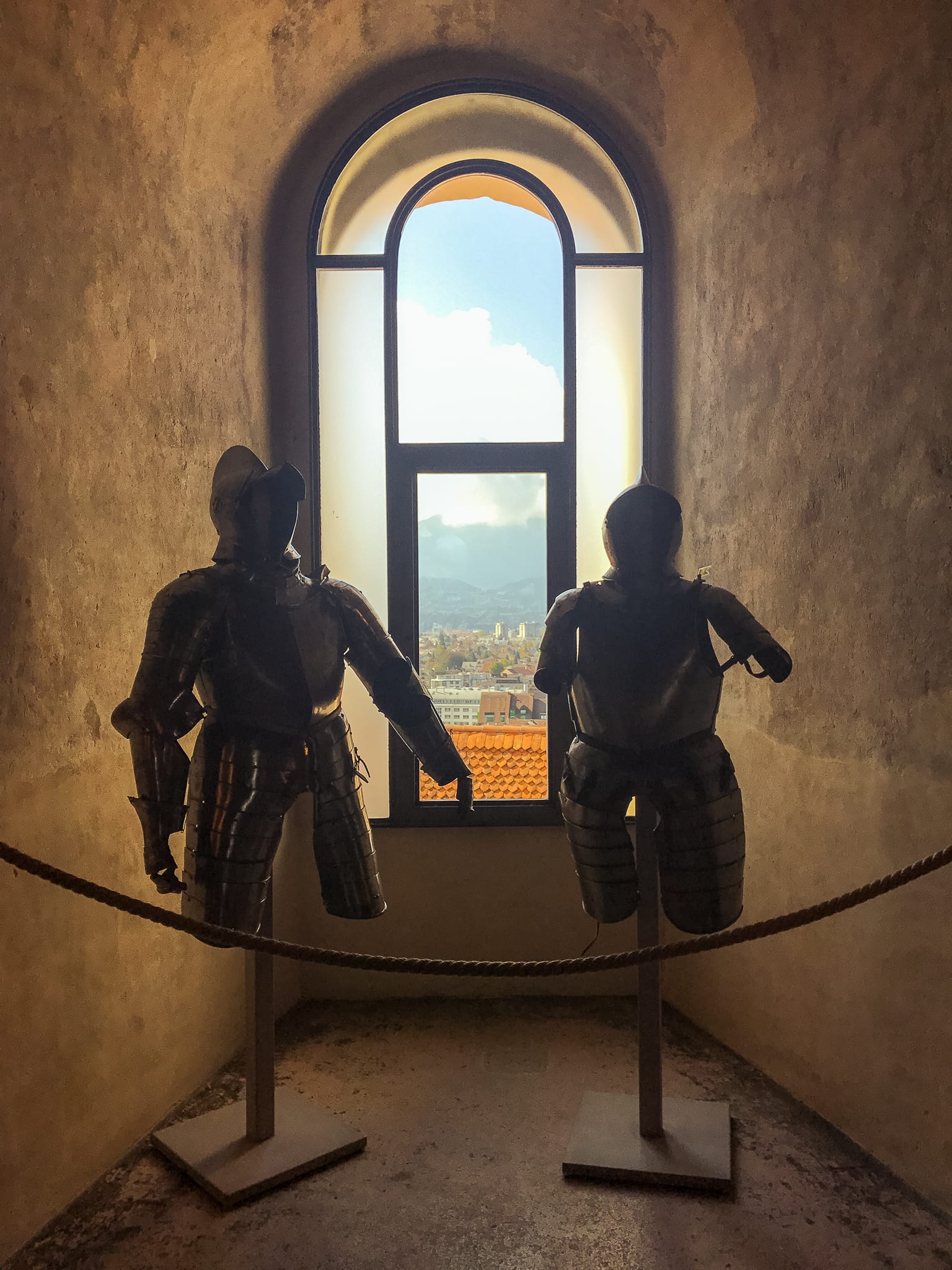
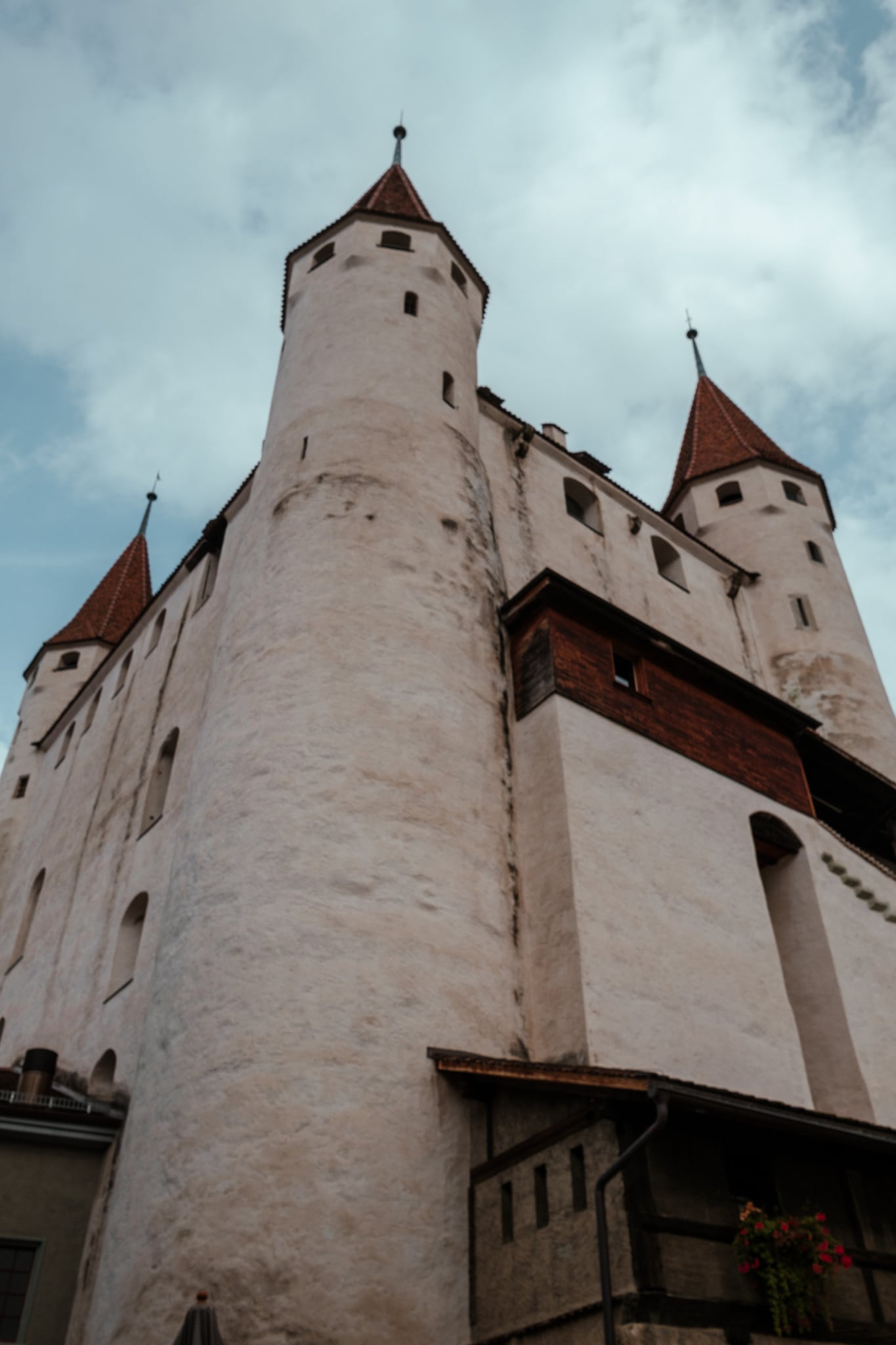
If you don’t want to pay to enter the castle, you can also find some nice views of the city a little lower down at an observation deck behind Thun’s most prominent church, Stadtkirche. The views from the castle are better (and include the church itself!), but the views from the observation deck are still quite lovely — and are free.
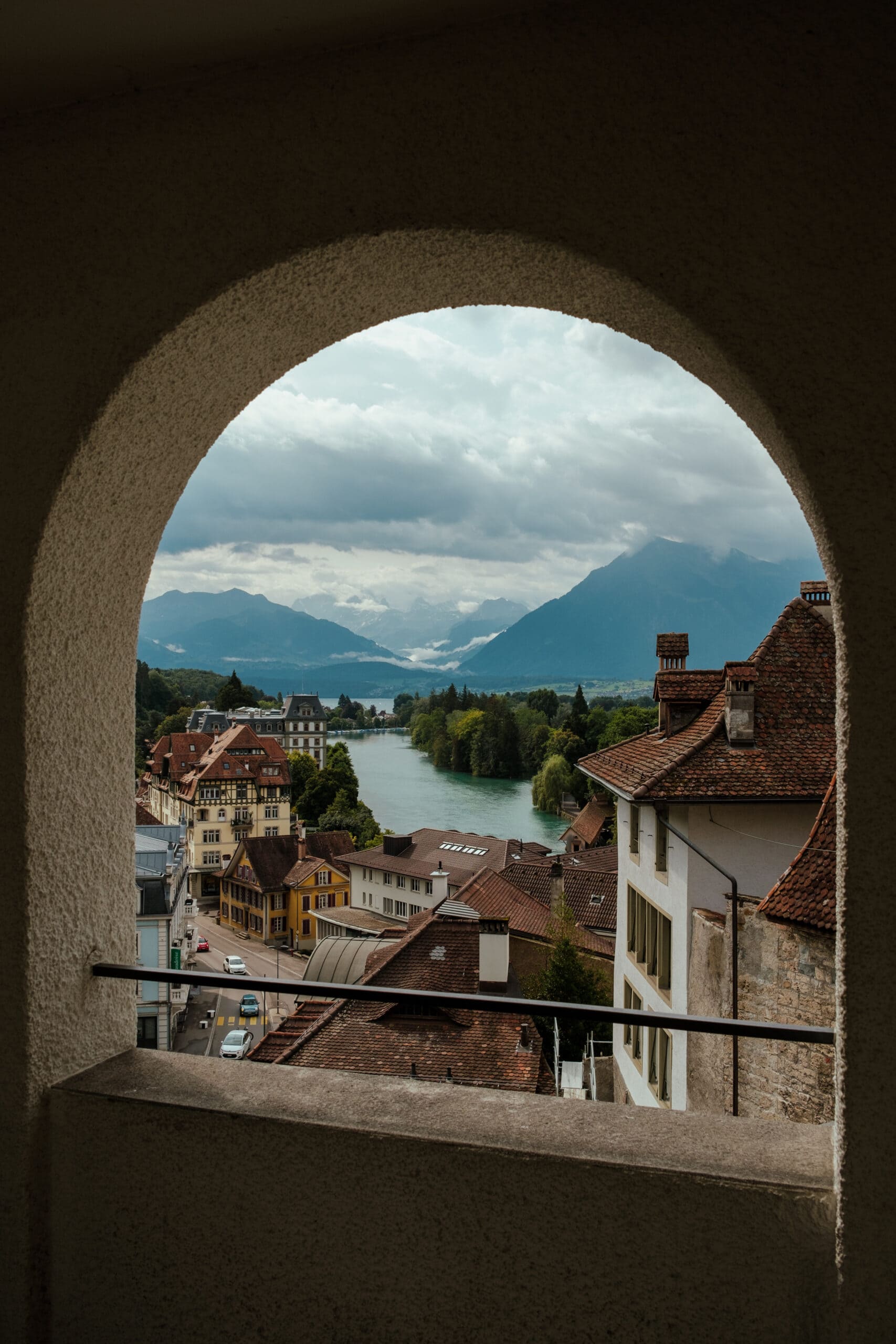
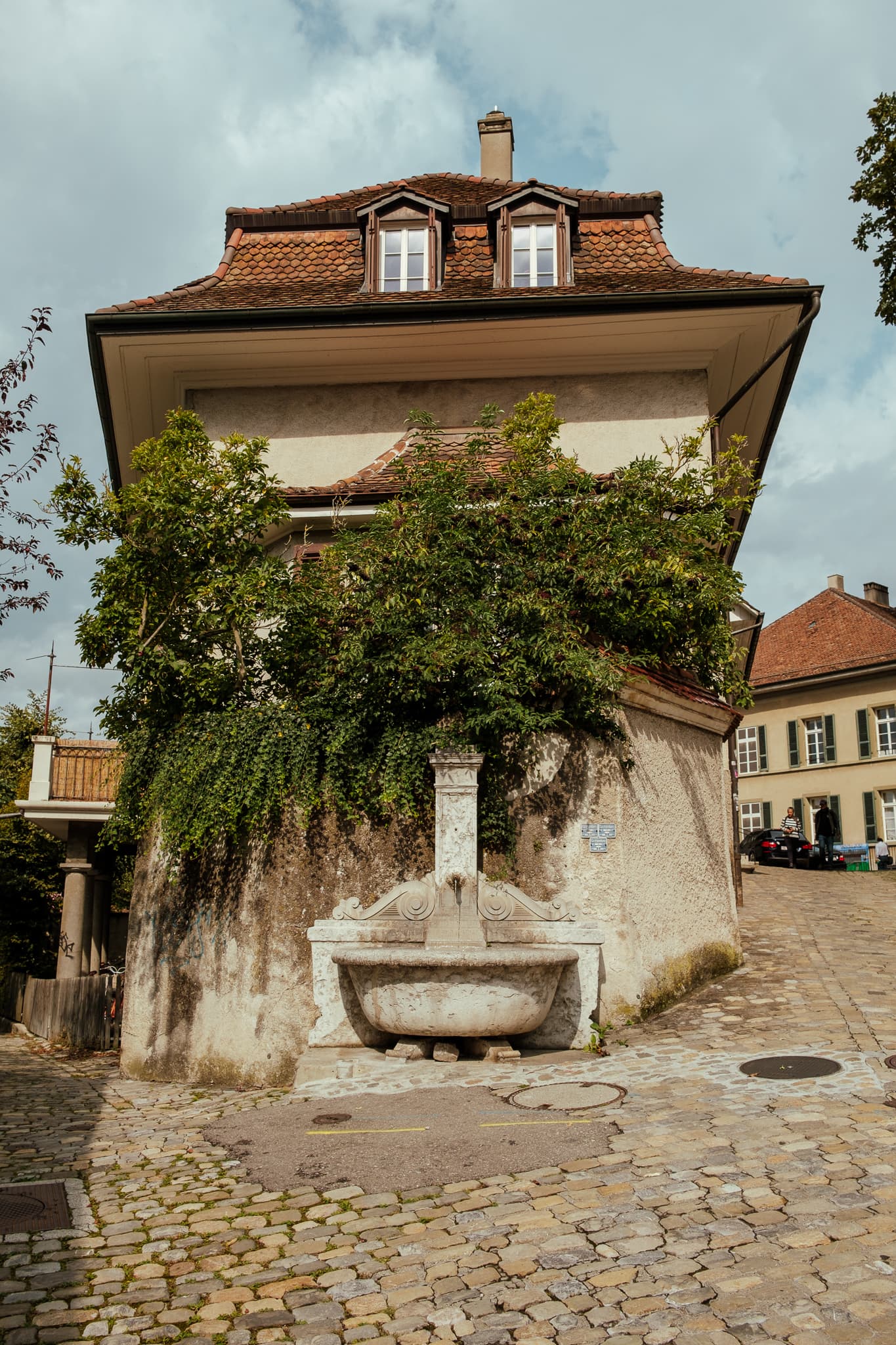
To reach either the castle or Stadtkirche, climb up the step covered stairs called Kirchtreppe.
Don’t leave Thun without walking through some of its charming streets — including Obere Hauptgasse, Thun’s best shopping street — and checking out the town square, which has a nice view of the castle.
You should also be sure to visit Thun’s beautiful wooden covered bridges, which are often decked out with gorgeous flower arrangements. You may even see surfers practicing their skills in the water beside the bridges!


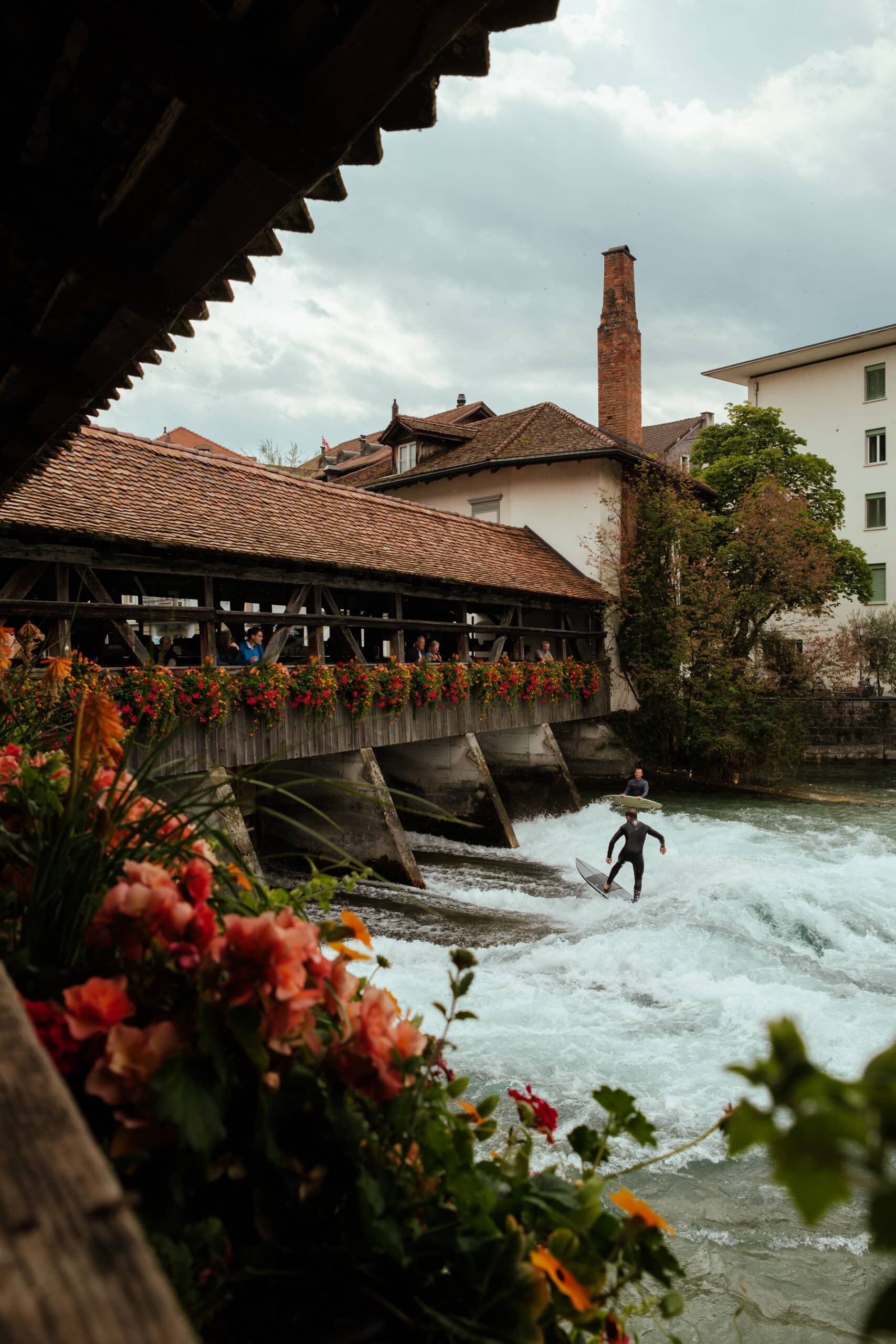
Other things you can consider doing in Thun include the Kunstmuseum — a notable art museum — and walking around Schaudau Park.
I recommend finding lunch in Thun before you leave for Brienz. If the weather is good, Thun is a lovely place to eat outdoors and admire the beautiful blue-green water of the Aare River.

Train to Brienz
After lunch, return to Thun’s train station and catch the next train to Brienz.
The train from Thun to Brienz leaves approximately every 30 minutes and takes about 1 hour. Depending on the train you catch, you may need to change trains in Interlaken.

In terms of timing, I would not recommend rushing out of Thun. Brienz is very, very small and does not require a lot of time to explore. In other words, I recommend allocating more time from your day to Thun than to Brienz. As long as you are in Brienz a couple of hours before your boat leaves for Interlaken, you should have more than enough time to see Brienz. (The exception is if you plan to ride the Brienz Rothorn Bahn.)
Exploring Brienz
Thun is a small city, but Brienz is a tiny town. To be honest, there’s little to do there other than walk around and enjoy the classic Swiss homes and incredible lake views. (In my opinion, Brienzersee is the prettier of Interlaken’s two lakes!) You can also rent a kayak, canoe, or paddle boat and get out on the water yourself.


One thing you might consider doing if you have enough time, and if you are visiting between May and October, is to ride the Brienz Rothorn Bahn — a scenic railway that travels up the Brienzer Rothorn mountain. I have not done this myself, but I’m told the views are incredible.
Importantly, you would need several hours to take the Brienz Rothorn Bahn — the trip to the summit and back to Brienz takes an hour each way, plus you’ll want some time to enjoy the summit. Find more information on this journey here.
Boat to Interlaken
You can just take the train to return to Interlaken, but I highly recommend taking a boat cruise instead.
If you can time your boat trip from Brienz to Interlaken so it occurs during sunset, I highly recommend it. It’s an extremely picturesque boat ride, with towering mountains surrounding the beautiful waters and small villages.
The boat ride takes about 1 hour and 15 minutes. As you can see in the sample boat ride pictured below, the boat actually zigzags across the lake and stops at a number of places along the way.

You should plan to buy your boat ticket at the ticket office in Brienz.
If you want to ensure that you are able to secure a ticket for your desired boat, you might consider buying it upon arrival in Brienz. That way, you can explore Brienz at your leisure without worrying about catching the boat.
Another option, if you find yourself with time to kill, is to take an earlier boat and hop off at one or more stops that the boat makes on its way to Interlaken. Just make sure that there is another boat you can pick up later, or you risk having to find alternative transportation back to Interlaken.


Bonus: Harder Kulm
Here’s one additional option for your day: if you return to Interlaken before sunset, head up to Harder Kulm.
Harder Kulm is the closest mountain to Interlaken, and offers an incredible view over the town of Interlaken, Thunersee and Brienzersee, and the stunning mountain massif of Eiger, Mönch and Jungfrau. It’s absolutely stunning.


Note that there is a restaurant on Harder Kulm, which is convenient, though it’s pricey. I did eat dinner there, and thought the food was only okay.
The funicular up Harder Kulm costs CHF 30.00 for a round-trip ticket (or just CHF 15.00, if you have the Swiss Travel Pass). You can find more information here.
Where to Stay
Interlaken is extremely convenient for visiting Thun and Brienz in one day since it’s right in the middle of them. (It’s also a good, central base for exploring the broader region generally.)
During my first visit to Interlaken, I stayed in a private room at the Happy Inn Lodge, which was very close to one of Interlaken’s two train stations and was a good value in an expensive destination.
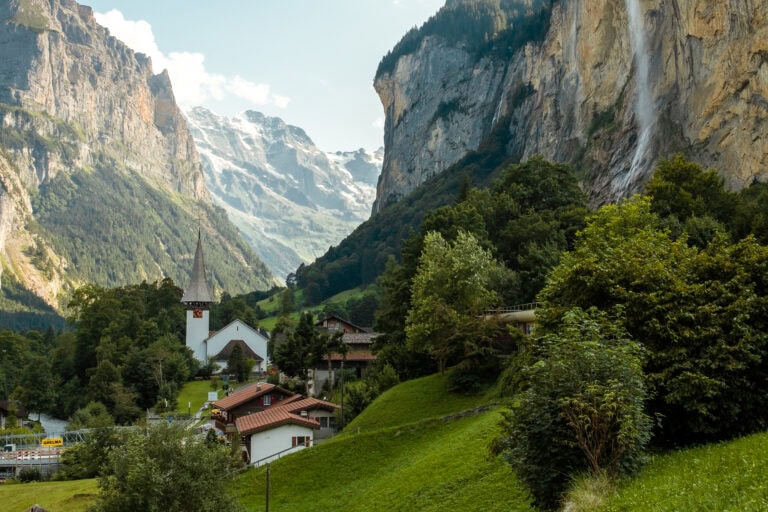
It’s also possible to stay in another town in the Jungfrau region (such as Lauterbrunnen, Wengen, Murren, or others) — you will just need to add more time for train transit at the beginning and end of this itinerary. Lauterbrunnen is my top pick, as it’s extremely picturesque but still easy to access.
I highly recommend Hotel Staubbach in Lauterbrunnen, which has a good breakfast and excellent views of Lauterbrunnen’s famous 1000-foot waterfall.

Final Thoughts
I loved visiting Thun and Brienz in one day — both destinations were absolutely worthy of my time, and given their small sizes, brief visits felt fine.
Together, my visits to Thun and Brienz made for an absolutely spectacular day!
More Information About Switzerland


pin this post