21 Delightful Things to Do in Venice
Truth be told, Venice is one of my favorite cities in the world.
I don’t care that it’s crowded, and expensive, and often hot as hell. I’m willing to put up with all of that and more for the sheer magic of walking over a tiny bridge while a gondolier sings to his customers in the canal below, or admiring St. Mark’s Square from a bell tower across the water, or riding on a boat on the Grand Canal at sunset.
Many visitors to Venice have reached a different conclusion, finding it overrated and overtouristed. While no place is for everyone, and it’s totally fine for people to dislike cities I love, I fear that some of Venice’s detractors haven’t given the city its best chance to shine — sometimes spending only enough time in the city to dash past its best-known spots.
And sure, St. Mark’s Square can be great (though crowded), and Rialto Bridge is indeed gorgeous (though…also crowded), but there’s so much more to do and see in Venice beyond admiring these world-famous sights. With museums full of history and colorful outlying islands and delicious local food and drinks and so much more, Venice is a remarkable place full of delightful things to do.
Here are 21 of the best things to do in Venice.
This post contains affiliate links. If you make a purchase or a booking through one of these links, I may receive a small commission at no extra cost to you. Thanks for supporting In Old Cities in this way!
Best Things to Do in Venice
1. Get lost.
Yes, that’s right: my very favorite thing to do in Venice — more than seeing world-famous churches and bridges, or cruising down the Grand Canal, or whatever — is simply to wander without a destination or map.
If you’re only in Venice for a short time, I understand the urge to dash from place to place, seeking out St. Mark’s Square and Rialto Bridge and all those other incredibly famous sights. But for me, the real joy of Venice is found in the quiet corners.
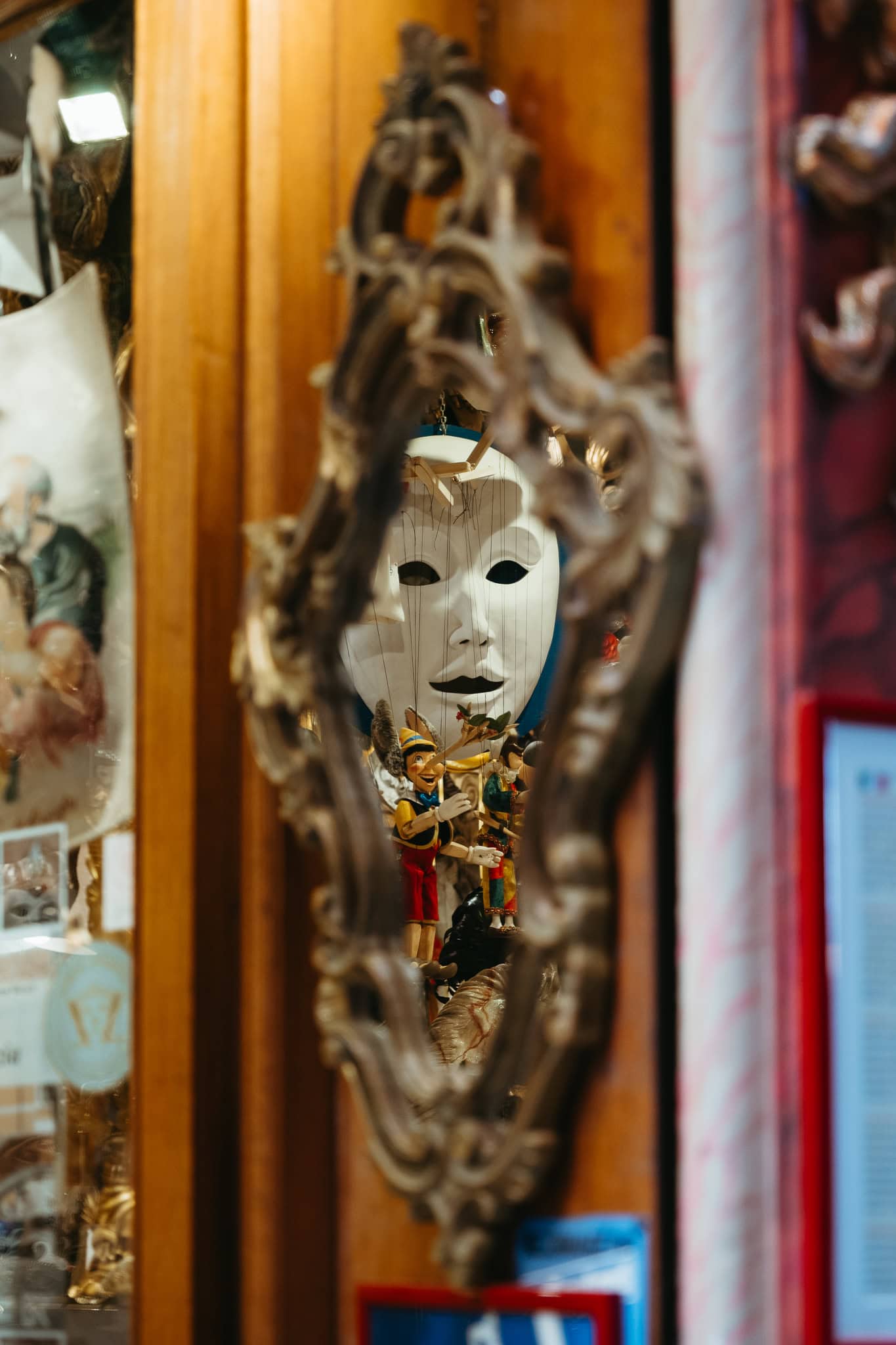
It’s hearing a gondolier sing as you cross a picturesque little bridge you know you’ll never be able to find again. It’s winding up in a twisty little area that confuses even Google Maps. It’s stumbling upon a string quartet rehearsing in a church, or a couple decked out for a night at the opera, or rows of laundry drying on clotheslines over a little-known canal.
Resist the urge to know where you are at every moment in Venice. It’s a small city — you’ll always be able to find your way eventually. Until then, get lost on purpose and enjoy it!
2. Discover your favorite bridges.
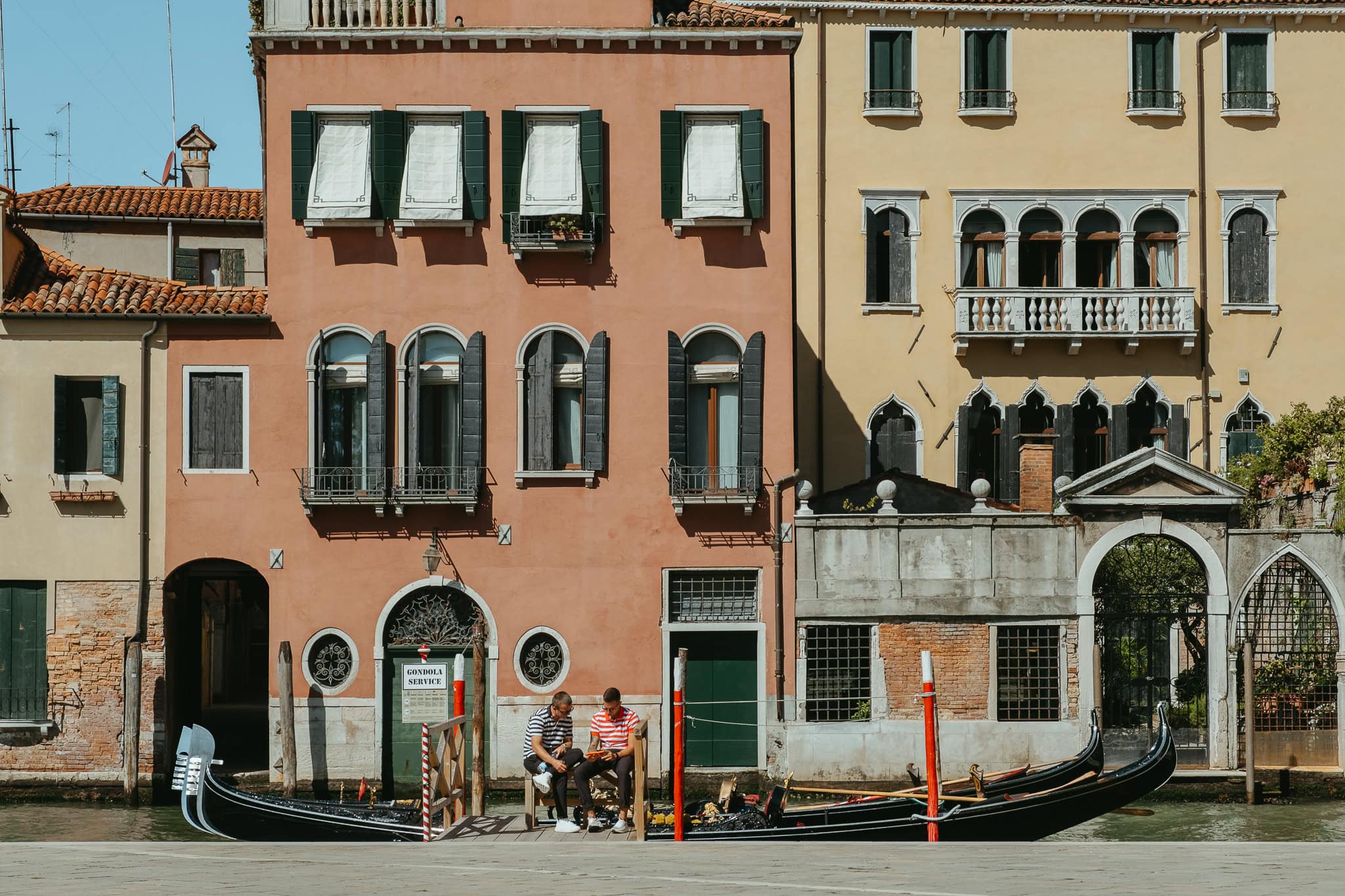
By all accounts, there are more than 400 bridges in Venice — no surprise for a city that has canals instead of roads. Indeed, it’s impossible to walk around Venice without crossing plenty of bridges. Some are small, some are huge, many are beautiful.
Some of Venice’s most famous bridges include:
RIALTO BRIDGE | You’ve definitely seen pictures of Rialto, whether you know it or not. The widest bridge in Venice, Rialto is also one of the most beautiful bridges in the city, thanks to its porticoes and rows of shops. Plus, it’s one of just four bridges over the Grand Canal, so you’ll likely need to cross it while exploring Venice.

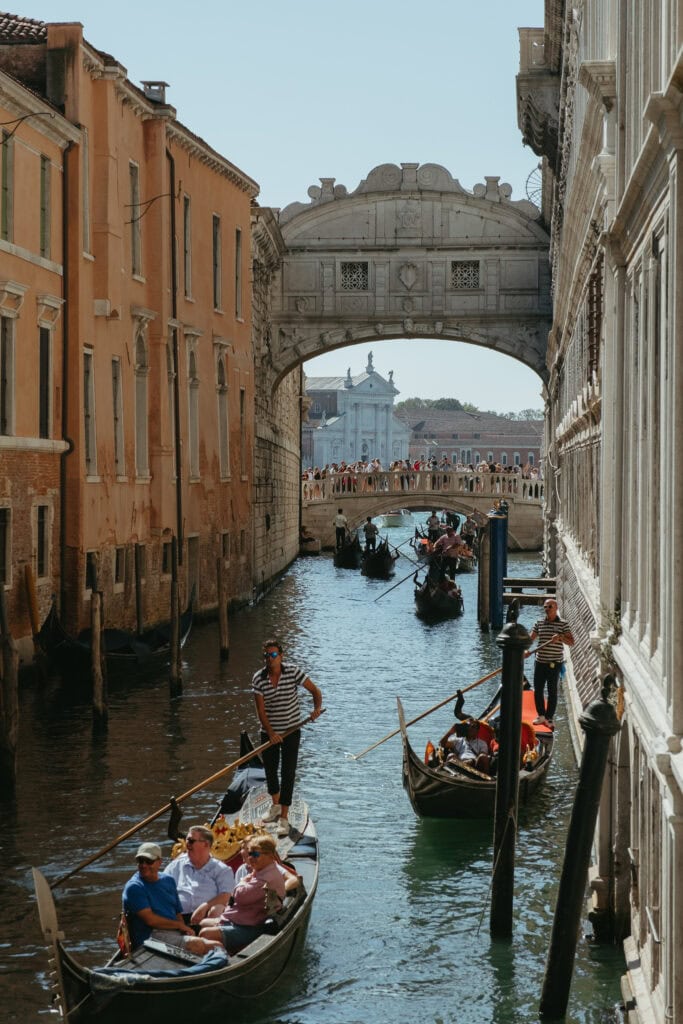
BRIDGE OF SIGHS | This bridge, which connects a former prison with upper-floor interrogation rooms in the Doge’s Palace (more on that later), purportedly got its name from prisoners sighing as they got their got their last glimpse of Venice through the tiny windows in the bridge as they were led to their prison cells. The Bridge of Sighs (or Ponte dei Sospiri) can best be seen from the bridges on either side of it: Ponte della Paglia and Ponte de Canonica.

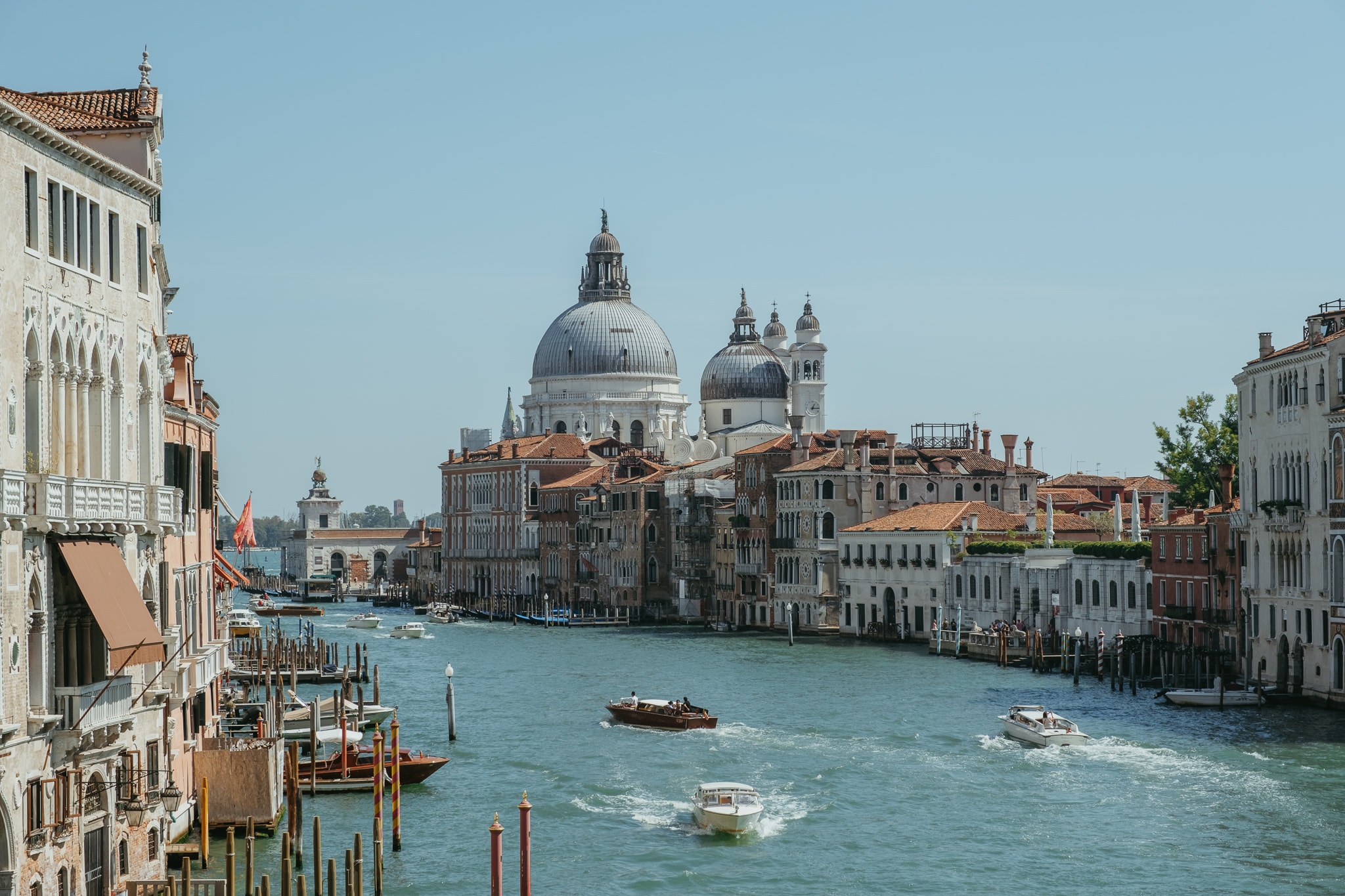
PONTE DELL’ACCADEMIA | This basic wooden bridge, which crosses the Grand Canal, is nothing special to look at — but the view from the bridge is fabulous (more on that a little later as well!).
For lesser-known bridges, my favorite is Ponte Chiodo — the last remaining bridge in Venice with no railings or other safety measures.
3. Ride the #1 vaporetto.
Venice is car-free, but it’s not bus-free — it’s just that Venice’s buses are boats.
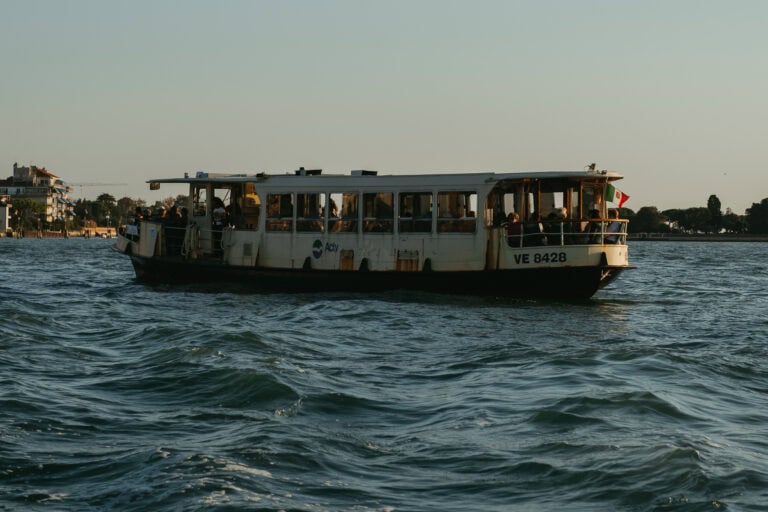
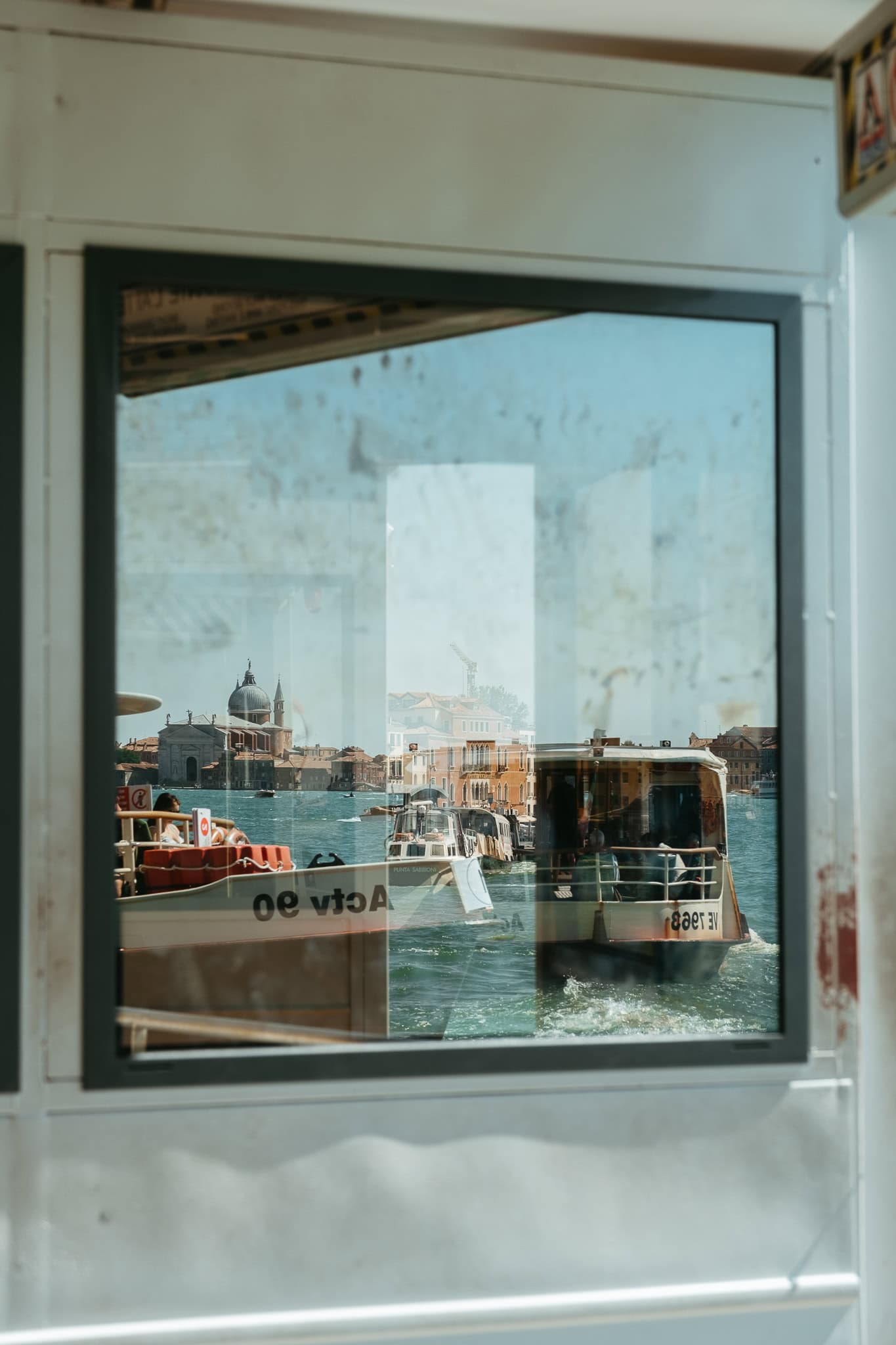
These water buses are called vaporetti, and are an excellent option for getting around the city, particularly for navigating to some of the outlying islands in the Venetian Lagoon and for traveling down the Grand Canal.
Even if you’re happy just to walk and don’t ever feel a need to get around via vaporetto, I still recommend taking at least one vaporetto ride — ideally on the #1 line, which cruises the length of the Grand Canal and beyond. (#1 is the number of the line, not me saying that it’s the best…although it IS the most popular vaporetto line!)
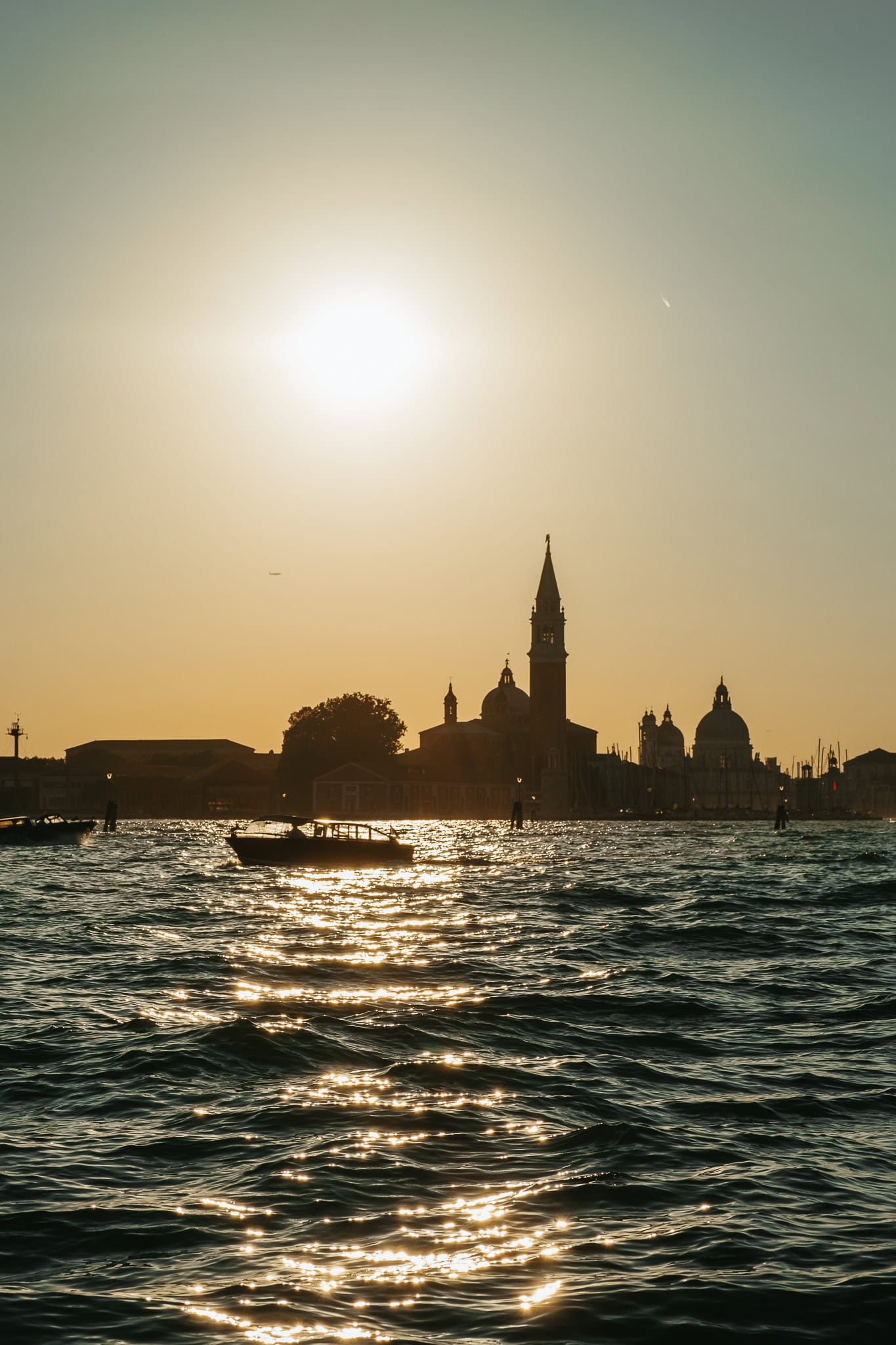
Specifically, I recommend hopping on a southbound #1 vaporetto and taking it to the Lido (a separate island), where most people are likely to disembark and you might be able to snag one of the coveted seats in the open-air back of the boat. Then, ride the vaporetto the whole way to the northern end of the Grand Canal. Along the way, you’ll get fantastic views of the island of San Giorgio Maggiore, the edge of St. Mark’s Square, Rialto Bridge, and everything else along the Grand Canal.
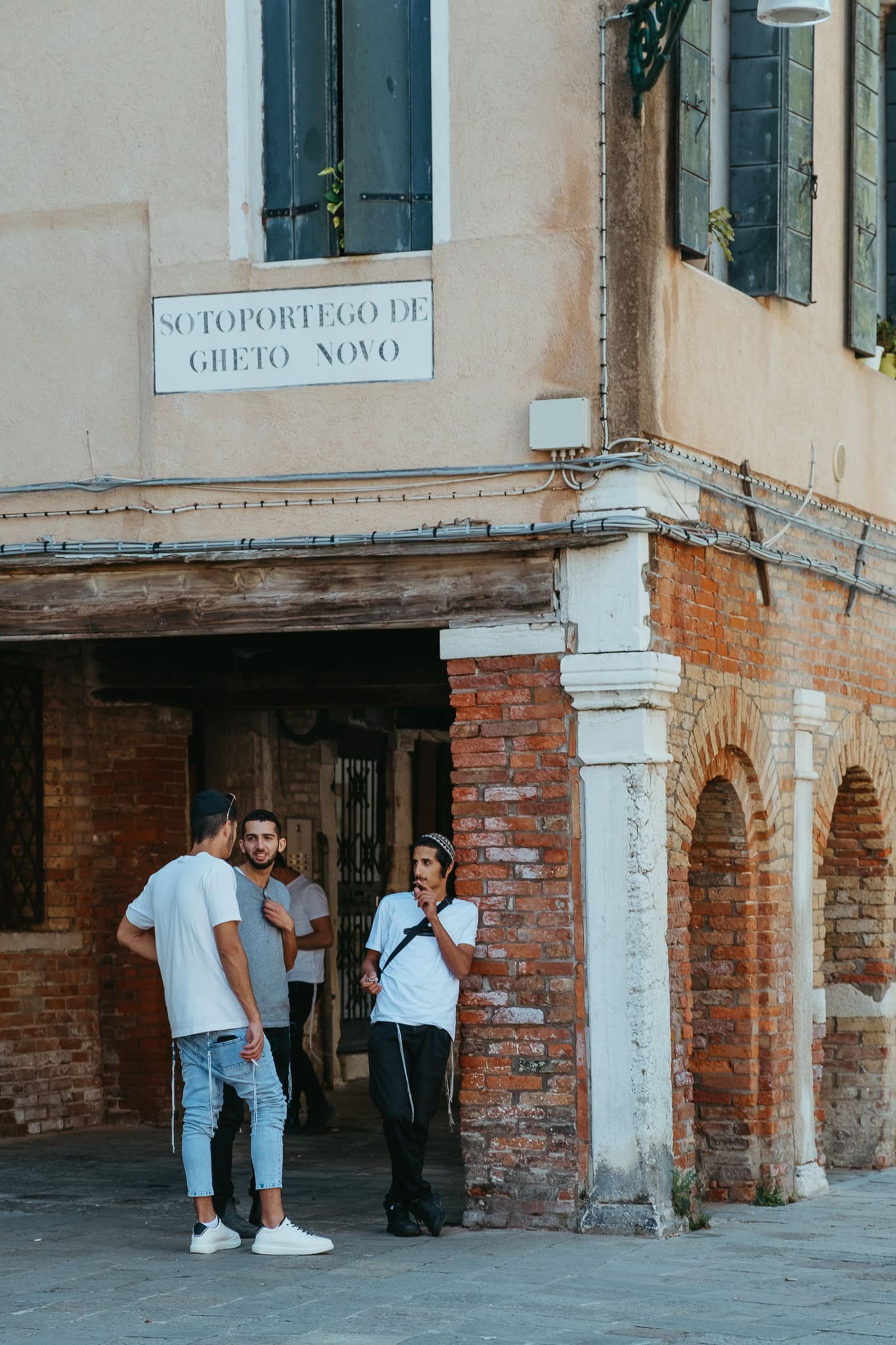
4. Discover Venice’s Jewish history in the Venetian Ghetto.
In 1516, the ruler of Venice — the doge — ordered the city’s small Jewish population to live in their own, segregated area: the Ghetto.
The segregation of the Venetian Ghetto was strict, with the residents having a curfew and quite literally being locked into the neighborhood at night. To add insult to injury, the Jewish residents were themselves billed for surveillance of the Ghetto’s gates.
Venice’s Ghetto is located in the city’s Cannaregio district. In the 16th century, when the segregation began, the word “ghetto” didn’t have the same connotations it has today in English — because the English language got the word “ghetto” from Venice’s Ghetto. In other words, we now use the word “ghetto” for areas where minority groups are concentrated because Venice once concentrated its Jewish population into a neighborhood called the Ghetto.
Today, of course, Venice’s Jewish population is no longer segregated, but the Ghetto remains an important and thriving area for the community — not least because it holds several very historic and beautiful synagogues.
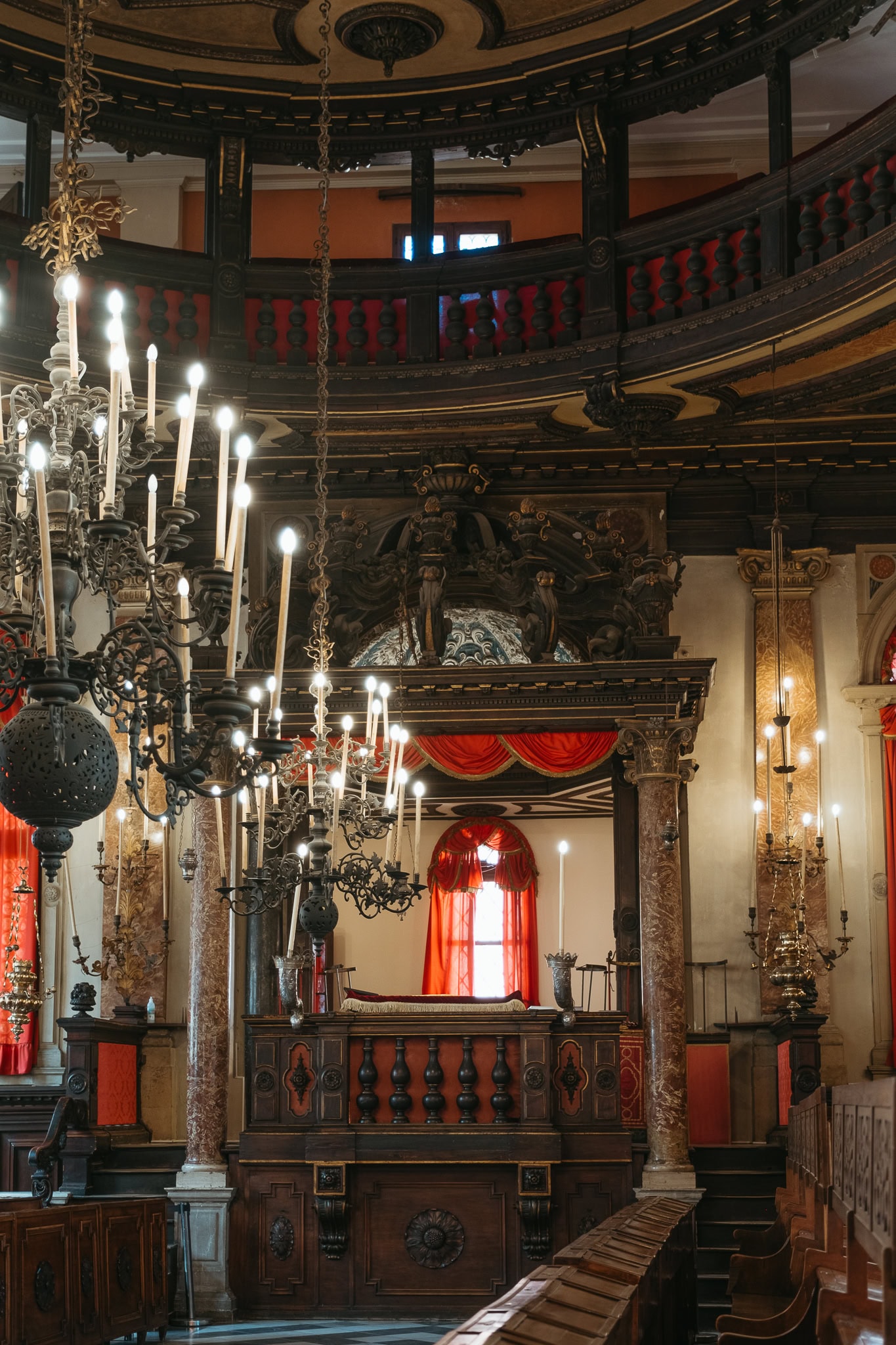
During your visit to Venice, you can take an official tour of these synagogues, and the Ghetto in general, with either a guided tour or a self-guided audio tour. (I did the audio tour, and found it really informative and interesting!) Find more information about these options here.
Or, for a more unique experience, you can take a combined tour of the Ghetto AND a Cannaregio food tour (which sounds awesome and is very highly reviewed!). Check availability here:
5. Seek out the best views.
If you ask me, Venice is one of the most picturesque cities in the world, with beautiful views around virtually single every corner. I know that’s a thing people say about a lot of cities, but with Venice, it’s literal, not figurative.
I chalk it up to the absence of cars, first and foremost. While unsightly vehicles tend to clutter up street views in a normal city, Venice doesn’t have that issue. (Sure, there are plenty of boats, but I think they’re much more picturesque than cars!)
Without cars to get in the way, it’s easy to see all the ways that Venice shows off: the warm brown roofs, seen overhead from church towers; the picturesque little bridges over narrow canals, with flowers hanging from the sides; the ornate architecture lining the Grand Canal; the vastness of St. Mark’s Square; the twisty little streets with streams of sunlight perfectly illuminating them; and so much more.
Here are a few of my own favorite spots for great views of Venice:
- Ponte dell’Accademia: The southernmost bridge on the Grand Canal has a perfect view of the boats flooding in and out of the Grand Canal.
- San Giorgio Maggiore: Visit the top of the bell tower of this island across the way from some of the best overhead views of the city.
- Peggy Guggenheim Collection: An art museum with an austere but perfectly located terrace right along the Grand Canal.

6. Enjoy art with a view at the Guggenheim.
Speaking of the Guggenheim, I think it’s one of the most underappreciated spots in Venice.
No, it’s certainly not unknown: if you visit, you’ll be far from the only tourist there.
But compared to world-famous sights like St. Mark’s Square, the Guggenheim gets far less attention. That’s for the best, though, since it would lose much of its appeal if it was overwhelmed with visitors.
Let’s back up: the Peggy Guggenheim Collection is an art museum in the former home of — you guessed it — Peggy Guggenheim, an heiress and socialite who devoted much of her life and her fortune to collecting art and supporting the careers and development of many artists whose work is revered today (such as Jackson Pollock and Max Ernst).
The Guggenheim displays Peggy’s fantastic collection of 20th-century art, with works by Picasso, Dalí, Duchamp, Klee, Magritte, Mondrian, and many others.
But with all due respect to the art, my favorite part of the Guggenheim doesn’t look toward the art at all: it’s the back terrace, which is perched right on the Grand Canal.
This simple stone terrace is the perfect place to sit and watch the world float (or chug, or zip!) by. On my first visit to the Guggenheim, I sat and watched the rhythms of the Grand Canal and its many boats for no less than an hour.


7. Take a day trip to Burano (and maybe Murano).
While thoroughly exploring the main islands of Venice is well worth your time, you should also consider visiting one or more of the outlying islands within the Venetian Lago.
My top recommendation: Burano. This tiny island, just a 45-minute ferry ride from Venice, is famous (and rightly so!) for its brightly colored buildings and storied history of handmade lace-making.
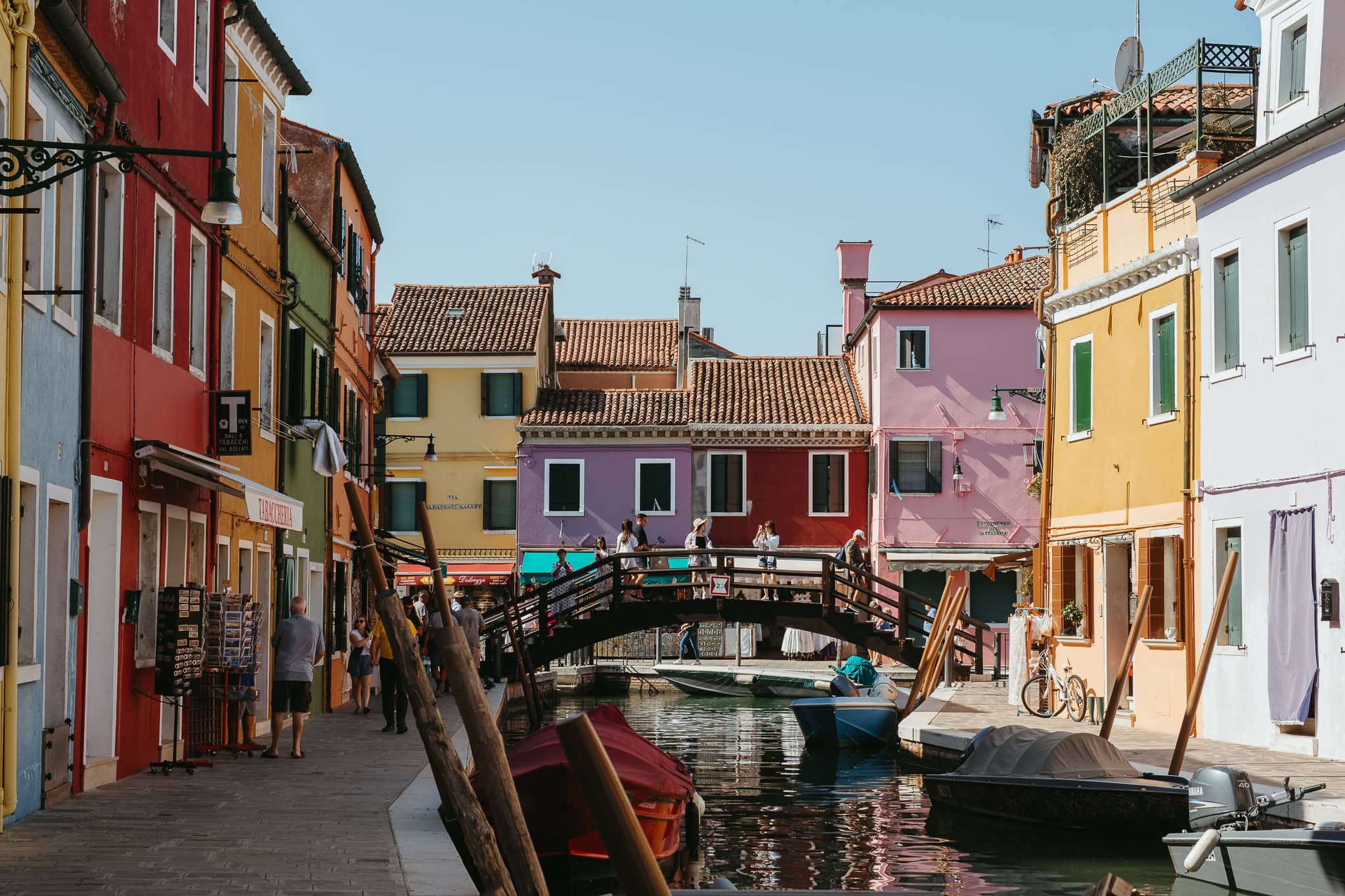
Murano, a slightly larger island between Venice and Burano, is also worth a stop if you have the time and interest — and it’s on the same ferry line as Burano, so it’s totally possible to visit both islands in one day. Murano is famous for its glassmaking artistry and is the perfect place to snag a glass souvenir from your time in Italy.
8. Tour a cursed theater.
Okay, it’s not really cursed.
I think.
Actually, you tell me: what would you call a theater named La Fenice — The Phoenix — that’s burned to the ground twice?
It’s not a great omen, anyway. But despite its checkered history, La Fenice is well worth a visit. The rows of blue box seats, with ornate golden decor and lighting all around, are really something to see.
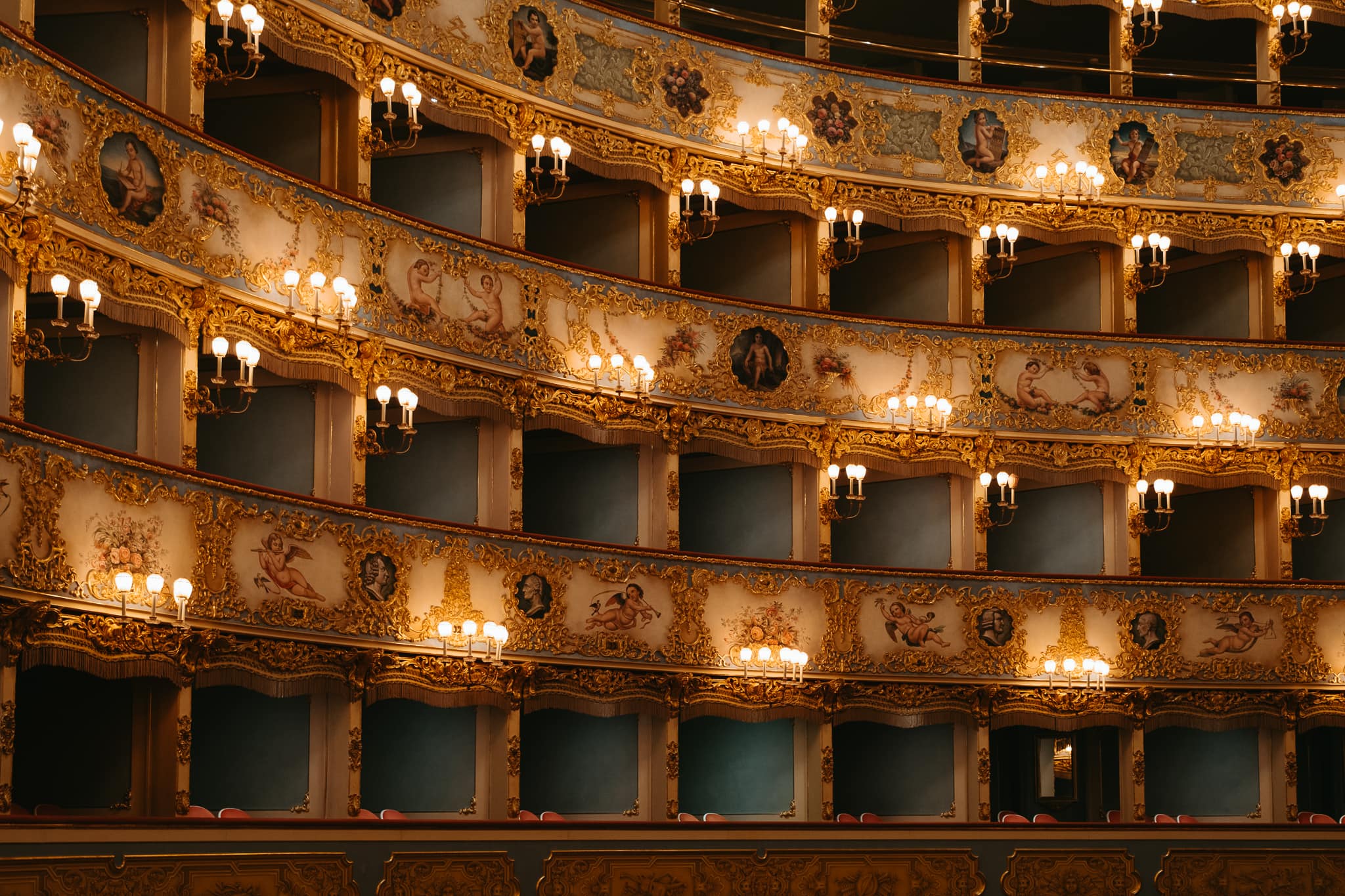
Plus, it’s far less overwhelmed by tourists than many of Venice’s other destinations, so it’s a bit of a hidden gem.
I recommend touring La Fenice with the self-guided audio tour, which directs you around the theater and tells you about the history and meaning of the space. You even get to sit in the royal box and admire the perfect view from that place of honor.
9. Admire the golden mosaics of St. Mark’s.
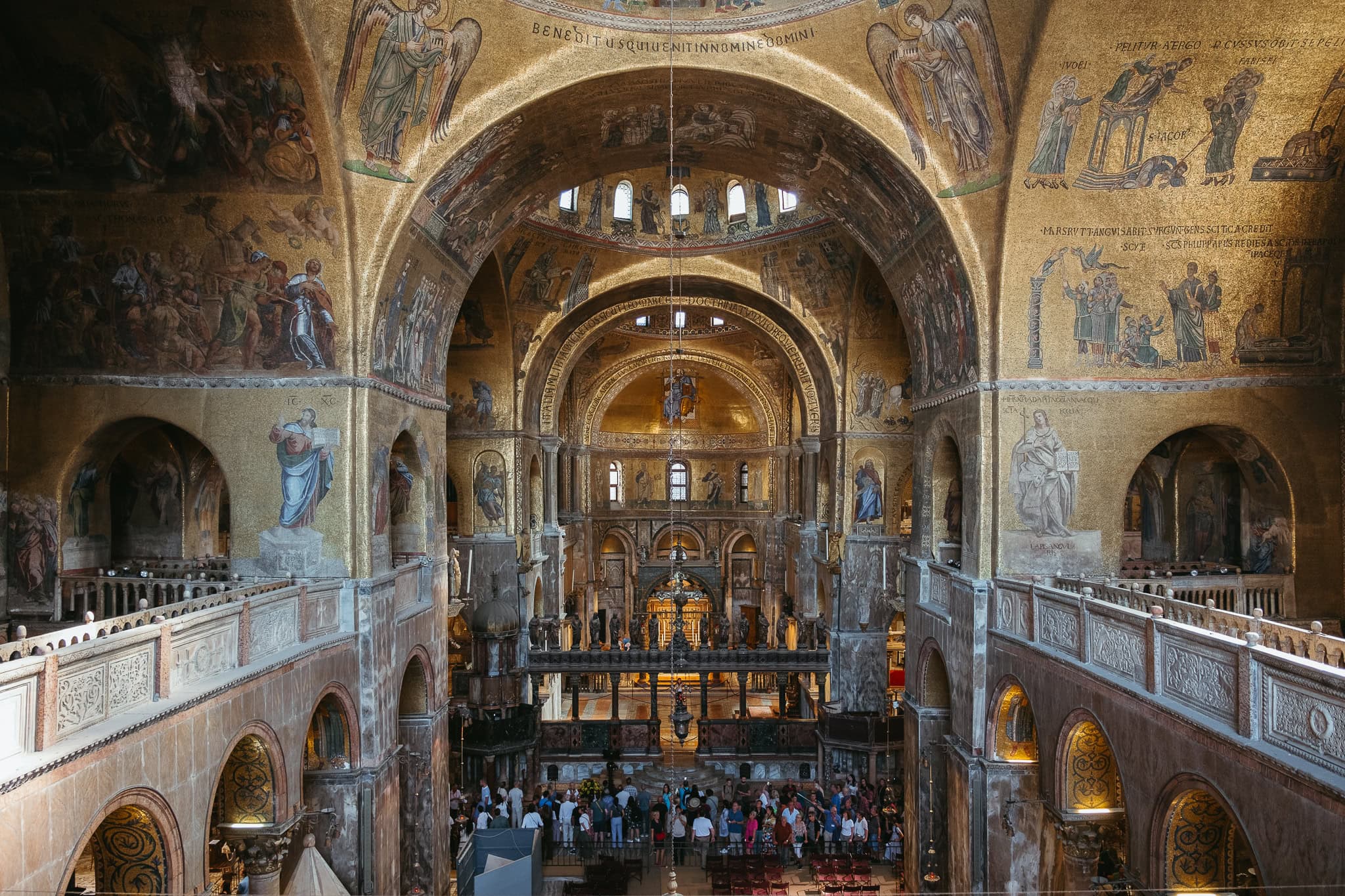
With apologies to God, or the church, or whoever, here’s what I said out loud the moment I walked into St. Mark’s Basilica for the first time: “Holy shit.” Oops!
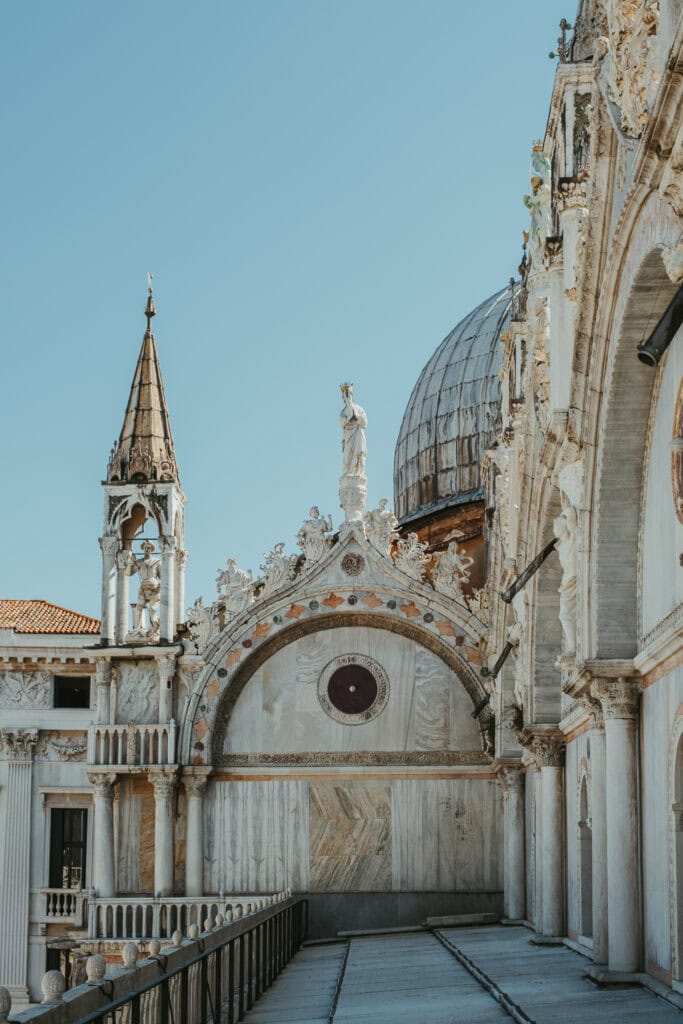
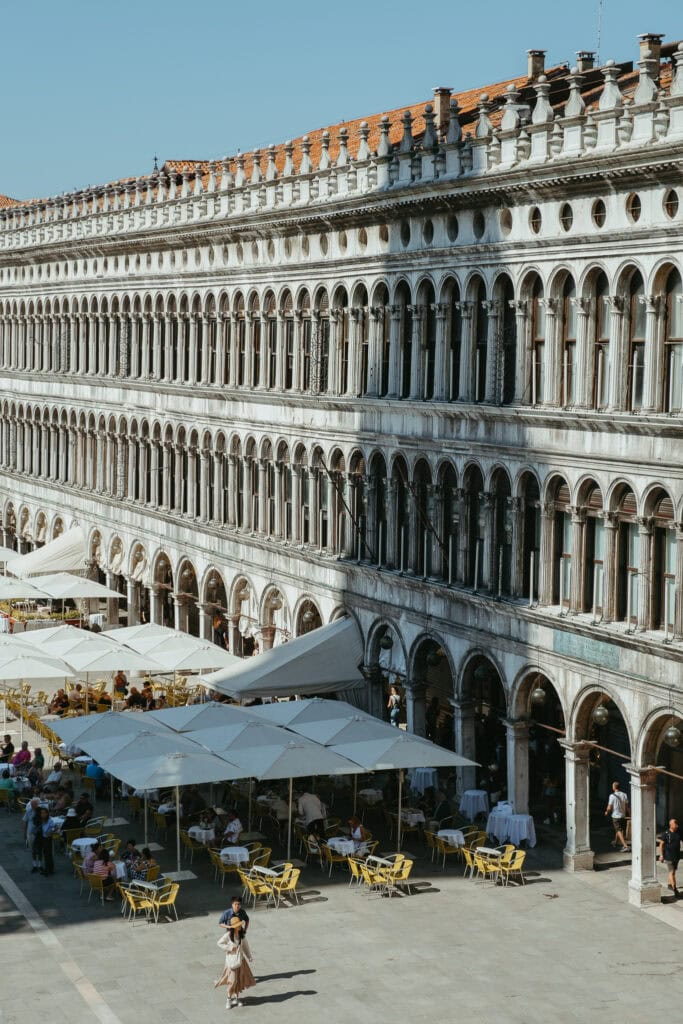
But thus is the power of the magnificent, shimmering, golden mosaic interior of the biggest and most important church in Venice. St. Mark’s, sitting with its many domes at the end of St. Mark’s Square, is wonderful to look at from the outside as well, but the inside is a must-see.
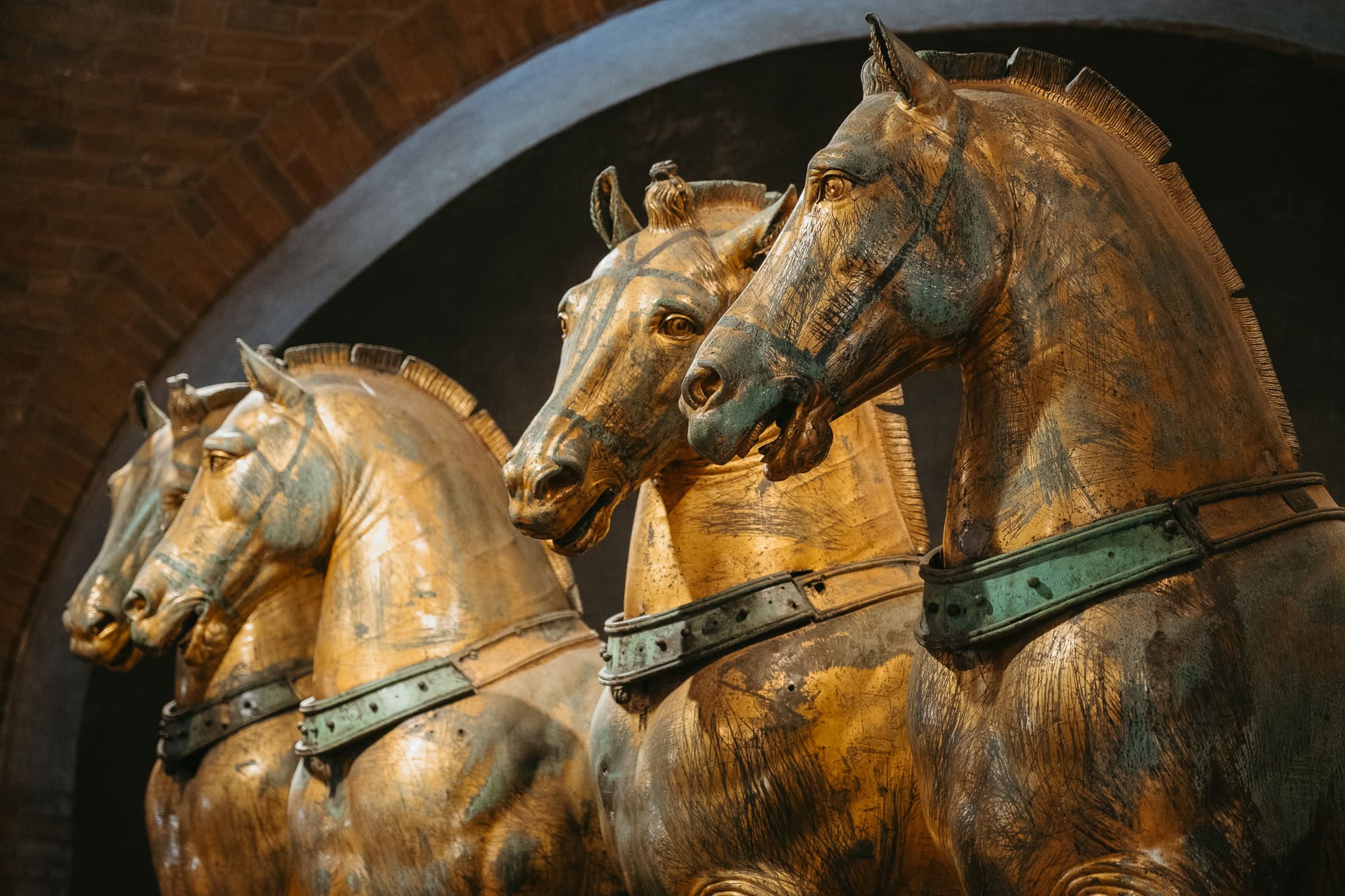
I also recommend purchasing the additional access to the Museo di San Marco — a museum located within the basilica. With this ticket, you get excellent views of the interior of the church, access to the exterior balcony (and its lovely views of the square), and a look at the original bronze horses of St. Mark’s (the horses currently sitting on the exterior balcony are replicas).
10. Ride to the top of Venice’s tallest building.
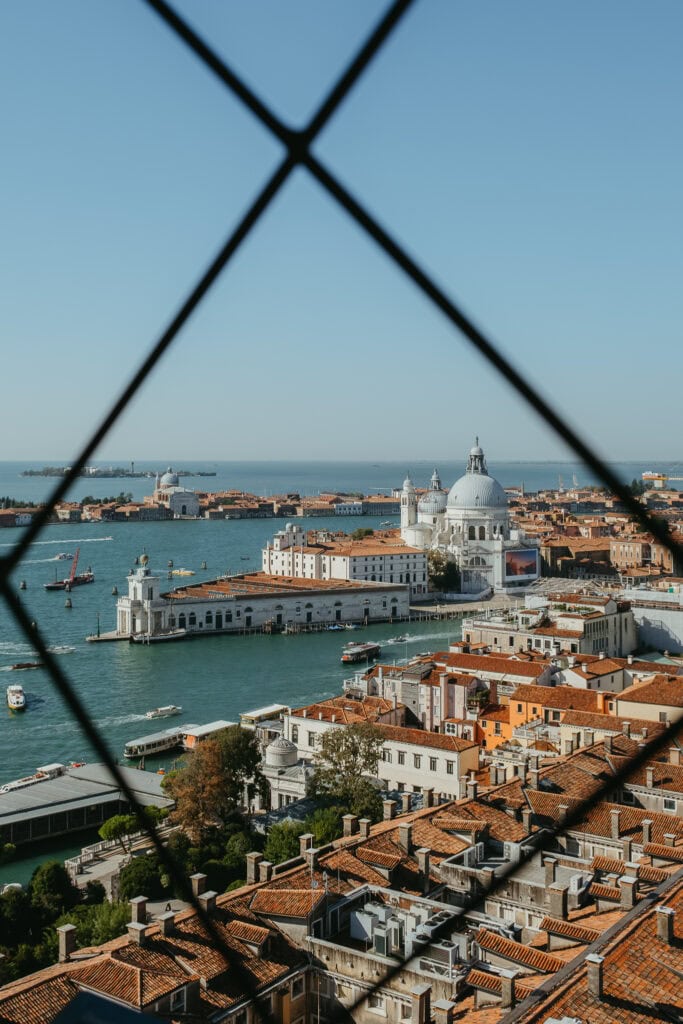
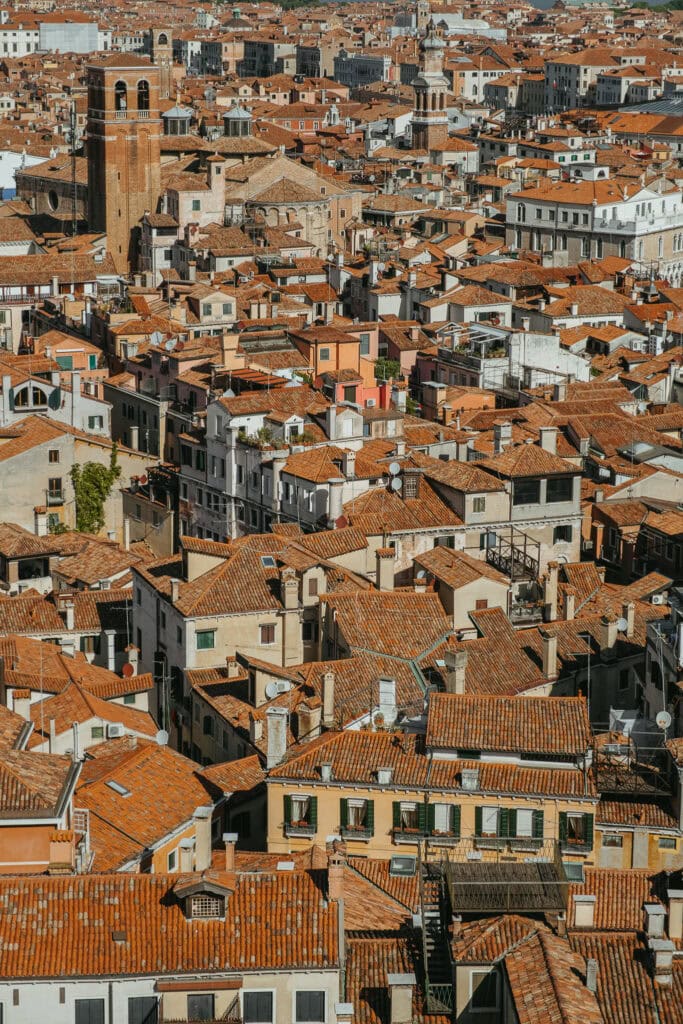
While you’re visiting the basilica, don’t miss the campanile — the freestanding bell tower sitting just outside the basilica. The campanile is the tallest building in Venice, and you won’t want to miss the fantastic views from the top.
You won’t even have to work for them — unlike a lot of church towers in Italy, St. Mark’s campanile has an elevator. Pay your entrance fee, wait in line if necessary (tip: arrive at opening to avoid the line!), and zip right to the top, where you can get right to admiring the views of the square, the rooftops of Venice, outlying islands like San Giorgio Maggiore, and much more.
11. Visit San Giorgio Maggiore.
Speaking of San Giorgio Maggiore, I strongly recommend heading over there for a visit.
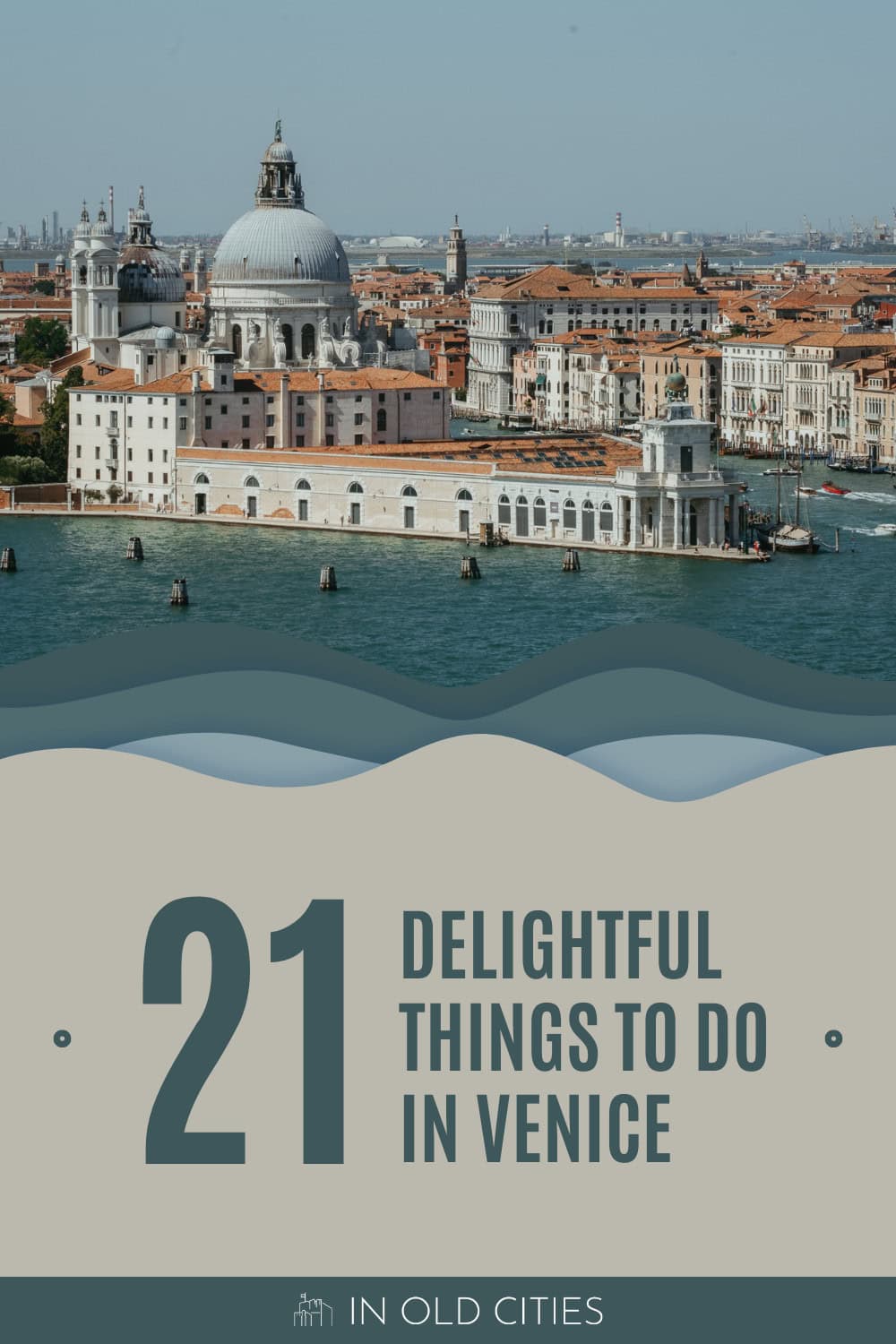
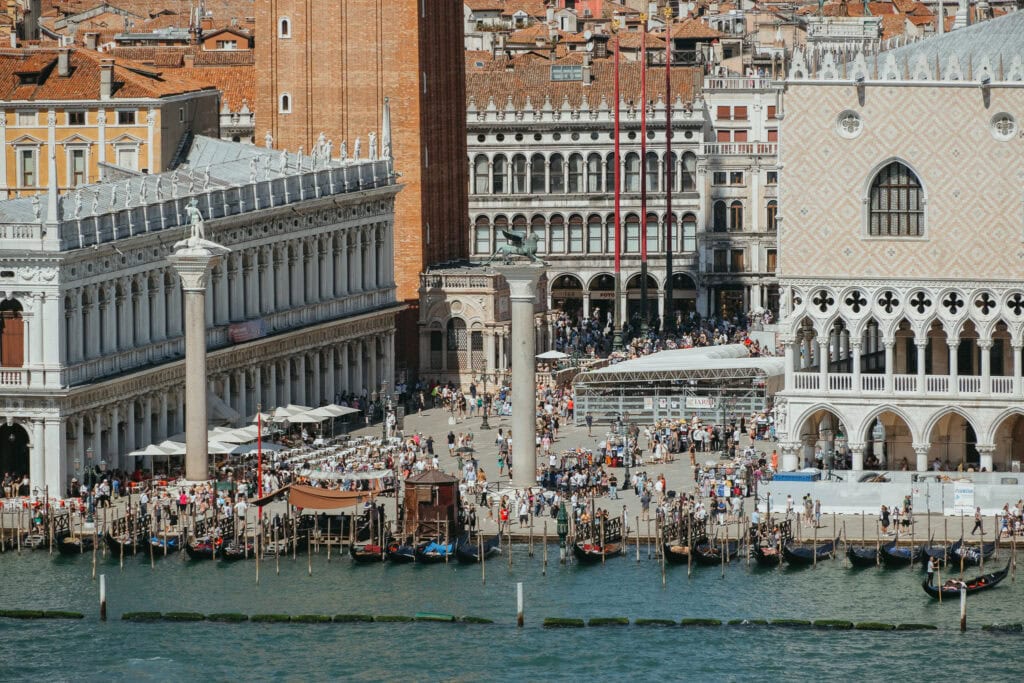
San Giorgio Maggiore is a small island just south of St. Mark’s Square. To reach it, you’ll need to take the #2 vaporetto line from the San Marco vaporetto stop. When you disembark, head inside the beautiful church, which is the main thing to see on the island. Be sure to head to the top of the bell tower, which has some of my favorite views of Venice — in particular, the very best view (IMO!) of St. Mark’s campanile. I also love the views of the Basilica of Santa Maria della Salute, which sits at the end of the Grand Canal.


12. Watch the sun set from Ponte dell’Accademia.
I’ve mentioned Ponte dell’Accademia a few times already in this post, but it’s worth highlighting more specifically.
This simple wooden bridge is a far cry from, say, the opulence of Rialto, but if you ask me, it’s better — thanks to its views.
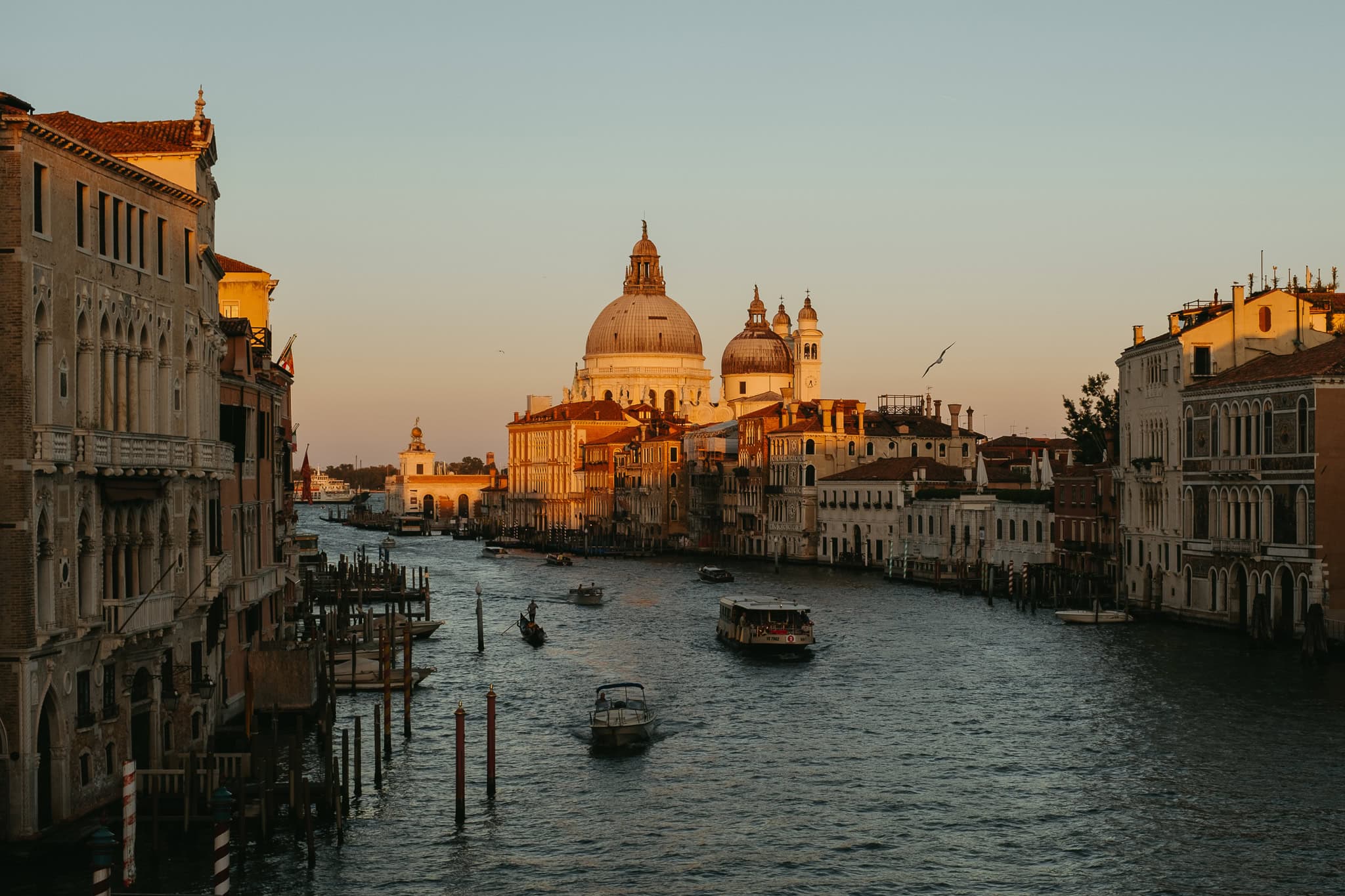
Looking south from Ponte dell’Accademia, the last bridge on the Grand Canal, you can see the end of the canal, where many kinds of boats — from narrow gondolas to large vaporetti and more — stream in and out of the canal, with the domes of Santa Maria della Salute presiding over the scene.
At sunset, the view is particularly beautiful, with the church glowing warmly in the golden hour light.
13. Learn about Venetian history at Museo Correr.
Museo Correr, which occupies portions of the buildings around the edges of St. Mark’s Square, contains art and exhibits about the history of Venice. There’s a particular focus on the time of the Republic of Venice, when Venice was ruled by doges.
Parts of the building itself, which includes former residences of royals and important civic authorities in the Republic of Venice, are also especially beautiful. Don’t miss the ballroom or the royal apartments!


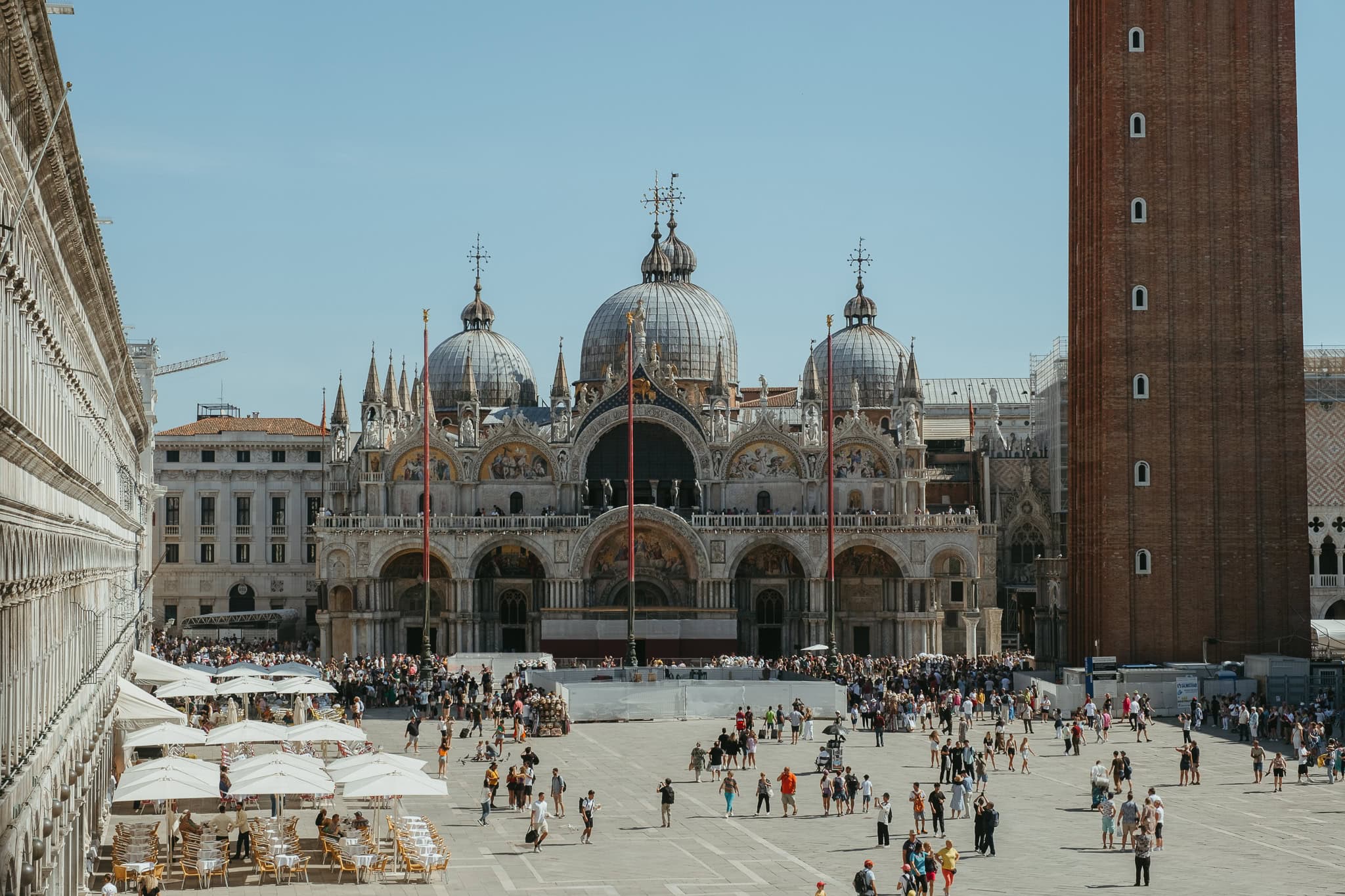
In addition to its exhibits, Museo Correr has — in my opinion — the best view of St. Mark’s Square and its basilica. For this view, head to the museum cafe (which is just outside the entrance to the museum) and try to snag a table at a window, where you can see the basilica and the base of the campanile at the other end of the square.
14. Walk over the Bridge of Sighs.
At the other end of St. Mark’s Square, beside the basilica, you’ll find the Doge’s Palace — the former residence of the Doge of Venice, the elected authority that ruled over Venice.
In additional to the residential space, the Doge’s Palace also included government offices and a jail. It’s this last part that’s most of interest to many visitors, because it includes the Bridge of Sighs. Yes, as you tour the Doge’s Palace, you walk over the Bridge of Sighs and can peer through the tiny windows to see the views of Venice that purportedly caused prisoners to sigh as they took that same walk for the final time.
Technically, you’re not supposed to stop while on the bridge — it’s narrow, and you might create a bottleneck that throws off the whole flow of visitors. But if you’re there during a quiet time with few visitors, like I was, you might have a few minutes to pause and photograph the views.


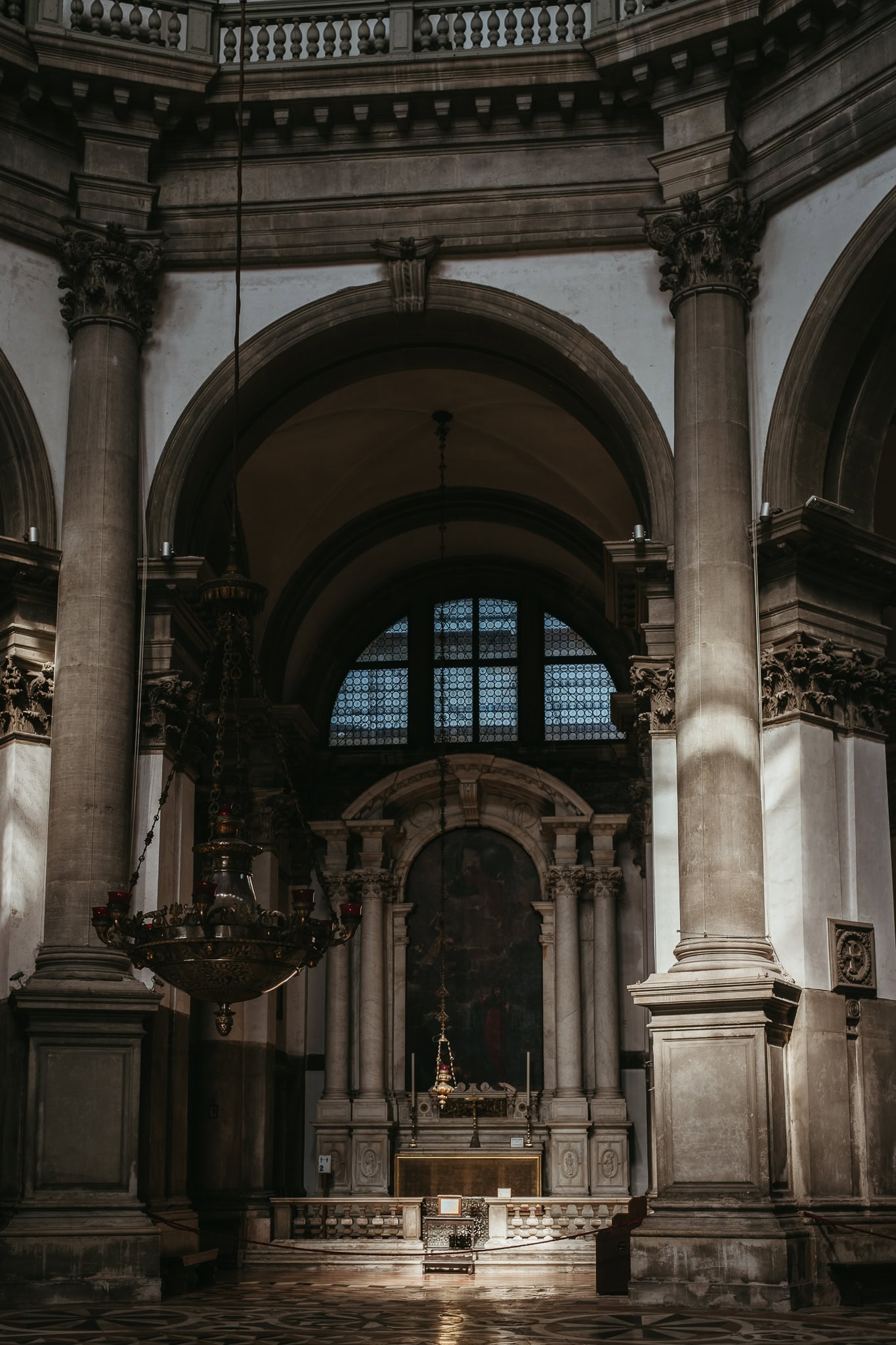
15. Pop into some churches.
Though when it comes to Venetian churches, St. Mark’s tends to grab most of the attention, there are plenty of other lovely churches that are worth a visit. Personally, I tend to pop into most churches that I pass while traveling in Europe, and I found that the churches in Venice were (1) a lovely respite from the early September heat, and (2) largely quite quiet and empty, which was a nice break from the crowds I encountered in most other places.
Some of the most notable churches in Venice, aside from St. Mark’s, include:
- Santa Maria della Salute: As discussed above, this is the multi-domed church that sits at the southern end of the Grand Canal. You can climb its main dome for a great view over the city!
- San Zaccaria: This beautiful building contains a flooded crypt with the tombs of many of Venice’s doges.
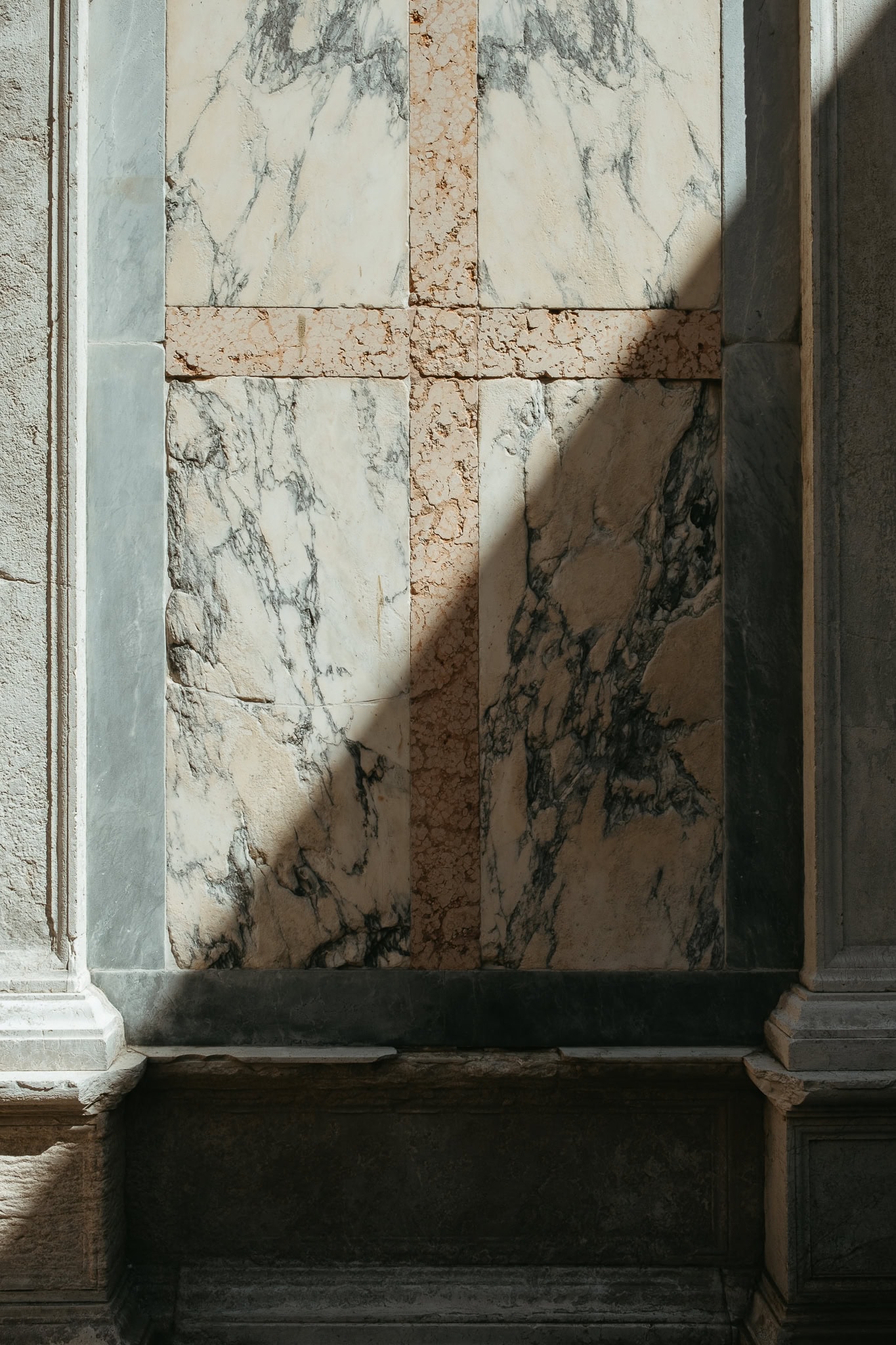
- Santa Maria dei Miracoli: Stop by here to admire the beautiful colored marble both inside and outside the building.
16. Drink a spritz (or five).
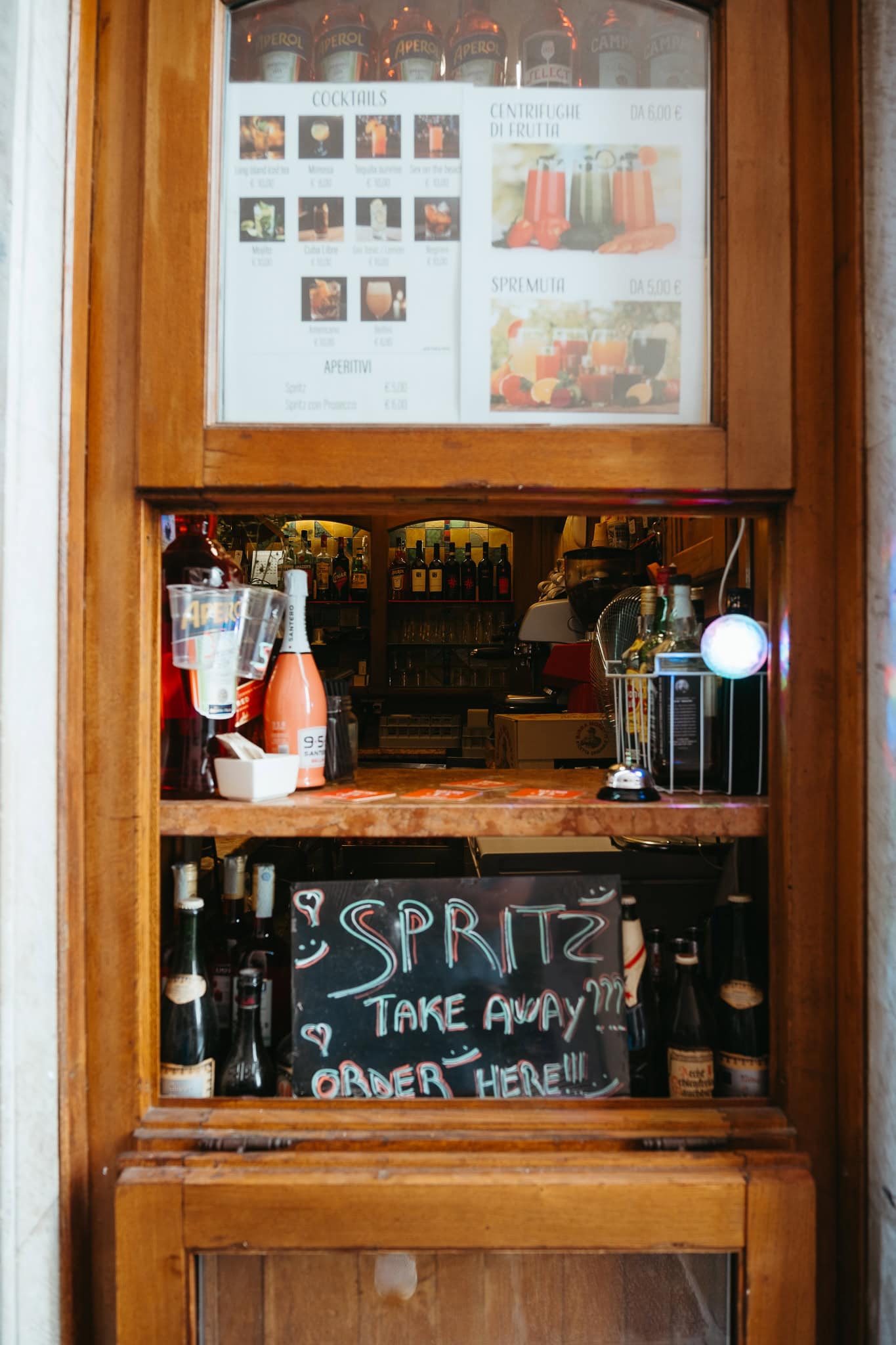
Particularly if you’re visiting Venice during those hot summer months of the peak tourist season, you’ll need some treats to cool you down. My favorite is actually a lemon granita (basically a slushie), but don’t leave Venice without trying a spritz or two (or more).
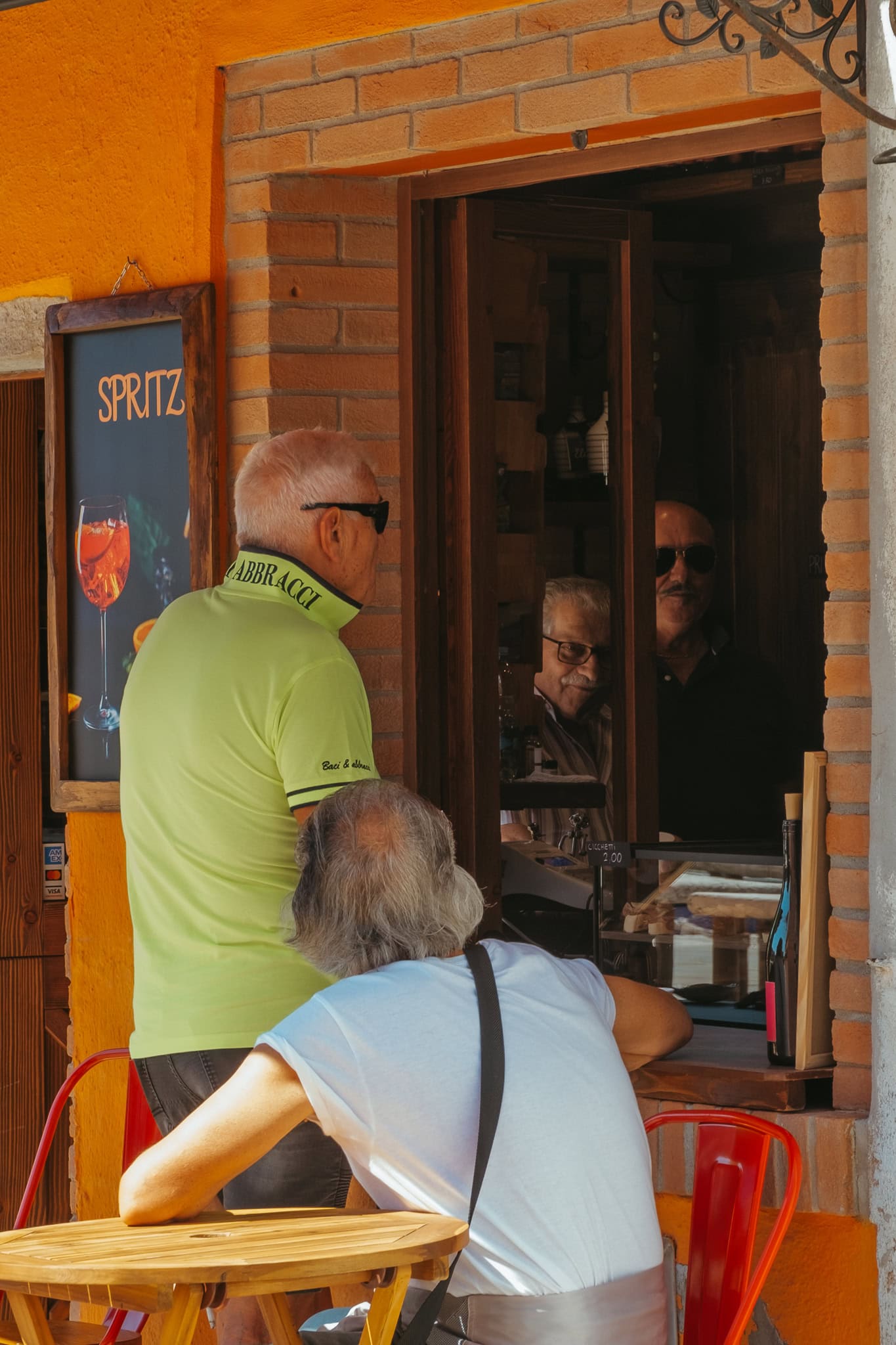
The spritz originated in Italy, and you can find them for just a few euros all throughout Venice, often at easy takeaway windows. Many are made with Aperol, but you can also get them with Campari, Select, or other liqueurs.
TIP: A traditional Venetian spritz is made with Select, or try a “mezzo e mezzo” spritz for a half-Aperol, half-Campari version that’s popular with those who think Aperol is too sweet and Campari is too bitter.
17. Feel like a local in Cannaregio.
While Venice’s Cannaregio district is no longer the hidden secret that it once was, it’s still far enough removed from the city’s main tourist destinations that a lot of visitors never make it that far north.
And thank goodness for that, because it means there’s still at least one part of Venice where you can feel like not every person around you is a fellow tourist. (Yes, I understand the irony inherent to this desire!)
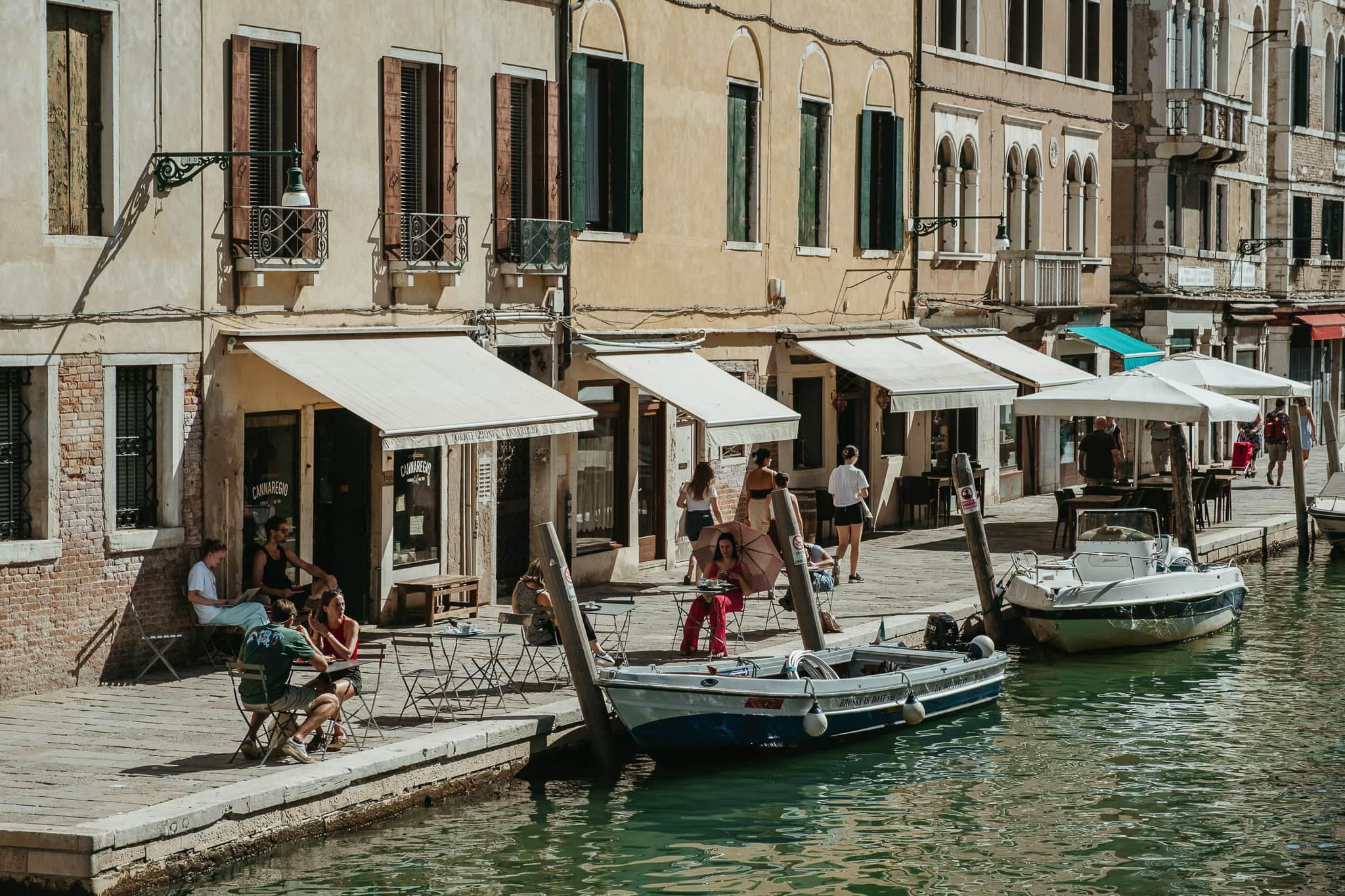
Since it’s less touristy and more local, Cannaregio is a particularly great area to explore the food scene. For expert advice about which restaurants, bars, and cafes are worth your time and money, I recommend a food tour. You’ll try portions of Venetian specialties at a number of local spots before sitting down for a full meal — and you’ll top it all off with gelato.
Check availability for a Cannaregio food tour here:
18. Shop at Mercato di Rialto.
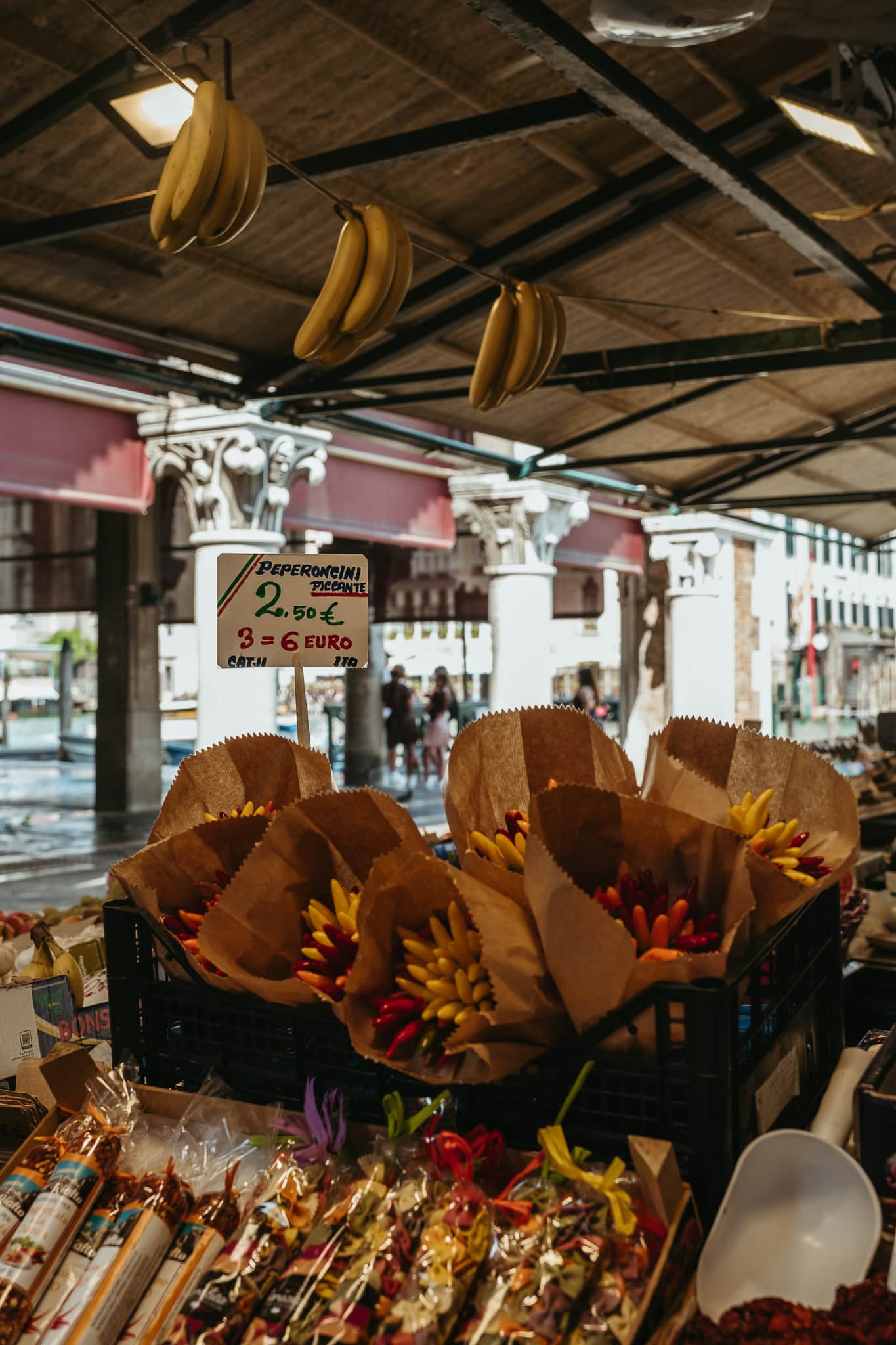
Speaking of local life, get up early in the morning and head over to Mercato di Rialto for a peek at how some Venetians shop. At this market near the overwhelmingly popular Rialto Bridge, Venetians buy and sell fish, produce, spices, and much more. If you’ve selected lodging with a kitchen, get in on the action and buy some groceries for dinner!

19. Rescue some books at Libreria Acqua Alta.
The best-known bookstore in Venice, Libreria Acqua Alta — named after the seasonal high tides that routinely flood the city — has become Insta-famous for its picturesque stacks of used books, which fill gondolas and bathtubs and other vessels that protect the books from flooding.
I’m a huge fan of buying books when I travel, and recommend that you pop into Acqua Alta for more than a photo. In addition to books, they have cards, art, and other great souvenirs.


20. Eat cicchetti.
For a true Venetian specialty, be sure to try some cicchetti — Venice’s version of tapas or pintxos. Pronounced “chi-KET-ee,” these small finger foods often take the form of a spread and fishy topping on a piece of bread, but you’ll find a variety of forms and flavors.

If you’d like a little expert guidance in finding the best cicchetti, consider taking a food tour like this one:
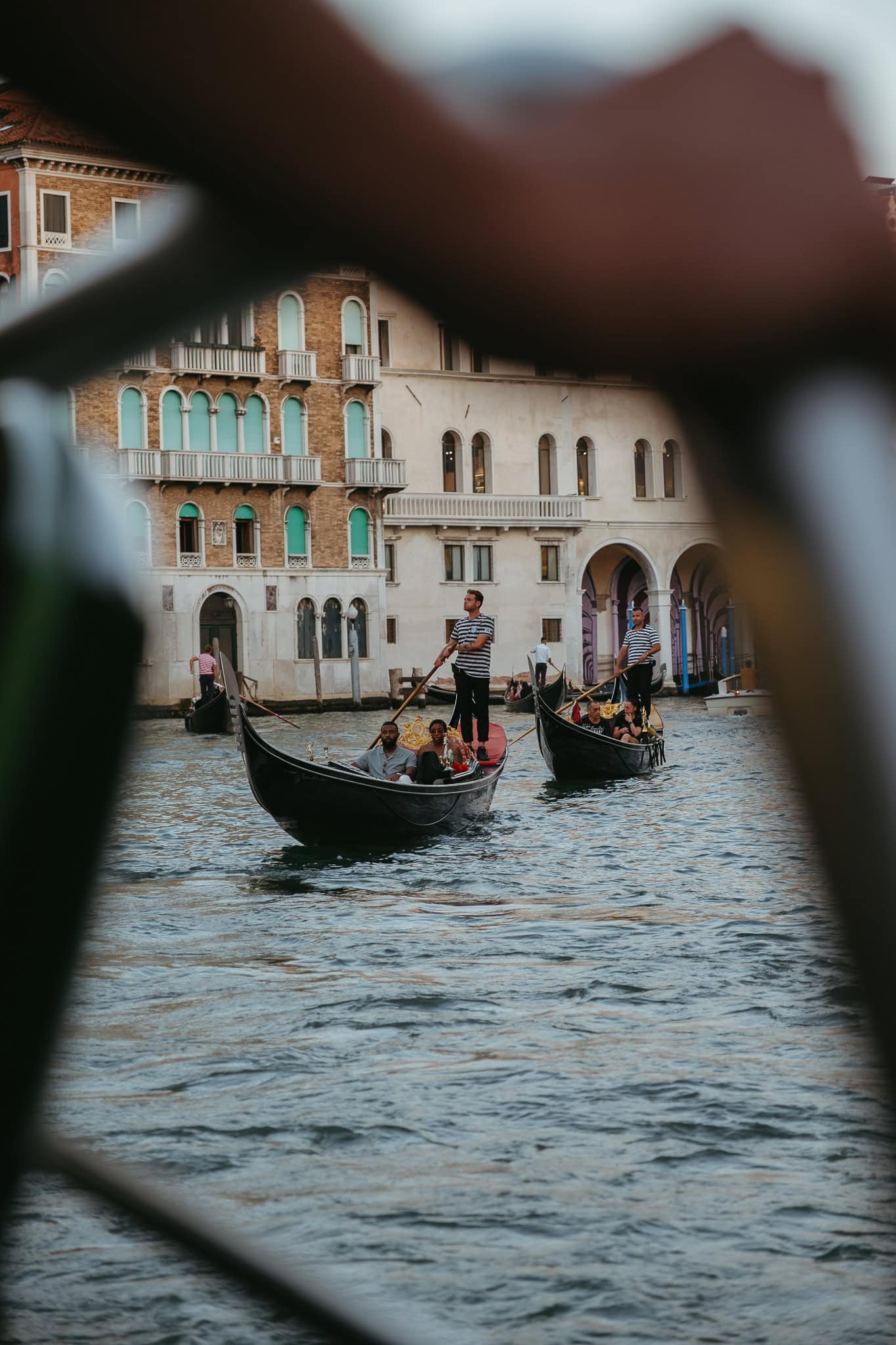
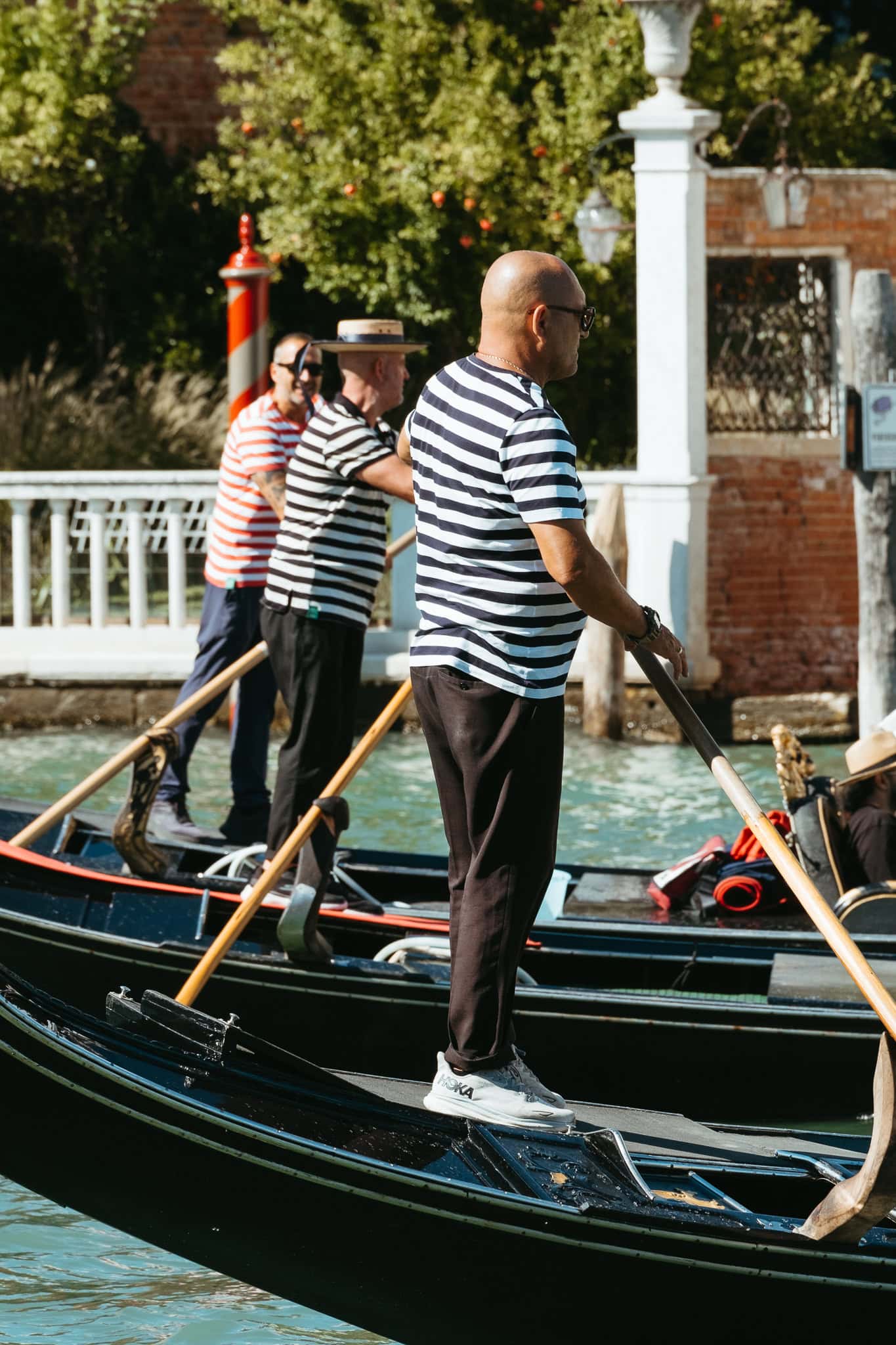
21. Ride a gondola.
Did I save the best for last? Honestly, you’ll have to tell me: I’ve never actually taken a gondola ride in Venice, as I haven’t cared enough about experiencing a gondola to pay what I see as a pretty hefty price.
That said, I know that a lot of people would not consider their trip to Venice complete without a gondola ride. If that’s you, here’s what to know about riding a gondola in Venice.

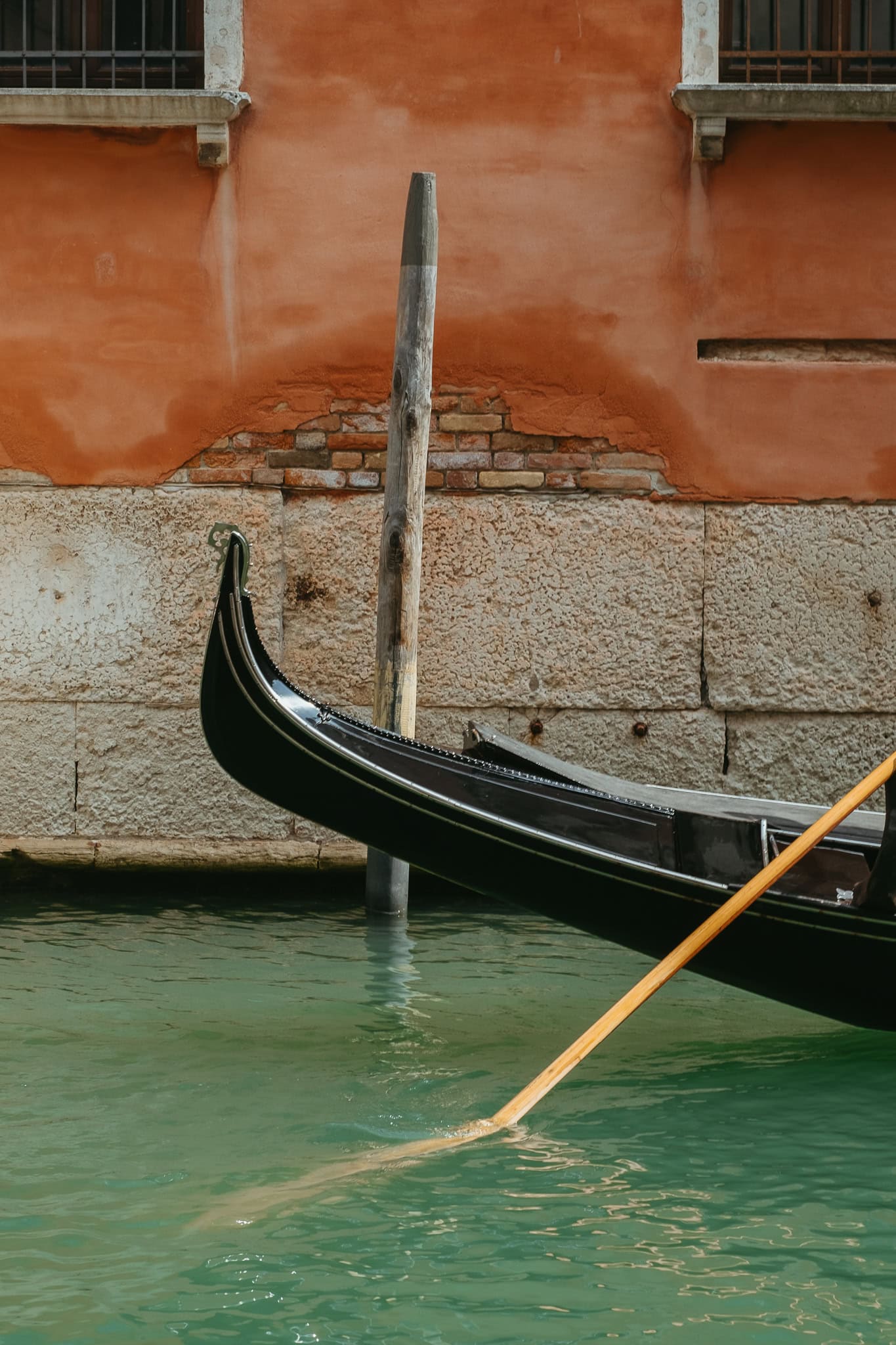
Gondola pricing is standard across the city. In 2025, a gondola ride in Venice costs €90 for a 30-minute ride during the day, or €110 for a 35-minute ride at night.
To snag a gondola ride, line up at one of the many (many) gondola stations around the city. They’re not difficult to find! (Most are located at/near bridges.) I personally recommend heading toward the smaller canals, where you can have a more peaceful ride through the more charming portions of the city, rather than the chaos of the Grand Canal.
If you don’t want to risk having to wait in line, you can also prebook a gondola ride like this one — but be cautious about this option, and read the reviews carefully before committing. Many people report that the rides are shorter than promised, and shared with strangers.
Things to Do in Venice: Interactive Map
Below is a map with the locations discussed in this post. To use this map during your own trip to Venice, click the star next to the map’s name (which saves the map to your account). You can then find and use the map from your Google Maps app by going to “Saved,” then “Maps.”
Final Thoughts
I hope this post has clued you in to some new-to-you spots and other hidden gems, and helped to expand your understanding of things to do in Venice. It’s a city with so much to offer — with world-famous views and sights, yes, but lots of hidden gems and underappreciated activities as well.
Enjoy Venice, and let me know what you think after you experience it!
More Information About VENICE AND ITALY
ITALY ITINERARIES | Spend 10 days in Rome, Florence, and Venice, or two weeks visiting some of the highlights of Italy. (COMING SOON!)
THINGS TO DO | Discover how to plan your day if you have just one day in Venice (COMING SOON!), how to spend 3 days in Venice, find 3 of my favorite hidden gems, and learn how to ride the most popular vaporetto.
LODGING | Discover the best areas to stay in Venice, plus hotel recommendations for a variety of budgets (COMING SOON!).
VIEWS | Learn where to find the very best views of Venice.
DAY TRIP | Find out how to spend one day exploring the islands of Burano and Murano.
COSTS | Here’s how much I spent for one month in Italy.
pin this post