How to Take a Day Trip from Brussels to Bruges
“It’s a fairytale town, isn’t it? How’s a fairytale town not somebody’s f***ing thing? How can all those canals and bridges and cobbled streets and those churches, all that beautiful f***ing fairytale stuff, how can that not be somebody’s f***ing thing, eh?”
In Bruges
Ah, Bruges. One of Europe’s best-preserved medieval towns, the Bruges of today benefits from the suffering of the Bruges of yesteryear. While Bruges prospered during medieval times, it fell into poverty in the 16th century. As a result, many of its historic buildings were never demolished to make way for newer and more modern buildings.
Unsurprisingly, then, Bruges has become very popular with tourists who want to soak in a little fairytale magic. It’s certainly no hidden gem, and you’ll have to contend with loads of other tourists no matter when you go.
One way you can mitigate this annoyance is to spend at least one night in Bruges and experience the city in the early morning or in the evening, when fewer tourists crowd the streets.
But even if you only have time for a day trip, Bruges is a wonderful experience. I visited Bruges during a day trip from Brussels, and loved it. Now I’m eager to go back and spend a few nights there!
Here’s everything you need to know about taking a day trip from Brussels to Bruges — including how to get there, what to do, and where to eat.
How to Travel from Brussels to Bruges
The best way to get to Bruges from Brussels is the train.
Trains in Belgium are reliable, clean, and relatively inexpensive. I exclusively used trains to get around Belgium and enjoyed it quite a lot.
Basic Info
There are three main train stations in Brussels: Nord, Centrale, and Midi. These trains are all on the same line, so most trains to Bruges will pass through all three of these stations. I recommend simply staying near any of these three train stations, and leaving for Bruges from there.
The main train station in Bruges is called Bruges, or Brugge (the spelling depends on the language used). There is also a station called Bruges-Saint-Pierre or Brugge-Sint-Pieters, but that one is a bit farther out from the city and I don’t recommend arriving there.
Trains from Brussels to Bruges take between 60 and 70 minutes, depending which Brussels station you use.
Buying Train Tickets
The easiest way to buy train tickets in Brussels is to arrive at the station in advance of the train you want to take (I recommend arriving 30 minutes early, but that’s way more time than you need) and purchasing a ticket on one of the automated ticket machines. You will be able to select English as the language for the machine to use.
If you have a difficult time navigating these machines, just look for a person-operated sales booth. The person manning this booth will speak at least some English as well.
If you’d rather buy your tickets in advance, I recommend using the official SNCB website (this is the website of the Belgian train system). This is also where you can check train times and schedules in advance of your journey.
Large boards in the train station will tell you which track to use to board your train. If you don’t know what to look for, ask a station attendant.
Arriving in Bruges
The Bruges station is about a 15-minute walk from the historic center of Bruges.
If that’s more than you’re able or willing to walk, you can grab a bus or a taxi outside the train station.
Things to Do During a Day Trip to Bruges
Though it’s a small place, there are many things to do in Bruges — but with just one day in Bruges, you’ll need to be a bit choosy.
Here are some of the top things to do during a day trip from Brussels to Bruges.
Take a Walking Tour
I love taking walking tours right when I arrive in new cities. A good walking tour is an excellent way to get the lay of the land and learn history that you otherwise would never know.
Bruges is compact and full of history, making it the perfect place for a walking tour. I enjoyed this free walking tour with GuruWalk — it covered much of the old city (including areas I likely wouldn’t have stumbled across on my own) and taught me a lot about how Bruges came to be the way we see it today.
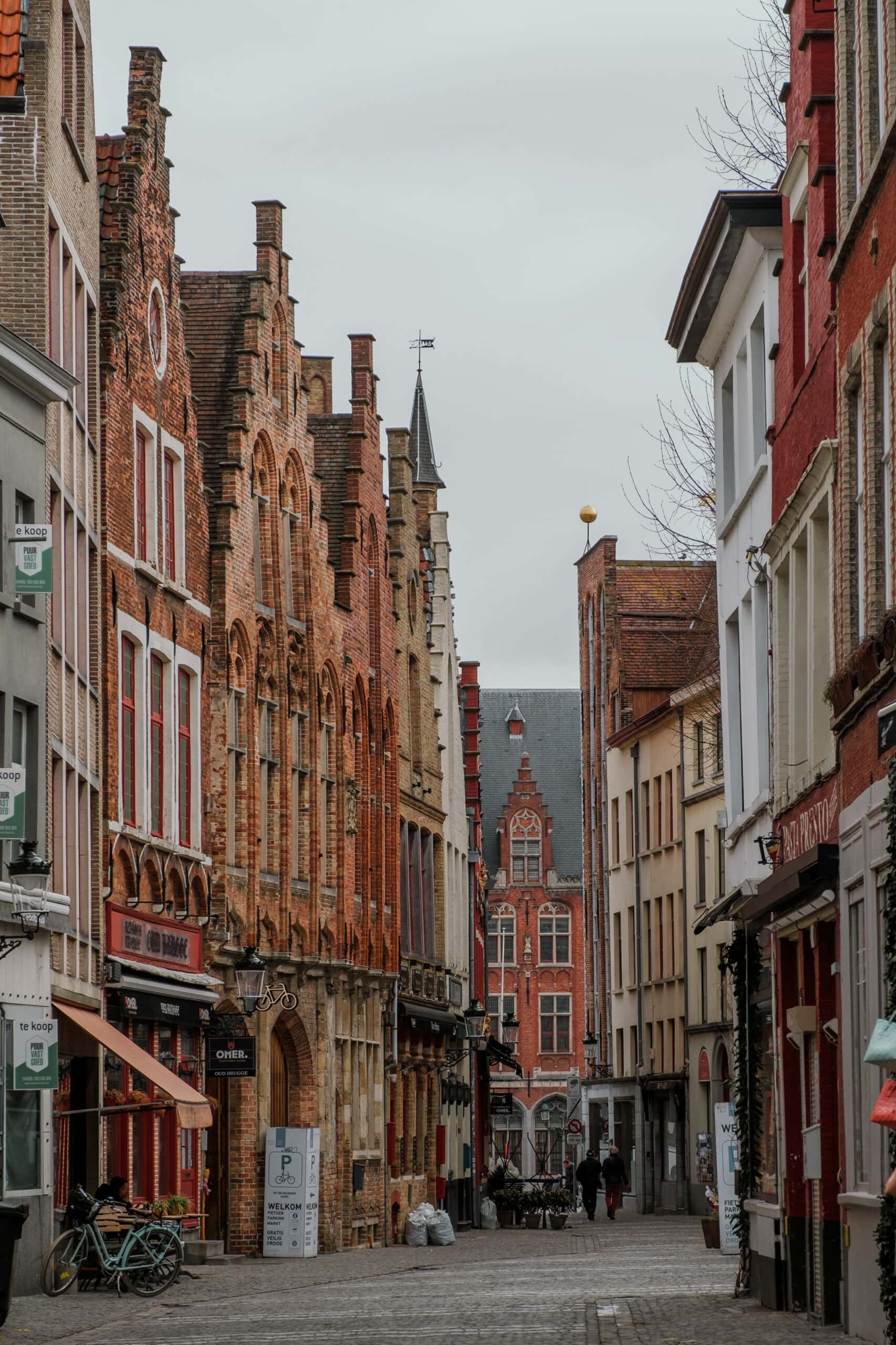

The walking tour I took was free upfront, but like any “free” walking tour, there is an expectation to tip the guide at the end. (€10-20 per person is pretty standard.)
Climb the Belfry of Bruges
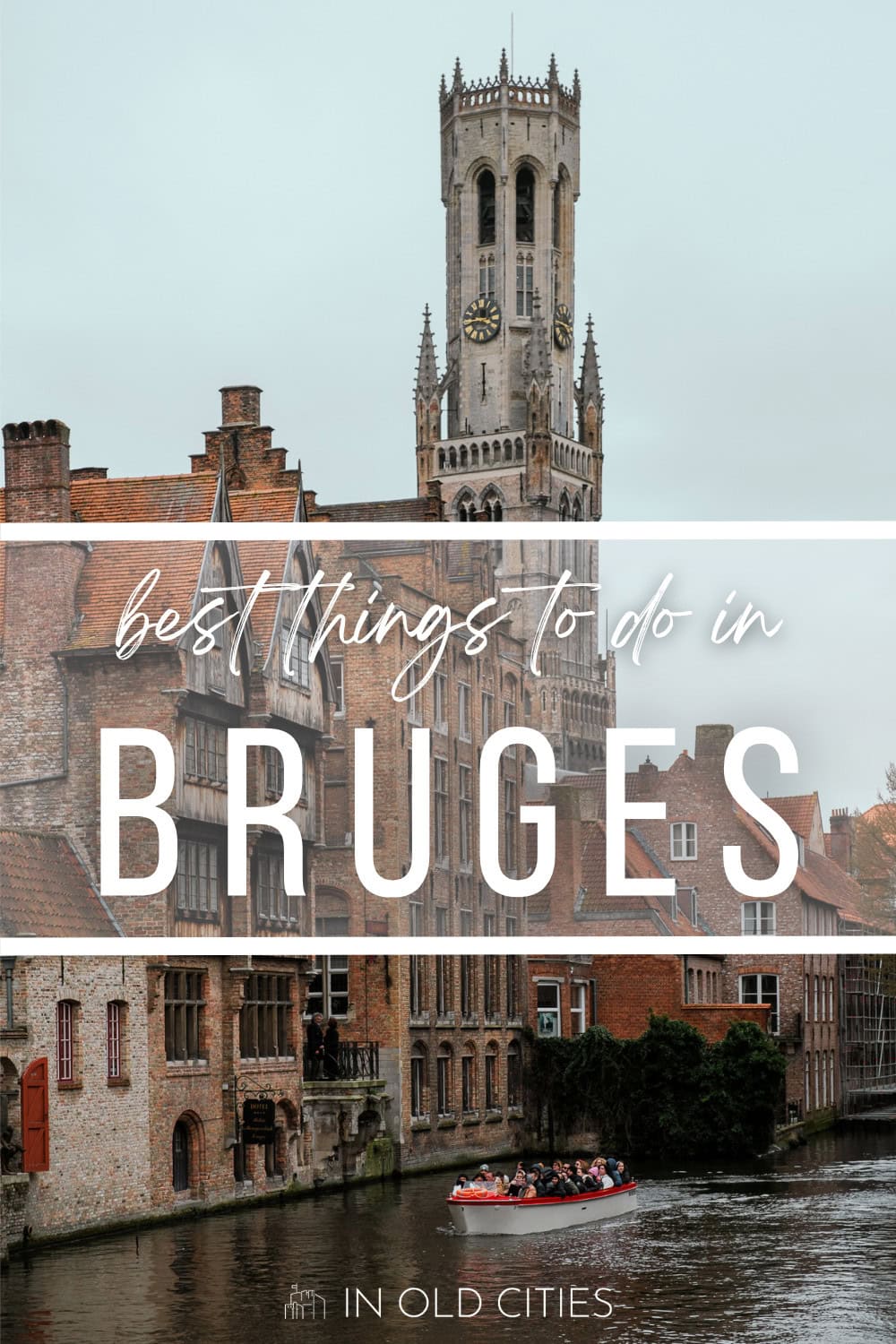
The Belfry of Bruges is the huge tower that presides over the city’ picturesque main square.
For better or worse, the Belfry of Bruges has no elevator. If you want to enjoy the view from the top, you have to climb 366 twisty, narrow stairs.
The stairs are no joke! Most people with average fitness should be able to manage it (I saw a small child doing it!), but be advised that the stairs are extremely steep in some places, and extremely narrow in virtually all places. They are used by both those climbing up and those walking down, which means you’ll often have to pause to let people pass in the other direction (it’s really not safe to both keep walking at the same time).
If, like me, you’re short or generally afraid of heights, you might want to cling to the many ropes and handrails.
Thankfully, there are several rooms along the way up where you can pause to catch your breath and examine some exhibits about the Belfry and its bells. (If you happen to be visiting on a Wednesday, Saturday, or Sunday, you might even get to hear the bells being played.) Once you reach the room with the carillon, you are nearly there (though the last stretch is the steepest!).
It took me about 15 minutes to climb the stairs, which included stops in each exhibit room and plenty of pauses for people walking down.


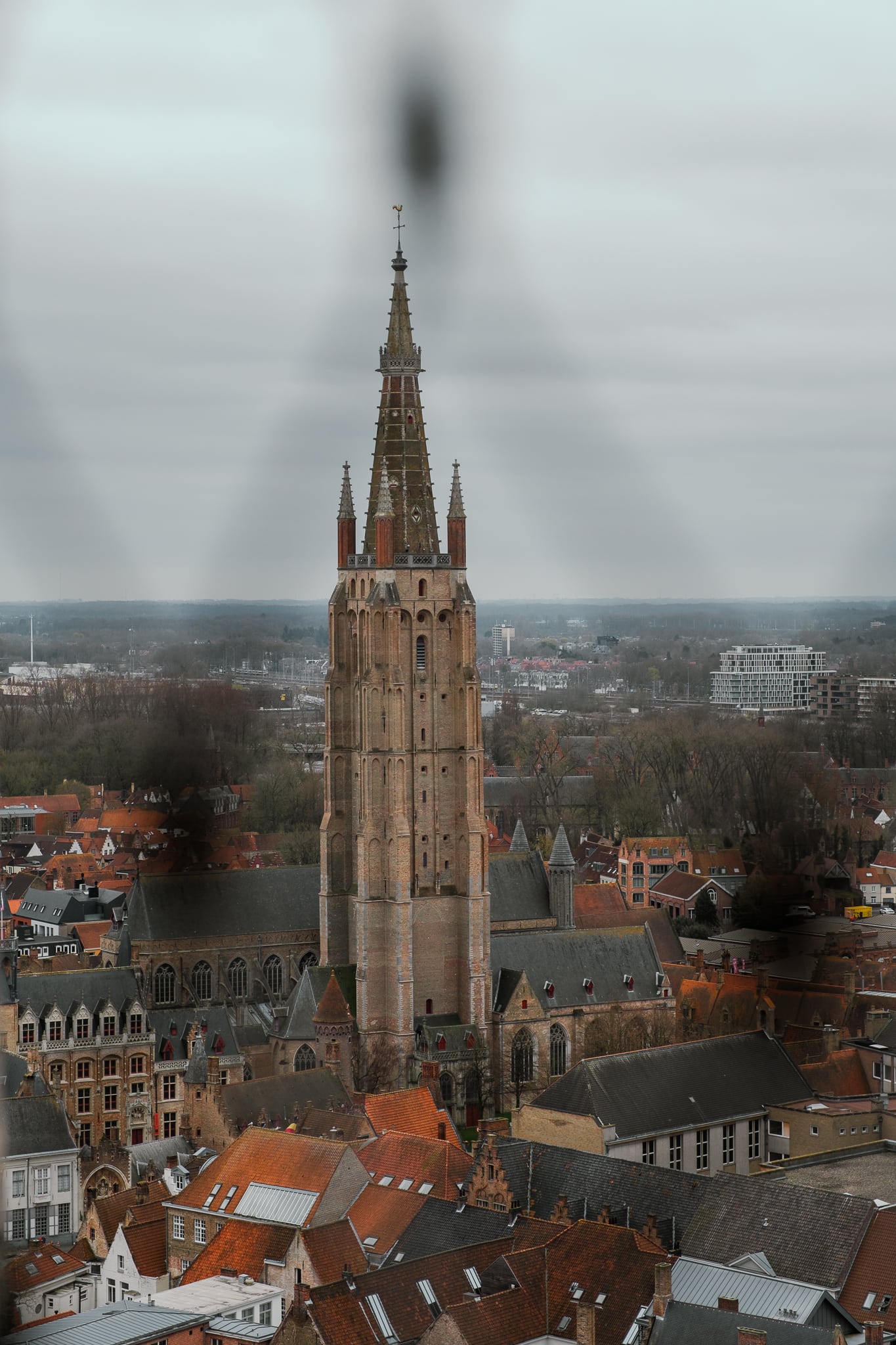
In general, I advise that you manage your expectations for the view from the top. This is doubly true if you’re short like me (5’1″ over here, and only if I’m standing on my longer leg).
First, there’s netting that obstructs the view and gets in the way of camera lenses. Smartphone lenses aren’t a problem, because they’re small, but my regular zoom lens was too big, and I had to use my narrower telephoto lens to get photos without netting.
Second, the walls you stand behind are very thick and reasonably tall. If you yourself are tall, you might not even notice this, but us short folks may struggle to get the views we hope for. For example, I had great views of things in the distance, but wasn’t even remotely close to being able to see the vast square below the Belfry.
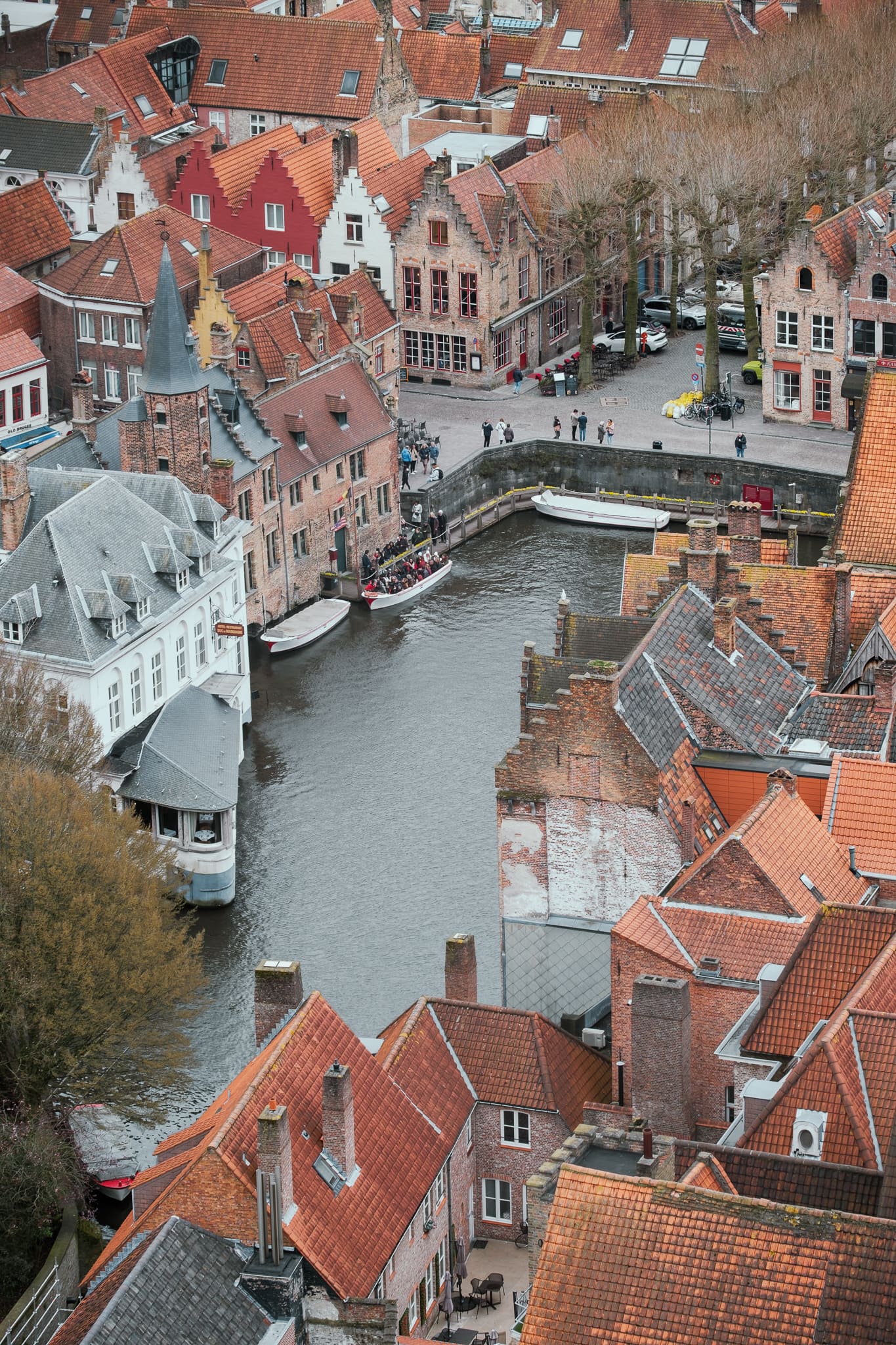
If you have a good idea of what time of day you can (and want to) climb the Belfry, I recommend buying a ticket in advance. I turned up on a Monday morning in the off-season (the slowest day in Bruges) and the next three time slots were fully booked already. You can buy a ticket here.
Cruise the Canals
One of the most popular things to do in Bruges is to take a boat tour of the canals. For about 30 minutes, your boat will wind through the beautiful waters of Bruges and give you information about the things you are passing.
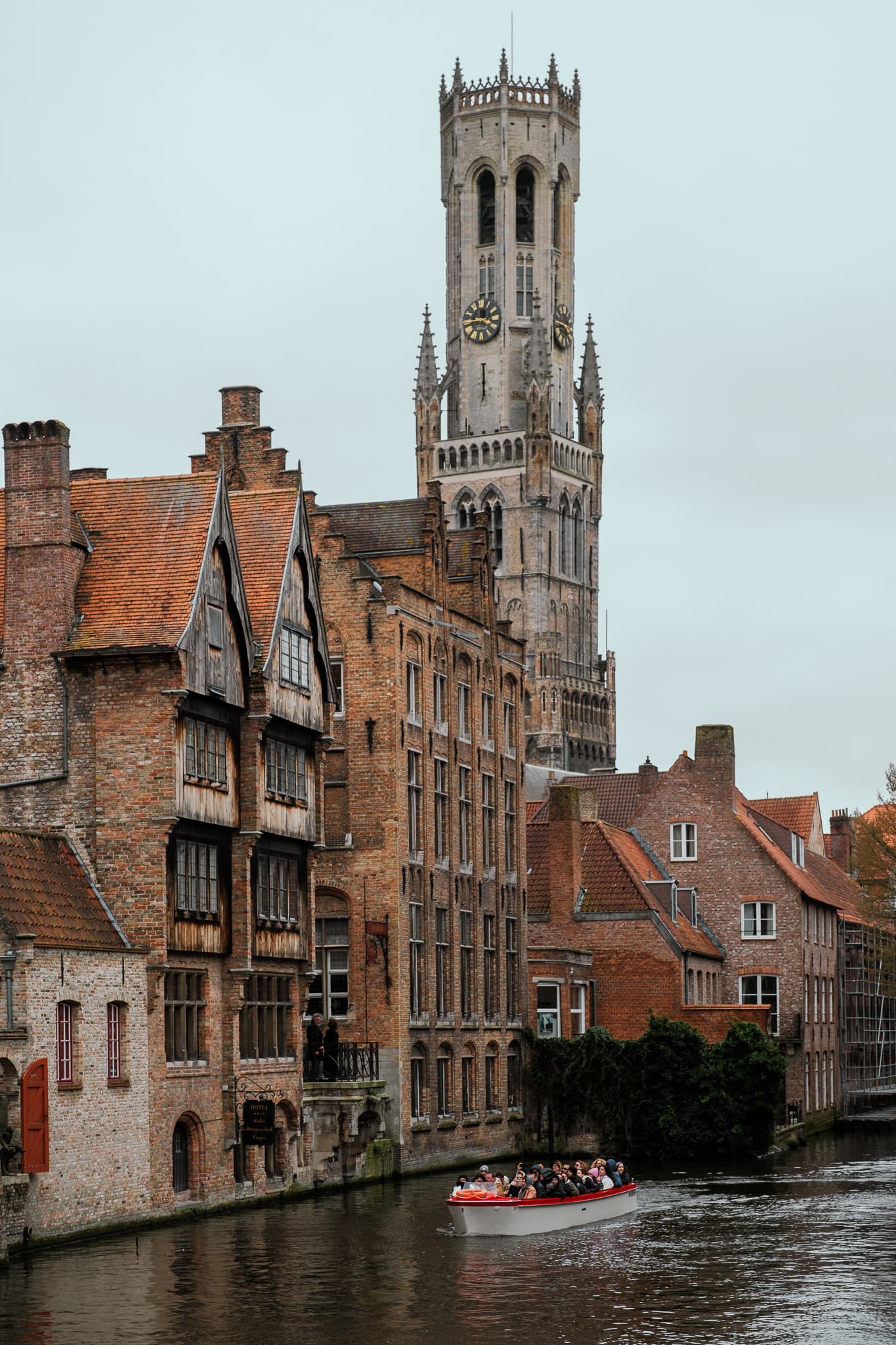

There are quite a few places throughout Bruges where canal tours depart from — just follow the canals, and you will inevitably find one. (If this stresses you out, you will find one of the departure points at Rozehoedkaai, which is a famous spot for photos. Or, here is a list of departure points!)
All of the tours cost the same amount (€15.00 for adults), follow the same route, and give you the same information, so don’t worry about trying to choose the best one. They also don’t run on a regular schedule but instead will leave when the boat is full enough.
Venerate the Holy Blood
One thing you start to learn as you travel the world, especially Europe, is that a lot of places claim to have relics from the crucifixion of Jesus Christ (thorns from the crown, pieces of cloth, nails from the cross, etc). Are all of them real? Well…certainly not. But while strong doubt (to say the least) has been placed on some of these relics thanks to carbon dating, others can’t be proven one way or the other.
That leads us to Bruges, which claims to possess a cloth stained with the actual blood of Jesus in the Basilica of the Holy Blood.
Is Bruges’s relic real? We don’t know. But you can see the relic today during certain hours, when it’s on display for visitors to pass by and venerate it.
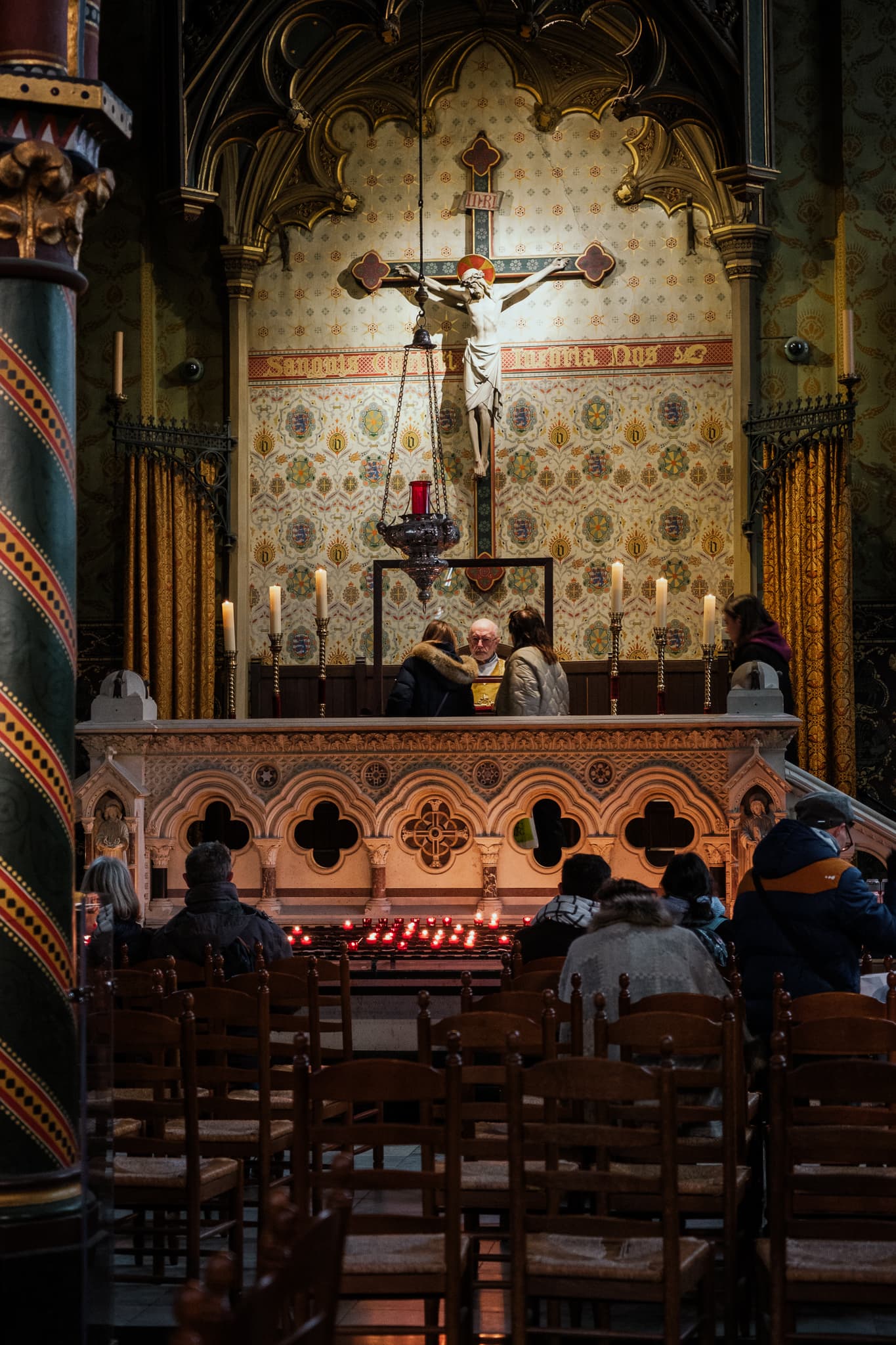
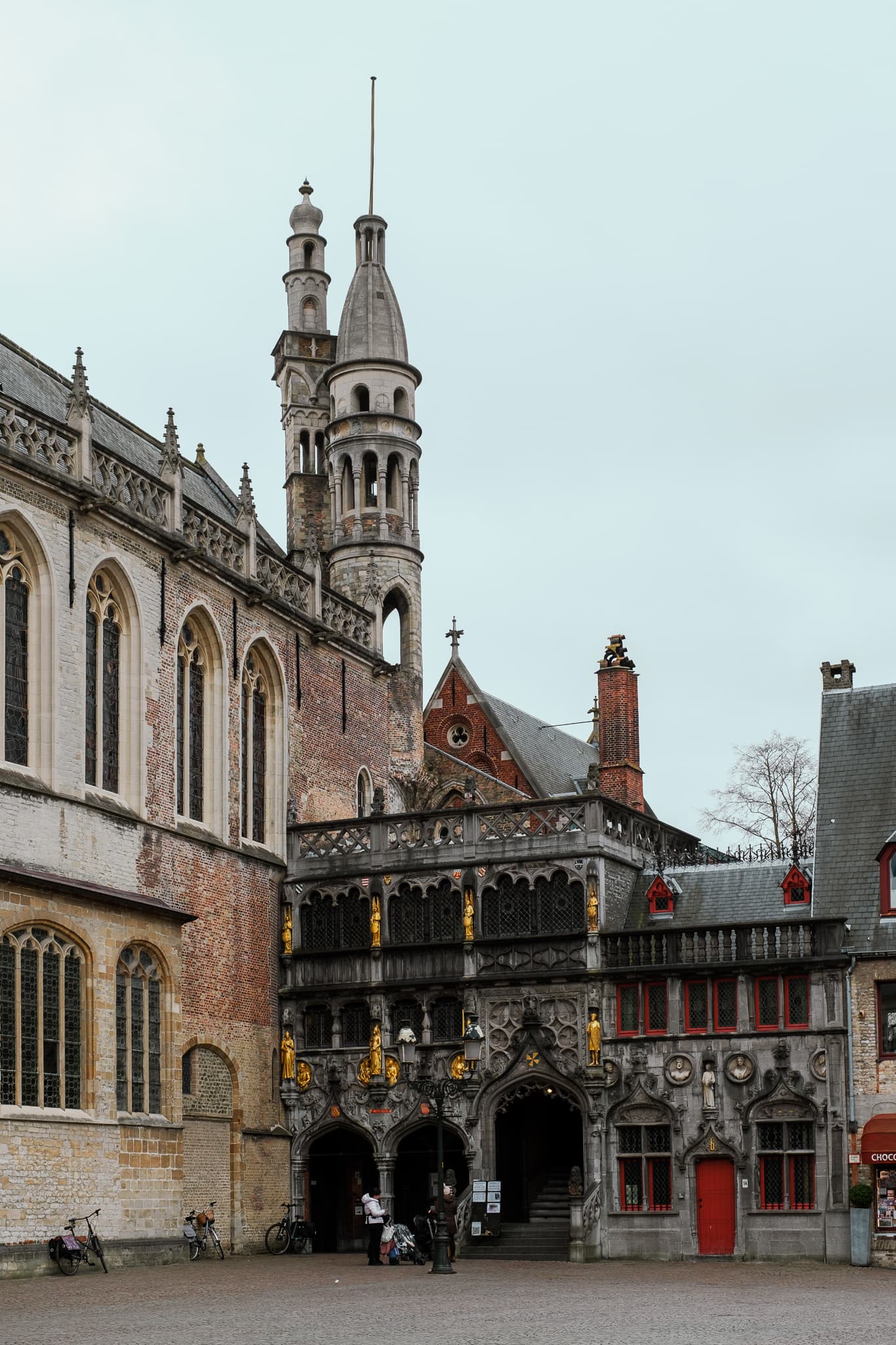
If you want to see, or “venerate,” the relic, visit the basilica between 2 pm and 4 pm on any afternoon, or between 10:15 am and 11 am on Fridays. To venerate the relic, you will walk up a small set of stairs and pass by the glass vial containing the cloth.
A priest sits behind the relic at all times. Signage instructs you that venerating the relic indicates your faith in Jesus Christ, and encourages you to donate money to the church as you pass by, though neither of these things are enforced.
Visit the Begijnhof
Way back in the 13th century, unmarried but emancipated women of Bruges formed the Begijnhof, or Beguinage — a community where they could live together in a religious order (but without the lifelong vows required by convents).
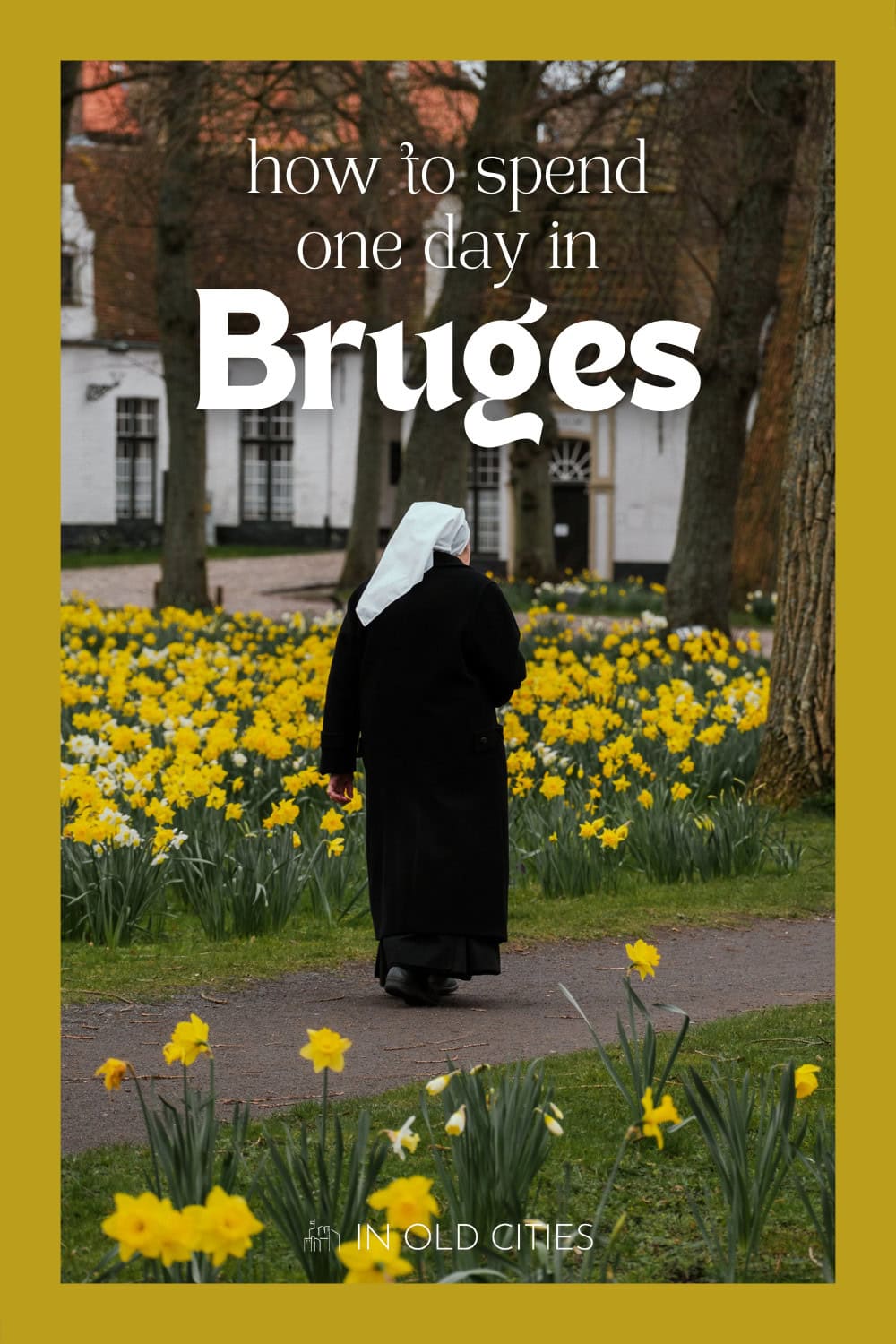
Today, the Begijnhof is a beautiful space within (but secluded from) the city of Bruges, with rows of white homes surrounding a field of leaning trees. During my visit in mid-March, there were also thousands of beautiful daffodils.
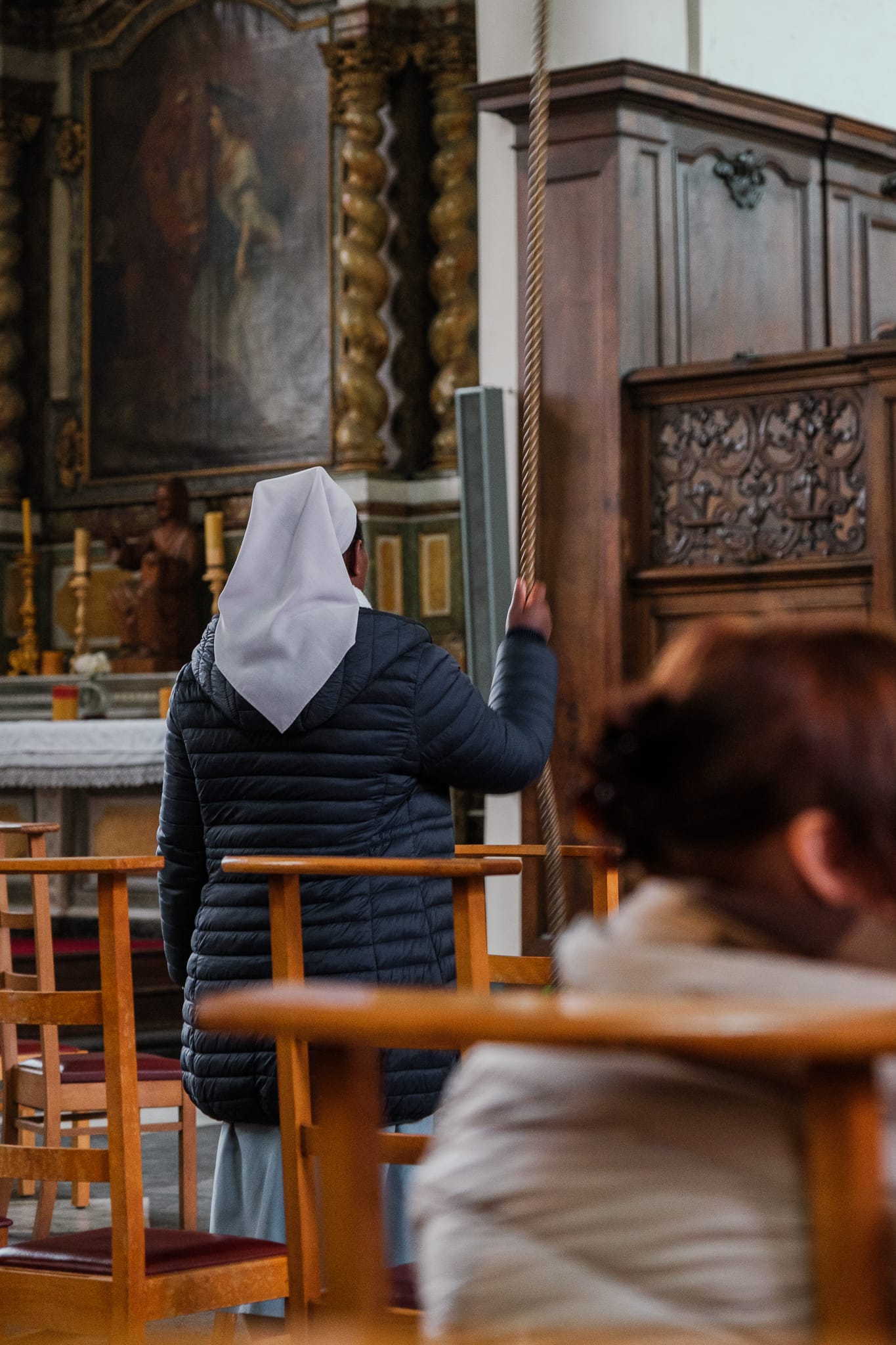
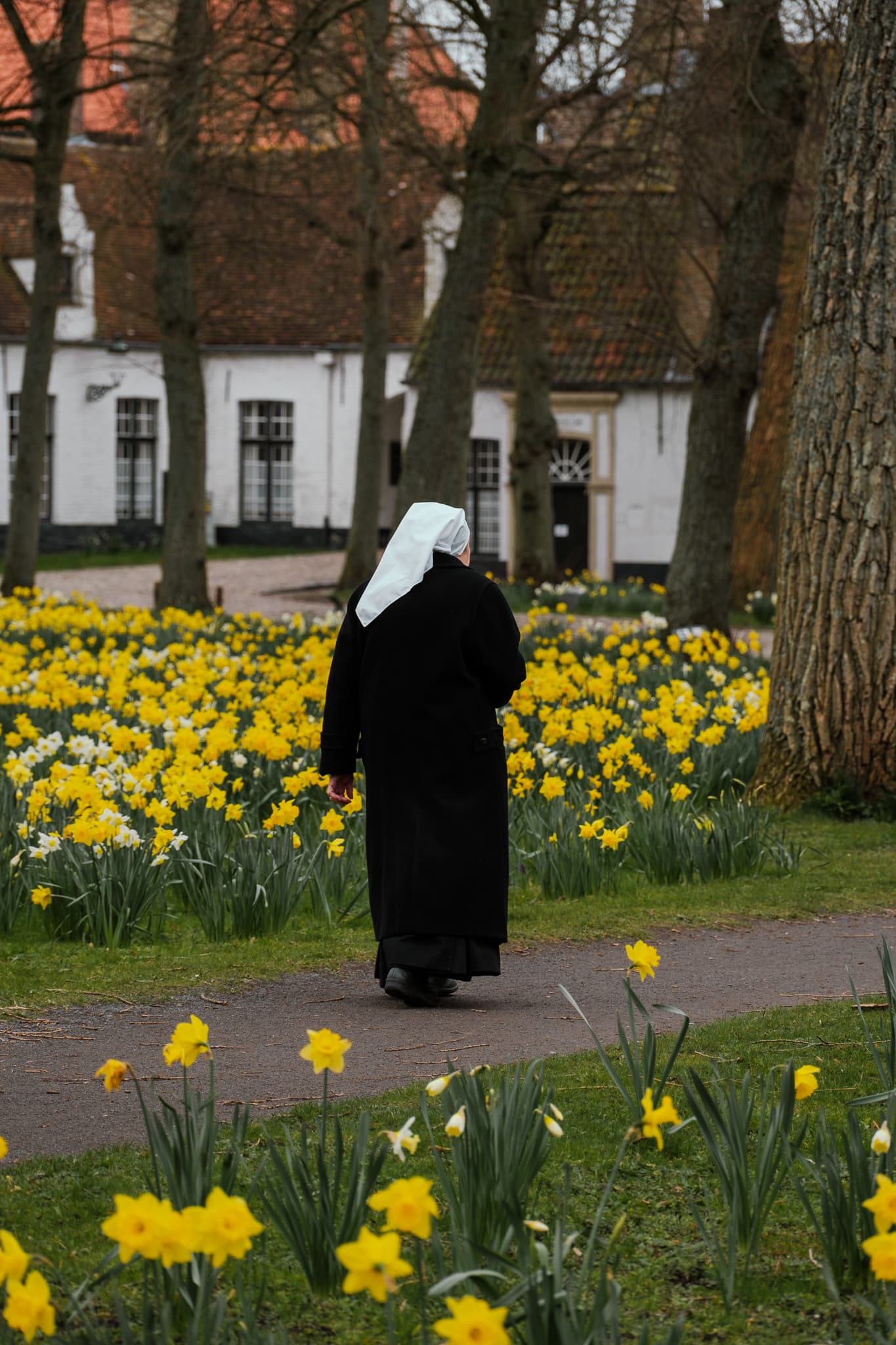
There are no more Beguines living in Bruges, but the Begijnhof is now occupied by a few nuns. When I walked into the Begijnhof’s chapel, the nuns happened to be doing their prayers, which was lovely to witness.
Just outside the Begijnhof is a very picturesque area with swans and a lovely view of Bruges’s Church of Our Lady.

Where to Eat in Bruges
Assuming you don’t have any dietary restrictions that prohibit it, you simply can’t leave Belgium without eating a waffle. And while I personally tried waffles in a few different Belgian cities, the best I found, hands down, was in Bruges at House of Waffles.
You can sit down at House of Waffles, which is the thing to do if you want one of their more elaborate offerings, but you can also purchase a waffle to go from their walk-up window.
I opted for the chocolate and strawberry variety. If you’re given a choice between the Brussels and Liege style of waffle, go for the Liege. (Yes, I painstakingly taste-tested them both during my time in Belgium. You’re welcome.)

For other Belgian treats, a local recommended the following to me: The Chocolate Line for Belgian chocolates, The Old Chocolate House for decadent hot chocolate, and The Potato Bar for fries.
I also had a lovely breakfast at That’s Toast.
Day Trip to Bruges: Interactive Map
Below is a map with the locations included in this itinerary. To use this map during your own trip to Belgium, click the star next to the map’s name (which saves the map to your account). You can then find and use the map from your Google Maps app by going to “Saved,” then “Maps.”
Final Thoughts
Bruges is one of Belgium’s best-known cities, and for good reason — it’s wonderful! Don’t fear the tourist crowds; Bruges is worth a visit even when it’s full of people.
Enjoy your day trip to Bruges!
More Information About Belgium
ITINERARY | Follow my detailed itinerary for 10 days in Belgium and the Netherlands.
EXPENSES | Exactly how much I spent for 10 days in Belgium and the Netherlands.
OTHER DAY TRIPS FROM BRUSSELS | Learn how to visit Namur and Dinant in one day from Brussels, or how to take a day trip to Ghent.
GHENT ALTARPIECE | Dig into a visit to Ghent’s world-famous Altarpiece.
MORE TRAVEL INSPIRATION | Learn which Belgian cities are amongst 8 fairy tale destinations in Europe, and which tourist destination in Ghent is a Mennonite history site.
pin this post