How to Spend One Day in Belfast
It’s the home of the Titanic, and a witness to tragedies during the Troubles, and the holder of a fragile peace — helped along by physical walls and barriers that keep the city’s most divided populations apart when times are fraught.
Belfast isn’t the flashiest destination on the island of Ireland, but it’s a crucial part of any visit to Northern Ireland.
And, though there’s plenty to occupy multiple days of your time, one day in Belfast is enough to learn about the city’s best-known and most important claims to history — plus, its ongoing struggles in the present and possible directions in the future.
This is your perfect one-day Belfast itinerary.
This post contains affiliate links. If you make a purchase or a booking through one of these links, I may receive a small commission at no extra cost to you. Thanks for supporting In Old Cities in this way!
One-Day Belfast Itinerary
Breakfast at Lava House
Start your day at Lava House, a casual cafe that serves up great traditional Irish breakfasts. I liked the Small Fry!
Titanic Museum
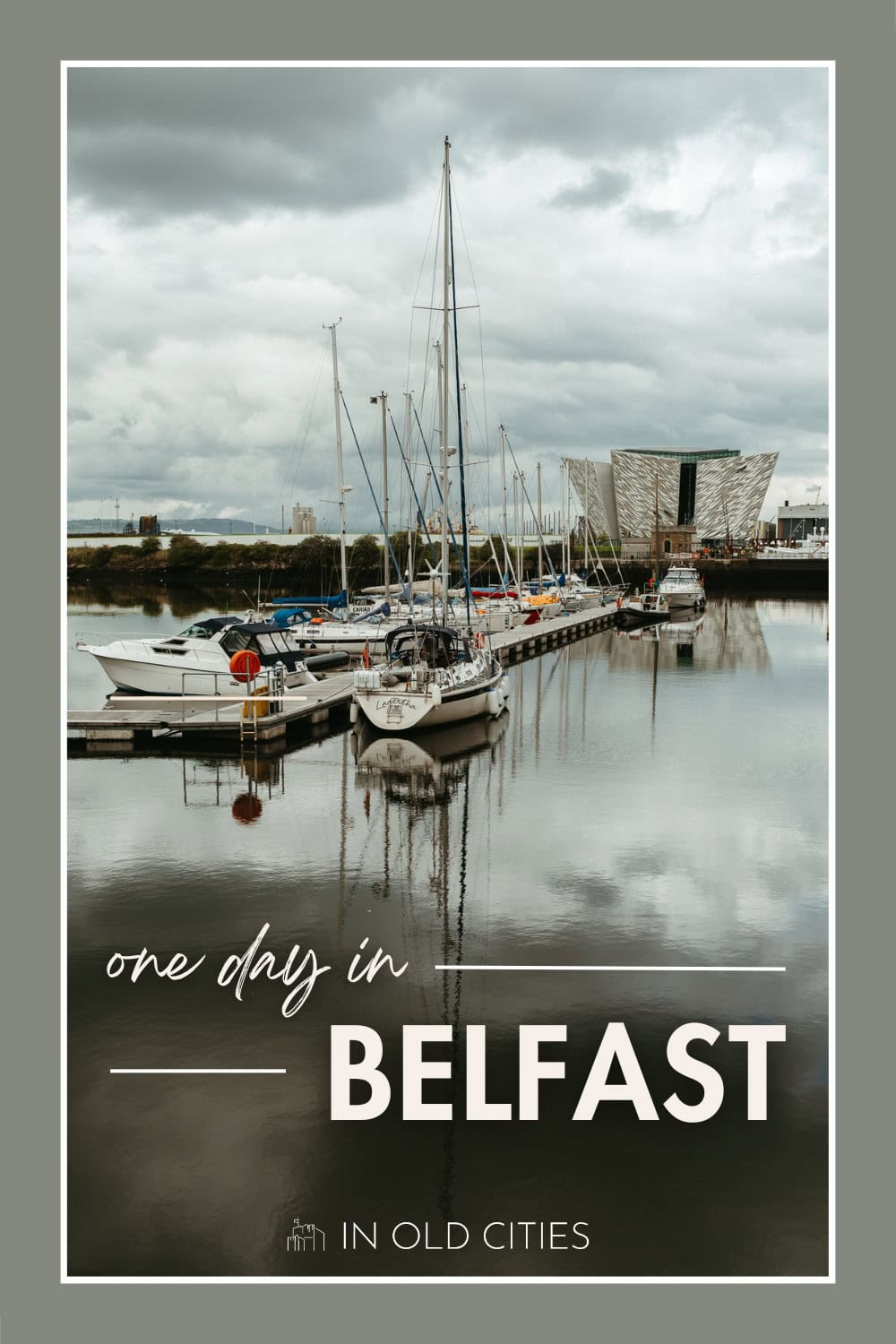
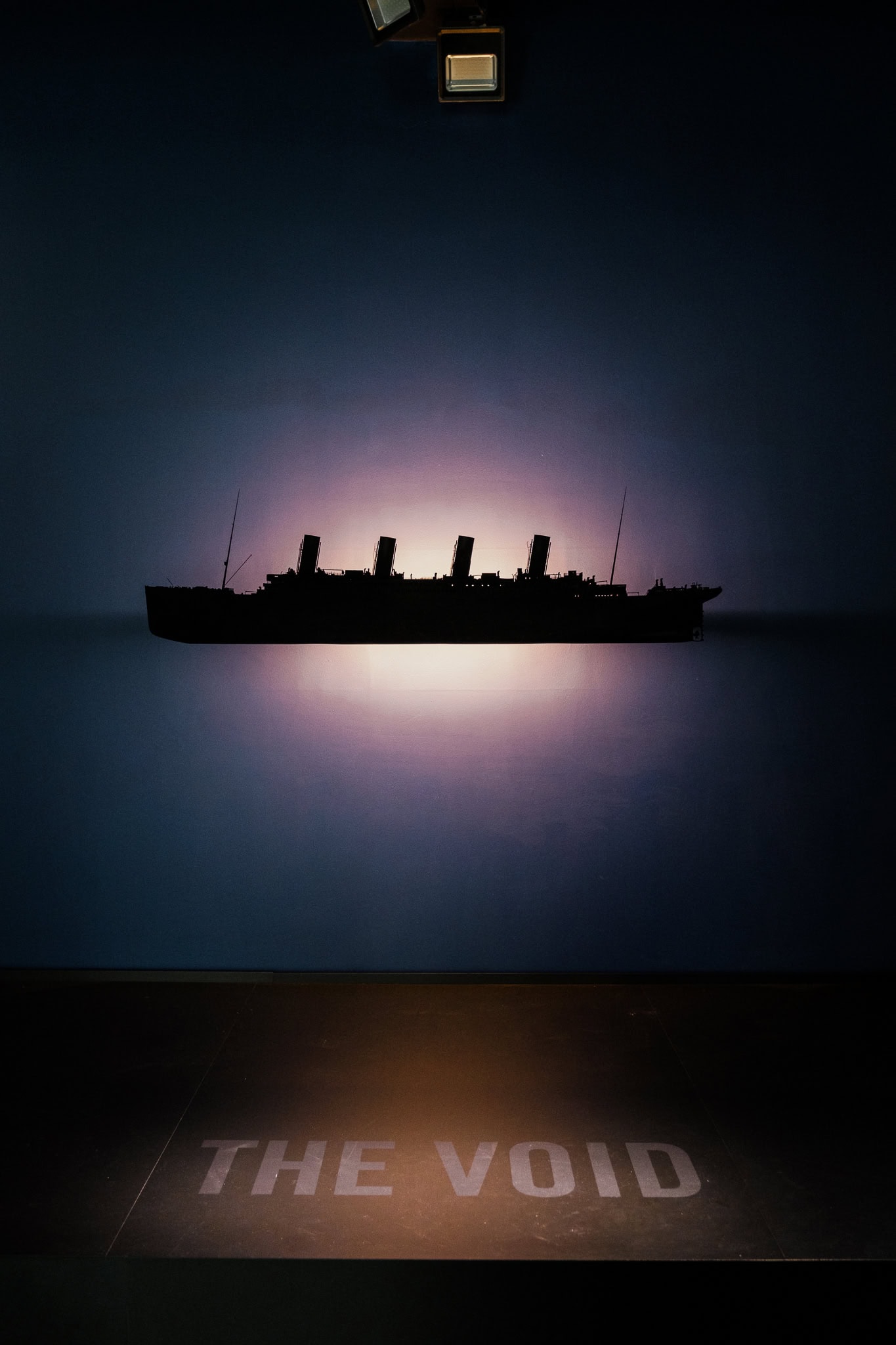
Plan to spend the rest of your morning at Titanic Belfast, a museum dedicated to the doomed, world-famous ship.
Why does Belfast have an entire museum about the Titanic? Because that’s where the ship was constructed. In fact, the museum is located on the spot of the former shipyard where the Titanic was built.
As a result, a good bit of the museum is devoted to the political and social context in which the Titanic was built, as well as the way it was made. There’s a strange little ride — it’s optional — specifically about the experience of building the ship. (For what it’s worth, I waited in quite a long line to ride it, and while it was fine, I wouldn’t advise waiting in line for it.)
There are also exhibits about the rooms and items within the ship. And, of course, plenty of space is devoted to the sinking of the Titanic.
That said, I wasn’t wildly impressed with the area on the sinking. It was a bit light on information, if you ask me, and I genuinely thought that James Cameron’s Titanic movie did a better job of explaining why the ship actually sank.
Even there, though, there were affecting bits, particularly the huge wall of names of those who died in the sinking of the Titanic. I was also struck by a violin that’s believed to be an actual instrument played on the deck as the ship sank.

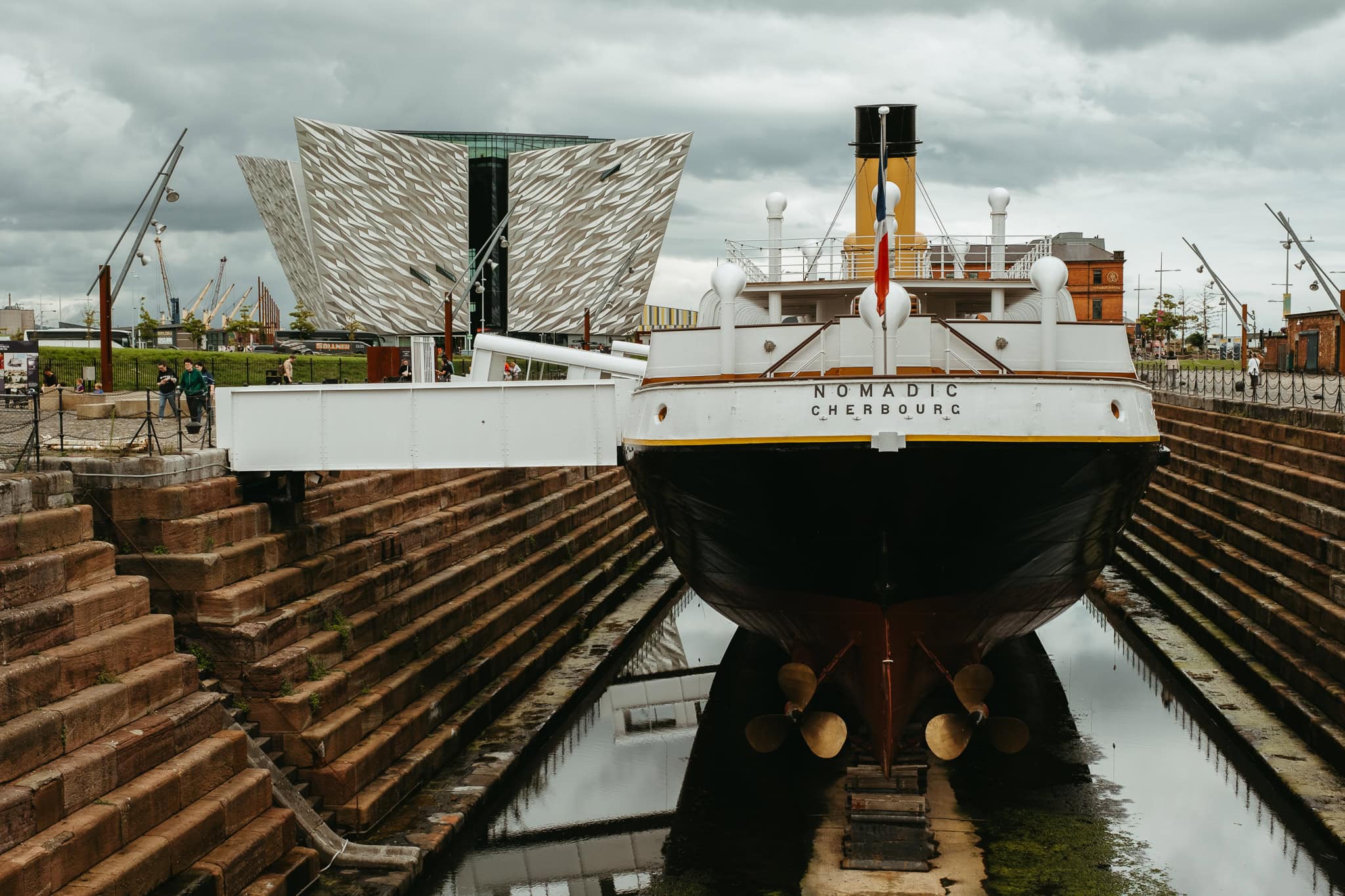
Your ticket to Titanic Belfast also includes entrance to the SS Nomadic — the tender ship that was used to transfer first- and second-class passengers to the Titanic at a small port that couldn’t accommodate the larger ship.
The Nomadic was not involved in the sinking of the Titanic and continued to operate long after the Titanic fell to its watery grave. In fact, it’s the last surviving ship by the White Star Line — the company that owned the Titanic.
Today, the Nomadic is on display just outside the Titanic museum, and it’s worth a visit while you’re in the area. I wouldn’t say that it’s wildly interesting, but step inside the Nomadic and put yourself in the place of passengers who did the same in 1912, never knowing that many of them were walking toward their deaths.
Find more information about tickets to Titanic Belfast here. I highly recommend reserving your tickets in advance; the museum only lets in so many people during each time slot and they regularly sell out.
When I visited the museum, I didn’t buy my ticket in advance and had to wait several hours for the next available slot. This was fine, as I had some flexibility in my schedule, but that will not be the case if you have only one day in Belfast!
St. George’s Market
Find lunch at St. George’s Market, a wonderful space with hundreds of stalls selling many types of food — and other stuff, including books, clothes, groceries, antiques, and more!
However, be aware that St. George’s Market is open only on Friday, Saturday, and Sunday. If you’re visiting Belfast on a different day, I recommend lunch at The Morning Star, a historic alehouse that I liked for fish and chips.
Belfast Political Tour
Spend your afternoon at what I think is the very best thing to do in Belfast: the Conflicting Stories Walking Tour.
This is a unique walking tour with two very distinct sections and leaders, who will give you opposing perspectives on the events of the Troubles and the future of Northern Ireland.
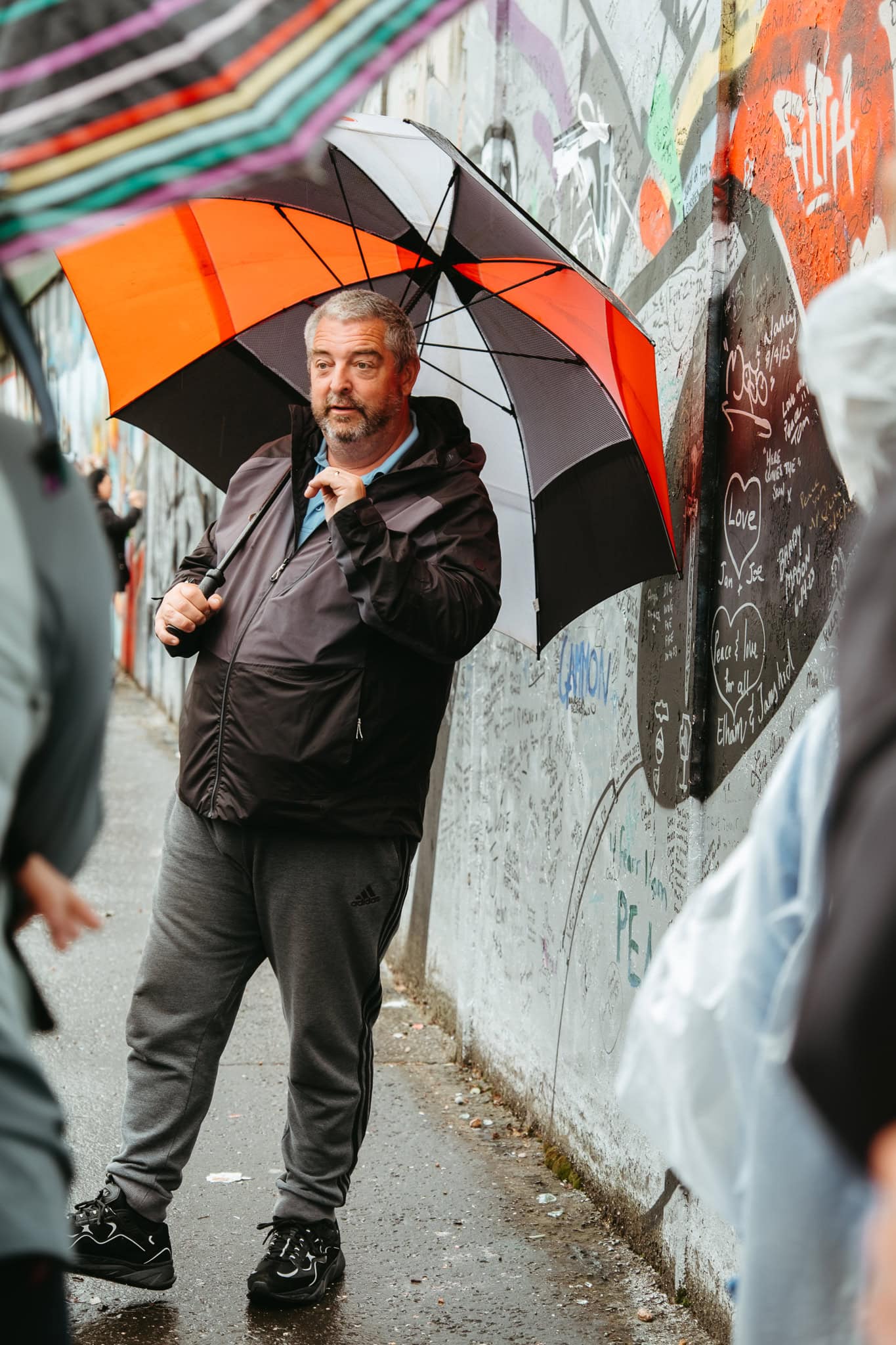
The tour begins in an Irish Catholic part of Belfast, where you’ll see murals devoted to Catholic hunger strikers (most famously, Bobby Sands) and other global political causes (like Palestine), memorials for people killed during the Troubles, and streets where Catholic homes were destroyed by Protestants.

During my tour, the guide for this section of the afternoon was a former member of the Irish Republican Army — the militant wing of the Irish nationalist movement that works toward the reunification of Ireland. (Meaning: that Northern Ireland would leave the UK and become part of the state of Ireland again.)
Since the Troubles, he has left the IRA and now spends his life pursuing peace (while still advocating for Irish reunification). And his story was fascinating. Like many people, he experienced devastating loss during the Troubles: his brother was murdered by loyalist paramilitaries in 1989, and his best friend was killed by a loyalist police officer in a Sinn Fein office in 1992.
And yet, he said he doesn’t blame loyalists or unionists for these tragedies. Instead, he said, “I blame the politics of British rule.” To him, the culprit is clear: colonialism. To that end, he’s hopeful, arguing that Irish reunification is “inevitable,” and may even occur in his lifetime.
Eventually, your Catholic guide will take you to one of Belfast’s “peace walls” and hand you over to a Protestant, who will lead the rest of the tour. (Yes, Belfast is divided by walls and other barriers with gates that are shut every night!)

With your Protestant guide, you’ll see streets of Protestant homes that were destroyed by Catholics, memorials to people who were killed by the IRA (most notably, on Shankhill Road), and murals devoted to loyalist fighters and members of the British royal family (including Queen Elizabeth and King Charles).
You’ll also visit a sizable and memorable area with extensive signage arguing that many leaders of Sinn Fein, an Irish republican political party, should in fact be in jail, not directing policies in Northern Ireland.
My guide for this section of the tour had a markedly different perspective on the events and causes of the Troubles, of course, but also on the future of Belfast and Northern Ireland. Where my Catholic guide was optimistic about the future of Northern Ireland and the potential for reunification, my Protestant guide emphasized ongoing divisions and lamented rising tensions — and argued that Irish reunification would reignite violence, not quash it.
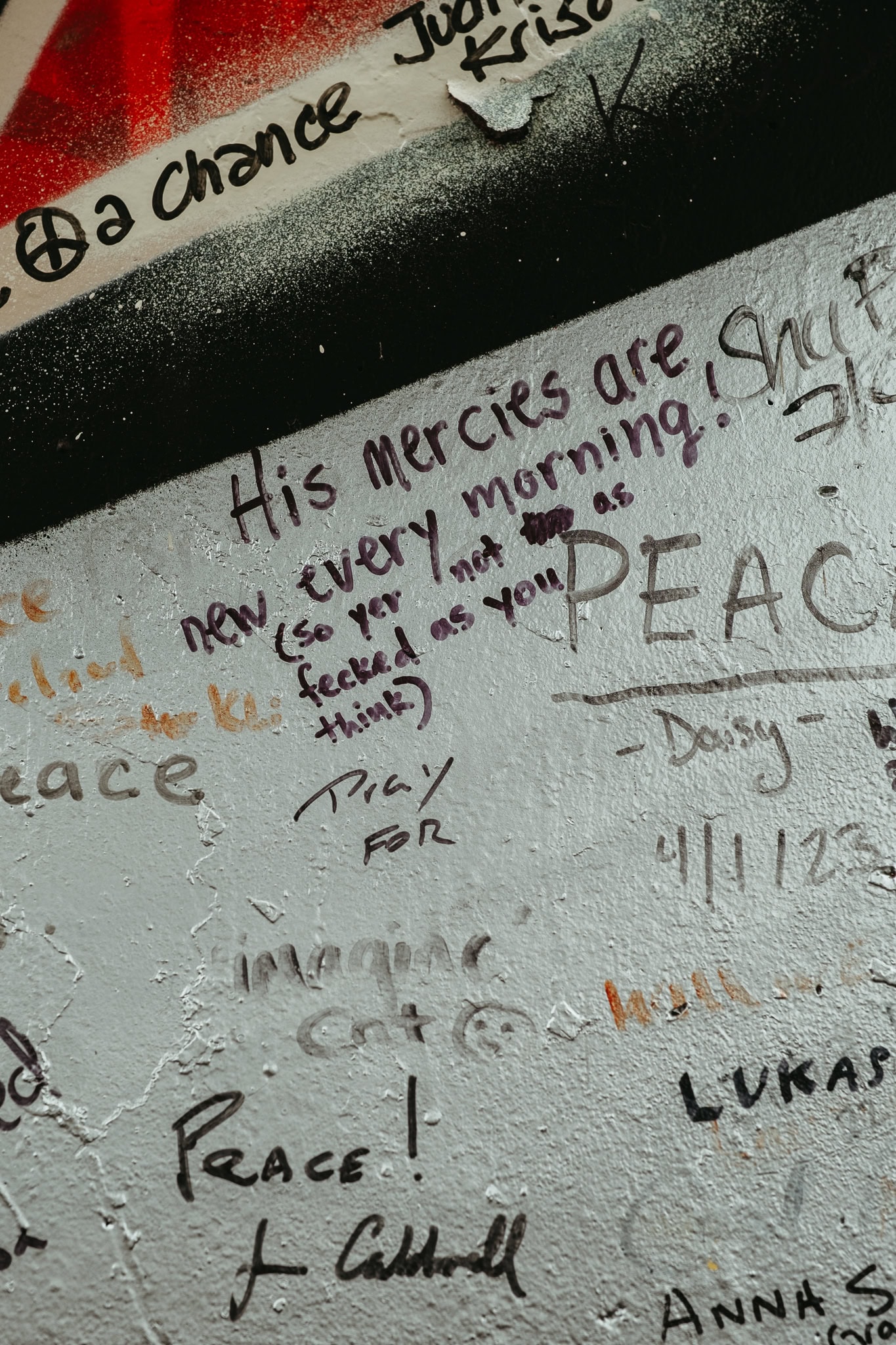
As is so often the case, the more I learn about Northern Ireland’s political situation, the less I know what to say about it. Personally, I hope for lasting peace. I hope for a democratic resolution and self-determination for the people of Northern Ireland, and Ireland generally. And I hope my unionist guide, who warned that “we’re heading for disaster,” was wrong.
The Conflicting Stories Walking Tour is a wonderful, difficult, and crucial experience. Frankly, I think it should be your top priority in Belfast.
Check availability for the Conflicting Stories Walking Tour here:
Dinner at Darcy’s
From the tour, head back toward Belfast’s city center and make your way to Darcy’s for dinner.
Darcy’s specializes in traditional Irish food, and served up the best roast I had in Northern Ireland.
Cathedral Quarter
Spend the rest of your evening exploring the historic and charming Cathedral Quarter. Though it gets its name from its proximity to Saint Anne’s Cathedral, Cathedral Quarter is best known for its pubs and nightlife.
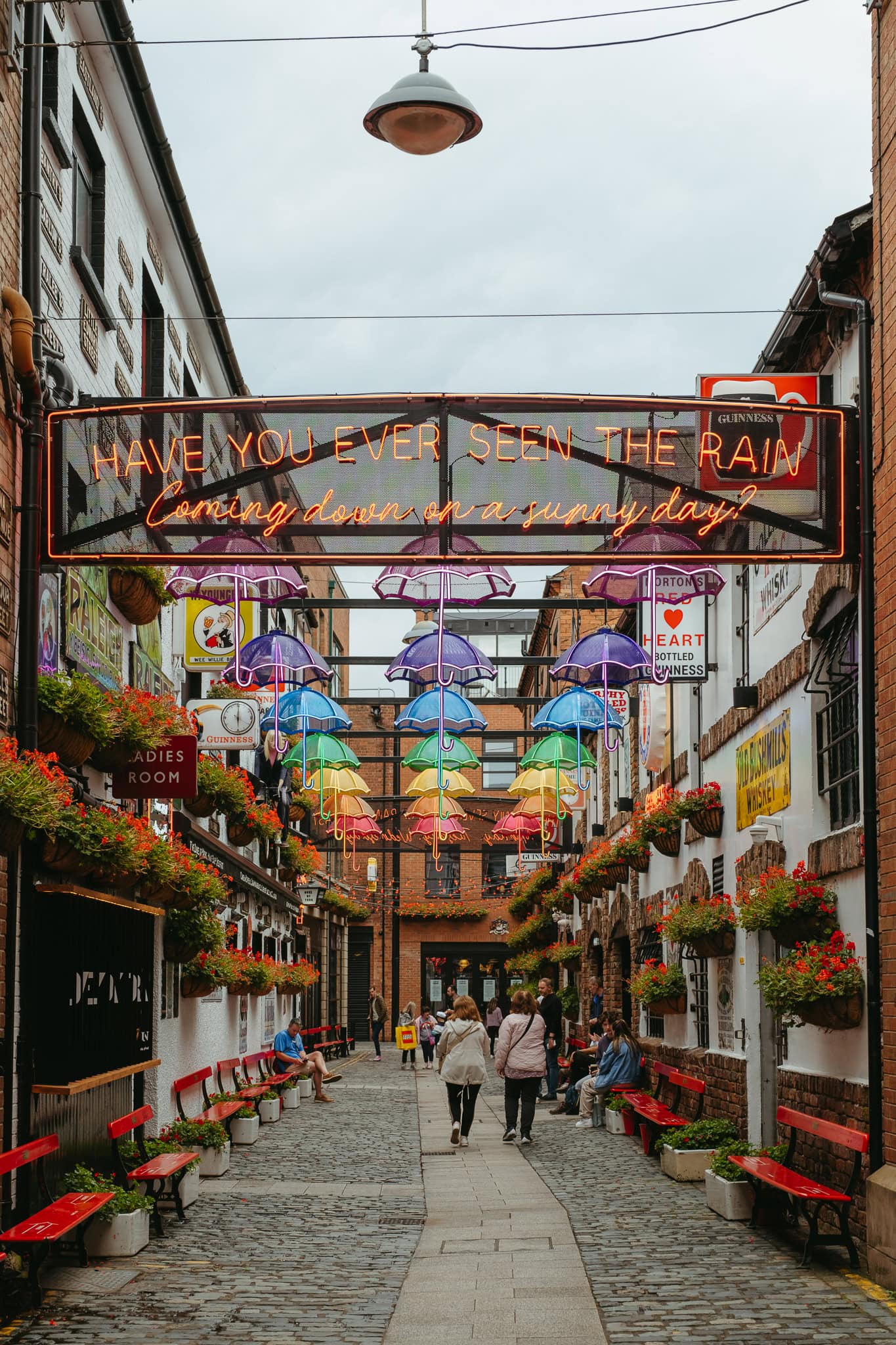
If you’re not sure where to start, check out Commercial Court — a small pedestrian-only street that’s famous for its rows of brightly lit, rainbow-colored umbrellas hanging overhead.
Personally, I’m not usually a huge fan of super Instagram-friendly spots like Commercial Court, which tend to fill up with a lot of tourists posing for photos. (No disrespect to them — it’s just not my vibe!)
But in this case, the pubs that line the street are worth visiting, if nothing else. The Duke of York pub, specifically, is one of Belfast’s best-known spots — though I preferred the casual glamour of The Dark Horse. (Heads up, though, that The Dark Horse isn’t open most evenings.)
If you have more time…
If you have more than one day to spend in Belfast, or find yourself with some time to kill, here are some other things to consider doing.
Crumlin Road Gaol
Crumlin Road Gaol is a historic building that operated as a prison for 150 years. During the Troubles, it housed famous prisoners like Bobby Sands and Martin McGuinness, but there’s plenty more history to be found there.
“The Crum,” as it’s known, was closed as a prison in 1996 and today serves as a sort of museum you can visit. Find more information here.
Ulster Museum
Northern Ireland’s largest museum, the Ulster Museum, has a wide-ranging array of exhibits on art, culture, local history, botany, zoology, and more — it’s truly full of information on Northern Ireland, and an excellent use of at least half a day in Belfast.
Entry to the Ulster Museum is free! Find information about opening hours here.
Botanic Gardens
If you’re already visiting the Ulster Museum, be sure to give yourself some time to explore the Botanic Gardens — where the museum is located.
In addition to the Ulster Museum, the Botanic Gardens are best-known for the Palm House, a large iron and glass building that houses tropical plants.
Where to Stay in Belfast
During my visit to Belfast, I stayed in a private room at the International Youth Hostel. It was fine — certainly nothing special, with bare bones furnishings, but it was affordable and I was able to walk everywhere I went. I’d recommend it for budget travelers, but not for anyone who prioritizes comfortable lodging while traveling.
For other lodging option in Belfast, consider these hotels:
BUDGET | Amica Guesthouse is a bit outside of the city center, but it’s otherwise a great price for a lovely room.
COMFORT | The lovely Titanic Hotel is located right beside Titanic Belfast.
LUXURY | Don’t miss the beautiful Fitzwilliam Hotel, which is conveniently located on one of Belfast’s most notable streets.
Belfast One-Day Itinerary: Interactive Map
Below is a map with the locations included in this itinerary. To use this map during your own trip to Belfast, click the star next to the map’s name (which saves the map to your account). You can then find and use the map from your Google Maps app by going to “Saved,” then “Maps.”
Final Thoughts
Candidly, Belfast isn’t my favorite city in Northern Ireland — that would be Derry — but it’s well worth a visit nonetheless.
And I personally think that one day is just enough time to get a taste of the best of Belfast.
If you have more questions about visiting Belfast or Northern Ireland, don’t hesitate to leave a comment or shoot me a message! I’d love to discuss.
More Information About Northern Ireland
ITINERARY | Here’s your perfect itinerary for one delightful week in Northern Ireland.
GETTING AROUND | It’s refreshingly easy and inexpensive to travel Northern Ireland without renting a car. Here’s how.
COST OF TRAVEL | Find out exactly how much I spent for 10 days of travel in Northern Ireland.
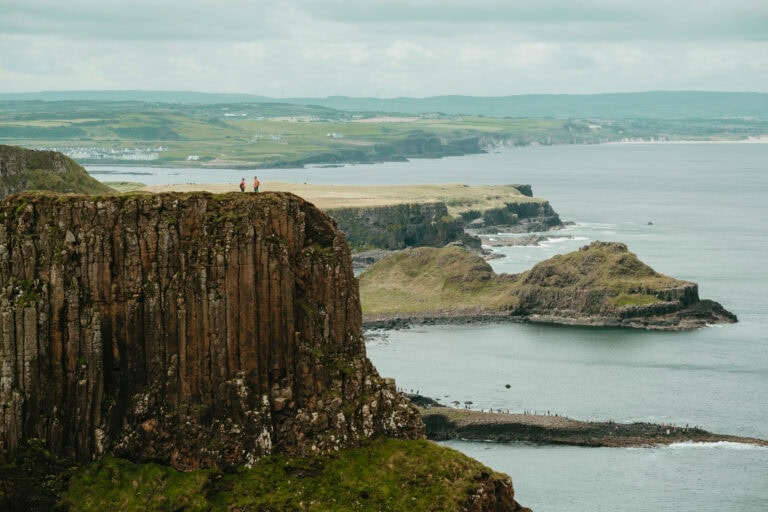
THE COAST | Learn all about some of my favorite things to do along the coast of Northern Ireland, including exploring Giant’s Causeway, hiking the Causeway Coast Way trail, and taking a day trip to Rathlin Island.
DERRY | Read about how to spend two days in delightful Derry.
pin this post