

How to Walk the Camino de Santiago from Sarria
If you’ve heard of the Camino de Santiago, you may know it as a lengthy walk across northern Spain. But that’s only one version of the Camino!
In truth, the Camino is many routes, all heading toward the city of Santiago de Compostela in northwest Spain. Each year, several hundred thousand people walk one of these routes and earn a “compostela” in Santiago — a certificate proclaiming that they completed the Camino.
The most popular Camino route is the Camino Frances, which is about 500 miles (or 800 kilometers) beginning in France. But if you only have a few days to walk the Camino, and you still want to earn a compostela, there’s a great option for you: start your Camino in the town of Sarria, about 116 kilometers from Santiago de Compostela.
And lucky for you, I have personal experience guiding others in walking the Camino from Sarria! While I walked the full Camino Frances, my mother and sister met me in Sarria and walked the rest of the Camino with me from there. With this experience under my belt, I can tell you whether it makes sense to start your Camino in Sarria, how much it costs to walk from Sarria, how to pack for this type of Camino, other things you should consider if you start your Camino in Sarria, and more.
Read on to learn everything you need to know about how to walk the Camino de Santiago from Sarria!
Want to read more about the Camino?
Find my complete travel guide for the Camino de Santiago here.
This post contains affiliate links. If you make a purchase or a booking through one of these links, I may receive a small commission at no extra cost to you. Thanks for supporting In Old Cities in this way!
Whether to Start Your Camino in Sarria
Walking the Camino from Sarria is not the right choice for everyone. Here’s what to ask yourself when deciding whether it’s the right choice for YOU:
- How much time do I have to walk the Camino?
- Do I care about earning a compostela?
- Do I care about the experience of walking into Santiago de Compostela?
First of all, if you only have about five days to walk, starting your Camino in Sarria might be the right choice for you. Actually, starting in Sarria is a really great option for people who have 7 to 10 days available for a trip: that’s enough time to travel to Sarria, walk to Santiago, spend 1 or more days hanging out in Santiago or another city in Spain, and return home.
But the second and third questions are just as important.
Here’s why: in my personal opinion, while the stretch of the Camino from Sarria to Santiago de Compostela has plenty of beauty, it’s one of the least interesting parts of the Camino. It’s also the most crowded section of the Camino (more on that below).
So, if you only have a short time to walk the Camino, I would not necessarily recommend that you choose Sarria to Santiago. Even though the end might seem like the most obvious choice, you can walk any section of the Camino you want! (I met one family that’s walked the first two weeks of the Camino Frances three times now; they don’t care about compostelas and just like walking that part of the path!)
BUT…if you DO care about earning a compostela OR walking into Santiago de Compostela (or both!), then I do recommend that you start your Camino in Sarria. If you instead walk only the first five days of the Camino, you won’t be able to earn a compostela (since you have to arrive in Santiago to do that!).
How Long it Takes to Walk the Camino from Sarria
The journey from Sarria to Santiago is about 116 kilometers (or 72 miles).
Most people complete this in five days of walking (or about 23 kilometers/14.4 miles per day). It’s possible to do it in just four days, but I wouldn’t recommend that unless you’re especially fit and you’re already accustomed to walking long distances multiple days in a row. You can also walk it in more than five days if you’d prefer to (or need to) go a little slower.
Later in this post, I’ll recommend a day-by-day itinerary for walking the Camino from Sarria in five days.
How Much it Costs to Walk the Camino from Sarria
The Camino can be a very inexpensive way to travel, if you want it to be. However, it is up to you how much luxury you choose, and therefore how much you spend on the Camino.
Please note that post-COVID inflation affected the Camino just like the rest of the world, and so prices you may see on blogs or other websites from Caminos before COVID are likely to be outdated! (I walked my Camino in 2023.)
Lodging
Lodging is one of the easiest expenses to control on your Camino. There are several different types of lodging for pilgrims along the Camino, and they vary in price. It is totally up to you whether you stay in less expensive or more expensive lodging. In order from least expensive to most expensive, here are your most common options:
- Municipal albergues. These albergues (hostels for pilgrims) are generally owned and operated by the towns where they are located. They are often bare bones, in terms of services and quality. Some have kitchens where you can cook your own meals, if you prefer. Typically, beds in municipal albergues cannot be booked in advance. You can expect a bed in a municipal albergue to cost between €8 and €10, give or take a couple of euros. (Before COVID, municipal albergues often cost as little as €5 per night, but that is unusual now.) Beds in municipal albergues are essentially always in dorm rooms with multiple bunk beds.
- Private albergues. These albergues tend to be nicer than municipal albergues (no guarantees, though), but what that means can vary wildly. I stayed in some extremely nice private albergues, and some that were just okay (or worse). Sometimes, for an additional charge, they offer communal meals, which are a nice way to meet other pilgrims. Private albergues typically cost between €12 and €18 (again, give or take a few euros) for a bed in a dorm room. Some private albergues do offer private rooms, which typically cost approximately €35 to €45 for rooms that hold 1 or 2 people (private rooms for 3 or 4 people, which are sometimes available, will cost more). If you are traveling with another person, getting private rooms might be nearly as cost-effective as staying in dorm rooms. Many private albergues allow you to book in advance, either on a site like booking.com, on the albergue’s own website, or through WhatsApp (you will need to look up the albergue’s phone number to do this).
- Pensions. Pensions are guests houses or small hotels with exclusively private rooms. They are not only for pilgrims, but in some of the towns between Sarria and Santiago de Compostela, it is likely that many (or most, or even all) of the people staying in a pension are pilgrims. Rooms in pensions typically cost more than private rooms in albergues — between €40 and €50 or so (more if there are 3 or more beds).
Some towns on the Camino have other types of lodging as well, including regular hostels (for all travelers, not just pilgrims) and traditional hotels, including chain hotels. Prices for hotel rooms vary greatly, depending on the quality of the hotel. If you have a large budget, you might even consider splurging on a room at the Parador to celebrate the end of your Camino in Santiago.
In summary, you can reasonably expect six nights of lodging on the Camino (including one night in Sarria and one night in Santiago de Compostela) to cost somewhere between €50 and €200 per person, roughly. (If you are a solo walker staying only in private rooms, expect to pay at least this much.)
Food
Food is not expensive on the Camino, though like lodging, it depends on your choices.
A typical cafe breakfast on the Camino — coffee plus a pastry or tortilla (a Spanish egg dish) — often costs between €3 and €5 or so. If you also get any fruit or juice, you can expect to pay a little more.
For lunch, it’s not unusual to pay between €5 and €8 for a bocadillo (sandwich) and a drink. If you choose something else, like a cooked meal, you might pay between €10 and €15.
Prices for dinner vary wildly depending on your choices. Many restaurants offer a pilgrim’s menu (a multi-course menu with a few options for each course), which typically costs between €12 and €17. (Pilgrims’ menus are often available for lunch as well.) Similar prices are not unusual for other types of restaurant meals, though you may spend a bit less if you order just one course.
If you purchase any drinks at local bars, you can expect to pay a few euros for a glass of wine, mixed drink, or beer.
Note as well that most towns along the Camino have small grocery stores or markets where you can purchase food and assemble (or cook) your own meals, which can be considerably cheaper. Indeed, if you stay in albergues with kitchens, and join together with other pilgrims to cook a communal meal, it is easy to spend just €2-3 per person on dinner.
In short, if you are on a tight budget and are willing to get much of your food from supermarkets and other local stores (rather than cafes and restaurants), it is possible to spend perhaps €10-15 per day on food. If you instead buy most or all of your food from cafes and restaurants, you can expect to spend closer to €25-30 per day.


Other Expenses
Pilgrims do not typically have too many expenses other than lodging and food. Your most likely expenses are:
- Laundry: All albergues along the Camino have places for pilgrims to wash their clothes — either in machines, or by hand, or both. For machines, albergues typically charge about €5 per load (so it is wise to join up with other pilgrims and share the machine and thus the costs). If you instead wash your clothes by hand, that is free (but bring travel detergent with you, as some albergues do not provide soap). Virtually all albergues have clotheslines, drying racks, or somewhere else for pilgrims to hang their wet clothing to dry.
- Medical supplies: If you find yourself needing any medical supplies you did not pack, you will need to purchase them from pharmacies along the way. This may be less likely for pilgrims who start in Sarria and therefore are walking for only a few days, but if — for example — you need to purchase any Compeed (blister products), you can expect to pay about €7-10 (depending on the size and type of pack you choose).
Total Costs
In summary, you can reasonably expect walking the Camino from Sarria to Santiago de Compostela to cost between €150 and €400 (rounding up a bit to provide a budgetary buffer on both ends), depending on your choices. If you want to spend less, that is possible to do, and it is of course possible to spend more as well.
Keep in mind that if you stay in Santiago or any other Spanish city for any additional nights after you complete the Camino, that will increase your costs. Additionally, be sure to factor in the costs of reaching Sarria and then returning to your home at the end of your trip. (I have not estimated these here because they will vary wildly depending on where you live.) Of course, if you need to purchase any equipment to walk the Camino, that will also increase your costs.
Personally, I spent €314 to walk from Sarria to Santiago de Compostela (not including my transportation costs to reach Sarria or to leave Santiago). Broken down, here were my costs:
- Lodging: €158 for six nights in total, or €26.33 per night. This includes one night in Sarria before walking this final stretch, and one night spent in Santiago de Compostela after finishing the Camino. Three of these nights, my mother, sister and I stayed in private rooms in albergues (we also spent one night in an albergue dorm room, one night in a pension, and one night in a vacation rental apartment in Santiago).
- Food: €151, or just over €30 per day for five days of walking. We ate exclusively at cafes and restaurants, and did not cook any of our meals. Additionally, I drank alcohol most days, which increased my costs.
- Additional expenses: €5 (I bought a small souvenir in Santiago de Compostela).
What to Pack for Walking the Camino from Sarria
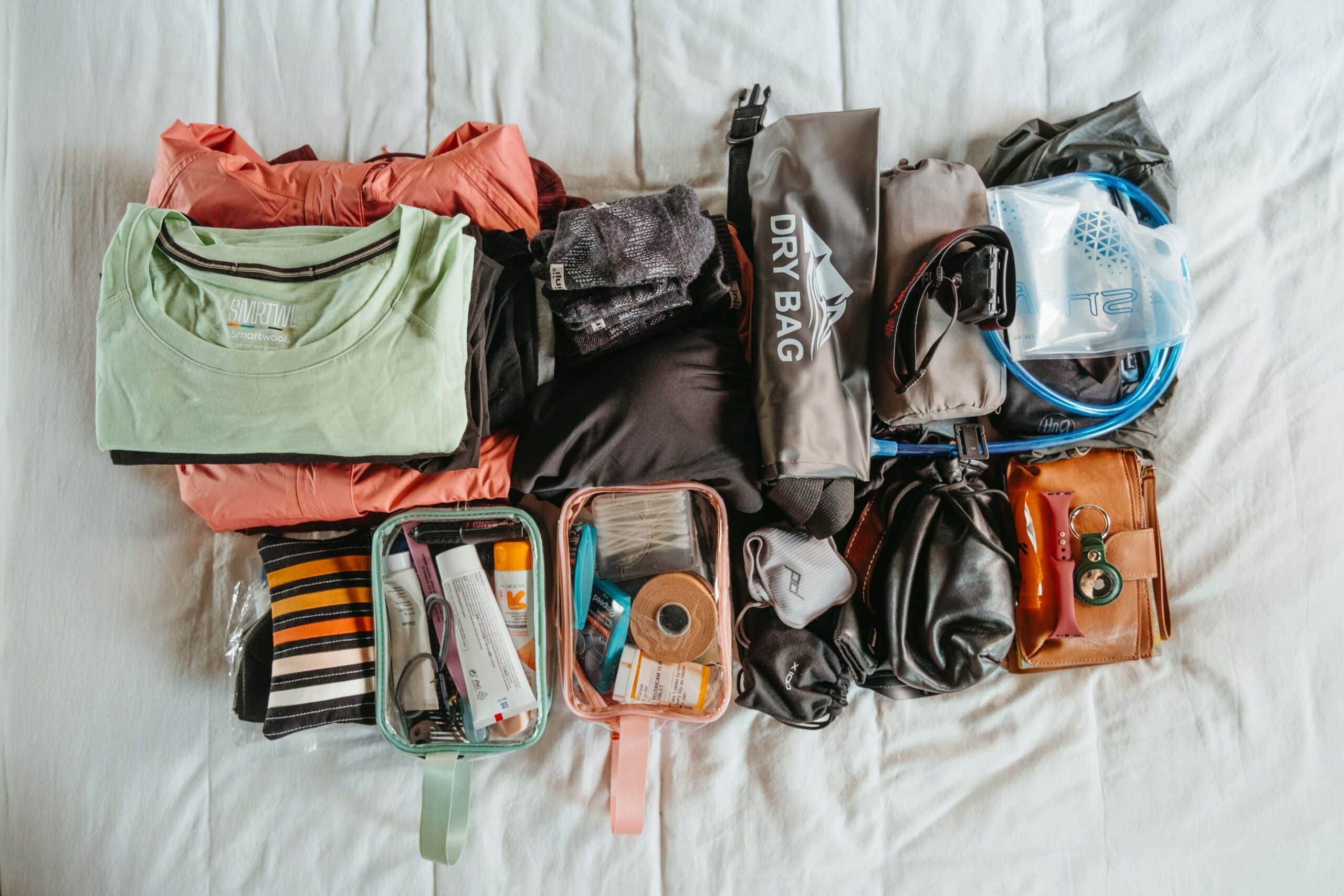
Your backpack and everything inside it should be as light as possible in other to prevent injuries and generally make your Camino easier. The common wisdom is that your pack and all its contents should weigh no more than 10% of your total body weight (not counting food and water).
For what it’s worth, my pack weighed about 20 pounds when I started (it was lighter by the end, as I ditched things along the way). This was quite a bit heavier than the recommended amount, largely because I chose to carry a few items (like my camera and Kindle) that were not strictly necessary, but enhanced my experience enough to be worth the extra weight.
Now, if you’re thinking that you might be able to pack less for a five-day Camino than for a longer Camino…bad news. Unfortunately, you need to pack essentially the same stuff whether you are walking the Camino for five days or thirty-five days. This is because you should be packing as little as possible for any Camino, no matter how long!
When my mom and sister joined me in Sarria to walk five days of the Camino, I had them pack pretty much exactly the same stuff I packed for my thirty-four days of walking. Read this full post about packing for the Camino to get all the details about what I packed!
However, there are a few things I packed that you MIGHT be able to leave behind if you’re starting your Camino in Sarria. They are:
- Menstrual supplies. If you have a (reasonably) regular period, and no reason to believe that your period will arrive between Sarria and Santiago, you can probably leave menstrual supplies off your packing list.
- Rain gear. This one is iffy — how do you feel about gambling? I would never walk the Camino (for any length) without a rain cover for my backpack (though many hiking backpacks come with built-in rain covers these days anyway). But if there’s zero rain in the forecast for your walk from Sarria to Santiago — and you’re okay with the possibility of getting wet if it does rain anyway — it might not be crazy not to carry a poncho or rain jacket. Keep in mind, though, that Galicia (the region of Spain you will be walking through) tends to be rainier than some other regions. Really, it just depends on how comfortable you are with getting wet!
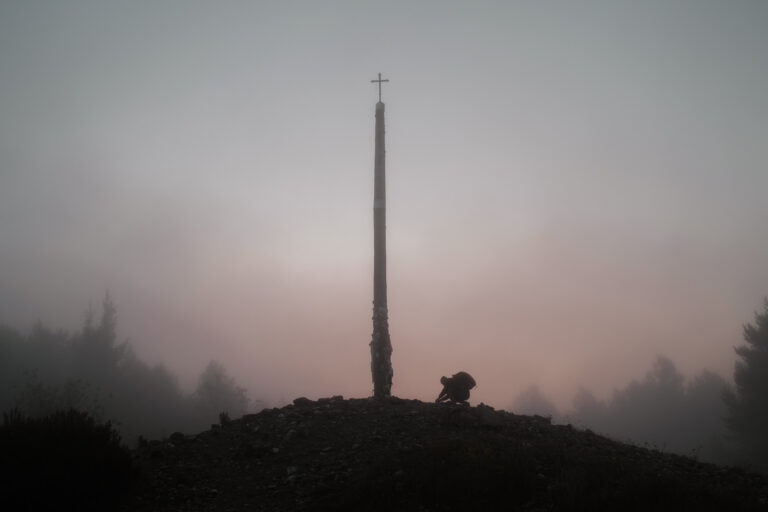
- Stone. As you can read in my full packing post, pilgrims who walk the Camino Frances typically carry a stone to leave behind at a certain spot. However, that spot is before Sarria, so no need to carry a stone if you are starting there!
Here is my recommended packing list for the Camino (in printable checklist form!):
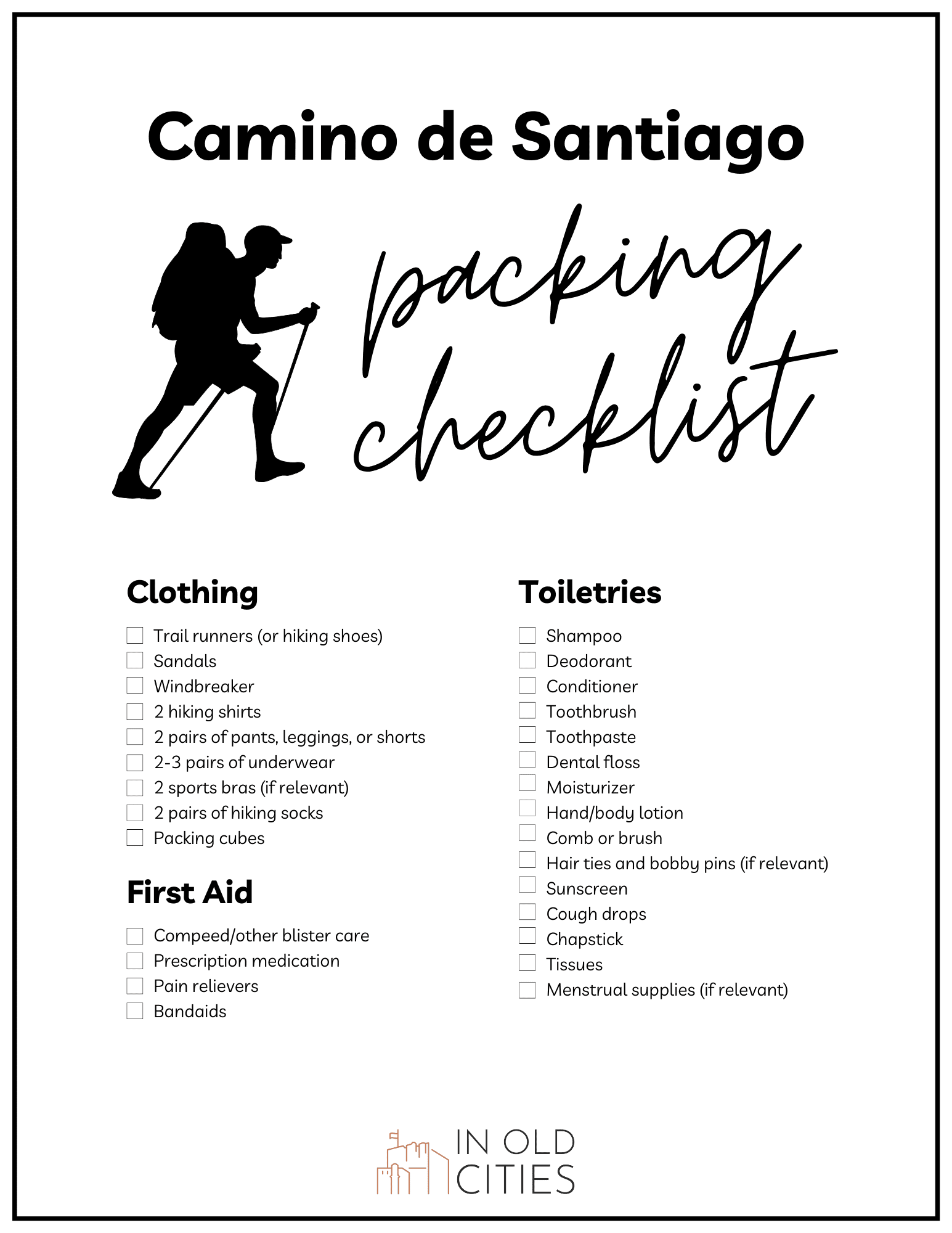
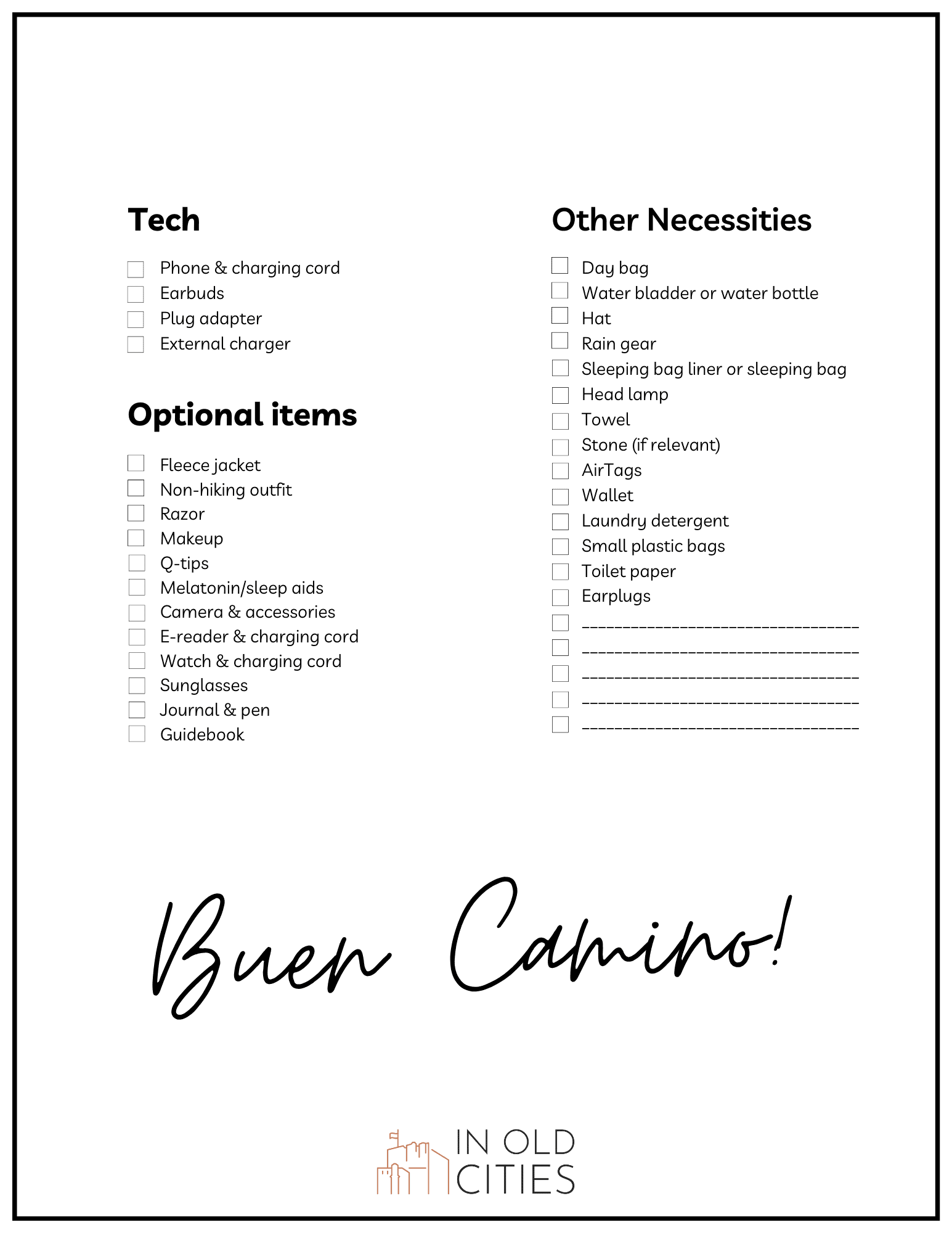
Be sure to read my full post about what to pack for the Camino to get my specific thoughts on what you truly do and do not need!
Other Things to Know About Walking the Camino from Sarria
Here are a few more important things you should know about walking the Camino from Sarria:
This section of the Camino feels very different than the rest of the Camino Frances.
Because so many people start walking the Camino in Sarria, the trail tends to be much busier between Sarria and Santiago than on the rest of the Camino Frances.
Most notably, it is very common to see large organized groups — especially huge groups of schoolchildren — walking the Camino after Sarria.
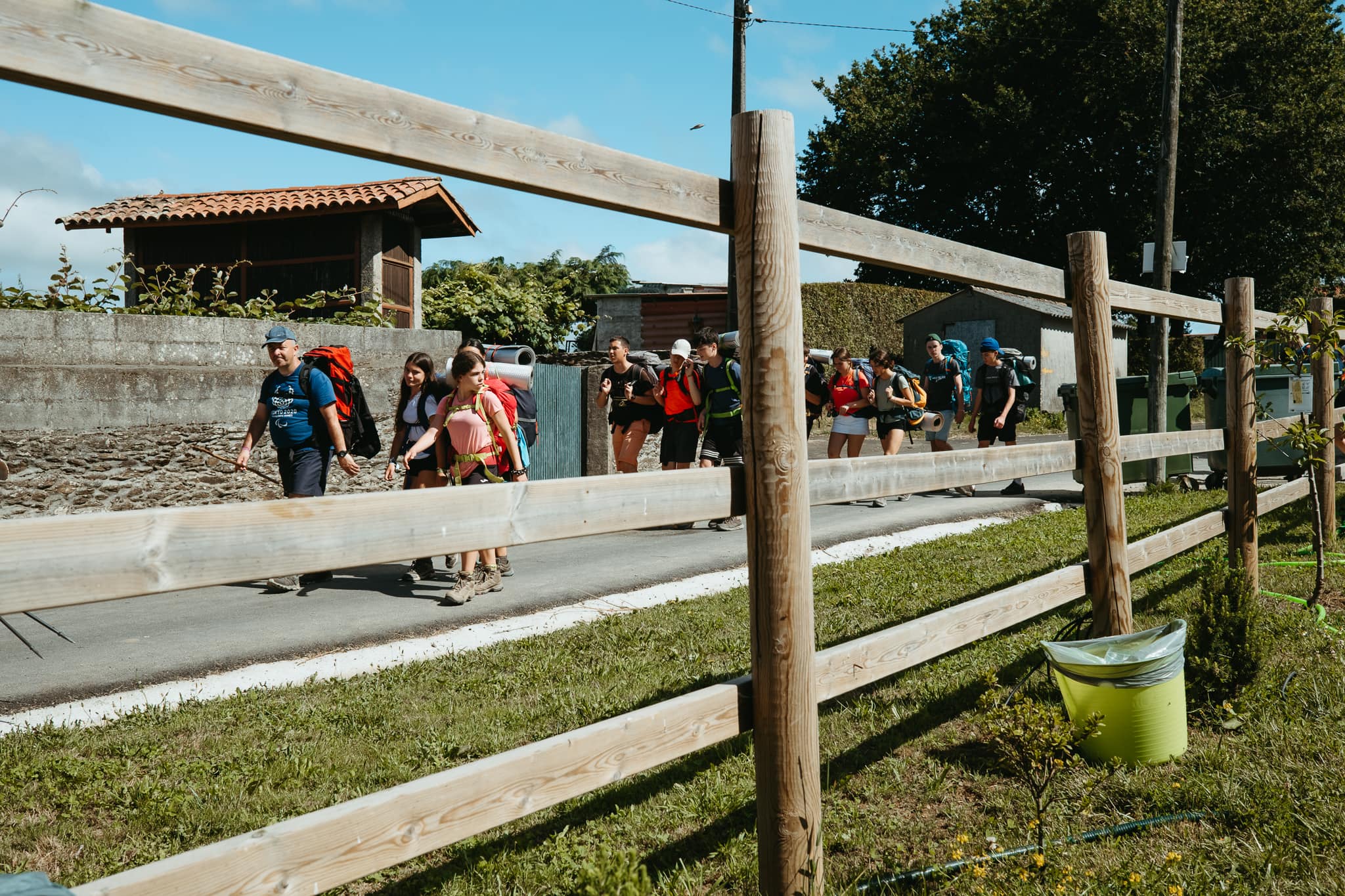
The Camino is for everyone, so this is not a problem. But set your expectations accordingly!
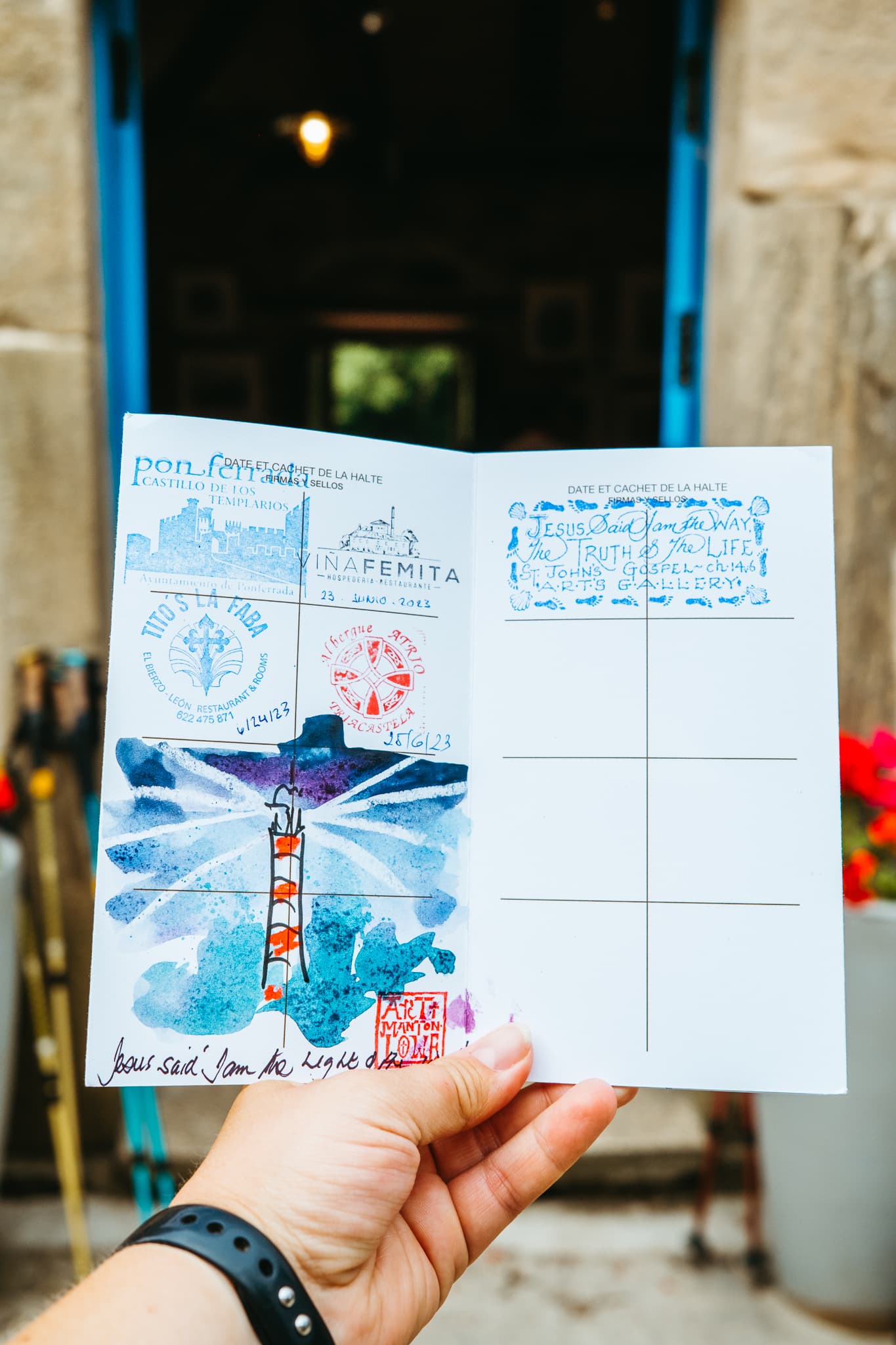
You need to get a credencial, and you need to get it stamped twice a day.
If you want to earn a compostela in Santiago, or stay in certain pilgrims’ albergues, you will need to get a credencial and carry it with you.
A credencial is a sort of pilgrims’ passport. You get it stamped as you walk — usually each place you sleep will stamp your credencial, and you can also get stamps at cafes and restaurants, stores, some churches, and many other places along the Camino. It’s fun to collect unique stamps as you go!
If you are starting your Camino in Sarria, you need to get at least two stamps per day to prove that you actually walked (and did not just, say, take the bus each day). It’s enough to get a stamp at your albergue and one cafe each day (though you can certainly get more).
You can order a credencial (from any number of places online) to your home before you leave for your Camino and take it with you, or you can pick one up in Sarria at one of the town’s churches or at some of the albergues.
FYI, there is no single official issuer of credencial; many different towns and entities and places provide them, so do not worry about getting the “right” kind of credencial.
If you can’t carry your bag the whole time (or at all), that’s okay.
While it’s true that many pilgrims carry their backpacks with everything they’ve brought on the Camino, there are options if this is not possible for you (or you simply don’t want to).
The Camino has a number of services that will transport your pack from your starting point for the day to the albergue you’ll be staying in that night. These services include, among others:
- El Camino con Correos (this is Spain’s postal service)
- JacoTrans
- Caminofácil
Notably, you do NOT need to have your bag transported every single day, if you do not wish. Every albergue and hostel (and many hotels, as well) in towns along the Camino has special envelopes for luggage transfer services at their reception desks. If you decide you want to have your bag transported the next day, perhaps because it’s a particularly difficult hiking day or you’re nursing an injury, you can do this easily using the envelopes.
All you need to do is put the daily fee in the envelope in cash (in 2023, this was usually €6 per day), fill out your name, contact information, and destination on the appropriate lines on the envelope, then attach the envelope to the bag you need to have transported. Then leave your bag near the door of the albergue or hostel on your way out.
The transport service will come collect your bag mid-morning and drop it off in the place you plan to stay that night. (Note that in order to take advantage of these services, you need to know in advance where you will be stopping for the day.)
The Camino is not a wilderness hike.
No, this is not like the Appalachian Trail, or the Pacific Coast Trail, or many other backpacking thru-hikes you may have heard about. The Camino de Santiago (especially the very popular Camino Frances) is full of infrastructure, which means lots of small towns where you can stay in albergues (pilgrim hostels) or other lodging, eat at cafes, bars, and restaurants, and restock supplies. In other words, you will have access to a bed, a shower, and plenty of food each day. The Camino is also full of water fountains along the trail and many other opportunities to meet your needs.
And by the way, if you’re hoping to carry a tent and pitch it somewhere every night to save money (or just because you like to camp)…rethink that plan, as wild camping is illegal in Spain. Some albergues do allow people to pitch tents on their properties, but you will need to do some research in advance to figure out whether you can make that work for you.
It’s up to you whether to plan the details of your Camino in advance, or figure it out as you go.
While some pilgrims plan out their Caminos in great detail before they leave — booking lodging for each night and, perhaps, organizing daily luggage transport — others figure it out as they go, deciding where to stop for the day when they are tired and finding a bed at any albergue that looks good and has space.
You get to decide which approach is right for you! Even if you are a Type A travel planner (like me!), keep in mind that the Camino is not normal travel and it is a great opportunity to welcome some flexibility and serendipity. For this reason, I generally advise against planning your Camino in advance.
However, it’s also true that the Camino is more crowded from Sarria to Santiago, and so there is some wisdom in booking your lodging in advance for this particular walk — especially if you are not traveling alone and need to secure beds for multiple people.
For what it’s worth, before I left on my Camino, I created a rough itinerary (which I mostly, but not completely, stuck to). I did not book lodging in advance — EXCEPT the first few nights, and then the section from Sarria to Santiago, where I booked lodging in advance for each night. This is because I knew I would be walking that portion with my mom and sister, and wanted to make sure we would not struggle to find good places to stay together.
In retrospect, I think we all wished that I had not booked our lodging in advance, so we would have had more flexibility. There was one day, in particular — our longest day of walking — when we were a few miles away from our final destination and we walked through a cute little town with some albergues that looked quite nice. We were exhausted and would have loved to stop for the day, but we had a non-refundable reservation in the next town, so we had to keep going.
Also, while the Camino IS busier after Sarria, it turned out that we were not walking during an exceptionally busy time, and would have had no trouble finding beds without reservations.
Ultimately, there is no right answer here. It’s up to you!
No matter what you choose, Gronze.com is my favorite resource for finding albergues in every town along the Camino. Many places can be booked in advance on booking.com, while others can be booked only by calling or by messaging via WhatsApp.
And finally…when you arrive in Santiago, here’s how to get your compostela.
After you’ve arrived in Santiago, celebrated your accomplishment with your fellow pilgrims, and taken as many photos as you want in front of the cathedral (and, perhaps, attended pilgrims’ mass at noon), head to the pilgrim’s office here to get your compostela.
When you arrive at the office, volunteers will walk you through the process. It is largely digitized now and is very easy.
Note that you can register yourself as a pilgrim in advance of your Camino. This speeds up the process of receiving your compostela. However, it’s totally optional. My family and I did not do this, and we only spent perhaps an extra two minutes getting our compostelas (though it was not busy when we arrived).

How to Get to Sarria
Are you sold on walking the Camino from Sarria? Then here’s how to reach Sarria to begin your Camino.
The best way to get to Sarria, especially for pilgrims, is to take the train from another Spanish city. If you are departing from a place where you will need to fly into Spain, take a look at flight options into Barcelona, Madrid, and Santiago de Compostela. Each of these cities has an airport and good train routes to Sarria.
After you have selected your flight (if relevant), you can book your train ticket to Sarria at renfe.com. This is the official website of Spain’s train system. While you can book your train tickets at other websites as well, I always avoid booking with third-party sellers if at all possible. (If anything goes wrong, it is much easier to work with the servicer directly than to deal with a third-party seller.)
If possible, I recommend arriving in Sarria by mid afternoon so that you have time to settle in and pick up last-minute necessities (such as your credencial or walking sticks) before shops and churches close for the day.
Sarria to Santiago: A Suggested Itinerary
If you choose to walk the Camino from Sarria, you can structure your itinerary however you want. If you want to walk just 10 kilometers per day and really take your time getting to Santiago, you can do that. If you want to walk nearly 30 kilometers each day and finish in just four days, you can do that too!
That said, most people complete the walk from Sarria to Santiago de Compostela in five days. After walking this section myself, here is my recommended five-day itinerary for Sarria to Santiago.
| DAY | BEGIN | END | DISTANCE |
|---|---|---|---|
| 1 | Sarria | Portomarín | 22.6 km / 14.1 mi |
| 2 | Portomarín | Palas de Rei | 25.8 km / 16 mi |
| 3 | Palas de Rei | Ribadiso da Baixo | 25.8 km / 16 mi |
| 4 | Ribadiso da Baixo | O Pedrouzo | 22.2 km / 13.8 mi |
| 5 | O Pedrouzo | Santiago de Compostela | 20 km / 12.5 mi |
Read more about what to expect on each of these days of walking at my full Camino Frances itinerary.
Final Thoughts
If you have just a short period of time to walk the Camino, the Sarria to Santiago route might just be the right choice for you. And who knows — maybe it will even inspire you to get back out there and walk another, longer Camino some day.
Buen Camino!
More Information About the Camino
THE BASICS | Start with an introduction to the Camino de Santiago and 15 important things to know about the Camino, and read about a typical day on the Camino.
SAFETY | Find out what to know about safety on the Camino.
FOOD | From typical meals to costs, here’s everything to know about food on the Camino.
GO IT ALONE | Here’s what you need to know if you’re thinking about walking the Camino alone (like me!).
EXPENSES | Just how much does the Camino cost, anyway? Find out here.
GET READY TO GO | Here’s what to know about how long the Camino takes, how to plan for the Camino (or not!), and 9 helpful ways to prepare for the Camino.
ITINERARY | Want to walk the Camino Frances in about 34 days? Read my recommended itinerary.
PACKING GUIDE | Everything you need to know about what to pack (and not to pack!) for the Camino, plus a printable packing checklist.
CAMINO FRANCES | If you walk the Frances route, here are 10 incredible things you can expect to see — plus my own Camino photo diary.
PHOTOGRAPHY | A complete guide to taking great photos on the Camino de Santiago.
pin this post


The trouble is that the “Sarria Stroll” is now so over crowded it’s difficult to get as much out of it as you could 20 or even 10 years ago. Over 500,000 pilgrims gained a Compostela in 2025!
I always advise novice to walk the Camino Ingles from Ferrol (but they need to top it of with 25km in their home country) – it’s much more fun nowadays.
Whatever your choice Buen Camino!
The Camino Ingles is next on my list, I think! I’ve heard great things about it.