A Typical Day on the Camino de Santiago
While I was walking the Camino de Santiago, one of the things my friends, family, and followers most wanted to know was what a typical day was like.
Well: walk, eat, walk, eat, walk, eat, wash, talk, eat, sleep.
Okay, there’s a little more to it than that. But life on the Camino truly is quite simple — which is so much of its appeal. On any given day, little is on your plate other than walking, fueling your body to walk some more, and talking to people you meet along the way. It’s refreshing and fulfilling.
Here’s what a typical day on the Camino de Santiago is really like.
Want to read more about the Camino?
Find my complete travel guide for the Camino de Santiago here.

6 am: Wake up
Around 6 am, I wake up and pack my bag as quietly as possible.
Most nights, I sleep in a dorm room shared with several or several dozen other people, so I always do my best not to wake other pilgrims who are still sleeping. Sometimes this means taking my things out into the hallway and packing my backpack out there to minimize noise in the room.
(Pro tip: if the room is dark, use the red light setting on your head lamp — you’ll be able to see enough to gather your things, but it’s much less likely to disturb others in the room.)
If I know I have a particularly long day of walking ahead of me, or I expect the weather to be particularly hot, I wake up earlier — 5:30, or even 5 am. Conversely, if I plan to walk only a short distance, I might not get started until 7 am.
Once I have all my stuff together, I head out to the albergue’s entrance to retrieve my walking sticks and lace up my shoes (nearly every albergue requires pilgrims to leave those items at the door).
6:15 – 8 am: Walk
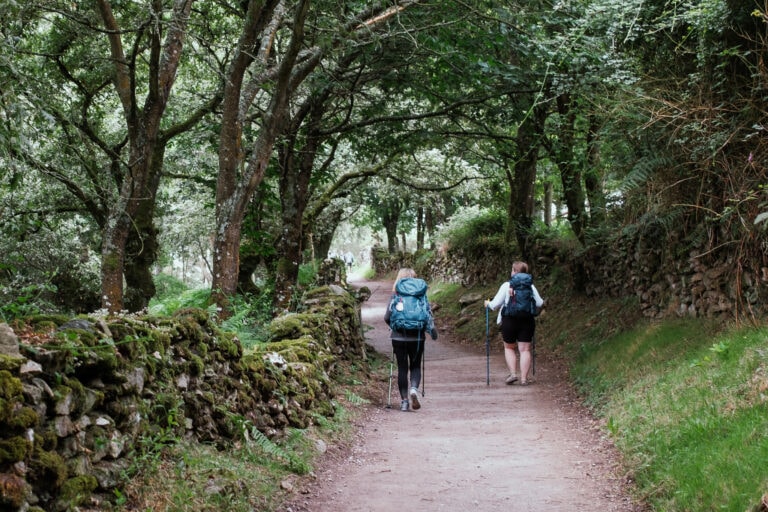
I step out the front door and start walking.
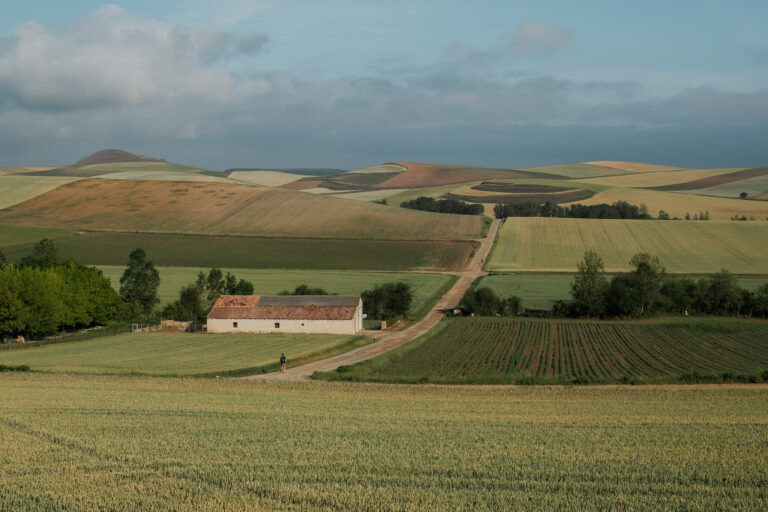
I love this time of day, when the world feels quiet and vast around me. Often, all I can hear is the sound of my shoes on the path and birds chirping in the trees. Sometimes, I get to watch the sun rise.
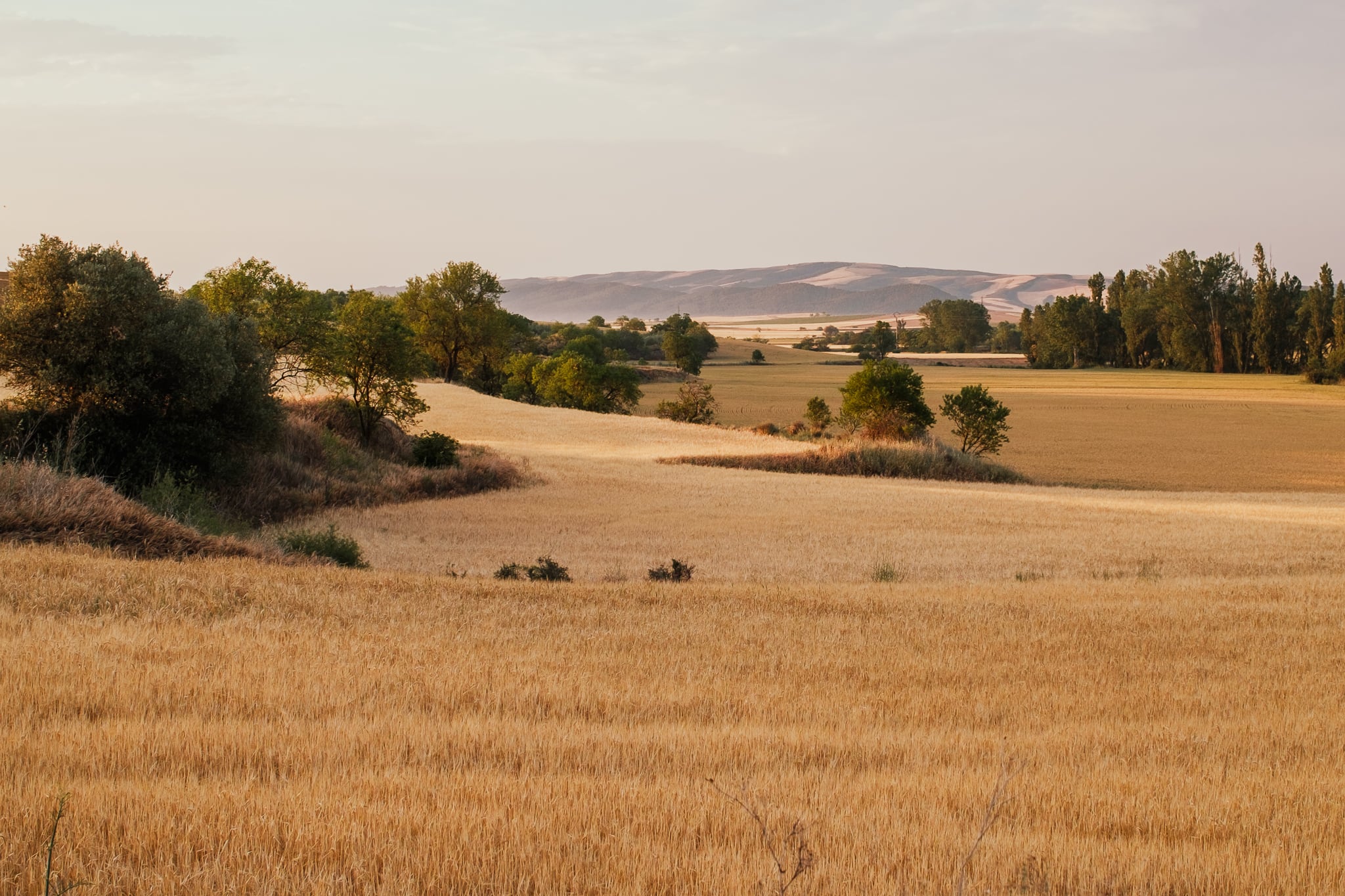
This is a matter of personal preference, but I like to walk the first section of my day in silence, without listening to music or podcasts or chatting with fellow pilgrims.
8 am: First breakfast
I stop in the first town with one or more open cafes and have breakfast. (Sometimes, I walk through other towns earlier, but they don’t have anything open yet.)
For this breakfast, I usually eat either a pastry or a slice of tortilla (a Spanish omelette, not the Mexican flatbread). If I’m lucky, the cafe will be willing to fry up some eggs instead. I often have a banana or apple as well, and I always have a cup of cafe con leche (coffee with milk). Sometimes, I buy a piece of fruit to take with me and eat later along the trail.
Typically, a number of other pilgrims also stop to eat at the same cafe, so I sit and eat my breakfast while chatting with several of them. It’s normal to see the same faces over and over again on the Camino, so they’re likely already my friends at this point.


8:30 – 11 am: Walk
I put on sunscreen, strap my bag back on, and start walking again.
At this point, I usually stick in my earbuds and start listening to music as I walk.
11 am: Second breakfast
By mid- to late-morning, I’m starting to get hungry again, so I stop for food. Often, I buy a bocadillo (a basic Spanish sandwich) and eat half of it now, saving the rest to eat later.
11:30 – 1:30 pm: Walk
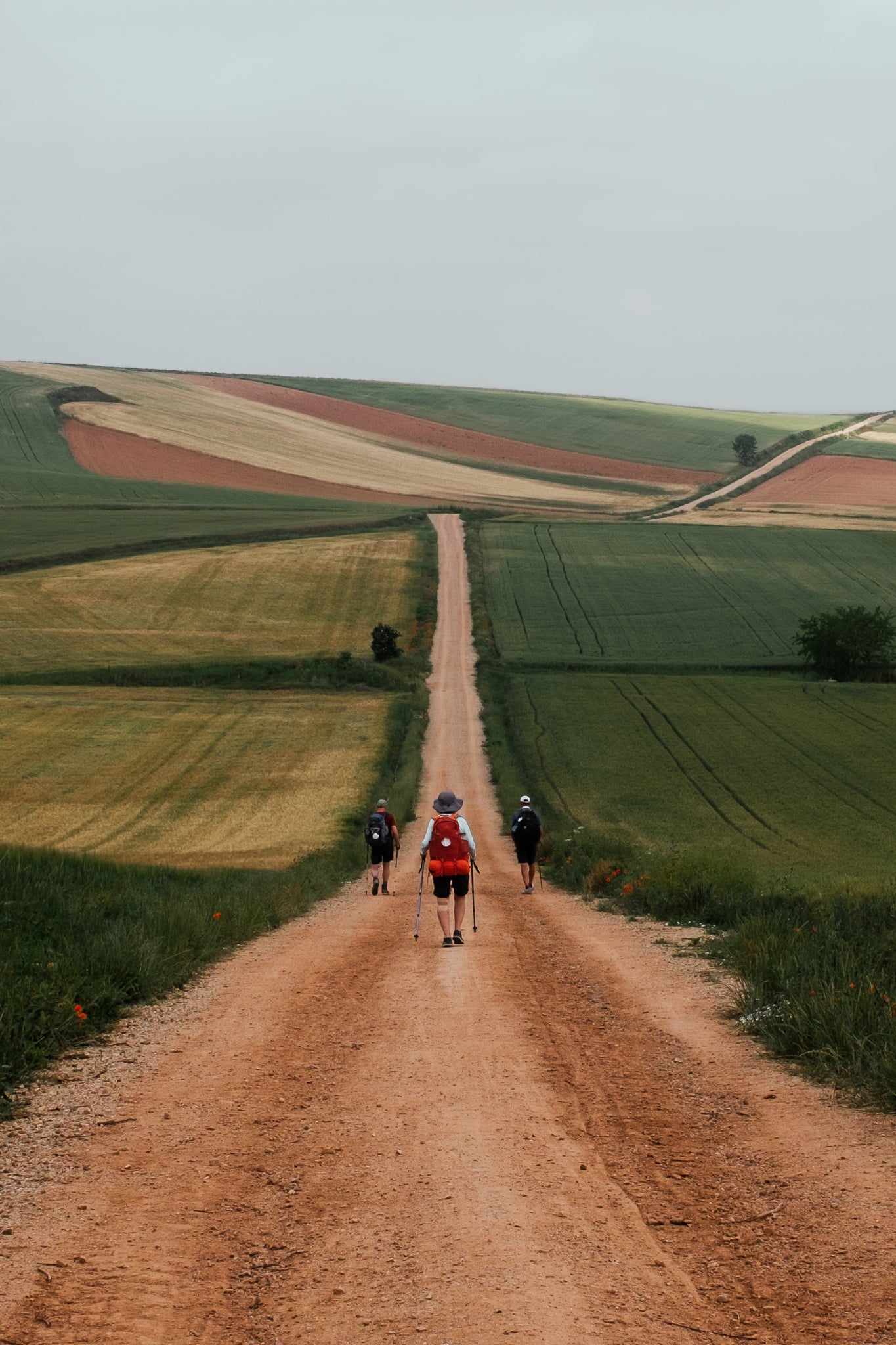
I continue on the trail to finish the last stretch of my walking day.
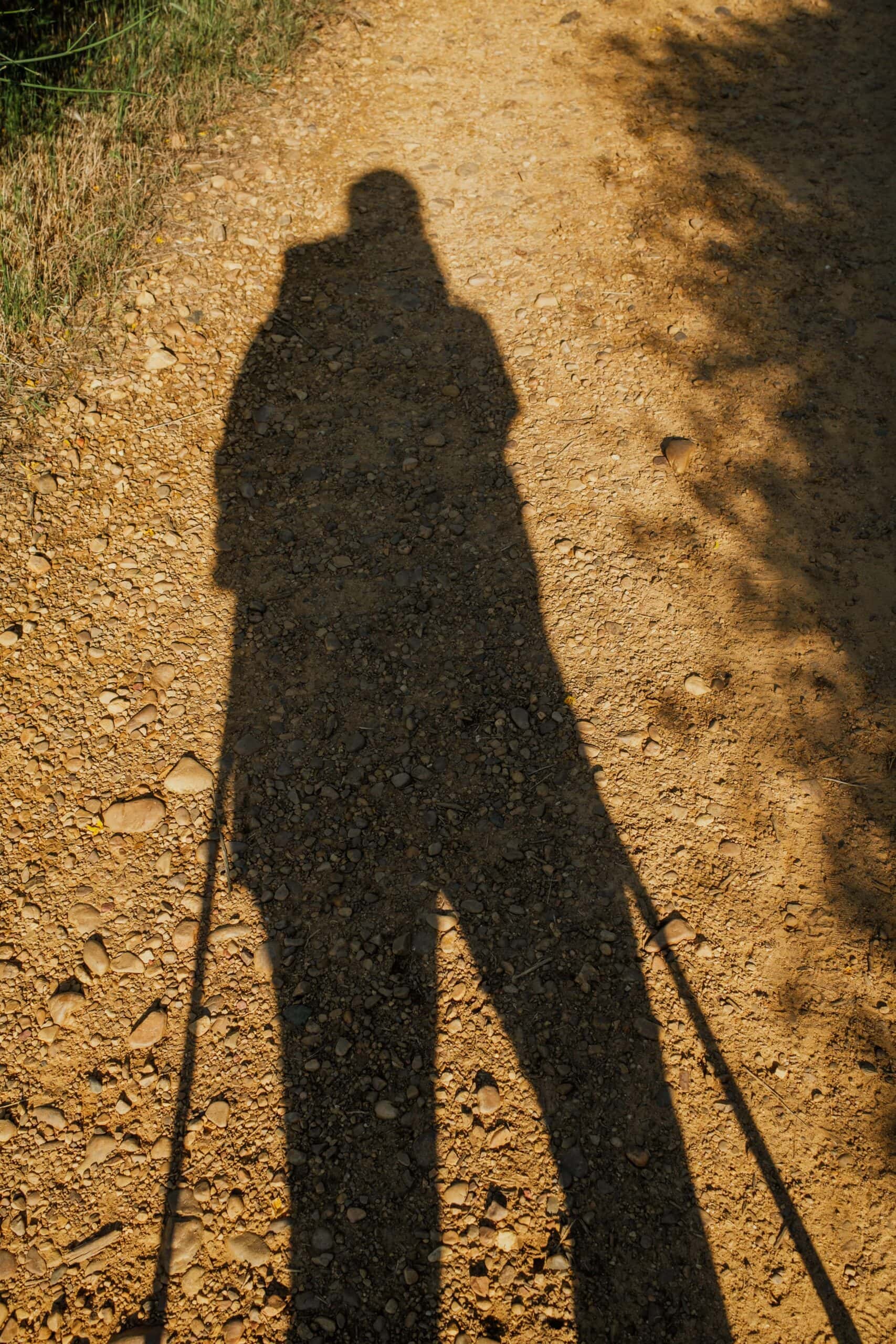
At this point, my legs might be dragging, and I’m definitely quite hot and sweaty, and I’m ready to reach my destination. If I was previously listening to music, I might switch to a podcast or an audiobook — which are more effective at distracting me from my tiredness.
1:30 pm: Check in at my destination
Finally, I reach the town where I plan to stop for the night and find my albergue (or an albergue, if I didn’t reserve a bed anywhere in advance).
I check in, select a bed (sometimes it’s assigned by the front desk), and make my bed. (Typically, the albergue provides a fitted sheet and pillowcase, and I also carry a sleeping bag liner.)
2 pm: Shower
I shower and put on my clean outfit. (I am walking the Camino with two shirts, two pairs of leggings, and one hiking skirt.)
After I clean myself, it’s time to clean my clothes. Just about every albergue will have a few sinks intended for pilgrims to hand wash their clothing, plus some lines and clothespins where clothes can air dry. Some albergues also have washing machines and dryers, but these cost money and it adds up quickly, so I almost always hand wash my clothes.
3 pm: Late lunch with friends
Often, I will message friends that are staying in the same town for the night and arrange to meet them at a bar or cafe in town, where we will enjoy some food and drinks for the rest of the afternoon.
I’m especially fond of the tinto de verano, a sort of sangria alternative that’s made of red wine and (usually) lemon soda.
4:30 – 7 pm: Relax
Until dinner, I do…whatever I’m in the mood for!
Typically, it’s one or more of these things:
- Nap
- Edit photos and videos
- Hang out with friends some more
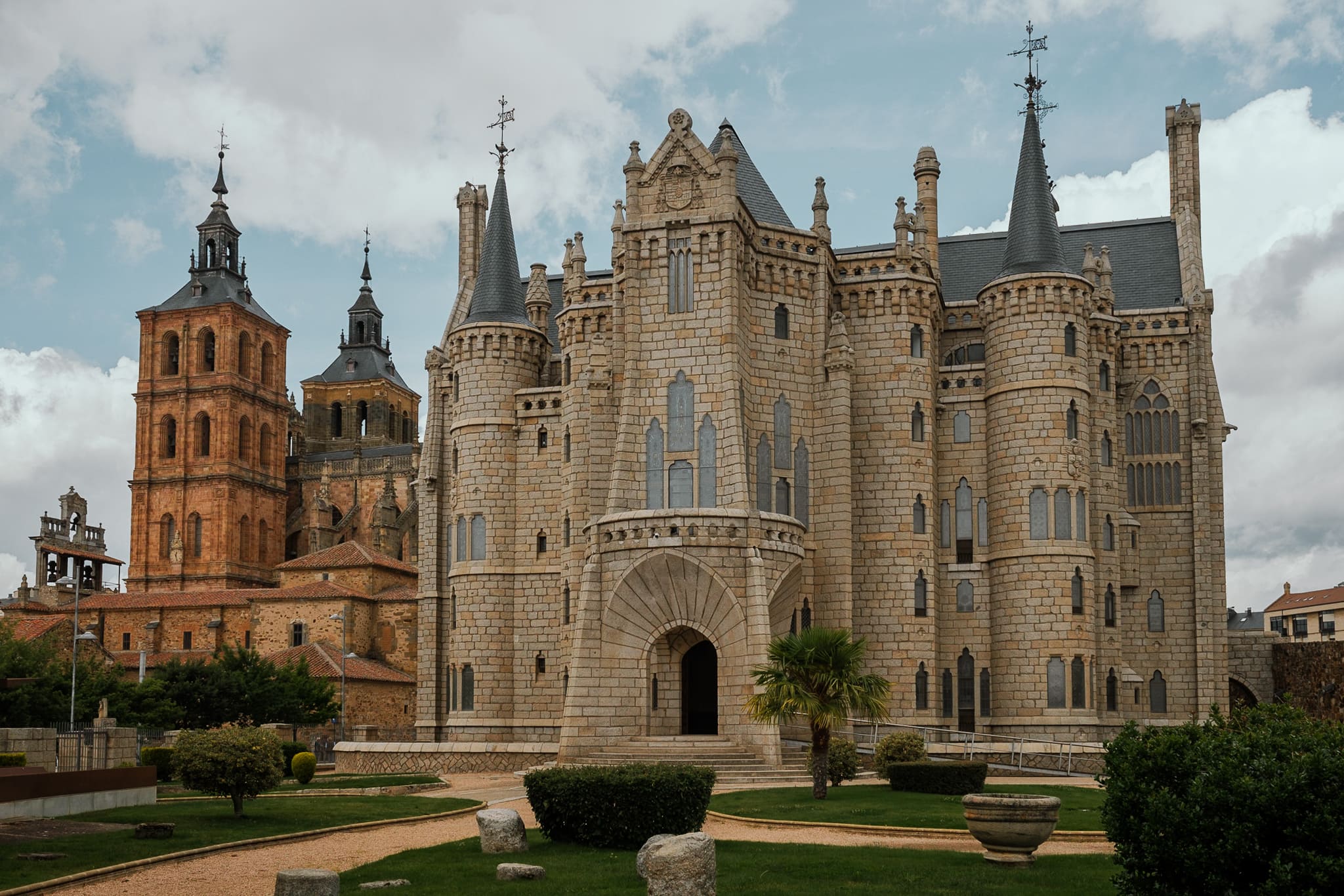
- Sightsee in town
- Write in my journal
- Read a book in my albergue
- Plan for the next day

7 pm: Dinner
Around 7 pm, I have dinner.
If my albergue is offering a communal meal, I always eat that. It’s often better quality than other food to be found on the Camino, and I get to meet other pilgrims.
Sometimes, my albergue doesn’t have a communal meal but I do have friends who are staying in an albergue that will let me join in, and so I’ll do that.
If there’s no communal meal to be found, I find a restaurant in town, usually with other pilgrims.
Many restaurants on the Camino — at least on the Camino Frances — offer a pilgrim’s meal. This is a multi-course meal with a few different options for the food in each course. It’s generally a reasonable price — 12 to 15 euros or so — and a ton of food. If a pilgrim’s meal is available, I usually eat it.
9 pm: Go to bed
After dinner, it’s time for bed — gotta be up early to do it all over again!
In fact, most albergues have a curfew and require pilgrims to be back inside by a certain time (often 10 pm).
I plug in my phone and Apple watch, and make sure to keep my earplugs close by in case another pilgrim in my albergue snores. If I’m not feeling tired yet, I might read on my Kindle for a bit.
But usually, thanks to all that physical activity earlier in my day, I’m out like a light.


More Information About the Camino
THE BASICS | Start with an overview of the Camino and 15 important things to know about the Camino de Santiago.
SAFETY | Find out what to know about safety on the Camino.
FOOD | Learn all about food on the Camino.
GO IT ALONE | Here’s what you need to know if you’re thinking about walking the Camino alone (like me!).
EXPENSES | Just how much does the Camino cost, anyway? Find out here.
GET READY TO GO | Here’s what to know about how long the Camino takes, how to plan for the Camino (or not!), and 9 helpful ways to prepare for the Camino.
ITINERARY | Want to walk the Camino Frances in about 34 days? Read my recommended itinerary.
PACKING GUIDE | Everything you need to know about what to pack (and not to pack!) for the Camino, plus a printable packing checklist.
CAMINO FRANCES | If you walk the Frances route, here are 10 incredible things you can expect to see — plus my own Camino photo diary.
SHORT CAMINO | Here’s how to walk the Camino in just 5 days.
PHOTOGRAPHY | A complete guide to taking great photos on the Camino de Santiago.
pin this post