What to Know About Safety on the Camino de Santiago
If you’re thinking about walking the Camino de Santiago, you might be wondering: is it safe?
After all, you would be spending days or weeks (or even more!) walking across mountains and fields and towns and cities, often in relative isolation. It’s natural to wonder if that experience is likely to be safe, especially if you’re planning to walk alone.
Well, let’s cut to the chase: yes, the Camino is extremely safe.
But that’s not to say that there are no safety concerns on the Camino. Of course, there are issues to be aware of and opportunities to decrease the risk of harm, injury, or loss.
As a woman who walked the Camino Frances alone, I have plenty of personal experience with, and knowledge about, these exact issues. In this post, I’ll run through the greatest safety concerns on the Camino — including concerns for female pilgrims and solo pilgrims — and offer specific tips about mitigating the most serious risks to your safety on the Camino.
Here’s what you need to know about safety on the Camino de Santiago.
Want to read more about the Camino?
Find my complete travel guide for the Camino de Santiago here.
This post contains affiliate links. If you make a purchase or a booking through one of these links, I may receive a small commission at no extra cost to you. Thanks for supporting In Old Cities in this way!
An Overview of Safety on the Camino
Let’s start with the most important thing: the Camino is extremely safe.
Pilgrims rarely experience crime, especially violent crime.
That said, there are several other notable risks that pilgrims should be aware of — plus some concerns that are specific to female and solo pilgrims. Let’s get into it.
Greatest safety concerns on the Camino
While violent crime, or any interpersonal crime, can happen anywhere, it’s quite rare on the Camino.
The biggest threats to pilgrims’ safety on the Camino — besides plain old injuries like sprains and blisters — are actually the heat and vehicles.
Heat
Weather on the Camino depends on the route you take and the time of year you walk. But during the busiest time on the Camino — the summer — and on many of the most popular routes — including the Frances, the Portuguese, and the Norte — the weather can be extremely hot, with temperatures reaching dangerous levels.
Indeed, several pilgrims do tragically die on the Camino each year, with heatstroke a frequent cause.
Note as well that Camino routes are often exposed to sun, increasing the risks involved with the heat and leading to potential sunburn.
Vehicles
Though Camino routes often go through the woods, fields, and other trails away from roads, they also frequently cross roads or follow directly beside them.
As a result, pilgrims are often forced to get a bit closer to vehicles than they would want (though sometimes, thankfully, there are guards between the road and the trail). And while drivers near the Camino are usually fairly careful around pilgrims, that’s not always the case.
Bicycles are also a real concern. With regret — because I did meet some lovely biking pilgrims — I must report that bikes were genuinely the worst part of my own Camino.
Many pilgrims complete the Camino on bikes rather than on foot, and while there are often separate routes for bicyclists to take, sometime biking pilgrims and walking pilgrims have to share the same trail.
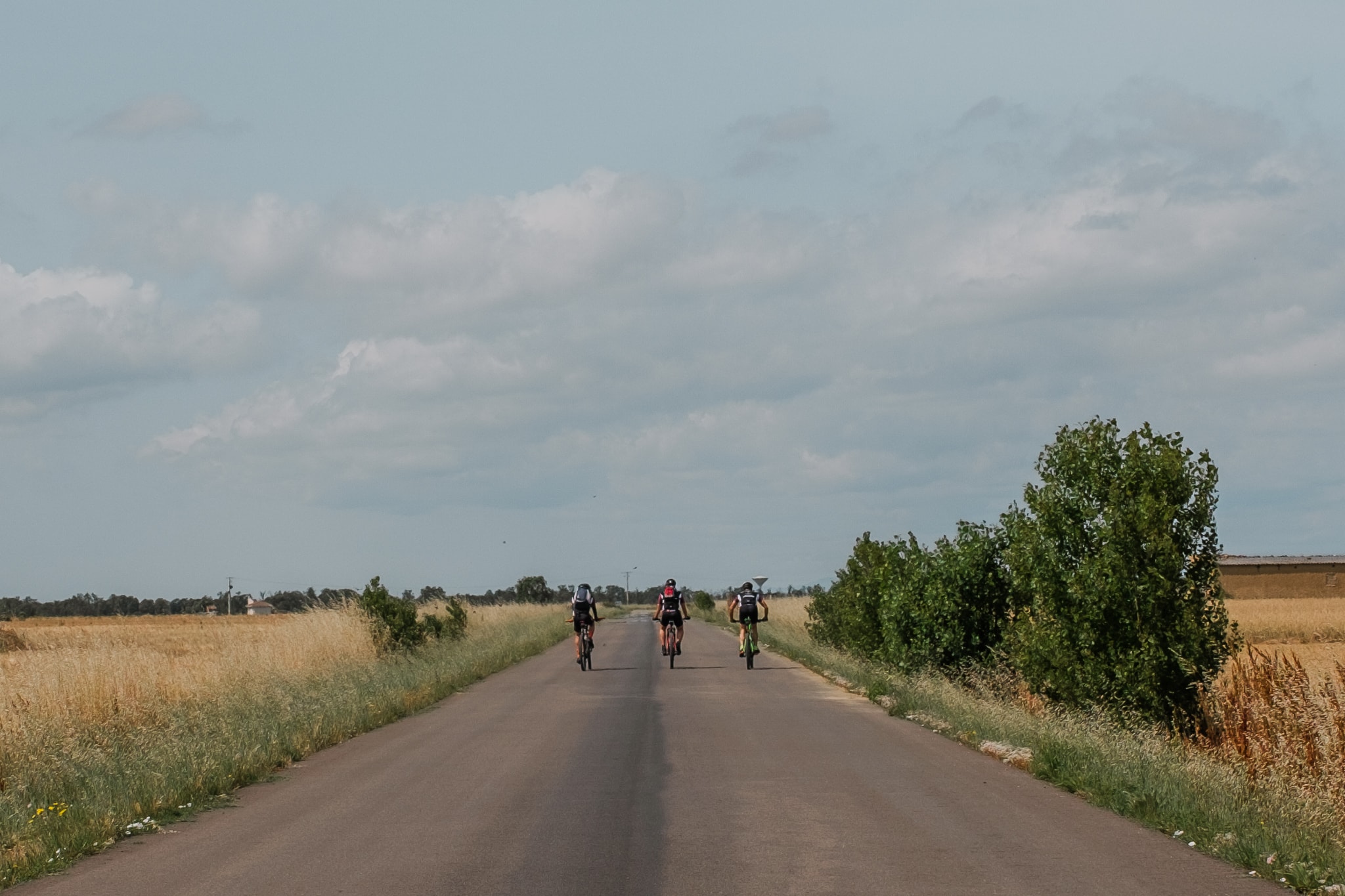
Unfortunately, bicigrinos (a play on the Spanish word for pilgrim, peregrino) are notoriously bad at ringing their bells or otherwise alerting pilgrims that they are approaching. (My theory is that most bikers do not realize just how quiet their bikes actually are!
The result of this is that more often than not (at least 3/4 of the time), I did not know a bike was approaching me until it was right behind me or even right beside me.
This is not safe.
What if, right at the moment a bike was passing me, I happened to stumble and stuck out my walking stick for support? Or had chosen that moment to start moving over to the other side of the path?
Walkers do have the right of way on the Camino; it is the responsibility of bikers to make sure walkers know they are there. Unfortunately, in my experience, few bikers abide by this responsibility. Accordingly, those walking the Camino should be alert to the presence of bikers and aware that one may be approaching you at any time.
Women’s safety on the Camino
Many women are concerned about whether it’s safe for them to walk the Camino.
Well, as a woman who’s traveled solo extensively (including a year of full-time solo travel in Europe and Asia!), I can assure you that the Camino is very, very safe for women, including women traveling solo. I would go so far as to say that it may be the safest I’ve ever felt as a woman traveling alone!
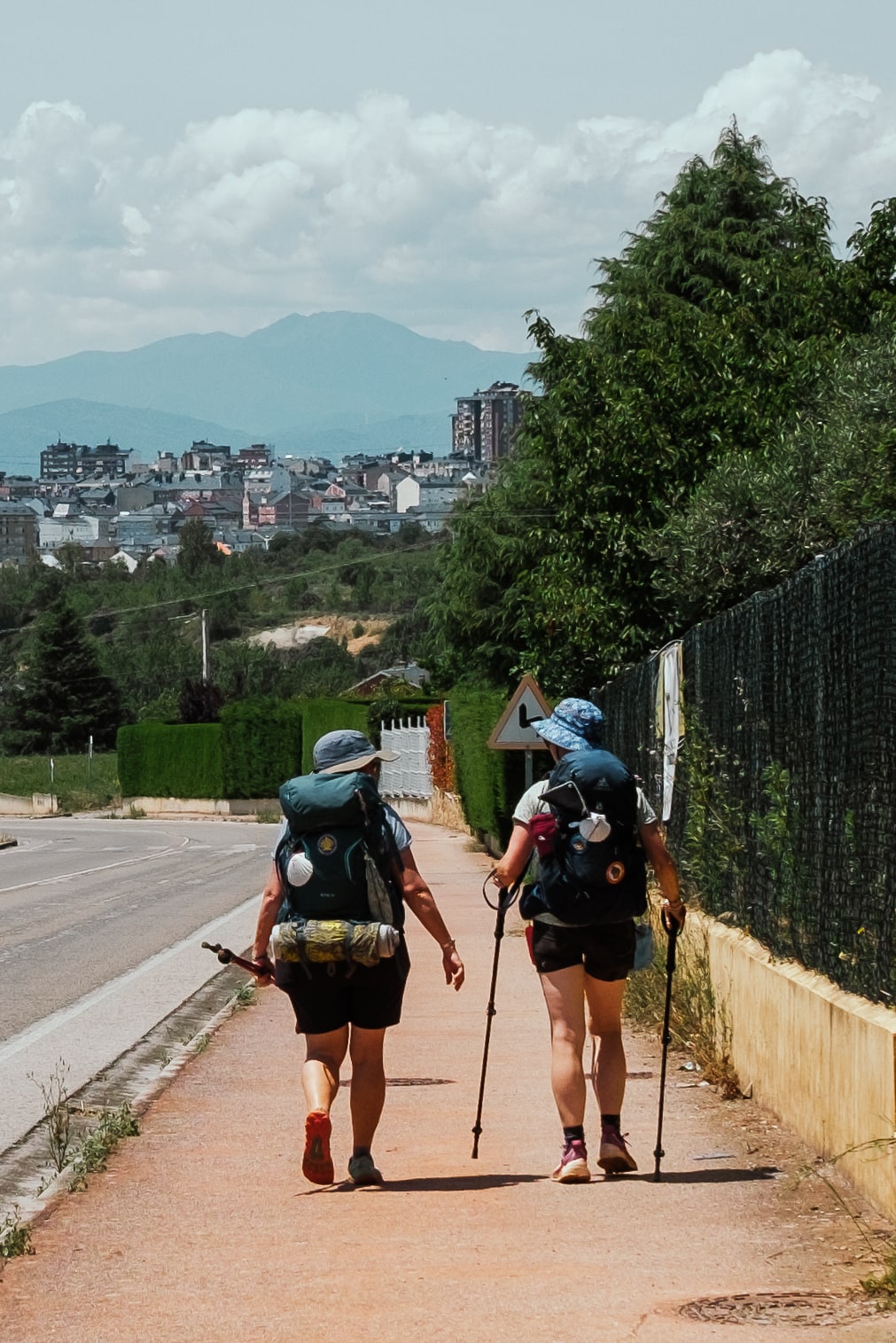
And, during my 34 days of walking, only once did I feel even remotely uneasy. I left the town of Villafranca del Bierzo very early in the morning, well before sunrise, and on my way out of town, a car with two men slowed down and barked at me (?) through the car windows on their way past me. This was unsettling, but they did not do anything else to indicate that they planned to harm me, and I continued safely on my way.
Now, I have read reports from some female pilgrims of sexual harassment from hospitaleros (the people who run albergues, where pilgrims stay) or other people providing services along the way. And of course, it is always possible that other pilgrims might treat women poorly.
But I personally did not see or suffer anything like this during my Camino, or hear of it happening to anyone I encountered. My perception is that this kind of experience is rare. Indeed, most people you meet on the Camino — pilgrim or Spanish local alike — are exceptionally kind and generous.
And, for what it’s worth, more women than men walk the Camino these days!
Safety while solo on the Camino
Yes, it’s also perfectly safe to walk the Camino alone!
Indeed, this is an extremely common thing to do. Anecdotally, I would estimate that a majority of pilgrims I encountered were walking solo.
There are marginal safety risks to walking alone: you don’t have a built-in partner (or group) to keep an eye on your belongings, and anyone wishing to harm pilgrims may be more likely to target someone who’s walking alone.
But these are not substantial problems for the reasons discussed elsewhere in this post, and for one more reason: it’s actually not very common to be truly alone on the Camino.
Indeed, if you are walking one of the more popular Camino routes — especially the Camino Frances — and you are not walking during the winter, you can expect to encounter other pilgrims everywhere you go. There will be pilgrims on the trail with you, at the cafes and restaurants where you stop along the way, at the albergues where you sleep at night, and in the towns where you hang out in the afternoons and evenings.
As an introvert, I even sometimes had to make an effort to find solitude on the Camino!
And yes, it’s totally fine to walk the Camino as a solo woman — I did it! During my time on the Frances, I met MANY other women (ages ranging from early 20s to early 80s) doing the same.
READ MORE: What to Know About Walking the Camino de Santiago Alone
Protecting your belongings on the Camino
Petty theft is a concern on the Camino, as it is almost anywhere.
That said, I did not hear of any instances of theft during my Camino (aside from one pair of walking sticks going missing from an albergue). I stayed in albergue dorm rooms most nights, and felt completely safe leaving my belongings (including my phone and an expensive camera) behind when I left the room to go shower.
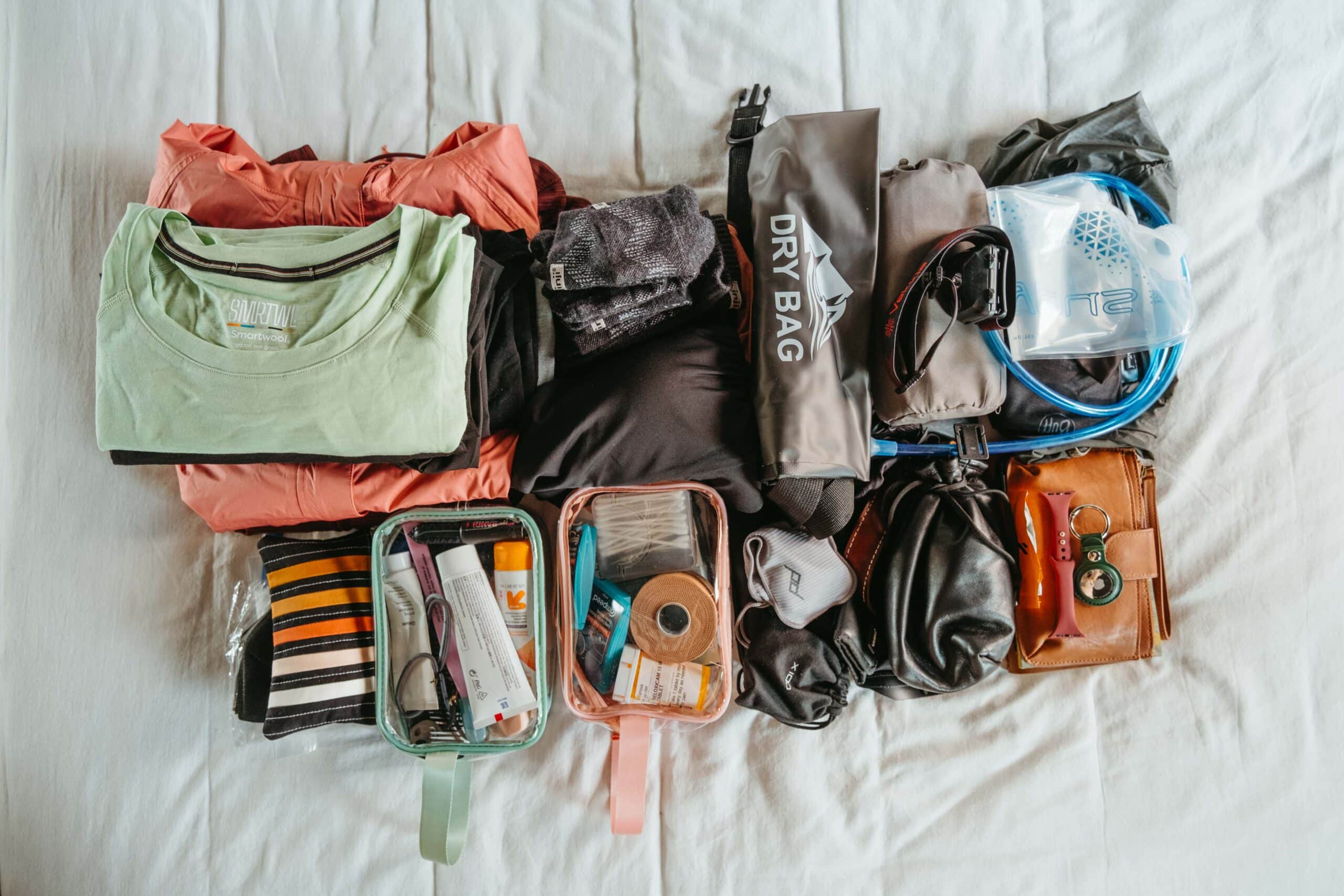
Indeed, I packed a dry bag so that I could take my valuables with me into the shower — but then I never, ever used it. (In fact, in Burgos, I sent it ahead to Santiago so that I wouldn’t need to carry it anymore!)
That said, I did take my valuables (namely, my wallet and my camera) with me when I left the albergue to sightsee, find food, or meet friends. I carried an ultra-lightweight day bag for this purpose.
Here are a few other things to know about protecting your things in albergues:
- A few albergues provide lockers where you can store your stuff, but that’s a rarity.
- Virtually every albergue will require you to remove your hiking shoes and leave them (and your walking sticks) near the front door. You will put your shoes back on when you head out the next morning.
- The greatest risk to your belongings in an albergue is not from other pilgrims, but from non-pilgrims who may walk into the albergue, pretending to be pilgrims, and steal items from rooms in the albergue. However, this is also not common, and not something to be paranoid about.
Other than albergues, there are not too many places to worry about your stuff walking away. The main one is that when you stop for food, you will generally take off your bag and set it down alongside other pilgrims’ bags — often along a wall beside or across from the cafe.


In this situation, there is — I suppose — a small chance that someone might grab a bag and run (as depicted in the movie The Way!), but that would be very unusual. At any rate, there are usually many pilgrims around, with many eyes on the bags.
Safety Tips for the Camino
Here are several crucial tips for mitigating the greatest risks to your safety on the Camino.
Be careful around cars
In some places on the Camino, the risk of being hit by a car is very real.
As a result, exercise a lot of caution in areas where the trail crosses or goes near a road.
Never assume that a driver can see you or will make the safest decision, and always be prepared to move out of the way to the best of your ability.
Assume bikes are near
Unfortunately, you absolutely can’t assume that cyclists will alert you when they’re coming near you — most of them simply will not.
Therefore, in places where bikes are sharing the trail with walkers, it’s a good practice to look behind you before you move to a different side of the path, or otherwise do anything that might put you in the way of an oncoming bike.
Beat the heat
If you are walking the Camino in a warm season, especially the summer, you will want to avoid walking in mid-afternoon, when the heat can be brutal and even dangerous.
So, if you know you have a particularly long day of walking ahead of you, or the temperature is expected to be especially hot, try to time your day so that you are done walking by the early afternoon. Sometimes, this will mean waking early and starting to walk before the sun rises.
Plus, don’t forget the usual sun safety precautions like wearing a protective hat and applying (and reapplying) plenty of sunscreen!
Wear a head lamp
As a general rule, it’s a good idea to avoid walking in the dark if possible.
But sometimes — like when you need to start extra early because you’ve planned an especially long day of walking, or you need to beat the heat! — it’s best to start walking before the sun rises.
In these circumstances, always wear a head lamp until the sunlight is bright enough that cars and cyclists can easily see you, and you can clearly see the path in front of you.


I recommend buying a head lamp that includes a red light option, which is good for packing your bag while it is still dark inside an albergue dorm room (the red light is less likely to wake other pilgrims). I used this head lamp, and had no complaints.
Be prepared
Sure, this is general advice that covers all manner of sins, but what I mean is: set yourself up to avoid injury by being prepared with both information and supplies.
It may be more interesting and fun to walk without knowing what’s coming each day, but there are times on the Camino when knowledge can help you make better choices. For example, during my Camino, I met someone whose walking partner injured her ankle so seriously on day one that she had to end her Camino then and there — all because they had missed warnings to avoid a particularly steep and rocky route at a fork in the path.
It’s also wise to walk with basic supplies, like blister care (I swear allegiance to Compeed), rain protection, and a water bottle that holds at least 1 liter (I walked with a 1 liter water bladder, which was almost always enough — water fountains are frequent in most parts of the Frances).
Final Thoughts
I hope this information makes you feel more confident and prepared about walking the Camino.
No matter your gender, and whether or not you plan to walk alone, the Camino is a very safe place to travel.
But if you still have questions about safety on the Camino, feel free to leave a comment or shoot me a message — I’d love to talk about it!
More Information About the Camino
THE BASICS | Start with an introduction to the Camino de Santiago, 15 important things to know about the Camino, and read about a typical day on the Camino.
FOOD | From typical meals to costs, here’s everything to know about food on the Camino.
GO IT ALONE | Here’s what you need to know if you’re thinking about walking the Camino alone (like me!).
EXPENSES | Just how much does the Camino cost, anyway? Find out here.
GET READY TO GO | Here’s what to know about how long the Camino takes, how to plan for the Camino (or not!), and 9 helpful ways to prepare for the Camino.
ITINERARY | Want to walk the Camino Frances in about 34 days? Read my recommended itinerary.
PACKING GUIDE | Everything you need to know about what to pack (and not to pack!) for the Camino, plus a printable packing checklist.
CAMINO FRANCES | If you walk the Frances route, here are 10 incredible things you can expect to see — plus my own Camino photo diary.
SHORT CAMINO | Here’s how to walk the Camino in just 5 days.
PHOTOGRAPHY | A complete guide to taking great photos on the Camino de Santiago.
pin this post