How to Plan for the Camino de Santiago
The Camino de Santiago — a pilgrimage route to Santiago de Compostela, Spain — is one of my favorite travel experiences ever. Each day on the Camino, I woke up early, gathered my few belongings, and simply started walking.
To some, especially those who have not backpacked before, the Camino may sound overwhelming. I’m speaking from experience here, since I had never backpacked before the Camino!
However, the relative simplicity of the Camino — walk, eat, socialize, sleep, repeat — means that it is totally possible to go walk the Camino with very little planning at all.
However, for those who get anxious about traveling with few plans, there are lots of ways to plan for the Camino in advance and make your experience smoother.
In this post, I’ll give you a step-by-step process for planning your Camino — and give you my specific recommendations about what not to plan, based on my own Camino experience.
Want to read more about the Camino?
Find my complete travel guide for the Camino de Santiago here.
This post contains affiliate links. If you make a purchase or a booking through one of these links, I may receive a small commission at no extra cost to you. Thanks for supporting In Old Cities in this way!
The Great Camino Planning Debate
There’s a wide spectrum of thought on how much pilgrims should plan their Caminos in advance.
On one end of the spectrum, you have people who prefer to leave for the Camino with a fully detailed itinerary. These people might:
- decide in advance where they will be walking each day, and book lodging for each location
- arrange for daily luggage transport, if they don’t want to carry their own bag
- know when they are arriving, and when they are leaving
- engage the services of a Camino planning company to handle the logistics for them
On the other end of the spectrum are people who plan nothing except a starting point and date. They might:
- walk as far as they feel like walking each day, and look for an albergue with an available bed when they’re ready to stop
- have only a vague idea of how long their Camino might take
- have no specific plans, and no firm commitments (in the form of return tickets or otherwise).
And of course, the rest of the spectrum is populated by pilgrims who fall somewhere in between — they plan a little in advance but leave the rest up to fate, or they plan a lot but not everything, or some other combination thereof.
Wherever you fall on this spectrum is completely fine — it’s up to you.
5 Steps to Plan for the Camino
Here’s my recommended approach to planning for your Camino. It applies no matter where you think you fall on the Camino planning spectrum!
1. Decide how much time you have to walk and select your route accordingly.
The Camino is not just one route to Santiago — it’s many routes, coming from a variety of directions and covering many different lengths.
The most popular route is the Camino Frances, which generally begins in Saint-Jean-Pied-de-Port, France, and covers about 800 kilometers, or 500 miles. (I walked the Camino Frances in June 2023.) Most people who walk the full Camino Frances do it in four to five weeks.
There’s also the Portuguese route, which typically begins in Porto and takes about two weeks.
There’s the Camino Ingles, which takes only five days or so.
And so on.
So, the first step in planning your Camino is figuring out how much time you have available, and selecting your route accordingly.
That said, keep in mind that you do not have to do the entire route at once, or at all. You can walk just a portion of a Camino, and that is completely fine. If you have two weeks to walk, you can walk the first two weeks of the Camino Frances, if that’s what you want.
MY RECOMMENDATION: For what it’s worth, most people (including me!) recommend that first-time pilgrims walk the Camino Frances. It’s the most popular route, which means that it has the most amenities in terms of food and lodging (which can make the experience a lot smoother). Its popularity also means that there will always be plenty of other pilgrims to meet and socialize with, which goes a long way on the Camino.

2. Buy a ticket to your starting point…and maybe from your ending point.
Choose the date when you’ll start your Camino and buy tickets to get you to your starting point.
Depending where you live, and how flexible your schedule is, you may not need to buy your return ticket just yet — you can wait and buy a ticket home when you have a better idea of when you will complete your Camino.
If you live a bit farther away, such that you’ll need to cross an ocean for your Camino (or otherwise cannot rely on trains or budget airlines), you have another decision to make. Do you want to buy your plane ticket home, and lock yourself into a schedule? (After all, buying one round-trip airline ticket is typically much cheaper than buying two one-way tickets.) Or do you want to hold off, and risk having to shell out for an expensive last-minute return ticket?
MY RECOMMENDATION: If you have any flexibility in your schedule, book a round-trip ticket, but give yourself as much buffer as you can in setting the return flight. For example, if you think you will arrive in Santiago on July 1, considering booking your return flight for, say, July 5 (or even later). This way, if you need more time than you expected to finish walking, you have some built-in buffer. If you don’t need it, you can spend those extra days sightseeing in Santiago, or another city in Spain, or Portugal.
3. Draft an itinerary…or don’t!
At this point in your planning process, you will need to decide whether you want to develop any sort of itinerary for your Camino. There are several possible approaches to this issue:
- Walk the Camino without any kind of itinerary. Walk as far as you want each day, and arrive in Santiago whenever you get there!
- Decide to simply follow a recommended itinerary in a Camino guidebook, such as this book by Anna Dintaman and David Landis, or this popular book by John Brierley. (Both of these books are for the Camino Frances, but there are guidebooks available for other Camino routes as well!) Or you can use my 34-day itinerary for the Camino Frances!
- Draft a potential itinerary, but expect that you may change some of your plans as you go.
- Draft a definite itinerary and plan to stick to it.
Most pilgrims create a firm itinerary only if they have a strict schedule they need to keep to — for example, if they absolutely must arrive in Santiago on a certain date, or they’re using an agency to plan and book their Camino (which I do not recommend, by the way!).
For what it’s worth, the Camino is an excellent opportunity to release any tendencies you may have toward overplanning. I say this as a Type A person who loves, loves, loves to plan travel: on the Camino, flexibility is king, and a lot of advance planning is more likely to create problems than solve them.
Here’s why: the Camino is not like normal travel. You are walking yourself from destination to destination, and carrying everything you brought. Things may happen — are likely to happen! — along the way that will make you want or need to change your plans.
You may make friends with a group of fellow pilgrims and want to walk the rest of the Camino together. (This happened to one of my friends who had booked her entire Camino in advance, and she ended up cancelling all her advance bookings so that she could stick with her group.)
You may develop an injury that forces you to rest or slow down for a few days. (This happened to multiple people that I met along the way.)
And so on.
MY RECOMMENDATION: If you have any flexibility in your schedule, I think it’s best to walk the Camino with limited (or no) plans and without a strict itinerary. That said, if the idea of having no itinerary at all gives you hives (I get it), I recommend drafting a potential itinerary. You don’t need to stick to it, but it can give you some sense of structure, and even the process of developing the itinerary can help you prepare mentally for the Camino. (This is what I did — and I did change my plans a couple of times along the way!)
If you do decide to develop some sort of itinerary, here is the general approach I recommend:
- Review recommend Camino itineraries online and in guidebooks. For example, if you choose to walk the Camino Frances, you might look at websites such as gronze.com or guidebooks like this one by John Brierley (or my own Camino Frances itinerary!). Look at how many stages — that is, individual days of walking — these itineraries tend to recommend.
- Sketch out a rough number of stages for your own Camino. Don’t worry: unless you have a strict deadline for completing your Camino, you can change this number as you go on.
- Going day by day from the beginning, start filling in your potential plan for each day. For example, if you are starting the Camino Frances in Saint-Jean-Pied-de-Port, decide if you are walking to Orisson or Roncesvalles on the first day. If Roncesvalles, will you go to Zubiri, or somewhere else, on day two? And so on. Use the resources I mentioned above, and any others you find, to help you design your stages. Continue doing this until your itinerary has you land in Santiago.
And that’s it!
Here’s what the first draft of my potential itinerary looked like:

Keep in mind that there are no set stages on the Camino. There are many, many towns along the Camino — they turn up every few miles, for the most part — and almost all of them have places for pilgrims to stay. So while there are certain towns where most pilgrims do tend to stay, you can do whatever you want! Devise any stages (and any number of stages!) that sound good to you. The stages set forth in any guidebook, or on Gronze, or wherever, are mere suggestions.
4. Decide whether you want to book your lodging in advance.
Next, you’ll need to decide whether to book any, some, or all of your lodging in advance.
There are several different approaches to this. They include:
- Booking none of your lodging in advance. Each day, stop walking when you decide you are done for the day and look for an available bed in one of the albergues wherever you are.
- Booking one or two days in advance as you go. What this might look like is each afternoon, after you settle into the town where you’re staying for the night, you can decide where you want to stop the next day and then reserve a bed in that town.
- Booking lodging for some sections of the Camino in advance, but otherwise winging it each day. For example, you might book the first few nights and the last few nights of the Camino Frances in advance, since these sections tend to be the busiest. You might also book certain nights well in advance if there is a particular albergue you know you want to stay in. (For example, though I did not stay there, I had several friends who went out of their way to stay at Casa Susi in Trabadelo.)
If you already know that you don’t want to book a single night of lodging in advance — cool, you’re all set! Though if you’re walking the Camino Frances, I might encourage you to book at least the first night in advance. The monastery in Roncesvalles does often sell out, as does Orisson, if you plan to stop there instead, and you don’t want to feel forced to rush over the Pyrenees.
If you’re interested in doing a bit more planning than that, some words of warning: I didn’t book my entire Camino in advance, but from my anecdotal observations, those who did book everything in advance mostly seemed to (or definitely did) regret it.
And speaking personally, even when I booked lodging just one day in advance, I sometimes regretted it.
For example, at one point, I had booked a night in Ponferrada. However, the walk that day turned out to be brutal — miles and miles and miles downhill — and when I got to beautiful Molinaseca, I wished I could just stay there instead of hiking another 5ish miles to Ponferrada. But I had a nonrefundable booking, so on I trudged.
On the flip side, when I decided to cut one of my days short and stay in La Faba instead of hiking several miles more to O Cebreiro, as I had planned, I was incredibly glad that I hadn’t booked a place to stay in O Cebreiro, and could just grab a bed in La Faba instead.
MY RECOMMENDATION: Book the first one to three nights of your Camino, at least if you’re walking the Camino Frances. Then wait and see how the Camino feels once you are walking it. You will soon get a sense of how crowded the trail is (and therefore, whether there are more pilgrims than beds or vice versa) and how many miles you can reasonably walk each day. This is information that will help you decide whether you want to start booking your lodging a day or more in advance. I do not recommend booking every night of your Camino in advance unless you have special circumstances. (For example, I had a friend who needed to stay in private lodging each night for health-related reasons, so he planned and booked ahead for the entire Camino.)
Also, if you are a big planner, one thing you can do to help yourself prepare for the lodging issue is to research and record good places to stay in each destination on your rough itinerary. Then, as you walk, you can refer back to your itinerary to find options for lodging.
Gronze is an excellent resource for finding lists of lodging options in any town on the Camino, as are caminosleeps.com (for the Camino Frances) and any guidebook worth its weight. I walked with this excellent, lightweight guidebook and regularly referred to it to find lodging and decide how far to walk each day.


If you do decide to book any lodging in advance, note that many albergues are listed on booking.com. Other albergues can be booked directly on their websites. Some can be booked in advance only via phone or WhatsApp, so it’s helpful to know how to ask basic phrases such as “Do you have a bed?” in Spanish.
5. Let go…and go!
If you’ve followed the above steps, you’ve done more than you need to in order to successfully plan your Camino.
The Camino is a time to release your anxieties and concerns about travel planning. I’m not going to tell you that nothing is going to go wrong — in fact, things probably will go wrong.
But if things are going to go wrong while I’m traveling, there’s nowhere I’d rather be than the Camino, where people are exceptionally generous and helpful, and where it is especially easy to pivot.
- Get to a town and every bed is somehow full? No problem: just keep walking, or take a bus or taxi to the next town.
- Not sure where to stay the next night? No problem: there are plenty of resources (see above for some of them!) with recommended towns and lodging options, and other pilgrims will be happy to weigh in.
- Not sure which way to go when there’s a fork in the road? No problem: just discuss with other pilgrims, or refer to the map and recommendations in your guidebook.
- Worried about getting lost? No problem: the Camino is exceptionally well-marked, and in the worst case scenario, locals or other pilgrims will absolutely help you get back to where you’re supposed to be.
So, plan what you can (but don’t overplan!), let go of the rest, and just go — one way or another, things will work out. (And it will probably be a lot easier than you think!)
Final Thoughts
In the end, it’s totally up to you how much to plan for the Camino. If you really want to map out a detailed, firm itinerary, and book your lodging for each night, you can do that. If you want to arrive at your starting point with no plans and see what happens, you can do that too!
The most important thing is to get out there — your Camino is waiting.
Buen Camino!
More Information About the Camino
THE BASICS | Start with an introduction to the Camino de Santiago and 15 important things to know about the Camino, and read about a typical day on the Camino.
SAFETY | Find out what to know about safety on the Camino.
FOOD | From typical meals to costs, here’s everything to know about food on the Camino.
GO IT ALONE | Here’s what you need to know if you’re thinking about walking the Camino alone (like me!).
EXPENSES | Just how much does the Camino cost, anyway? Find out here.
GET READY TO GO | Here’s what to know about how long the Camino takes and 9 helpful ways to prepare for the Camino.
ITINERARY | Want to walk the Camino Frances in about 34 days? Read my recommended itinerary.
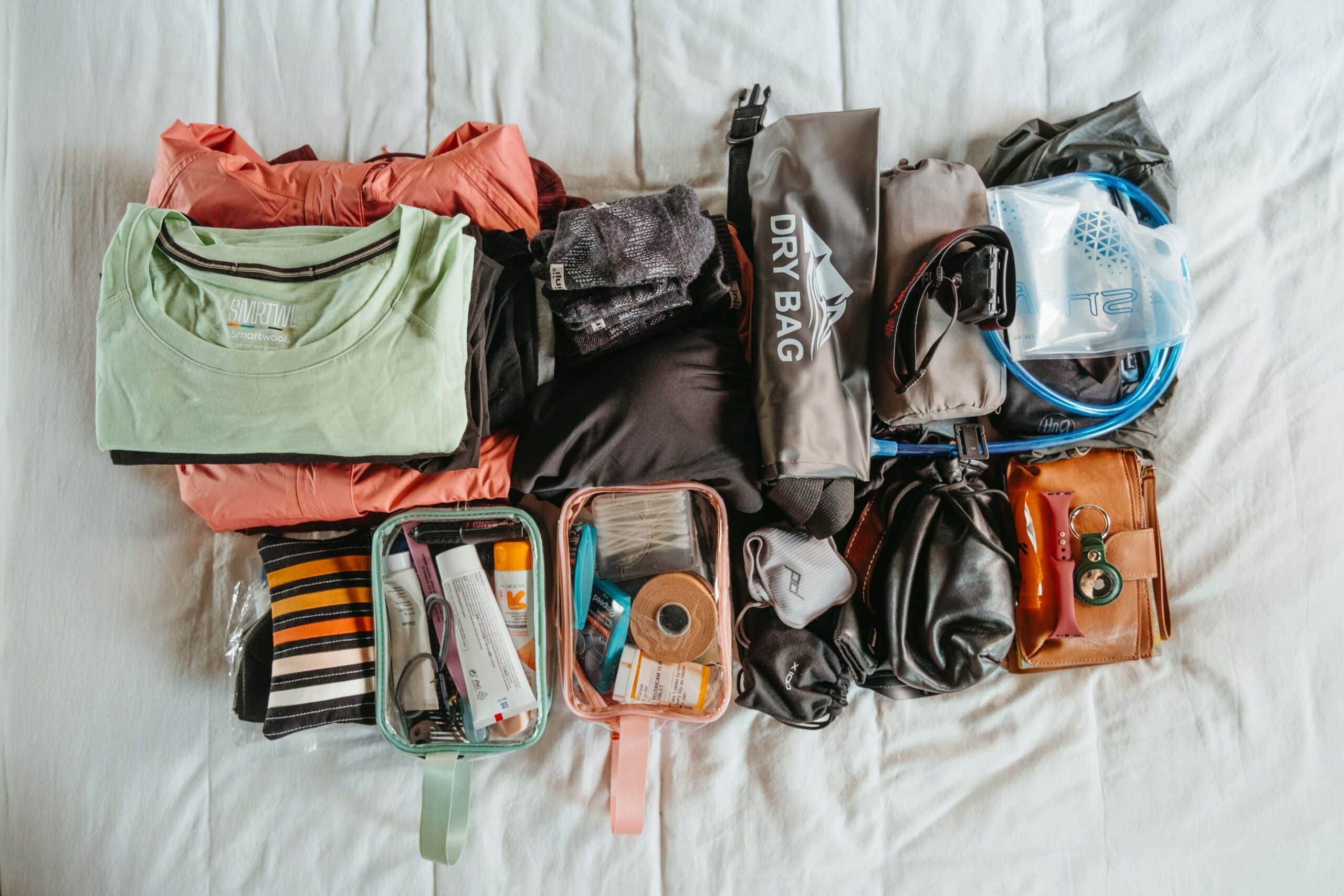
PACKING GUIDE | Everything you need to know about what to pack (and not to pack!) for the Camino, plus a printable packing checklist.
CAMINO FRANCES | If you walk the Frances route, here are 10 incredible things you can expect to see — plus my own Camino photo diary.
SHORT CAMINO | Here’s how to walk the Camino in just 5 days.
PHOTOGRAPHY | A complete guide to taking great photos on the Camino de Santiago.
pin this post