How Much Does the Camino de Santiago Cost?
The Camino de Santiago is a wonderful experience and can be a delightfully inexpensive way to travel. But just how much does it cost to walk the Camino, exactly?
Well, that depends on the pilgrim. If you sleep in the least expensive type of albergues (hostels for pilgrims), cook some (or most) of your own meals, and hand wash your clothes, your Camino will be very inexpensive indeed. On the other hand, if you stay in private rooms, eat at restaurants for every meal, and have your bag transported for you each day, you will spend quite a bit more.
For example: during my Camino, I slept almost exclusively in albergues (but often nice ones), cooked virtually none of my own meals, and almost always hand washed my clothes. This meant I had a pretty midrange Camino in terms of spending! You could spend less or more than I did, depending on your standards.
In this post, I’ll break down the different price points you can expect for lodging, food, and more on the Camino and estimate the total cost of the Camino. Then, I’ll tell you exactly how much I spent on my own Camino!
NOTE: Be aware that post-COVID inflation affected the Camino just like the rest of the world, and so prices you may see on blogs or other websites from Caminos before COVID are likely to be outdated! (I walked my Camino in June 2023.)
This post contains affiliate links. If you make a purchase or a booking through one of these links, I may receive a small commission at no extra cost to you. Thanks for supporting In Old Cities in this way!
Want to read more about the Camino?
Find my complete travel guide for the Camino de Santiago here.
Typical Expenses on the Camino
Transportation
Your costs for reaching the starting point of your Camino and returning home at the end will, of course, depend completely on where you are traveling from. If you are flying to France or Spain from Australia, you will pay more for transportation than if you are taking the train from Germany.
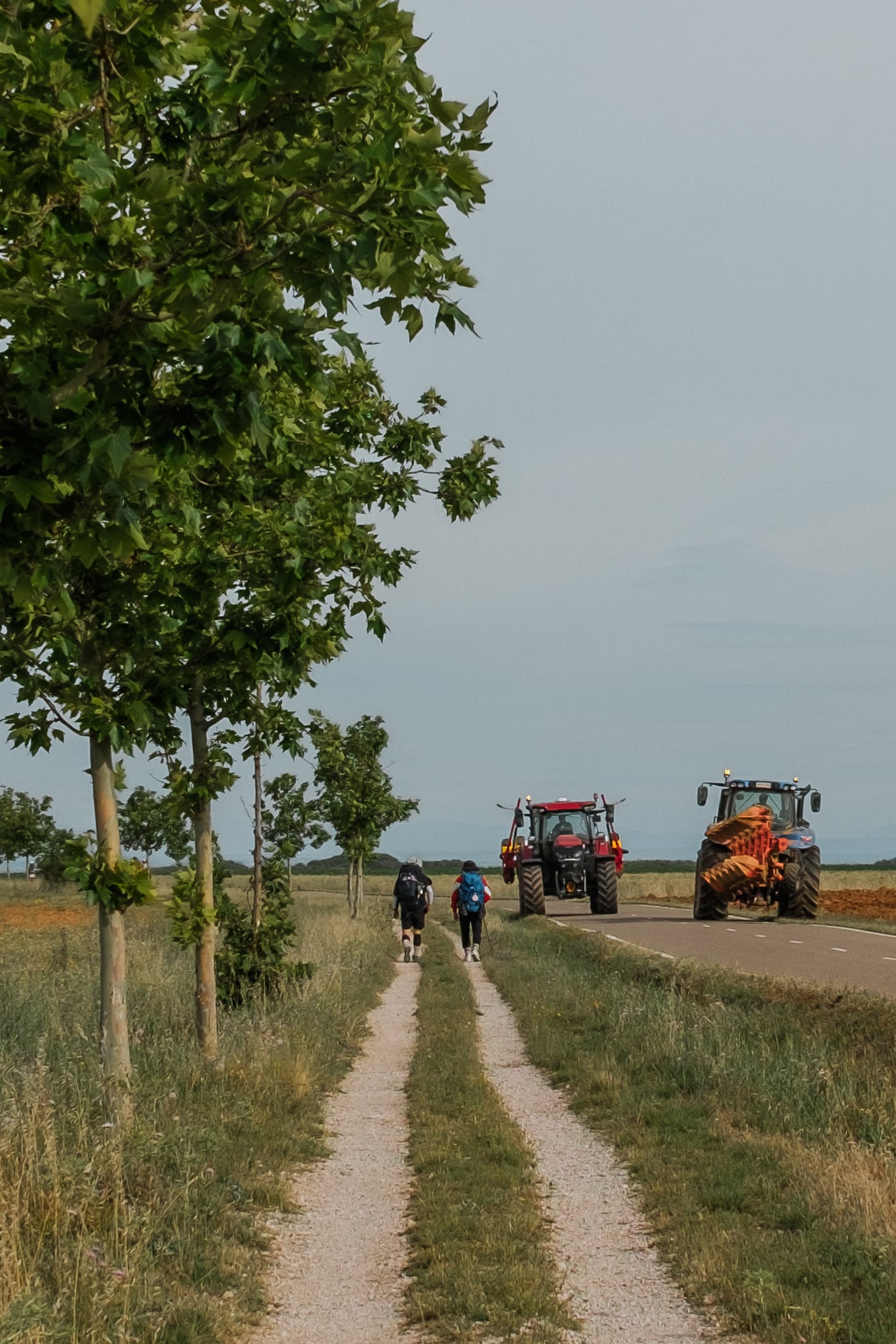
If you walk your entire Camino, you will not have any additional transportation costs. However, some pilgrims occasionally need to take a bus or taxi (whether due to injuries, blisters, getting lost, or other reasons) for short distances. The cost of taking a bus or taxi on the Camino will depend on how far you go, but you can generally expect to spend somewhere between €5 and €15 per ride.
Accommodation
Lodging is one of the easiest expenses to control on your Camino. There are several different types of lodging for pilgrims along the Camino, and they vary in price. It is totally up to you whether you stay in less expensive or more expensive lodging. In order from least expensive to most expensive, here are your most common options:
- Municipal albergues. These albergues (hostels for pilgrims) are generally owned and operated by the towns where they are located. They are often bare bones, in terms of services and quality. Some have kitchens where you can cook your own meals, if you prefer. Typically, beds in municipal albergues cannot be booked in advance. You can expect a bed in a municipal albergue to cost between €8 and €10, give or take a couple of euros. (Before COVID, municipal albergues often cost as little as €5 per night, but that is less common now.) Beds in municipal albergues are essentially always in dorm rooms with multiple bunk beds.
- Private albergues. These albergues tend to be nicer than municipal albergues (no guarantees, though), but what that means can vary wildly. I stayed in some extremely nice private albergues, and some that were just okay (or worse). Sometimes, for an additional charge, they offer communal meals, which are a nice way to meet other pilgrims. Private albergues typically cost between €12 and €18 (again, give or take a few euros) for a bed in a dorm room. Some private albergues do offer private rooms, which typically cost approximately €35 to €45 for rooms that hold 1 or 2 people (private rooms for 3 or 4 people, which are sometimes available, will likely cost more). If you are traveling with another person, getting private rooms might be nearly as cost-effective as staying in dorm rooms. Many private albergues allow you to book in advance, either on a site like booking.com, on the albergue’s own website, or through WhatsApp (you will need to look up the albergue’s phone number to do this).
- Pensions. Pensions are guests houses or small hotels with exclusively private rooms. They are not only for pilgrims, but in some of the towns between Sarria and Santiago de Compostela, it is likely that many (or most, or even all) of the people staying in a pension are pilgrims. Rooms in pensions typically cost more than private rooms in albergues — between €40 and €50 or so (more if there are 3 or more beds).
Some towns on the Camino have other types of lodging as well, including regular hostels (for all travelers, not just pilgrims) and traditional hotels, including chain hotels. Prices for hotel rooms vary greatly, depending on the quality of the hotel. If you have a large budget, you might even consider splurging on a room at the Parador to celebrate the end of your Camino in Santiago.
Food
Food is not expensive on the Camino, though like lodging, it depends on your choices.
A typical cafe breakfast on the Camino — coffee plus a pastry or tortilla (a Spanish egg dish) — often costs between €3 and €5 or so. If you also get any fruit or juice, you can expect to pay a little more.
For lunch, it’s not unusual to pay between €5 and €8 for a bocadillo (sandwich) and a drink. If you choose something else, like a cooked meal, you might pay between €10 and €15.
Prices for dinner vary wildly depending on your choices. Many restaurants offer a pilgrim’s menu (a multi-course menu with a few options for each course), which typically costs between €12 and €17. (Pilgrims’ menus are often available for lunch as well.) Similar prices are not unusual for other types of restaurant meals, though you may spend a bit less if you order just one course.
If you purchase any drinks at local bars, you can expect to pay a few euros for a glass of wine, mixed drink, or beer.
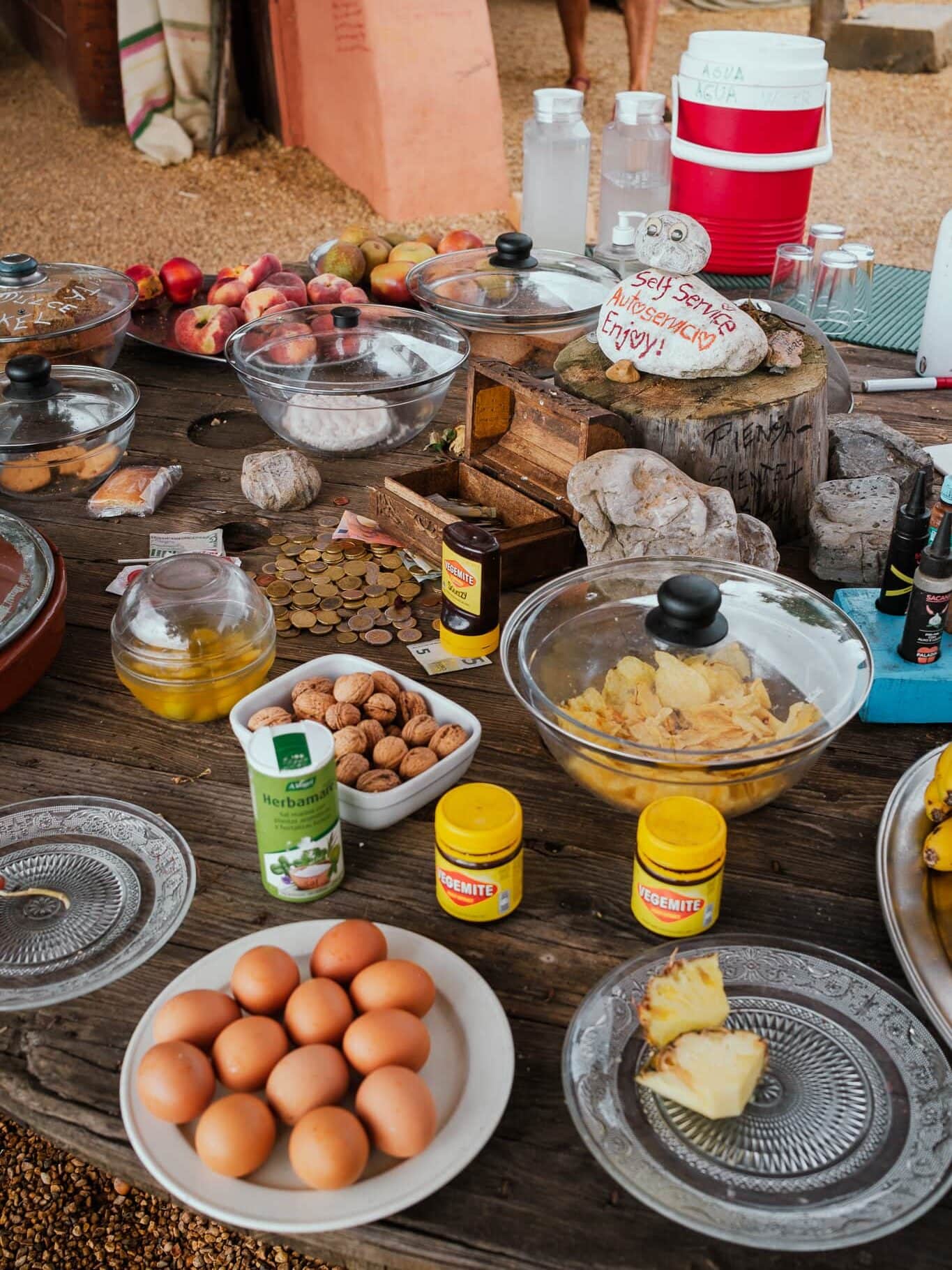
Note as well that most towns along the Camino have small grocery stores or markets where you can purchase food and assemble (or cook) your own meals, which can be considerably cheaper. Indeed, if you stay in albergues with kitchens, and join together with other pilgrims to cook a communal meal, it is easy to spend just €2-3 per person on dinner.
In short, if you are on a tight budget and are willing to get most of your food from supermarkets and other local stores (rather than cafes and restaurants), it is possible to spend perhaps €10-15 per day on food. If you instead buy most or all of your food from cafes and restaurants, you can expect to spend closer to €25-30 per day (or more, if you eat at particularly nice places, regularly drink alcohol, etc.).

Other expenses
Pilgrims do not typically have too many expenses other than lodging and food. Your most likely expenses are:
- Laundry: All albergues along the Camino have places for pilgrims to wash their clothes — either in machines, or by hand, or both. For machines, albergues typically charge about €5 per load (so it is wise to join up with other pilgrims and share the machine and thus the costs). If you instead wash your clothes by hand, that is free (but bring travel detergent with you, as some albergues do not provide soap). Virtually all albergues have clotheslines, drying racks, or somewhere else for pilgrims to hang their wet clothing to dry.
- Medical supplies: If you find yourself needing any medical supplies you did not pack, you will need to purchase them from pharmacies along the way. This may be less likely for pilgrims who start in Sarria and therefore are walking for only a few days, but if — for example — you need to purchase any Compeed (blister care), you can expect to pay about €7-10 (depending on the size and type of pack you choose).
- Entrance fees: Along the way, you may encounter museums, cathedrals or other places that you wish to explore, some of which charge entrance fees. In my experience, these fees typically range in price from approximately €3 to €7, depending on the place. These are, of course, completely optional. As a data point, over the course of my entire Camino Frances, there were 9 places that I paid a fee to explore (and I was a more active sightseer than most other pilgrims), and they cost an average of €5 each.
- Luggage transport: If you do not wish to carry your backpack on a particular day (or ever), you can pay a luggage transport service to drive your bag to your next destination. In 2023, these services usually cost €6 per day.
Total Cost of the Camino
Given the above list of expenses, here is an estimate of the average daily cost of the Camino, broken down by several different price ranges:
| BUDGET | MIDRANGE | LUXURY | |
|---|---|---|---|
| Accommodation | €8-10 | €15-20 | €35-45 |
| Food | €10-15 | €20-30 | €30-40 |
| Other expenses | €1-2 | €3-7 | €5-15 |
| TOTAL | €19-27 | €38-57 | €80-110 |

How Much I Spent on the Camino
I walked the Camino Frances from late May 2023 to early July 2023. I spent 34 days walking from Saint Jean Pied de Port, France, to Santiago de Compostela, Spain, and took 3 rest days (in Burgos, Astorga, and Sarria). Excluding my transportation to and from Europe (as well as a couple days touring Madrid after the Camino), and the clothing and supplies I purchased before leaving for my Camino, here’s exactly how much I spent on my Camino:
Accommodation
I spent €832.87 for 37 nights of lodging, or €22.51 per night. For the most part, I stayed in albergue dorm rooms (usually private, occasionally municipal), but I spent ten nights in private rooms and pensions (when I took rest days or when my mom and sister were with me for the last few days of my Camino), which increased my accommodation costs.
Food
I spent €1,032.13, or €27.90 per day, on food. I ate virtually exclusively at cafes and restaurants, and occasionally bought some snacks from supermarkets. Additionally, I drank alcohol most days, which increased my costs.
Other expenses
- Entrance fees: I spent €45, or €1.22 per day, on entrance fees to museums, cathedrals, and other points of interest.
- Laundry: I spent €25.50, or €0.69 per day, on laundry machines. Most days, I washed my laundry by hand.
- Shopping: I spent €50, or €1.35 per day, on several lightweight souvenirs.
- Shipping: I spent €32.60, or €0.88 per day, to ship a package ahead to myself from Burgos to Santiago.
- Supplies: I spent €96.94, or €2.62 per day, to replace toiletries and other supplies (mostly blister care).
All together, outside of food and lodging, I spent €250.04, or €6.76 per day.
TOTAL
In total, my Camino cost €2,115.04, or €57.16 per day.
Final Thoughts on the Cost of the Camino
The Camino can be a very inexpensive way to travel — it’s really up to you! You decide what kinds of places you want to sleep and eat, and whether you will carry your own bag or wash your own clothes. Ultimately, these factors will largely determine how much the Camino costs for you.
More Information About the Camino
THE BASICS | Start with an introduction to the Camino de Santiago and 15 important things to know about the Camino, and read about a typical day on the Camino.
SAFETY | Find out what to know about safety on the Camino.
FOOD | From typical meals to costs, here’s everything to know about food on the Camino.
GO IT ALONE | Here’s what you need to know if you’re thinking about walking the Camino alone (like me!).
GET READY TO GO | Here’s what to know about how long the Camino takes, how to plan for the Camino (or not!), and 9 helpful ways to prepare for the Camino.
ITINERARY | Want to walk the Camino Frances in about 34 days? Read my recommended itinerary.
PACKING GUIDE | Everything you need to know about what to pack (and not to pack!) for the Camino, plus a printable packing checklist.
CAMINO FRANCES | If you walk the Frances route, here are 10 incredible things you can expect to see — plus my own Camino photo diary.
SHORT CAMINO | Here’s how to walk the Camino in just 5 days.
PHOTOGRAPHY | A complete guide to taking great photos on the Camino de Santiago.
pin this post