9 Ways to Prepare for the Camino de Santiago
If you’ve decided to walk the Camino de Santiago, you might be wondering: do I really have to prepare much for this thing, or can I just show up and wing it?
Here’s the thing: while it’s possible (even advisable) to walk the Camino de Santiago with limited advance planning, there are lots of things you can and should do to physically and mentally prepare for the Camino.
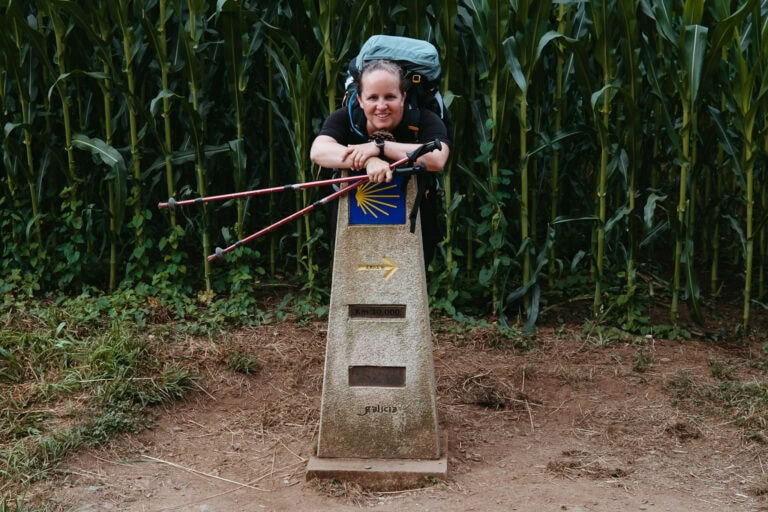
I walked the Camino Frances from Saint-Jean-Pied-de-Port to Santiago de Compostela, and learned a lot about what an aspiring pilgrim can do to effectively prepare for the Camino de Santiago. Now, I’m sharing my top tips with you.
You can certainly have a wonderful and successful Camino without doing all of these things — to be honest, I didn’t even do all of them! — but they will make your experience smoother, safer, and easier (in the right ways).
Here are nine things you can do to prepare for the Camino de Santiago.
Want to read more about the Camino?
Find my complete travel guide for the Camino de Santiago here.

This post contains affiliate links. If you make a purchase or a booking through one of these links, I may receive a small commission at no extra cost to you. Thanks for supporting In Old Cities in this way!
1. Start walking more. A lot more.
At its core, the Camino is a long walk (a very long walk). Really, though, it’s a series of long walks — a few days to a few weeks (or even a few months) of daily long walks. Most pilgrims on the Camino walk about 12 to 20 miles (or 20 to 30 kilometers) per day — each day, for weeks on end, with minimal (or no) rest days.
Physically, then, you will be a lot better off on the Camino if you are already accustomed to walking long distances (especially if you can do it multiple days in a row). In the weeks and months before you leave for the Camino, try to set aside several hours for long walks as often as you can.
If you can simulate the conditions of the Camino (outdoors, with lots of hills and various types of terrain), you will be more prepared. But any amount or type of walking is better than none.
For example, before I ever started thinking about walking the Camino, I got a walking pad (sort of a very basic treadmill) to use in my home office. I put the walking pad under my desk and got a riser for my desk, so that I now had a sort of treadmill desk and could walk while I worked. This turned out to be great training for the Camino, since I typically walked 10 to 15 miles (sometimes even more) on most work days.
Of course, even if the distances were not far off from the Camino, the conditions couldn’t have been more different: walking on a flat treadmill inside my home is not at all comparable to walking outside with a backpack. Still, it was certainly better than nothing, and I was much more prepared for the Camino than I would have been without my treadmill desk.
Copy my treadmill desk setup
Walking Pad

Desk Riser

2. Find your shoes.
Your shoes are your single most important piece of gear on the Camino. If your shoes are too big, too small, or the wrong type for you, your Camino could become very difficult or even impossible (bad blisters can be crippling!).
There’s a wide range of opinions about which type of shoes are best for the Camino. Some pilgrims swear by hiking shoes or even hiking boots (though others warn that boots are too hot/overkill for the Camino, especially if you’re walking in the summer). Others love hiking sandals.
These days, trail runners are a very popular choice, especially for the Camino Frances, which has a wide variety of terrains and plenty of pavement in particular.
I joined Team Trail Runners and went with the Hoka Challengers. And I loved them! I would definitely wear them again on a future Camino.
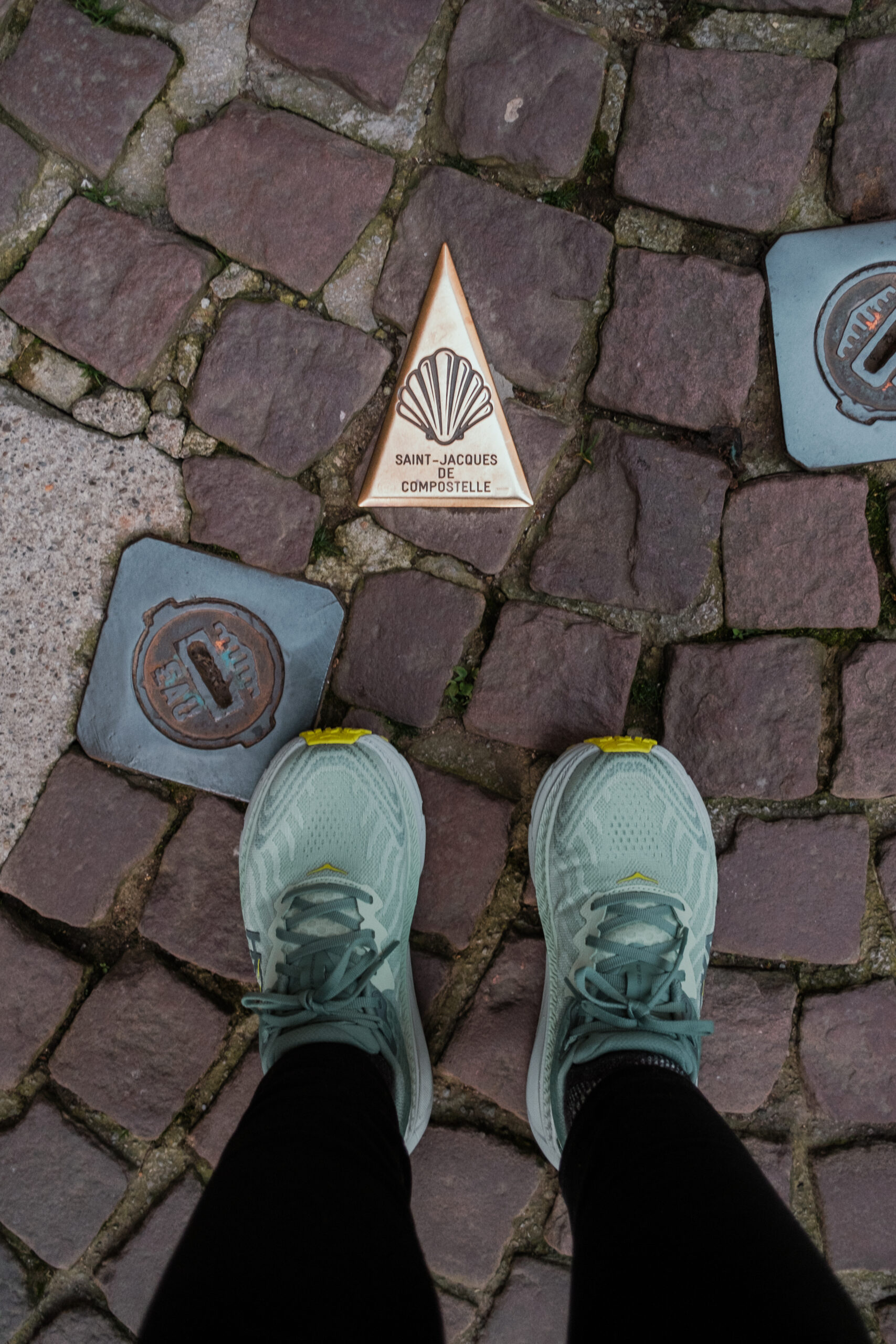
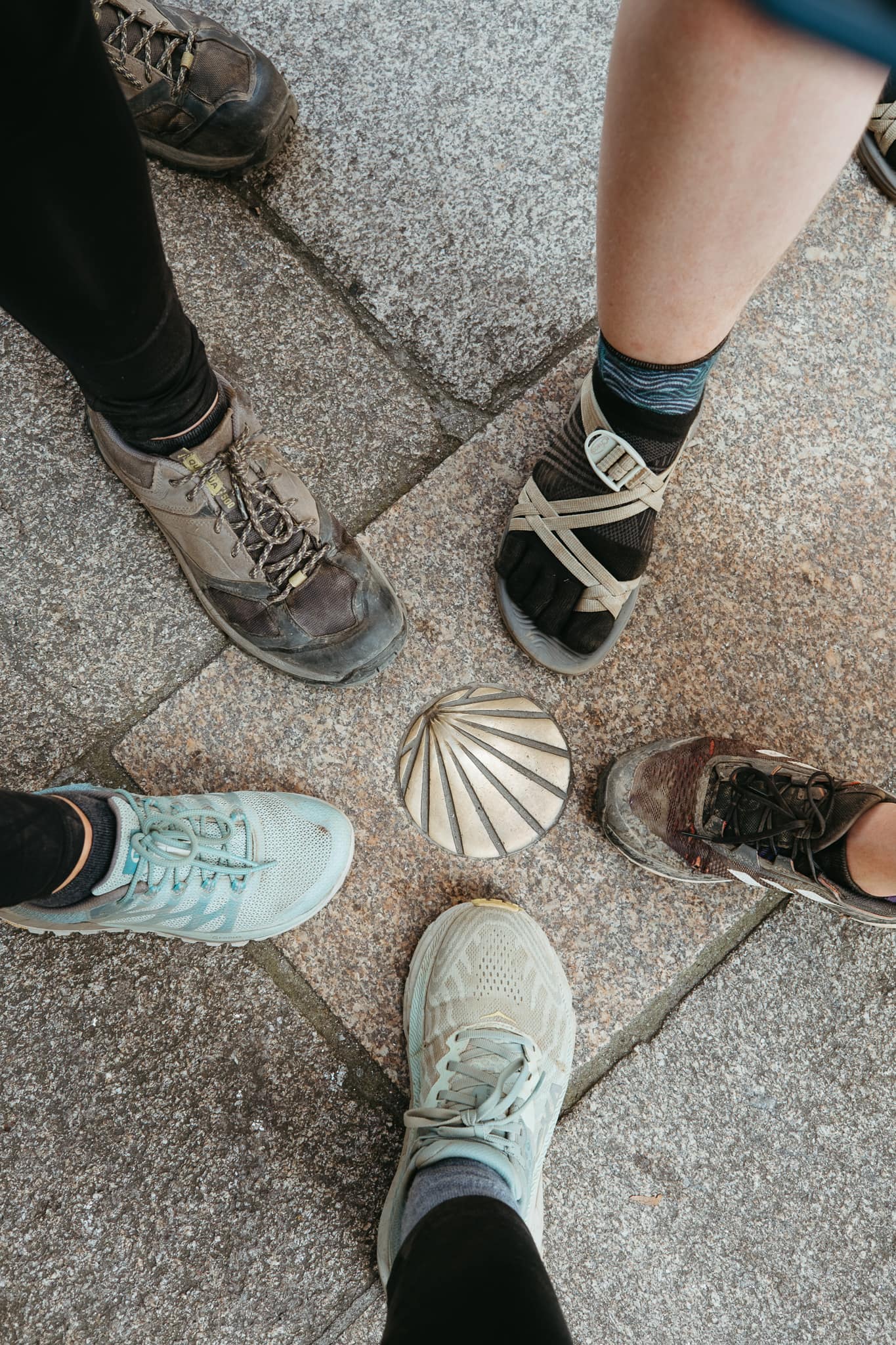
That said, I wouldn’t recommend them for YOU just because they worked great for ME! Camino shoes are very personal, and you should go with whatever feels comfortable to you.
I highly recommend going to a store that sells athletic and/or hiking shoes — ideally, a variety of types — and trying on as many shoes at it takes to find a pair that feels extremely comfortable. (By the way, when you go to try on shoes, bring the socks you plan to wear on the Camino!)
I purchased my shoes from REI because they have a very generous return policy (you can return them even after wearing them, which is quite helpful here since problems with fit might not reveal themselves until you’ve walked a few miles in a variety of conditions!).
The one thing I WOULD change about my shoe choice is to size up more. I normally wear a size 6.5 or 7, and I went with size 6.5 wide for the Camino. The wide style was a great choice, as it gave me more room in the toe box (very necessary!), but I should have gone with the size 7 or even 7.5. Keep in mind that your feet are likely to swell as you walk long distances, and having more space can mitigate some of the rubbing that leads to blisters.
If you’re not sure which type of shoes you want to get, or you’re not able to visit a store in person and need to order online, check out these Camino forums for plenty of helpful discussions about shoe choices!
3. Get fitted for a backpack.
If you’re planning to walk with your belongings on your back, as most pilgrims do, you’ll need to select a quality backpack that fits your body well.
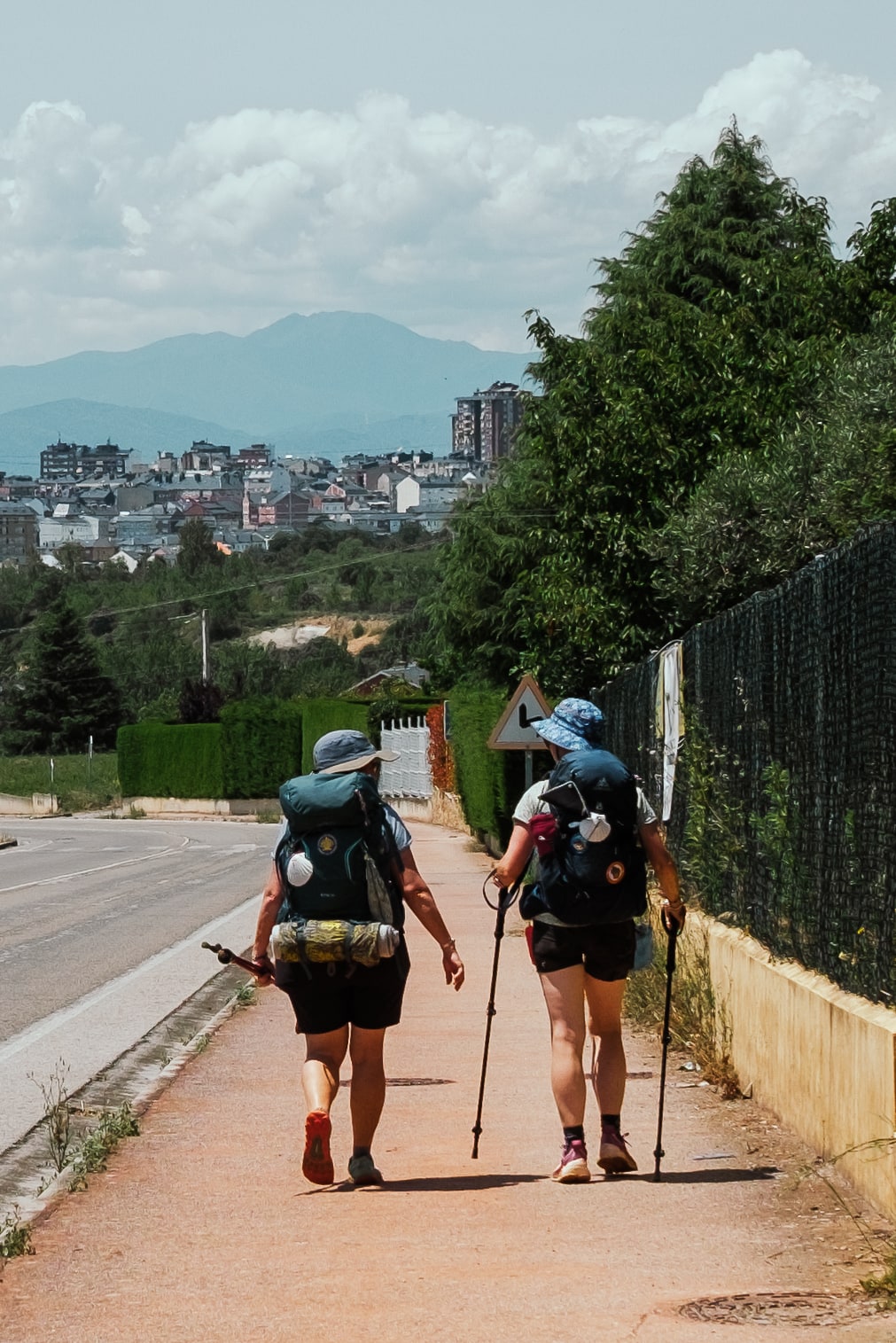

If you’re near a store that sells hiking backpacks, the best way to select your bag is to visit the store and try on backpacks. Ideally, you should load up the backpacks with the amount of weight you will carry on the Camino (shoot for no more 10% of your body weight), so that you can tell what the bags would feel like if you were actually walking the Camino with them. If possible, bring the shoes you will wear on the Camino as well so that you can see how the combination feels.
My advice to get fitted is a “do as you say, not as I do” situation, because I bought a bag without ever getting fitted for it! Personally, I went with the Osprey Sirrus 36, because I read that it was a good fit for women with short torsos (I’m only 5’1″!). Thankfully, this was true, and it felt great as soon as I put it on for the first time.

However, on the Camino — with a full bag and trail conditions — I did have to do some experimenting with the correct settings for all the adjustable straps. Getting fitted in the first place would have prevented all of that and started me off on the right foot!
4. Go for some training hikes.
Now that you have your shoes and your backpack, break them in — and start giving your body a better sense of what it’s actually like to walk the Camino — by adding them to the long walks you’re already taking.
Fill your backpack with a bunch of stuff — any random stuff is fine, as long as it makes your bag about the same size and weight as you expect to carry on the Camino! — and take it out for a training hike. If you have access to a trail with some moderate hills, that’s ideal. Try to carry your bag for at least 3 to 5 miles at a time, if possible. (That’s about how long you’ll usually be walking between towns on the Camino.)
Even if you live in the middle of a city, you can still prepare this way. Just strap on your backpack and take some long walks around your city. Okay, you might feel silly, but that’s a lot better than getting injured on the Camino, or being otherwise unprepared!
However, I would caution you against breaking in your shoes too much if you’re planning to walk in trail runners or something similarly lightweight. Shoes like this definitely do not last forever and you don’t want to wear them down before you even step onto the Camino! (I will say that I thoroughly wore out my Hoka Challengers in the 500 miles of the Camino Frances and had to throw them away at the end.)
5. Learn a few Spanish phrases.
Sure, a lot of people who live and work along the Camino speak some English. But not everyone does — and, at any rate, it’s nice to learn at least some basic phrases before you visit a foreign country. Your Camino will be a lot easier if you know how to do things like order food and ask for a bed or a bathroom.
Based on my Camino experience, I recommend that you try to learn at least the following phrases:
- Hello: Hola
- Goodbye: Adiós
- Please: Por favor
- Thank you: Gracias
- Where is the bathroom?: ¿Dónde está el baño? (NOTE: while “baño” is a common spoken word for “bathroom,” most bathrooms along the Camino are labeled with the word “aseo,” so that’s what to look for in terms of signage.)
- Do you have a bed? ¿Tienes una cama?
- A tortilla and a coffee with milk, please: Una tortilla y un café con leche, por favor
The food order is just an example, of course. It is a good idea to know how to construct basic sentences (using words like “and,” which in Spanish is “y” — pronounced like the letter E).
I also recommend looking up the words for basic food items, like apple (“manzana”) or sandwich (“bocadillo”) to make ordering easier. Consider downloading the Google Translate app onto your phone so you can quickly search for the right word while you are on the go!


I also recommend learning at least the numbers 1 through 20, so you understand when people tell you prices for things.
(And by the way, if you’re walking the Portuguese route, you should learn these phrases in Portuguese too!)
6. Buy the rest of the stuff you need, too.
Shoes and a backpack are your most important gear on the Camino, but they’re certainly not all you need.
If you’re already an experienced hiker or backpacker, you may have most or all of the necessary gear for the Camino. But well in advance of your departure, be sure to develop a packing list and start acquiring the things you’re missing.
Speaking from experience, I can tell you that it’s stressful to realize you still need something shortly before you’re supposed to leave. (Though don’t worry too much: you can find pretty much anything you need in stores for pilgrims along the way!)
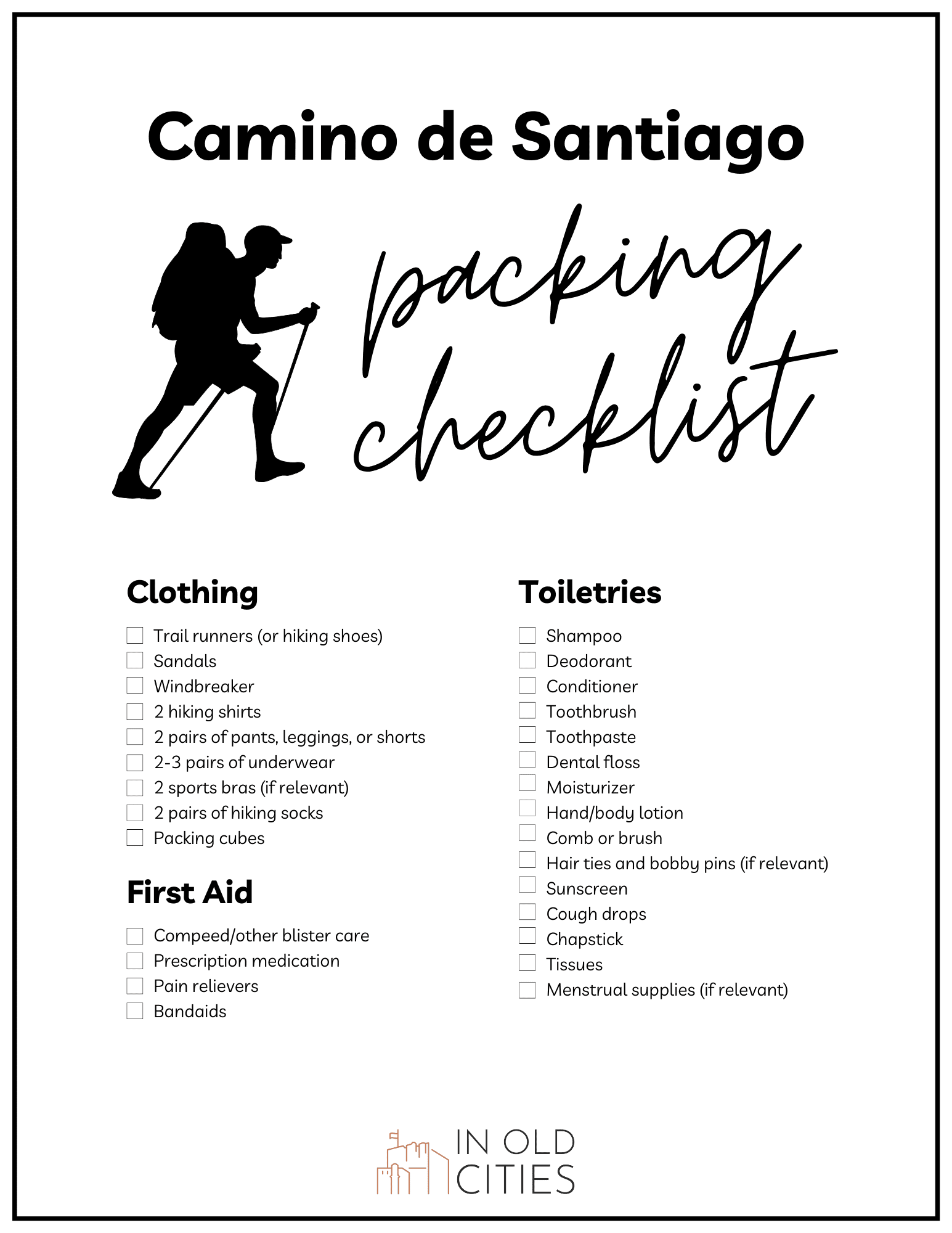
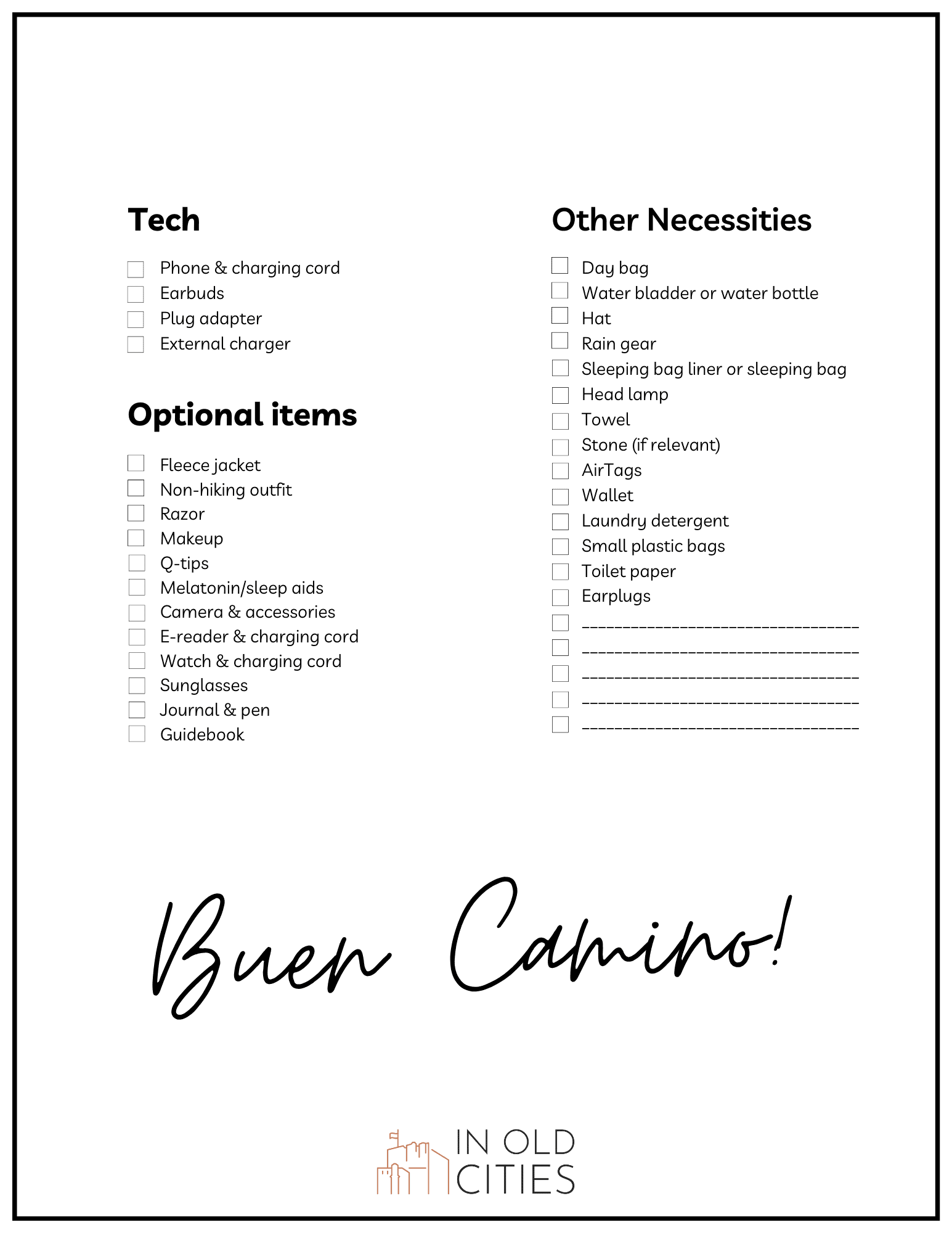
Here’s my personal recommended packing list for the Camino. And check out my full post about packing for the Camino with links to my favorite products and lots of details about why you do or don’t need certain things!
7. Read some books about the Camino.
Before my Camino, I loved reading several books about other people’s experiences on the Camino. This may not be for you — it’s totally fine if you don’t want to have others’ views on the Camino in your head before you go — but I found it to be a nice way to get in the right headspace and set reasonable expectations.
Books I read about the Camino include:
- The Walk of a Lifetime by Russ Eanes. This is a short memoir of Eanes’s journey on the Camino Frances, and it gave me one of my own Camino mantras: I am not in a hurry.
- The Only Way Is West by Bradley Chermside. This is another Camino Frances memoir. Chermside walked the Camino as a young Brit, and writes pretty thoroughly about his experience.
- Two Steps Forward by Graeme Simsion and Anne Buist. This book is actually a novel about the Camino by a married couple that has walked several Caminos together. (Skip the audio book and read this one in print or digital form.)
Likewise, there is no shortage of YouTube videos and movies about the Camino, if you’re interested in diving into visual content about other people’s Caminos. The most famous movie, probably, is The Way, which I did watch before my Camino.
8. Download an app to use on the Camino.
For the most part, the Camino is exceptionally well-marked, and it’s unusual to get lost. However, some pilgrims like to use Camino-specific apps that provide real-time maps, stage previews, elevation maps, lodging options, and more.
I personally did not use any apps on the Camino — between my guidebook and the advice I got from other pilgrims, I had enough information — but friends of mine appreciated apps called Wise Pilgrim and Buen Camino.
9. Rely on Camino forums for any tough questions.
I hope that my posts about the Camino answer all your questions, but in the event that you’re still wondering about some stuff, these Camino forums are an incredible resource. Whatever question you may have about the Camino, it’s probably been asked and answered there!

More Information About the Camino
THE BASICS | Start with an introduction to the Camino de Santiago and 15 important things to know about the Camino, and read about a typical day on the Camino.
SAFETY | Find out what to know about safety on the Camino.
FOOD | From typical meals to costs, here’s everything to know about food on the Camino.
GO IT ALONE | Here’s what you need to know if you’re thinking about walking the Camino alone (like me!).
EXPENSES | Just how much does the Camino cost, anyway? Find out here.
GET READY TO GO | Here’s what to know about how long the Camino takes and how to plan for the Camino (or not!).
ITINERARY | Want to walk the Camino Frances in about 34 days? Read my recommended itinerary.
PACKING GUIDE | Everything you need to know about what to pack (and not to pack!) for the Camino, plus a printable packing checklist.
CAMINO FRANCES | If you walk the Frances route, here are 10 incredible things you can expect to see — plus my own Camino photo diary.
SHORT CAMINO | Here’s how to walk the Camino in just 5 days.
PHOTOGRAPHY | A complete guide to taking great photos on the Camino de Santiago.
pin this post