
How to Visit 8 Mennonite History Sites in Europe
Europe’s Mennonite history is a complicated subject.
Long ago, as the Protestant Reformation picked up steam in Zurich and elsewhere, certain 16th-century radicals believed the reformers didn’t sufficiently adhere to Biblical principles with their new theology. Among other issues, these radicals believed in pacifism, the abolition of mass, and the baptism of adults (rather than infants).
As a result, the group was dubbed the “Täufers” — or, in English, “Anabaptists,” which loosely means “re-baptizers” — because they were illegally baptizing adults who had previously been baptized as infants.
Their ideas were, to say the least, unpopular. Anabaptists were swiftly persecuted, and many were even martyred. Anabaptist history in Europe is, in fact, littered with thousands of martyrs and many more examples of imprisonments, torture, and other methods of religious persecution.
Famously, for example, one Dutch martyr named Dirk Willems managed to escape from prison before his execution, but a guard pursuing him across a frozen pond fell through the ice. Willems, who believed in principles of nonviolence, turned back to save his pursuer in an act of self-sacrifice. He was thereafter burned at the stake.
This severe persecution did not manage to stamp out the movement. Instead, people fled to new pastures. For example, many left Switzerland for Germany, and then — after finding persecution in Germany too — crossed the ocean to what is now the United States or Canada. Others fled to what is now Russia, and developed a strong community there.
Accordingly, the Anabaptist movement survived and spread — and split. Among other splinter groups arose the Amish (named after Jakob Amman, a Swiss man) and the Mennonites (named after Menno Simons, who was Dutch).
Today, there are more than two million Mennonites worldwide — not a tiny number, thanks in large part to decades of international evangelism (for example, there are hundreds of thousands of Mennonites in Ethiopia alone), but not exactly one of the world’s largest religious denominations.
Many others may no longer attend Mennonite churches, but have ethnic Mennonite heritage — the result of insular communities formed centuries ago, which developed their own cultures, foods, and languages. (My maternal grandparents still speak Pennsylvania Dutch!)
My own ancestors (on both my parents’ sides) were Swiss-German Mennonites who eventually emigrated to the United States, seeking a better life and religious freedom. Accordingly, during trips to Switzerland, Germany, and Belgium, I’ve made sure to carve out some time to visit notable sites from Mennonite and Anabaptist history.
If you’re a practicing Mennonite and/or have familial roots in Mennonite communities, or if you’re just interested in the history of the Anabaptist movement, I strongly recommend you do the same. Here’s how to visit nine sites from Mennonite history in Europe.
TIP: This map contains the locations mentioned in this blog post. To save it to your own Google Maps account, click the star next to the map’s name. You can then find and use the map from your Google Maps app by going to “Saved,” then “Maps.”
You can visit each of the locations discussed below independently (note that several will be considerably easier to visit if you rent a car, rather than relying on public transit).
However, if you’d rather travel with a group, I recommend taking a look at TourMagination — a faith-based travel tour company that offers tours focused on Anabaptist history. While I don’t believe that any of their tours visit every single site I discuss in this blog post, some of their tours do reach many of them.
1. Täuferhöhle
Located in Bäretswil, Switzerland
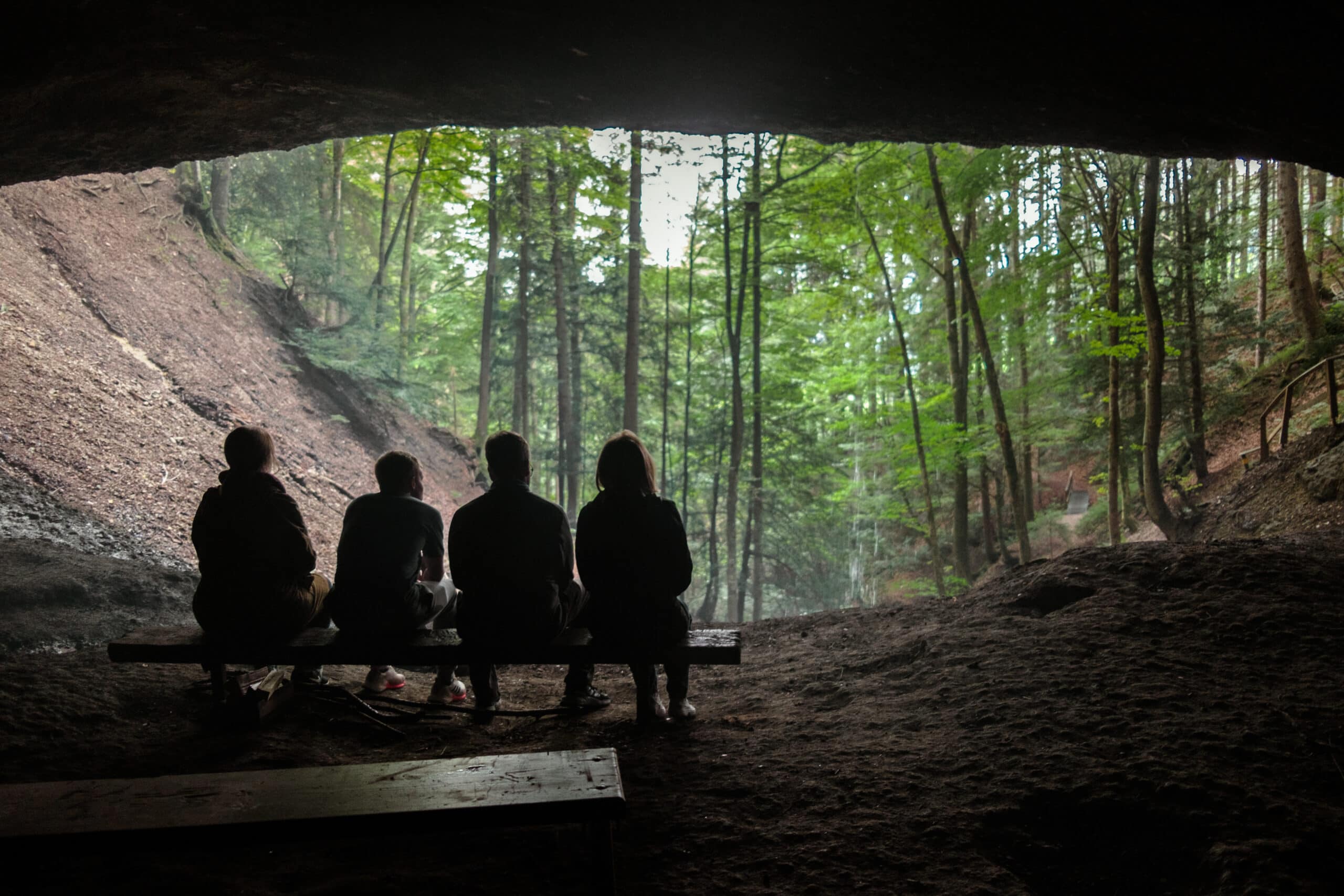
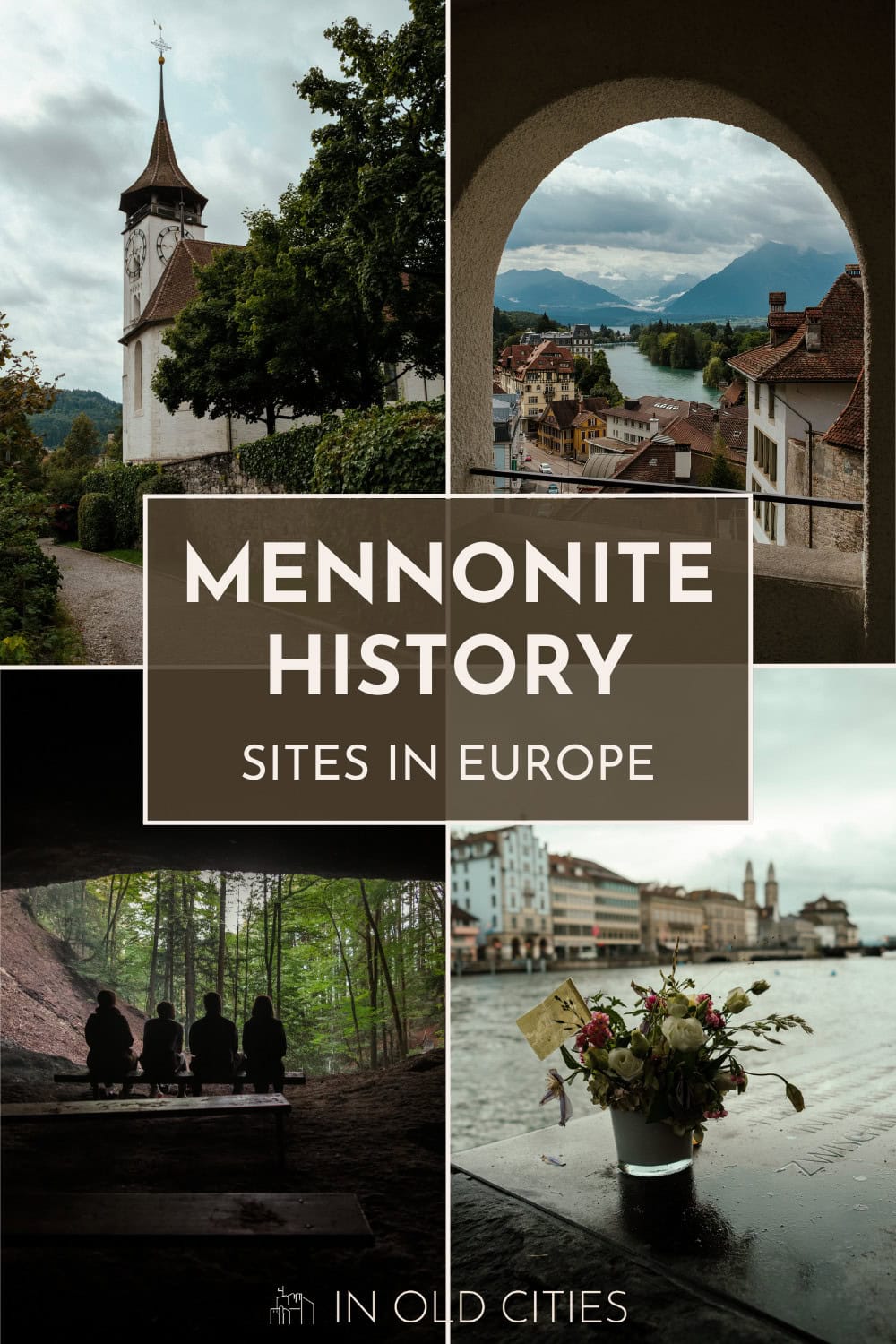
Twenty-some miles outside of Zurich, in woods near the small town of Bäretswil, lies a beautiful cave where early Anabaptists gathered to worship away from the authorities that sought to penalize their religious expression.
It’s also thought that Felix Manz — a well-known Anabaptist martyr — hid in the cave for several weeks before he was ultimately betrayed and executed (we’ll come back to that later) for the crime of baptizing adults.
From the forest, the cave — called Täuferhöhle — is a strange hole in the rocks. Inside the cave, it’s a gaping mouth that opens to lush green leaves and a small waterfall.
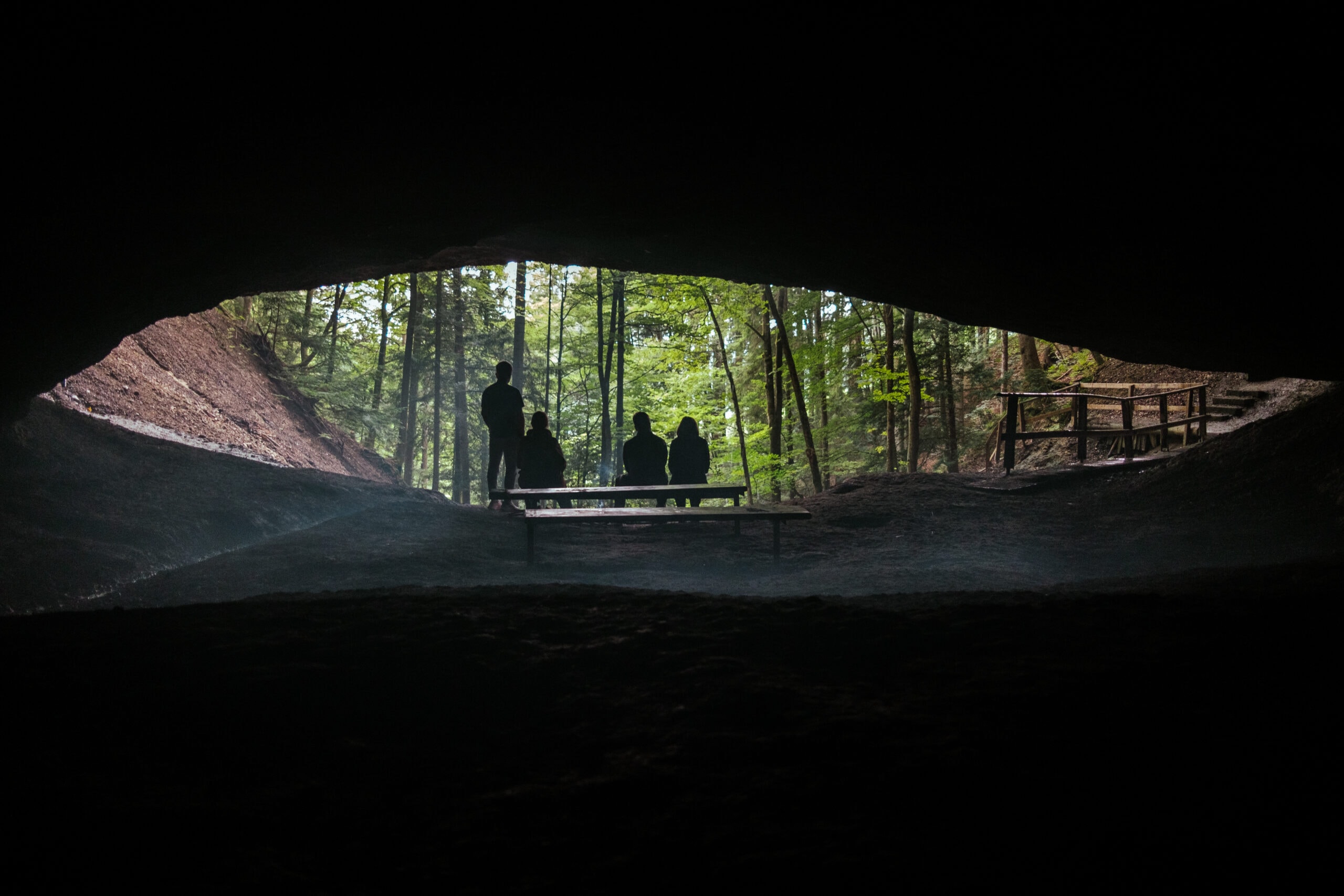
To visit Täuferhöhle, drive to this spot, which is approximately the location of a small (very small) parking area at the edge of Täuferhöhle’s woods. (As you’re driving, keep an eye out for signs to Täuferhöhle, as the parking area is not marked on Google Maps.)
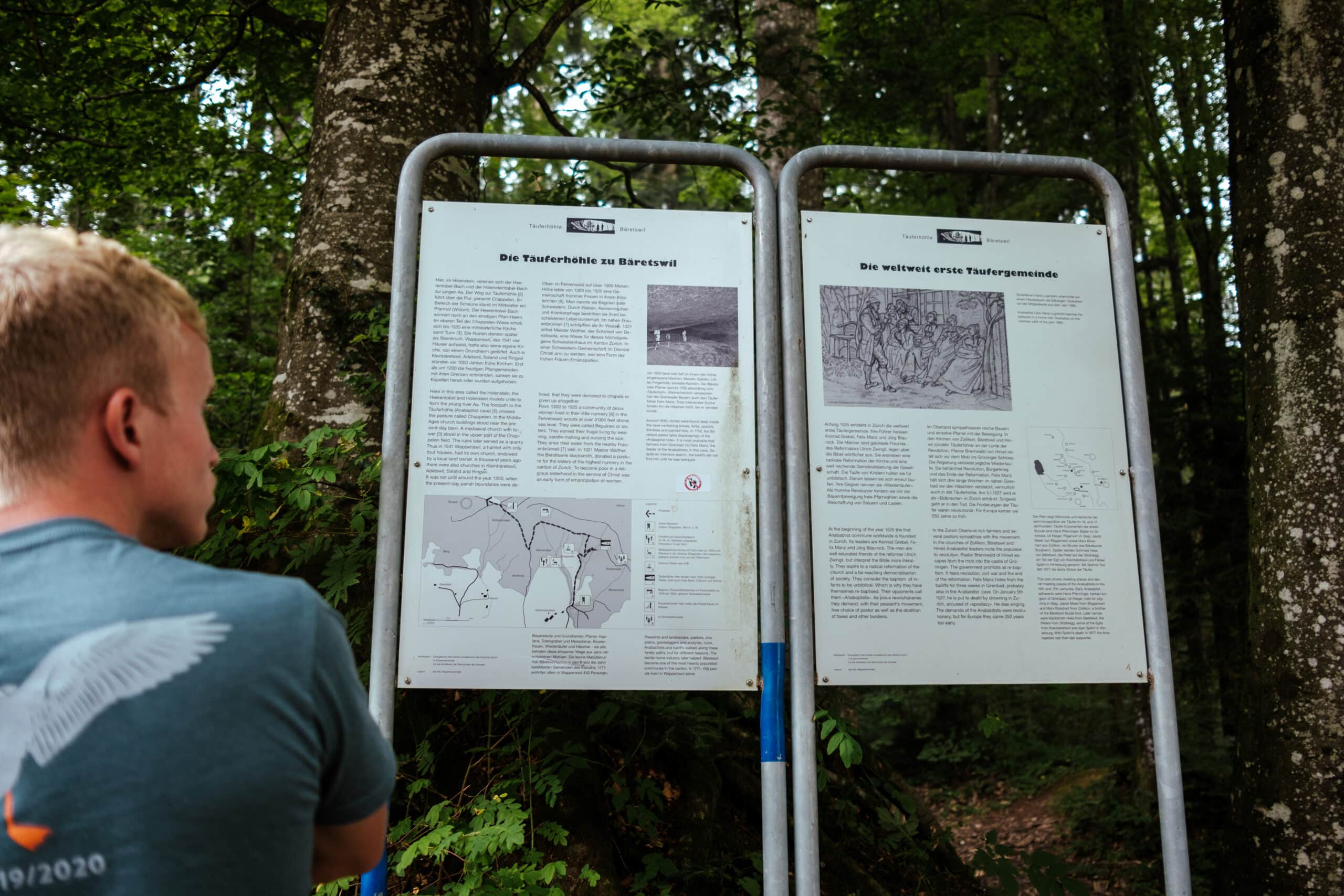
Beside the parking area are signs (in both English and German) explaining the history of the cave. When you’re ready to walk to the cave, follow the yellow sign directing you up the hill toward the woods to the left of the informational signage (you’ll walk past a small structure right off the bat, and then an outhouse partway up the hill). The hill feels a little steep at times, but it’s brief.

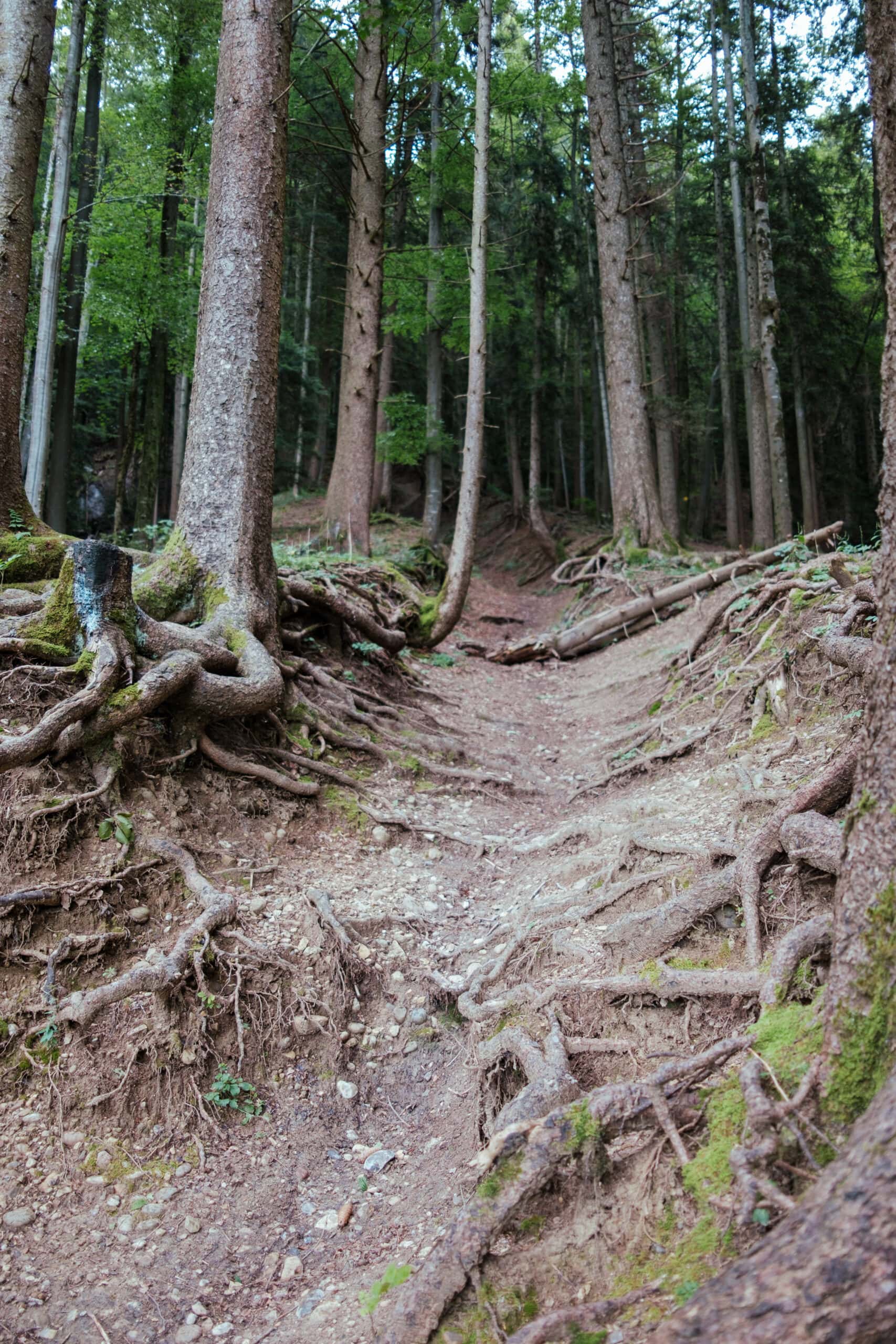
At the top of the hill, you’ll reach the woods. Again, follow the sign pointing you toward the right. After just a few short turns through the trees, you’ll see the cave.
The walk isn’t long — only about 10 to 15 minutes from the parking area for the average walker — but it’s easy to see how the cave’s hidden location offered privacy and protection to 16th-century Anabaptists.
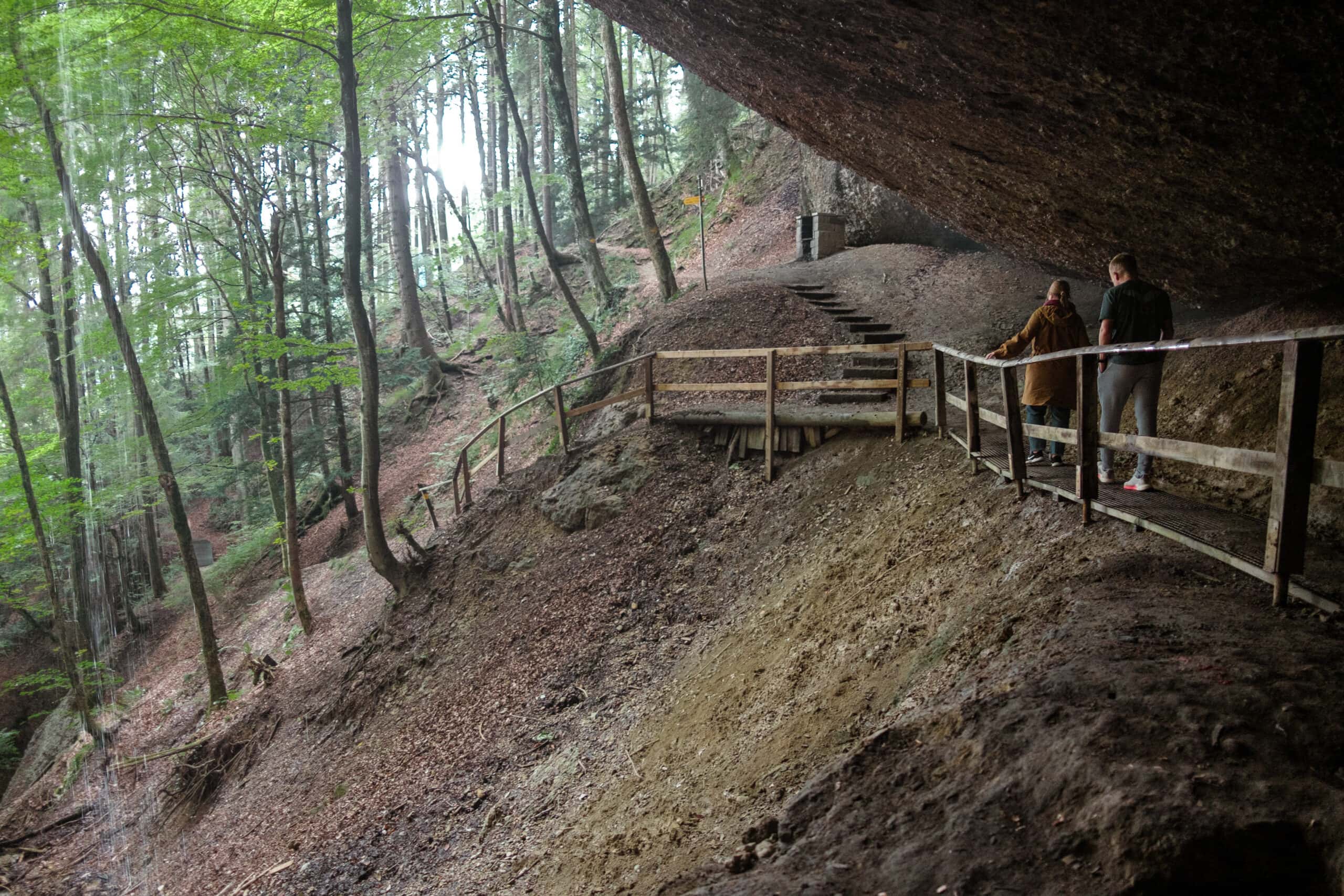


If you’re interested in Mennonite history, you simply can’t visit Switzerland without going to Täuferhöhle. It’s a brief but rewarding walk and, for many, a surprisingly emotional destination.
I’ve visited Täuferhöhle twice, and both times was struck by the conviction and commitment required to steal away to this remote location just to meet with like-minded believers. I don’t know whether any of my direct ancestors ever visited Täuferhöhle, but I know that I was born into a rich spiritual heritage dating back for centuries — and historical sites like Täuferhöhle are evidence.
Täuferhöhle is also simply a nice place to visit, whether or not you especially care about Mennonite history. Local families sometimes walk to the cave for picnic lunches and bonfires, which I understand completely — it’s a very charming location.
2. Trachselwald Castle
Located in Trachselwadld, Switzerland
While the history of Täuferhöhle is a reflection of religious persecution, even more direct reminders of this dark past can be found at Switzerland’s Trachselwald Castle.

From the 16th to 18th centuries, Anabaptists were imprisoned in Trachselwald Castle, which is located in the rolling countryside of the canton of Bern. Some of the imprisoned were then executed for their religious beliefs and expression.
To Switzerland’s credit, they have done an excellent job owning up to, and appropriately recognizing, the tragic history of Trachselwald Castle. Today, Trachselwald Castle is essentially a museum commemorating its prior imprisonment of Anabaptists. In the large rooms at the base of the castle are displays and audio recordings explaining when and how Anabaptists were kept in this place, and how they responded.

When you climb up to the tower (on rather narrow stone staircases), you will discover several rooms containing the cells in which prisoners were kept. Take a moment and consider what it would have meant and felt like to be trapped in these spare, brutal spaces, and the strength of character required to stick to one’s convictions in the face of such treatment.

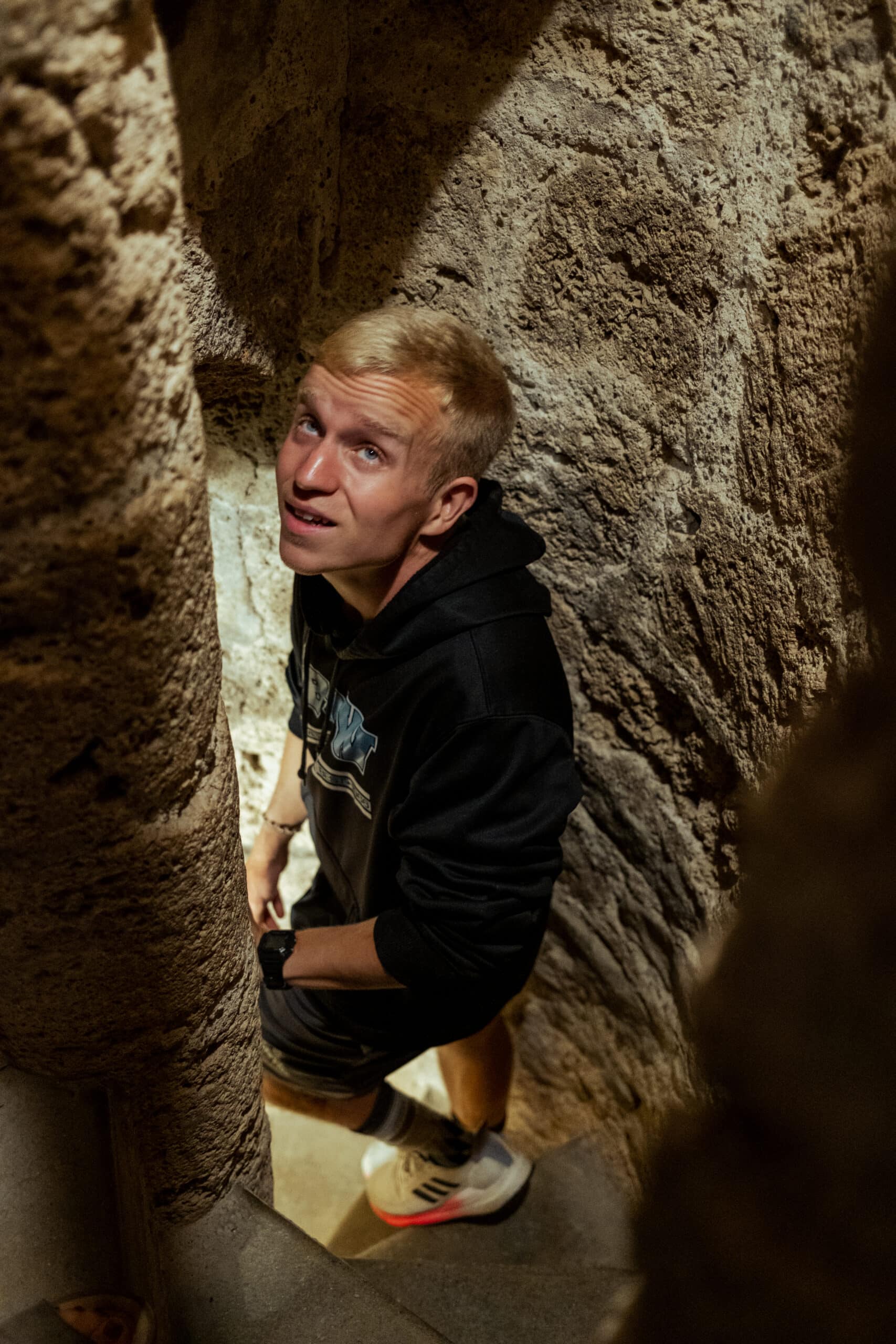
Intriguingly, decades of visitors have also turned these rooms into something else: a record of visitors to the castle.
The walls around the cells are filled with names of those who have visited the castle and recorded their own names in pen or marker. Many have added the dates of their visits and/or their places of origin. If you have ever attended a Mennonite church in a place with a lot of Mennonites, are connected with a Mennonite university, or otherwise have an unusually high number of relationships with Anabaptists, I think it is quite likely that you might find names you recognize.
Mennonites are not typically known for defacing property. However, they are extremely practiced at making connections. Particularly when two people who grew up Mennonite and have ethnic Mennonite roots meet, you can count on them immediately trying to work out how they are related or if they have any mutual friends (and probably succeeding).
This is, of course, not behavior that’s unique to Mennonites, but because the Mennonite world is so small, Mennonites are perhaps unusually likely to actually discover their connections. (I have personally witnessed my mother meeting someone new and realizing that they are her second cousin on more than one occasion.) We call this “playing the Mennonite game.”
In one sense, the walls of Trachselwald Castle are a one-sided Mennonite game. In just a few minutes of searching, my family found the names of dozens of people we personally know or know of (none of whom I previously even knew had visited the castle), including some of my college classmates and professors, people who attended the tiny church I grew up in, and siblings of friends.
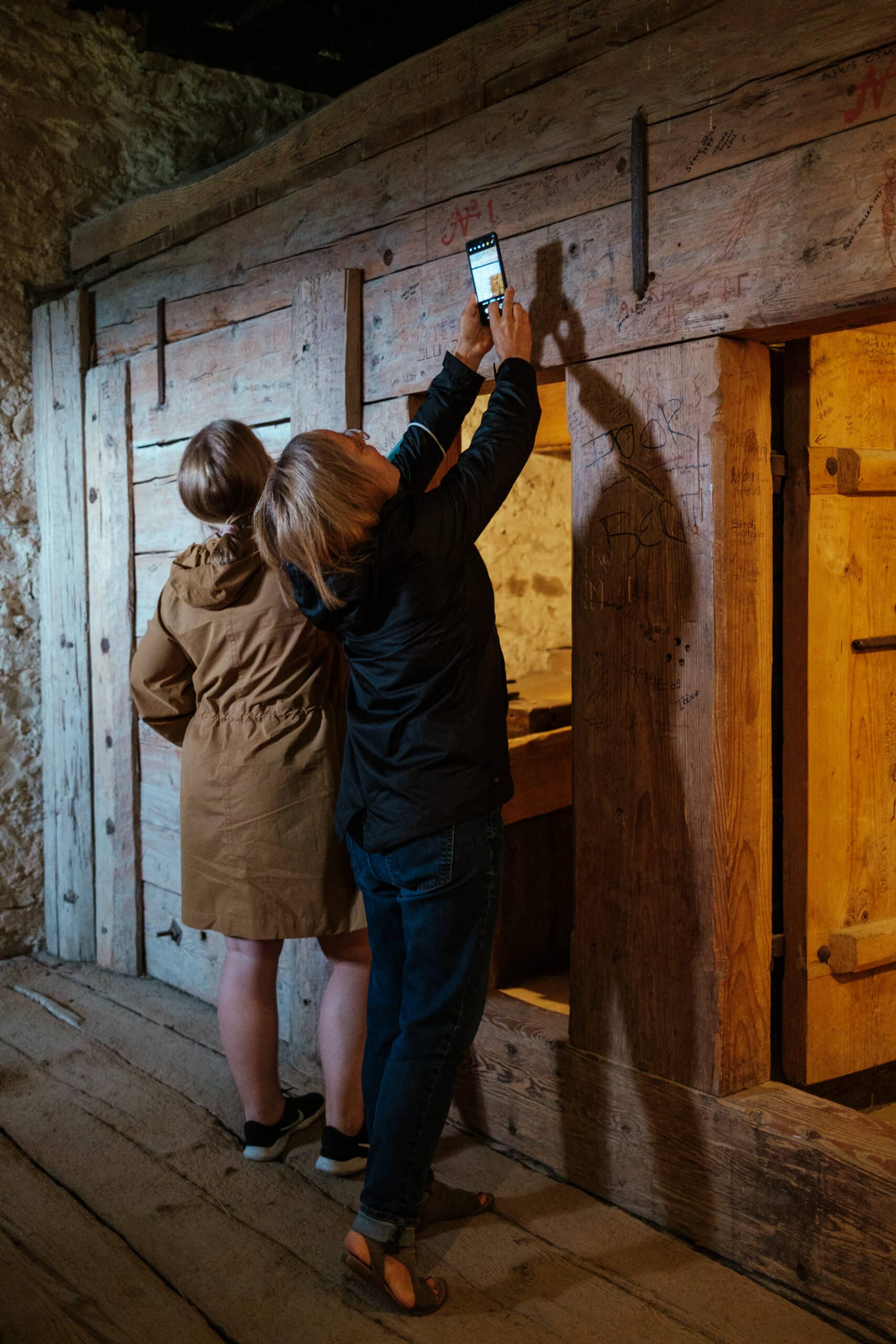
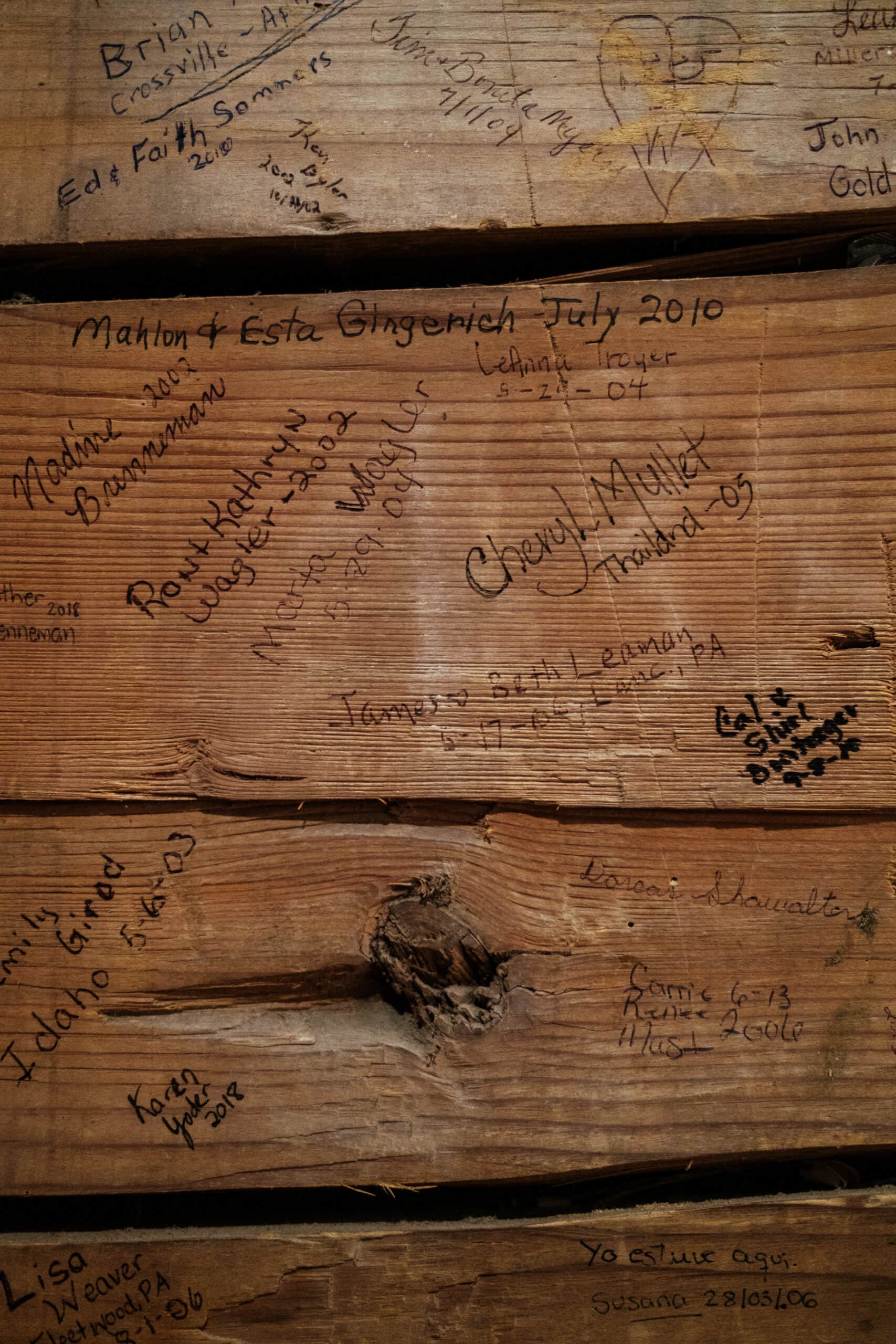
I am ordinarily opposed to travelers making permanent physical marks on the places they visit. However, there’s something very special about Mennonite visitors of today recording their presence in this space that one imprisoned their spiritual (or perhaps even actual) ancestors. The suffering of those early Anabaptists was not in vain: the movement survives, and so does their legacy. (No comment as to whether my own family added our names to the walls!)
TIP: If you want to join the ranks of the rebellious Mennonite graffiti artists, make sure to bring a pen with you into the castle. Believe it or not, the castle doesn’t outright provide the materials you’ll need to write on its walls.
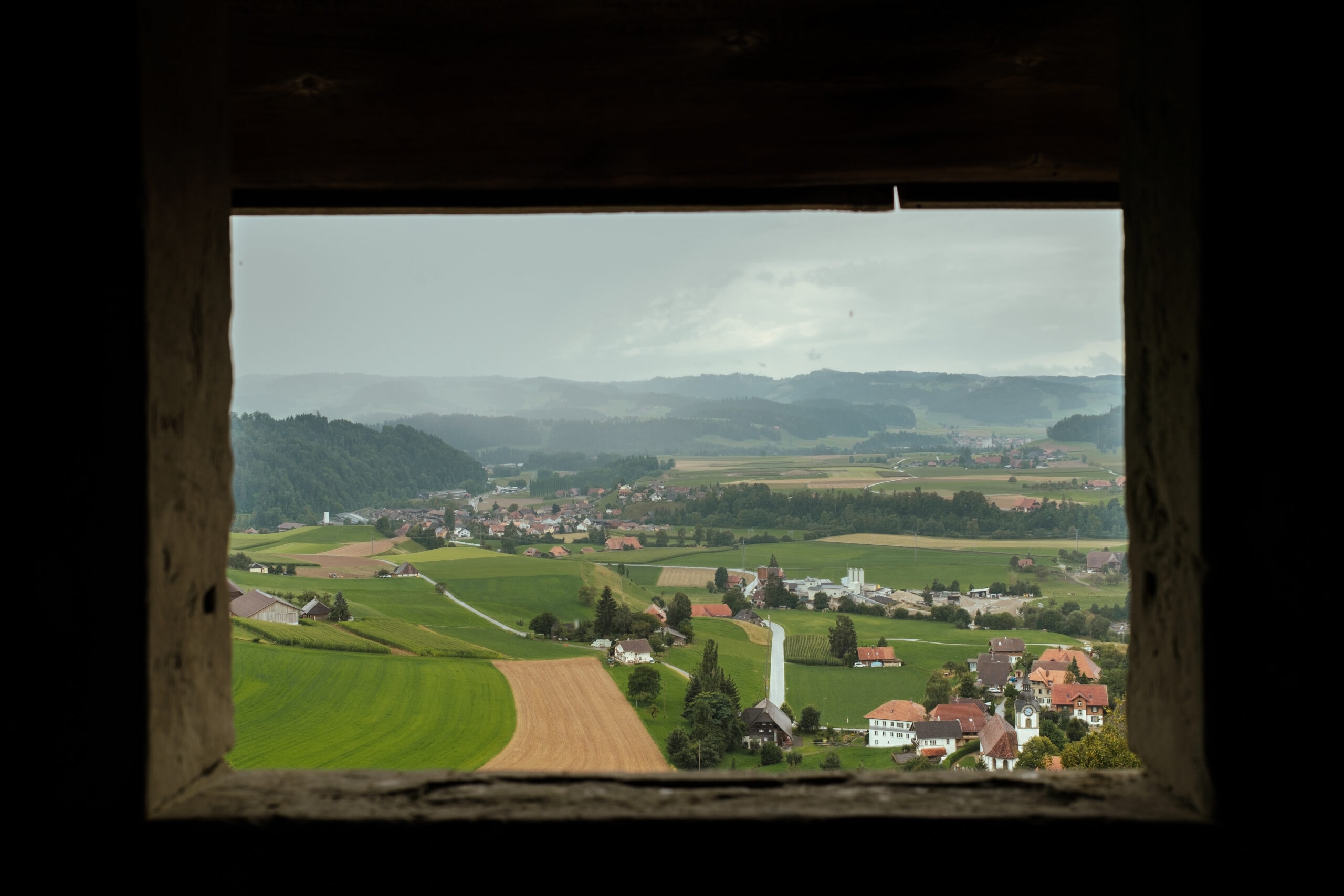
The uppermost room with cells also contains several windows (not accessible from the cells) with beautiful views of the surrounding countryside. It is almost hard to believe that such a lovely place could be used for such terrible treatment of people. Of course, history is full of examples of horrible things happening in beautiful places.
If you have a car, Trachselwald can easily be visited as part of a day trip from pretty much anywhere in northern Switzerland, though it’s closest to Bern (approximately a 45-minute drive).
If you don’t have a car during your trip to Switzerland, you can reach Trachselwald Castle via public transit. You’ll need to take a series of trains and/or buses to the nearby town of Sumiswald, then walk about half an hour to the castle. Because the exact train lines you’ll travel depends on the time and date of your visit, I recommend checking Google Maps and local train schedules for possible departure times on the day before your planned visit to Trachselwald.
Note that public transit takes much longer than driving in this instance (given that the trip requires one or more transfers when coming from most notable Swiss destinations). If your plan is to visit Trachselwald using public transit, be sure to check Google Maps for potential journey lengths in advance so you can plan your itinerary accordingly. (You don’t want to to assume you can go to Trachselwald and back in 4 hours, only to learn on the day of your visit that it will take you 3 hours just to get there.)
3. Thun Castle
Located in Thun, Switzerland
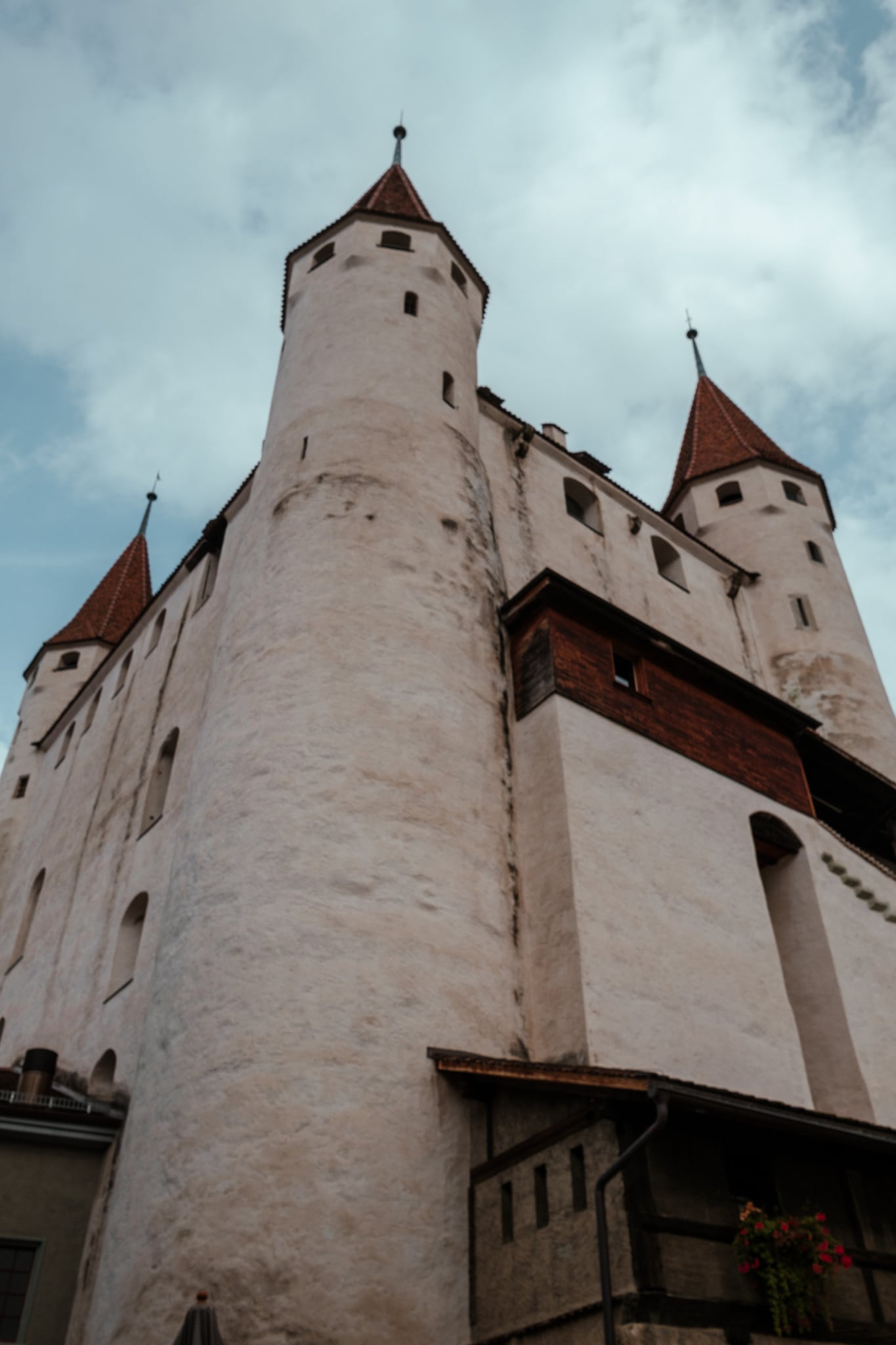
For another reminder of Anabaptist imprisonments, visit the town of Thun, Switzerland. There, towering over the town is another castle that was formerly used to imprison Anabaptists (including at least one of my own ancestors).
Today, the 12th century castle is used as a museum with exhibits about the castle, town, and more. Check current operating hours and ticket prices here. (Heads up that in order to reach the castle, you’ll need to climb a fair number of stairs.)
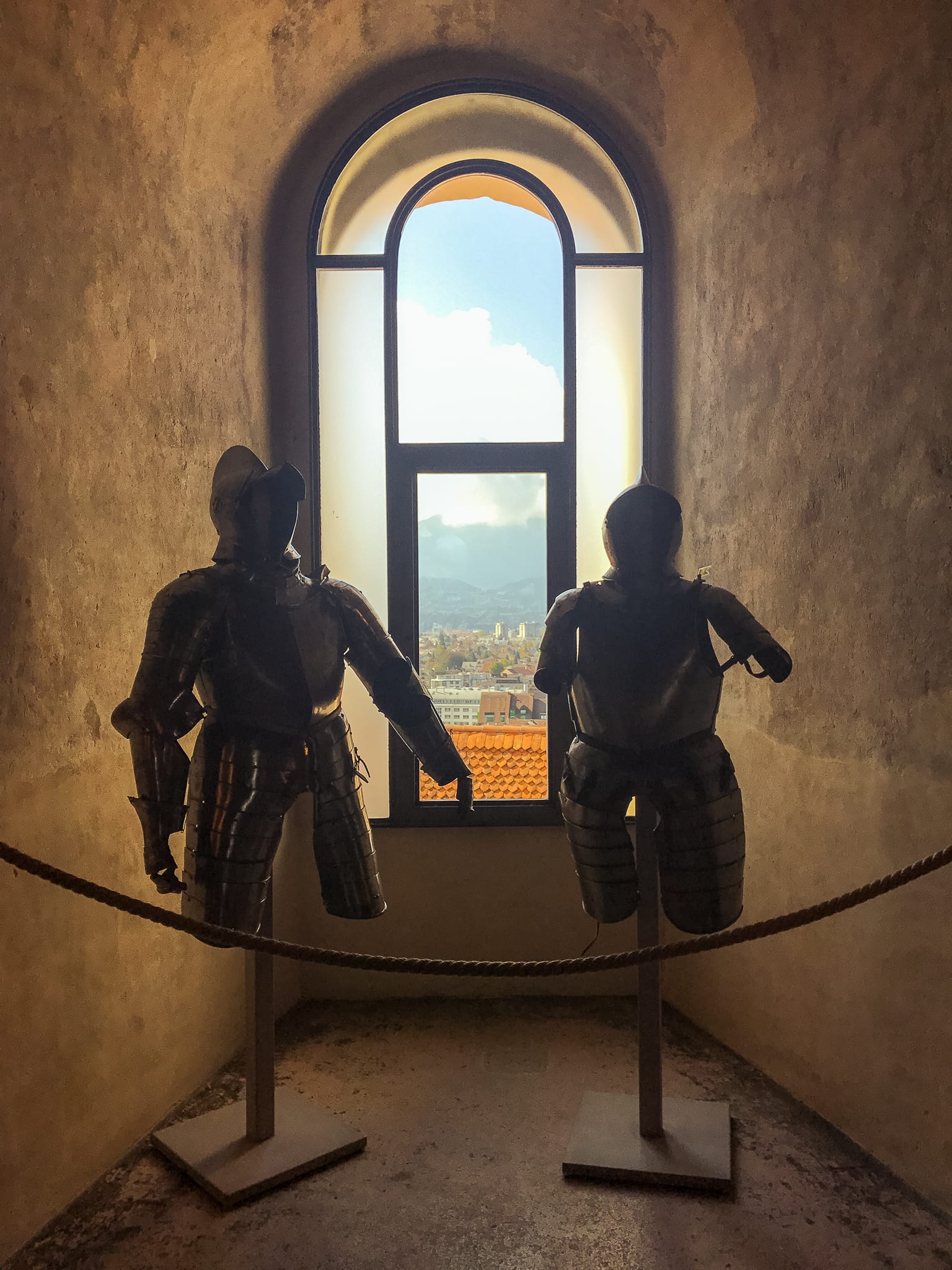
Personally, I thought the museum itself was only okay — but the view from the towers where Anabaptists were once imprisoned is fabulous. You can get also a good view of the town from a viewpoint near the town’s most prominent church, but the castle (and especially its towers) is so much higher that the view can’t be compared. (Plus, from the castle, the picturesque little church is also part of the view.)

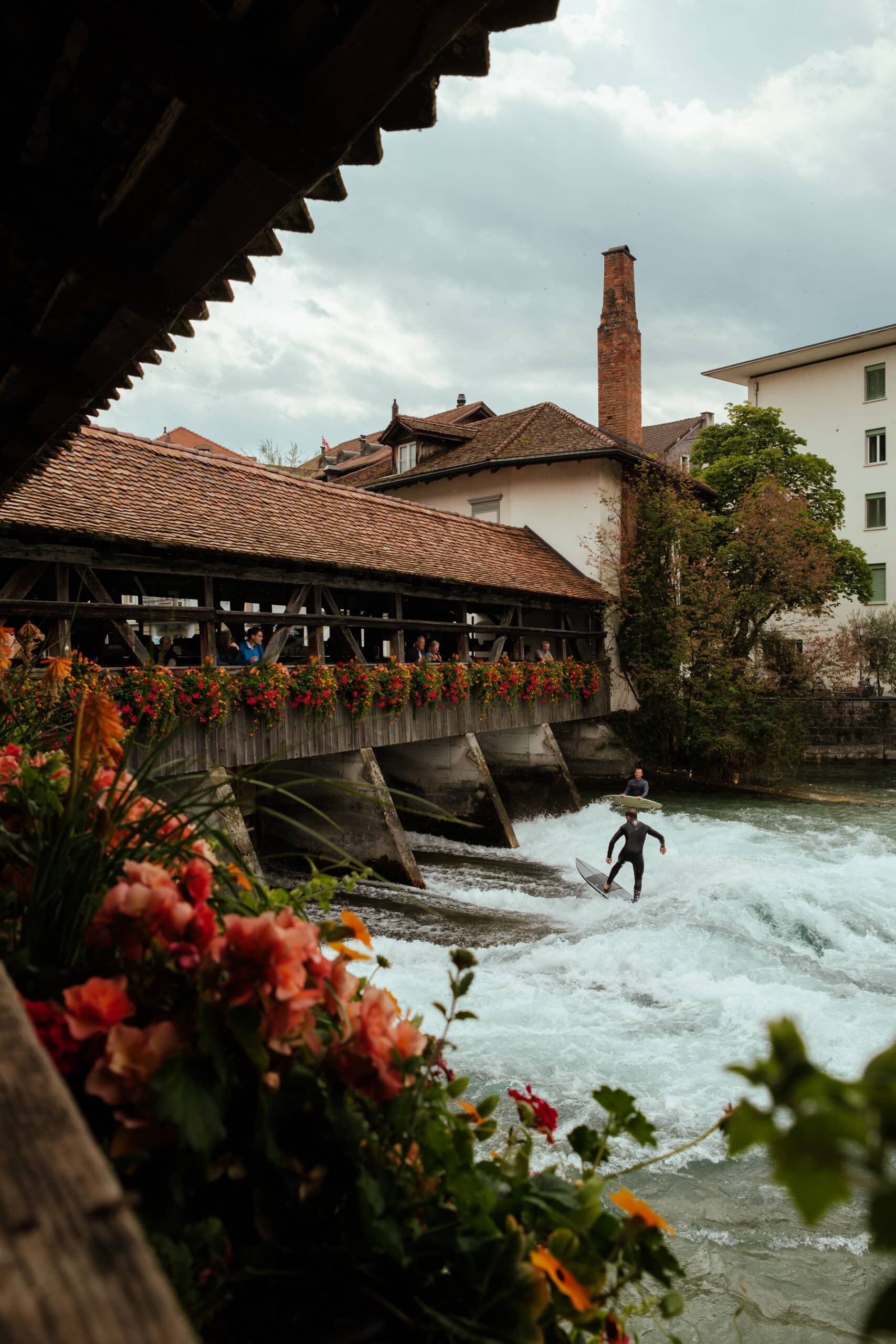
In addition to visiting the castle, be sure to give yourself at least a few additional hours to walk around and enjoy this charming town. Don’t miss the surfers riding artificial waves on the narrow river, the spacious town square with a castle view, or the decked-out wooden bridges crossing over beautifully blue-green water.

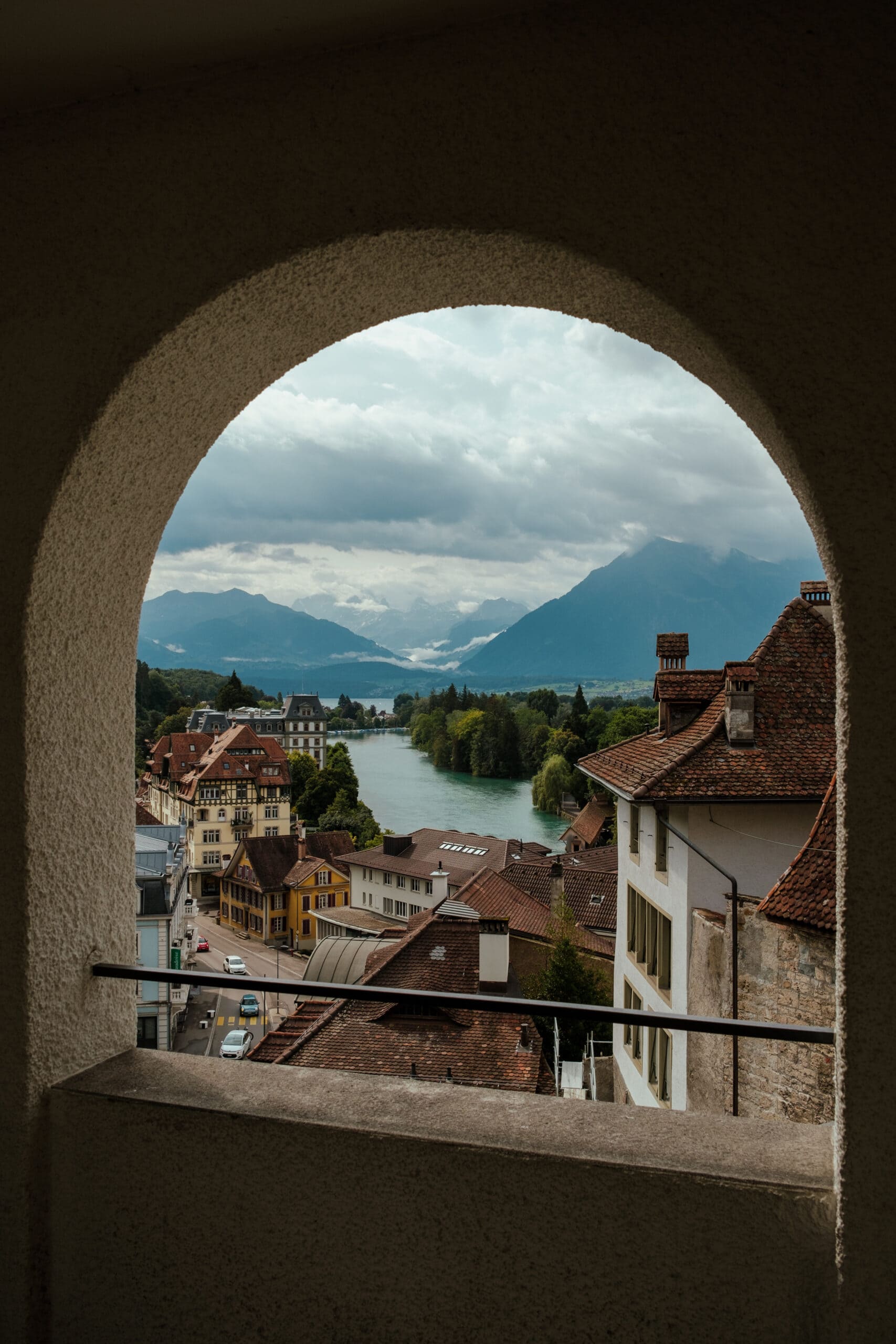
READ MORE: How to Visit Thun and Brienz in One Day
4. Steffisburg Landeskirche
Located in Steffisburg, Switzerland
Pair your visit to Thun with a quick stop in the tiny town of Steffisburg, which is just outside Thun. (If you aren’t traveling with a car, you can easily reach it by bus from Thun, as I have personally done on one of my trips there. If necessary, you could even walk.)
Steffisburg is the ancestral home of many Swiss-German Mennonite families (including part of my own family). For our purposes, the star of the show is Steffisburg’s Landeskirche — a small, historic church.

Inside is a large plaque featuring an artistic depiction of Moses and the Ten Commandments. Around Moses are the names of prominent local men from centuries ago. Incredibly, it’s dated 1682.
If you have Swiss-German Mennonite roots, you will likely recognize many of the family names here (Yoder, Gingrich, Stauffer, variations on Lehman and Garber, etc.). Perhaps you, like me, can even trace your family history to one of the names on this plaque.

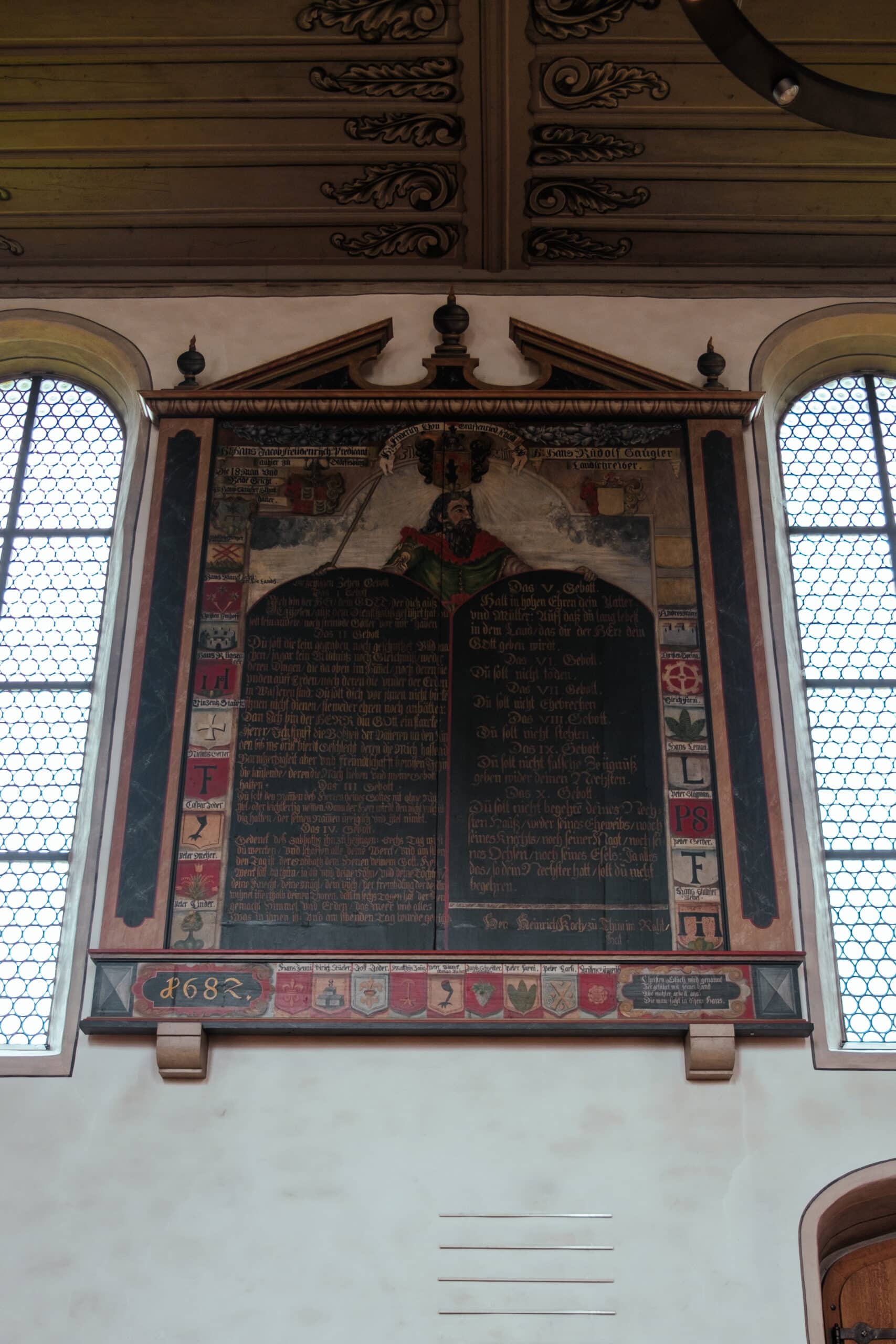
I’ve visited Steffisburg twice, and on both occasions, the church was open (with no one there) during regular business hours. However, if you want to ensure that will be the case during your visit as well, you might consider contacting the local parish first.
5. Limmat Memorial Plaque
Located in Zurich, Switzerland
Of the thousands of Anabaptists who were martyred in Europe, one of the best known is Felix Manz. In 1527, at the age of just 28 or 29, he was killed by drowning in Zurich for the crime of baptizing adults. With his hands and feet bound, as he waited to meet his end in the ice-cold water, Manz — who never renounced his belief in Anabaptist principles — sang a hymn.
Today, Felix Manz is commemorated with a plaque at the banks of the Limmat River, near the location where he was drowned.
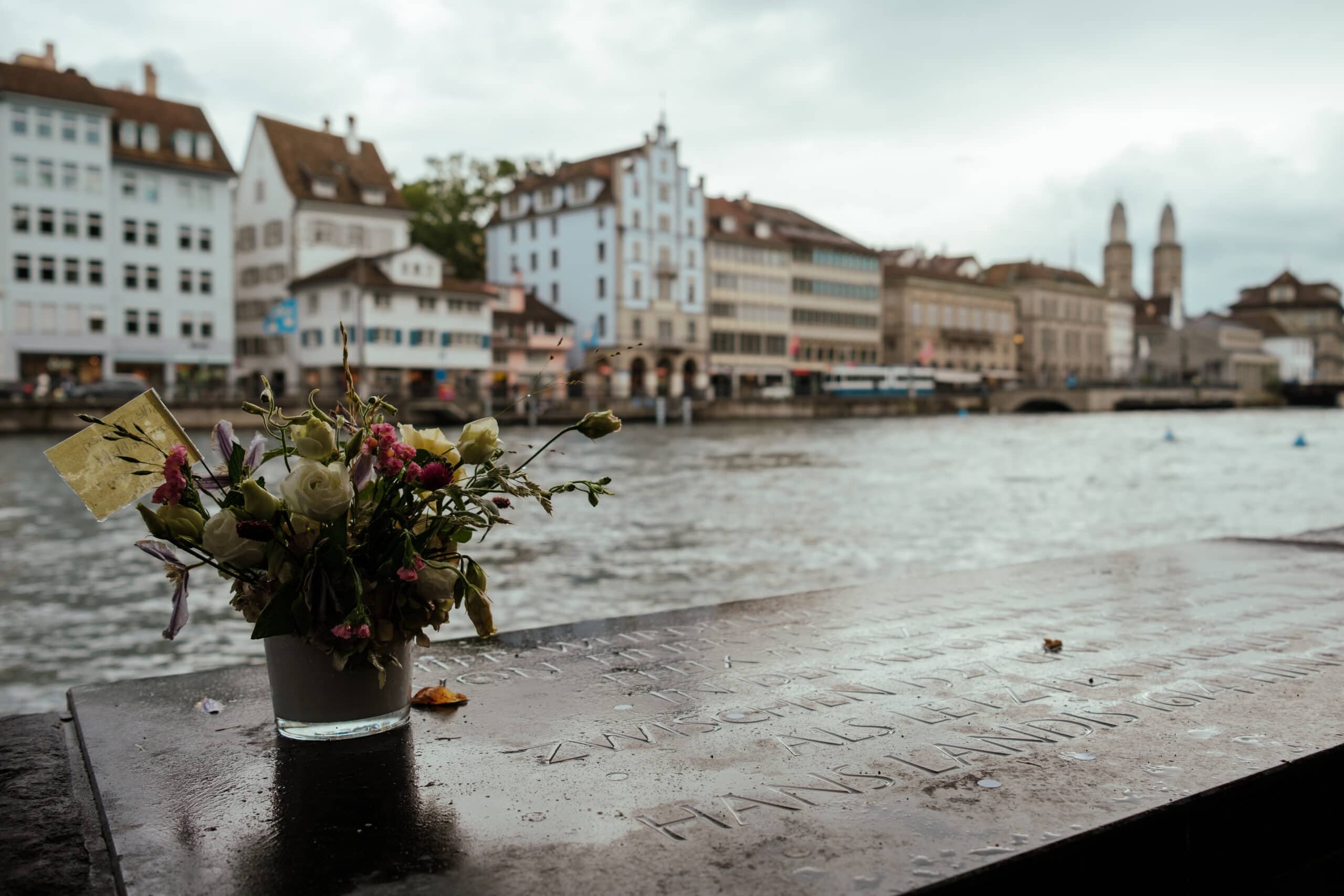
The plaque also commemorates Hans Landis (another of my ancestors), who was the last Anabaptist to be executed in Zurich. In 1614, he was beheaded in a tower that formerly stood in the Limmat River.

6. Zwingli House
Located in Zurich, Switzerland
Also in Zurich is the onetime home of Ulrich Zwingli, who was a crucial figure in the Swiss Reformation.
Zwingli represents a complicated part of Mennonite history. While his work was a reformer was critical to establishing the environment that produced Anabaptism, Zwingli and the Anabaptists eventually developed serious theological (and other) differences, as the Anabaptists were more radical than Zwingli. (For example, the Anabaptists, unlike Zwingli, believed that the Bible demanded pacifism and prohibited infant baptism.)
As a result of these disagreements, Zwingli labeled the Anabaptists extremists, and did not defend them when they were executed and forced to flee from Zurich.
The Zwingli house is not open to the public, though you can easily visit its exterior, which is just a few steps away from the famous Grossmünster church. (There’s also a Zwingli statue beside the church.) Above the door to the home, a plaque states in German that “on October 11, 1531 [Zwingli] moved from this house with the Zurich army to Kappel where he died for his faith.” (Debatable: Zwingli died in battle, fighting for Zurich — though the battle did have religious issues at its origin.)


7. Täuferkeller Steinsfurt
Located in Steinsfurt, Germany
In recent years, Mennonites in Germany have made a concerted effort to recognize and publicize locations that are critical to Anabaptist history there. They have labeled this project the Täuferspuren, or “Anabaptist Path.”
One of the most interesting destinations on the Täuferspuren is the Täuferkeller, or Anabaptist cellar, in Steinsfurt.
In the 17th century, with severe persecution continuing in Switzerland, many Anabaptist refugees made their way to what is now Germany, where they were somewhat more tolerated, but continued to suffer from systemic discrimination. Among other issues, Anabaptists in some locations were not permitted to gather to worship or even to hold celebrations such as weddings.
However, many Anabaptists did not adhere to these restrictions, and continued to meet for worship services. One such place they met was a cellar in Steinsfurt.
In March 1661, the cellar was raided and an illegal gathering of more than 50 Anabaptists was discovered. While the attendees were not imprisoned or executed, as some might have been in Switzerland, they were fined a positively extortionate fee. And still, the Anabaptists continued to meet.
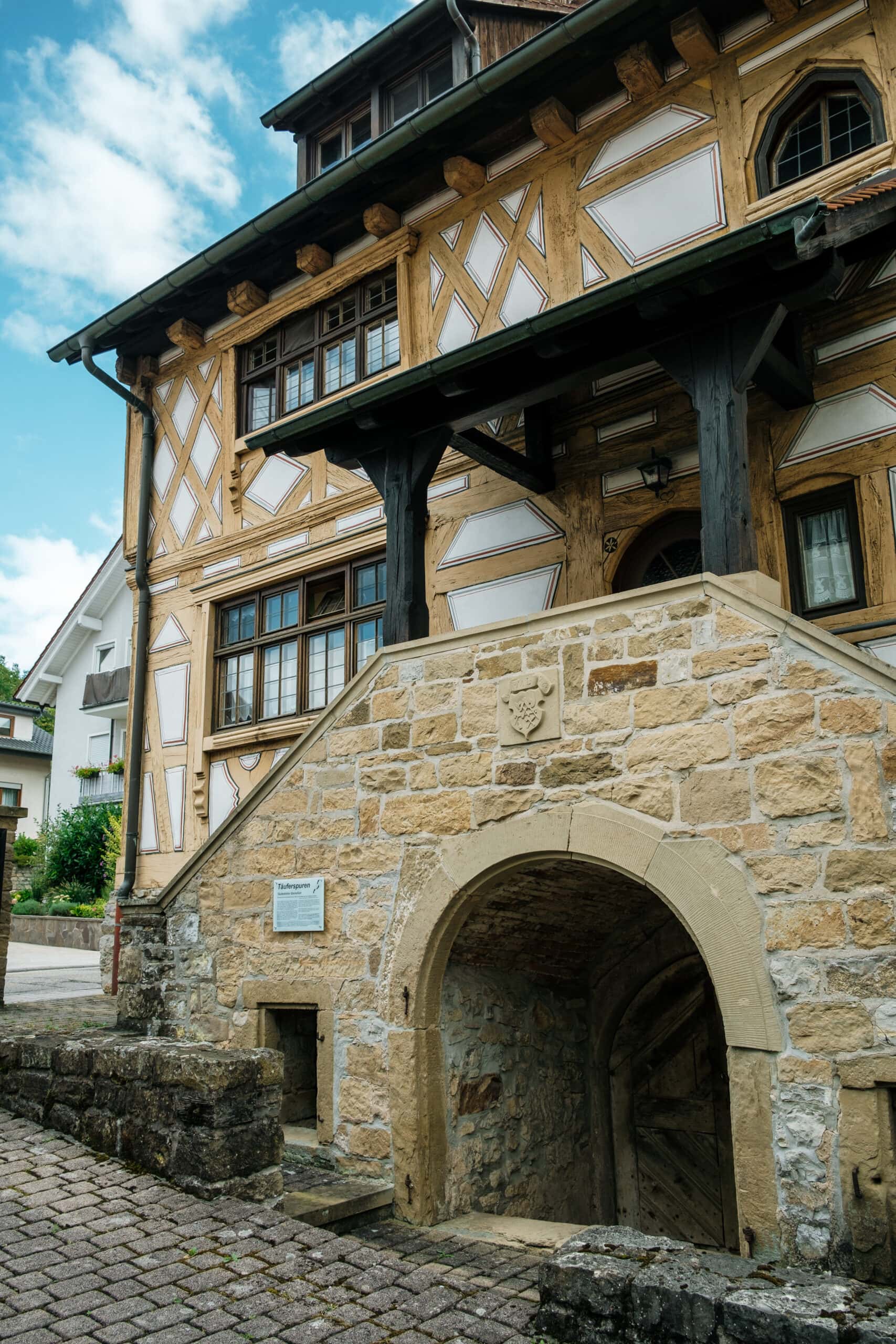
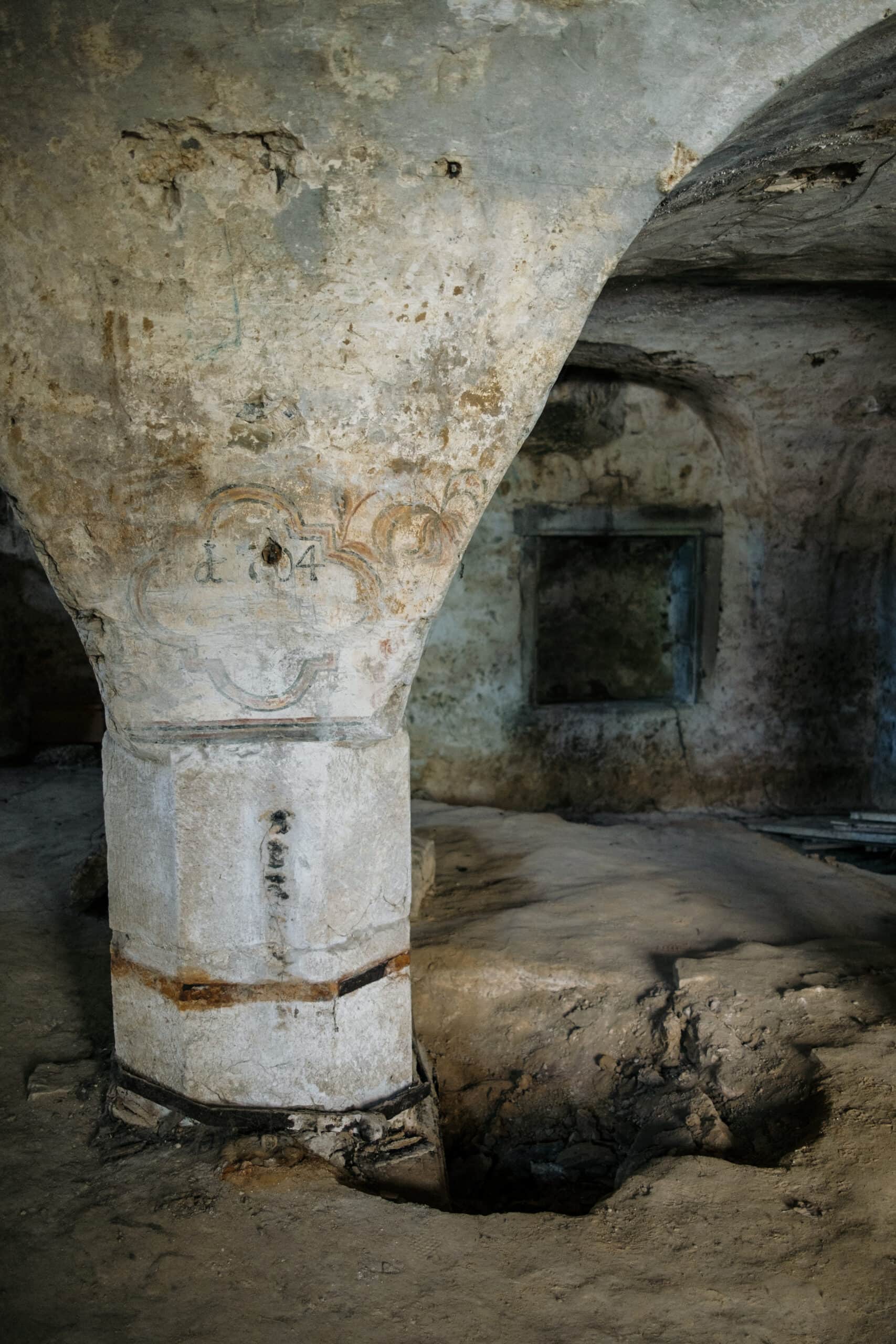
Of all the destinations on this list, the Steinsfurt cellar will be the trickiest for you to visit. While you can certainly swing by the location and see the exterior, the cellar itself is not regularly open to visitors. (My family gained access because we were visiting a family friend who lives in the area and is involved with the Täuferspuren project.)
If you wish to see the inside of the cellar, I recommend that you contact the Mennonitische Forschungsstelle (Mennonite Research Center), who may be able to connect you with people who can give you access to the cellar. You can find their email address on the Täuferspuren website.
Alternatively, the Mennonite church in Sinsheim (next to Steinsfurt) may be able to help you out.
8. Gravensteen
Located in Ghent, Belgium
By now, you perhaps have picked up on a theme: not infrequently, European castles were used to imprison, torture, and execute Anabaptists during the early history of the movement.
Gravensteen was no exception. Dating back to the 12th century, Gravensteen (meaning something like “Stone Castle of the Counts”) was originally the home of the Counts of Flanders. Later, however, it became a prison and court. Many people, including at least 146 Mennonites, met horrible ends there.

Today, it is easy to visit Gravensteen, which is right in the beautiful old town of Ghent. If your hearing is sufficient, I strongly recommend that you opt for the audio tour (which is included in the price of your ticket), as there is little to no signage providing context for what you are seeing as you walk through the castle.
The audio tour does not specifically mention Mennonites, though it does make some references to the imprisonment of “religious dissidents” — some of whom, presumably, were Anabaptists. During the tour, you will walk through or past places where people were tortured and/or executed, including the spaces pictured below: a room with a hole where food was dropped to the masses of prisoners in the dungeons below, and a room full of torture implements.

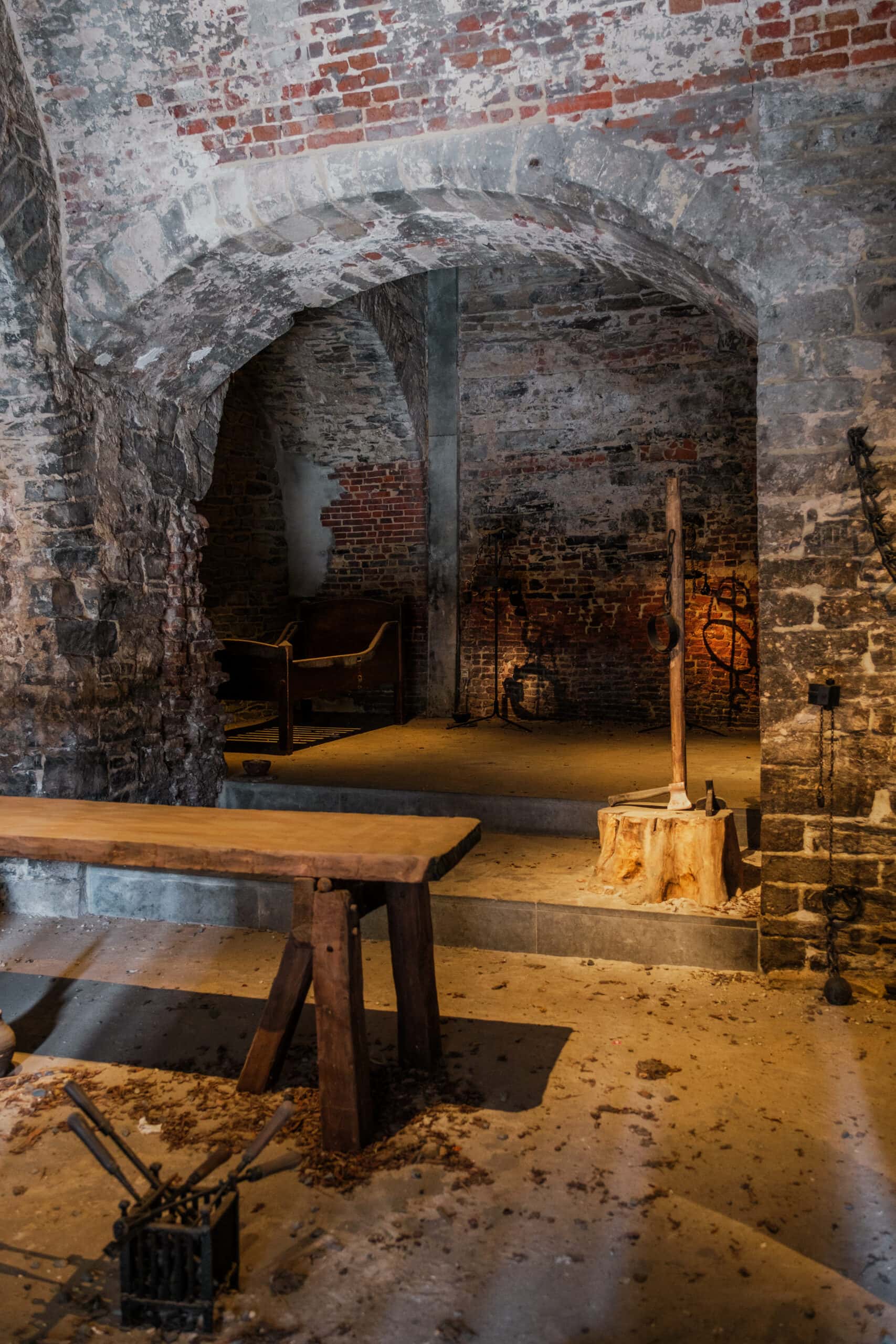
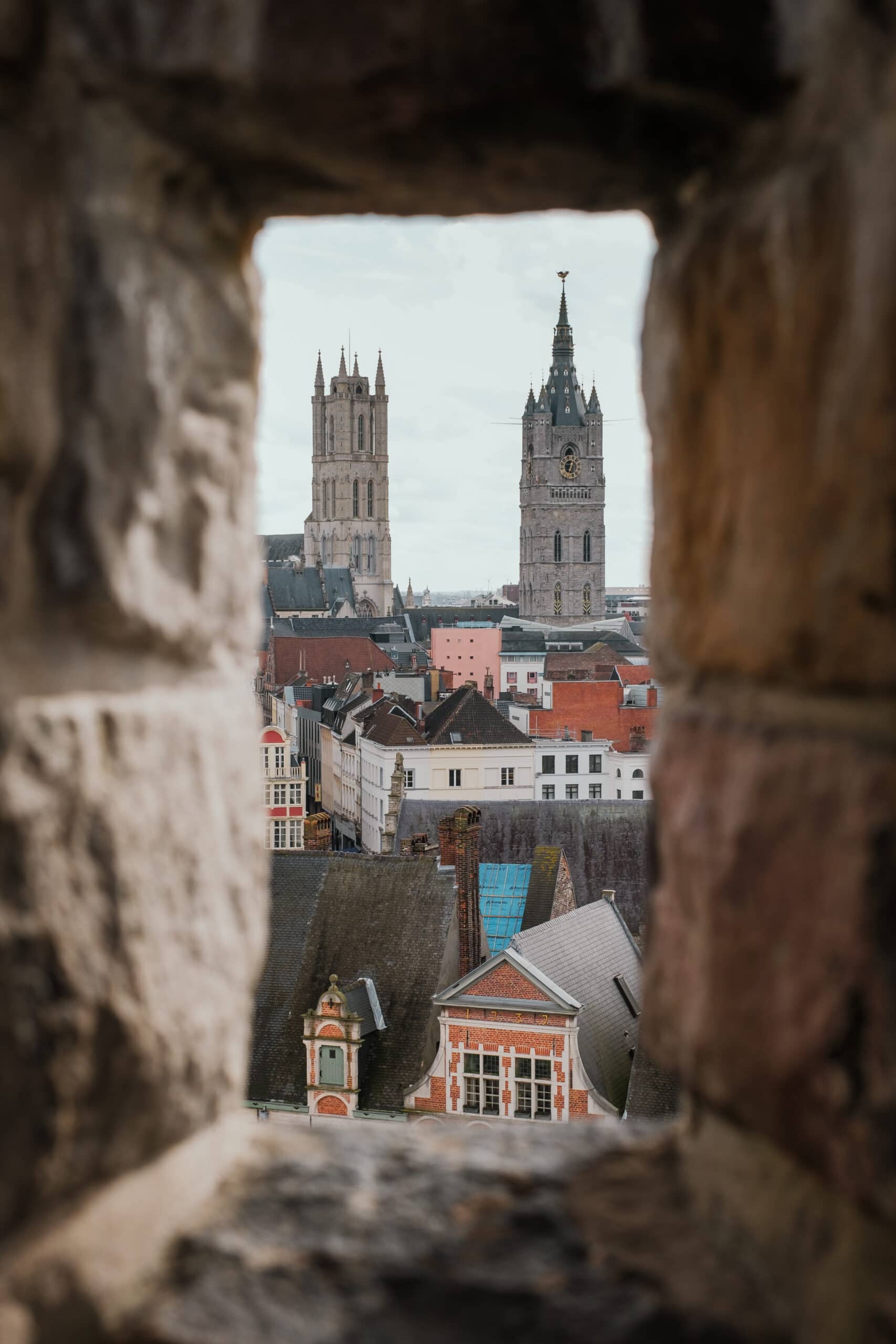
It takes about 75 minutes to complete the audio tour of Gravensteen. In addition to learning about the gruesome history of the castle, you can get beautiful views of today’s Ghent from the tower and other viewpoints.
Be cautious if you have mobility issues, as there are quite a few slick and narrow spiral staircases.




pin this post







Thank you for “How to visit 8 Mennonite HistorySites in Europe. Steffisburg is the birthplace of our relative, Hans Rupp der Jung, baptized on Dec. 7, 1662 in Steffisburg. An official charge was written in Thun on April 4, 1695 for an emigration fee of 5 % when his family left Switzerland..
We think he is our probable ancestor, is it possible to know if Rupp relative still live in the Steffisburg area?
Hi Sharon! I wish I had a better answer for you but I’m not sure of the best way to go about more detailed genealogical research in Switzerland. You might consider reaching out to the local churches (https://www.refsteffisburg.ch/ is the church community with the building referenced in my post) — if they don’t have answers either, they might at least be able to tell you how to go about such a search in Switzerland. Best of luck with your research!
Found this article by accident, but I loved the part about how Mennonite people immediately try to find out how they are related to each other. Then I really laughed when you identified Hans Landis as one of your ancestors because I’m also his descendant. Now I know where to go in Switzerland to connect with that part of my family’s history. Cheers!
Ha, no way! Think we’re perhaps 8th or 9th cousins or so? 🙂 I hope you do get to trace some of your family history in Switzerland — let me know how it goes!
Thank you for writing this and sharing these locations and insight. Am descended from Theodorus Eby (Aebi) and am planning travels through Germany and Switzerland. In my travels am hoping to see some of the areas my family came and visit sites that might give me a feel for their lives as Mennonites during the 1600s. Your blog has been helpful in this planning. While I am not a Mennonite myself, am proud of my heritage and all that has been passed onto me through the generations that came before me.
I’m so happy to hear that my site has been helpful! That’s such a beautiful part of the world to visit and I think it can be really meaningful to see the places where your family came from, however long ago that may have been. Have a fantastic trip!
P.S. I also have Eby ancestors, so perhaps we are distantly related!