How to Spend One Day in Madrid
In so many ways, it’s the center of Spain.
Geographically, for one: Madrid is located in, essentially, the dead center of the Iberian Peninsula, which Spain shares with the much-smaller Portugal.
But it’s more than that.
Madrid is Spain’s capital and largest city. It’s the home to more than a seventh of Spain’s entire population. And it’s the beating heart of the nation.
Visiting Madrid is an essential element of understanding Spain. You could easily spend multiple days, a week, or even more exploring this big, beautiful city.
But even if you have just one day to see Madrid, you have enough time to see many of Madrid’s top sites — and to soak up the unique vibes that make Madrid so special.
Here’s how to spend one day in Madrid.
This post contains affiliate links. If you make a purchase or a booking through one of these links, I may receive a small commission at no extra cost to you. Thanks for supporting In Old Cities in this way!
How to Spend One Day in Madrid
Fair warning: this one-day Madrid itinerary is busy, and requires lots of walking.
But if you’re up for it, you’ll get a wonderful overview of Madrid and its most notable sites.
Let’s get started.
Breakfast at Café de Oriente
Start your day at Café de Oriente, a beautiful restaurant across from the Royal Palace of Madrid.
Café de Oriente sits on Plaza de Oriente — a notable square beside your next stop.
Palacio Royal de Madrid
After breakfast, walk across the street to the Royal Palace of Madrid. This incredible building is the largest royal palace in Europe — though Spain’s royal family no longer lives here, and it’s used only for ceremonies.
Give yourself one to two hours to explore the palace’s open state rooms and gardens.
You can buy tickets, and find more information about visiting the palace, here.
When I visited Madrid with my mom and sister, we planned to tour the Royal Palace. But instead, we stumbled upon a Solemn Changing of the Guard ceremony taking place in the Plaza de la Armería — the large square between the palace and the neighboring cathedral. Large numbers of people had gathered to watch the ceremony, lining up on the stairs of the cathedral and along a designated processional route, and we joined them.
This was a long and elaborate ceremony, with much more to it than a typical changing of the guards. In fact, around 400 people and 100 horses participate in this ceremony, all decked out in traditional uniforms. We watched as rows of people paraded in on horses, or carrying rifles, or playing drums, and more.


The Solemn Changing of the Guard takes place on the first Wednesday of each month at noon. Signage at the palace said the ceremony occurs at noon, but when we arrived at 10:45 a.m., the processional had already begun.
Catedral de Santa María la Real de la Almudena
Just beside the Royal Palace is the Almudena Cathedral, which houses a replica of the Virgin of Almudena — a medieval statute of the Virgin Mary.
The cathedral is free to enter. However, the cathedral also holds a museum, which costs €7 per ticket (you can buy your ticket upon arrival).
I highly recommend visiting the museum, and here’s why: you get to go up to the roof.
To be honest, I wasn’t especially interested in most of the exhibits throughout the museum (which generally have to do with the history of the church and Catholic liturgy). But the roof was absolutely worth the price of admission.

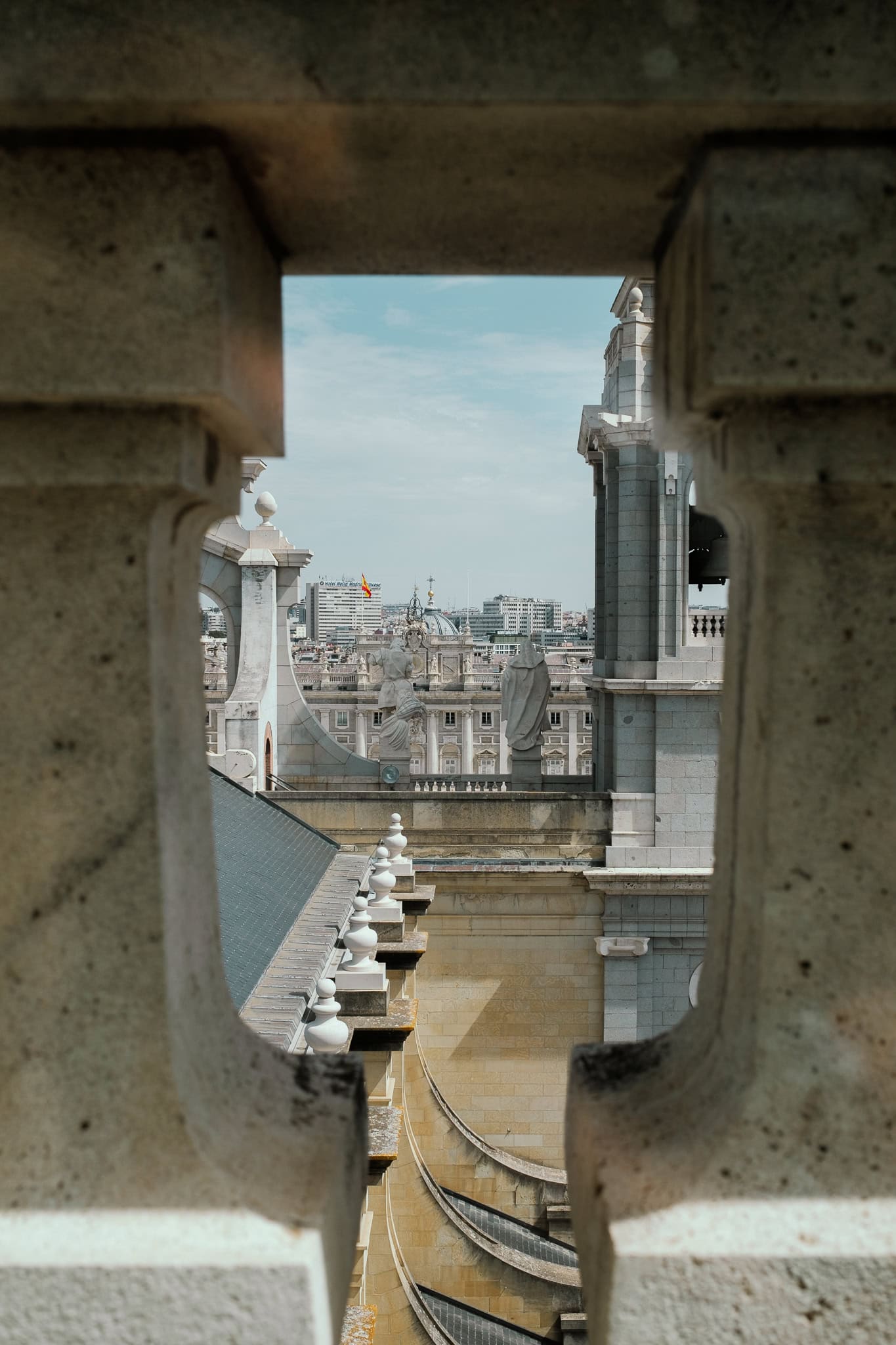

The views are wonderful, sweeping across the rooftops of Madrid. You also get a great look at the bell towers of the church and the Royal Palace across the plaza.
But the most interesting part of being on the roof is getting up close and personal with the large statutes of the twelve apostles that stand atop the walls of the cathedral.
The apostles are labeled with their names, and many are carrying symbols associated with them. For example, the statue of Saint James — the namesake of the Camino de Santiago pilgrimage — holds a pilgrim’s staff and gourd.
After visiting the museum, be sure to explore the main part of the cathedral as well. If you’d like, stand in line to see the Virgin of Almudena — but my favorite part of the cathedral was the way that stained glass windows left colorful streaks of light on many of the floors and walls.


Lunch at Mercado de San Miguel
From the cathedral, walk the short distance to Mercado de San Miguel, a wonderful food hall.
This market is sometimes criticized as too touristy — and sure, if what you’re looking for is a farmers’ market where locals buy their groceries, you won’t find it there.
But I absolutely loved Mercado de San Miguel.
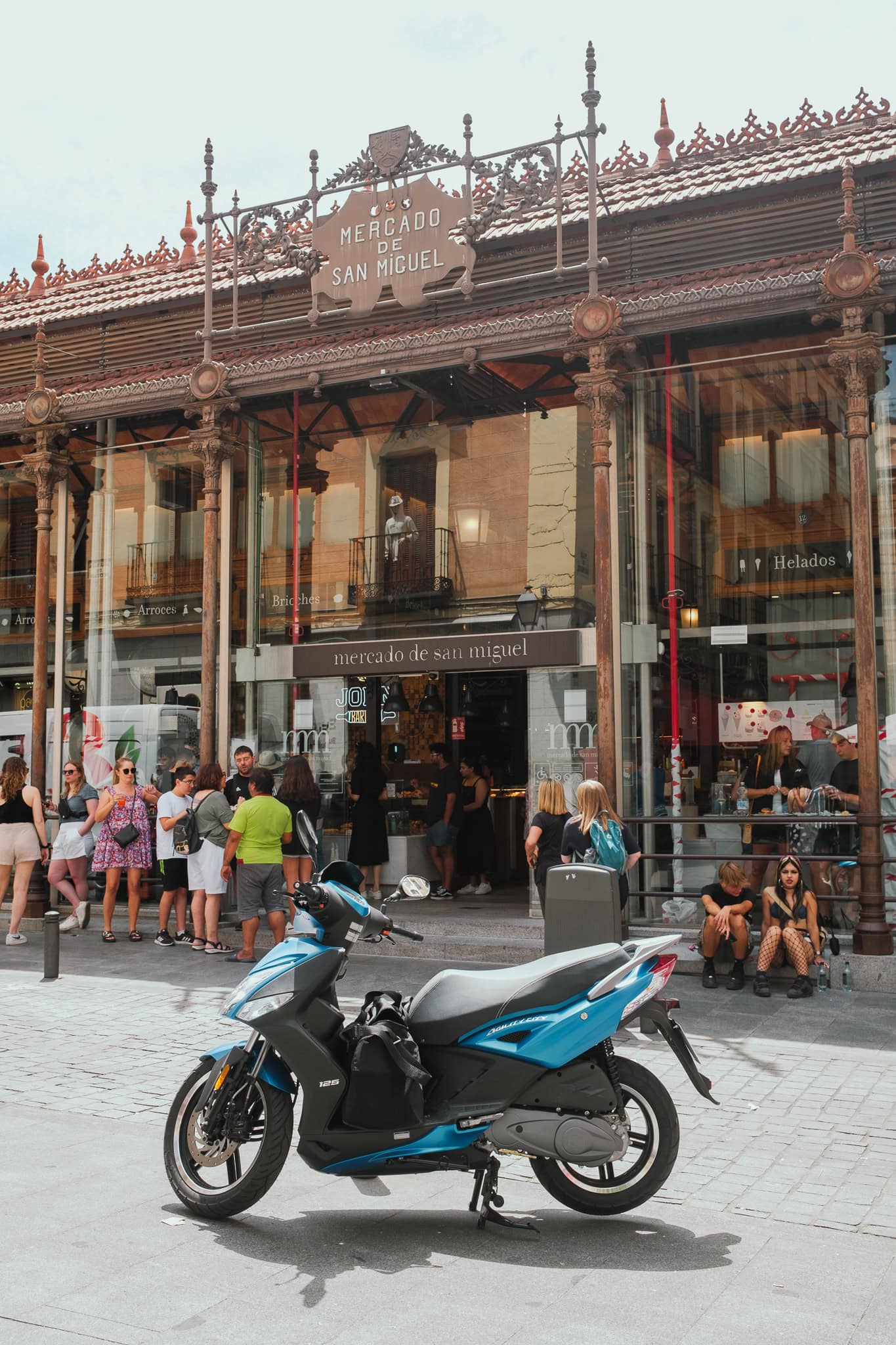


It’s chaotic, and exciting, with people snatching up much-desired spots at tables and pressing toward the food stands serving tacos and drinks and olives and cheese and tapas and so, so much more. There’s a wonderful variety of food on offer, and it’s an especially great place to try a bunch of small plates, if that interests you.
Personally, I got two different empanadas and a sangria for about €11. A bit pricey, but it was all great!
Museo Nacional del Prado
Return to Calle Mayor and head toward your next destination: the Prado, Spain’s best-known art museum.
If you like, you can stop at Plaza Mayor (Madrid’s most famous square) on the way; it’s right next to Mercado de San Miguel. This itinerary will have you returning to Plaza Mayor after dinner too, but it’s certainly worth seeing at multiple times of day.
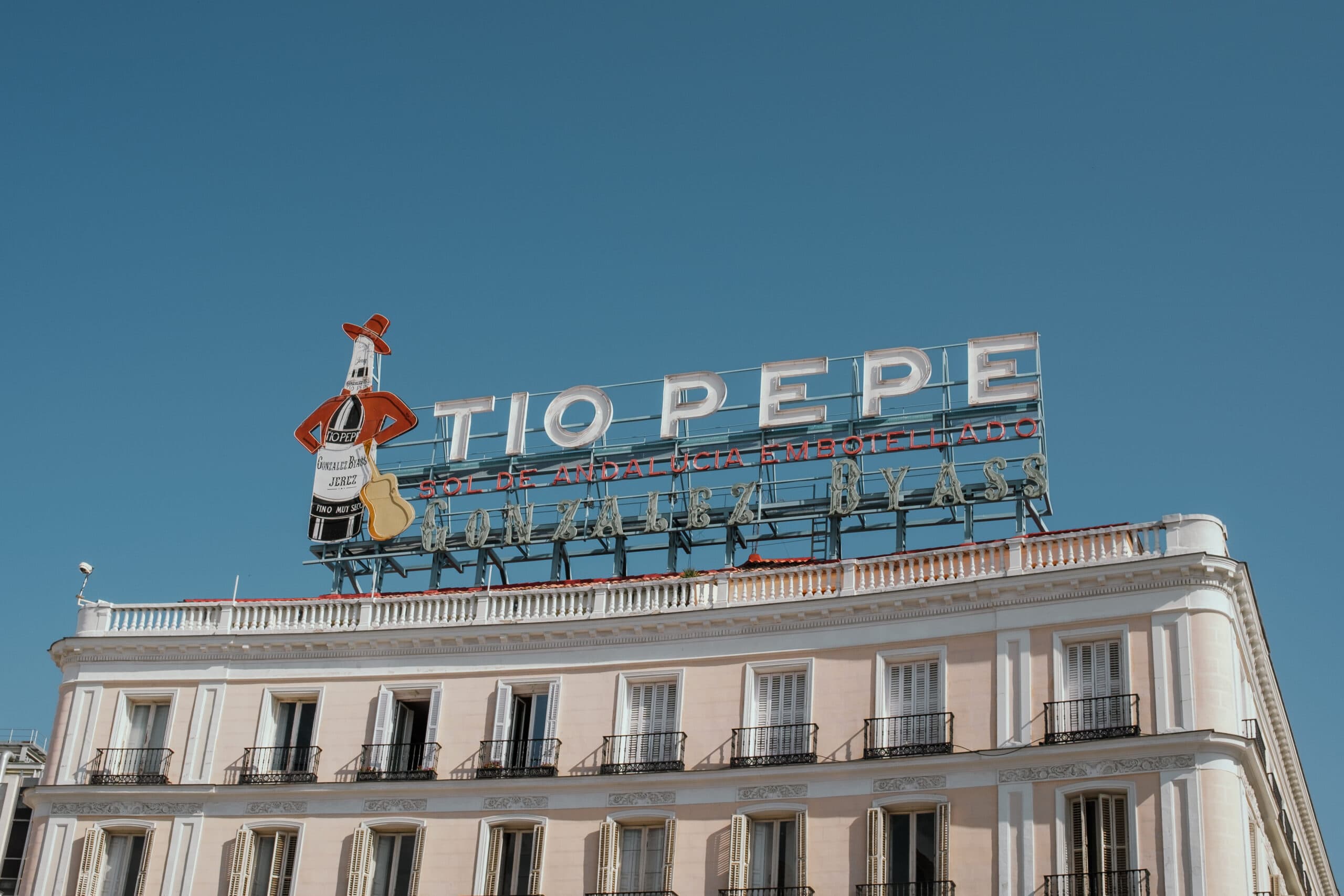
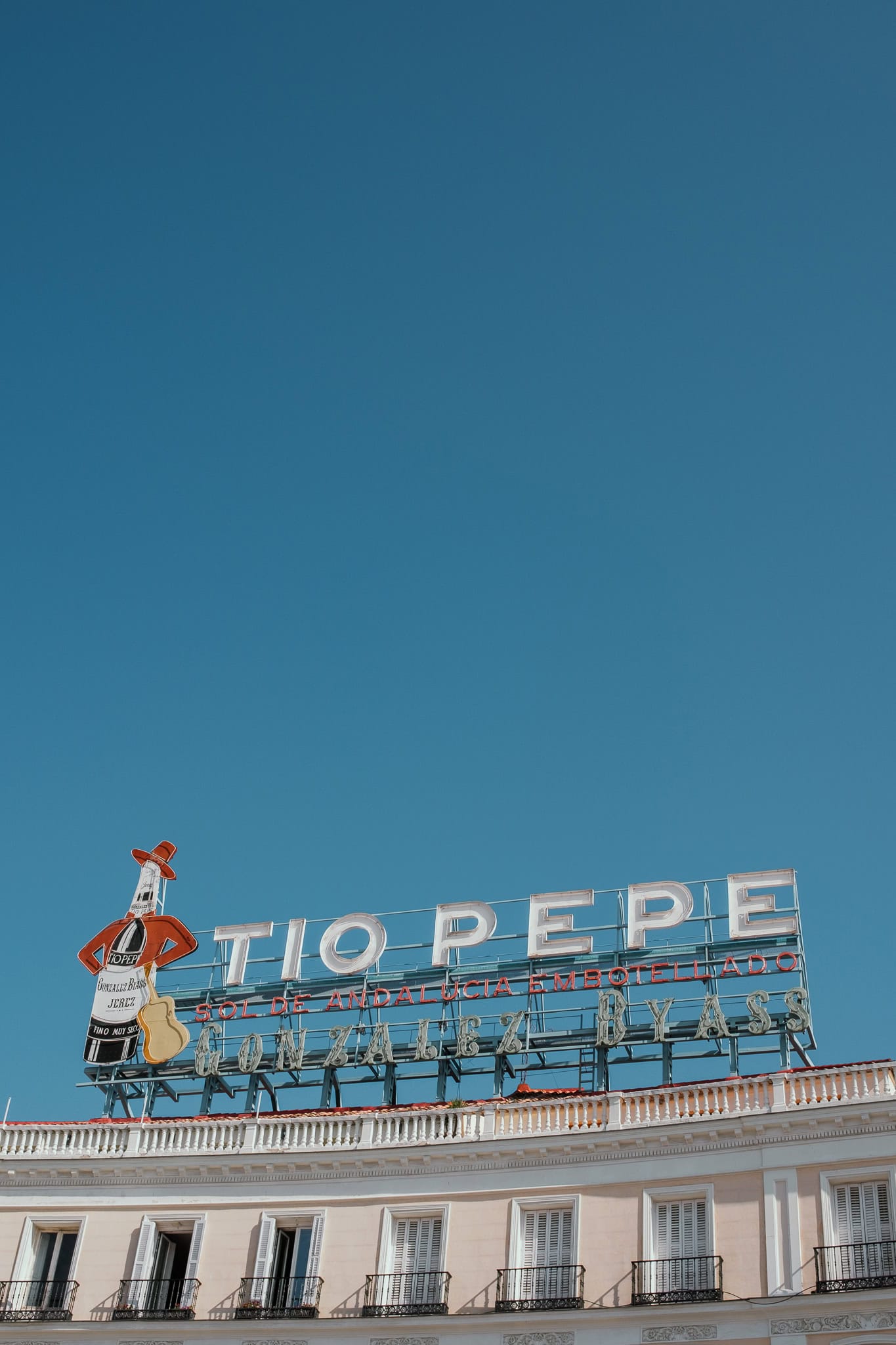
On the way to the Prado, you’ll also walk through Puerta del Sol, a square best known for holding a statute of a bear and a strawberry tree (a 3-D version of the image on Madrid’s coat of arms). Personally, though, my favorite part of the Puerta del Sol is the huge Tio Pepe sign — a neon advertisement for sherry.
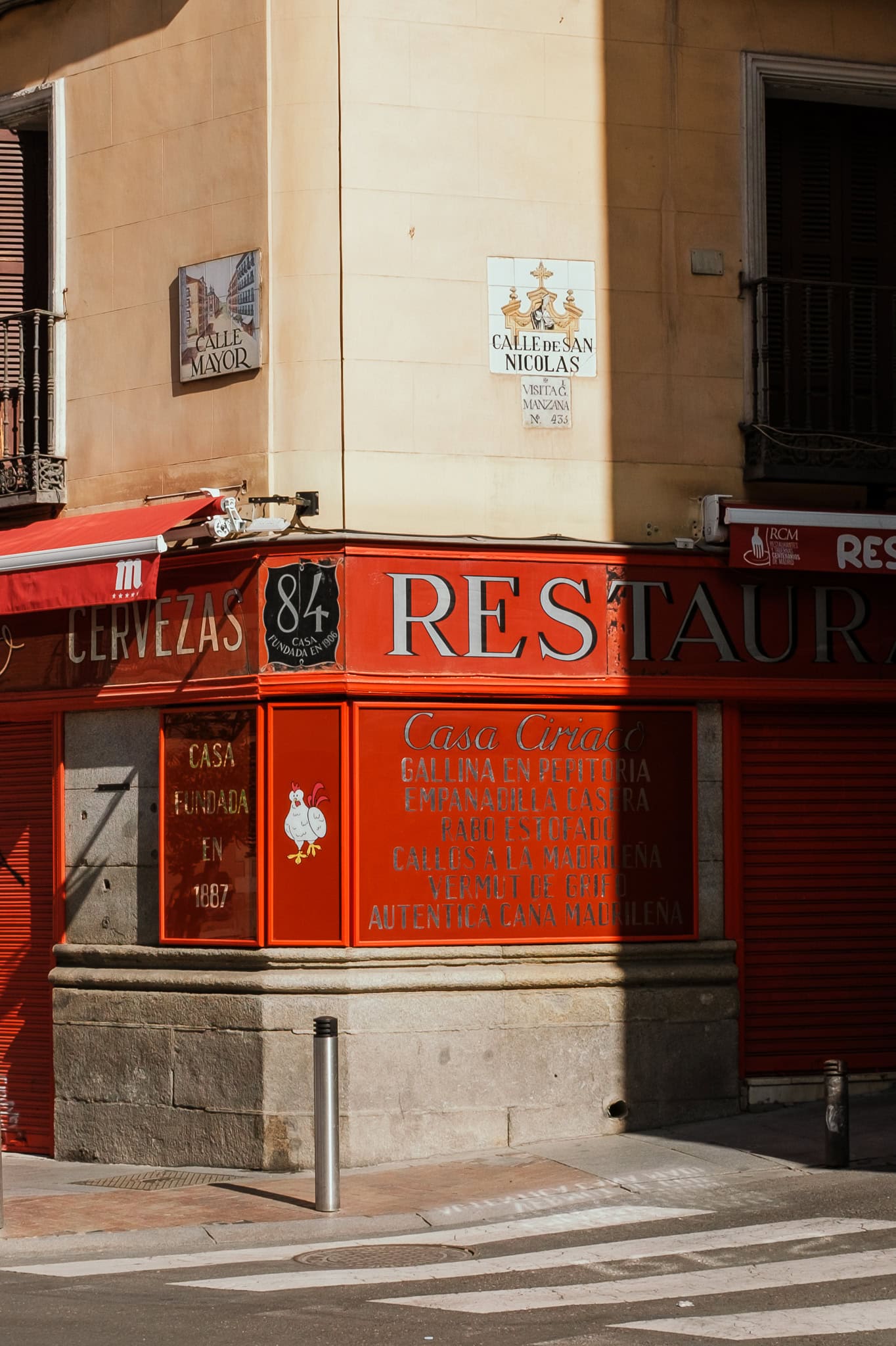
Eventually, you will reach the Prado. It’s a wonderful building with a massive collection of Spanish art — plus masterpieces from elsewhere in Europe and beyond.
Highlights of the Prado include the chaotic, overwhelming Garden of Earthly Delights by Hieronymus Bosch, Francisco Goya’s Black Paintings (including the disconcerting Saturn Devouring His Son), and Las Meninas by Diego Velázquez.


Tickets to the Prado cost €15 for general admission. You can buy them in advance here, though I had no trouble snagging one upon arrival when I visited (there was no line).
Parque de El Retiro
Just a few blocks away from the Prado is the large Parque de El Retiro, a famous park and UNESCO World Heritage site.
The best-known spots in Parque de El Retiro include the Estanque Grande (a large pond for boating, backed by a huge monument to King Alfonso XII), the Palacio de Cristal (a glass conservatory), and the gardens beside Puerta de Felipe IV.

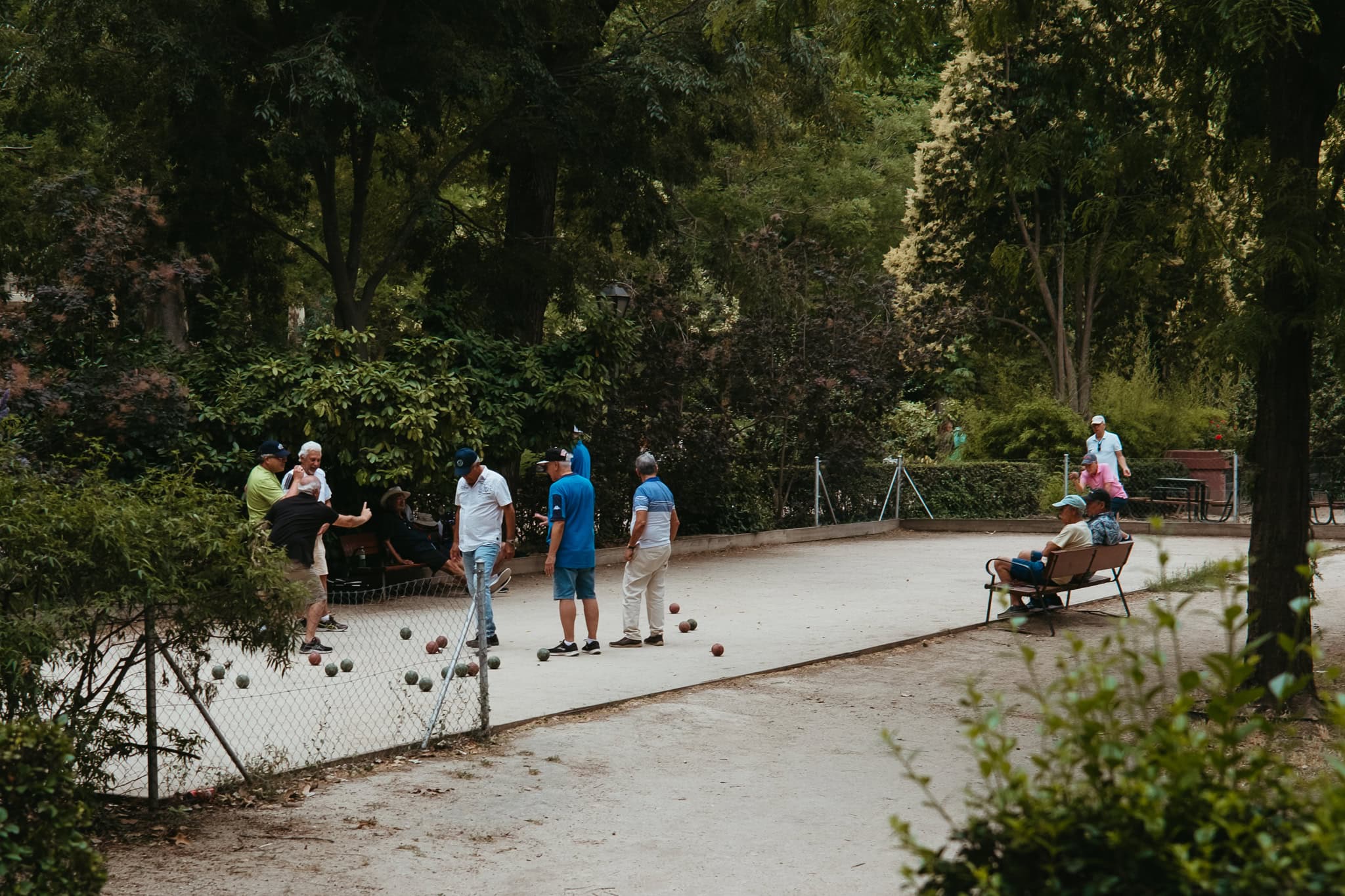
But personally, my favorite parts of Parque de El Retiro were the little things. Stumbling upon the bocce courts, where I watched old men good-naturedly squabble over ball placements. Meandering down a tree-lined path while an unusually strong breeze sent leaves twirling all around me. Listening to the man playing guitar beside the pond.
Dinner on Calle de Ventura de la Vega
For dinner, head to Arrocería Marina Ventura, which gets great reviews for Spanish specialities like paella.
If you’re not big on Spanish food, you’ll find a bunch of wonderful other restaurants on the same street — Indian, Mexican, Argentinian, Chinese, and more.
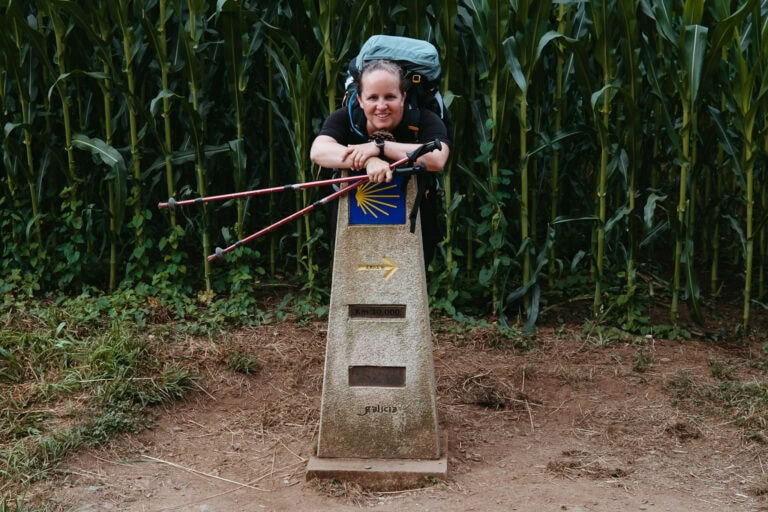
When I visited Madrid, I had just spent more than a month in Spain walking the Camino de Santiago, and I must admit that I was tired of Spanish food and eager to eat something else.
Thankfully, I stayed at a hotel on that street with my mom and sister — more on that later — and we had wonderful meals at Indian Aroma and El Chaparrito. (We also liked Feliz Coffee, and there were plenty of other great-looking restaurants we didn’t have a chance to check out!)
Plaza Mayor
After dinner, return to Plaza Mayor to experience its vibrant nighttime life.
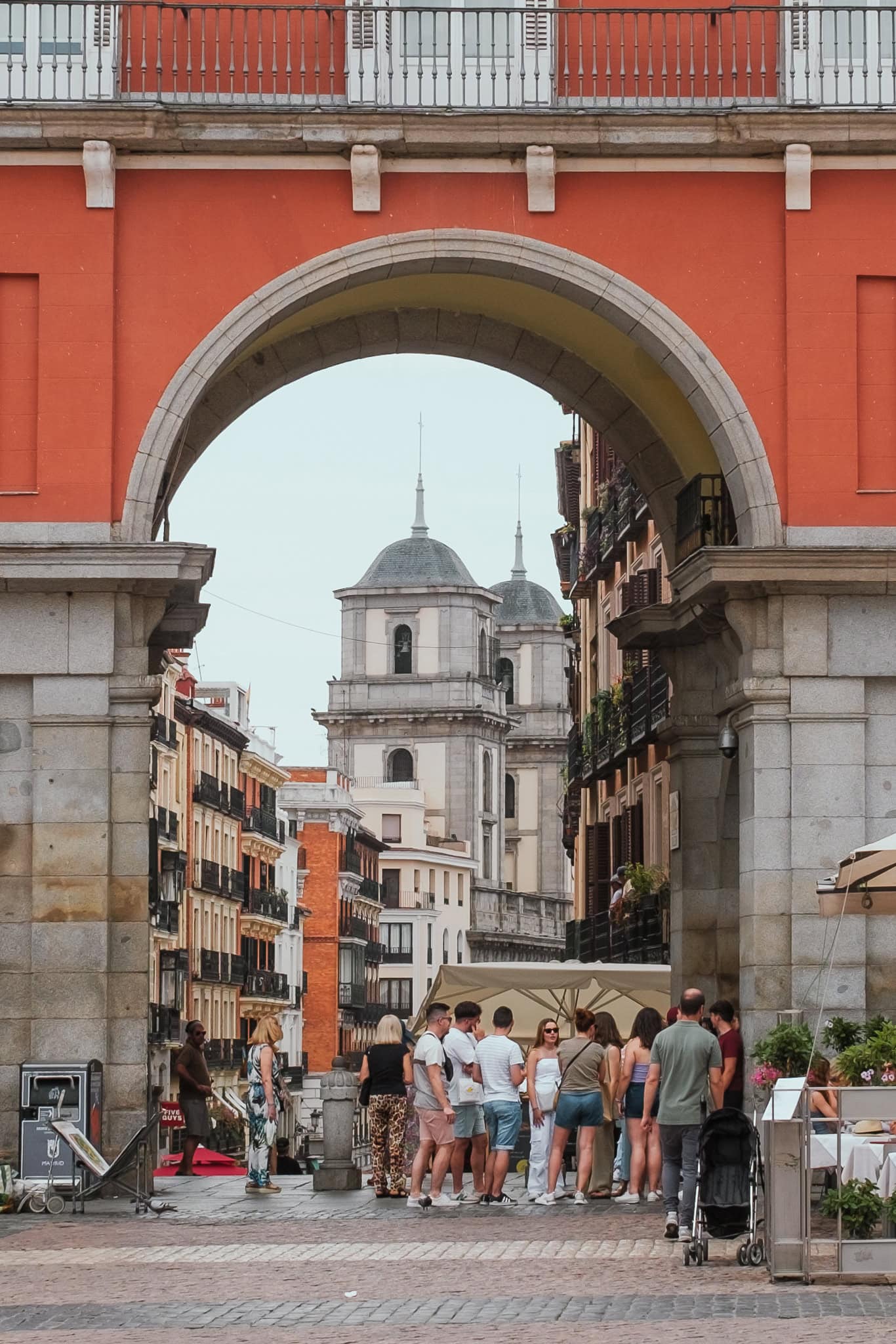
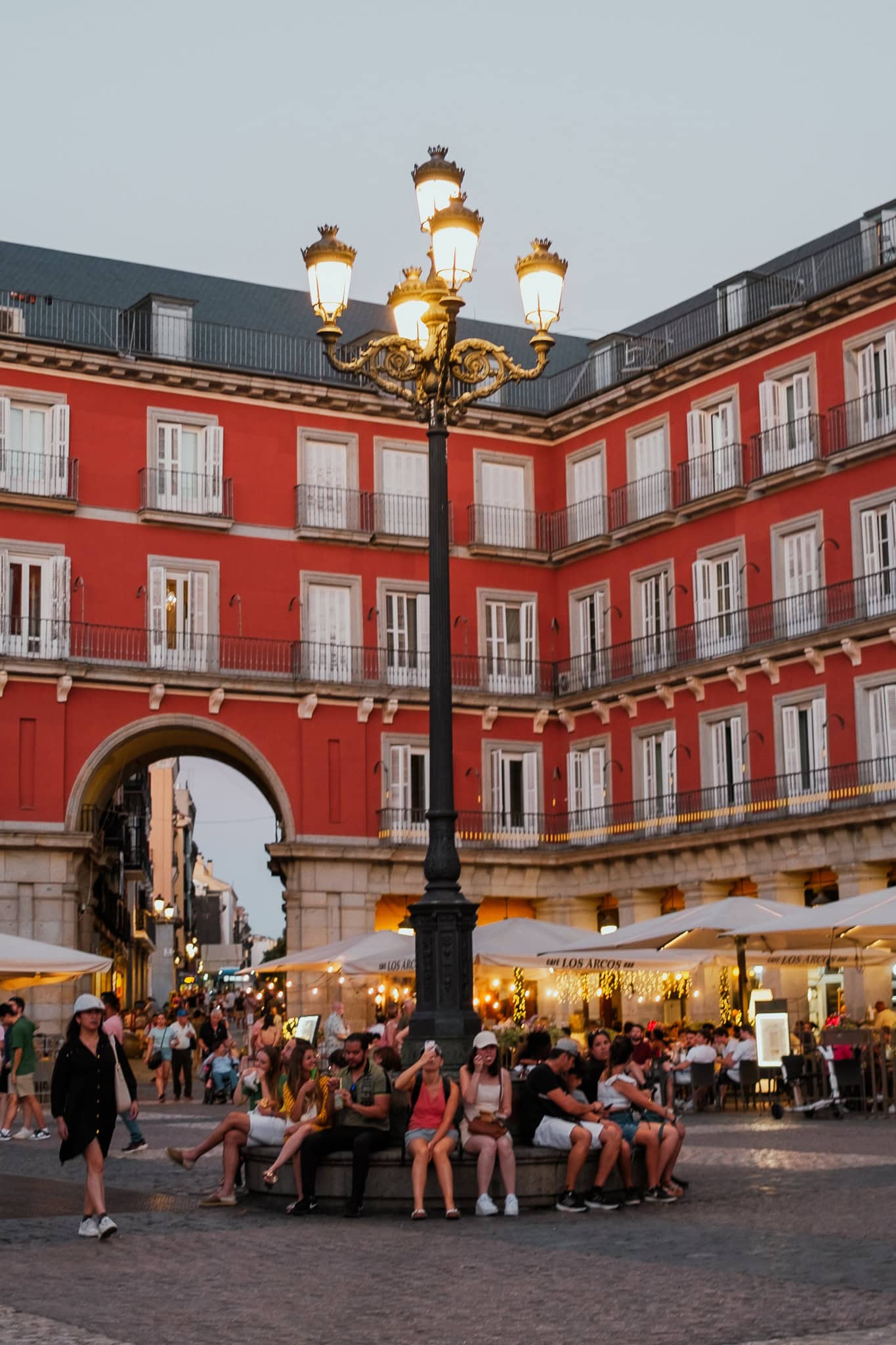
Plaza Mayor is a huge square lined uniformly by beautiful buildings — plus arched entrances that allow people to get in and out of the square. At the center of the plaza is a large statute of King Phillip III and his horse.
In the evenings in Plaza Mayor, the cafes and restaurants around the square are filled with people. You may want to join them — it’s a beautiful place to people-watch while enjoying a drink — but be warned that they’re expensive spots.
You can also expect to see plenty of people selling light-up spinny trinkets — the sky may be full of people demonstrating their wares — plus people dressed as familiar characters and taking photos with tourists. (I saw Spider-Man, Sulley from Monsters, Inc., and a teddy bear.)

If you have more time…
If you have more than one day to spend in Madrid, or somehow find yourself with a little extra time in your day, here are some suggestions.
Museo Reina Sofia
The Reina Sofia is smaller than the Prado, but quite famous in its own right — largely for holding Guernica, Picasso’s huge, devastating work about the Spanish Civil War.
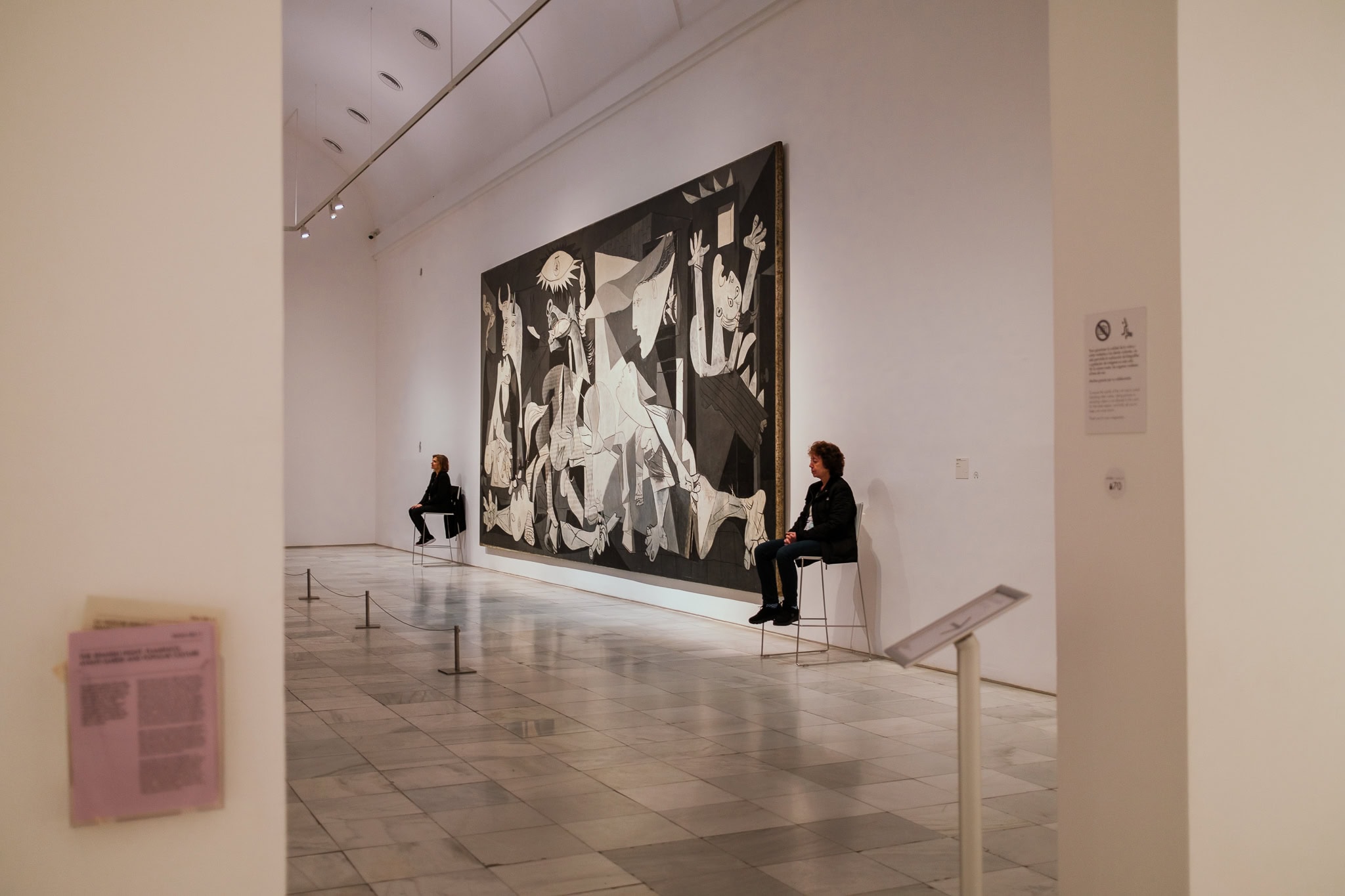
Wonderfully, the Reina Sofia has free entry most evenings and on Sunday afternoons. You won’t have long to explore the museum, but it’s enough time to see Guernica and other highlights.
Find more information about the museum’s free entry times (and other tickets) here.
Plaza de España
The Plaza de España, which is also located near the Royal Palace, is most notable for its huge statue of Miguel de Cervantes, the author of Don Quixote.
If you’re a photographer, don’t miss this plaza — you can get a great shot of the Cervantes statue in front of the Hotel Riu Plaza España, an impressive building on the edge of the square.
Gran Via
For fans of shopping, it’s tough to beat Gran Via — one of Madrid’s biggest and most notable streets. It’s known for its shopping, dining, and entertainment opportunities, and is worth a wander if you have some spare time.
Where to Stay in Madrid
I recommend Hostal Lisboa, where I stayed during my time in Madrid. It was reasonably priced and centrally located, allowing me to walk everywhere I wanted to go.
For other lodging options, consider these hotels:
One-Day Madrid Itinerary: Interactive Map
Below is a map with the locations included in this itinerary. To use this map during your own trip to Madrid, click the star next to the map’s name (which saves the map to your account). You can then find and use the map from your Google Maps app by going to “Saved,” then “Maps.”
Final Thoughts
Though one day could never be enough to thoroughly explore Madrid, you can still see many of the city’s top sites and get an excellent sample of what makes Madrid so great.
I found Madrid to be a beautiful and vibrant city with incredible architecture, lively plazas, inspiring art, and much more. I hope you love it too — and please leave a comment or send me a message if you have questions about how to make the most of one day in Madrid!
More TRAVEL TIPS
BOOKING FLIGHTS | Learn how to book flights with points and miles, and never pay for a flight again.
PLANNING ITINERARIES | Use Google Maps to plan your perfect travel itinerary.
SOLO TRAVEL | First-time solo traveler? Follow these tips to go with confidence.
pin this post