

How Long Does the Camino de Santiago Take?
If you’re thinking about walking the Camino de Santiago, you probably have many questions, but likely chief among them is this: how long does it take?
The answer to that question is complicated. But here it is, in its simplest form: that’s up to you!
In this post, I’ll explain why that is.
This is what to know about how long it takes to walk the Camino de Santiago.
Want to read more about the Camino?
Find my complete travel guide for the Camino de Santiago here.
What the Camino Is, Actually
To answer the question of how long the Camino takes, we first have to establish what the Camino is and how it works.
Here are the most important things to know.
There are many Caminos.
To illustrate that point, this map depicts some (but not all!) of the best-known Camino routes, all leading to Santiago.

What this means:
- You can be in many different places in Spain, Portugal, France, and beyond, and still be walking the Camino.
- You can start your Camino from anywhere, including the middle of a route or somewhere that’s not on an official route. Indeed, many European pilgrims simply start walking from their own homes or cities, joining up with an official route where possible. (I have seen Camino symbols in cities in Belgium, the Netherlands, and Germany!)
- It’s not possible to “walk the whole Camino,” because the Camino has unending possibilities.
- You don’t need to go the whole way to Santiago de Compostela in order to walk the Camino. For example, you can just walk the first week or two of the Camino Frances, and stop at that point — and that is still walking the Camino.
You walk at your own pace.
Along the most established routes, like the ones discussed below in this post, there are often towns every few miles with places for pilgrims to stay.
This means that you can decide how far to go each day. If you are injured, or need to take it slow for any other reason, you can walk a short distance. If you are feeling strong and fit, you can go farther.
Some pilgrims walk 40 kilometers per day. Others walk 10 kilometers per day. (Depending on the difficulty of the route, many pilgrims average around 25 kilometers per day.)
It’s up to you — and how far you go each day will also determine how long it takes you to walk your chosen Camino route.

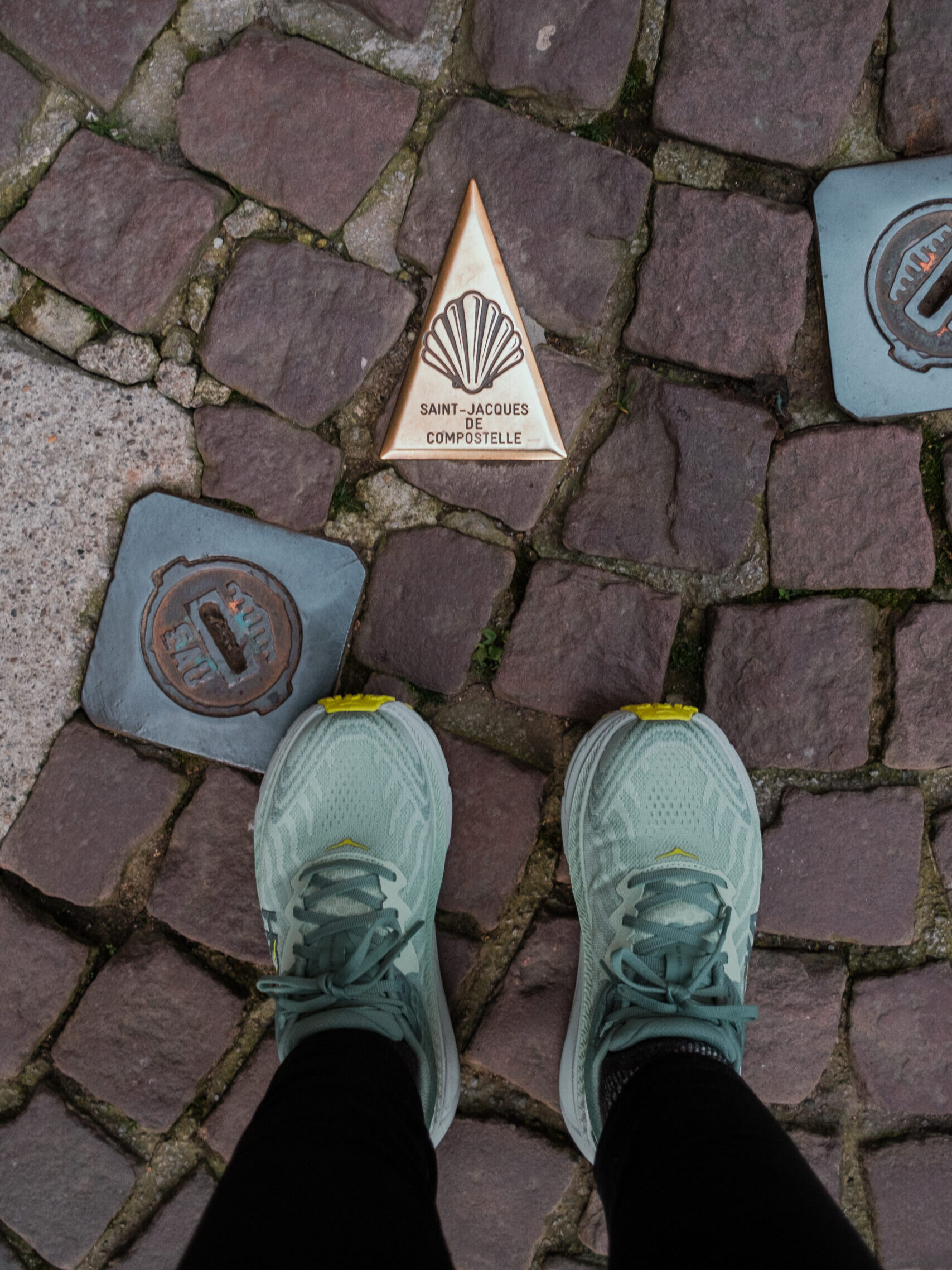
An Overview of the Camino Routes
Here’s a quick overview of many of the official Camino routes and how long they typically take if walked from their traditional starting points to Santiago de Compostela.
However, keep in mind that pilgrims can start or stop anywhere along any of these routes!
Camino Frances
The best-known and most popular Camino route, the Camino Frances traditionally begins in Saint Jean Pied de Port, France — hence the name.
SJPdP is just over the border between France and Spain, and people who start the Camino there cross over the Pyrenees mountain range and into Spain on their first day of walking.
From SJPdP to Santiago, the Camino Frances is nearly 800 kilometers or 500 miles. Most people walk it in 30 to 35 days.
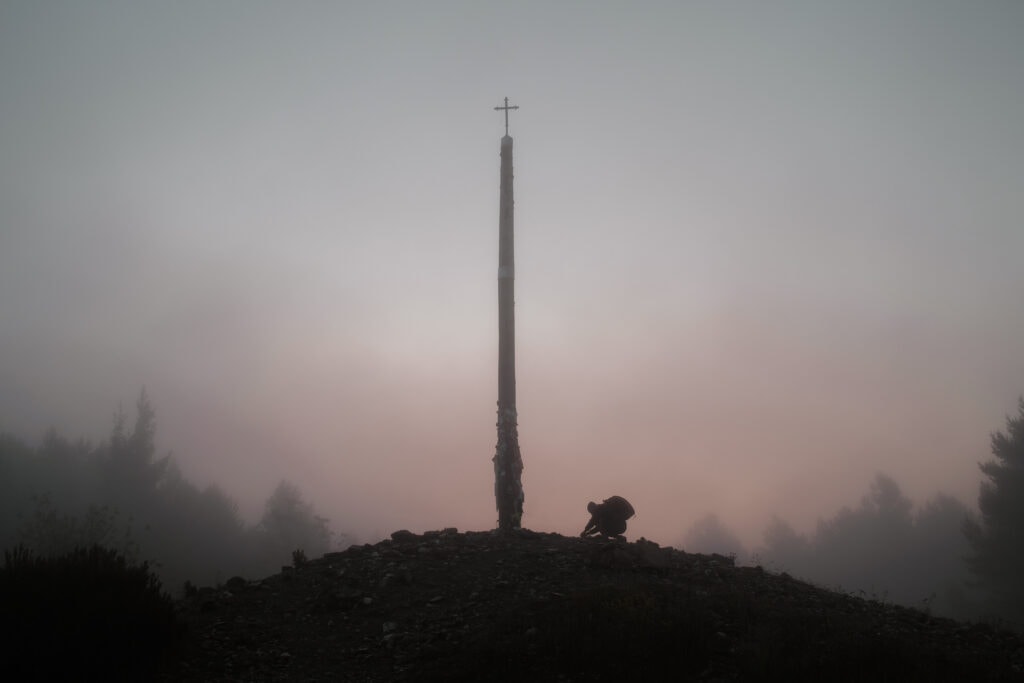
In 2023, I walked the Frances in 34 days. Check out my posts about the Camino Frances here:


Camino Portugues
The Camino Portugues, or the Portuguese Way, goes through — you guessed it — Portugal.
You can walk from Lisbon, but the much more popular option is to start in Porto. From there, there are several different route options, including one that follows the coast and one that remains inland.
The Portuguese routes are about 260 to 280 kilometers long from Porto to Santiago, and most pilgrims walk them in 10-14 days.
Camino del Norte
The Norte route begins in Irun, just beside the French border, and follows Spain’s northern coast.
The Camino del Norte is just a bit longer than the Frances, at about 820 kilometers. Most pilgrims walk it in 32 to 40 days.
Camino Inglés
The Camino Inglés is the shortest of the official Camino routes at about 120 kilometers, or 75 miles. It leaves from the town of Ferrol, north of Santiago, and gets its name because it was the route of choice for many English pilgrims in prior times.
Most pilgrims take 4 to 6 days to walk this route.
Camino Primitivo
The Primitivo route begins in Oviedo, and stretches for about 320 kilometers, or 200 miles.
The Camino Primitivo follows near the Norte route, and it’s possible to begin the Camino on the Norte but then switch to the Primitivo near Oviedo. (This is a popular option since it substantially adds to the variety of scenery.)
Via de la Plata
The Via de la Plata is the longest official Camino route within Spain, at approximately 1000 kilometers. It begins in Seville and stretches north to Santiago.
Most pilgrims walk the Via de la Plata in about 6 weeks.
Chemin du Puy
The Chemin du Puy begins in the French town of Le Puy-en-Velay. It covers about 750 kilometers in southern France before joining up with the Camino Frances in Saint Jean Pied de Port. Most people walk it in about 30 to 40 days.
There are a few other well-established Camino routes through France (for example, routes beginning in Vezelay or Arles), but Le Puy is the best-known starting point.
Camino Finisterre
The Camino Finisterre is the only route that actually leads away from Santiago de Compostela. It goes from Santiago to the coastal town of Fisterra, and takes about two days.
You can also add a day to walk to another coastal town, Muxía.
Pilgrims do not generally walk this route on its own, but instead add it on to the end of their Caminos after arriving in Santiago.

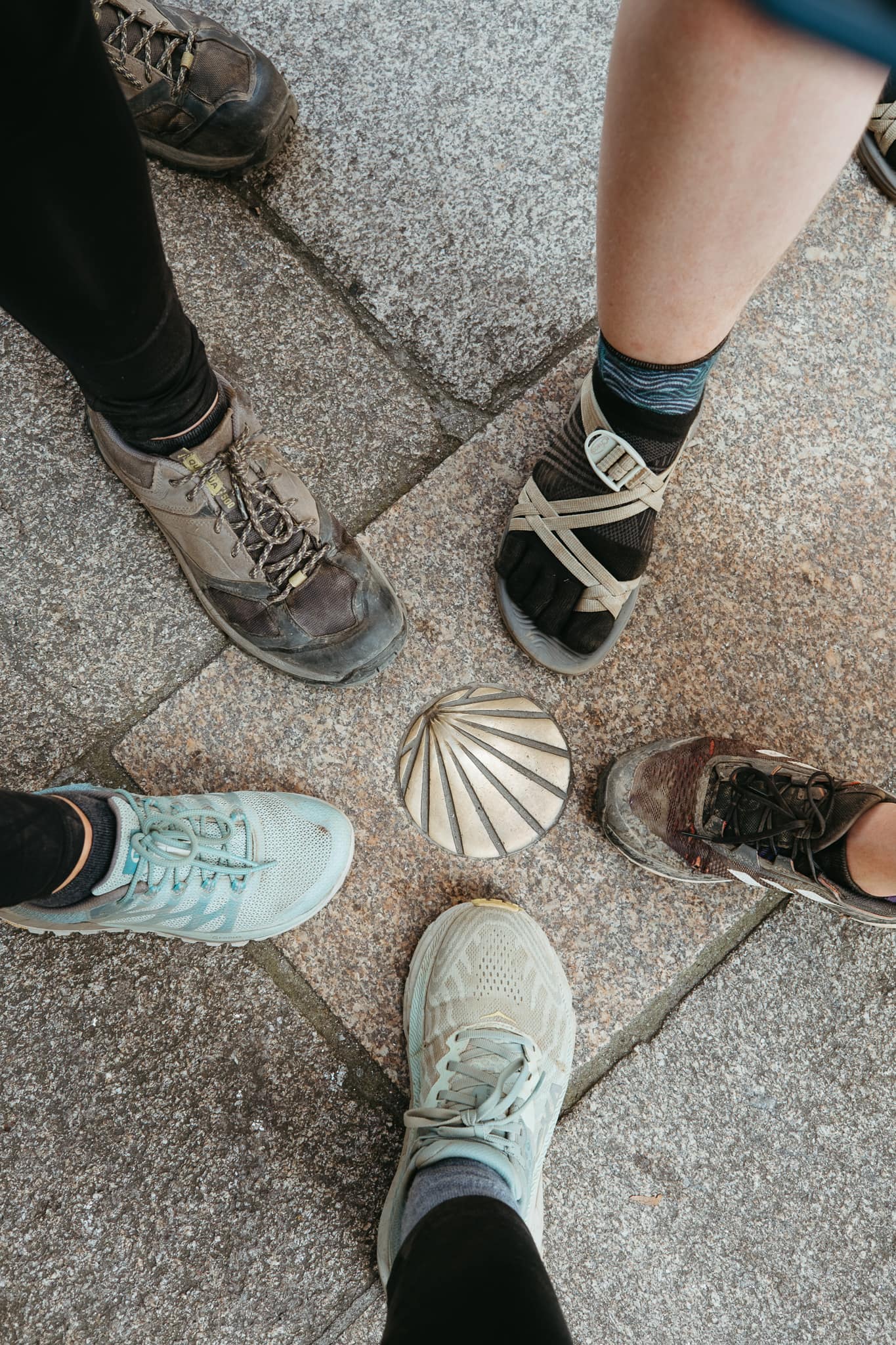
Shortening the Camino
What if you have only a short period of time to experience the Camino?
Here are a few recommendations for how to get the most out of the Camino in a short time.
Choose a short route
Obviously, one option is to choose a short route that doesn’t require a full month or more to walk from the beginning to end.
The Camino Inglés is a good choice here, since it can be walked in less than a week.
If you have 10 to 14 days to walk, consider walking the Portuguese route.
Begin the Camino Frances
You don’t have to reach Santiago de Compostela in order to walk the Camino, or to have a meaningful Camino experience.
If you just want to have the experience of walking a varied and beautiful route with other pilgrims, I strongly recommend starting the Camino Frances in Saint Jean Pied de Port and walking until you run out of time. I can guarantee that there will be plenty of other pilgrims for you to meet, and you will get some exceptional scenery. (In my view, the first two weeks or so is, for the most part, the prettiest part of the Frances!)
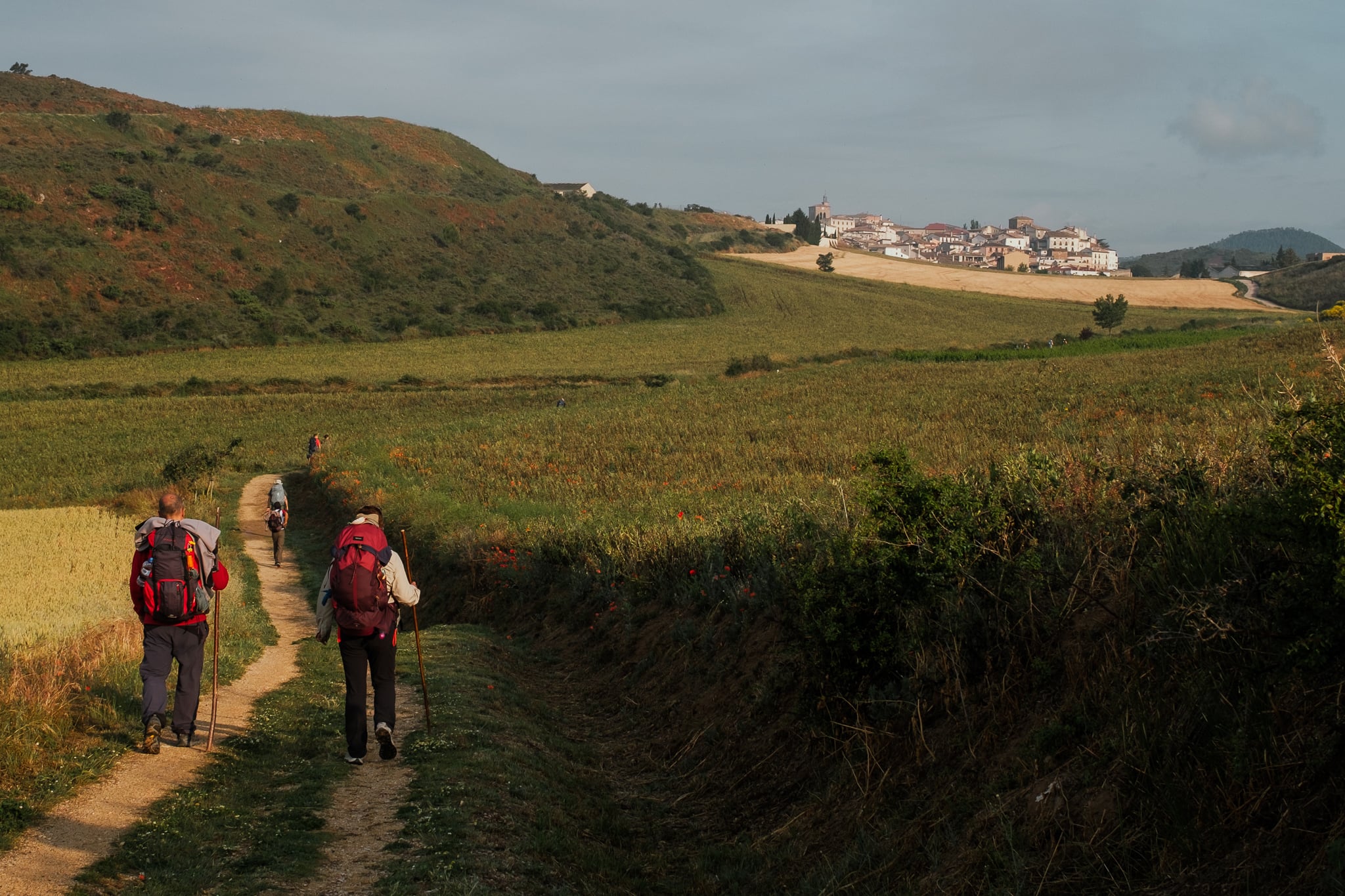
If you do something like this, you would not be alone. During my own time on the Frances, I met quite a few European pilgrims who were walking just the beginning of the route, with plans to return and finish it in the future (perhaps over a period of years!). I also met an American family that likes to walk just the first two weeks or so of the Frances every so often. They don’t care about reaching Santiago, but just enjoy the experience and the views. These are perfectly legitimate ways to walk the Camino!
Walk from Sarria
The pilgrims’ office in Santiago de Compostela provides compostelas, or certificates of completion, to pilgrims who can demonstrate that they walked at least 100 kilometers of the Camino. (Pilgrims carry credenciales, or passports of sorts, and collect stamps along the way as proof of their efforts.)
Accordingly, many (MANY) people begin their Caminos in the city of Sarria, Spain, which is about 116 kilometers away from Santiago de Compostela on the Camino Frances route. A Sarria Camino takes about 5 days to complete.

READ MORE | How to Walk the Camino de Santiago from Sarria
Bike the Camino
You can substantially shorten your Camino by biking instead of walking — though the experience of a bicigrino (a play on the Spanish word for “pilgrim,” peregrino) is very different.
Because a bicycle can cover much more ground each day, a biking Camino goes much quicker. This can make it more difficult to build relationships on a biking Camino, since you will be going at a different pace than almost all other pilgrims and are not likely to see the same people over and over again.
If you opt to bike the Camino, carefully consider your level of ability, as some routes are much more difficult to bike than others. (The Frances is a popular option for biking as well as walking.)
Final Thoughts
So, really, how long does it take to walk the Camino? That’s up to you — it depends completely upon where you start, which route you take, and how far you walk each day. You get to decide!
More Information About the Camino
THE BASICS | Start with an introduction to the Camino de Santiago, 15 important things to know about the Camino, and read about a typical day on the Camino.
SAFETY | Find out what to know about safety on the Camino.
FOOD | From typical meals to costs, here’s everything to know about food on the Camino.
GO IT ALONE | Here’s what you need to know if you’re thinking about walking the Camino alone (like me!).
EXPENSES | Just how much does the Camino cost, anyway? Find out here.
GET READY TO GO | Here’s what to know about how to plan for the Camino (or not!), plus 9 helpful ways to prepare for the Camino.
ITINERARY | Want to walk the Camino Frances in about 34 days? Read my recommended itinerary.
PACKING GUIDE | Everything you need to know about what to pack (and not to pack!) for the Camino, plus a printable packing checklist.
CAMINO FRANCES | If you walk the Frances route, here are 10 incredible things you can expect to see — plus my own Camino photo diary.
SHORT CAMINO | Here’s how to walk the Camino in just 5 days.
PHOTOGRAPHY | A complete guide to taking great photos on the Camino de Santiago.
pin this post





Sadly the Camino Frances is so crowded nowdays. When I did my first CF in 2001 only 61,418 Compostelas were issued for the whole year. By the end of October 2025 the 500,000th had already been colledted. There are more facilities now than there were 24 years ago but so, so many more people.
Glad I did them (6) when I did rather than waiting until now.
Better to do one of the others. The Camhino Portugues is a good alternative.
Yes, the growth is a bit shocking! I feel very fortunate that I happened to walk during an uncrowded time — it never felt busy until I hit Sarria (and then it was nuts).
I definitely have the Portuguese (and the Norte, and the Ingles, and others!) on my radar for future Caminos!